The Rise of Temporary and Pop-Up Architecture
Temporary structures offer an experimental means to look at design, construction technology, and use of materials.
Sponsored by Vectorworks, Inc. | Presented by Sarah Barrett
Webinar On-Demand
There is an increasing need for a structure, display, enclosure, or interactive space that can be temporary, flexible, and adaptable for different people, uses, or times. This temporary architecture, sometimes referred to as "pop-up architecture," allows for great creativity and potential time and cost savings during the construction process. This webinar will look at some ways pop-up architecture has been developed, used, and admired around the world.
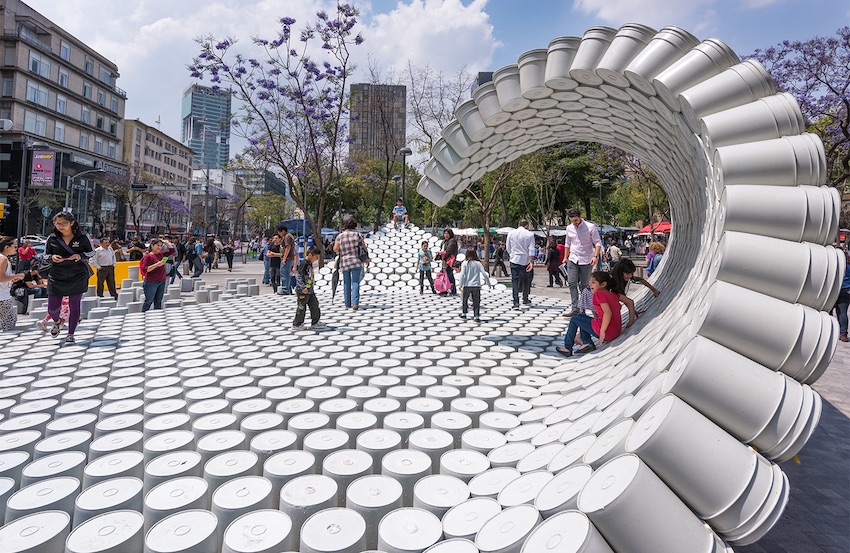
Photo courtesy of 5468796 Architecture

|
Sarah Barrett, Architect Product Specialist, Vectorworks, brings more than a decade of experience as an architect and graphic designer, as well as professional expertise in the field of parametric modeling, to her role as an architect product specialist at Vectorworks. In addition to serving as an architectural expert and BIM specialist for the company, she helps create best practices for Marionette, the integrated algorithmic modeling tool in Vectorworks software. Sarah also leads webinars and workshops on a variety of industry topics and develops materials to help customers improve their workflows and design processes. She holds a Master of Architecture from the University of Michigan and a Bachelor of Arts in architectural studies from Brown University. |
Vectorworks, Inc. is an award-winning design and BIM software provider serving the architecture, landscape architecture and entertainment industries in 85 countries. Creating intuitive software since 1985, we’ve become the preeminent software built to manage the entire design process. Globally more than 685,000 users are creating, connecting and influencing the next generation of design with Vectorworks on Mac and Windows. Headquartered in Columbia, Maryland, with offices in Newbury and London, England and Vancouver, Canada, Vectorworks is a part of the Nemetschek Group. Learn how we empower designers to create experiences that transform the world at vectorworks.net or follow @Vectorworks.
Originally published in Industrial Heating
Originally published in January 2019
LEARNING OBJECTIVES
- Discover the history and motivation behind creating temporary architecture for habitable and non-habitable spaces.
- Explore the design challenges of innovative approaches to material usage, experimentation, and progressive design solutions.
- Recognize the positive environmental implications of temporary architecture, including disassembling, reuse, and recycling.
- Identify the ways pop-up architecture concepts are being integrated into permanent and semipermanent structures in code-compliant manners.