Enhancing Sustainability through Materials and BIM
Sponsored by Vectorworks, Inc. | Presented by Sarah Barrett
Webinar On-Demand
We live in a world of limited resources, and the AEC industry not only has a large impact on the use of those resources, but also the overall health of our planet. As designers, it is important to consider the impact of the project not only on the environment, but also on the health of its occupants.
In this course, we’ll discuss how to better identify and reduce a design’s carbon footprint using Building Information Modeling (BIM). Specifying high-quality, sustainable materials for interiors can not only lead to longer product life cycles and better energy management, but also benefit the overall health of the occupant by limiting the use of toxic substances and volatile organic compounds (VOCs). We’ll demonstrate how BIM gives the designer more control over a building’s level of sustainability – such as generating embodied carbon calculations – and gives the designer more opportunities to enhance the aesthetics and occupant comfort by using a systems approach.
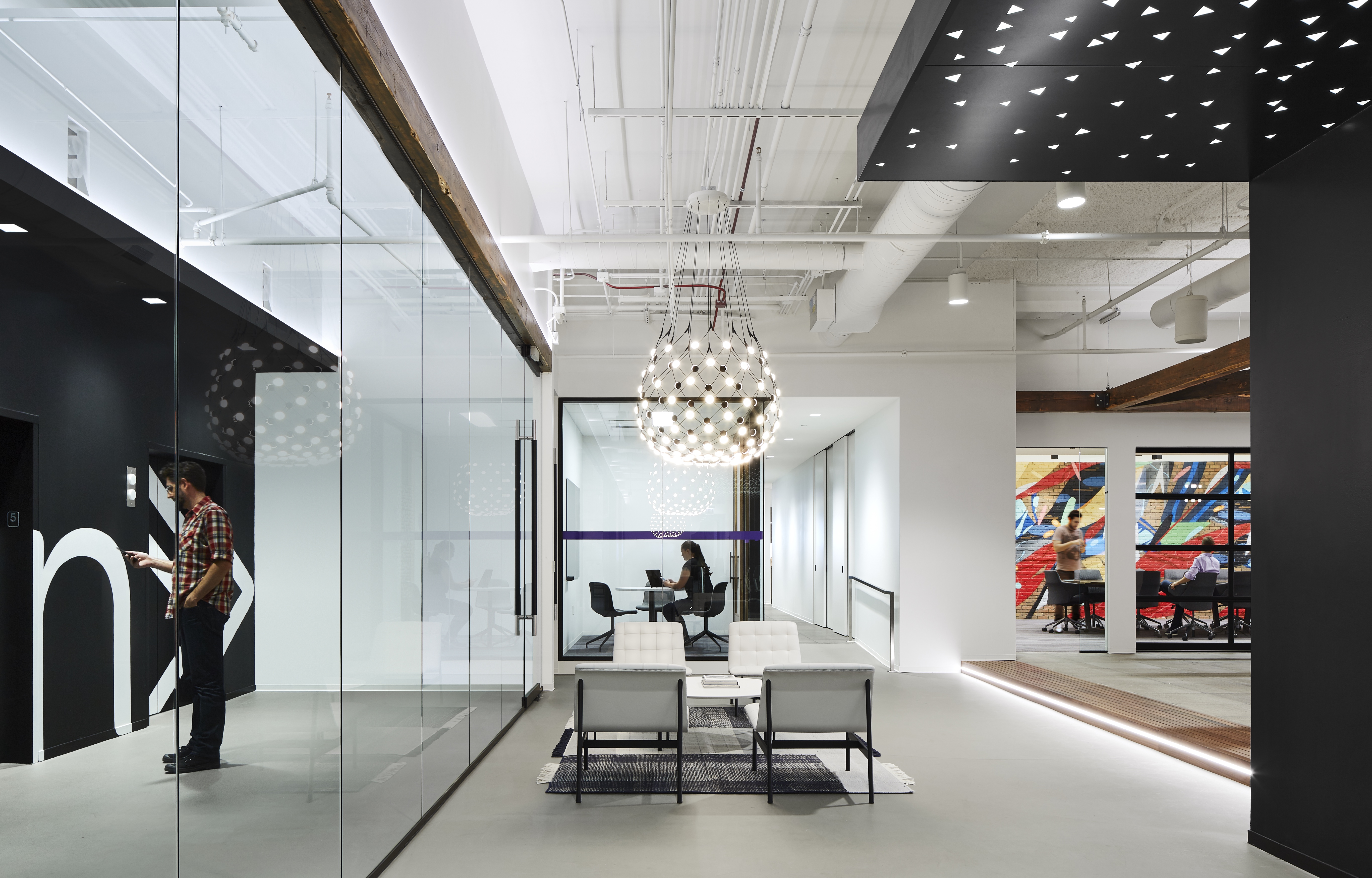
Photo courtesy of Eastlake Studio and Hall + Merrick Photographers
Active Campaign Headquarters

|
Sarah Barrett, Senior Architect Product Specialist, Vectorworks, Inc. brings more than a decade of experience as an architect and graphic designer, as well as professional expertise in the field of parametric modeling, to her role as a Senior Architect Product Specialist at Vectorworks, Inc. In addition to serving as an architectural expert and BIM specialist for the company, Sarah helps create best practices for Marionette, the integrated algorithmic modeling tool in Vectorworks software. She also leads webinars and workshops on a variety of industry topics and develops materials to help customers improve their workflows and design processes. Sarah has an M.Arch. from the University of Michigan and a B.A. in architectural studies from Brown University. |
Vectorworks, Inc. is an award-winning design and BIM software provider serving the architecture, landscape architecture and entertainment industries in 85 countries. Creating intuitive software since 1985, we’ve become the preeminent software built to manage the entire design process. Globally more than 685,000 users are creating, connecting and influencing the next generation of design with Vectorworks on Mac and Windows. Headquartered in Columbia, Maryland, with offices in Newbury and London, England and Vancouver, Canada, Vectorworks is a part of the Nemetschek Group. Learn how we empower designers to create experiences that transform the world at vectorworks.net or follow @Vectorworks.
Originally published in Security
Originally published in February 2022
LEARNING OBJECTIVES
- List the seven core principles of sustainable construction.
- Explain how high-quality materials lead to the health, safety, and welfare of occupants, a reduction of embodied carbon, and less waste.
- Describe how materials and BIM software provide a systems approach that leads to more efficient buildings.
- Recognize how high-quality materials and design can lead to cost savings and a reduced carbon footprint without sacrificing aesthetics or occupant comfort.