Polyiso CI: The Optimal Air and Water-Resistive Barrier Solution
How to meet the continuous insulation requirements in steel stud building envelope designs
Sponsored by Rmax | Presented by Matt Stevens, AIA, CSI, CCPR, CDT, REWO
Webinar On-Demand
This webinar will educate attendees about building longevity and sustainability, and how these concepts impact making buildings more energy-efficient. The course examines how foil-faced polyiso continuous insulation can function as multiple control layers, providing air and water-resistive barriers, in addition to providing a thermal control layer and meeting NFPA 285 fire code standards. Additionally, the course reviews building codes and standards regarding how to meet the continuous insulation requirements in steel stud building envelope designs, the benefits of using polyisocyanurate insulation in wall assemblies and how to specify it to meet these requirements for optimal energy performance and design efficiency.
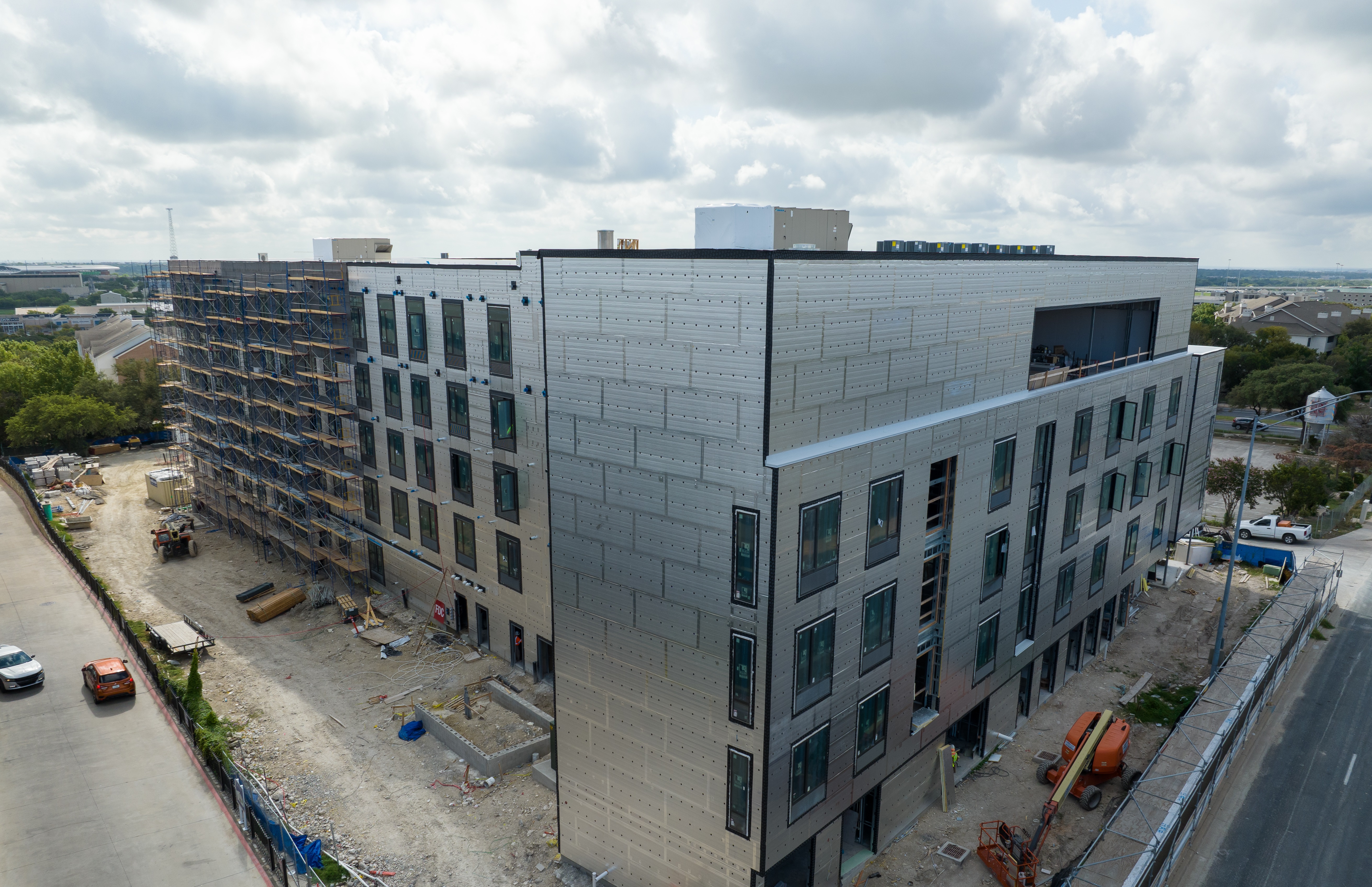
Photo courtesy of Rmax
 |
Matt Stevens, AIA, CSI, CCPR, CDT, REWO, received his Master’s degree in Architecture from Texas Tech University and has over 25 years in the building industry. His experience includes architectural design, construction, consulting, and training/development roles. As a Building Envelope & Architectural Consultant he works directly with Architects, Contractors, Consultants and Specifiers to select the optimal insulation for their projects while meeting applicable building codes. He is an active member that serves on the boards of several CSI and BEC chapters in Texas. Matt is also a committee member on several RAiNA committees. |
Rmax is a division of the Sika Corporation, a specialty chemicals company with a leading position in the development and production of systems and products for insulating, bonding, sealing, damping, reinforcing and protection in the building industry. Rmax products are all made in America, with production facilities in Dallas, TX, Greer, SC, and Fernley, NV.
Originally published in Building Enclosure
Originally published in October 2023
LEARNING OBJECTIVES
- Establish building sustainability and longevity concepts.
- Explain the science behind thermal, air and moisture control for steel stud construction.
- Interpret code requirements for building envelope design and performance.
- Discover how polyiso meets requirements and outperforms traditional methods for optimal control.