Sustainable Facade Solutions: Advantages of GFRC & Various Design Options
Sponsored by Rieder USA | Presented by JR Hughes and Frank Wagenbauer
Webinar On-Demand
This course presents the advantages and high performance of glassfibre reinforced concrete facades. Furthermore the flexibility of the material, various design options, sustainable facts and tailor-made building solutions will be discussed.
In addition to durability, low maintenance and total fire resistance, the products also impress when it comes to eco-friendly: It goes without saying that Rieder uses non-toxic products (free of crystalline silicon dioxide) and reduces its use of primary energy in production to a minimum. In line with the zero-waste policy, for example, all waste materials from production are reused in other areas and innovative technologies help reduce offcuts.
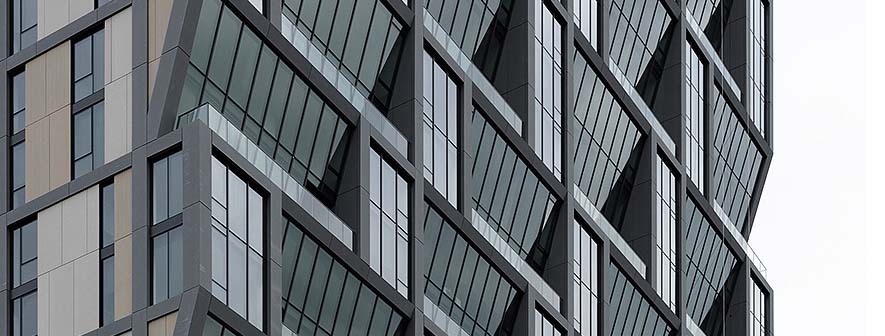
Photo courtesy of Rieder Group / Ditz Fejer

|
JR Hughes has been working for "Hughes Group" as an independent manufacturer's agent since 1998. He heads up the exterior facade's division for the Midwest Territory. In 2014 he co-founded "Centerline Architectural Supply", a complete fabrication and distribution company for Rainscreen Systems. |

|
Frank Wagenbauer is a qualified Austrian sales director, who restructured sales teams and improved overall sales in various European companies. He joined Rieder in 2017 and is responsible for project management and first class customer experiences all over the world. As a graduate of the Vienna University of Economics, Frank Wagenbauer lives with his family in Vienna. |
The Rieder Group specializes in the production of solution-oriented, environmentally friendly and economical facade solutions made of glassfibre reinforced concrete. The greatest driving force behind the continuous development is the striving to create more than just sustainable concrete elements in order to allow Rieder to make an active contribution to the energy revolution. The aim is to offer architects and builders an intelligent facade with countless possibilities in terms of aesthetics, flexibility of design, sustainability, and cost-effectiveness.
Originally published in Engineered Systems
Originally published in September 2021
LEARNING OBJECTIVES
- Discuss the advantages and performance benefits of GFRC and rainscreen systems and how the material contributes to the safety of buildings.
- Explain sustainable facts about GFRC facades and rainscreen systems and show how they contribute to the energy revolution and environmental protection.
- Identify the importance of proper design and point out numerous possibilities for individual facades.
- Compare different GFRC products and discuss innovations and holistic solutions for building envelopes.