This CE Center article is no longer eligible for receiving credits.
Wood-framed construction is the predominant method of building homes in the U.S. and has gained steady acceptance in light commercial and industrial buildings. The inherent strength of wood-framing, its cost effectiveness, and energy efficiency have been borne out in hundreds of years of use. Yet today’s high energy prices, changes in building codes, and growing awareness of building performance and environmental sustainability have led to the development of products and practices that strengthen wood framing as a preferred construction method. This article will focus on wood-framed roofs, their basic anatomy, and the best practices that lead to high performance.
Anatomy of a Wood-Framed Roof
Dimensional lumber or engineered wood is typically installed equal distances apart to create the support structure of a wood-framed roof assembly. The framing is sheathed with plywood or oriented-strand board (OSB), then layered with various underlayment materials before the finished roofing materials are attached. A key consideration is the type of roof construction, stick built or truss. Each has its advantages and disadvantages.
 |
|
Photo: Huber Engineered Woods
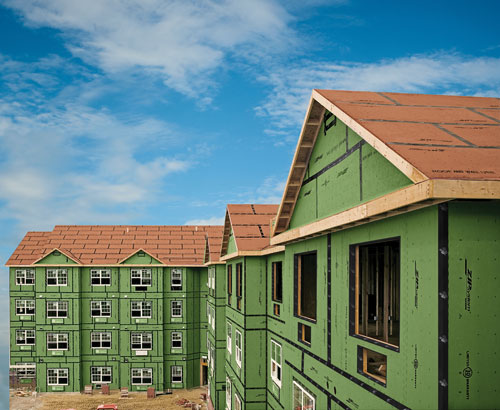
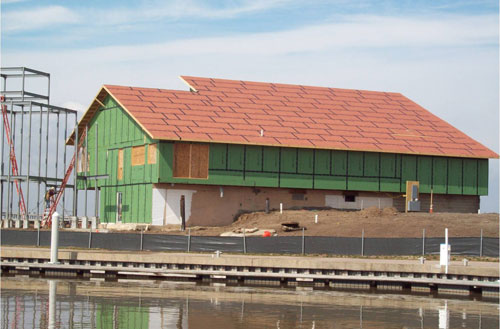
High-performance wood-framed roofs contribute to building durability, comfort, and energy in any climate.
|
Stick-Built vs. Truss Construction
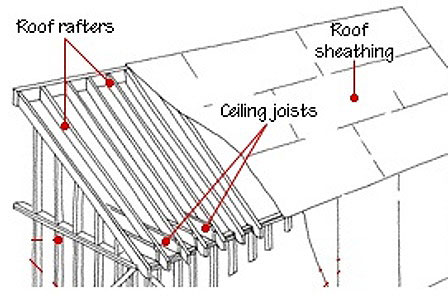
A stick-built roof consists of individual rafters, each cut and secured by the builder to form the shape and pitch of the roofline. All roof members are cut and installed on site. The rafters are sloped, attach to the top of the wall framing, and sit on an incline to create the roof grade. A roof truss is typically a triangular assembly made with 2 x 4 or other dimensional lumber used to support a roof. Multiple trusses are used to assemble the framework for a roof.
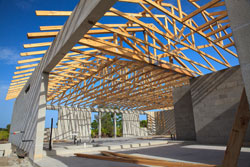
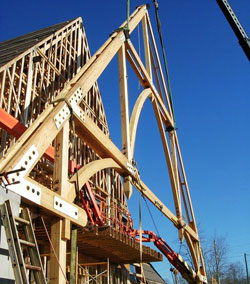
Despite the fact that with stick-built construction, all framing lumber can be purchased locally and delivered quickly, it is generally considered to be more costly than a roof truss system, with a higher variability in quality and a required skill level that increases with the complexity of the design. In many cases, roof trusses have replaced traditional stick framing, saving labor and offering complicated intersecting roof patterns without the need to measure and cut the rafters individually. Using advanced computer modeling, truss builders create designs incorporating required loadings and space-saving shapes with minimal waste. Trusses are manufactured off site to exact specifications, and can be mass produced efficiently, reducing costs, the size of the roofing crew, and delays from errors or changes that occur on stick-built roofs. Truss systems are custom made for a specific job and cannot be altered on site.
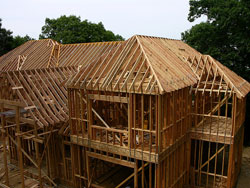
Flexibility is the area in which stick-built roofs may have an edge. Although trusses are customized for many types of structures, they may fall short when it comes to complicated roof designs that incorporate numerous dormers, hip, rolling hip, or turret roofs. Stick built also has an advantage in structures that must accommodate attics or cathedral ceilings, as roof trusses can't be modified without compromising their strength.
 |
|
Photo: Huber Engineered Woods
Truss construction is more efficient than stick-built
|
Roof Sheathing
Serving as a structural skin for the roof, roof sheathing supports the roof covering and transmits the load of this material as well as the live loads and loading due to snow, ice, and wind to the rafters or trusses or roof joists. Sheathing is secured to the supports and used as the base for fastening the roof coverings. In the early 20th century most roof sheathing was wood plank; today, it is typically either plywood or OSB.
Plywood. Constructed out of glued layers of orthogonally stacked wood veneers hot pressed together, plywood is a structural panel resistant to contraction and expansion. While lighter than OSB, when exposed to water plywood is susceptible to delaminating and weakening, which can cause the sheathing to lose strength and compromise the nailing. In a worst case scenario over a prolonged period of time, the roof covering will have to be removed, and the sheathing replaced.
OSB. In OSB, precisely cut wood strands are mixed with resin binders and oriented in a four-layer process in which two core layers are oriented perpendicular to two surface layers. The panel is then cured under intense heat and pressure to form an lasting bond between the strands. OSB sheathing is used extensively in residential and commercial construction as an alternative to PS-2 plywood. OSB panels are typically heavier and less absorbent than plywood, though OSB can be subject to edge swelling when exposed to moisture. However, high-performance OSB with greater water resistance is now commonplace. High-performance OSB are considered a high quality alternative to plywood and commodity OSB.
Underlayments
 |
|
Photo: Huber Engineered Woods
Underlayments should be easy to install
|
Initially used for temporary protection against the elements, underlayment is now an integral part of an overall roof system and adds a second layer of protection on top of the sheathing to keep out moisture. Underlayment is required by building codes to meet such standards in resisting fire, wind-driven rain, wind uplift, and punctures. Proper selection of underlayment depends on a variety of factors, including roof slope, fire code requirements, finished roofing material and climate considerations. An underlayment that performs well under a metal roof in the hot, humid South may not hold up in a cold Northeast climate under wooden shingles. There are typically four main categories of underlayments: felt, synthetics, self adhering ice and water barriers, and wood structural panels with a built-in moisture-resistive barrier.
Felt. Traditional black felt paper has been used in residential roof construction for half a century. Felt paper is either coated or saturated with asphalt to make it water-resistant, though not waterproof. Builder’s felt is available in 15 pound and 30 pound weights, which refers to the original weight of the papers, though modern production has made them actually lighter. Although considered a relatively easy to use and cost effective option, durability can be a problem. Felt paper can tear easily especially when wet. The 30 pound paper is thicker and stiffer, less prone to tearing, and provides more protection from water, but it is also much heavier and can be more difficult to work with. Architects should be aware that there are several ASTM standards that offer specifications for asphalt-saturated felt that many manufacturers fail to meet according to the International Association of Certified Home Inspectors —the papers are saturated to a lower level, predisposing these underlayments to absorb water and fail sooner.
Synthetic. A relative newcomer to the marketplace, synthetic underlayments offer greater resistance to water than felts. Made of synthetic polymers, the exact composition of which varies among manufacturers, synthetic underlayment is lightweight, UV resistant, safer to walk on, and resistant to insects, fungus and rot. More expensive than roofing felt, synthetics are also more resistant to tears and wrinkles, and lay down more evenly. Synthetics also come in light colors, enabling the roof to stay cooler, and are fabricated in larger sheets, which can save time during installation.
 |
|
Photo: Huber Engineered Woods
Synthetic underlayments offer greater resistance to water than felts.
|
Peel-n-Stick Materials. A square or rectangular roof underlayment with an adhesive backing that is peeled off and pressed into place, peel-n-stick materials are typically used in areas of the roof where ice dams or leaks are likely to occur. Considered a superior option for ice and water barriers, peel-n-stick underlayments can be a first layer on potentially problematic areas, or installed on the entire roof if it is low slope or flat. Water tends to pool up on these roofs, and the underlayment prevents it from seeping through. Thicker than other types of underlayment, peel-n-stick materials are noted for their durability to withstand the elements during roofing installation. One drawback is that the adhesive is temperature-sensitive until securely bonded to a dry surface with a temperature of more than 45 degrees Fahrenheit. Additionally, most of the materials are slippery, and unsafe to walk on directly after application.
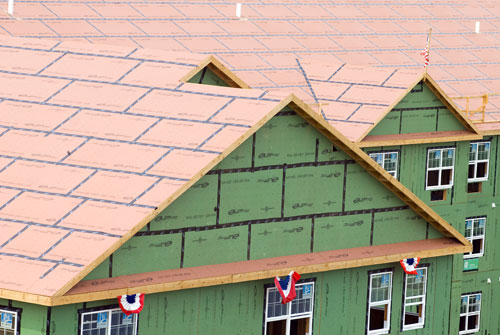
Combination Wood Structural Panel and Underlayment. Now available are wood structural panels with a built-in moisture-resistive barrier that eliminates the need for roofing underlayment. The easy to install roof panels do require that seams between panels be taped. This yields a structural roof system and code-recognized underlayment over which shingles and other approved roof coverings can be directly applied. These combination panels have a clear fastening guide on the panel surface for fast, accurate installation. Builders report a 40 percent reduction in installation time, which can potentially reduce the size of the roofing crew required, and renders the roof rough dried-in for up to 180 days. “With these panels, it was a quicker, easier process that got us watertight and kept our job moving.” says Trey Little, Project Manager at Nashville Builders Atkins and Associates.
 |
|
Photo: Huber Engineered Woods
Wood structural panels with built-in moisture resistive panels install easily.
|
Finished Roofing
The choice of finished roofing materials depends on cost, roof slope, expected service life, wind resistance, and local climate as well as aesthetics. Underlayment is a key factor in roof longevity, and underlayments that aren’t compatible with the roof-covering material can cause problems. The IBC stipulates the minimum type and application of underlayments to be used with each roof finishing material.
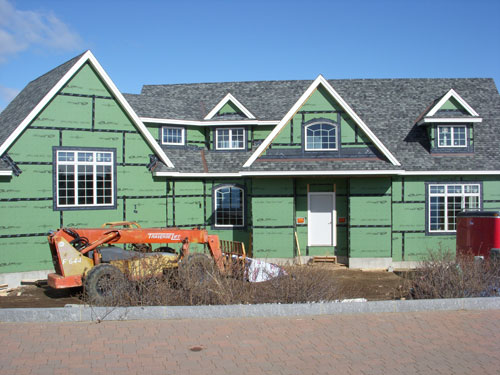
Asphalt Shingles. Affordable and durable, asphalt roofing shingles are the most widely used option in North American roofing applications. They tend to last longer in cool and dry conditions rather than warmer and more humid climates as extreme heat quickly damages and wears out the asphalt. Special ice-guard underlayments may be required in more northern climate zones. In extreme cold, shingles can develop hairline stress cracks. IBC requires two layers of felt underlayment in roofs with slopes between 17 and 33 percent, and one layer on steeper slopes; in roof areas prone to ice damming, the code requires at least two layers of underlayment cemented together or a self-adhering polymer modified bitumen sheet commonly referred to as ice-and-water membrane.
 |
|
Photo: Huber Engineered Woods
Asphalt roofing shingles are the most widely used option in North American roofing applications.
|
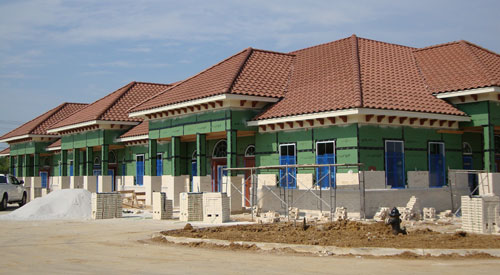
Clay, Slate, and Concrete Tiles. Slate is a natural material that doesn’t heat up, requires little maintenance, and can withstand major storms. Less expensive are clay tiles, which do well in southern climates and are suited to keeping out both heavy rains and radiant heat from penetrating into the building interior. Concrete tiles are also a popular choice in southern regions, and withstand colder conditions and high winds. The load carrying capacity of the roof should be checked to ensure it can handle the heavier weight of concrete tiles. For clay and concrete tiles, the IBC stipulates two layers of underlayment on roofs with slopes lower than 33 percent, and one on steeper roofs. For slate shingles, underlayment should comply with ASTM D 226, which covers 15 and 30-pound felt, or ASTM D 4869, for felt applications in steep-slope roofs.
 |
|
Photo: Huber Engineered Woods
Clay tiles are typically used in southern climates and are suited to keep out heavy rains and radiant heat.
|
Wood Shakes/Shingles. As long as wood shingles and shakes are from high quality wood like redwood, cedar and some treated pines they hold up well in most climates. Constant high heat however may cause cracking or splitting. A natural oil in cedar shingles helps repel water, making them ideal in climates with rain or humidity. The wood’s natural substance helps stop mold and mildew from rotting the shingle and causing leaks in the roof. For both wood shingles and shakes the code requires that underlayments comply with ASTM D 226, Type I or ASTM D 4869, and stipulates specific instructions in applying two layers of underlayment cemented together or self-adhering polymer-modified bitumen in ice dam prone areas. Wood shakes, in particular, need a heavy underlayment, and the code requires an interlayment to comply with ASTM D 226, Type 1. According to the Cedar Shake and Shingle Bureau, “The felt interlay acts as a baffle that prevents wind driven snow or other foreign material from entering the attic cavity during extreme weather conditions.”
Metal. According to the Metal Roofing Alliance, a metal roof can be expected to last at least two to three times longer than other roofs. While the initial cost may be significantly higher than an asphalt roof, the longevity and low maintenance requirements of a metal roof may result in a better per-year cost. Metal roofing has a 140-mph wind rating, and is able to withstand extreme weather such as high winds, heavy snow, hailstorms, and even wildfires. Ice and snow can easily slide off before building up and causing problems. However, people should be careful when walking under metal roofs with accumulated ice and snow. Metal panels do not provide much resistance to accumulations of ice and snow from sliding off on to the ground below. In hot climates, metal expands. The surfaces are fire-resistant and the metal is lightweight, and may also lower energy bills by reflecting the sun’s radiant heat away from the building. The IBC requires underlayment for metal roof shingles to comply with comply ASTM D 226, Type I or ASTM D 4869, and gives instructions for installing underlayment in ice-prone structures.
Considerations in Designing Roof Systems
Designing high-performance roofs are a function of a complex interplay of key factors and special considerations from roof pitch to environmental loads and construction techniques in hurricane-prone areas.
Roof Pitch. Roof pitch, or slope, is a main consideration in roof design and is determined by the vertical rise in inches for every horizontal twelve inch length, which is known as the run. A roof with x rise/12 run slope means that for every 12 inches horizontally, it rises x inches. According to Waterproof Magazine, pitches for common roof types include:
- Flat Roof: Less than 2/12
- Low Slope: 2/12-4/12
- Conventional Slope Roof: 4/12-9/12
- Steep Slope: 9/12 and higher
 |
|
Photo: Huber Engineered Woods
Pitched roofs require little maintenance and have long service lives.
|
While the slope has an effect on the roof style and materials used as well as the space in the building’s interior, the primary purpose of sloping a roof is to shed water. Many roofing contractors maintain that pitched roofs are generally more expensive than their lower sloped counterparts, but they also last longer, require much less maintenance, and withstand water better. Felt or synthetic underlayments are usually adequate—options that narrow on flatter roofs. Typically used for commercial applications, flat roofs are cheaper to build, but require constant maintenance, and are prone to roof leaks,contractors say. With a heavy rain or snowfall there is a risk of ponding from the added weight placed on a flat roof; architects must adjust their designs accordingly. Ethylene propylene diene monomer (EPDM) membranes are now used in many low- or flat-roof applications to provide protection from weathering. In many situations, designers choose to use stiff, water resistant subflooring panels beneath the EPDM. High performing osb and plywood provide greater resistance to ponding loads. Resistance to ponding loads is a major consideration in flat roof design.
Environmental Loads. Beside the usual dead and live load considerations, roof designers must address environmental loads. Snow loads on roofs vary according to a variety of complex factors including the roof itself, climate, snow, ice and exposure to wind. Flat-roofed buildings present the greatest danger of collapse due to snow load as they do not allow the snow to slide off, and do not drain well during snowmelt. The American Society of Civil Engineers (ASCE) 7-05 provides guidance for determining snow loads based on specific criteria. Underlayments take on an added importance in these situations. Felt and many synthetics may not be able to offer the moisture protection necessary as roofs build up with ice dams and heavy dense snow.
Another concern with snow is exposure of the wood framing in an unfinished house. Dusty Bitton, owner of Pinetop Custom Homes, is located in McCall, Idaho, which has the highest average snowfall in Idaho and only a 5-month building season. “At times we are unable to complete our builds before the heavy snowfall hits and must depend on moisture-resistant products to prevent any issues until we can continue the building process the next spring,” stated Bitton. “I began building a home last November using the wood structural panels with built-in moisture resistance that were exposed through May. Although the homeowner was worried, the strength and moisture barriers of the products prevented any issues, and we were able to resume building without any delay due to rework.”
Wind damage, too, is a common cause of roofing failures. The design load for wind uplift of a roof is a complex formula that is determined by such factors as roof structure, slope, wind speed, building height, roof areas, building terrain, building type and building openings. Calculators exist to determine the design wind loads for the roof area's field, perimeter and corner zones, and minimum recommended design wind-resistance loads based on the specific building and climate parameters. Once calculated, the force can be used to influence the materials selected for the roof so it cannot be torn from the building in strong winds. If you have any questions about calculating wind pressures, consult an engineer or your local building official.
The Federal Emergency Management Agency (FEMA) has produced a series of 37 fact sheets to provide technical guidance and recommendations aimed at improving the performance of buildings subject to flood and wind forces in coastal environments. Known as FEMA 499, although considered good practice in coastal regions, these recommendations are not requirements unless the local code references the document. One FEMA recommendation suggests taping sheathing panel seams to provide better protection against water infiltration if the roof covering ever blows off. If a storm ever blows the finished roof covering off, any loose laid underlayment, like felt, will blow away with it. This exposes the panel seams and creates a direct path for water intrusion into the house. This can lead to a tremendous amount of water damage inside the home. Taping panel seams as recommended by FEMA protects the home from this type of damage. In the experience of North Carolina custom home builder, John Paul Corey of East Carolina Construction, the taped combination panels held up very well on his projects after Hurricane Irene battered the North Carolina coast in August 2011, producing winds in excess of 80 miles per hour. “Other projects in the area had either tar paper on the roof, or building wrap on the exterior, and 60 to 70 percent of their materials blew off during the storm that then had to be replaced,” notes Corey.
| Wood and Construction Types |
|
The International Building Code (IBC), which has been adopted by most states, gives the design and construction community guidelines on where wood frame buildings are acceptable. Developed in 2000, the IBC has increased opportunities for wood-framed construction, which is allowed not only in residential but light commercial construction and other applications.
The IBC identifies five classifications of construction based on types of materials and required fire resistance ratings. Construction types are further divided into A and B, detailing different fire-resistance characteristics, with A representing the more stringent requirements. Types I and II relate primarily to non-combustible materials such as steel and concrete. Multi-story wood construction generally falls into Types III, IV, and V, which allow combustible materials to varying degrees.
• Type III (Ordinary) Type III buildings have non-combustible exterior walls and often have a wood roof. This type allows smaller wood members to be used for interior walls, floors, and roofs including wood studs, joists, trusses, and I-joists. Interior building elements are of any material permitted by the IBC. Type IIIA requires 1-hour fire-resistance throughout except that exteriorbearing walls require no less than 2-hour fire-resistive construction. Type IIIB has no fire resistance requirements, except for exterior bearing walls, which has the same requirement as Type IIIA
• Type IV (Heavy Timber). Also known as Heavy Timber or HT, Type IV construction utilizes large dimensional lumber for structural members and interior elements. This classification allows the exterior walls to be noncombustible materials and the interior building elements are of solid or laminated wood without concealed spaces. Complying fire retardant-treated wood framing is allowed in exterior wall assemblies with a two-hour rating or less. Interior wood columns, beams, floors, and roofs are required to satisfy certain minimum dimensions and no concealed spaces are permitted.
• Type V (Light frame) Type V construction is found in many modern buildings. The walls and roofs are made of combustible materials, most commonly wood. Type V is construction in which the structural elements, exterior walls and interior walls are of any materials permitted by the IBC. The walls, floors, and roofs may be of any dimension lumber and the exterior walls may be of combustible materials. |
Radiant Barriers in a Roof System
A cost-effective green measure for wood-framed roofs that’s being increasingly used is the radiant barrier. Radiant barriers are installed in homes—usually in attics—primarily to reduce summer heat gain, which helps lower cooling costs. The barriers consist of a highly reflective material that reflects, or more specifically re-emits, radiant heating rather than absorbing it. Radiant barriers are available in several forms, including reflective foil, reflective metal roof shingles, reflective laminated roof sheathing, and even reflective chips. The reflective material is usually aluminum and is applied to one or both sides of a number of substrate materials, or can be combined with various types of insulation materials. Architects should note one consideration that is frequently misunderstood: To perform properly, radiant barriers need to face an open space. There must be an air gap between the radiant barrier and the next layer of material. Without an open space between objects, there is no radiant heat, only conductive heat.
Radiant barriers are generally more effective in hot climates than in cool climates, especially when cooling air ducts are located in the attic. Studies have shown that radiant barriers can lower cooling costs by as much as 10 percent in a warm, sunny climate, with the potential to reduce the air conditioning system demand. In cool climates it is more cost effective to install more than the minimum recommended level of insulation rather than a radiant barrier.
According to the U.S. Department of Energy, a radiant barrier's performance is determined by two factors:
Emissivity (or emittance). The ratio of the radiant energy (heat) leaving (being emitted by) a surface to that of a black body at the same temperature and with the same area. It's expressed as a number between 0 and 1. The higher the number, the greater the emitted radiation.
Reflectivity (or reflectance). A measure of how much radiant heat is reflected by a material. It's also expressed as a number between 0 and 1 (sometimes, it is given as a percentage between 0 and 100%). The higher the number, the greater the reflectivity.
The angle the incident radiation strikes the surface—a right angle (perpendicular) usually works best.
All radiant barriers must have a low emissivity (0.1 or less) and high reflectivity (0.9 or more). The greater the temperature differences between the sides of the radiant barrier material, the greater the benefits a radiant barrier can offer.
High Performance in Roofing
High-performance roofing is dependent on a number of factors. But with today’s current practices and products, architects are well equipped to design safe, durable, energy-efficient wood-framed roofs that extend the life of both residential and non-residential buildings.
 |
Huber Engineered Woods LLC, a wholly owned subsidiary of J.M. Huber Corporation, combines advanced resin and wood products technologies with state-of-the-art manufacturing capabilities to develop top quality products like AdvanTech® subflooring and ZIP System® sheathing. Find out more about these innovative products by visiting Huber’s online architect library www.huberarchitectlibrary.com. |