Back to School: Demystifying the Use of Fire-Retardant-Treated Wood in Educational Facilities
Sponsored by Hoover Treated Wood Products | Presented by Mike Eckhoff
Webinar On-Demand
Pressure-impregnated, fire-retardant-treated wood (FRTW) can be used to improve the health, safety, and welfare of educational facilities. Codes limit combustible materials’ applications based on fire and life safety. However, the codes recognize FRTW for many applications where a noncombustible material is mandated. This presentation will define FRTW, describe the FRTW manufacturing process, discuss FRTW’s technical characteristics and fire performance advantages, and identify interior and exterior applications for the various occupancies of educational facilities, in all five types of construction, spanning Pre-K through post-secondary facility construction. Participants will learn how to construct strong, generic specifications to make the most of FRTW.
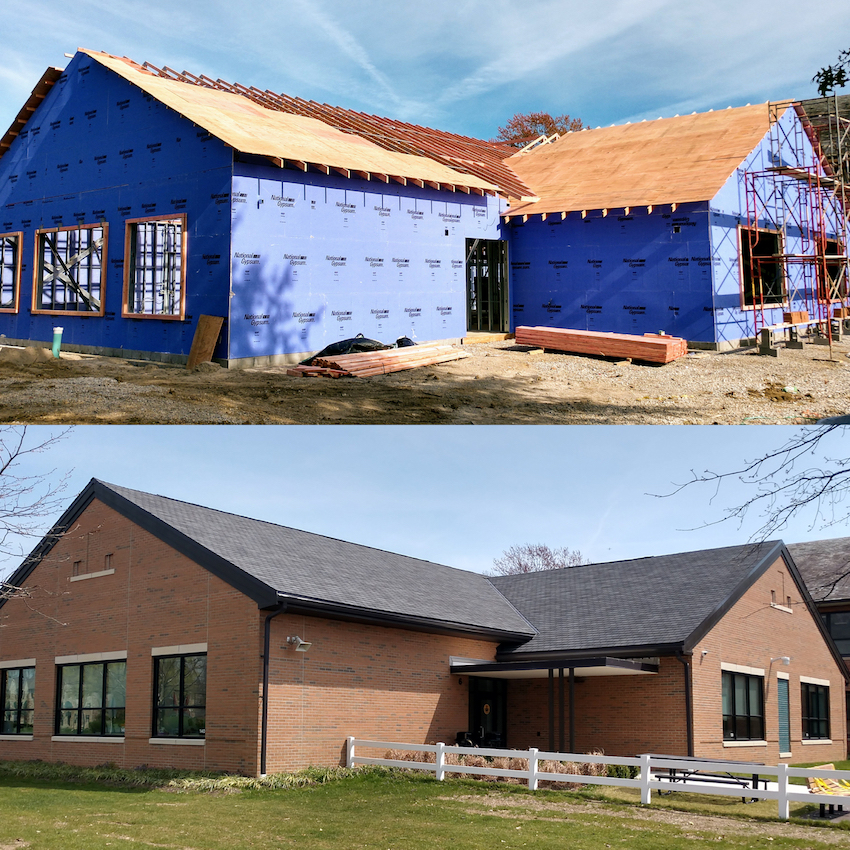
Photo courtesy of Hoover Treated Wood Products, Inc.

|
Dr. Mike Eckhoff is a public policy expert with over 15 years of experience in the forest products industry. He has worked for both the Colorado State Forest Service and the USDA Forest Service where he shaped policy for the natural environment in response to the mountain pine beetle epidemic. Since 2017, he has been a Codes & Education Specialist for Hoover Treated Wood Products, providing technical expertise on fire-retardant-treated wood (FRTW) to architects (AIA-approved seminars; HSW credit), building/fire officials (ICC Preferred Education Provider), engineers, and designers. He has given hundreds of invited presentations, lectures, and interviews on sustainable wood products, including FRTW, to firms, municipalities, agencies, universities, and media throughout the United States. He completed his Ph.D. in Forest Science at Colorado State University in Fort Collins, CO. |
Hoover Treated Wood Products, Inc, in business since 1955, supplies a comprehensive portfolio of pressure-impregnated kiln-dried lumber and plywood products for fire retardant and preservative applications. Hoover has multiple company-owned treating facilities, conveniently located to service a 100 plus member stocking distributor network which thoroughly covers the USA and Canada. The rigorous quality control procedures employed by Hoover are constantly reviewed and inspected by Underwriters Laboratories and Timber Products Inspection’s follow-up services.
Originally published in National Driller
Originally published in April 2021
LEARNING OBJECTIVES
- Define FRTW and describe its manufacturing process.
- Recognize legitimate FRTW and the International Building Code (IBC) requirements for testing, labeling, and utilizing interior and exterior FRTW.
- Identify IBC applications for interior and exterior FRTW in Assembly, Business, Education, and Residential occupancies, in all five types of construction, spanning Pre-, K-12, and higher education.
- Write strong, generic specifications for making the most of FRTW’s advantages while improving the health, safety, and welfare of educational facilities.