This CE Center article is no longer eligible for receiving credits.
This course is part of the Glass in Architecture Academy
Natural daylight has always been important and significant in buildings. In some applications, it has been architecturally routine and proportioned, as with windows of many historic homes. In others, it has been dramatic and remarkable, such as the oculus of the Pantheon. Current building designers do well to learn from these historical examples but can also benefit from new tools and options. Specifically, national standards have been developed to ascertain beneficial levels of daylight and to establish associated design targets within buildings. At the same time, sophisticated computerized design and measurement programs can accurately predict the manner in which natural sunlight is received or reflected by various building elements in association with the time of day and the season. Glass and glazing have also become more sophisticated with state-of-the art products, which can be selected to maximize daylight, minimize heat transfer, and limit glare. Architects and other design professionals who are up-to-date on all of these technologies can help to create buildings that are optimized for natural daylighting while keeping in balance with other design requirements.
The Significance of Daylighting
The term “daylighting” refers to the illumination of buildings by natural sunlight. In an era in which we have become accustomed to electric lighting, it is easy to forget that for most of the history of buildings, natural daylighting was a critical influence on architectural form. The central elements involved in daylighting strategies have been and continue to be windows, skylights, other openings, and reflective surfaces.
People have always been naturally attracted to light. Beyond its innate lure, numerous independent scientific studies have proven that daylighting is strongly correlated with substantial improvements in human health and performance. These benefits are fundamentally attributed to the visually invigorating and productive environments provided by natural light. Among the findings of various studies, natural daylighting is correlated with:
- Reinforcing natural human
circadian rhythms.
- Fighting depression and lethargy.
- Improving patient healing times
in hospitals.
- Improving students’ performance in schools.
- Increasing workplace productivity.
Daylighting can also benefit building operations. From an energy use standpoint, natural daylighting may be able to replace electric lighting use within buildings for 70-80 percent of daylight hours, correlating with lower energy costs and reduced pollution from fossil fuel-based power plants. For buildings with air-conditioning, reduced electrical lighting creates less internal heat, further lowering energy costs. Daylight can have other operational benefits too. Walmart, for example, has installed skylights in its large stores because daylighting has been shown to increase their retail sales.

Photo courtesy of Guardian; Photo credit: Greg Benson Photography
The Krishna Singh Nanotechnology Center located at the University of Pennsylvania and designed by Weiss/Manfredi uses sustainability principles and the latest in high-performance glass to provide abundant natural daylighting in the building.
The increasing attention paid to architectural daylighting over the past few decades has been driven by this body of benefits. The human benefits speak to the architect’s role in assuring health and welfare for building occupants. The building impacts address the needs of the building owner and controlling operational costs. All of them are incorporated into the intent and rationale behind LEED credits for indoor environmental quality and optimizing energy performance. With all of this in mind, let’s look deeper into the process of successfully implementing daylighting strategies.

Photo courtesy of Guardian; Photo credit: Matt Todd Photography
The use of high VLT glass for daylighting allows Valley View Middle School occupants to reap the numerous benefits associated with exposure to natural light.
Glass and Glazing
Windows, curtain wall systems, skylights, and other daylighting openings usually incorporate glass to allow the passage of light while providing protection against the elements. Of course, many different types of glass are available, offering a broad range of characteristics. The glass can be clear or tinted, of various thicknesses, and be produced with a wide range of coatings in order to manage energy performance and facilitate many different aesthetic objectives. A quick summary of some of the fundamental terms and common choices in glass options that are suitable for daylighting follows:
- Float Glass:The term “float” refers to the manufacturing process in which molten glass is floated atop a pool of liquid tin in order to establish its surface flatness. Float glass is available as clear, low-iron (in which the trace green tint of clear glass is reduced) or a range of tint colors including a fairly new series of lighter colors (light gray and light blue). Different thicknesses of float glass are available associated with the structural capacity and deflection-control requirements of a broad range of glazing applications.
- Annealed Glass:All float glass is initially produced as annealed, meaning that the glass is cooled to room temperature with a minimal final level of residual stress. Annealed glass can be readily cut during the fabrication process.
- Heat-Strengthened Glass: Heat-strengthened glass is produced by a heat-treatment process within which the temperature of the glass is gradually elevated to around 1,300 degrees Fahrenheit, and then the surfaces of the glass are rapidly cooled in order to develop permanent compressive stresses at the glass surfaces. When heat-treated glass is necessary to resist the thermal loads on a project (and tempered glass is not otherwise necessary), heat-strengthened glass is often the optimal solution. Heat-strengthened glass is approximately twice as strong as annealed glass.
- Tempered Glass: Tempered glass is heat-treated in the same manner as heat-strengthened glass, except that the quenching process is intensified in order to develop higher residual compressive stresses. Tempered glass will break into small, dice-like pieces with relatively dull edges, and tempered glass qualifies as safety glazing. While tempered glass is approximately four times as strong as annealed glass, heat-strengthened glass is less likely to escape from its frame in the event of breakage.
- Laminated Glass:Laminated glass consists of two or more plies of glass bonded with an interlayer material, most commonly polyvinyl butyral (PVB). Because the interlayer serves to retain shards in the event of breakage of the glass, laminated glass can constitute safety glazing. It can also provide significant acoustic performance and forced-entry resistance benefits.
- Insulated Glass Units (IGU):Insulating glass units, consisting of two or more panes of glass separated by a sealed gaseous space, are widely necessary in order to meet energy codes. A low-E coating is commonly implemented on the #2 surface of the unit (the inner surface of the outermost lite of glass) in order to support energy performance.
The optimal glazing selection will depend upon matching the particular project requirements for performance and aesthetics with the combination of features provided by each glazing type. That includes understanding any effects of different glass types on the final color and appearance of the glass. It also includes determining the need for a clear line of sight, as in vision glass, or if diffuse light and privacy are needed, as in translucent glass. If a project design team prefers an all-glass exterior aesthetic, spandrel (fully opacified) glazing may be strategically placed on the building skin in order to conceal the structural and mechanical features of the building. There are numerous other options available to design teams that affect aesthetics and performance, including a range of tint colors, a palette of coatings, acid-etched glass, patterned glass, frit of many colors and in many configurations, colored interlayers, and digitally printed glass and interlayers.
For daylighting, glazing should be selected recognizing that a strategic level of visible light transmittance (VLT) is required while still needing to control solar heat gain. (See sidebar for performance term definitions.) IGUs are typically required by energy codes to improve U-Factor or R-value performance of exterior walls. All of these will impact the quality and color of the natural daylight, so they should be reviewed and selected with care in each daylighting situation.

Photo courtesy of Guardian; Photo credit: Ara Howrani
A mix of vision glass and dark spandrel glass is used on the Guardian Science & Technology Center addition and takes advantage of the multiple visual and performance attributes of available glass products.
Trends in Glass and Glazing
Architects have been using glass in innovative ways for decades, drawing upon an expansive array of glazing performance and design options. Computerized energy modeling and daylight simulations have facilitated the refinement of building designs for appearance, performance, and benefit to occupants. The outcomes have been increasingly advanced and efficient solutions.
In recent years, glass manufacturers have been asked to respond to the needs of owners and architects to provide new and higher-performing glass and glazing products to suit a range of design trends. For example, there has been a growing interest in large-sized IGUs to facilitate unobstructed vision. That can be done, but architects and owners are of course still seeking good glass flatness and optical clarity, so it is important that manufacturers have the capability to achieve all of those criteria. Larger glass sizes also mean that thickened glass may be necessary in order to maintain appropriate deflection control. As a result, the fabrication, handling, and installation of these glazing units may necessitate special provisions to accommodate the increased sizes and weights of the units. Special requirements should be carefully coordinated early in the design process.
There has also been a sustained trend in northern climates to control heat loss better in glazing. In commercial buildings, argon fill and triple glazing are among the features that are being increasingly specified to support intensified insulating performance. In addition, interior surface coatings are being used to reflect heat back inside a building, lowering the u-factor and improving the performance of IGUs.
For climates where cooling is the dominant control mode, intensified screening of solar energy is often a key objective while still achieving good daylight. The light-to-solar gain ratio (LSG) is a useful metric in this case and is calculated as the VLT divided by the SHGC. High LSG values mean strong levels of visible light transmission occur simultaneously with significant solar heat shielding. In some cases, low-E coatings may incorporate double or triple layers of silver in order to attain powerful LSG ratios.
Finally, the use of bent glass has been increasing to help to deliver architectural objectives. Testing has demonstrated that, in fact, there is little or no effect on VLT with bent glass, although it can certainly create some pleasant and varied lighting effects depending on the conditions. Robust energy performance remains available through the use of low-E coatings that have been proven to fully accommodate the glass-bending process. As with architecture involving large units, coordination on the prospective use of bent glazing units should begin early in the design process.
LEED and Daylighting
The LEED rating system of the U.S. Green Building Council (USGBC) has always recognized the significance of daylighting in buildings, and has listed it as a credit option under the general category of Indoor Environmental Quality.
Daylighting has also been linked to the support of other prerequisites and credits such as Minimum and Optimized Energy Performance, Quality Views, and Interior Lighting. LEED v4 contains significant updates and changes to the process of demonstrating how daylight is effectively used in buildings. The first distinction is that different point levels are available based on the particular building type or LEED program being used (i.e. LEED for Healthcare, Schools, etc.). The second distinction is that the previous prescriptive compliance-path option has been eliminated, meaning that computer simulation, calculation, or measured data are required in order to illustrate the performance benefits of daylight in a building.
LEED v4 still encourages building designers to maximize daylighting by setting daylighting goals, considering site and massing opportunities, and configuring the building for the best exposure to natural daylight. Credit is based on the availability of daylight to the regularly occupied spaces, which are distinguishable from other spaces such as utility rooms, rest rooms, or storage locations. Glare-control devices (manually operated or automatic with a manual override) are required for all regularly occupied spaces.
In order to demonstrate and document how daylight performs in a building seeking LEED certification, there are three compliance paths available to design teams. One of these three available options must be selected and used as follows:
Computerized Simulation
This first compliance-path option is new for LEED v4 and allows the use of an Illumination Engineering Society (IES) based computerized daylight simulation utilizing hourly and annual daylight data.
The simulation program must be able to generate spatial daylight autonomy (sDA) ratios. The sDA is a metric describing annual sufficiency of ambient daylight levels in interior environments. It is defined as the percentage of an analysis area that meets a minimum daylight illuminance level for a specified fraction of the operating hours per year. Essentially, that means the computer program must determine the simulated daylight levels across a standardized grid series of points located no further apart than 2 square feet and at a work plane height of 30 inches. The light must be simulated in the computer model at different times of the day and of the year. It is measured in lux value, with a minimum threshold of 300 lux of daylight necessary in order to be considered effective. The light level must also be present for at least 50 percent of the hours between 8 a.m. and 6 p.m. local time at each measurement point. This threshold level is abbreviated sDA300/50% and is the first basis for earning daylighting credit under this compliance path.
The more measurement locations that meet or pass this threshold, the more credit points that can be earned. For most buildings, if the simulation shows that 55-74 percent of the locations in regularly occupied spaces meet or exceed the sDA300/50% threshold, then two points can be achieved. If 75 percent or more is demonstrated, then three points can be earned. For healthcare projects, the basis of the simulation is focused upon perimeter areas of the building, as defined within LEED for Healthcare. In these cases, a total of 75 percent of the measurement locations meeting the sDA300/50% threshold can earn one point, while a total of 90 percent of the measurement locations meeting the sDA300/50% threshold can earn two points.
In addition to the sDA portion of the simulation, a second criteria must be met—namely that of determining whether the daylight is causing unwanted glare. To make that determination, annual sunlight exposure (ASE) is measured across the same grid locations as the sDA simulation. Under the LEED guidelines, a maximum of 1,000 lux of daylight is permitted without the use of any operable shades, blinds, etc. The time portion of this measurement is not a percentage, but a stated number of hours over the course of the year, which LEED defines as no more than 250 hours annually. Thus the value ASE1,000/250 is the upper limit for demonstrating usable daylight in the occupied spaces of the building. In order to earn the daylighting credit points, the ASE threshold must not be breeched for more than 10 percent of the area illuminated by daylighting.
The process of performing this type of computerized simulation may require specialized software as well as the assistance of a daylighting professional. There are commonly five steps involved. First, the needed simulation inputs must be identified based on the building design, including its location, geometry, permanent light obstructions, glass and glazing specifications, surface reflectances of interior finishes, etc. With this information in place and the grid of measurement locations identified, the next step is to run the sDA simulation for the regularly occupied spaces. The processes detailed in IES publications and standards must be followed appropriately. Once the results are obtained, the third step is to evaluate the sDA values for compliance against the credit requirements. If the percentage does not meet the targets necessary to earn credits, then some aspects of the building design will need to be revised to improve performance. The simulation and evaluation steps are then repeated as needed until sDA targets for minimum daylight levels are attained. Determination of ASE is the fourth step and may require minor adjustments to the sDA simulation model, again according to IES guidelines. When ready, the ASE simulation can be performed and the outputs generated. The final step is to evaluate that the ASE upper limit is not breeched for any more than 10 percent of the areas being daylit. Otherwise, further iterations of design revisions, simulation, and evaluation will be necessary.
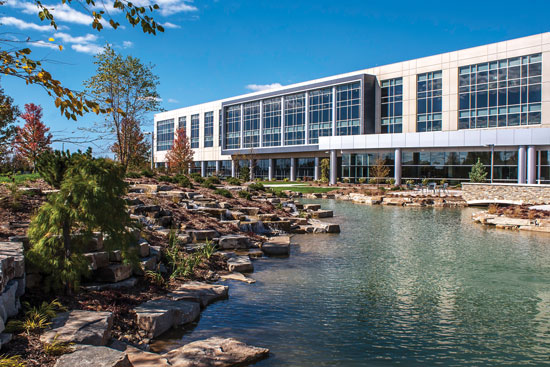
Photo courtesy of Guardian; Photo credit: Vos Glass
The Gordon Food Service Headquarters building uses high-performance glass to achieve daylight, energy efficiency, and other LEED benefits.
Illuminance Calculations
The second compliance-path option is also based on a computer simulation, but requires calculations only for specific dates and times. It is similar to previous versions of LEED, but LEED v4 now requires that site-specific daylight illuminance values form the basis of the simulation along with local climate and weather files. Under this compliance path, a space is considered daylit if the simulation shows an illuminance level between 300 and 3,000 lux on a clear-sky day.
The weather data should be selected from the clearest sky conditions within 15 days of September 21 and within 15 days of March 21 (the two equinox dates). The average hourly values of the two dates shall be used for two simulations—one run for 9 a.m. and the other for 3 p.m. The results must present the percentage of regularly occupied floor area, which meets the daylight criteria within the range of lux values stated above. For all buildings, if 75 percent of the floor area meets this calculated level, then one credit point is earned. If 90 percent of the floor area is demonstrated as daylit, then two credit points are earned. Note that this compliance path does not provide an opportunity to earn three points as in the other two paths.
The process of using this compliance path requires three basic steps. First, as with the sDA simulation, all of the simulation inputs related to the building design, materials, and surfaces needs to be collected and input along with the local climate and weather files. Once ready, then the next step is perform the two point-in-time simulations for the 9 a.m. equinox conditions and the 3 p.m. equinox conditions. When the results are determined, then the final step is to evaluate the floor areas where illuminance compliance is demonstrated and where it may not be. If the total percentage of qualified daylit floor area is less than the target for LEED credit, then further iterations of the design will be needed and the simulation/evaluation steps repeated until the goal is achieved.
Light Measurements
The third compliance-path option is intended for completed new buildings or existing buildings which are being renovated. Rather than a computer simulation, this path draws upon measurements from light meters within the building. The daylighting requirements are similar to those of the second compliance option, necessitating illuminance levels of 300 to 3,000 lux taken on a given day between 9 a.m. and 3 p.m. Yet instead of requiring equinox measurements, this path permits measurements from any two days of regular operation during the year, as long as the days are five–six months apart. In order to earn two credit points, at least 75 percent of the regularly occupied floor areas must meet the daylighting criteria (only one point awarded in healthcare). If 90 percent of the floor area meets the criteria, then three points can be earned (two points in healthcare).
The process for using this compliance-path option involves three basic steps. First, preparation is needed involving the establishment of a grid of measurement locations for all regularly occupied spaces based on IES standard guidelines. This grid is typically marked on a floor plan. The spaces must be accessible, and all furnishings must be in place. Electrical lighting must be off during the measurements. Next, the actual measurements are recorded based on stated IES procedures. Note that measurements must be taken on days of regular operation, not during breaks or normal shutdown times. All measurements should be taken at the standard 30-inch height above the floor. In the event that measurement can’t be completed in one day, the following day may be used as long as it is during the same 9 a.m. to 3 p.m. time frame. Finally, the results are evaluated. If the building falls short of the target, then modifications will be necessary in advance of further measurement. After the first compliant measurement set, a second set of measurements will be needed five to six months later. The two sets of data are then averaged to demonstrate compliance.

Photo courtesy of Guardian; Photo credit: Pete Eckert
The St. Charles Cancer Center is an example of a building that uses a balanced approach to create a naturally daylit, functional, and well-designed facility.
Optimizing Daylighting Design
With an understanding of all of the aspects of daylighting discussed so far, the natural question is how to put it all together for the best results. While each member of the design team will bring their own background, resources, and perspective to the design process, the following guidelines can help to optimize the outcome:
- Design in concert with the rest of the building. Daylighting does not have to be treated as a distinct entity or exercise, but should be approached as an integrated aspect of the total building design. In association with the abundance of interrelated variables, the process will likely be more iterative than linear. The goal is to find the optimal configuration and balance with respect to aesthetics, energy performance, illuminance, and glare mitigation. From a design standpoint, the size, shape, and location of the glazing must be coordinated with the overall exterior and interior designs.
- Design for the climate and site. While repetitive daylighting solutions across projects may initially seem feasible, differing project locations may ultimately require dramatically different design approaches. Disparities between northern and southern climates are clear, yet locations much closer to one another can be subject to starkly different conditions of weather and sunlight exposure. Specifically site-specific influences from surrounding buildings, trees, water, or other features can have dramatic impacts.
- Design for different building sides. Many buildings are being designed with sensitivity to the compass orientation of each facade. This approach recognizes that, in the United States, southern facades often receive greater amounts of sunlight than northern facades, while eastern and western facades may have similar exposure but at different times of the day. Hence the most appropriate design strategies may be for different facade treatments or glazing selections to be implemented on different sides of the building.
- Design with glass. By understanding the different attributes of different glass and glazing products, architects have a broad palette of choices available in terms of color, transparency, and many different types of performance. Glass can help a building to achieve both stunning aesthetics and robust energy performance.
- Design using available resources. Manufacturers can provide very detailed information to fine-tune the glass glazing selection within the overall building design process. Powerful online tools are available to generate robust center-of-glass performance metrics, visualize glazing appearance under a range of real-world conditions, and explore the overall building energy performance. Some even help to facilitate BIM modeling.

Photo courtesy of Guardian
Online tools from glass manufacturers allow architects to review, select, and envision different choices in available glazing products.
Conclusion
Daylighting is a powerful attribute of building design. Understanding and implementing the available resources, principles, and standards in the design process can yield significant results. Daylighting has been shown to help improve indoor environmental quality and energy performance, thus contributing directly to LEED certification. Overall, daylighting helps architects create buildings that are better designed, more appealing to users, and more cost effective to operate.

|
Guardian Industries Corp.
Guardian Industries Corp. is a diversified global manufacturing company with leading positions in float glass and fabricated glass products. The Guardian SunGuard® glass product line for commercial applications offers solar control and a variety of colors and performance levels.
www.guardian.com/commercial
|