This CE Center article is no longer eligible for receiving credits.
Ceramic tile has a long history in architectural design, but recent technologies and innovations have given it new life in outdoor spaces. As residential and commercial outdoor living spaces evolve from pandemic stopgaps to long-term shifts in design, architects and building owners are turning to materials that are both durable and fashion-forward. This course will look at the characteristics that make ceramic tile particularly suited for outdoor spaces. It will explore the latest design trends for outdoor spaces and touch on key technologies, innovations, and standards that meet those design needs. It will also explain how ceramic tile supports eco-friendly as well as health, safety, and well-being goals for the full range of exterior designs.
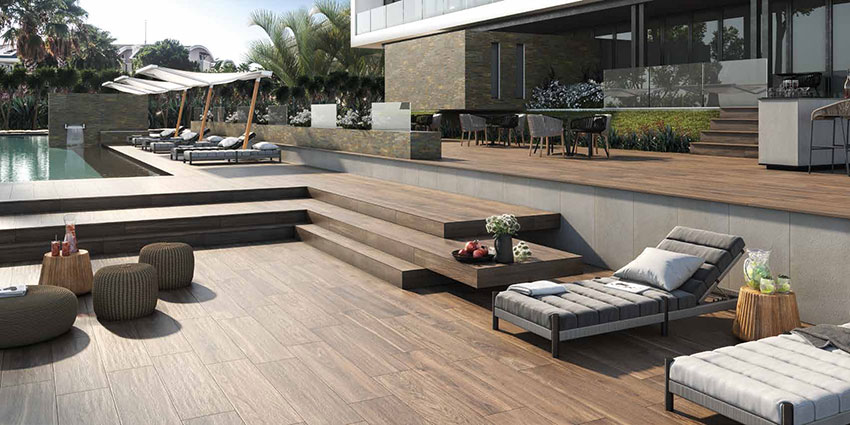
Landmark Ceramics Frontier 20; image courtesy of Tile Council of North America
Outdoor ceramic tile enjoys a long history and continues to evolve to meet a wide variety of applications from outdoor kitchens to pool decks.
LAYING THE GROUNDWORK FOR INNOVATION
Ceramic tile has a long and rich history, dating back thousands of years. It can be found in nearly every culture of the world and has lent its versatile style to some of our most important structures—from the Alhambra in Granada, Spain, to the Topkapi Palace in Istanbul. Social, political, and economic forces have influenced ceramic tile over the centuries, but it has never fallen out of favor. And the fact that numerous early tile constructions still exist is a testament to ceramic tile’s durability.
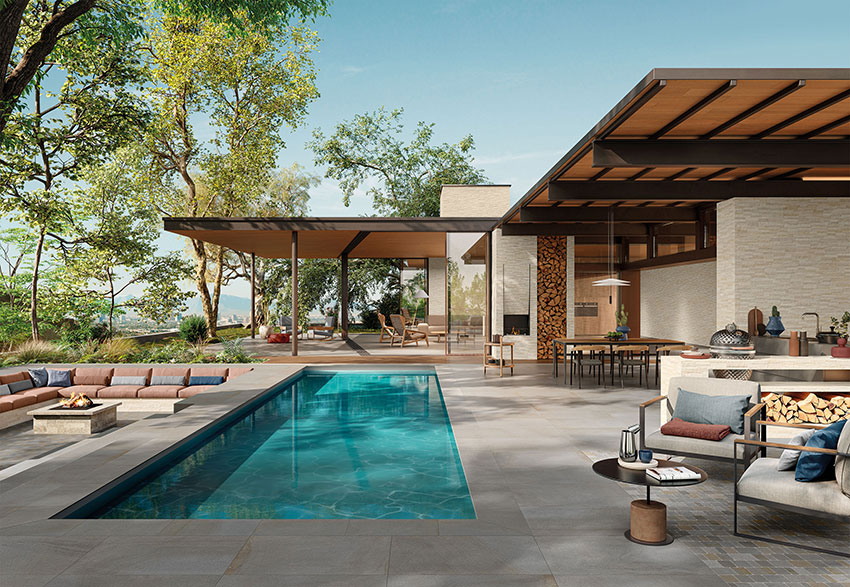
Interceramic Encierro; image courtesy of Tile Council of North America
Throughout history, ceramic tiles have been prized for their durability, beauty, and versatility, and the latest products, which are available in a wide range of colors, sizes, and styles, can be customized to fit the specific needs of a project.
The earliest known examples of ceramic tiles date back to ancient Egypt and Mesopotamia, where they were used for decorative purposes. They were also used in ancient Greece and Rome for both decorative and practical purposes. During the medieval period, ceramic tiles were used extensively in Islamic architecture, particularly in the Middle East and North Africa. Ceramic tiles became increasingly popular in Europe during the Renaissance and Baroque periods, especially in Spain, Italy, and Portugal. With the advent of industrialization in the 19th century, ceramic tile production became more mechanized and efficient, which led to an increase in the popularity of ceramic tiles as a practical and affordable flooring option.
These days, ceramic tiles are used in a wide variety of applications, from decorative accents to functional flooring and wall coverings. They are available in a wide range of colors, sizes, and styles, and can be customized to fit the specific needs of a project. Throughout history, ceramic tiles have been prized for their durability, beauty, and versatility. They have played an important role in the development of architecture and design and continue to be a popular choice for both residential and commercial projects.
Ceramic tiles are typically manufactured using a combination of traditional and modern techniques. The production uses highly automated machinery and processes to achieve high levels of efficiency and consistency. Raw materials are mixed in a large industrial mixer to create a homogenous mixture of clay, feldspar, quartz, and other minerals. The blended materials are formed into tiles using a variety of methods. After forming, the tiles can be decorated and/or enhanced with glazes and coatings, and then dried and eventually fired in a kiln at high temperatures. Once the tiles are fired, they can be sorted and packaged or may go through additional finishing techniques such as cutting to smaller sizes, polishing, and rectifying.
Ceramic tile’s mass production allows for high levels of consistency, speed, and cost-effectiveness, making it a popular choice for large-scale commercial and residential projects. However, handmade or custom-made ceramic tiles are also highly desirable and available to architects (see sidebar).
Ceramic tile is defined as a glazed or unglazed ceramic surface component that is fired at high temperatures. Those high temperatures produce specific characteristics and properties that make them particularly desirable in the built environment. The term “ceramic tile” is a broad reference to a collection of tile subsets. This “ceramic tile family”– as it is commonly known – includes wall tile, mosaic tile, porcelain tile, pressed floor tile, and quarry tile. Though these subsets have their unique qualities that might lend themselves to specific applications, they all share the general benefits for which ceramic tile is best known. And many of the benefits are what make ceramic tile suitable for exterior design.
Health and Hygiene
Architects play a crucial role in designing buildings that promote the health and well-being of occupants. One important aspect of their role is the choice of materials since materials can impact occupant health in a variety of ways.
Ceramic tile has a multitude of benefits when it comes to health, hygiene, and general cleanability. It can be easily cleaned with water and does not require harsh chemical cleaners to do the job. Its surface is naturally inhospitable to the growth of bacteria and microbes, such as mold. Architects needing to specify for an extra measure of resistance can find antimicrobial ceramic tile options that actively suppress or even destroy harmful microorganisms such as mold, fungi, bacteria, and viruses.
Allergens can be an issue with some materials, but ceramic tile contains no allergens and cannot be penetrated by dust, dirt, or pollen that might affect an occupant’s health or comfort. In the same way, while some building materials emit various levels of harmful volatile organic compounds (VOCs) or contain formaldehyde, both of which can impact the health of occupants, ceramic tiles contain no organic compounds. Even when exposed to heat or fire, ceramic tile surfaces do not emit toxic fumes. Ceramic tile is also free of polyvinyl chloride (PVC)─a plastic resin that is sometimes found in vinyl flooring and that contains chemicals of some concern to health experts. Ceramic tile is made from naturally occurring materials, meaning it doesn’t carry the health─and environmental─concerns associated with plastic, in general.
Environmental Sustainability
In addition to affecting the health and well-being of occupants, architects can select materials for sustainability. Ceramic tile has one of the lowest carbon footprints of any available flooring. Based on publicly available environmental product declarations (EPDs) it has the lowest global warming potential and lowest fossil fuel resource depletion. The fact that it is highly durable also makes it a sustainable material – with a lifespan of 75+ years, it has an extremely low life-cycle cost and low environmental impact compared to other flooring materials in North America. Another inherent property of ceramic tile is its thermal mass, which reduces peak heating and cooling, leading to lower energy costs and more comfort for occupants.
Ceramic tiles can be created from pre- and post-consumer recycled materials. They are one of few surfaces that can be salvaged and reused in renovations. Responsibly recovered waste such as dust, powder, unfired scrap, and water can be reincorporated into manufacturing, which minimizes waste and maximizes resources in a “closed loop” approach. Ceramic tile is solid and 100% inert, meaning it won’t leach caustic liquids or decompose—and it meets the Environmental Protection Agency’s (EPA) criteria for “clean-fill” material. At the end of its use, ceramic tile can be ground up and reused as a different material, such as paving or asphalt.
Low-Maintenance and Durability
Ceramic tile is moisture-resistant, stain-resistant, and fade-resistant, making it a prime surface for exterior design. Architects can specify ceramic tile options that withstand freeze-thaw cycles, which makes them a good choice for any climate. Ceramic tile has a high break strength and is scratch-resistant.
Safety
Occupant safety is a primary goal when selecting construction materials. There are increasingly more ceramic tile slip-resistant options available for outdoor applications. These options are ideal for moisture-rich climates or in spaces that are exposed to wet conditions, such as pool decks. Architects can also specify certain textures that add an extra level of slip resistance.
Another safety benefit is fire resistance. Ceramic tile is nonflammable in nature, so it never burns or produces smoke. As noted earlier, it does not give off toxic fumes if exposed to heat and fire. Additionally, if there is a fire in the vicinity, ceramic tile can help reduce flame spread.
Variation Within the Subsets
When specifying ceramic tile for outdoor settings, architects should consider the qualities of each ceramic tile subset. For instance, ceramic wall tile tends to be for indoor applications. Pressed ceramic floor tile can be a good choice for outdoor applications but might depend on factors such as climate and the need for slip resistance. Quarry tile is often used in outdoor design and is especially popular for walkways and patios. Its earth-tone color options blend well visually in outdoor spaces. It also has natural grip with non-slip options available for added safety.
Porcelain tile is composed of fine, dense clay and fired at high temperatures. Its composition and its manufacturing process make it highly durable with an “impervious” water absorption rate of 0.5% or less. Porcelain tile is well-suited for water and outdoor applications. Additionally, porcelain tile comes in formats especially suited for outdoor applications. Porcelain tile panels/slabs are the largest tiles in the ceramic tile family while porcelain tile pavers come in thick formats.
Finally, ceramic mosaic tile—which can be made of regular ceramic, porcelain, or quarry tile—is typically chosen for its small size (fewer than 9 square inches). Its durability is important in outdoor applications, but the key element for choosing ceramic mosaic tile is for creative design involving a combination of shapes, colors, and, sometimes, textures. In general, designers should always check with the manufacturer to make sure the type of ceramic tile they choose is appropriate for the project.
Creativity and Style
t’s probably clear by now that within the ceramic tile family, and among the subsets, there is a wide range of textures, patterns, and finishes that allow designers to create a variety of looks and styles. Architects can create bold and colorful designs or subtle, natural looks—and almost anything in between. And because ceramic tile comes in a variety of shapes and sizes, from small mosaics to large-format tiles, designers can create unique patterns tailored to fit a particular space.
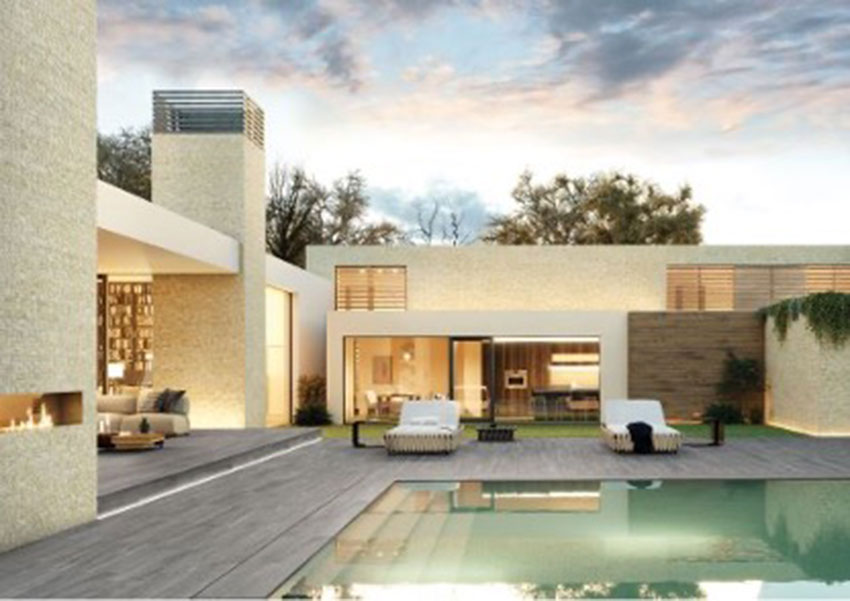
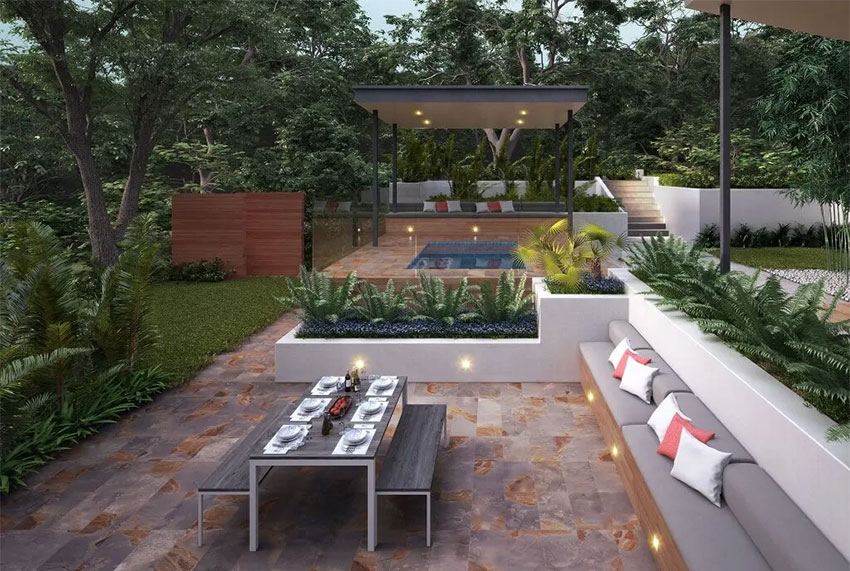
Landmark Ceramics; image courtesy of Tile Council of North America
A growing number of homeowners, businesses, and municipalities are directing their investments towards enhancing outdoor spaces—and the distinctive characteristics of ceramic tile are playing a crucial role in accommodating these evolving demands.
The Rise of Outdoor Spaces
The COVID-19 pandemic has led to a significant increase in the popularity of outdoor spaces. With the risk of transmission of COVID-19 higher indoors, many people have turned to outdoor spaces as a safer option for socializing and entertaining. Outdoor spaces allow for greater air circulation, making it less likely for the virus to spread. To comply with social distancing guidelines, outdoor spaces have become essential for maintaining a safe distance while still being able to gather with others.
In addition, spending time outdoors has been shown to have positive effects on mental health, and with many people feeling the effects of isolation and stress during the pandemic, outdoor spaces have become a popular way to improve mood and well-being. Remote work and schooling have transformed residential living spaces, as well.
As more people turn their homes into flexible environments, outdoor spaces are being seen as an important component—a way to enjoy fresh air and a change of scenery. Homeowners, businesses, and municipalities have been investing in outdoor spaces to make them more comfortable, functional, and aesthetically pleasing. This trend continues—even as the pandemic has largely subsided—because many people have discovered the benefits of spending time outdoors and are likely to continue to prioritize outdoor spaces. Ceramic tile’s unique qualities are helping to meet these changes.
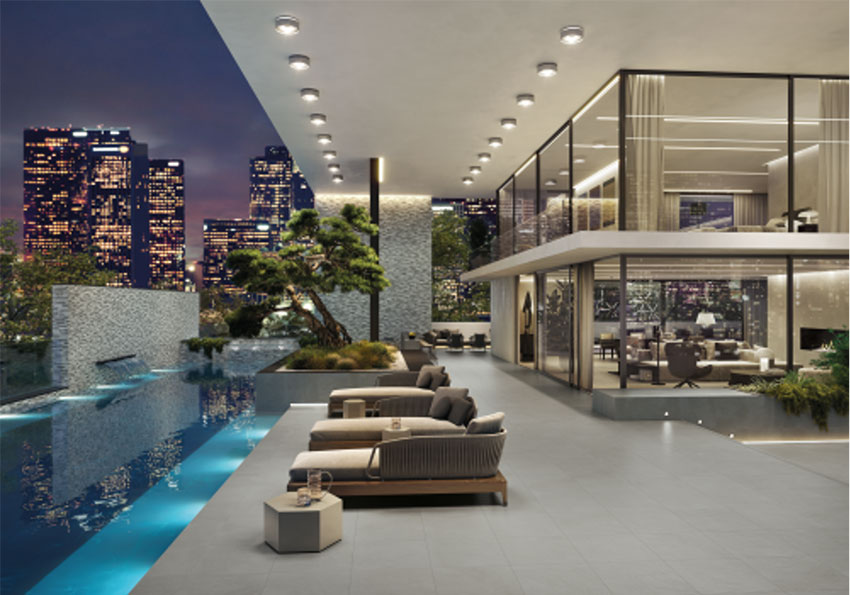
Landmark Ceramic Cosmopolitan Ash; image courtesy of Tile Council of North America
Extruded aluminum trim can be effectively used for smooth transitions between different cladding panel types at inside and outside corners, edges, and other locations.
A VERSATILE MATERIAL FOR OUTDOOR DESIGN
The rise in demand for outdoor spaces has increased the variety of types of spaces. Architects and building owners are reimagining applications such as private patios, fire pit areas, party spaces, pools, and gardens. In particular, rooftop decks and terraces, indoor-to-outdoor transitional spaces, and outdoor kitchens are trending. The expansion of the ceramic tile family’s options—for freeze-thaw and non-slip resistance, for example—plays a major role in supporting and facilitating the reach of these trends. Importantly, the wide range of colors, textures, formats, and styles allows designers and occupants to explore an aesthetic vision, while still providing necessary durability.
Ceramic tile has a long history in architectural design, but recent technologies and innovations have given it new life in outdoor spaces. As residential and commercial outdoor living spaces evolve from pandemic stopgaps to long-term shifts in design, architects and building owners are turning to materials that are both durable and fashion-forward. This course will look at the characteristics that make ceramic tile particularly suited for outdoor spaces. It will explore the latest design trends for outdoor spaces and touch on key technologies, innovations, and standards that meet those design needs. It will also explain how ceramic tile supports eco-friendly as well as health, safety, and well-being goals for the full range of exterior designs.
Landmark Ceramics Frontier 20; image courtesy of Tile Council of North America
Outdoor ceramic tile enjoys a long history and continues to evolve to meet a wide variety of applications from outdoor kitchens to pool decks.
LAYING THE GROUNDWORK FOR INNOVATION
Ceramic tile has a long and rich history, dating back thousands of years. It can be found in nearly every culture of the world and has lent its versatile style to some of our most important structures—from the Alhambra in Granada, Spain, to the Topkapi Palace in Istanbul. Social, political, and economic forces have influenced ceramic tile over the centuries, but it has never fallen out of favor. And the fact that numerous early tile constructions still exist is a testament to ceramic tile’s durability.
Interceramic Encierro; image courtesy of Tile Council of North America
Throughout history, ceramic tiles have been prized for their durability, beauty, and versatility, and the latest products, which are available in a wide range of colors, sizes, and styles, can be customized to fit the specific needs of a project.
The earliest known examples of ceramic tiles date back to ancient Egypt and Mesopotamia, where they were used for decorative purposes. They were also used in ancient Greece and Rome for both decorative and practical purposes. During the medieval period, ceramic tiles were used extensively in Islamic architecture, particularly in the Middle East and North Africa. Ceramic tiles became increasingly popular in Europe during the Renaissance and Baroque periods, especially in Spain, Italy, and Portugal. With the advent of industrialization in the 19th century, ceramic tile production became more mechanized and efficient, which led to an increase in the popularity of ceramic tiles as a practical and affordable flooring option.
These days, ceramic tiles are used in a wide variety of applications, from decorative accents to functional flooring and wall coverings. They are available in a wide range of colors, sizes, and styles, and can be customized to fit the specific needs of a project. Throughout history, ceramic tiles have been prized for their durability, beauty, and versatility. They have played an important role in the development of architecture and design and continue to be a popular choice for both residential and commercial projects.
Ceramic tiles are typically manufactured using a combination of traditional and modern techniques. The production uses highly automated machinery and processes to achieve high levels of efficiency and consistency. Raw materials are mixed in a large industrial mixer to create a homogenous mixture of clay, feldspar, quartz, and other minerals. The blended materials are formed into tiles using a variety of methods. After forming, the tiles can be decorated and/or enhanced with glazes and coatings, and then dried and eventually fired in a kiln at high temperatures. Once the tiles are fired, they can be sorted and packaged or may go through additional finishing techniques such as cutting to smaller sizes, polishing, and rectifying.
Ceramic tile’s mass production allows for high levels of consistency, speed, and cost-effectiveness, making it a popular choice for large-scale commercial and residential projects. However, handmade or custom-made ceramic tiles are also highly desirable and available to architects (see sidebar).
Ceramic tile is defined as a glazed or unglazed ceramic surface component that is fired at high temperatures. Those high temperatures produce specific characteristics and properties that make them particularly desirable in the built environment. The term “ceramic tile” is a broad reference to a collection of tile subsets. This “ceramic tile family”– as it is commonly known – includes wall tile, mosaic tile, porcelain tile, pressed floor tile, and quarry tile. Though these subsets have their unique qualities that might lend themselves to specific applications, they all share the general benefits for which ceramic tile is best known. And many of the benefits are what make ceramic tile suitable for exterior design.
Health and Hygiene
Architects play a crucial role in designing buildings that promote the health and well-being of occupants. One important aspect of their role is the choice of materials since materials can impact occupant health in a variety of ways.
Ceramic tile has a multitude of benefits when it comes to health, hygiene, and general cleanability. It can be easily cleaned with water and does not require harsh chemical cleaners to do the job. Its surface is naturally inhospitable to the growth of bacteria and microbes, such as mold. Architects needing to specify for an extra measure of resistance can find antimicrobial ceramic tile options that actively suppress or even destroy harmful microorganisms such as mold, fungi, bacteria, and viruses.
Allergens can be an issue with some materials, but ceramic tile contains no allergens and cannot be penetrated by dust, dirt, or pollen that might affect an occupant’s health or comfort. In the same way, while some building materials emit various levels of harmful volatile organic compounds (VOCs) or contain formaldehyde, both of which can impact the health of occupants, ceramic tiles contain no organic compounds. Even when exposed to heat or fire, ceramic tile surfaces do not emit toxic fumes. Ceramic tile is also free of polyvinyl chloride (PVC)─a plastic resin that is sometimes found in vinyl flooring and that contains chemicals of some concern to health experts. Ceramic tile is made from naturally occurring materials, meaning it doesn’t carry the health─and environmental─concerns associated with plastic, in general.
Environmental Sustainability
In addition to affecting the health and well-being of occupants, architects can select materials for sustainability. Ceramic tile has one of the lowest carbon footprints of any available flooring. Based on publicly available environmental product declarations (EPDs) it has the lowest global warming potential and lowest fossil fuel resource depletion. The fact that it is highly durable also makes it a sustainable material – with a lifespan of 75+ years, it has an extremely low life-cycle cost and low environmental impact compared to other flooring materials in North America. Another inherent property of ceramic tile is its thermal mass, which reduces peak heating and cooling, leading to lower energy costs and more comfort for occupants.
Ceramic tiles can be created from pre- and post-consumer recycled materials. They are one of few surfaces that can be salvaged and reused in renovations. Responsibly recovered waste such as dust, powder, unfired scrap, and water can be reincorporated into manufacturing, which minimizes waste and maximizes resources in a “closed loop” approach. Ceramic tile is solid and 100% inert, meaning it won’t leach caustic liquids or decompose—and it meets the Environmental Protection Agency’s (EPA) criteria for “clean-fill” material. At the end of its use, ceramic tile can be ground up and reused as a different material, such as paving or asphalt.
Low-Maintenance and Durability
Ceramic tile is moisture-resistant, stain-resistant, and fade-resistant, making it a prime surface for exterior design. Architects can specify ceramic tile options that withstand freeze-thaw cycles, which makes them a good choice for any climate. Ceramic tile has a high break strength and is scratch-resistant.
Safety
Occupant safety is a primary goal when selecting construction materials. There are increasingly more ceramic tile slip-resistant options available for outdoor applications. These options are ideal for moisture-rich climates or in spaces that are exposed to wet conditions, such as pool decks. Architects can also specify certain textures that add an extra level of slip resistance.
Another safety benefit is fire resistance. Ceramic tile is nonflammable in nature, so it never burns or produces smoke. As noted earlier, it does not give off toxic fumes if exposed to heat and fire. Additionally, if there is a fire in the vicinity, ceramic tile can help reduce flame spread.
Variation Within the Subsets
When specifying ceramic tile for outdoor settings, architects should consider the qualities of each ceramic tile subset. For instance, ceramic wall tile tends to be for indoor applications. Pressed ceramic floor tile can be a good choice for outdoor applications but might depend on factors such as climate and the need for slip resistance. Quarry tile is often used in outdoor design and is especially popular for walkways and patios. Its earth-tone color options blend well visually in outdoor spaces. It also has natural grip with non-slip options available for added safety.
Porcelain tile is composed of fine, dense clay and fired at high temperatures. Its composition and its manufacturing process make it highly durable with an “impervious” water absorption rate of 0.5% or less. Porcelain tile is well-suited for water and outdoor applications. Additionally, porcelain tile comes in formats especially suited for outdoor applications. Porcelain tile panels/slabs are the largest tiles in the ceramic tile family while porcelain tile pavers come in thick formats.
Finally, ceramic mosaic tile—which can be made of regular ceramic, porcelain, or quarry tile—is typically chosen for its small size (fewer than 9 square inches). Its durability is important in outdoor applications, but the key element for choosing ceramic mosaic tile is for creative design involving a combination of shapes, colors, and, sometimes, textures. In general, designers should always check with the manufacturer to make sure the type of ceramic tile they choose is appropriate for the project.
Creativity and Style
t’s probably clear by now that within the ceramic tile family, and among the subsets, there is a wide range of textures, patterns, and finishes that allow designers to create a variety of looks and styles. Architects can create bold and colorful designs or subtle, natural looks—and almost anything in between. And because ceramic tile comes in a variety of shapes and sizes, from small mosaics to large-format tiles, designers can create unique patterns tailored to fit a particular space.
Landmark Ceramics; image courtesy of Tile Council of North America
A growing number of homeowners, businesses, and municipalities are directing their investments towards enhancing outdoor spaces—and the distinctive characteristics of ceramic tile are playing a crucial role in accommodating these evolving demands.
The Rise of Outdoor Spaces
The COVID-19 pandemic has led to a significant increase in the popularity of outdoor spaces. With the risk of transmission of COVID-19 higher indoors, many people have turned to outdoor spaces as a safer option for socializing and entertaining. Outdoor spaces allow for greater air circulation, making it less likely for the virus to spread. To comply with social distancing guidelines, outdoor spaces have become essential for maintaining a safe distance while still being able to gather with others.
In addition, spending time outdoors has been shown to have positive effects on mental health, and with many people feeling the effects of isolation and stress during the pandemic, outdoor spaces have become a popular way to improve mood and well-being. Remote work and schooling have transformed residential living spaces, as well.
As more people turn their homes into flexible environments, outdoor spaces are being seen as an important component—a way to enjoy fresh air and a change of scenery. Homeowners, businesses, and municipalities have been investing in outdoor spaces to make them more comfortable, functional, and aesthetically pleasing. This trend continues—even as the pandemic has largely subsided—because many people have discovered the benefits of spending time outdoors and are likely to continue to prioritize outdoor spaces. Ceramic tile’s unique qualities are helping to meet these changes.
Landmark Ceramic Cosmopolitan Ash; image courtesy of Tile Council of North America
Extruded aluminum trim can be effectively used for smooth transitions between different cladding panel types at inside and outside corners, edges, and other locations.
A VERSATILE MATERIAL FOR OUTDOOR DESIGN
The rise in demand for outdoor spaces has increased the variety of types of spaces. Architects and building owners are reimagining applications such as private patios, fire pit areas, party spaces, pools, and gardens. In particular, rooftop decks and terraces, indoor-to-outdoor transitional spaces, and outdoor kitchens are trending. The expansion of the ceramic tile family’s options—for freeze-thaw and non-slip resistance, for example—plays a major role in supporting and facilitating the reach of these trends. Importantly, the wide range of colors, textures, formats, and styles allows designers and occupants to explore an aesthetic vision, while still providing necessary durability.
Rooftop Terraces
Ceramic tile has a long history as a material for rooftop terraces. In many cultures, including Mediterranean and Middle Eastern cultures, ceramic tile has been used for centuries as a roofing material because of its durability, weather resistance, and aesthetic appeal.
In the early 20th century, ceramic tile became a popular material for rooftop terraces in the United States, particularly in cities where there was limited indoor living space. In the mid-20th century, other materials like rubber and asphalt were often used for rooftop terraces. But in recent years, ceramic tile has experienced renewed interest from architects and owners. The reasons? Sustainability, longevity, and aesthetic versatility, among others.
Roof decks, in general, have become more popular since the pandemic. They are often incorporated into new construction for single-family homes and multifamily residential and mixed-use commercial buildings. Other times they are added to replace an undeveloped rooftop. A typical undeveloped rooftop has little to no value for owners or tenants. By installing ceramic tile such as porcelain tile pavers, the rooftop is transformed into a destination, potentially hosting a myriad of activities with coveted views, from cityscapes to mountains. The “found space” aspect of turning an undeveloped roof into a vibrant, usable space can revitalize a building and add value to a property without owners investing in a huge renovation or addition.
Architects interested in human-centered design, health, and sustainability take into consideration how occupants experience a space. A roof deck in a multifamily building creates a unique space removed from normal daily routine. In a single-family home, it can serve as an oasis or green space for gardening. Rooftop decks have an allure embedded in a culture of leisure and as a place for community to develop. The pandemic taught people to enjoy life, expect more of our spaces, and attend to our health and well-being. Roof decks embody that concept.
But, to fulfill that role, they have to be functional, which is why a durable surface material like ceramic tile is key. Ceramic tile provides a long-lasting, fade-resistant assembly and serves to protect the roof itself – with very little maintenance needed. Along with the attributes the ceramic tile family shares, architects can specify slip-resistant options, making roof decks safer for people (and pets). And they can choose ceramic tile with the best freeze-thaw resistance.
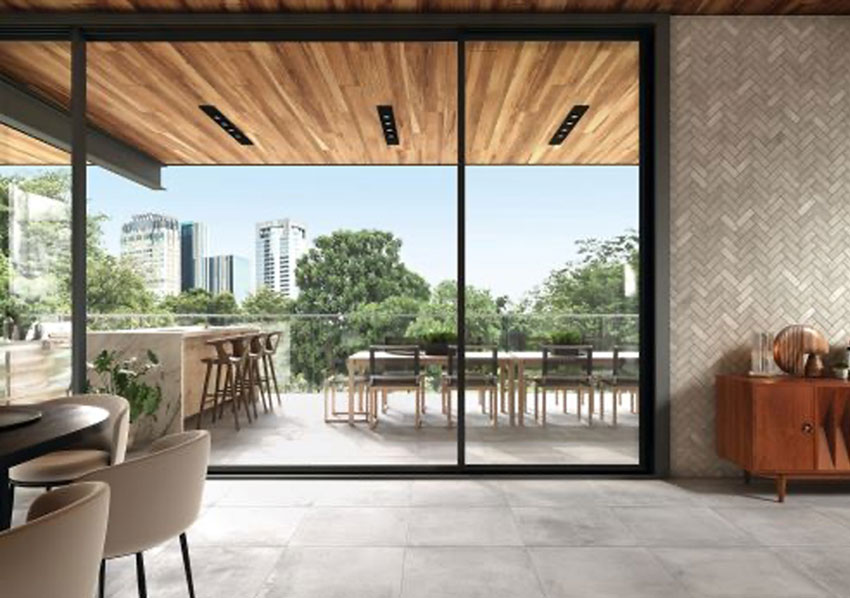
LDaltile Rekindle; image courtesy of Tile Council of North America
Architects can employ ceramic tile seamlessly in their designs for both indoor and outdoor spaces, ensuring durability and style are not compromised.
Indoor-Outdoor Spaces
Another trend that has seen an uptick since the pandemic is indoor-to-outdoor living spaces. Social distancing and other social shifts allowed homeowners, developers, and architects to reimagine pandemic social spaces in more permanent ways. Indoor-to-outdoor flooring designs create a seamless transition between indoor and outdoor spaces. This design creates continuity and flow and makes the connected spaces feel more cohesive and unified. By using the same flooring material inside and outside, architects can create a more functional space better suited to the occupants. A space that is used for entertaining, for instance, can be extended seamlessly from the inside to the outside, providing more space for guests.
Ceramic tile is unique in comparison to other flooring materials because it can be used both indoors and out. An architect can create a design using the same ceramic tile for both spaces without compromising durability or style. The ability to transition ceramic tile flooring from inside to outside─with the benefit of so many aesthetic options─blurs the line between the spaces. This transitional design is particularly effective in spaces with large windows or glass doors, because of the visual connection created between inside and outside. Ceramic tile’s other attributes benefit inside-to-outside spaces. For instance, its fade-resistance, stain-resistance, and cleanability help preserve the seamless look.
With indoor-to-outdoor spaces, moisture is more likely to sneak indoors, but the same tile protecting against the elements outdoors can withstand moisture coming indoors, too. Indoor-to-outdoor spaces can be applied in a variety of ways: living room to patio, bedroom to outdoor fireplace, bathroom to pool, and other combinations. And because ceramic tile is fire resistant and includes slip-resistant options, these combinations of spaces can be designed with safety in mind.
Outdoor Kitchens
Outdoor kitchens have also become increasingly popular in recent years. With the growing trend of spending more time at home and entertaining guests in outdoor spaces, homeowners are investing in outdoor kitchens to enhance their outdoor living experience.
Advances in outdoor kitchen design and technology have made it easier and more convenient to create fully functional outdoor kitchens. There are now a wide variety of outdoor kitchen appliances and fixtures available that can withstand outdoor conditions. Ceramic tile makes this outdoor environment possible because of its attributes, including durability. In addition, the variety of ceramic tile looks can help designers create an aesthetically stunning space that goes far beyond a simple grilling area.
When specifying materials for outdoor kitchens, water resistance is especially key. All ceramic tile is water resistant, and porcelain, quarry tile, and some pressed floor tiles and mosaic can withstand repeated freeze-thaw cycles. Ceramic tile is also easy to clean even when exposed to food and drink. Applications for ceramic tile in outdoor kitchens include countertops, kitchen islands, bars, stoves, and ovens, as well as firepits or fireplaces surrounded by tile.
Countertops provide a good canvas for aesthetic design. Gauged porcelain tile panels and slabs are one popular option to create a natural stone look and can withstand marring from sharp utensils and heavy dining décor. Bars and kitchen islands are often part of an outdoor kitchen design. These types of areas are prone to food and drink spills, but using ceramic tile makes for a surface that is easily cleaned and stain resistant.
Additionally, if an outdoor kitchen design incorporated a pool, using ceramic tile as a floor surface between the two spaces would prevent water damage and be resistant to pool chemicals. Using ceramic tile around outdoor stoves, ovens, fire pits, and fireplaces provides aesthetic opportunities. But it also offers added safety because of ceramic tile’s inherent flame resistance. For all the reasons given above, ceramic tile is a material that fits well with indoor-outdoor kitchens, as well as any adjacent outdoor spaces or pathways.
EVOLVING TECHNOLOGIES
It’s not just the types of applications that are evolving. Ceramic tile options are expanding as new technologies emerge. Digital printing and ceramic tile manufacturing processes have helped push color and texture options into new territory. Ceramic tile can now be specified to create more realistic visuals that emulate other materials such as wood, marble, stone, and concrete. New technologies, testing standards, and building codes have given rise to the more widespread use of gauged porcelain tile pavers that are 2 cm and thicker, as well as porcelain tile panels/slabs that are literally changing the faces of buildings.
New Tile Technologies and Tile Trends
The trend toward outdoor living spaces has led to the rapidly growing popularity of gauged-porcelain tile pavers that are 2 cm or thicker. This category of tile is being employed as an alternative to traditional pavers made from concrete or brick. Gauged porcelain pavers can be installed using different methods, which makes them a versatile choice for outdoor applications. They can also be installed traditionally using adhesives.
This method is a smart choice for porches, garages, parking spaces, and other areas subject to heavy loads. In recent trends, they are being used in on-grade paver applications – on sand, grass, and gravel – without adhesives. They are also being used as raised flooring with pedestal systems on decks and rooftop patios. The 2cm+ thickness provides durability in terms of breaking strength and impact resistance. And as with all porcelain and ceramic tiles, slip-resistant options are available to suit the needs of a project. Aesthetic-wise, some gauged porcelain tile pavers provide a good choice for indoor-outdoor design flow.
The term “gauged” refers to tile precision engineered for a specific thickness and performance, using advanced production technology. Traditionally, gauged tile has been used to describe tile meeting ANSI A137.3 that is much thinner than ordinary tile, as slim as 3.5 millimeters (a little more than 1/8 inch) thick.
The rising popularity of thicker gauged porcelain tile pavers has led to recent updates to the ANSI A137.3 standard. The update now also defines gauged as applying to tile that is 2 cm and thicker, which is still relatively thin in comparison to traditional pavers of stone or cement. The standard update required hundreds of hours of research over three years with special attention given to strength and impact criteria, which should ensure more successful paver installations that also allow for creative design.
This update to the standard expands the possibilities for successfully using ceramic tile pavers in outdoor spaces, allowing for more creative and functional design options while maintaining the durability and low maintenance characteristics of ceramic tiles.

Daltile Panoramic Porcelain; image courtesy of Tile Council of North America
The diverse selection of ceramic tile appearances empowers designers to craft aesthetically breathtaking spaces that surpass mere grilling areas.

Florida Tile NY2LA; image courtesy of Tile Council of North America
Gauged porcelain pavers can be installed using different methods, which makes them a versatile choice for outdoor applications.
Advances with Gauged Porcelain Tile Slabs/Panels
Another recent tile trend involves gauged porcelain tile slabs and panels. This type of tile is a good choice for creating large, uninterrupted surfaces. Advances in manufacturing have led to larger, thinner tiles in this category – as large as 6 feet by 12 feet and as thin as 1/8 inch. The lightweight quality paired with new technologies for stronger mortars make these panels/slabs a choice tile for exterior facades.
Previously, building code required that projects using larger panels for exterior facades would need to apply for a code variance – an expensive, complicated process. Fortunately, the 2021 International Building Code (IBC) has been updated to strike this requirement, opening the door for slab/panel possibilities. Manufacturers are now making adhered porcelain tiles as large as 36”x72” and 48”x48” that can be used without a code variance. Designers and building owners now have greater flexibility. In addition, porcelain tile panels/slabs are becoming a more viable alternative to other types of panels.
In an adhered facade application, gauged porcelain tile adds thermal mass to the building envelope. This increases the energy efficiency of heating and cooling the building’s interior. In a ventilated facade application, gauged porcelain tile is fixed to the building exterior with fasteners. The space created between the building wall and tile circulates air, which can remove heat, keep the building dry, and improve insulation properties.
A ventilated facade can achieve an energy savings of 20 to 30% as well as reduce external noise pollution. As with pedestal systems, the ventilated chamber can be used to house pipe ductwork for easy accessibility. Ceramic tiles used in facade applications can achieve energy efficiency and innovation credits in green and healthy building programs.
In terms of aesthetics, ceramic tile facade installations like these can make a big impact with options for statement architecture and branding. And, as with other ceramic tile, this type of gauged porcelain tile comes in a variety of shapes and colors to obtain a variety of cladding designs.
Realistic Visuals
In recent years, there have been significant advancements in ceramic tile technology that have made it possible to create highly realistic visuals that mimic the look and feel of natural materials such as stone, wood, and concrete.
Ceramic tile manufacturers are now using high-resolution digital printing technology to create intricate designs and patterns that are incredibly lifelike. This technology allows for the creation of tiles that look like natural stone, wood, or concrete, with realistic details such as veining, knots, and texture.
Some manufacturers are using 3D printing technology to create tiles with more depth and texture. This process involves layering materials to create a three-dimensional effect that mimics the look and feel of natural materials.
Manufacturers are also using advanced surface treatments to create tiles that have a more natural look and feel. For example, some tiles are treated with a matte finish or a textured surface to mimic the look of natural stone or concrete.
Finally, larger tile formats can be designed to mimic the look of natural stone slabs or planks of wood, for example, and can be used to create a more cohesive and unified design.
The ability to transform the look of ceramic tile, making it virtually indistinguishable from these natural materials, has been a game-changer for outdoor applications.
Overall, these advancements in ceramic tile technology have made it possible to create highly realistic visuals that are virtually indistinguishable from natural materials, while also offering the durability and ease of maintenance of ceramic tile.
Pedestal Systems Gain Popularity in the U.S.
Pedestal systems are not a new technology, but they have gained popularity in recent years as a solution for elevated outdoor flooring. The use of ceramic tile on elevated outdoor surfaces, such as balconies, roof terraces, and patios, has traditionally been challenging due to the need for a stable substrate that can withstand exposure to weather and foot traffic.
Ceramic tile pedestal systems provide a solution to this challenge by elevating the tiles off the ground using adjustable pedestals. These systems are made up of adjustable pedestals, support plates, and spacer tabs that allow for precise leveling and spacing of the tiles. The pedestals are typically made of materials such as plastic or rubber and can be adjusted to accommodate slopes or uneven surfaces.
Ceramic tile pedestal systems have been used in Europe for many years, but their use has become more widespread in North America in recent years. They offer several advantages over traditional installation methods, including improved drainage, easier access to the substrate for maintenance, and the ability to create a level surface on uneven ground.
A pedestal system should always be checked for compatibility with any surface system over which it is being installed. In the case of a rooftop, a pedestal installation must be compatible with the roofing system itself, including membrane, insulation, protection board, and roof deck. Failed tile systems and damaged roof membranes can occur when design professionals and roofing contractors don’t communicate well about the compatibility of their materials and systems.
This type of system can be an option for renovating a space where the owner does not want to dig up, dismantle, or disturb the underlying surface. In situations where drainage requires a sloped surface, and other bonded tile systems might be tricky, a pedestal system can be installed over the top of it and adjusted to create a flat surface. This ability to create a system that is somewhat independent of its surface is a primary feature of the pedestal system. If a tile breaks, it can be easily replaced without having to disturb too much of the installation.
Another benefit, aside from potential reductions in cost and labor, includes the fact that the space created between the surface and pedestal allows hiding other systems that might otherwise be messy, unsightly, or even dangerous when exposed, such as HVAC, electrical wires, and plumbing. In addition, the hidden space can house extra features such as lighting elements that add more value and design options to the tile installation. This also makes it convenient for electricians, HVAC technicians, and plumbers—or the owner—to access infrastructure or accessory lighting when needed. This space can also be utilized for numerous other systems, including those for plant irrigation and mosquito misting.
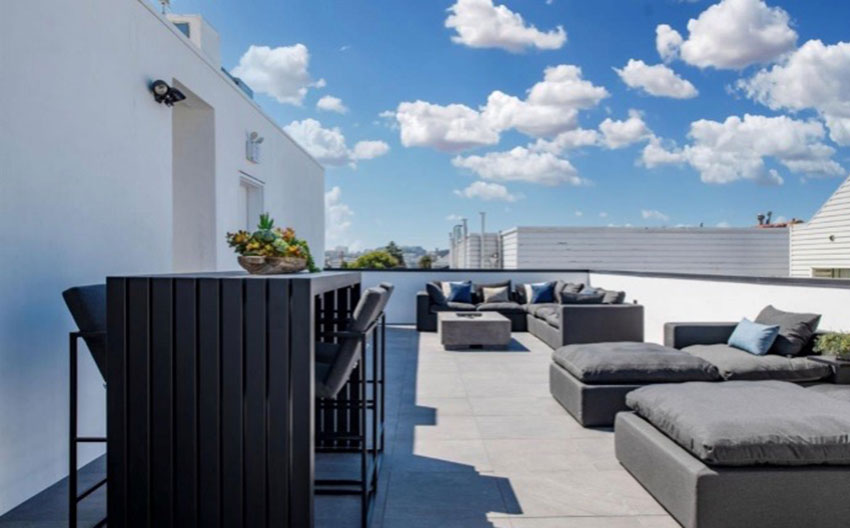
Daltile Rekindle; image courtesy of Tile Council of North America
The latest tile solutions come at a time when residential and commercial outdoor living spaces have evolved, from makeshift solutions meant as pandemic stop-gaps to a long-term shift in design.
Case Study: Drainage and Outdoor Lighting
Outdoor tiling projects can take their cue from some indoor projects, as well. In the case of an old home in Oregon, an underused basement with a history of water problems was transformed into a livable space through a tile pedestal system. According to Dirk Sullivan, the National Tile Contractors Association (NTCA) State Director for Oregon, the project required installing French drains, a sump pump, and an industrial dehumidifier to clear the moisture. Next, they ran plumbing and an electrical conduit over the original, now-dry surface, and, finally, installed pedestal pavers over the top of the infrastructure.
Sullivan says the original floor had been “tragically out of level” because of the pitched series of drains needed to manage the water. But the pedestal system allowed them to adjust the pavers as they installed it in a way that created a level floor above the unlevel drainage floor. The ability to put electrical and plumbing infrastructure above the original flooring meant they didn’t need to find another spot for it that would likely require cutting through the concrete.
The tile company also saw another opportunity for a pedestal system for this client. As it turns out, the client had a goth aesthetic, with planter boxes in her backyard that looked like coffins. The tile team suggested running lights under a pedestal system throughout the outdoor space to give the coffin planters an eerie glow. They ran a series of cable lighting in greens, reds, purples, and blues to provide just the right atmosphere and transform it into an outdoor space that achieved the client’s aesthetic.
Case Study: Freeze-Thaw Benefits
Outdoor spaces are becoming more popular in the U.S.— even in locations that experience cold extremes, high moisture, and quick temperature changes. Gauged porcelain pavers provide stability on a pedestal system and the system allows moisture—like the kind Oregon often experiences—to run through it. When temperatures drop to freezing, it expands the moisture, which can cause some tile that is not freeze-thaw resistant to pop and break. High temperatures can also be tough on tile installations.
“In certain climates, like in Colorado and Montana, where we have extreme temperature swings within a 24-hour period, the thick porcelain pavers are more resilient to environmental impacts,” says Dan Lambert, who is on the NTCA technical committee and co-owns Lambert Tile and Stone with his wife, Elizabeth.
Lambert says the 2cm porcelain pavers are a strong choice and the pedestal systems have evolved from creating quarter-inch space below the pedestal to 6 inches of air space, which has provided opportunities to tune the system to weather impacts. In an example of a patio installation in Vail, Colorado, a gauged porcelain paver patio features a heating system underneath it to help manage freeze-thaw impacts. The pedestal system itself, by design, also makes room for expansion from weather events.
Lambert says that one of the biggest challenges tile installers face for outdoor projects is that architects continue to specify a 1/8 inch per foot slope on exterior patios to maintain a more level surface for patio furniture and avoid a teeter-totter effect. However, the minimum slope is ¼ inch per foot for water management requirements. With tile pedestal systems, the waterproofing can meet slope requirements and the surface of the tile pedestal system itself can be level. “It’s a huge win-win for the A&D community,” he says.
Like other tile experts, Lambert emphasizes the need for specifiers and other contractors working on a tile project to plan from the beginning. Movement must be factored into the equation, no matter the weather, and for outdoor tile projects where slope and weather become an obstacle to getting a successful and level installation, pedestals are a good option. They can reduce problems in the long-term for the consumer, and also decrease liability issues for tile installers.
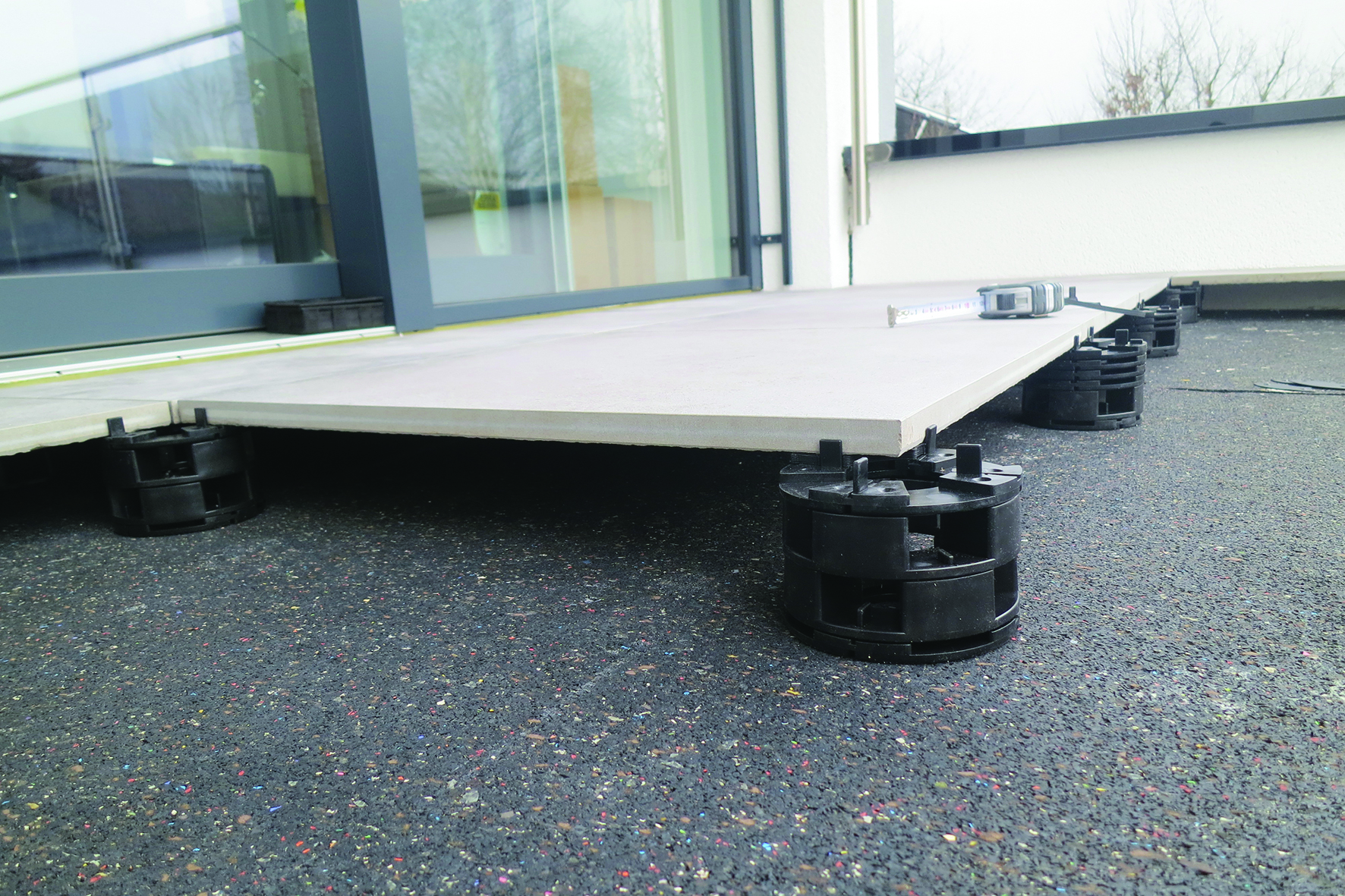
Schluter Systems TROBA-LEVEL; photo courtesy of Tile Council of North America
Adjustable paver supports are one technology that supports different formats and thicknesses to achieve the necessary height in outdoor applications.
STANDARDS AND CERTIFICATIONS FOR HEALTH AND SUSTAINABILITY
One major reason architects choose ceramic tile is that it is an eco-friendly and healthy material. It is energy efficient, has a small carbon footprint, and is highly recyclable, among other things. Ceramic tile’s health and sustainability benefits can be understood and leveraged through a variety of certification programs, standards, third-party verification documents, and labels. These trusted sources allow designers and building owners to choose products that have been independently verified to meet rigorous sustainability criteria.
Green Squared Certification
Green Squared Certification, a certification program developed by the Tile Council of North America (TCNA), evaluates the sustainability of ceramic tile products based on a range of rigorous sustainability criteria including raw material sourcing, manufacturing processes, product performance, and end-of-life management. The certification process includes an independent evaluation by a third-party auditor, who assesses the environmental and social impacts of the product throughout its life cycle.
To receive Green Squared Certification, ceramic tile products have to demonstrate energy-efficient manufacturing processes and be produced using renewable energy sources where possible. They must use responsibly sourced raw materials, such as recycled content, and avoid materials that are environmentally or socially harmful. Ceramic tile products must demonstrate water-efficient manufacturing processes and use water responsibly throughout the product's life cycle. They must minimize their environmental impact through measures such as waste reduction, pollution prevention, and responsible transportation. They also have to meet high standards for worker health and safety, labor practices, and community engagement.
Green Squared certification provides a credible, transparent way for designers and building owners to evaluate ceramic tile products and make responsible and informed decisions for their projects.
LEED Certification
Leadership in Energy and Environmental Design (LEED) is one of the more widely recognized sustainability certification programs for buildings. The use of ceramic tile can contribute to several LEED credits and help buildings achieve higher LEED ratings. And, in general, it contributes to a range of real-world benefits, such as reduced energy use and lower environmental impacts. It also supports occupant health, including indoor air quality (IAQ), which might come into play with outdoor tile in indoor-outdoor applications.
LEED credits include:
- Materials and Resources Credit 4: Recycled Content - Ceramic tiles that contain recycled content can contribute to this credit, which rewards the use of materials with recycled content.
- Materials and Resources Credit 5: Regional Materials - Using ceramic tiles that are manufactured regionally can contribute to this credit, which encourages the use of materials that are extracted, processed, and manufactured within a certain distance of the building site.
- Indoor Environmental Quality Credit 4.1: Low-Emitting Materials - Ceramic tiles that meet low-emitting criteria for volatile organic compounds (VOCs) can contribute to this credit, which encourages the use of materials with low VOC emissions.
- Innovation in Design - Using ceramic tiles in innovative ways or for sustainable design strategies can contribute to this credit, which recognizes exceptional performance and innovative solutions that go beyond the requirements of LEED.
Declare Label
The Declare label is a transparency label that provides information about the environmental and health impacts of building products, including ceramic tile. The label discloses information about the ingredients, sourcing, and end-of-life management of the product.
Cradle to Cradle Certification
This certification program evaluates the environmental and social impacts of products throughout their entire life cycle. Ceramic tile products can receive Cradle to Cradle certification based on criteria such as material health, renewable energy use, water stewardship, and social fairness. Additionally, Green Squared certified products are specified by Cradle to Cradle automatically meeting all VOC emissions criteria.
ISO 14001 Certification
This is a widely recognized environmental management system standard that can be applied to manufacturing processes. Architects can work with ceramic tile manufacturers who have obtained ISO 14001 certification, which demonstrates their commitment to environmental management and sustainability.
Living Product Challenge
This is a certification program developed by the International Living Future Institute (ILFI) that evaluates products based on a range of sustainability criteria, including material health, social fairness, and energy use. Ceramic tile products can be certified under the Living Product Challenge if they meet these criteria.
WELL Building Standard
This is a performance-based certification program developed by the International WELL Building Institute (IWBI) that evaluates buildings and spaces based on their impact on human health and well-being. Ceramic tile can contribute to several features of the WELL Building Standard including air quality, thermal comfort, and sound environment.
Environmental Product Declarations
Environmental Product Declarations (EPDs) are third-party verified reports that provide transparent and standardized information for designers and building owners about the environmental impacts of a product throughout its entire life cycle. EPDs provide a way for designers and building owners to compare the environmental performance of different products and make informed decisions about which products to use in their projects.
The EPDs for ceramic tile typically provide information about the environmental impacts of the tile over its life cycle, including its impact on climate change, water consumption, air pollution, and resource depletion. They also often provide information about the raw materials used to manufacture the tile, the manufacturing process, and the end-of-life management options for the tile.
As discussed in Section 1, EPDs show ceramic tile has a very low environmental impact. When compared to UL Certified EPDs for other types of flooring developed under the 2018 North American Flooring Product Category Rule, UL 10010-7, ceramic tile has the lowest 75-year global warming potential value.
Material Ingredient Transparency
Building product suppliers are increasingly required to provide standardized reporting of the content and chemical makeup of products, or “material ingredient transparency”. LEED, WELL Building, the International Living Future Institute’s (ILFI) Living Building Challenge, and other green and healthy building programs have incorporated aspects of material ingredient transparency in their programs and rating systems.
TCNA’s Material Ingredient Guide is the first of its kind by any building product industry. The guide provides assessment data on common tile industry ingredients that facilitate ceramic tile, mortar, and grout manufacturer conformance to market demands for standardized reporting.
The Material Ingredient Guide provides the following:
- Guidance and data for manufacturers and specifiers to consider regarding ceramic tile, mortar, and grout material ingredient transparency
- A list of the ingredients most commonly used by North American manufacturers and references to in-depth chemical assessments of these ingredients
- Insights into satisfying green and healthy building criteria
Highlighted in TCNA’s Material Ingredient Guide are four steps toward material ingredient transparency: Inventory, Screening and Assessment, Disclosure, and Optimization. Following these steps can support ceramic tile, mortar, and grout manufacturer efforts in developing material ingredient reports that satisfy common A&D criteria, through which there is an opportunity for product contribution to green and healthy building rating programs.
Inventory: The Material Ingredient Guide provides in-depth instructions on developing a product content inventory, which is a product’s list of material ingredients and any substances that make up a material. Each of these material ingredients and substances is identified by a Chemical Abstract Service Registry Number (CASRN).
Screening and Assessment: Screening and assessment involve evaluating the toxicological profile associated with the individual CASRN identified for each material ingredient and substance within a product’s content inventory. The Material Ingredient Guide describes GreenScreen for Safer Chemicals as a market-accepted method for construction products as it is referenced by LEED, WELL Building, ILFI, and other green and healthy building programs. The Material Ingredient Guide assigns a GreenScreen Assessment benchmark (BM) score to each of the ingredients commonly used by North American ceramic tile, mortar, and/or grout manufacturers. Additionally, the Material Ingredient Guide states whether each ingredient is included in various “Red Lists” or “Restricted Substance Lists.”
Disclosure: The Material Ingredient Guide provides two widely accepted disclosure formats for manufacturers to follow when reporting material ingredients in their products: Health Product
Declarations (HPD) and Manufacturer Inventories (MI). The Material Ingredient Guide provides in-depth instructions and templates for manufacturers to follow when developing an HPD or MI. For both, a manufacturer must first have a product content inventory and a screening/assessment result for each material ingredient and substance included in the inventory. The Material Ingredient Guide’s GreenScreen Assessment BM scores for the ingredients common to ceramic tile, mortar, and grout, when disclosed, increase transparency. Also, an HPD or MI developed using this information qualifies for third-party verification, and a third-party verified HPD or MI with GreenScreen Assessment BM scores is highly credible and facilitates green and healthy building “optimization” by providing a high level of material ingredient transparency.
Optimization: Optimization involves selecting products with high levels of material ingredient transparency. Green and healthy building programs incentivize optimization by awarding points to projects that use products for which material ingredient information has been thoroughly inventoried, screened and assessed, and disclosed following steps such as those detailed in the Material Ingredient Guide.
TCNA’s Material Ingredient Guide facilitates more tile industry contribution to LEED and WELL optimization credits than any other industry due to having GreenScreen Assessments for over 75% of the reported ingredients in tile, mortar, and grout.
For more information on ceramic tile, mortar, and grout material ingredient transparency, refer to the TCNA Material Ingredient Guide, https://whytile.com/library/material-ingredient-guide/.
ANSI A138.1
This is a standard developed by the American National Standards Institute (ANSI) that establishes minimum criteria for the sustainability of ceramic tile products. It covers criteria related to raw materials sourcing, manufacturing processes, indoor air quality, and end-of-life management.
Embodied Carbon
Embodied carbon represents greenhouse gas emissions, released throughout the total life cycle of a product. Embodied carbon is reported as global warming potential (GWP) and expressed in carbon dioxide equivalents. Quantifying a product's embodied carbon requires LCA (Life Cycle Assessment). The results of the LCA are then reported through an EPD (environmental product declaration).
Some product EPDs report only on the production stage (Modules A1-A3) of the LCA, which provides a cradle-to-gate GWP. However, considering only modules A1-A3 does not reflect greenhouse gas emissions from maintenance, replacement, repair, refurbishment, or disposal during a building’s lifetime. When selecting a product based on embodied carbon, it is important to assess its cradle-to-grave GWP, which takes into account all life cycle stages (Modules A1-C4). GWP is the key factor used to determine a product’s embodied carbon. As discussed in section 1, when compared to UL Certified EPDs for other types of flooring developed under the 2018 North American Flooring Product Category Rule, UL 10010-7, ceramic tile has the lowest 75-year GWP value, meaning it also has the lowest cradle-to-grave embodied carbon.
CONCLUSION AND REVIEW
In this course, you have learned how ceramic tile’s characteristics lend themselves to exterior design projects. Its durability, flexibility, and aesthetic possibilities have been appreciated for centuries in architectural applications, but recent technologies and innovations have allowed ceramic tile to evolve with contemporary needs and desires. The expansion of available looks and styles and the advancements for ceramic pavers and panels open the door to a wide array of design possibilities—including biophilic design—while new codes and standards provide quality assurance. As the demand for sustainable and eco-friendly building materials increases, ceramic tile's natural composition and recyclability further position it as a reliable and environmentally friendly choice. Just as important, the hygienic, slip-resistant, fire-resistant, and non-toxic characteristics of ceramic tile support the health, safety, and well-being of those occupants enjoying outdoor spaces.
Erika Fredrickson is a writer/editor focusing on technology, environment, and history. She frequently contributes to continuing education courses and publications through Confluence Communications. www.confluencec.com