This CE Center article is no longer eligible for receiving credits.
The contemporary custom home can trace its origins to the Modernist movement of the early and mid-20th century, and to trailblazing architects such as Frank Lloyd Wright, whose designs cultivated a deep connection between indoors and outdoors.
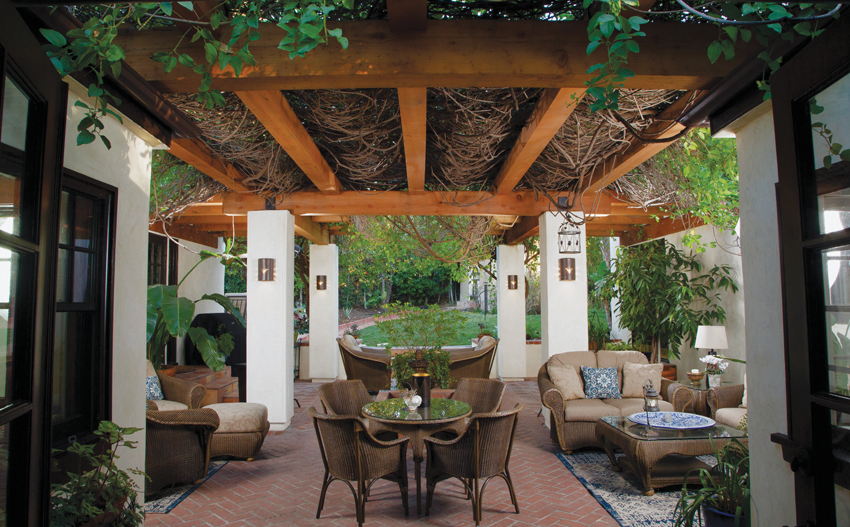
Photo: Jack Hutcheson Photography
Redwood timbers add organic beauty and warmth to indoor and outdoor rooms.
Contemporary homes tend to reflect a blend of styles, and while each design is an original, these homes tend to embrace several general strategies. The connection with the outdoors is paramount, and many contemporary home designs include ample windows and skylights that connect occupants with views, fresh air, and sunlight.
Open plans facilitate daylighting and encourage a more casual living pattern. Gone are the formal dining room and confined kitchen; instead, the kitchen connects to the living area and, just as importantly, to outdoor rooms and patios, where grilling and dining can occur. These open rooms must flow seamlessly into the outdoors, where outdoor rooms and landscaping complement the aesthetic of the main structure.
Contemporary home designs also tend to emphasize simplicity and function: narrow sightlines and an absence of ornament. But far from being austere, the contemporary home aesthetic is characterized by a preference for organic and “unprocessed” materials that work harmoniously with each other to create a sophisticated, modern look that is simple but warm. Often designers and clients show a preference for wood, metal, and stone, as well as an earth-toned or neutral color palette.
Of course, many of these choices play a role beyond simple aesthetics. Clients of custom homes often have many goals for their project, including energy efficiency, safety and security, health, and comfort and convenience. Some are also concerned about the environmental footprint of their home and want to do what they can to minimize negative impacts.
Designers and homeowners have never enjoyed such a variety of choices in nearly every design category, from windows and doors to flooring and finishes. With so many brands, styles, and finish options, the designer has the rewarding but undeniably challenging task of integrating all of these disparate elements into a harmonious whole and ensuring that these elements perform other required functions.
Fortunately, designers can rely on some timeless combinations and materials. Stone, wood, and metal never go out of style; these materials also tend to be durable and strong. Classic combinations include wood doors and cabinetry with metal pulls and hardware; exposed wood beams and metal roofing; and wood- or metal-clad windows and metal fabric shades.
Some specific examples show how durable, timeless materials can help create a harmonious aesthetic while contributing to other design goals.
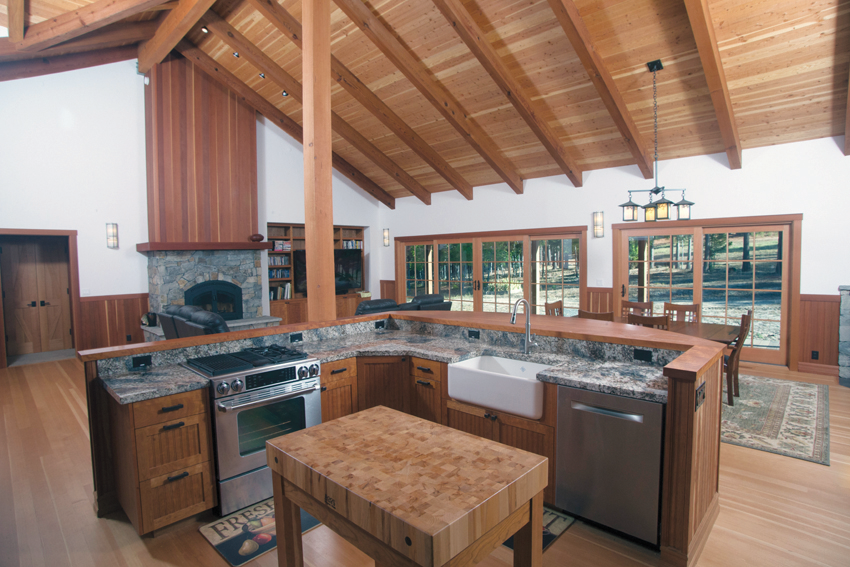
Photo: Jack Hutcheson Photography
Warm and versatile redwood is a material that can be used inside and outside the home in both structural and “appearance” products, such as tongue-and-groove ceilings.
Natural Warmth and Beauty: Redwood Timbers and Uppers
Wood is a classic design choice and one of the oldest building materials. It is beautiful, strong, and versatile, with an array of possible applications. It can be used indoors and outdoors, and in both structural or non-structural applications.
Of all the domestic wood species, coast redwood is among the most desirable. One of the lightest softwoods found in North America, redwood is also structurally strong, making it ideal for a wide range of structural applications where large timbers are required.
Timbers are the largest pieces of solid sawn lumber produced by sawmills, typically 5 inches thick and larger. Cut from the center of the tree, redwood timbers are a rich, reddish-brown tone. Being a natural product, each piece displays a unique grain pattern.
The use of redwood timbers for timber framing and exposed beam construction can produce dramatic results and lend natural beauty and strength to custom home projects. Redwood timbers can be used as posts and beams, in arbors, barns, shade structures, and trellises as well as the main home structure.
Upper grades are high-value appearance products used in finish applications, such as fascia, millwork, paneling, siding, trim, and wainscoting. Redwood upper grades can add natural warmth, beauty, and long-lasting durability to a custom home project. These uppers also exhibit Class B flame spread and are approved for use in California’s Wildland Urban Interface fire-hazard severity zones for exterior siding and decking.
When sourced from sustainably managed forests, redwood is an environmentally responsible design choice that sequesters carbon. Whatever the application, redwood can complement a variety of other materials and help create a distinctive aesthetic.
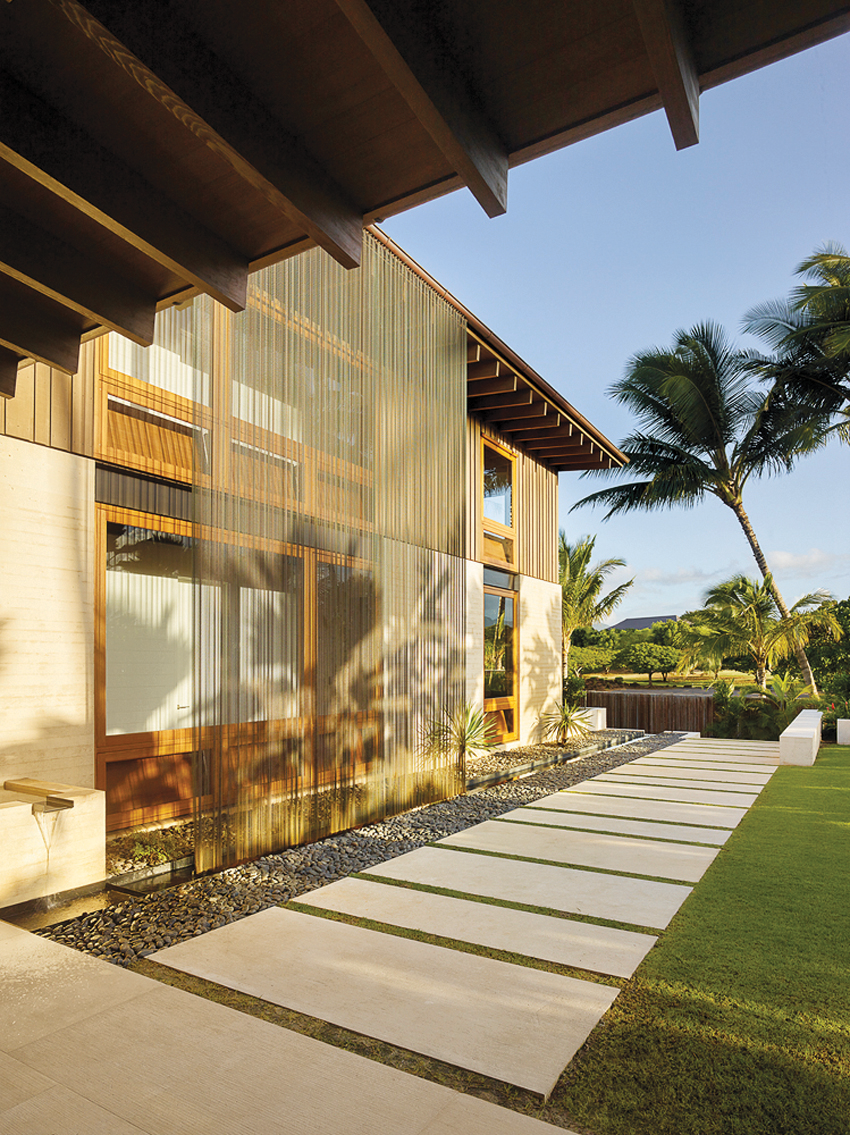
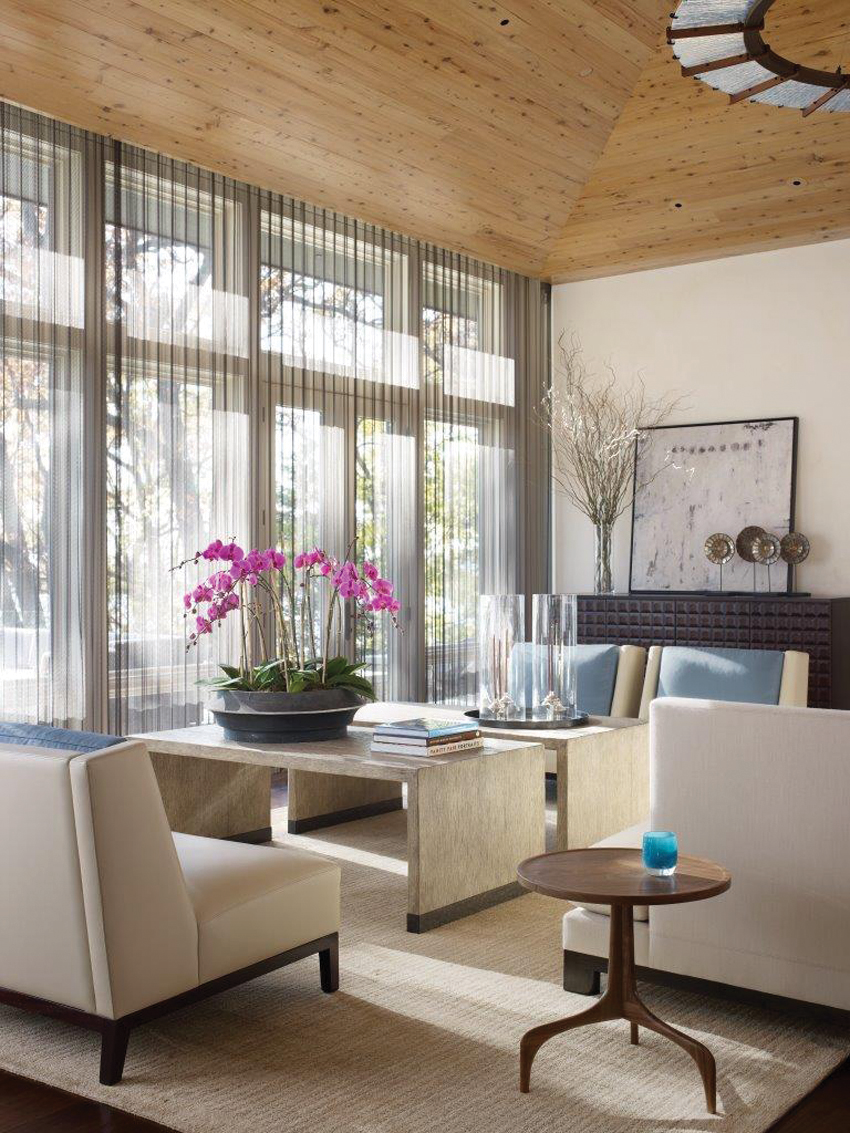
Photo: Matthew Millman Photography; courtesy of Walker Warner Architects
Coiled wire fabric makes a striking design statement while performing the important function of controlling solar gain and glare.
Versatile Style and Functionality: Coiled Wire Fabric Panels
Coiled wire panels are made by weaving strands of stainless steel wire into strong but flexible panels. These panels are highly decorative and versatile. They can be used both inside and on exteriors as cladding facades, solar shading, window and ceiling treatments, room dividers and partitions, and for architectural lighting effects. These panels are ideal for porches, patios, and other outdoor gathering spaces, as they enable air circulation and preserve views while controlling glare and heat gain.
Coiled wire fabric is highly customizable. Available in a range of weave sizes, gauges, and finishes, the panels can reflect and complement a range of architectural styles. The systems are operable; panels can be retracted to allow in more light or closed when the sun is at a lower position and prone to glare.
Coiled wire fabric can help reduce energy costs by controlling solar gain. The material is also easy to maintain, durable, and 100 percent recyclable, making it a good choice for clients striving to reduce the environmental impact of their projects.
Architects, interior designers, and custom homebuilders can take advantage of the design and engineering support offered by manufacturers of these systems, using the basic building blocks to create original designs tailored to the particular aesthetic of the home.
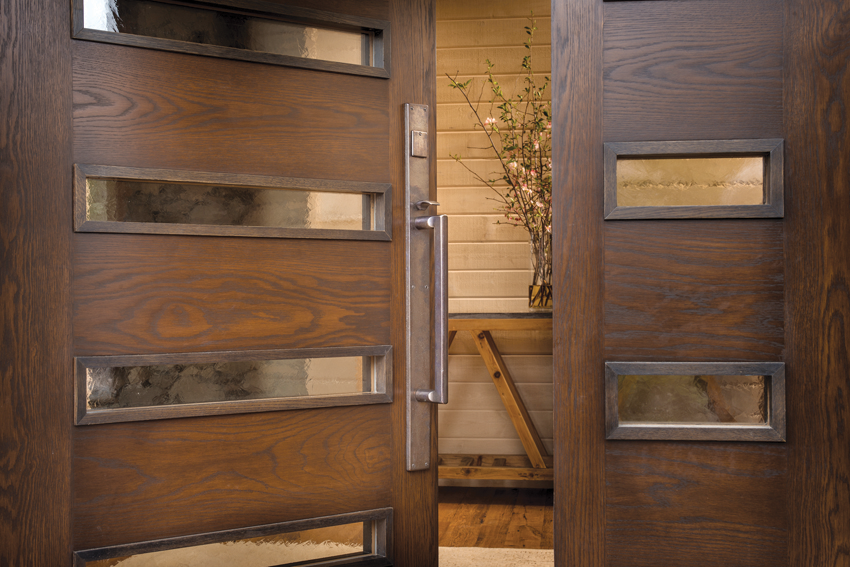
Photo courtesy of Rocky Mountain Hardware
Contemporary bronze pieces brighten up the custom wood entry doors and design elements in this updated Rocky Mountain A-frame home.
The contemporary custom home can trace its origins to the Modernist movement of the early and mid-20th century, and to trailblazing architects such as Frank Lloyd Wright, whose designs cultivated a deep connection between indoors and outdoors.
Photo: Jack Hutcheson Photography
Redwood timbers add organic beauty and warmth to indoor and outdoor rooms.
Contemporary homes tend to reflect a blend of styles, and while each design is an original, these homes tend to embrace several general strategies. The connection with the outdoors is paramount, and many contemporary home designs include ample windows and skylights that connect occupants with views, fresh air, and sunlight.
Open plans facilitate daylighting and encourage a more casual living pattern. Gone are the formal dining room and confined kitchen; instead, the kitchen connects to the living area and, just as importantly, to outdoor rooms and patios, where grilling and dining can occur. These open rooms must flow seamlessly into the outdoors, where outdoor rooms and landscaping complement the aesthetic of the main structure.
Contemporary home designs also tend to emphasize simplicity and function: narrow sightlines and an absence of ornament. But far from being austere, the contemporary home aesthetic is characterized by a preference for organic and “unprocessed” materials that work harmoniously with each other to create a sophisticated, modern look that is simple but warm. Often designers and clients show a preference for wood, metal, and stone, as well as an earth-toned or neutral color palette.
Of course, many of these choices play a role beyond simple aesthetics. Clients of custom homes often have many goals for their project, including energy efficiency, safety and security, health, and comfort and convenience. Some are also concerned about the environmental footprint of their home and want to do what they can to minimize negative impacts.
Designers and homeowners have never enjoyed such a variety of choices in nearly every design category, from windows and doors to flooring and finishes. With so many brands, styles, and finish options, the designer has the rewarding but undeniably challenging task of integrating all of these disparate elements into a harmonious whole and ensuring that these elements perform other required functions.
Fortunately, designers can rely on some timeless combinations and materials. Stone, wood, and metal never go out of style; these materials also tend to be durable and strong. Classic combinations include wood doors and cabinetry with metal pulls and hardware; exposed wood beams and metal roofing; and wood- or metal-clad windows and metal fabric shades.
Some specific examples show how durable, timeless materials can help create a harmonious aesthetic while contributing to other design goals.
Photo: Jack Hutcheson Photography
Warm and versatile redwood is a material that can be used inside and outside the home in both structural and “appearance” products, such as tongue-and-groove ceilings.
Natural Warmth and Beauty: Redwood Timbers and Uppers
Wood is a classic design choice and one of the oldest building materials. It is beautiful, strong, and versatile, with an array of possible applications. It can be used indoors and outdoors, and in both structural or non-structural applications.
Of all the domestic wood species, coast redwood is among the most desirable. One of the lightest softwoods found in North America, redwood is also structurally strong, making it ideal for a wide range of structural applications where large timbers are required.
Timbers are the largest pieces of solid sawn lumber produced by sawmills, typically 5 inches thick and larger. Cut from the center of the tree, redwood timbers are a rich, reddish-brown tone. Being a natural product, each piece displays a unique grain pattern.
The use of redwood timbers for timber framing and exposed beam construction can produce dramatic results and lend natural beauty and strength to custom home projects. Redwood timbers can be used as posts and beams, in arbors, barns, shade structures, and trellises as well as the main home structure.
Upper grades are high-value appearance products used in finish applications, such as fascia, millwork, paneling, siding, trim, and wainscoting. Redwood upper grades can add natural warmth, beauty, and long-lasting durability to a custom home project. These uppers also exhibit Class B flame spread and are approved for use in California’s Wildland Urban Interface fire-hazard severity zones for exterior siding and decking.
When sourced from sustainably managed forests, redwood is an environmentally responsible design choice that sequesters carbon. Whatever the application, redwood can complement a variety of other materials and help create a distinctive aesthetic.
Photo: Matthew Millman Photography; courtesy of Walker Warner Architects
Coiled wire fabric makes a striking design statement while performing the important function of controlling solar gain and glare.
Versatile Style and Functionality: Coiled Wire Fabric Panels
Coiled wire panels are made by weaving strands of stainless steel wire into strong but flexible panels. These panels are highly decorative and versatile. They can be used both inside and on exteriors as cladding facades, solar shading, window and ceiling treatments, room dividers and partitions, and for architectural lighting effects. These panels are ideal for porches, patios, and other outdoor gathering spaces, as they enable air circulation and preserve views while controlling glare and heat gain.
Coiled wire fabric is highly customizable. Available in a range of weave sizes, gauges, and finishes, the panels can reflect and complement a range of architectural styles. The systems are operable; panels can be retracted to allow in more light or closed when the sun is at a lower position and prone to glare.
Coiled wire fabric can help reduce energy costs by controlling solar gain. The material is also easy to maintain, durable, and 100 percent recyclable, making it a good choice for clients striving to reduce the environmental impact of their projects.
Architects, interior designers, and custom homebuilders can take advantage of the design and engineering support offered by manufacturers of these systems, using the basic building blocks to create original designs tailored to the particular aesthetic of the home.
Photo courtesy of Rocky Mountain Hardware
Contemporary bronze pieces brighten up the custom wood entry doors and design elements in this updated Rocky Mountain A-frame home.
Timeless Appeal: Hand-Cast Bronze Hardware
The selection of door and cabinet hardware can serve as a consistent design element that ties different parts of the home together. This is an especially important consideration with today’s open plans. Often such hardware is made of metal, which is strong and durable and can take on a variety of styles and finishes.
Bronze is an alloy of copper and tin; it is made by melting the two metals together and then pouring the molten material into molds. The resulting alloy is extremely durable and corrosion resistant.
Bronze was first created by human hands as early as 5000 BC. Over the millennia, it has been used for everything from coins, tools, and weapons to bowls, figurines, and fittings.
Today, bronze still has many applications, including the creation of versatile and durable hardware for custom homes. Truly a timeless material, bronze can be molded into a range of shapes, from simple to intricate, and is well-suited to contemporary, modern, and transitional styles. Bronze hardware adds an organic element to modern designs and is a classic complement to wood.
Highly skilled artisans draw on time-honored traditions to handcraft hardware and accessories for contemporary homes. However, these hardware products also benefit from digital technology. Computer numeric control (CNC) machines are used to fabricate lock mechanisms and other components. Locksets may look like art pieces from the outside, but they can house digital “smart locks” that can be opened using a digital code or voice control and/or controlled by a smartphone. At least one high-end manufacturer also offers extensive custom capabilities, with master craftsmen on staff who can create original patterns and 3-D modeling software that enables the user to perfectly match the finish and style with the materials of the door or other substrate.
Such products are inherently durable not only because of the raw materials used but also the care and craftsmanship that go into making them.
Custom Homes and Biophilic Design
Increasingly, the contemporary custom home is designed to connect occupants to the natural world. This connection is inherent to our well-being and health. Cycles of daylight and darkness, for example, help “tune” the body’s natural rhythms and affect several physiological processes, from sleep to digestion.
Biophilic design is a design approach in which architectural elements reflect people’s innate connection to nature. Biophilic design can be demonstrated through the use of natural materials, such as wood and metal; organic shapes, colors, and patterns; and through features that connect building occupants with outside views, sunlight, and fresh air.
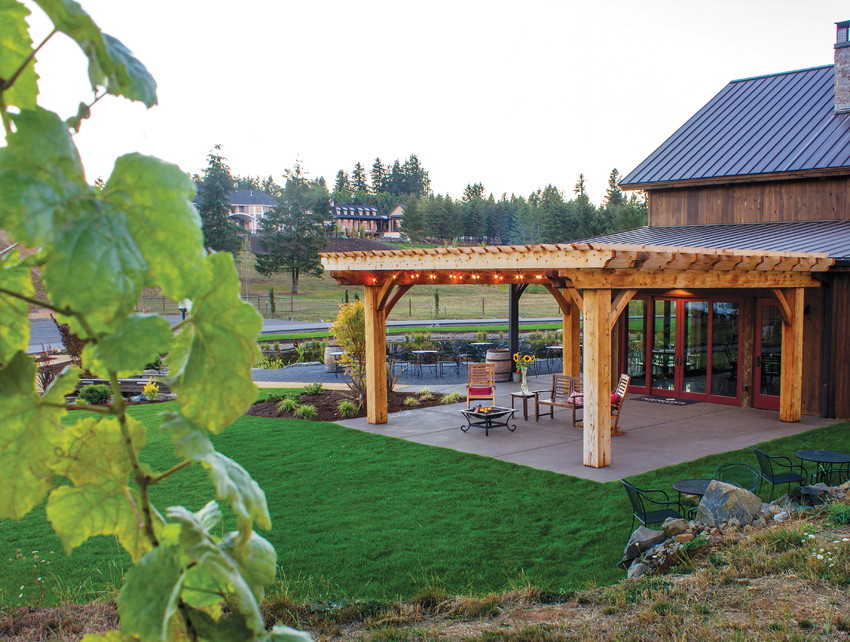
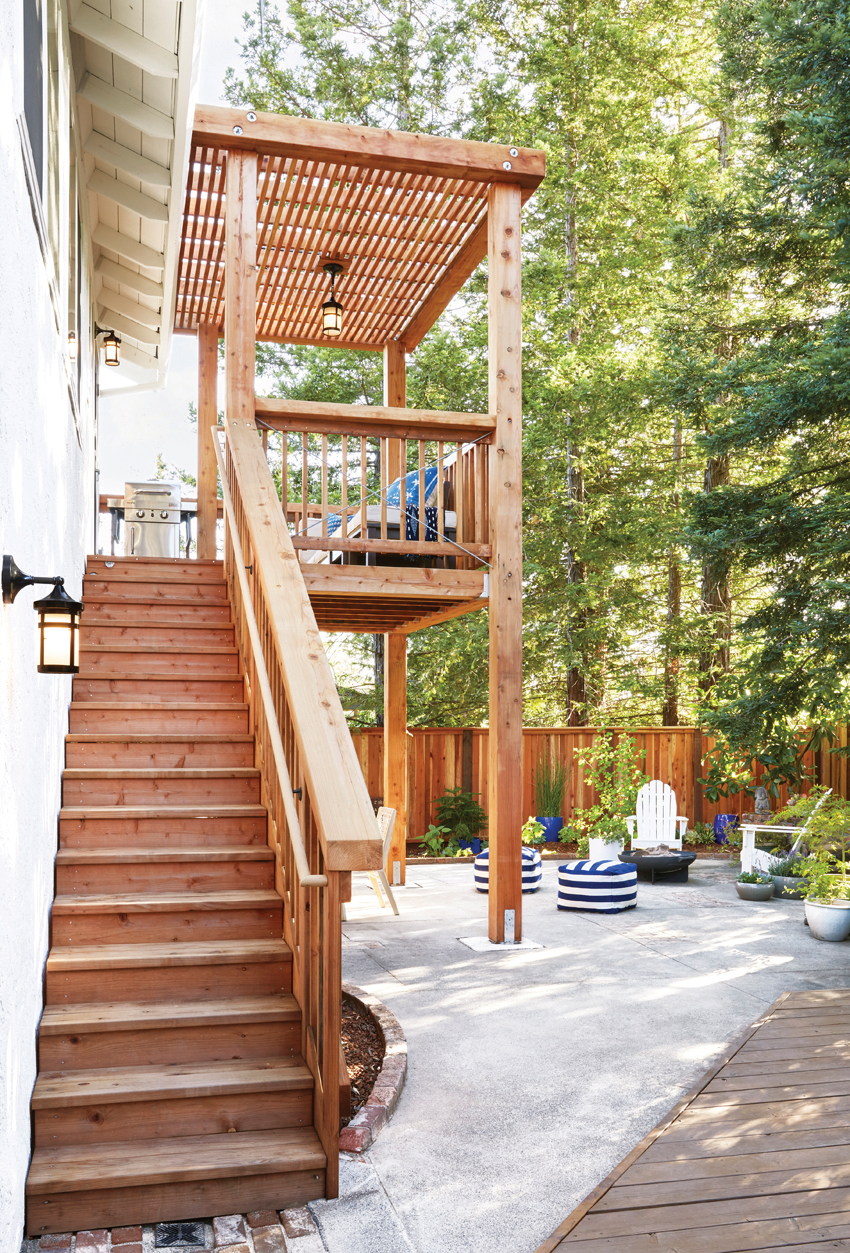
Photo: T.S. Whalen
An outdoor room, protected by a structure made with redwood, encourages people to spend more time outside.
The Natural Warmth of Wood
Wood is obviously a natural material. The colors, textures, grain patterns, and even the way it feels to the touch helps connect people to the trees and forests from which the lumber was sourced.
Redwood adds a timeless warmth to custom homes, and can help provide balance to the crisp lines and neutral palette exemplified in many contemporary homes. Wood is frequently used as an accent to bring warmth and natural beauty to the interior in the form of nonstructural beams, tongue-and-groove ceilings, wainscoting, flooring, cabinetry, and other nonstructural elements.
Redwood can also be used to create outdoor rooms, decks, and railings, and other elements, that invite people to step outside and reclaim their relationship with the natural world.
Finally, wood is extremely versatile and a natural complement to many other materials, from stone and metal to fabric and glass.
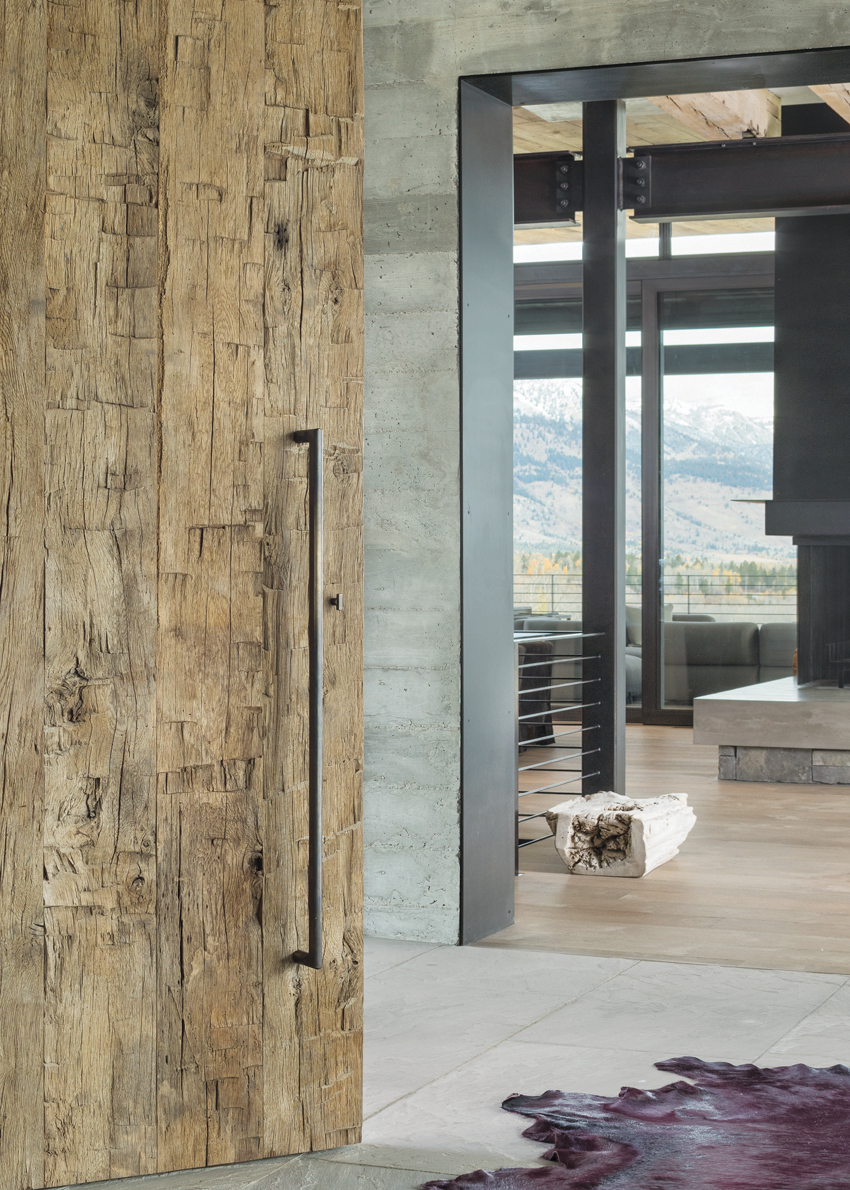
Photo courtesy of Rocky Mountain Hardware
A properly scaled hand-cast bronze handle pairs with this weathered-wood entry door to make a strong statement about connecting with the natural world.
Hand-Cast Metal and the Human Connection
We live in a time of increasing automation, where it is hard to see the connection between human hands and most manufactured products. Bringing hand-crafted elements into a custom home reminds us of the timeless relationship between humans and our precious natural resources.
Hand-cast bronze hardware adds a sophisticated but humane element to a contemporary custom home. These pieces are made using ancient techniques and raw materials mined from the earth. Biophilic designs can take the form of shapes, colors, and patterns inspired by nature. Some manufacturers offer collections that have a deliberately organic aesthetic: rounded edges, earth-toned finishes, and naturalistic shapes. These forms not only appeal to us on a deep level but also feel good to the touch. In addition, bronze hardware is a natural complement to other biophilic materials and shapes, whether crisply painted cabinetry or a reclaimed wood entry door.
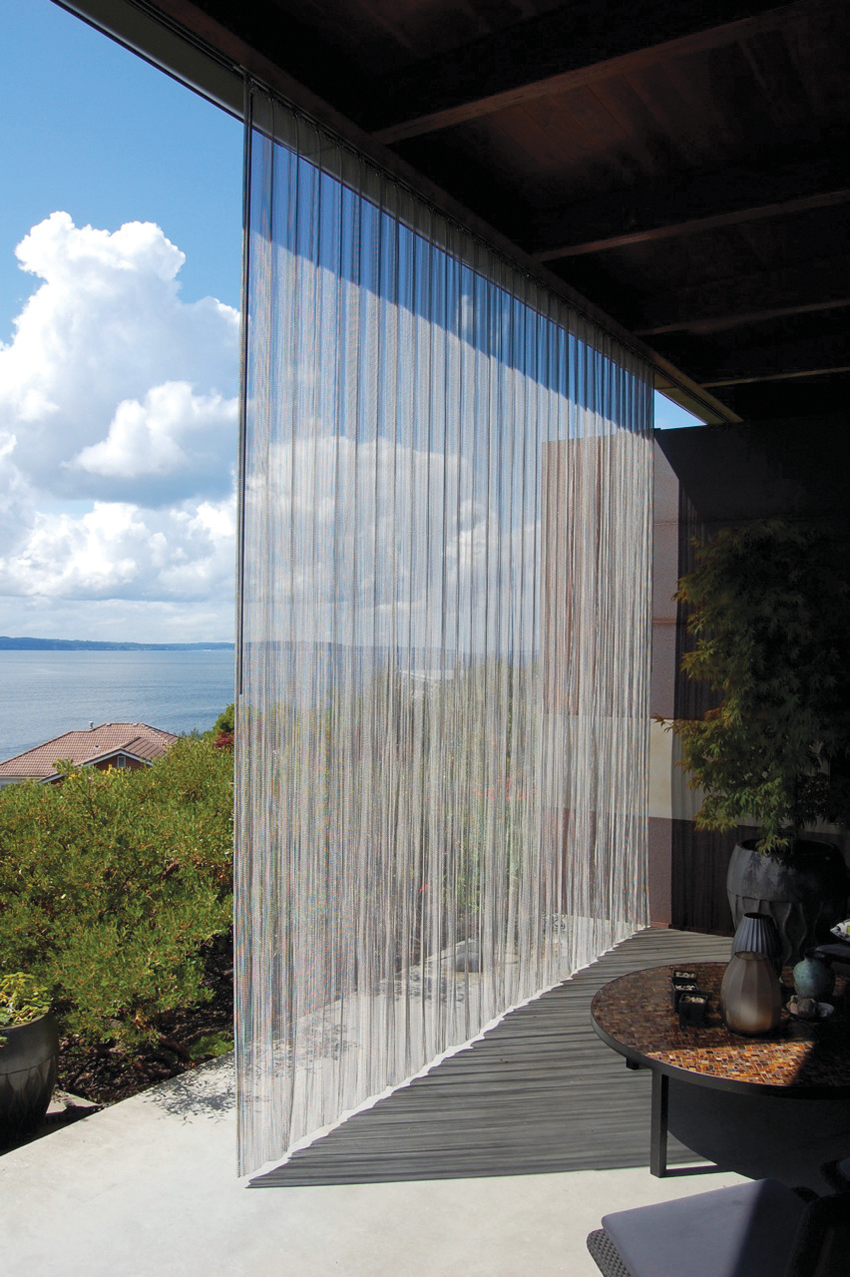
Photo courtesy of Cascade Architectural
Coiled wire fabric connects occupants with views and fresh air while controlling glare and solar gain.
Facilitating the Indoor-Outdoor Connection
Custom home clients often request generous windows, especially for framing views of natural features such as mountains. Architects and designers are also increasingly recognizing the value of daylighting and carefully balancing the desire for glazing with energy-efficiency goals.
Coiled metal drapery, which is made from a weave of stainless steel, facilitates the indoor-outdoor connection in several ways. The panels can be used to control solar gain and glare and modulate daylighting; in this way, sunlight is filtered and diffused into spaces and views are preserved. Because the panels are retractable, they can be adjusted throughout the day as light conditions change.
People often gravitate to windows or outdoor rooms and patios; however, these spaces can be uncomfortable if they are not protected from extreme temperatures, glare, and wind. Depending on the gauge and thickness of the wire, coiled wire fabric panels can be used on the exterior to mitigate sun, wind, wind-borne debris, and insects, thus creating a more comfortable outdoor environment that encourages people to stay outside longer.
Finally, coiled metal drapery is visually versatile. The fullness, gauge, and thickness of the wire can be adjusted to create everything from rigid architectural panels to billowy, transparent drapes. The repetitive pattern of the weave itself suggests a natural pattern or process, such as the cellular structure of beehives. The panels can be finished with a wide range of colors and effects if a more naturalistic effect is desired.
Satisfying Multiple Design Goals
When specifying products and materials for a custom home, every design choice must fall within the budget and meet the client’s aesthetic criteria. However, many materials and products must also perform other important functions—for example, contribute to energy performance, facilitate daylighting, and/or enhance the comfort, safety, and security of the home. Increasingly, homeowners have come to expect “connected” products that promise additional convenience or energy savings—appliances that can be controlled and monitored via a smartphone, for instance—and these features must be integrated without compromising the home’s aesthetic.
If one of the client’s goals is reducing the proejct’s environmental impact, the product must also be weighed for its impact on carbon emissions, waste, and depletion of natural resources. It is a complex task, and one that requires an incredible degree of expertise on the part of the design professional, on whom the client relies for guidance.
Let us consider some specific examples that demonstrate how a design choice can satisfy multiple goals while contributing to the overall aesthetic of the home.
Combining Timeless Style with Smart Technology
Door and cabinet hardware makes an important aesthetic statement. It is one of the first things you see—and touch—when you enter a home. High-quality hardware can complement doors and cabinetry, working with the style of the doors and drawers to help create a coherent style. Often, hardware is made with hand-cast metal—a natural complement to many species of finished wood, which is frequently used for contemporary doors and cabinets.
As something that is frequently handled, pulls, knobs, and other hardware must be ergonomic: pleasing to the touch and easy to use. On entry doors, hardware also performs an important security function. The mechanisms must be durable and reliable after repeated use.
“Smart locks” are also becoming increasingly popular. These offer several advantages: They do not require a physical key, which can be easily lost or misplaced, and the keyhole does not wear from excessive use. The lock can be customized so that each authorized person has a customized entry code, and often it can be controlled or programmed remotely with a smartphone. Many smart locks are compatible with smart home systems, such as Amazon Alexa or Nest. This way, the lock can be controlled by voice and/or synced with other smart home devices and programmed to trigger certain actions—for example, when the door unlocks, an entry light may switch on.
At least one manufacturer offers a Bluetooth-compatible smart lock that is available in any of the company’s hardware collections. All of the technology components are hidden within the mortise pocket so that it does not detract from the style of the piece. The lock still accepts a standard key in the event that the Bluetooth lock should fail.
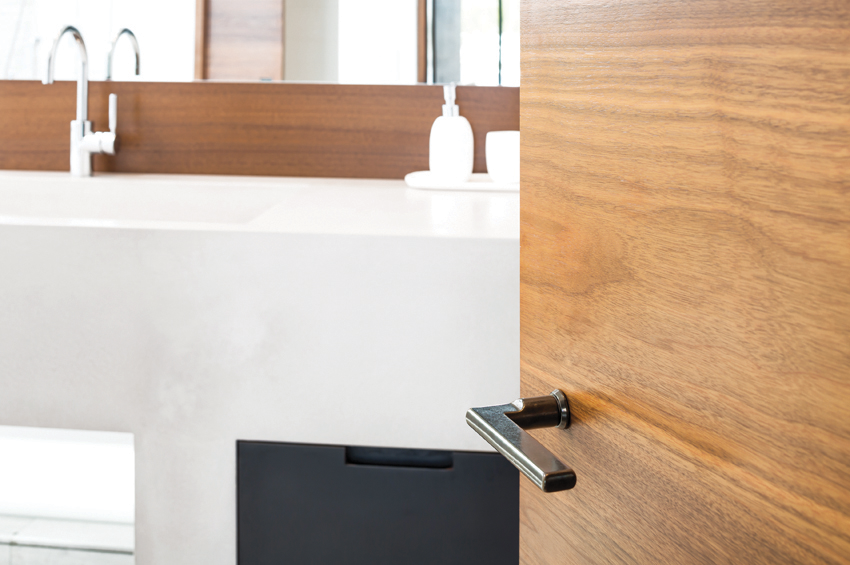
Photo courtesy of Rocky Mountain Hardware
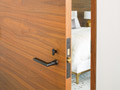
With minimalist and sleek profiles, these handles feature art-grade bronze, which elegantly complements the design of any door.
Coiled Wire Fabric Panels for Daylighting and Sun Control
Well-designed daylighting is critical for achieving a warm and welcoming interior in contemporary homes and for indoor and outdoor spaces. However, controlling glare and unwanted heat gain is critical. Designers often solve this problem with a combination of fixed and operable design strategies. For instance, awnings and overhangs, along with proper building orientation and the location, size, and number of windows, can control how much light enters the home at certain times of the year. However, these solutions often do not completely eliminate unwanted solar gain and glare and must be employed in tandem with movable or operable elements, such as shades, dividers, and/or retractable awnings.
All of these options are highly visible and must match the home’s aesthetic while serving their important function. If they are installed on the home’s exterior or in outdoor rooms or patios, they must also stand up to the elements, resisting rot, mildew, and insect infestation. In some cases, they must even protect windows against wind-borne debris and other impacts.
Hence, the material construction of shades or other sun control device is critical. Metal, whether brass, aluminum, or stainless steel, is a good choice for durability and weather and insect resistance. Shades and dividers can be made with a fabric made from coiled metal wire, which can be manufactured using a wide variety of metals and in various gauges, scales, colors, and finishes. The versatility of the fabric makes it ideal for a range of performance and design criteria.
Coiled wire fabric panels allow for the diffusion of both natural and artificial light throughout spaces. When used in window applications, this woven wire mesh facilitates daylighting, filtering sunlight without disrupting views to the exterior. Daylighting both helps reduce energy costs, as less artificial lighting is required, while providing a healthy, appealing environment for occupants.
Coiled wire fabric panels can also be used to control solar gain and glare—again, without compromising views or daylighting. This saves the homeowner energy costs, especially in cooling climates where summers are hot.
Whether used inside or on the home’s exterior, the panels become strong architectural elements that can be adjusted by selecting the type of metal, finish, thickness, and gauge of the weave. Even though the fabric shares the same basic construction, these variations can create everything from straight rectilinear panels to billowing drapes.
“When we think of sun control and rainwater retention, we are always searching for products that complement our palette of exterior materials,” says Thomas Clapper, LEED AP, senior associate, architect, Walker Warner Architects. “Coiled wire fabric is a natural choice for us. Whether we use it as a 20-foot-long rainwater diverter or a movable panel to cut the harsh sunlight, we are always delighted by the results.”
High-Performance Redwood
Most contemporary custom homes are constructed with wood. And while often the structure is hidden away and covered with drywall and sheathing, some designers deliberately showcase parts of the structure, leaving posts, beams, and other wood elements exposed. This is classically achieved in timber-frame construction and modified timber-frame designs.
On the exterior and outside the main home structure, wood is also used extensively, whether for siding as the structure for outdoor rooms, arbors, and pergolas; for decks, stairs, and railings; or for walkways, benches, and other landscape accents.
When used structurally, wood timbers need to be light and strong; if exposed, timbers should reveal a pleasing grain and color, and they should not crack or warp over time. When wood is used outside, whether structural or not, it is exposed to rain, ultraviolet sunlight, moisture, temperature extremes, and wear and tear from foot traffic and pets. Consequently, it is important to specify wood species that are naturally resistant to these forces. Some wood varieties, including cedar and redwood, are naturally rot and insect resistant; these species can be left untreated and will naturally weather to a soft pleasing gray color. The wood can also be finished with a stain, semitransparent stain, or paint, although maintenance will be higher.
The U.S. Department of Agriculture (USDA) Wood Handbook lists redwood as a naturally durable wood species. It is also beautiful. Redwood heartwood is cinnamon red in color and comes from the center of the tree. Naturally occurring tannins lend redwood heartwood natural resistance to termites and decay. Redwood sapwood is creamy yellow in color and comes from the outer section of the tree.
Tests by the USDA’s Forest Products Laboratory show that redwood loses less than 1⁄4 inch of wood fiber in 100 years of exterior exposure. When dried to 10 percent moisture content, redwood shrinks only 1.7 percent across vertical grain lumber and 3.3 percent across flat grain. This gives redwood the least volumetric shrinkage of commercially available domestic woods. Less shrinkage means less warping, cupping, and nail popping.
Redwood is lightweight, strong, and easy to work. Its open cell structure contains little pitch or resin, and it holds paints, stains, and other finishes extremely well.
Making Sustainable Choices
Architects and designers can specify products and materials that help meet a custom home project’s sustainability goals. There are many facets to sustainability. For example, a high-performance window contributes to a home’s energy efficiency, helping to lower energy usage (and costs) for decades. But there are other considerations. What is that window made of, and what did it cost—in terms of materials, energy, water, and waste—to make it? How durable is the window? Will it have to be replaced, or will it last the life of the building?
Third-Party Certifications
Third-party certification programs can help homeowners and designers achieve sustainability goals, whether that goal is to certify the project under a green building program such as LEED or the Living Building Challenge, reduce the project’s carbon footprint, or simply ensure a healthy home.
Several third-party programs can help vet products and materials and help designers make the most sustainable choices. Some of these—GREENGUARD, for example—focus on health, as evaluated by the emissions of certain chemicals. Others focus on a certain category of materials or practices. For example, the FSC certifies forests that employ sustainable practices as determined by a comprehensive set of metrics.
Other programs have a more general scope. Declare, for example, is a transparency program hosted by the International Living Future Institute. A Declare label discloses all of the “ingredients” in a product and whether that product contains any items on the “Red List,” a group of worst-in-class chemicals and compounds.
Following are some examples of how specifiers can use these programs to vet products and materials for custom homes.
FSC-Certified Forests
Redwood is an extremely durable, desirable, and versatile wood with many possible applications inside and outside the home. In general, wood is considered a renewable resource that sequesters carbon. However, forest practices vary widely, and clients and design professionals should rightly consider the source of the lumber to make environmentally responsible choices.
Coast redwood, sometimes called California redwood, grows exclusively in Northern California in the narrow “fog belt” hugging the coast. Before the Gold Rush, redwood forests once covered more than 2 million acres; today, only a fraction of that old-growth forest remains.
Though logging of the Redwood Region began decades before, whole-sale clear-cutting of these magnificent trees ramped up in the mid-1980s. In the early 1990s, environmentalists organized and worked with the federal government to pass the Headwaters Forest Agreement to stop logging of old growth, which ultimately led the industry to sustainable management and restoration of redwood forests in California. The vast majority (95 percent) of the remaining old-growth redwood forests are protected within parks and preserves. Since 1999, the redwood industry in California has been restoring the forests and has increased timberland yield each year with the practice of sustainable forest management.
Today, redwood is a responsible wood option. Choosing redwood lumber that is FSC certified can ensure that the manufacturer is committed to sustainable forestry practices. FSC certification entails an independent evaluation of a landowner’s forestry practices using strict environmental and socioeconomic standards. FSC also provides chain-of-custody monitoring, which tracks a product from an FSC-certified forestland to the final product.
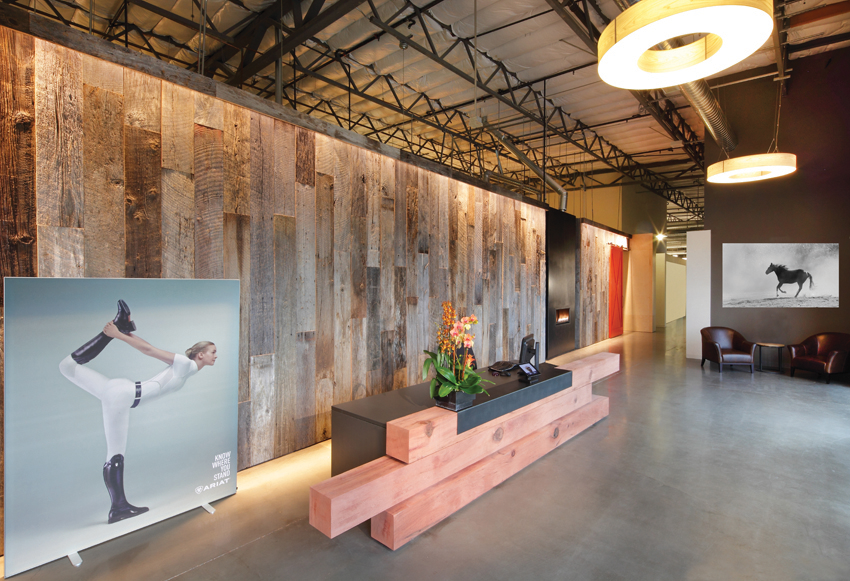
Photo: Bourne Photo
Today, discriminating clients can feel good about choosing redwood harvested from sustainably managed forests.
Using Declare to Vet Products
Many products are complex and contain many different components and materials. Adhesives and finishes are especially difficult to vet for health and toxicity. Some of these products may contain harmful chemicals, but it is often difficult to obtain information about them from manufacturers.
However, some companies are becoming increasingly transparent about their product ingredients; these manufacturers will have an advantage with specifiers who are looking for certified and toxin-free options.
In addition, researchers are developing high-performance alternatives that are also toxin free and/or have a lower carbon footprint. A good example is the development of blowing agents—used in spray-foam insulation—with low greenhouse gas potential.
Coiled wire fabric panels are a versatile solution for shade, providing solar control and glare protection while facilitating daylighting. These panels can offer both high design and energy savings; however, when used on the home’s exterior, they must be durable in the face of weather, insects, moisture, UV exposure, and more. Consequently, both the core material and finish are important for ensuring durability.
At least one manufacturer of stainless steel coiled wire drapery holds Declare labels for its products, several of which are Red List Free. This most stringent level of certification verifies that the product contains no items on the Red List, which is an inventory of chemicals and materials known to be harmful to humans. The International Living Future Institute has compiled the Red List as part of the Living Building Challenge. Other Declare labels for this manufacturer certify the product as LBC Compliant, which means it can be safely used in a Living Building Challenge project.
These products are finished with environmentally friendly powder coatings. They also contain no solvents, and emit trace, if any, volatile organic compounds, or VOCs.
Specifiers can access these labels from the Declare database and learn detailed information about the ingredients that make up each component, including the wire mesh, pigments, and tracking and accessories. The labels also disclose where the product is manufactured, its life expectancy, and recycling potential at the end of its life. This is valuable information for specifiers pursuing the Living Building Challenge or LEED, or for those simply trying to learn about the products so they can make responsible choices. Tracking down all of this information from manufacturers takes a good deal of time; manufacturers who are willingly transparent not only make the job easier for specifiers (and save the clients time and money), but they also gain a competitive edge.
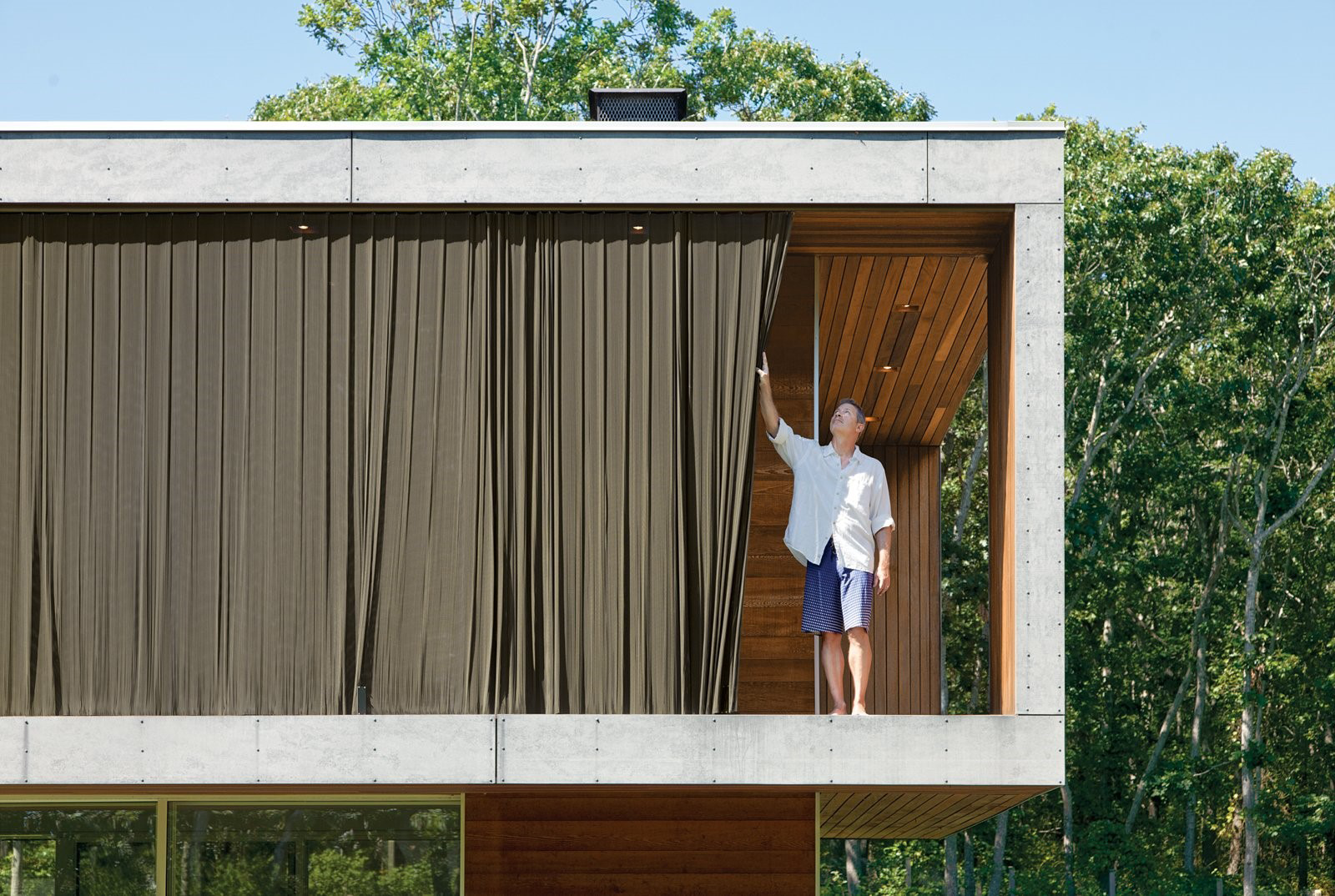
Photo courtesy of Cascade Architectural
By choosing products with Declare labels, clients can rest assured that their coiled wire drapery products do not contain any toxic or harmful chemicals.
Reducing Raw Material Extraction and Manufacturing Waste
One way to view environmental responsibility is to look at a company’s manufacturing facilities and the processes it employs. Does it strive to reduce water and energy usage and waste? Does it implement efficient waste and heat and water recovery and recycling? Does it use virgin or recycled materials? How carbon-intensive is the manufacturing process? How does the company treat its employees?
For example, manufacturers of bronze door and cabinet hardware should have in place practices that exemplify the company’s commitment to quality, the environment, and its employees.
First, look at the raw materials used in the hardware collections. How much recycled content is being used, and is it pre- or post-consumer material? Post-consumer material is an end product that has completed its life cycle as a consumer item and would otherwise have been disposed of as a solid waste. Notably, rates of post-consumer recycled content may be as great or greater than 90 percent.
Next, study the manufacturing process. For example, the sand that is used to cast molds may be recaptured for reuse, resulting in zero waste. Bronze chips and grinding dust may also be recycled, so there is no byproduct.
Company facilities are another indicator that manufacturers are committed to both environmental responsibility and the health and happiness of their employees. Some companies seek certification from third-party green building programs such as LEED, WELL, or the Living Building Challenge. Like individual product labels, these certifications ensure the facilities have met certain thresholds for energy efficiency, material selection, and building health.
Finally, look at company practices and the way a manufacturer treats its employees. Is it committed to equitable hiring practices and programs that promote employee health and well-being? Indicators to look for include health-care packages and services and opportunities at the workplace—gyms and yoga classes, for example—that encourage employees to take care of themselves.
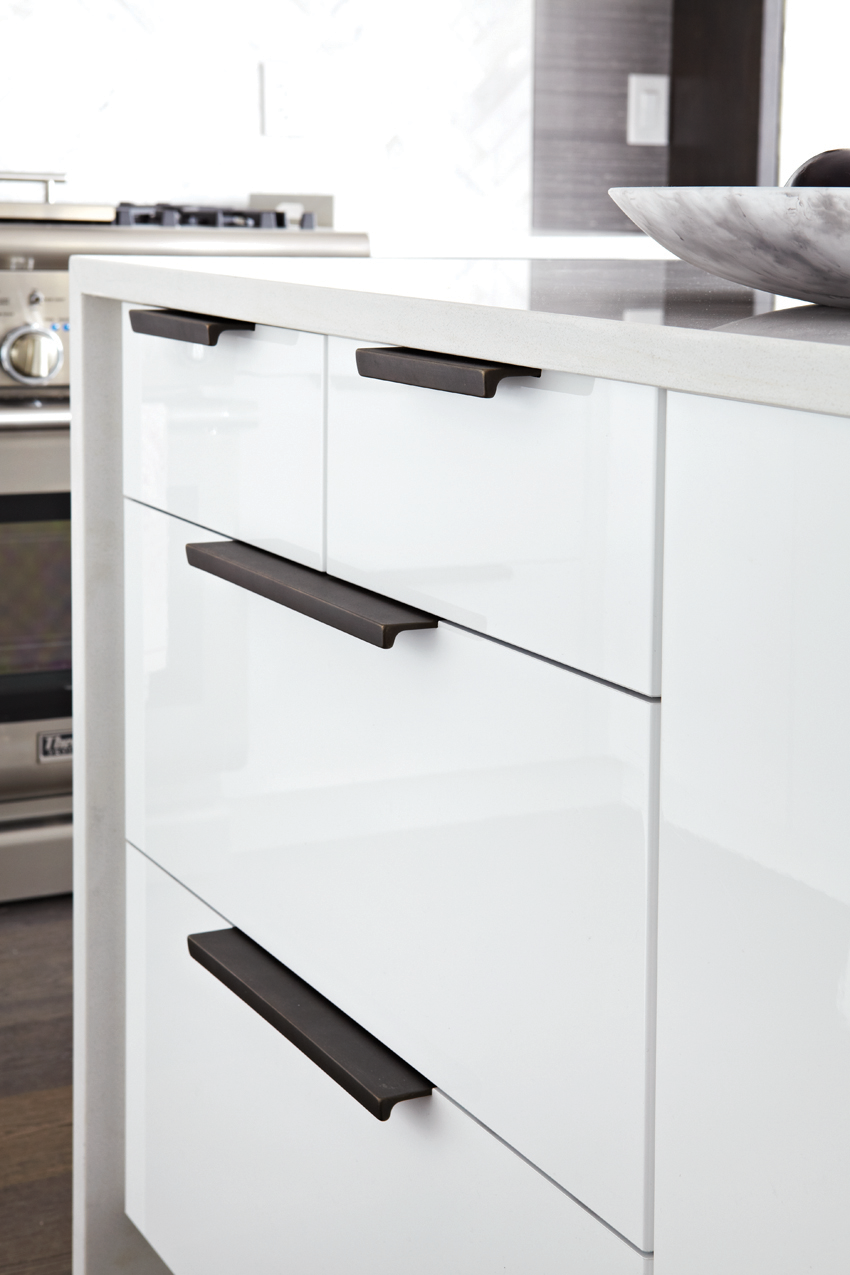
Photo courtesy of Rocky Mountain Hardware
Manufacturers of bronze pulls like the ones shown should exhibit a commitment to environmental responsibility and the well-being of its employees.
Working with Manufacturers
Designers of high-end custom homes expect a high level of customer and professional support. Specifiers will show preference to manufacturers who not only offer superior products but can also work with architects to design custom solutions for discerning clients. These services may include but are not limited to: modeling services, including energy modeling and 3-D renderings; structural engineering services; and in-house designers and engineers.
These services can help understand how selections will work with other material and product choices, ensuring a cohesive design. And while designers and homeowners have never enjoyed more choices, some clients may still require custom solutions. Hence, manufacturers that offer custom services will have an edge.
Customization and Customer Service
Most manufacturers of cast bronze hardware offer a number of collections that are certain to satisfy most customers. But those which offer flexible options and the ability to customize pieces will have an advantage. For example, an online “door hardware composer” may allow a customer to mix and match any of a company’s available escutcheons, handles, and finishes to create an original piece.
Beyond that, look for companies that can accommodate fully custom pieces. This will be determined in large part by their manufacturing capabilities. Custom pieces require a combination of hands-on craftsmanship and advanced technologies, and creating a custom piece involves a number of steps.
First, a highly trained craftsman hand-sculpts ideas into pattern boards and uses sand or wax to create casts. After the casting, the piece moves through a series of steps to add precise functionality. For example, CNC machines are used to create precise parts and mechanisms, while water-jet machines use high pressure to cut 2-D custom parts. Of course, these capabilities must be matched with an accommodating attitude on the part of the manufacturer. Company websites should provide examples of custom pieces and demonstrate a willingness to accommodate original designs.
Manufacturers of high-quality bronze hardware should stand behind their products. Look for strong warranties, such as a lifetime guarantee on material and workmanship. Some manufactures offers warranties that guarantee the internal mechanisms, including all locks and latches, for 50 years from the date of sale to the original user. Any defective product or parts that fall within these guidelines will be replaced. Comprehensive warranties and strong customer support send a message that a company believes in its products and the relationship with the customer does not end with the sale.
Comprehensive Design and Manufacturing Services for Coiled Wire Products
Coiled metal fabric is crafted from interlocking strands of coiled wire, which is used to form sheets of flexible metal fabric. These can be combined with engineered attachment systems for a range of turnkey solutions. This system is inherently flexible. Designers can choose material, gauge, color, coating/finish, weave thickness, open area, and engineered attachment system to meet specific project requirements, including design vision, functional requirements, and budget.
Coiled wire fabric systems are used as window treatments, dividers, canopies, awnings, and other custom shade structures. All of these systems, including the metal fabrics and mounting components, are fully customizable. Manufacturers of these systems should understand that architects and designers may not be as familiar with these systems and that they represent a change from solid dimensional materials. Consequently, companies that offers a range of design and job-site support services will have an edge. Services to look for include structural engineering, mechanical engineering, extrusion design, FEA analysis/modeling, drafting, shop drawings, schedules, architectural specifications, fabrication, and on-site installation consultation.
Expert in-house design and engineering services may be available to help with the development of drawings and material specifications for a specific application to ensure the design achieves the desired aesthetic effect while also meeting other goals, such as solar control.
The company should provide recommendations for the appropriate metal, coating, and aesthetic fullness, and have experts on hand who can advise designers on structural support requirements, attachment options, and even lighting and motion considerations.
Conclusion
Today’s custom homes are sophisticated and artful, with an emphasis on clean lines and authentic materials. Designers and homeowners are faced with a dizzying array of choices when designing a contemporary custom home. Designers must satisfy multiple goals, first ensuring the selection aligns with the project’s aesthetic design and budget, but then also making sure it contributes to other important goals, such as energy efficiency, comfort, security, health, and environmental responsibility. Fortunately, many manufacturers are dedicated to quality and transparency. Many not only offer an array of high-quality choices but will also work with the designer to come up with the perfect solution to satisfy a discriminating client.