This CE Center article is no longer eligible for receiving credits.
In a post-COVID world, building owners and occupants want assurance that the buildings they own and occupy are healthy and safe. Many of the modifications enabling health and safety are likely to create higher noise levels. Acoustical comfort, including the ability to focus, collaborate, or have confidential conversations, will need to be addressed in a way that is both effective and aesthetically pleasing.
This course will help building professionals meet the challenges of designing, renovating, and maintaining facilities, and the role that the ceiling can play in addressing new noise concerns without detriment to design. It will explore the negative effects of noise and solutions to lessen these to promote wellness, as well as factors impacting acoustics as a result of changes in material and layout criteria to address cleanability, de-densification, and physical/ social distancing. The course will also take a close look at the role that ceiling systems can play in creating well-designed sound, and identify solutions that are currently available to enable positive experiences for human health, well-being, and comfort in the built environment.
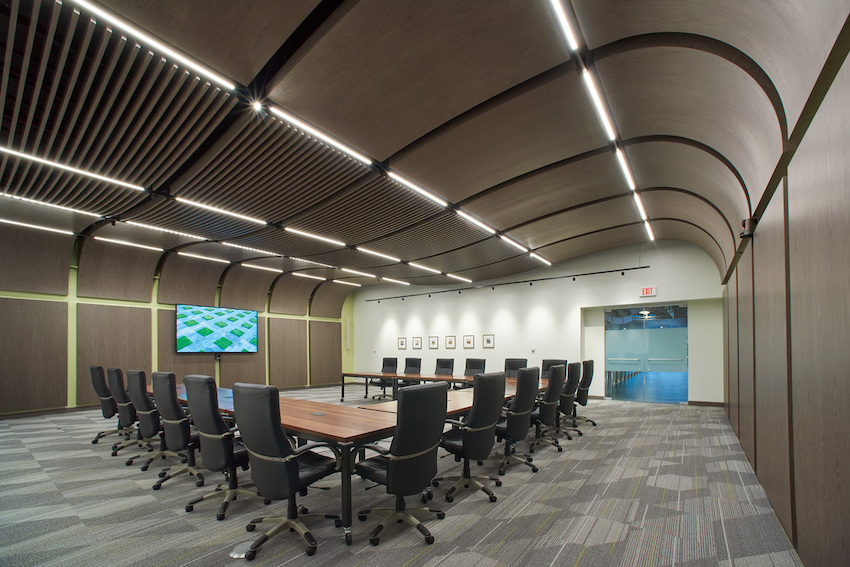
Photo courtesy of Armstrong Ceiling and Wall Solutions
Perforated wood ceilings are one of many ways beyond traditional acoustical tiles to reduce noise, adding sound absorption and sound blocking for quieter spaces.
In a post-COVID world, building owners and occupants want assurance that the buildings they own and occupy are healthy and safe. Many of the modifications enabling health and safety are likely to create higher noise levels. Acoustical comfort, including the ability to focus, collaborate, or have confidential conversations, will need to be addressed in a way that is both effective and aesthetically pleasing.
This course will help building professionals meet the challenges of designing, renovating, and maintaining facilities, and the role that the ceiling can play in addressing new noise concerns without detriment to design. It will explore the negative effects of noise and solutions to lessen these to promote wellness, as well as factors impacting acoustics as a result of changes in material and layout criteria to address cleanability, de-densification, and physical/ social distancing. The course will also take a close look at the role that ceiling systems can play in creating well-designed sound, and identify solutions that are currently available to enable positive experiences for human health, well-being, and comfort in the built environment.
Photo courtesy of Armstrong Ceiling and Wall Solutions
Perforated wood ceilings are one of many ways beyond traditional acoustical tiles to reduce noise, adding sound absorption and sound blocking for quieter spaces.