Photography: sterling e stevens DESIGN PHOTO; courtesy of Eurostar Fenestration
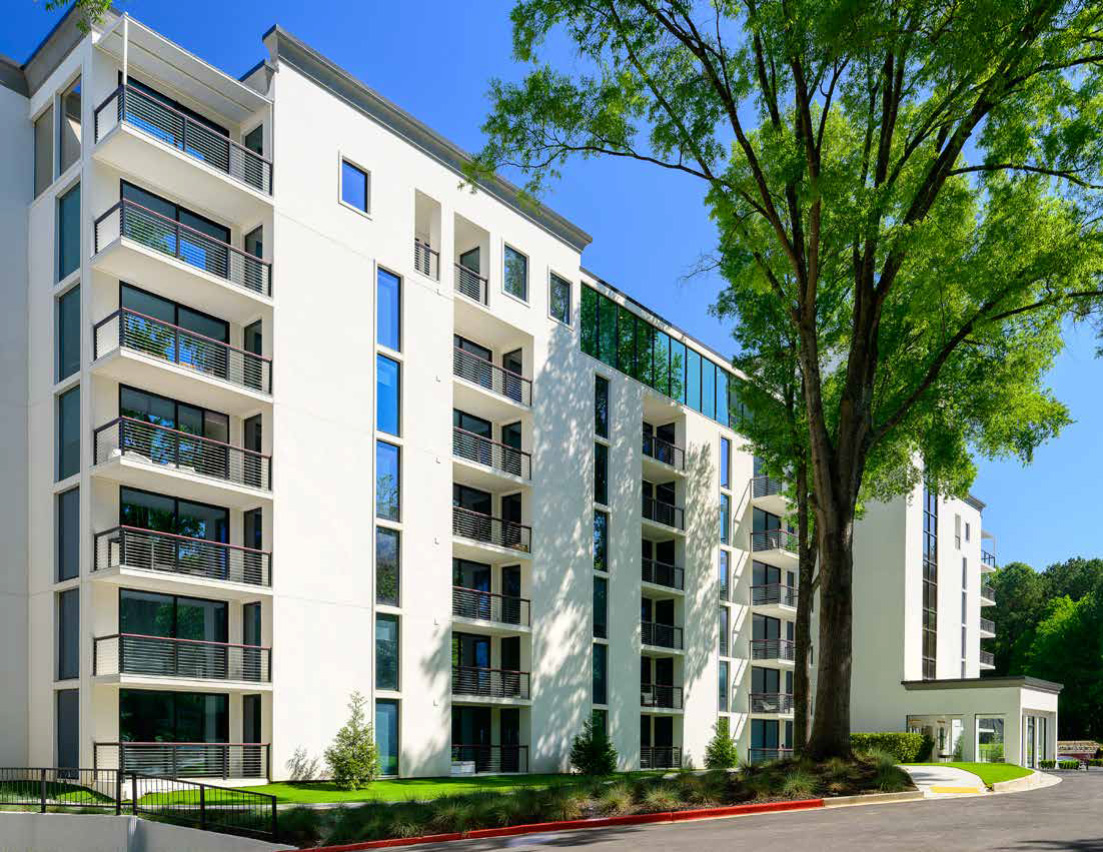
With the nation still experiencing home affordability challenges, many renters are choosing to stay in the rental market, according to the National Association of Home Builders. Architect: Laura Hudson Architecture, PLLC General Contractor: Beverly-Grant Inc.
The State of Things: Surveying Multifamily Market Trends
Residential construction trends, as reported by the U.S. Census Bureau and the U.S. Department of Housing and Urban Development (HUD), show that, despite steady rental demand, multifamily remains a complex environment influenced by economic uncertainty and the regulatory environment.1 The multifamily market in 2026 is experiencing a period of slower, if steady growth, shaped by higher construction costs, rising interest rates, economic uncertainty, and a significant influx of new supply over the past year.2
Despite the cautious adjustment to a high-cost environment rife with conflicting policy signals and market shifts, multifamily homes remain an increasingly popular option for U.S. households embracing all demographics, from young families just starting out to empty-nesters looking to downsize. According to the American Housing Survey and the U.S. Census Bureau, approximately 43.9 million residences, or 31.4 percent of housing in the U.S. today, are multifamily.3
Concurrent with these findings, CBRE’s U.S. Real Estate Market Outlook 2026 reports that barriers to homeownership will continue to support multifamily demand. Challenges for would-be homeowners in 2026 include a 105 percent monthly premium to buy versus rent, an estimated shortage of 3.4 million single-family homes, high mortgage interest rates, and elevated home prices.4 Additionally, fewer existing homeowners are willing to sell due to interest rates, which in turn will drive multifamily lease renewals.
Not only is affordability prompting multifamily demand, but it is also fueling growth in outer suburbs or satellite cities near larger metro areas. Since the beginning of 2020, rapidly growing tertiary markets have accounted for 80 percent of the top 25 metro areas in absorption as a percentage of stock, according to Yardi Matrix data. Among those top 25 markets are Boise, Idaho (35.5 percent of stock), Lafayette, Louisiana (32.3 percent), Charleston, South Carolina (30.5 percent), the Southwest Florida Coast (30.4 percent), Greenville, South Carolina (27.8 percent), Madison, Wisconsin (25.9 percent), and Huntsville, Alabama (25.5 percent).5
General Trends in Design
With greater and more diverse demographics placing demand on stock, multifamily home designs are getting smarter, healthier, and more high-tech. According to the National Association of Home Builders (NAHB), buyers are looking for spaces that are good for the environment, as well as homes that can reduce energy costs while using resources responsibly.6 Buyers are also prioritizing the new incorporation of high-tech devices, allowing them to check performance factors like energy use with their smartphone or to connect to the internet with Wi-Fi covering every spot in the building.
Increasingly, designers are prioritizing cleanability and durability, qualities that benefit both residents and owners over the long term.7 This durability plays hand in hand with the growing emphasis on timeless materials that highlight nature, light, and simplicity. Natural, clean forms that transcend trends are performing better across market cycles; visually heavy interiors, which accentuate micro trends, are growing less common and can date a space quickly.
Trend Watch: Enhancing Efficiency and Energy
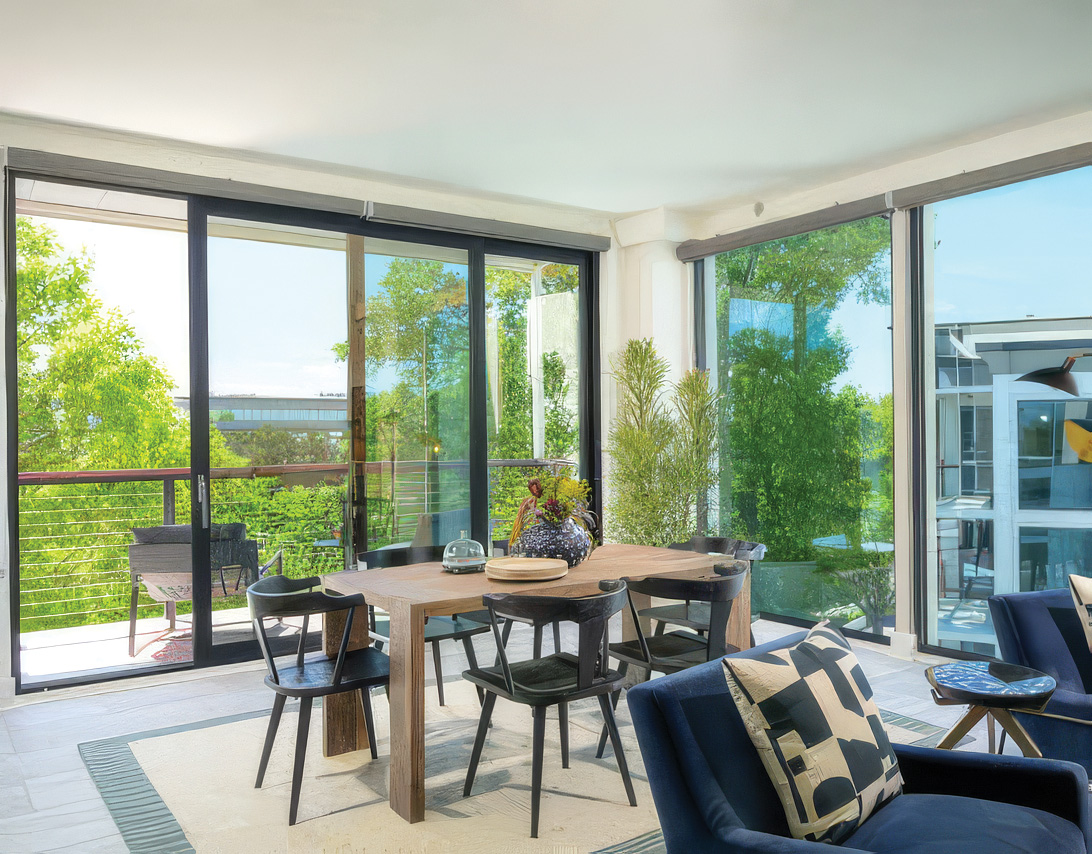
Photo courtesy of Eurostar Fenestration
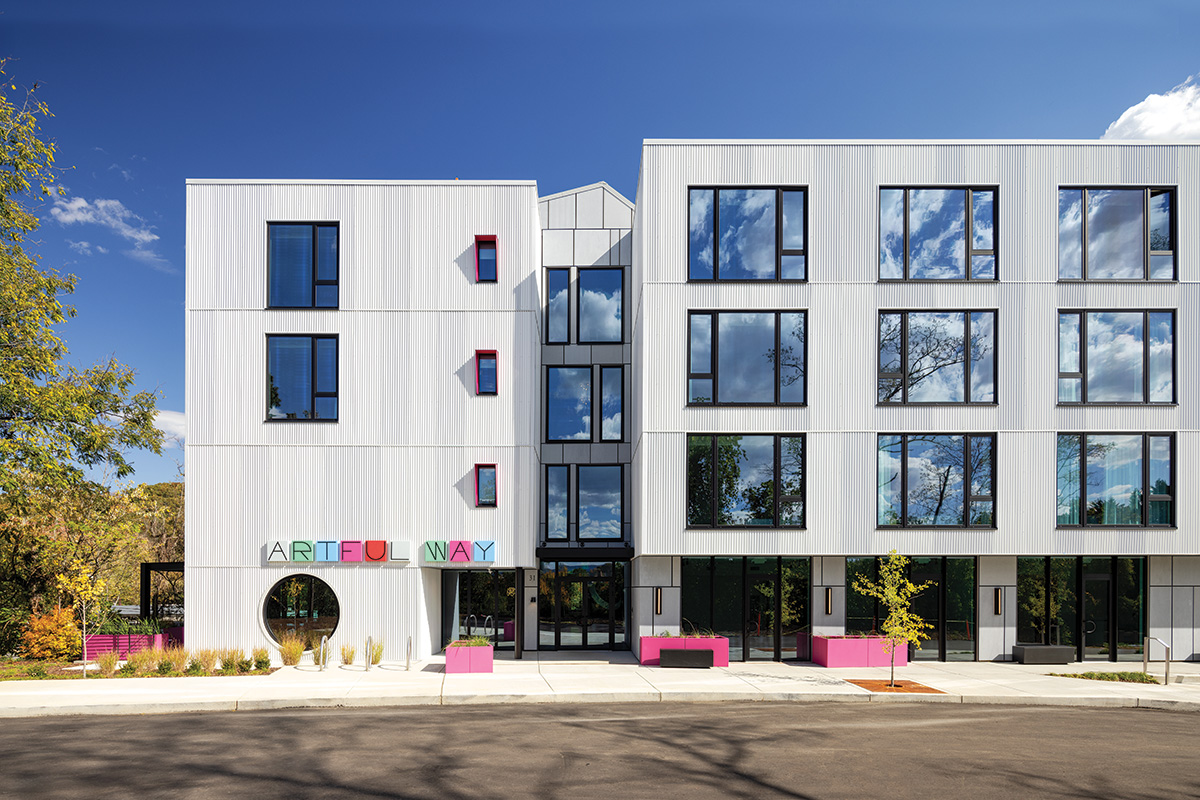
The modern design demand for glass must also satisfy code and occupant requirements for enhanced efficiency and performance. Developer: 58-Twelve Development.
Contemporary multifamily designs increasingly favor greater incorporation of natural light and connectivity to outdoor spaces. However, fenestration can be one of the largest contributors to energy loss, air infiltration, and thermal bridging in multifamily buildings.
The answer to the tension between daylighting and efficiency is modern high-performance fenestration systems that facilitate expansive glazing while maintaining thermal, structural, and acoustic performance.
Advanced window and door systems with thermally optimized frames, multi-pane glazing, and robust sealing technologies can significantly improve energy performance, occupant comfort, and resilience, allowing for larger glass areas without compromising total energy performance. Developers and architects are prioritizing energy efficiency and resilience in the face of climate pressures and rising energy costs, driving interest in and prioritization of thermally optimized frames, advanced glazing, and improved sealing technologies. High-performance windows and doors utilizing this technology are central to building envelope efficiency and are taking a prominent role in multifamily designs. Architect Alexander Zilberman, AIA, of AZA Design in New York City reports designing more oversized windows and doors with triple panes and other coatings to cut energy costs while also maximizing sight lines, views, and light for occupants.8
Beyond meeting code minimums for performance, design firms are maximizing the building’s facade for energy efficiency and re-examining both the construction materials they use and how a building interacts with its environment.9 With advances in glazing and frame technology, fenestration is being incorporated into whole-building approaches for Passive House, net-zero energy, and resilient, sustainable multifamily design. A high percentage of glazing is associated with health benefits, natural lighting, an enhanced sense of well-being, and even increased accessibility. For Philip Consalvo, principal at PJCArchitecture, his firm’s design strategy centers on creating architecturally fluid layouts that reduce visual clutter and maximize natural light.10
Window performance does not depend solely on the glass. Frame design, seals, hardware, and installation all significantly affect overall performance. Advanced fiberglass window frame technology combines the flexibility of uPVC with the strength of fiberglass to deliver energy-efficient, low-maintenance performance across a wide range of building types. This hybrid construction window framing enhances structural stability, resists warping and thermal expansion, and supports long-term durability in demanding environments.
For multifamily applications, advanced fiberglass window frames provide a dependable window system that balances performance with design. Available refined profiles and clean lines complement modern architectural styles, while advanced insulation properties help improve interior comfort and reduce energy costs. The result is a solution that supports both developer priorities and resident satisfaction, matches frame performance to advanced glazing, and delivers lasting quality, visual appeal, and everyday livability.
Trend Watch: Technology Integration
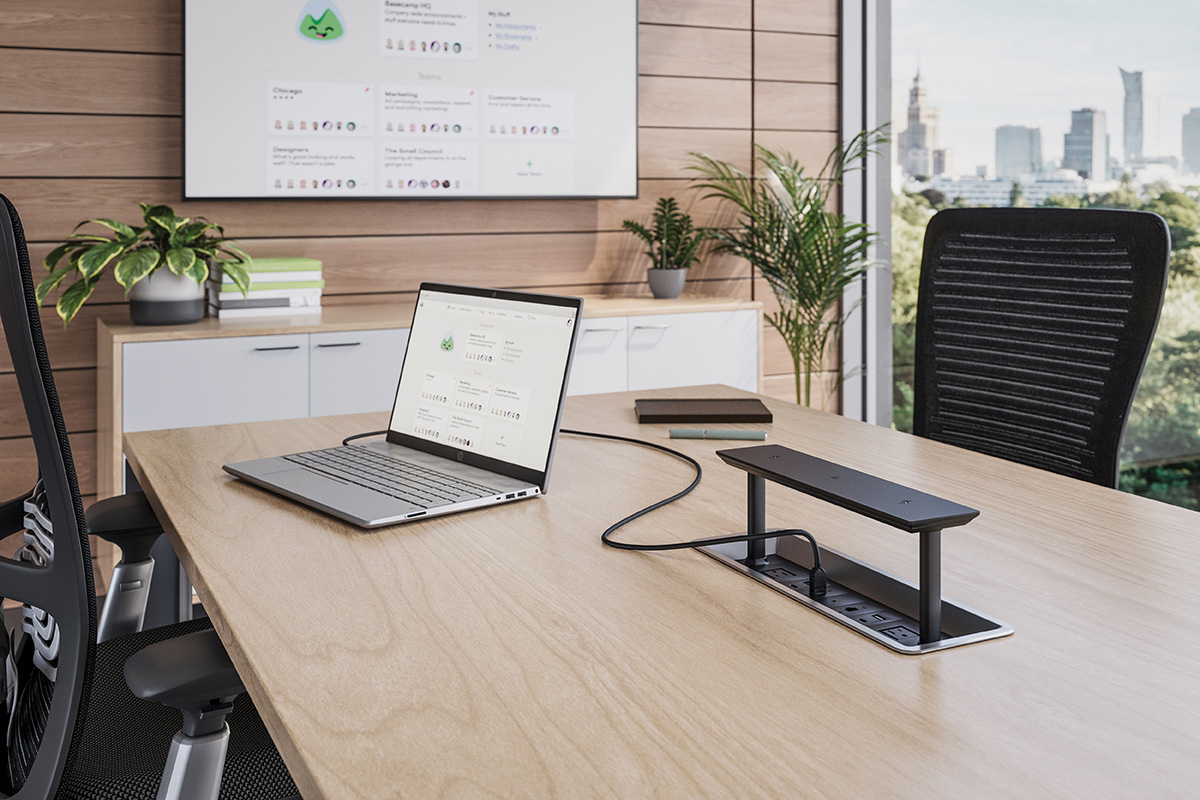
Photo courtesy Mockett
In a technology-centric world, architectural hardware is moving from simply supplying power to considering the aesthetics of power delivery.
Market trends reveal that a goal within successful multifamily planning is designing amenities for use, rather than optics. Design professionals at these projects are prioritizing how spaces are used and investing in spaces where engagement is strongest. For example, work lounges, multipurpose rooms, generous outdoor areas, and service touchpoints that reduce friction are increasingly outperforming flashier, single-use amenities because they feel purposeful.11 Specifically, multifamily is experiencing a dramatic shift with amenity spaces being allocated toward large, coworking areas. Small, nimble business centers have become a dated trend. Large, open concept coworking spaces greater than 1,000 square feet are replacing these centers and are outfitted with desks, soft seating, accessible charging stations, and ample natural light.12
Techno-centric spaces are a design reality, both in private residences and shared areas; Humphreys & Partners Architects notes that more technology will be incorporated throughout communities.13
Managing the increased amount of technology means harnessing the power needs for those devices. Achieving simplicity and harmony in a space is complicated by the inevitable cords, outlets, and technology hubs. Advances in architectural hardware, however, are allowing designers more control over these aesthetics.
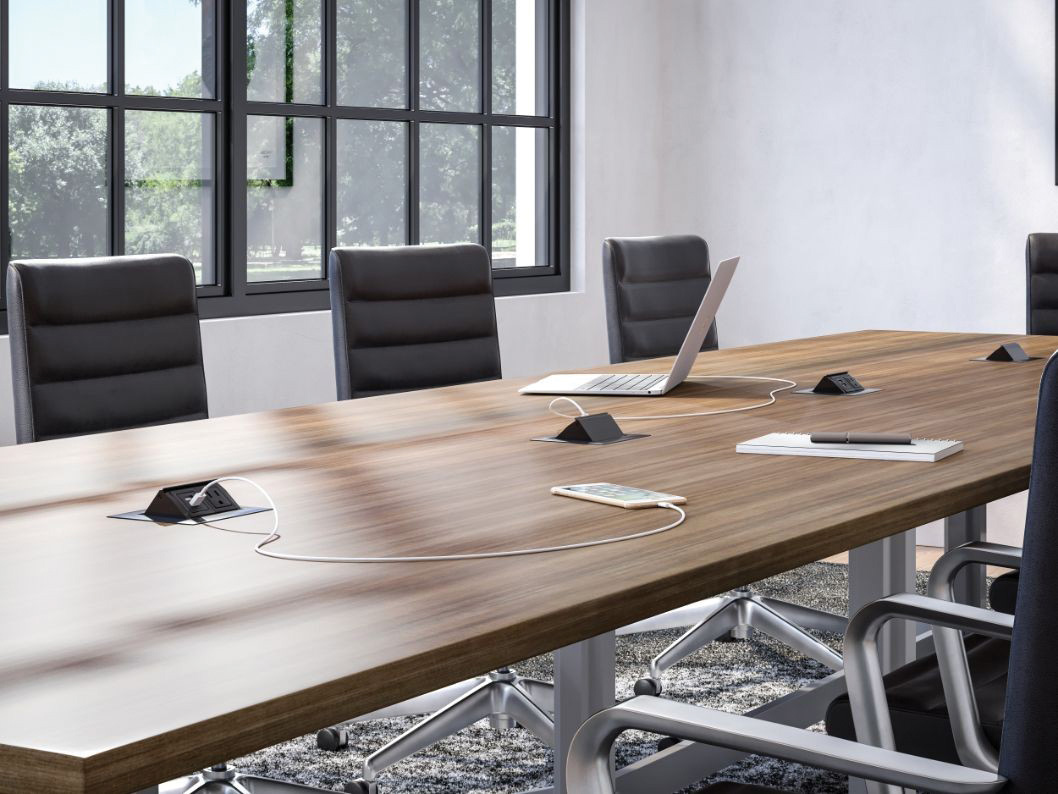
Placing access points in unique areas is one integration strategy. Sleek flip-up power outlets and USBA+C access points with a flip-up carriage that pops up when needed and folds down for a flush look with the surface when not in use are not only refining desks and counters but also may be mounted in furniture. When incorporated with appropriate connectors, multiple units can link together on a single circuit via daisy chain connector plugs. This allows designers to outfit furniture with multiple power stations when access to power in a floor core or at the wall is limited.
Likewise, undermount power units mounted underneath the front edge of the desk or work surface make power options easily accessible while freeing the work surface from clutter. This is a flexible option for smaller spaces that are unable to accommodate traditional desktop power grommet options due to space constraints.
Wire management systems consisting of an aluminum track and L-shaped locking brackets allow safe and directed containment for wires, cords, and cables. The system brackets are large enough and heavy-duty enough to hold multiple cables and wires and allow wiring to enter and exit at any point, making this system quite flexible. Usually mounted in a horizontal plane under or behind a work surface, these systems contain and confine wiring and cords, preventing tangling and eliminating visual clutter and trip hazards. Likewise, desk wire managers are small, durable fittings that guide and protect cables on desks, countertops, or workstation panels. These fittings not only organize cables by reducing tangling, but they also create a streamlined, professional look. Cable grommets prevent unnecessary wear and tear on cords by keeping them securely in place.
Wireless charging pads offer some of the most innovative options to power devices while containing wired chaos. Not only do they provide universal charging for multiple devices, but they also forgo surface wiring, creating a sleek, minimalist style with a contemporary touch that incorporates nicely into any workstation. These curated features align with residents’ daily routines while reducing visual clutter.
Photography: sterling e stevens DESIGN PHOTO; courtesy of Eurostar Fenestration
With the nation still experiencing home affordability challenges, many renters are choosing to stay in the rental market, according to the National Association of Home Builders. Architect: Laura Hudson Architecture, PLLC General Contractor: Beverly-Grant Inc.
The State of Things: Surveying Multifamily Market Trends
Residential construction trends, as reported by the U.S. Census Bureau and the U.S. Department of Housing and Urban Development (HUD), show that, despite steady rental demand, multifamily remains a complex environment influenced by economic uncertainty and the regulatory environment.1 The multifamily market in 2026 is experiencing a period of slower, if steady growth, shaped by higher construction costs, rising interest rates, economic uncertainty, and a significant influx of new supply over the past year.2
Despite the cautious adjustment to a high-cost environment rife with conflicting policy signals and market shifts, multifamily homes remain an increasingly popular option for U.S. households embracing all demographics, from young families just starting out to empty-nesters looking to downsize. According to the American Housing Survey and the U.S. Census Bureau, approximately 43.9 million residences, or 31.4 percent of housing in the U.S. today, are multifamily.3
Concurrent with these findings, CBRE’s U.S. Real Estate Market Outlook 2026 reports that barriers to homeownership will continue to support multifamily demand. Challenges for would-be homeowners in 2026 include a 105 percent monthly premium to buy versus rent, an estimated shortage of 3.4 million single-family homes, high mortgage interest rates, and elevated home prices.4 Additionally, fewer existing homeowners are willing to sell due to interest rates, which in turn will drive multifamily lease renewals.
Not only is affordability prompting multifamily demand, but it is also fueling growth in outer suburbs or satellite cities near larger metro areas. Since the beginning of 2020, rapidly growing tertiary markets have accounted for 80 percent of the top 25 metro areas in absorption as a percentage of stock, according to Yardi Matrix data. Among those top 25 markets are Boise, Idaho (35.5 percent of stock), Lafayette, Louisiana (32.3 percent), Charleston, South Carolina (30.5 percent), the Southwest Florida Coast (30.4 percent), Greenville, South Carolina (27.8 percent), Madison, Wisconsin (25.9 percent), and Huntsville, Alabama (25.5 percent).5
General Trends in Design
With greater and more diverse demographics placing demand on stock, multifamily home designs are getting smarter, healthier, and more high-tech. According to the National Association of Home Builders (NAHB), buyers are looking for spaces that are good for the environment, as well as homes that can reduce energy costs while using resources responsibly.6 Buyers are also prioritizing the new incorporation of high-tech devices, allowing them to check performance factors like energy use with their smartphone or to connect to the internet with Wi-Fi covering every spot in the building.
Increasingly, designers are prioritizing cleanability and durability, qualities that benefit both residents and owners over the long term.7 This durability plays hand in hand with the growing emphasis on timeless materials that highlight nature, light, and simplicity. Natural, clean forms that transcend trends are performing better across market cycles; visually heavy interiors, which accentuate micro trends, are growing less common and can date a space quickly.
Trend Watch: Enhancing Efficiency and Energy
Photo courtesy of Eurostar Fenestration
The modern design demand for glass must also satisfy code and occupant requirements for enhanced efficiency and performance. Developer: 58-Twelve Development.
Contemporary multifamily designs increasingly favor greater incorporation of natural light and connectivity to outdoor spaces. However, fenestration can be one of the largest contributors to energy loss, air infiltration, and thermal bridging in multifamily buildings.
The answer to the tension between daylighting and efficiency is modern high-performance fenestration systems that facilitate expansive glazing while maintaining thermal, structural, and acoustic performance.
Advanced window and door systems with thermally optimized frames, multi-pane glazing, and robust sealing technologies can significantly improve energy performance, occupant comfort, and resilience, allowing for larger glass areas without compromising total energy performance. Developers and architects are prioritizing energy efficiency and resilience in the face of climate pressures and rising energy costs, driving interest in and prioritization of thermally optimized frames, advanced glazing, and improved sealing technologies. High-performance windows and doors utilizing this technology are central to building envelope efficiency and are taking a prominent role in multifamily designs. Architect Alexander Zilberman, AIA, of AZA Design in New York City reports designing more oversized windows and doors with triple panes and other coatings to cut energy costs while also maximizing sight lines, views, and light for occupants.8
Beyond meeting code minimums for performance, design firms are maximizing the building’s facade for energy efficiency and re-examining both the construction materials they use and how a building interacts with its environment.9 With advances in glazing and frame technology, fenestration is being incorporated into whole-building approaches for Passive House, net-zero energy, and resilient, sustainable multifamily design. A high percentage of glazing is associated with health benefits, natural lighting, an enhanced sense of well-being, and even increased accessibility. For Philip Consalvo, principal at PJCArchitecture, his firm’s design strategy centers on creating architecturally fluid layouts that reduce visual clutter and maximize natural light.10
Window performance does not depend solely on the glass. Frame design, seals, hardware, and installation all significantly affect overall performance. Advanced fiberglass window frame technology combines the flexibility of uPVC with the strength of fiberglass to deliver energy-efficient, low-maintenance performance across a wide range of building types. This hybrid construction window framing enhances structural stability, resists warping and thermal expansion, and supports long-term durability in demanding environments.
For multifamily applications, advanced fiberglass window frames provide a dependable window system that balances performance with design. Available refined profiles and clean lines complement modern architectural styles, while advanced insulation properties help improve interior comfort and reduce energy costs. The result is a solution that supports both developer priorities and resident satisfaction, matches frame performance to advanced glazing, and delivers lasting quality, visual appeal, and everyday livability.
Trend Watch: Technology Integration
Photo courtesy Mockett
In a technology-centric world, architectural hardware is moving from simply supplying power to considering the aesthetics of power delivery.
Market trends reveal that a goal within successful multifamily planning is designing amenities for use, rather than optics. Design professionals at these projects are prioritizing how spaces are used and investing in spaces where engagement is strongest. For example, work lounges, multipurpose rooms, generous outdoor areas, and service touchpoints that reduce friction are increasingly outperforming flashier, single-use amenities because they feel purposeful.11 Specifically, multifamily is experiencing a dramatic shift with amenity spaces being allocated toward large, coworking areas. Small, nimble business centers have become a dated trend. Large, open concept coworking spaces greater than 1,000 square feet are replacing these centers and are outfitted with desks, soft seating, accessible charging stations, and ample natural light.12
Techno-centric spaces are a design reality, both in private residences and shared areas; Humphreys & Partners Architects notes that more technology will be incorporated throughout communities.13
Managing the increased amount of technology means harnessing the power needs for those devices. Achieving simplicity and harmony in a space is complicated by the inevitable cords, outlets, and technology hubs. Advances in architectural hardware, however, are allowing designers more control over these aesthetics.
Placing access points in unique areas is one integration strategy. Sleek flip-up power outlets and USBA+C access points with a flip-up carriage that pops up when needed and folds down for a flush look with the surface when not in use are not only refining desks and counters but also may be mounted in furniture. When incorporated with appropriate connectors, multiple units can link together on a single circuit via daisy chain connector plugs. This allows designers to outfit furniture with multiple power stations when access to power in a floor core or at the wall is limited.
Likewise, undermount power units mounted underneath the front edge of the desk or work surface make power options easily accessible while freeing the work surface from clutter. This is a flexible option for smaller spaces that are unable to accommodate traditional desktop power grommet options due to space constraints.
Wire management systems consisting of an aluminum track and L-shaped locking brackets allow safe and directed containment for wires, cords, and cables. The system brackets are large enough and heavy-duty enough to hold multiple cables and wires and allow wiring to enter and exit at any point, making this system quite flexible. Usually mounted in a horizontal plane under or behind a work surface, these systems contain and confine wiring and cords, preventing tangling and eliminating visual clutter and trip hazards. Likewise, desk wire managers are small, durable fittings that guide and protect cables on desks, countertops, or workstation panels. These fittings not only organize cables by reducing tangling, but they also create a streamlined, professional look. Cable grommets prevent unnecessary wear and tear on cords by keeping them securely in place.
Wireless charging pads offer some of the most innovative options to power devices while containing wired chaos. Not only do they provide universal charging for multiple devices, but they also forgo surface wiring, creating a sleek, minimalist style with a contemporary touch that incorporates nicely into any workstation. These curated features align with residents’ daily routines while reducing visual clutter.
Design Adaptations to Technology
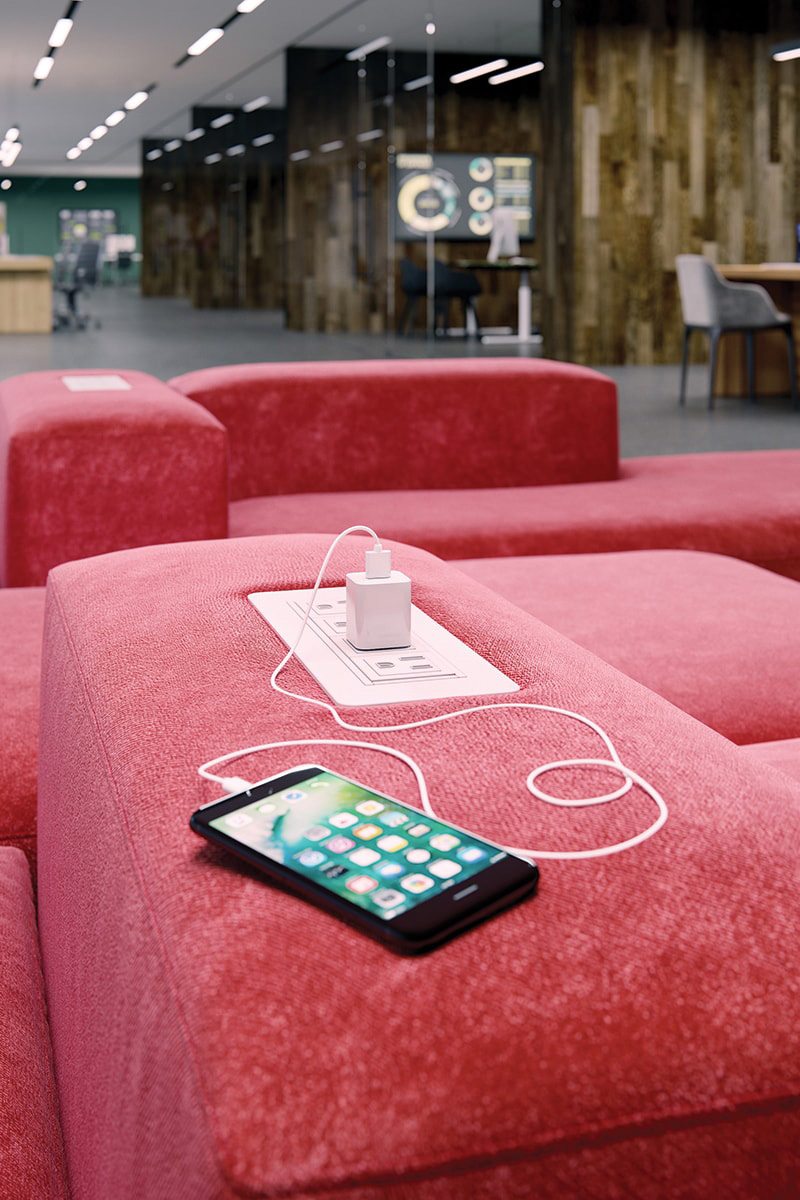
Photo courtesy of Mockett
New architectural hardware developments are allowing device charging and power supply to pop up in innovative places.
An overarching movement in current multifamily design is the concept of disciplined amenity planning. Disciplined amenity planning focuses on providing features that align with residents’ daily habits and schedules. “The philosophy is also about using the dollars not spent on underutilized amenities to add functional space for residents and provide upgraded finishes,” noted Sonya Haffey, CEO of VStarr, a South Florida-based award-winning multi-disciplinary and interior design practice.14
As communal space is increasingly valued in multifamily design, not only as a physical area but also as a place that supports the creation of social interactions, strengthens relationships, and enhances comfort while facilitating working from home, the presence of a well-designed and flexible communal area is essential.15
In 2020, working from home became a necessity. Today, it remains commonplace. The Pew Research Center found that 35 percent of Americans with jobs that can be performed remotely remain at home full time and that 41 percent of the workforce is working within a hybrid home/office work schedule.16 Coworking spaces are now an expected amenity in any new or luxury multifamily community. The market demonstrates a dramatic shift of amenity space being allocated toward large, coworking areas. This demand also means that giving tenants better access to technology is a must. For communal spaces serving as adaptable work-from-home hubs, the design professional must consider the needs of required devices and how these power needs adapt when common rooms flex in their use to a more social space.
Code Considerations
Creating a comfortable and multi-functional communal area requires attention to detail. It also is governed by code. In 2023, the National Electrical Code (NEC) introduced significant changes to the placement and accessibility of electrical outlets, directly impacting residential, commercial, and industrial properties. One of the most notable changes in the 2023 NEC is the requirement for more frequent placement of electrical outlets.17 Outlets must now be installed within 6 feet of doorways and at least every 12 feet along walls in living areas, such as bedrooms, living rooms, and dining rooms. In designated rooms like kitchens, the outlet placement requirement is higher. NEC’s 2023 update also places an increased focus on ensuring that electrical outlets are accessible to everyone, including individuals with disabilities. The new standards align more closely with the Americans with Disabilities Act (ADA) guidelines, stipulating that outlets in new installations must be positioned between 15 and 48 inches above the floor. This adjustment ensures that outlets can be easily reached by people in wheelchairs or with limited mobility.
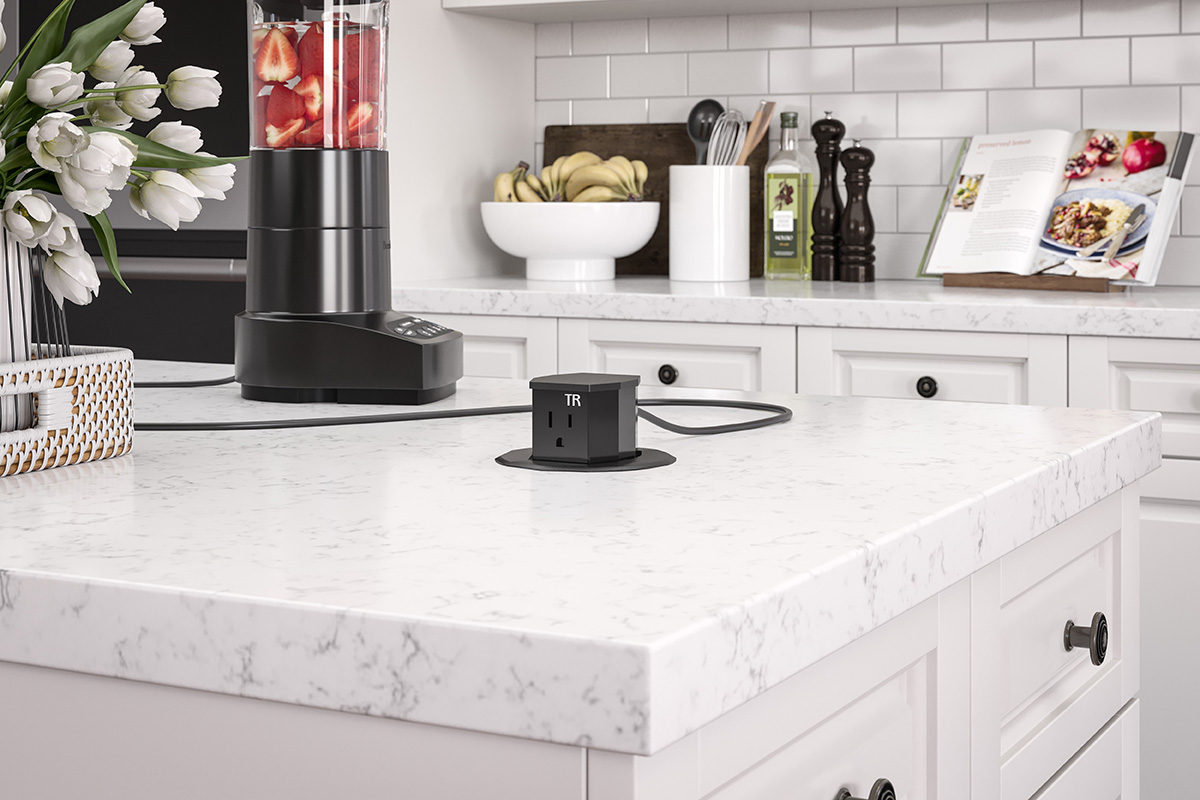
Photo courtesy of Mockett
A kitchen-certified power unit designed for discrete storage and easy access when required.
Additional changes to the NEC include the change for surge-protective devices. Surge-protective devices ratings are required to have a nominal discharge current rating (i-N) of not less than 10kA. SPDs were added to the NEC for the 2020 edition, and no minimum rating was required. The 2023 NEC code for multifamily housing enhances electrical safety and infrastructure by introducing mandatory surge protection [230.67] for units and feeders, expanded ground-fault (GFCI) protection for appliances, and necessary exterior emergency disconnects [230.85].18
While a higher prevalence of electrical outlets provides greater access to power, it can go against design intent, as spaces turn into an uncoordinated jumble of cords and wires, rather than streamlined living areas.
Wireless and its Advantages in Design
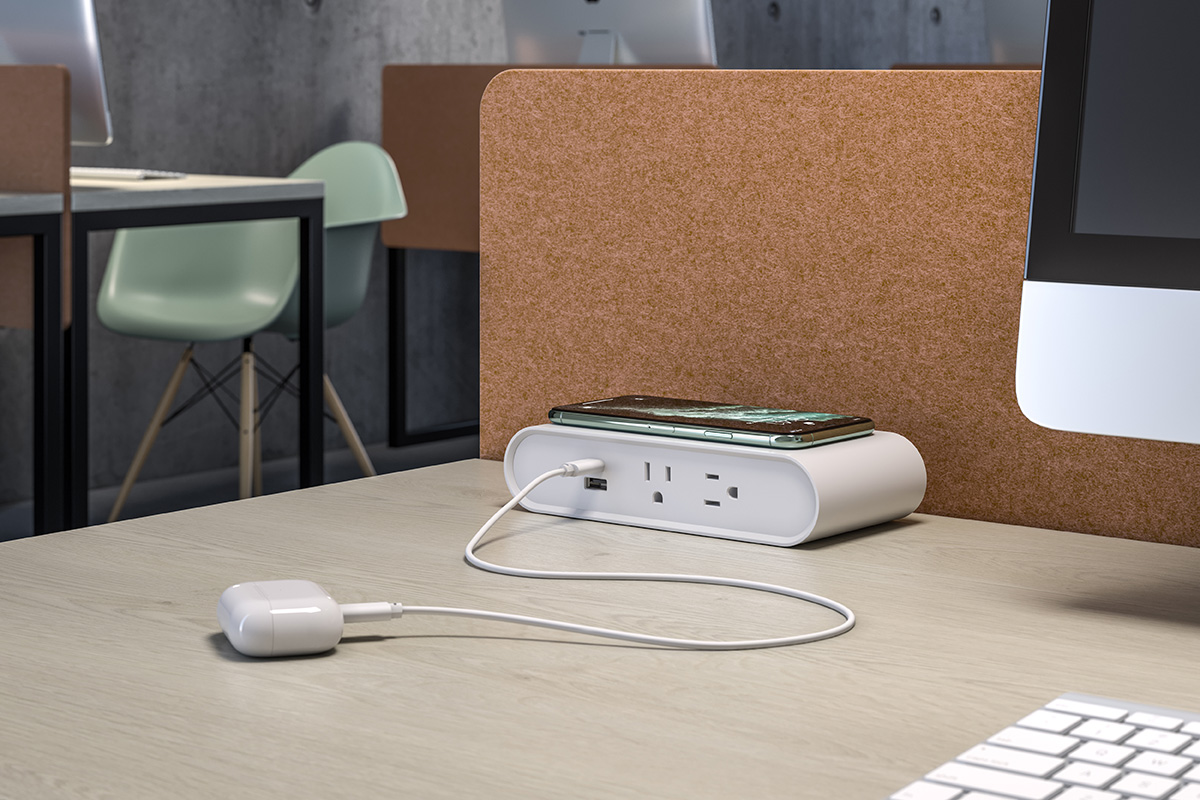
Photo courtesy of Mockett
Wireless charging is changing the design game by minimizing cords and moving charging options to a universal platform.
Wireless charging technology is the breakthrough, transformative shift morphing daily interactions and design possibilities with electronic devices. “By eliminating the need for cables and connectors, it offers an unmatched level of convenience and simplicity, reducing clutter and the wear and tear on device ports,” writes Elizabeth Baker for Tech Review Advisor.19
Wireless charging facilitates universal compatibility, with platforming advances in which the same charging pad can simultaneously power various devices across different brands. This advancement also allows designers to rethink daily routines and the spaces that support these products: in a future with an increased emphasis on devices and technological access, wireless charging opens the door to a simplified and more efficient possibility. Baker notes that safety is also significantly enhanced through wireless charging, with risks associated with electrical contacts minimized and advanced features like foreign object detection and overcharging protection integrated into their design.
The flexibility of design and integration into everyday objects, from furniture to public spaces, points to a trajectory where charging and power access become a seamless part of the environment. Power wireless chargers are designed to keep devices ready without the clutter of traditional cables. These chargers make workspaces more efficient and organized, allowing occupants to stay focused on tasks and offering a convenient power supply untethered to outlets. This allows occupants to stay connected whether seated at a desk or on the move and away from an office space.
Besides individual charging pads, architectural suppliers can provide larger wireless charging access, including dual-sided pop-up wireless stations, invisible under-desk chargers, illuminated stations, and lidded or roll-top wireless charging stations. Wireless charging access can also be clamp mounted and repositioned in a space. This flexibility allows people to host meetings from home or at a community space with a wireless charger for tables. Investing in a power wireless charger grants the opportunity to change workspace configurations with little hassle in terms of power system setup. This boosts the efficiency, adaptability, and accessibility of communal spaces, removing the traditional limitations of furniture placement and outlet access. The potential for wireless charging to further simplify lives and enhance the functionality of electronics is immense. Wireless charging enables designers to create architecturally fluid layouts that reduce visual clutter and avoid operational pain points for both management and residents. It also empowers designers to rework existing conditions, limiting waste and controlling long-term expense.
Containing Technology by Design
The growing host of devices and their power requirements should not overwhelm a space. Not only does this prevent multi-dimensional use of a communal area, but it also makes working from home less inviting. “The physical environment of the workplace has a significant effect on the way that we work. When our space is a mess, so are we,” reported Libby Sander in the Harvard Business Review.20
Desk wire managers offer innovative design and containment solutions for modern offices, collaborative workspaces, conference rooms, and other professional settings. Organized cables and wires promote a productive, aesthetically pleasing environment. Desk wire managers can be attached with double-sided tape, staples, or screws, depending on the design. Cable managers in a range of designs suit various spaces and tech needs. For high cable volumes, brush grommets provide a channel for multiple wires. To secure wires off the floor, J-shaped under-desk cable managers keep cables neatly lifted and out of harm’s way. Brackets are large enough and heavy-duty enough to hold multiple cables and wires. Wiring can enter and exit at any point, making this system quite adaptable.
Meeting Performance and Design Goals with the Whole Window
Windows are not just openings in a wall; they are the gateway to the world outside. Choosing the right windows can significantly impact the aesthetics, comfort, and energy efficiency of a building. Design professionals are growing more familiar with the integration of windows and doors into high-performance building strategies. Fenestration is being successfully incorporated into whole-building approaches for Passive House, net-zero energy, and resilient, sustainable multifamily design. However, the myth persists that all high-end windows perform similarly. The reality is that performance varies widely based on frame design, glazing configuration, sealing, hardware, and installation quality. Appearances alone can be deceiving.
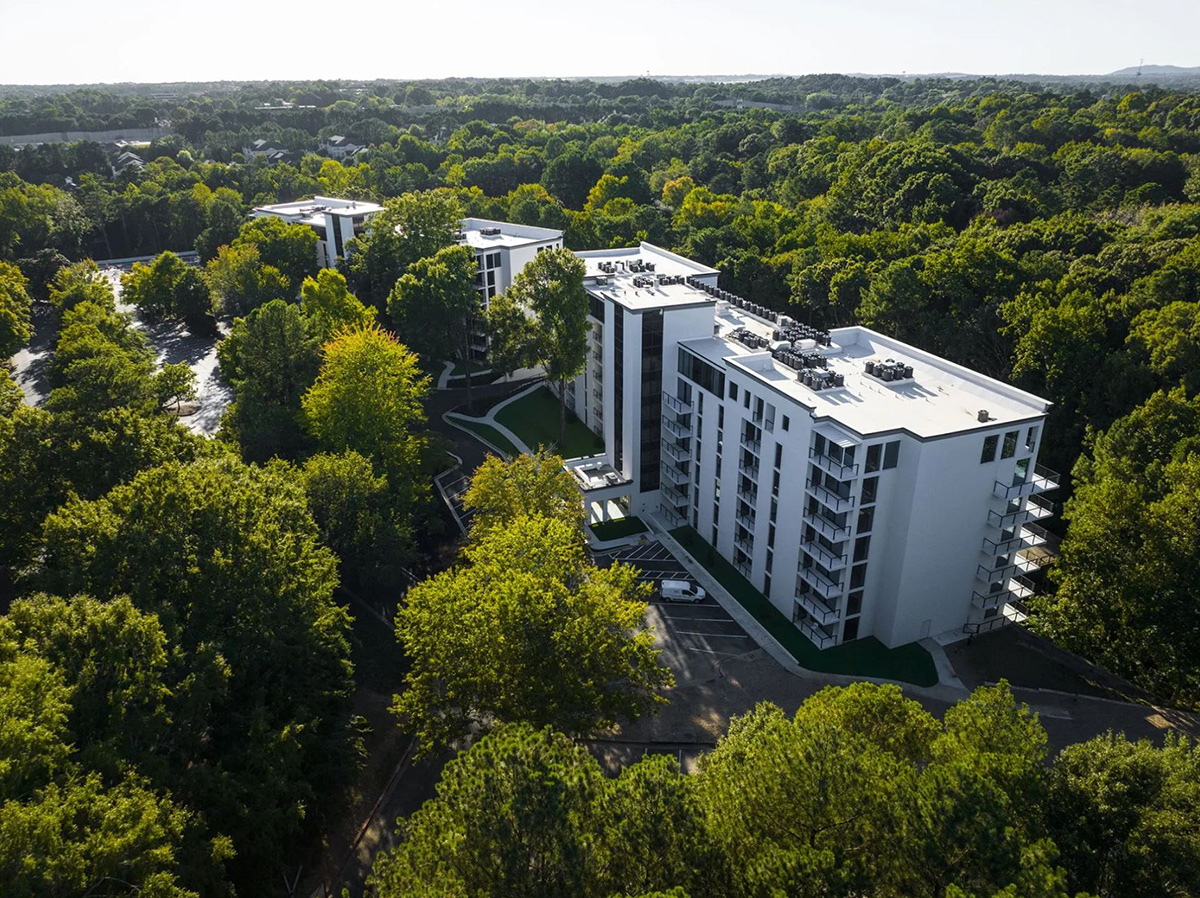
Photo courtesy of Eurostar Fenestration
It is a myth that only glazing contributes to window performance. The whole unit, from installation down to spacer bars, can be fine-tuned to achieve the benchmarks desired. Developer: 58-Twelve Development.
Assured Performance
To aid in confident specification, selected high-performance fenestration systems should comply with a number of criteria. Chief among these is the NFRC (National Fenestration Rating Council). The National Fenestration Rating Council (NFRC) is an independent, nonprofit certification body for the energy performance of windows, doors, and skylights. NFRC certification ensures that products are tested using precise, scientifically validated methods, resulting in ratings that are fair, accurate, and credible. Testing includes thermal performance ratings (U-factor, SHGC, visible transmittance) and others like air leakage. Additional certifications and compliance standards include Passive House Institute (PHI), which provides ultra-high-performance standards for low-energy buildings, ENERGY STAR®, which recognizes energy-efficient fenestration, and ICC and local building codes, which provide structural and safety performance standards.
“For a long time, windows and doors were evaluated primarily on appearance and cost. Today, architects are recognizing that fenestration is a critical performance component of the building envelope—one that directly affects energy efficiency, comfort, and long-term building durability,” says Armin Reischl, Partner, Eurostar Fenestration. “When you look at the building envelope as a system, fenestration plays a massive role. The right window and door systems can dramatically improve air tightness, reduce thermal bridging, and contribute meaningfully to the overall performance of the building.”
Fenestration Advancements for Multifamily
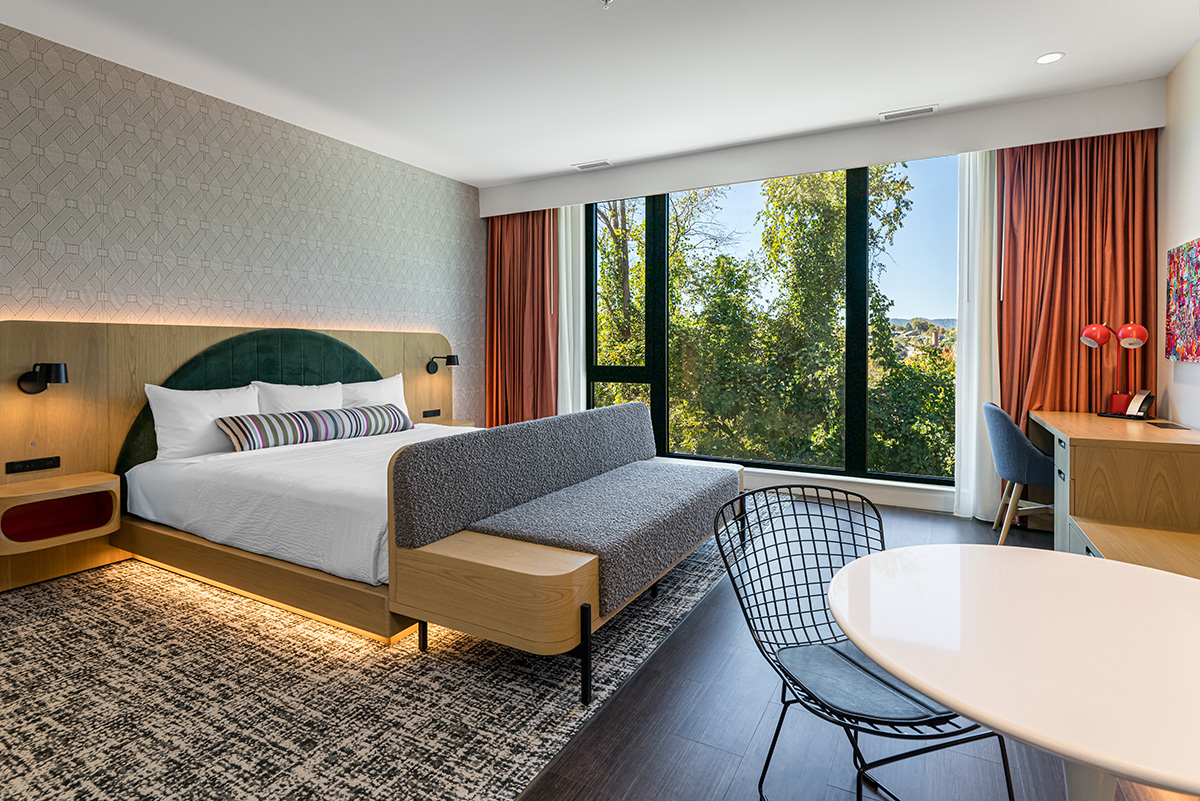
Photography: Ryan Theede Photography; courtesy of Eurostar Fenestration
Windows have long been used in buildings for daylighting and ventilation. According to the Whole Building Design Guide, more recent studies demonstrate that health, comfort, and productivity are improved due to well-ventilated indoor environments and access to natural light. Architect: Laura Hudson Architecture, PLLC. General Contractor: Beverly-Grant Inc.
In the competitive world of luxury apartment complexes, developers and architects are continuously seeking innovative ways to enhance the living experience of the property residents. With a growing emphasis on visual appeal, energy efficiency, and sustainability, windows and doors have gained significant attention and are now prioritized to not only drive curb appeal at the property but also the comfort of the residents.
Although advances in glazing performance have garnered a lot of recent attention, advances in framing are having a powerful impact on both efficiency and structural integrity. Framing that uses a unique material blend combines the flexibility of uPVC with the strength of fiberglass to deliver energy-efficient, low-maintenance performance across a wide range of building types. This hybrid construction enhances structural stability, resists warping and thermal expansion, and supports long-term durability in demanding environments. This advanced fiberglass window technology is additionally designed for maximum thermal insulation. Fiberglass has emerged as a transformative material in the fenestration industry, significantly enhancing the performance and durability of windows and doors. One notable benefit of fiberglass is its exceptional strength-to-weight ratio. Unlike traditional materials, fiberglass is both lightweight and incredibly strong, which allows for larger window and door spans without compromising structural integrity. Combining the strength of fiberglass with a traditional PVC profile, known for its affordability and ease of maintenance, this hybrid design ensures enhanced strength and durability while retaining the cost-effectiveness and low maintenance characteristics of PVC.
Superior thermal performance allows these fiberglass windows to be highly efficient, reducing energy loss in buildings. Because of the fiberglass reinforcement throughout the frame, the window units are provided with a superior strength-to-weight ratio, allowing for larger spans. Embedded fiberglass strands provide exceptional stability to windows and doors while at the same time further improving thermal insulation. Steel reinforcement is no longer necessary with these frames, and the weight of the window is significantly reduced. This makes opening and closing even easier and increases the service life. The material blend also resists warping, cracking, or fading due to low thermal expansion rates.
For multifamily applications, choosing fiberglass frames translates into selecting a dependable window system that balances performance with design. Available refined profiles and clean lines complement modern architectural styles, while advanced insulation properties help improve interior comfort and reduce energy costs. The result is a solution that supports both developer priorities and resident satisfaction: delivering lasting quality, visual appeal, and everyday livability. A stunning exterior should not mean sacrificing quality or performance. With advanced fiberglass frames, innovative technology delivers exceptional functionality that supports glazing performance metrics, whether for thermal and acoustic insulation, accessibility, or safety.
Additional Fenestration Performance Considerations
Windows shape a building’s character as much as they govern comfort, daylighting, and environmental performance. Modern fenestration portfolios include many additional options, such as precision-engineered tilt-turn systems and fully custom geometries that support diverse design aspirations across demanding multifamily contexts.
Among operational styles, tilt-turn systems are increasingly favored by architects for their dual-function operability. Tilt and turn windows are the standard operational specification in Europe. They are widely used in both residential and commercial buildings—from high-rise apartments to passive house projects. Now, with growing demand for energy efficiency, better indoor air quality, and elevated aesthetics, U.S. projects are seeing a surge in this style.
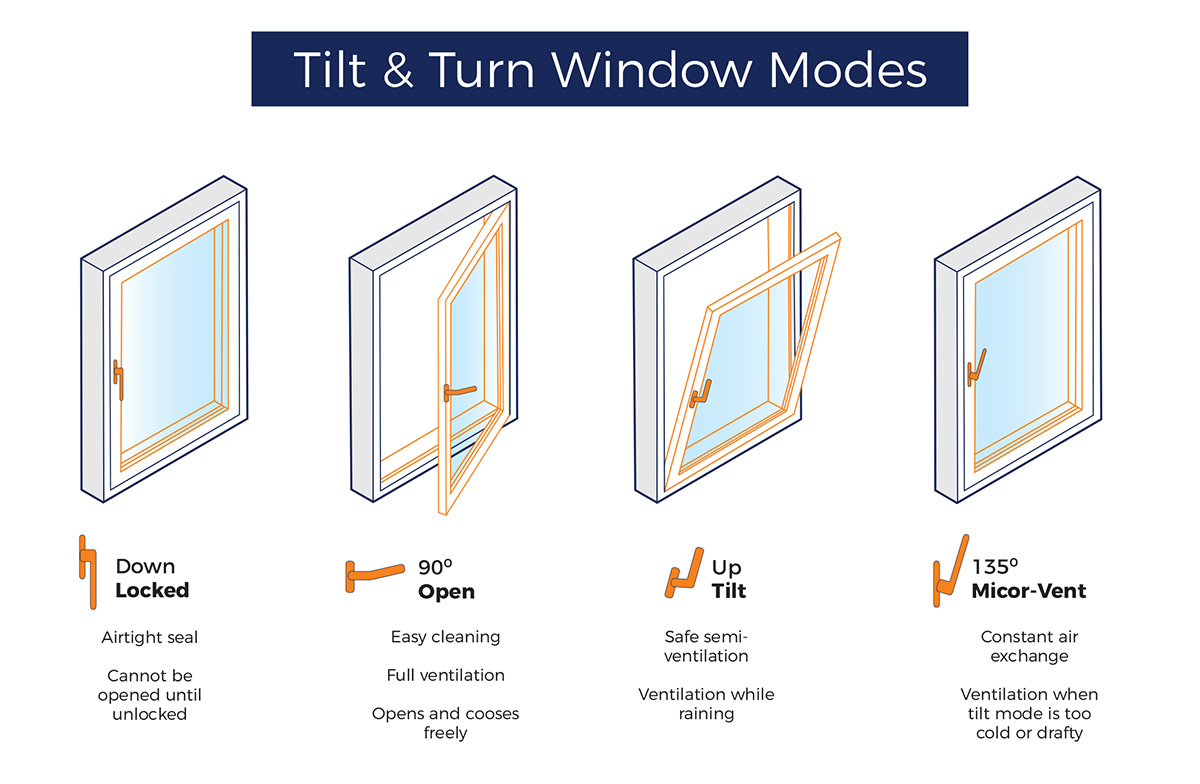
Image courtesy Eurostar Fenestration
Tilt-turn window operation.
Tilt-turn operation combines engineering precision with everyday practicality. Tilt mode provides controlled ventilation while maintaining safety and weather resistance. Turn mode offers full opening for egress and cleaning – a combination that integrates seamlessly with contemporary design and operational needs. Diagrams illustrating the mechanics of tilt-turn hardware further clarify how these systems balance air movement, weatherproofing, and user control without compromising aesthetic simplicity. With one handle, the window tilts inward for secure ventilation or turns inward like a door for full access. This gives occupants more control over airflow and makes the windows easier to use in a wider range of room layouts. Inward-opening sashes mean safe, indoor cleaning, offering ease of maintenance for high-rise or multi-family projects and avoiding the need for exterior access or costly window cleaning services. Tilt and turn systems offer superior thermal insulation and airtightness, helping meet Passive House and Net Zero goals. They’re also compatible with triple glazing and large-format units. The multi-point locking system engages the sash at multiple points around the frame, creating a secure, uniform seal that improves airtightness, enhances energy efficiency, and increases overall window security and performance. Finally, this operation affords architectural flexibility. The clean, minimalist design suits both modern and transitional styles. Plus, they pair well with curtain walls, window walls, and other custom assemblies.
In addition to tilt-turns, unique shapes like circular, arched, and asymmetrical shapes open new possibilities for architectural expression. These bespoke forms shape light and views in distinctive ways, adding sculptural elements that enhance both interiors and facades, all while maintaining precision and performance.
By combining thoughtful engineering, design versatility, and customization, European windows deliver architects reliable tools to confidently realize their vision with creativity and precision. Leading manufacturers and suppliers work closely with architects, builders, and developers to ensure the project team fully understands product options and the benefits of integrating them into their designs. This leverages industry expertise and experience, while offering near-limitless custom capabilities.
Design Details Matter
“Details really matter in architecture because they draw us to a place, reflect how we attach, giving us what we need to see to secure ourselves in a space, and make us feel at home in a place21.” While in principle architectural design may seem to pursue technical or pragmatic solutions that seem to exert little effect on aesthetic quality, prominent architects note that the high quality of their works results from the collaboration of art and technology to create a “perfect work.”22
Details of Fenestration Performance: Installation
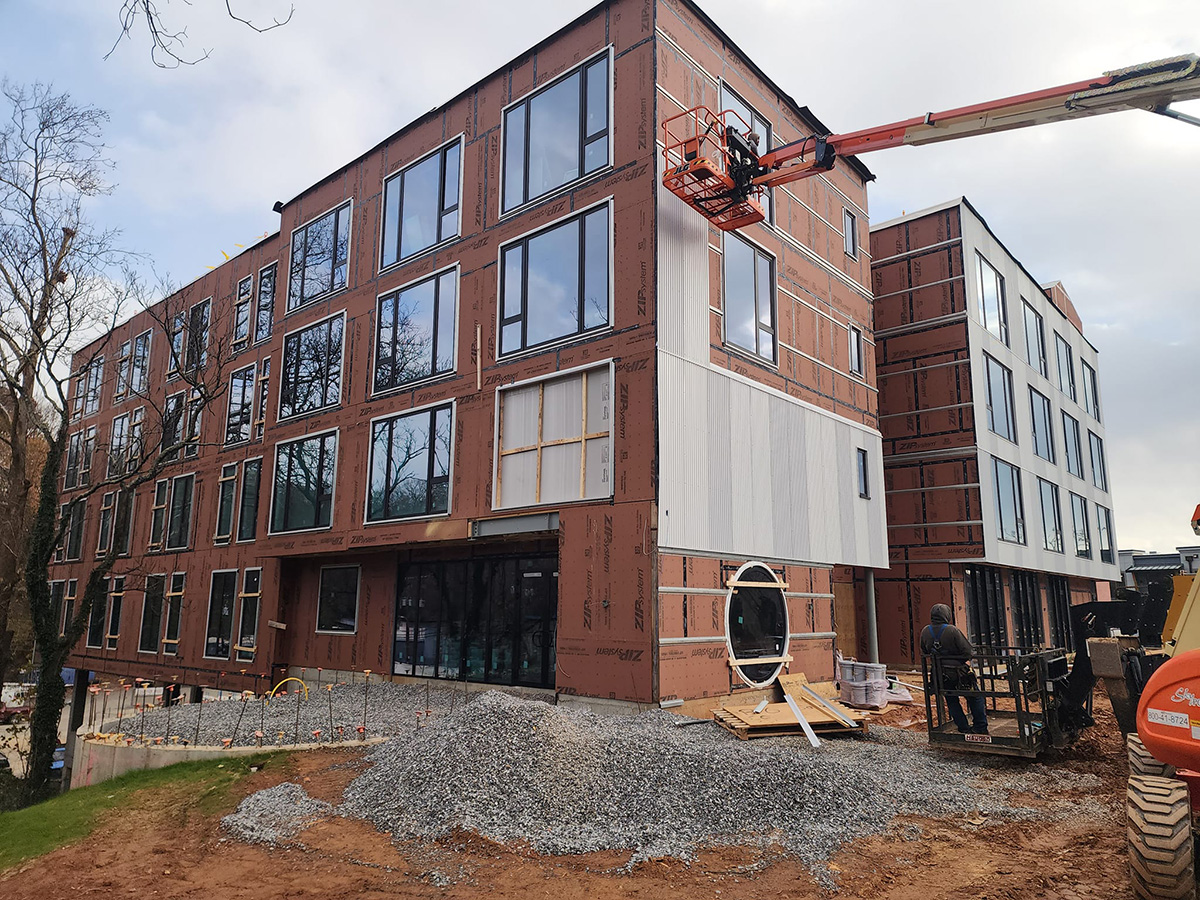
Photography: Rebel Hubbard; courtesy of Eurostar Fenestration
While windows have undergone major performance advancements, it remains critical that these units are installed correctly to support the performance of the entire envelope.
Fenestration impacts comfort, resilience, and long-term value. High-performance glazing and frames help reduce drafts, condensation, exterior noise, and temperature fluctuations, supporting both occupant well-being and the long-term durability of multifamily buildings. However, proper specification and installation are critical to achieving rated performance. Even top-performing windows and doors will underperform if not correctly integrated into the building envelope. Attention to detailing, installation practices, and coordination with wall assemblies assures that the intended energy, water, and acoustic performance is realized. Detailing and correct installation procedures ensure that fenestration systems will perform optimally within the building envelope, supporting affordability and sustainable living goals.
There are several different methods for window installation in practice in each state, including American Architectural Manufacturers Association (AAMA), ASTM, and local or municipal building codes. There can be different local and state codes that apply depending on location. It is important to check local and state requirements prior to installation.
The American Architectural Manufacturers Association (AAMA) and Fenestration & Glazing Industry Alliance (FGIA) provide the most commonly used guidance for installation. AAMA 2400 is the standard practice for the installation of windows with a mounting flange in stud frame construction. While often used for single-family homes, its principles apply to low-rise multifamily developments, typically up to four stories, to establish a proper air and moisture barrier between the window and the rough opening.
Rough-framed openings to receive the window must be sufficiently larger in width and height than the actual frame dimensions of the window. To ensure adequate clearance, it is critical to ensure that the framer follows the manufacturer’s literature for the recommended rough opening dimensions. The framing members shall be plumb, level, square, and true prior to the installation of the window. The studs and sheathing shall be free of voids, chipping, holes, twisting or other conditions that will not allow sealant to maintain continuous contact. Compatibility requirements can be found in AAMA 712, 711, and 714.
Prior to installation, verify that the rough opening is square and that the sill framing is not crowned or sagging; replace if necessary. Verify the rough opening framing is free of voids, holes, twisting, or any condition that will not allow the installation to have continuous contact.
The installer should then prepare the Water-Resistive Barrier (WRB) or Building Wrap and install self-adhesive flashing. A plastic window pan can be substituted for the sill flashing if the continuous seal of the installation can be maintained. Maintain a joint between the window and surface, as specified, and install backer rod or low-pressure aerosol foam and sealant, where needed.
After installation, several routine inspection steps can avoid errors and costly failures to the building, due to infiltration or damage, down the road. The team should ensure that the WRB is effectively integrated around the window frame in a weatherboard fashion. Once in place, flashing materials should be covered within the time frame recommended by flashing manufacturers to avoid degradation. Make sure to repair any damaged flashing or WRB prior to exterior wall cladding.
Leading fenestration products, designer knowledge, and supplier experience work collectively to provide lasting comfort, durability, and performance in multifamily projects. Manufacturers and suppliers working closely with architects, builders, and developers warrant that the team fully understands selected products and the benefits of integrating them into their designs.
Architectural Hardware Details as a Design Exclamation Point
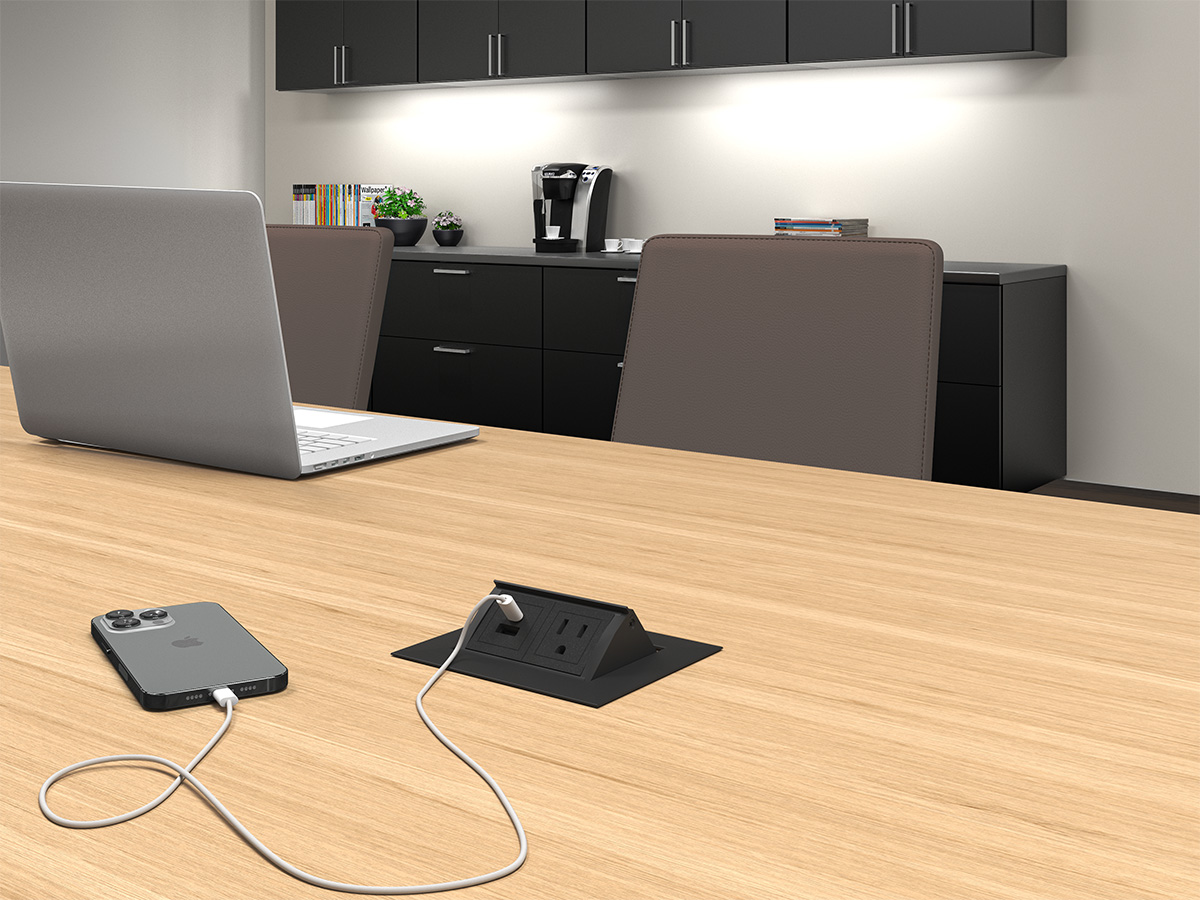
Photo courtesy of Mockett
Elevating a space with design is possible by considering even the small details.
High-quality architectural hardware seamlessly combines form and function, offering the perfect finishing touch for multifamily spaces. Although small, thoughtfully crafted hardware that enables better technology and power management is designed to enhance durability and ease of use. Fine architectural hardware empowers the design professional to design more efficiently while making sure that every detail contributes to the bigger picture. Well-crafted pieces offer the dual benefit of streamlined installation processes and enduring performance. Every element of fine hardware is precision-engineered, making even the smallest updates impactful and bringing both beauty and utility to interior spaces.
High-quality architectural hardware seamlessly combines form and function, offering the perfect finishing touch for multifamily spaces. Although small, thoughtfully crafted hardware that enables better technology and power management is designed to enhance durability and ease of use. Fine architectural hardware empowers the design professional to design more efficiently while making sure that every detail contributes to the bigger picture. Well-crafted pieces offer the dual benefit of streamlined installation processes and enduring performance. Every element of fine hardware is precision-engineered, making even the smallest updates impactful and bringing both beauty and utility to interior spaces.
Innovative wire management strategies extend to details like grommets that reinforce openings and provide smooth and efficient operation. Power grommets simplify power management and complement interior design. Essential in office, residential, hospitality, and educational environments, these products elevate furniture and fixtures to meet modern demands. Power grommets are the ultimate solution for integrating power sources into tabletops, furniture, and workspaces. These innovative outlets mount directly to surfaces like desks, countertops, and conference tables, allowing users to power devices conveniently without messy cords or cumbersome adapters. Pop-up outlets for countertops provide practical power access; furniture power outlets bring convenient and uncluttered access to power sources for electronics and appliances. Outlets to be mounted in tabletops come in various designs to suit both style and space requirements. Recessed power grommets offer a seamless appearance that blends effortlessly into any surface while offering easy access to power. Under-desk and edge-mount power outlets deliver convenience and accessibility without cluttering the tabletop. Grommets reduce the safety risks of exposed wires, creating a tidier and safer environment both at home and in shared communal spaces. Available in sleek designs and various finishes, they seamlessly blend with décor. Whether strategizing designs to manage electrical cords, computer cables, or charging wires, wire grommets and management systems offer a practical and lasting solution for a tidy workspace.
Design, Details, and Multifamily Concepts Moving Forward
As renting outpaces owning, due to elevated interest rates and limited affordable home inventory, multifamily communities offer multiple demographics the access to home. Multifamily spaces also hold a special power in the market by offering lifestyle features, amenities, and designs that most people are otherwise unable to incorporate into single-family homes.23 New products and advances – from details like architectural hardware, to large high-performance window installations – are making it possible for design teams to realize project goals and provide functional, user-centric design to new generations of homeowners.
Endnotes
1 https://www.census.gov/construction/nrc/index.html. Accessed April 10, 2026.
2 Cramer, Brian and Leah Cuffy. “Multifamily Construction Trends: Summer 2025.” National Apartment Association. Accessed April 10, 2026.
3 Schwanke, Dean. “Multifamily Homes: Types and Trends.” National Association of Home Builders®. Accessed April 10, 2026.
4 Deese, Travis and Kelli Carhart. “Multifamily.” U.S. Real Estate Market Outlook 2026. CBRE. Accessed April 10, 2026.
5 PwC and the Urban Land Institute: Emerging Trends in Real Estate® 2026. Washington, D.C.: PwC and the Urban Land Institute, 2025. Accessed April 9, 2026.
6 Schwanke, Dean. “Multifamily Homes: Types and Trends.” National Association of Home Builders®. Accessed April 10, 2026.
7 Bunescu, Olivia. “Why Less Is More in Multifamily Design Today.” Multi-Housing News. February 3, 2026. Accessed April 10, 2026.
8 Ballinger, Barbara. “Ask Designers and Architects: Top Home Trends for 2025.” National Association of Realtors®. January 3, 2025. Accessed April 10, 2026.
9 Caulfield, John. “Top 10 trends in multifamily rental housing.” Building Design + Construction. January 4, 2024. Accessed April 10, 2026.
10,11 Bunescu, Olivia. “Why Less Is More in Multifamily Design Today.” Multi-Housing News. February 3, 2026. Accessed April 10, 2026.
12,13 “Top 10 Multifamily Design Trends.” Case Study. Humphreys & Partners Architects. 2023. Accessed April 10, 2026.
14 Bunescu, Olivia. “Why Less Is More in Multifamily Design Today.” Multi-Housing News. February 3, 2026. Accessed April 10, 2026.
15 “Tips for Creating a Super Comfortable Communal Area at Home.” April 8, 2025. Vellino. Accessed April 13, 2026.
16 Parker, Kim. “About a third of U.S. workers who can work from home now do so all the time.” The Pew Research Center. March 30, 2023. Accessed April 13, 2026.
17 “Critical 2023 NEC Update: Game-Changing Electrical Outlet Placement And Accessibility Rules You Can’t Ignore!” J2 Services. October 13, 2024. Accessed April 13, 2026.
18 “Estimated Costs of the 2023 NEC Code Changes for Single-Family and Multifamily Buildings.” Home Innovation Research Labs. National Association of Home Builders. October 6, 2023. Accessed April 13, 2026.
19 Baker, Elizabeth. “The Benefits of Wireless Charging: Wave of the Future.” Tech Review Advisor. April 4, 2024. Accessed April 13, 2026.
20 Sander, Libby. “The Case for Finally Cleaning Your Desk.” Harvard Business Review. March 25, 2019. Accessed April 13, 2026.
21 “Why Ornament + Detail Really Matter in Architecture.” Genetics of Design. Kellogg College, Global Center for Healthcare and Urbanisation, Oxford University. June 29, 2021. Accessed April 16, 2026.
22 Gawell, E., & Grabowiecki, K. (2021). Modern Details in Meaningful Architecture. Sustainability, 13(24), 13691. Accessed April 16, 2026.
23 Strong, Symone. “10 Multifamily Design Trends That Will Define 2025.” Multifamily Executive. January 28, 2025. Accessed April 17, 2026.
Amanda Voss, MPP, is an author, editor, and policy analyst. Writing for multiple publications, she has also served as the managing editor for Energy Design Update.