Photos courtesy of Marvin
The eyes are the windows to the soul.” This insightful statement is often attributed to either William Shakespeare or Leonardo Da Vinci. Would either of these two admirable and wise historical figures then surmise that windows and doors are the eyes of the building, or, if used effectively, do they reveal the soul of the design?
Most Architects know that the successful integration of windows into their designs is often critical to their success. There are dozens of decisions the Architect needs to make to include a window or door into the design of a building, and perhaps none is more important than the selection of the frame material. With many options to choose from, the selected frame material will set the quality standard for the decisions to follow, including size, operation type, finishes, hardware, and glazing.
Windows and Doors, like many building products, have undergone a significant evolution from the selection of individual components, often by separate manufacturers, to specifying an entirely fabricated unit from a single manufacturer. Curiosity seekers, like me, may find browsing old catalogs of building materials for sash weights, finger pull lift hardware, jamb stock, and prefabricated sash interesting, but it is hard for us to imagine how tedious it was to actually specify and install a window from loose parts. That evolution has continued so that now a window or door is typically a fully assembled unit within a specific product line by a single manufacturer.
The possibilities are now again almost endless with the many options available within a single product line or from a single manufacturer. This has increased the complexity of the specification process and elevated the role of the Architect as the lead decision maker in assembling the construction documents, details, and specifications.
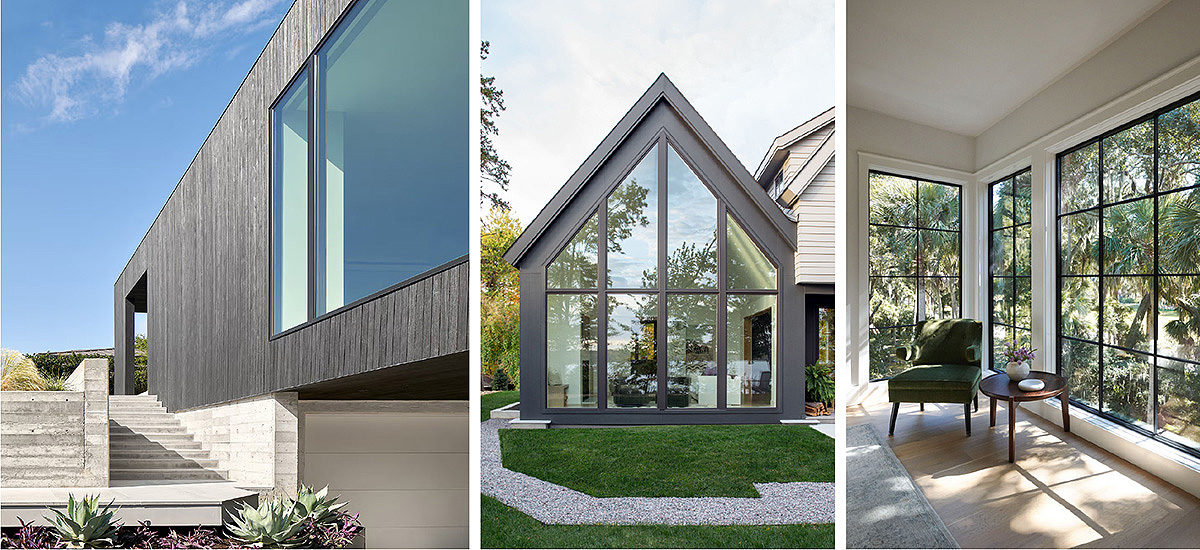
From a design perspective, the window openings in these building types can be categorized into two basic configurations: a single “punched” opening in a wall or a “ribbon” of windows that involves multiple vertical frame pieces. Single openings are more typical in older buildings, and multiple openings are more typical in modern and contemporary buildings, but of course, there are many hybrid approaches in the design of all periods. Two pioneers of modernism, Frank Lloyd Wright and Le Corbusier, often placed long horizontal continuous openings in exterior walls, which imparts a completely different effect to both the interior and exterior of the design. Windows were thought to be a “zone” of the wall rather than a periodic interruption of the wall. The overall approach to window openings should be established early in the process, as it will guide the many decisions that need to be made as the design is developed.
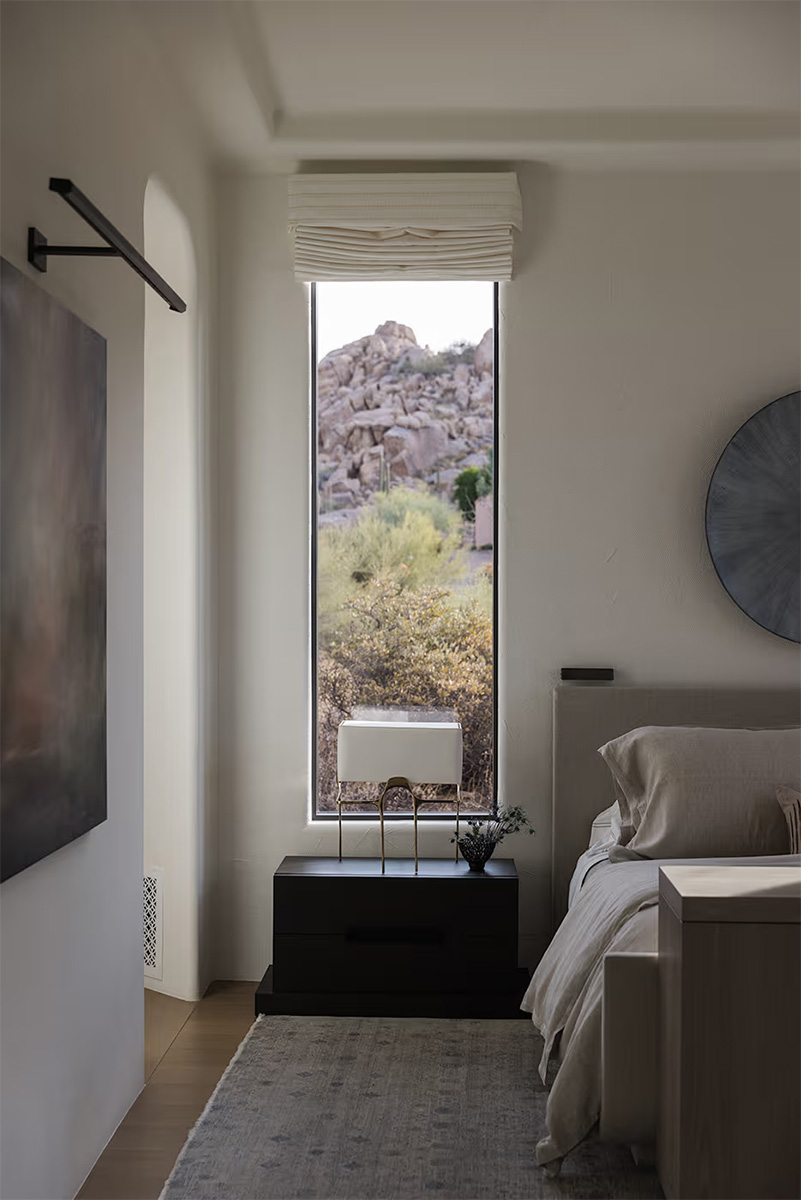
Photo courtesy of Marvin
Single “punched” window opening that the designer liked to think of as a picture frame used to frame the view.
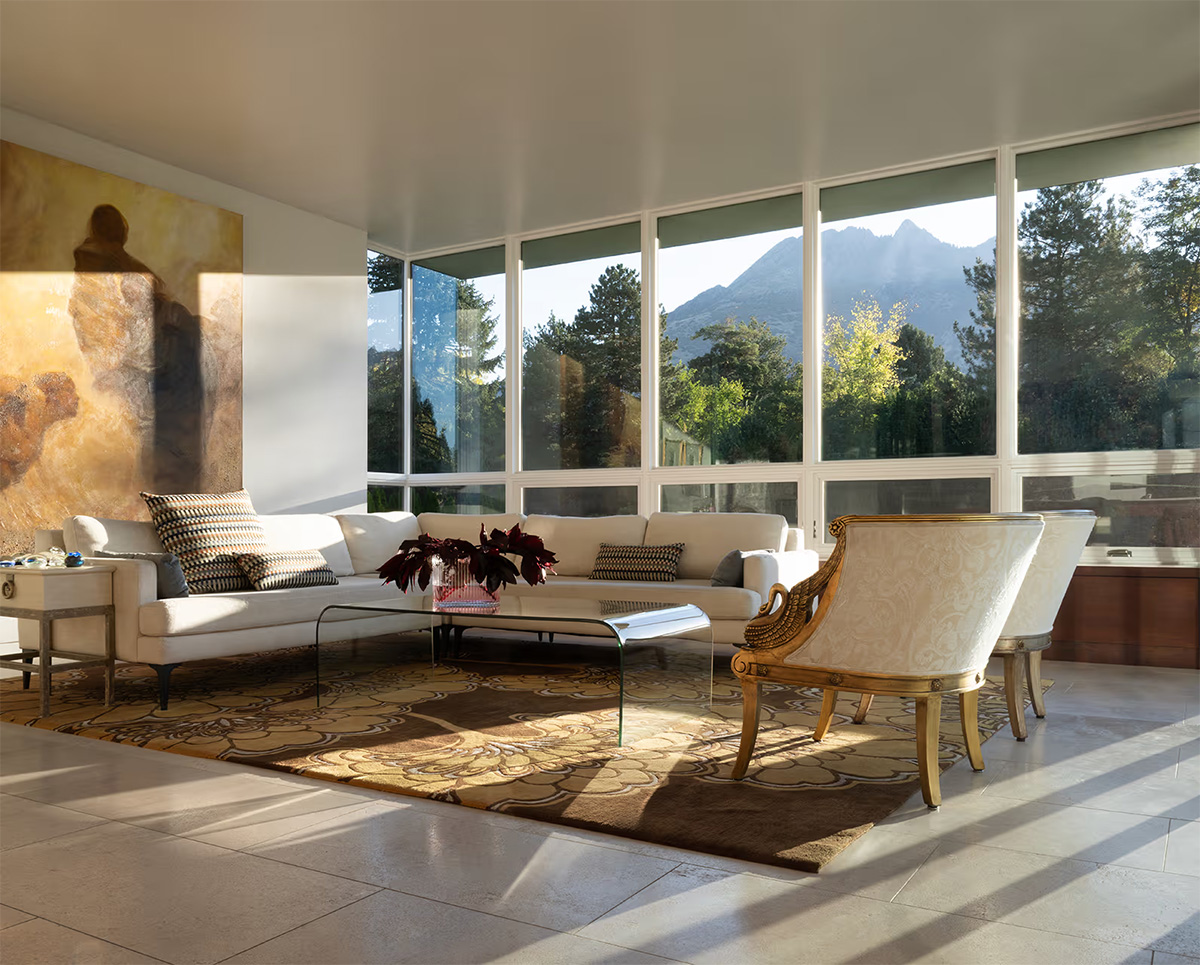
Photo courtesy of Marvin
Factory-mulled window in a “view zone” to create an expansive view.
Today, window and door frame materials are mostly the same, whether they are in a single opening or multiple openings. Units can be joined together on site or off site by the provider, which is often referred to as “factory mulled.” This can occur at either the vertical or horizontal frame piece of mullion. Some frame materials have accessory kerfs built into them to aid in joining units, and mullion covers made of matching materials, so that the result is seamless. The selection of a frame material has perhaps even more impact when working with large multiple openings, as the mulled frame pieces are more exposed when they are in the middle portion of the opening. So, the type of opening and how units are joined together can have a big impact on the selection of the frame material.
Architects are taught to utilize materials that are consistent with their true nature to best leverage their innate capabilities. So, let’s explore each frame material and type to better understand their best use in your design.
Wood and Clad Wood
Wood is certainly the most prevalent window and door frame material, which has been in use for over 1,500 years. But simply describing it as “wood” is no longer adequate given the range of products that now fall under this description. Historically, the frame would be made of a single piece of wood that would be shaped in the shop or factory to serve its role as sill, side jamb, or head jamb and joined at the corners with metal fasteners. Species that were employed could originally be specified by the designer, but have evolved to be selected by the manufacturer, and the designer selects one from what is available. Of course, strength, dimensional stability, and resistance to warping and twisting are critical.
The more prevalent species of wood used for window and door frames in the United States seem to be pine, mahogany, Douglas fir, and white oak. Many manufacturers offer different woods for the interior portion of the frame, which include pine, cherry, oak, and vertical grain Douglas fir. Certainly, the warmth of a natural wood finish on the interior is a major design feature. When properly protected, the exterior wood can last much longer than the typical expected useful life of a window. There are well-constructed and protected wood structures and windows that have lasted hundreds of years.
The Architect should carefully review the specifications and rated and needed product performance to ensure the structural capabilities of a wood window. Some wood frames are comprised of multiple pieces that are finger-jointed and/or laminated together, which can have different structural characteristics than single-piece frames. Finger-jointed and laminated wood frames can be strong and are more dimensionally stable than solid single-piece wood frames but can be limited in bending strength unless specifically engineered to achieve longer spans. While single “punched” openings typically rely on a continuous attachment of the perimeter frame to the primary wall structure to assist in resisting lateral forces, this is not the case when you have long or tall interim mullions that provide all of the lateral force resistance. There are occasions where vertical or horizontal mullions may require additional reinforcement depending on the span and frame material.
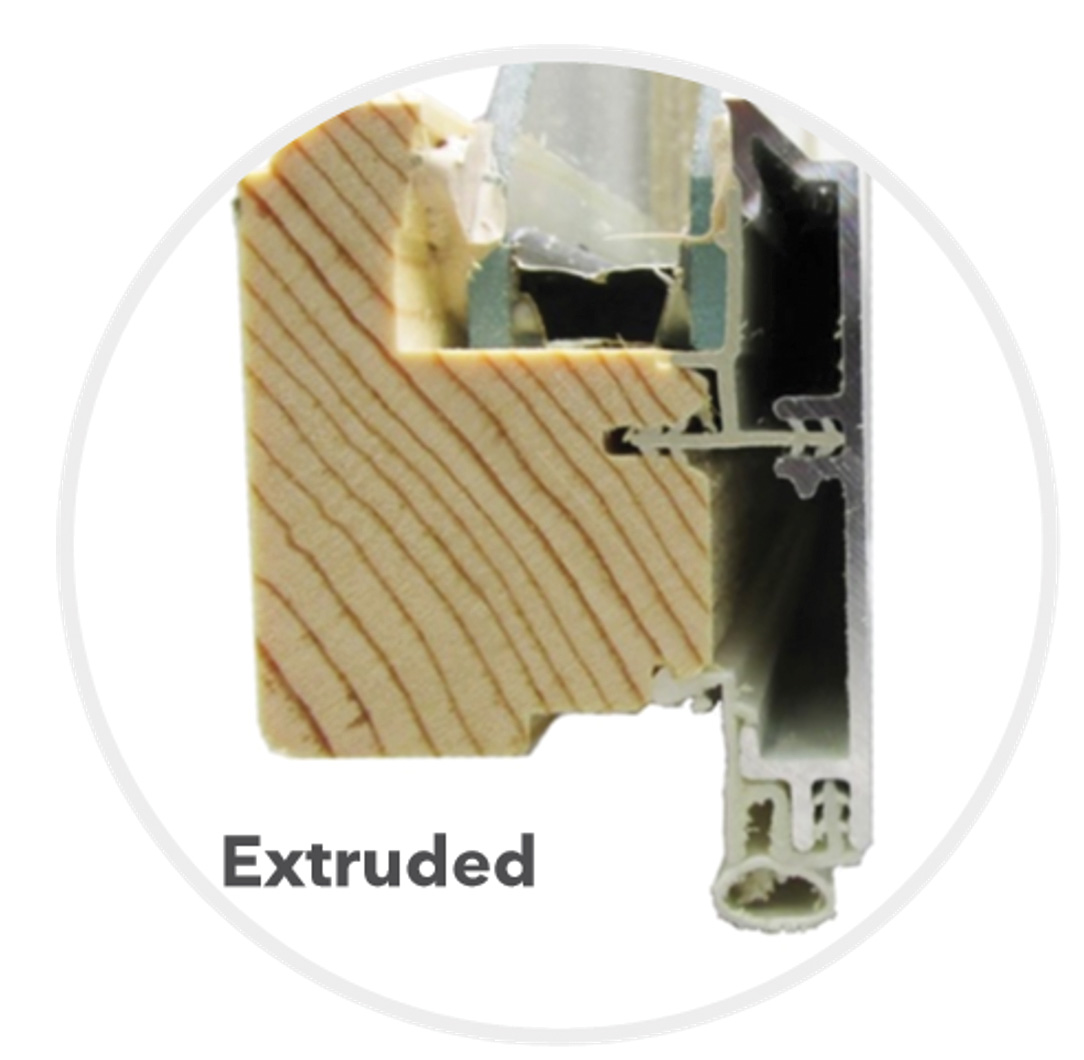
Photo courtesy of Marvin
Cross-section of extruded aluminum-clad wood window sash.
Aluminum cladding of windows and doors gained popularity in the 1960’s and has evolved since that time. Wood frames can be clad with aluminum, which is generally achieved in two ways. The original approach was to clad wood with roll-formed aluminum cladding that was quite thin (like flashing) and provided a protective shell tight to the wood frame piece. The more effective approach now involves an outer layer of extruded aluminum that provides many advantages over its predecessor. It is somewhat unfortunate that these are both categorized as “aluminum clad wood,” as the contemporary version is far superior and deserves a unique name—extruded aluminum clad wood. The extruded aluminum portion of the frame can provide a number of sectional profiles to enhance both traditional and modern designs and has sharp edges that provide crisp shadow lines and tight joints. This ability to customize the profile for a specific project provides the Architect with design flexibility. Custom profiles can be selected to align with historic profiles, making the frame material a good choice when replacing windows in older buildings. With contemporary coating technologies, the range of color choices is endless, and the durability is exceptional (30-50 years). With a separate extruded aluminum shell that is structurally bonded to a wood frame, they act as a composite assembly that results in greater strength, enhanced resistance to moisture damage and rot, as well as improved thermal performance than either could achieve alone.
Acetylated Wood (Accoya)
As mentioned earlier in the discussion on wood frames, we need to be mindful of the broader modified wood category, since “wood” now refers to a range of engineered and enhanced products. Acetylated wood, sold under the trade name Accoya, is one example. It typically uses fast‑growing, second‑growth species such as Radiata Pine and modifies the wood at a cellular level to greatly reduce water absorption. The process involves soaking the wood in acetic anhydride; afterward, waste materials are removed and the chemicals are recycled or repurposed. The resulting material is highly water‑ and rot‑resistant, and some products carry warranties of up to 50 years.
For window and door frames, acetylated wood provides all the benefits of traditional wood with added durability and moisture resistance. It also supports ESG‑aligned messaging, as the process produces a stable material that is non‑toxic to plants, animals, and humans once modified. While its initial cost is higher than standard wood, its extended lifespan makes its overall life‑cycle cost more economical.
Thermoplastic Composite
This category of materials is, just as its name implies, a type of material that will become “plastic” or moldable when heat is present. This is in contrast to thermoset composites, which, again, as the name implies, become permanently set after the application of heat. The differences between these two categories of composites are significant, so much so that they now have distinct CSI specification sections. Types of thermoset composites used in window and door frames are discussed later.
Thermoplastic composites are more economical to produce, have a lower first cost, and are easier to recycle. Thermoplastic composites can contain vinyl and wood fibers and are heated or melted and poured into forms. It also has a high strength-to-weight ratio and is naturally water-resistant. Thermoplastic composites also have low resistance to impact and a higher expansion/contraction rate when compared to thermoset composites. The most common thermoplastic composite used in window and door frames is vinyl.
Vinyl
Architects are responsible for the Health, Safety, and Welfare of the public. While health and safety are typically well understood, welfare or well-being includes ensuring that the design is cost-effective. Affordability is the primary advantage of vinyl as a frame material, primarily for windows. It also has many versions that should be carefully evaluated depending upon the intended use. It is often used as a cladding material or for a portion of a composite frame assembly over a wood sub-structure. As the only material in a window frame, it is less rigid and more prone to thermal movement than many of the alternatives. Most lower-quality vinyl windows will off-gas, causing them to turn yellow and become brittle after exposure to the sun and heat. Joints are often heat-welded or glued together and can also be prone to degradation over time.
Vinyl is a natural insulator and resists any damage due to exposure to water. It is very low maintenance and can be formed into a wide variety of profiles to complement your design. It is, however, typically limited in color selections, and due to its low flexural strength, it may be inappropriate for larger openings. Vinyl frames can be reinforced with steel inserts to increase strength, but these inserts can be deleterious to thermal performance. Because of its affordability and ease of manufacture, it is typically a good choice for replacement windows where budget is a major concern.
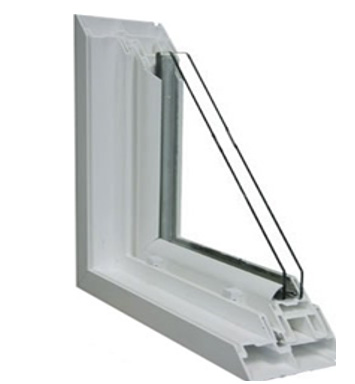
Photo courtesy of Marvin
Corner sample of vinyl window.
Photos courtesy of Marvin
The eyes are the windows to the soul.” This insightful statement is often attributed to either William Shakespeare or Leonardo Da Vinci. Would either of these two admirable and wise historical figures then surmise that windows and doors are the eyes of the building, or, if used effectively, do they reveal the soul of the design?
Most Architects know that the successful integration of windows into their designs is often critical to their success. There are dozens of decisions the Architect needs to make to include a window or door into the design of a building, and perhaps none is more important than the selection of the frame material. With many options to choose from, the selected frame material will set the quality standard for the decisions to follow, including size, operation type, finishes, hardware, and glazing.
Windows and Doors, like many building products, have undergone a significant evolution from the selection of individual components, often by separate manufacturers, to specifying an entirely fabricated unit from a single manufacturer. Curiosity seekers, like me, may find browsing old catalogs of building materials for sash weights, finger pull lift hardware, jamb stock, and prefabricated sash interesting, but it is hard for us to imagine how tedious it was to actually specify and install a window from loose parts. That evolution has continued so that now a window or door is typically a fully assembled unit within a specific product line by a single manufacturer.
The possibilities are now again almost endless with the many options available within a single product line or from a single manufacturer. This has increased the complexity of the specification process and elevated the role of the Architect as the lead decision maker in assembling the construction documents, details, and specifications.
From a design perspective, the window openings in these building types can be categorized into two basic configurations: a single “punched” opening in a wall or a “ribbon” of windows that involves multiple vertical frame pieces. Single openings are more typical in older buildings, and multiple openings are more typical in modern and contemporary buildings, but of course, there are many hybrid approaches in the design of all periods. Two pioneers of modernism, Frank Lloyd Wright and Le Corbusier, often placed long horizontal continuous openings in exterior walls, which imparts a completely different effect to both the interior and exterior of the design. Windows were thought to be a “zone” of the wall rather than a periodic interruption of the wall. The overall approach to window openings should be established early in the process, as it will guide the many decisions that need to be made as the design is developed.
Photo courtesy of Marvin
Single “punched” window opening that the designer liked to think of as a picture frame used to frame the view.
Photo courtesy of Marvin
Factory-mulled window in a “view zone” to create an expansive view.
Today, window and door frame materials are mostly the same, whether they are in a single opening or multiple openings. Units can be joined together on site or off site by the provider, which is often referred to as “factory mulled.” This can occur at either the vertical or horizontal frame piece of mullion. Some frame materials have accessory kerfs built into them to aid in joining units, and mullion covers made of matching materials, so that the result is seamless. The selection of a frame material has perhaps even more impact when working with large multiple openings, as the mulled frame pieces are more exposed when they are in the middle portion of the opening. So, the type of opening and how units are joined together can have a big impact on the selection of the frame material.
Architects are taught to utilize materials that are consistent with their true nature to best leverage their innate capabilities. So, let’s explore each frame material and type to better understand their best use in your design.
Wood and Clad Wood
Wood is certainly the most prevalent window and door frame material, which has been in use for over 1,500 years. But simply describing it as “wood” is no longer adequate given the range of products that now fall under this description. Historically, the frame would be made of a single piece of wood that would be shaped in the shop or factory to serve its role as sill, side jamb, or head jamb and joined at the corners with metal fasteners. Species that were employed could originally be specified by the designer, but have evolved to be selected by the manufacturer, and the designer selects one from what is available. Of course, strength, dimensional stability, and resistance to warping and twisting are critical.
The more prevalent species of wood used for window and door frames in the United States seem to be pine, mahogany, Douglas fir, and white oak. Many manufacturers offer different woods for the interior portion of the frame, which include pine, cherry, oak, and vertical grain Douglas fir. Certainly, the warmth of a natural wood finish on the interior is a major design feature. When properly protected, the exterior wood can last much longer than the typical expected useful life of a window. There are well-constructed and protected wood structures and windows that have lasted hundreds of years.
The Architect should carefully review the specifications and rated and needed product performance to ensure the structural capabilities of a wood window. Some wood frames are comprised of multiple pieces that are finger-jointed and/or laminated together, which can have different structural characteristics than single-piece frames. Finger-jointed and laminated wood frames can be strong and are more dimensionally stable than solid single-piece wood frames but can be limited in bending strength unless specifically engineered to achieve longer spans. While single “punched” openings typically rely on a continuous attachment of the perimeter frame to the primary wall structure to assist in resisting lateral forces, this is not the case when you have long or tall interim mullions that provide all of the lateral force resistance. There are occasions where vertical or horizontal mullions may require additional reinforcement depending on the span and frame material.
Photo courtesy of Marvin
Cross-section of extruded aluminum-clad wood window sash.
Aluminum cladding of windows and doors gained popularity in the 1960’s and has evolved since that time. Wood frames can be clad with aluminum, which is generally achieved in two ways. The original approach was to clad wood with roll-formed aluminum cladding that was quite thin (like flashing) and provided a protective shell tight to the wood frame piece. The more effective approach now involves an outer layer of extruded aluminum that provides many advantages over its predecessor. It is somewhat unfortunate that these are both categorized as “aluminum clad wood,” as the contemporary version is far superior and deserves a unique name—extruded aluminum clad wood. The extruded aluminum portion of the frame can provide a number of sectional profiles to enhance both traditional and modern designs and has sharp edges that provide crisp shadow lines and tight joints. This ability to customize the profile for a specific project provides the Architect with design flexibility. Custom profiles can be selected to align with historic profiles, making the frame material a good choice when replacing windows in older buildings. With contemporary coating technologies, the range of color choices is endless, and the durability is exceptional (30-50 years). With a separate extruded aluminum shell that is structurally bonded to a wood frame, they act as a composite assembly that results in greater strength, enhanced resistance to moisture damage and rot, as well as improved thermal performance than either could achieve alone.
Acetylated Wood (Accoya)
As mentioned earlier in the discussion on wood frames, we need to be mindful of the broader modified wood category, since “wood” now refers to a range of engineered and enhanced products. Acetylated wood, sold under the trade name Accoya, is one example. It typically uses fast‑growing, second‑growth species such as Radiata Pine and modifies the wood at a cellular level to greatly reduce water absorption. The process involves soaking the wood in acetic anhydride; afterward, waste materials are removed and the chemicals are recycled or repurposed. The resulting material is highly water‑ and rot‑resistant, and some products carry warranties of up to 50 years.
For window and door frames, acetylated wood provides all the benefits of traditional wood with added durability and moisture resistance. It also supports ESG‑aligned messaging, as the process produces a stable material that is non‑toxic to plants, animals, and humans once modified. While its initial cost is higher than standard wood, its extended lifespan makes its overall life‑cycle cost more economical.
Thermoplastic Composite
This category of materials is, just as its name implies, a type of material that will become “plastic” or moldable when heat is present. This is in contrast to thermoset composites, which, again, as the name implies, become permanently set after the application of heat. The differences between these two categories of composites are significant, so much so that they now have distinct CSI specification sections. Types of thermoset composites used in window and door frames are discussed later.
Thermoplastic composites are more economical to produce, have a lower first cost, and are easier to recycle. Thermoplastic composites can contain vinyl and wood fibers and are heated or melted and poured into forms. It also has a high strength-to-weight ratio and is naturally water-resistant. Thermoplastic composites also have low resistance to impact and a higher expansion/contraction rate when compared to thermoset composites. The most common thermoplastic composite used in window and door frames is vinyl.
Vinyl
Architects are responsible for the Health, Safety, and Welfare of the public. While health and safety are typically well understood, welfare or well-being includes ensuring that the design is cost-effective. Affordability is the primary advantage of vinyl as a frame material, primarily for windows. It also has many versions that should be carefully evaluated depending upon the intended use. It is often used as a cladding material or for a portion of a composite frame assembly over a wood sub-structure. As the only material in a window frame, it is less rigid and more prone to thermal movement than many of the alternatives. Most lower-quality vinyl windows will off-gas, causing them to turn yellow and become brittle after exposure to the sun and heat. Joints are often heat-welded or glued together and can also be prone to degradation over time.
Vinyl is a natural insulator and resists any damage due to exposure to water. It is very low maintenance and can be formed into a wide variety of profiles to complement your design. It is, however, typically limited in color selections, and due to its low flexural strength, it may be inappropriate for larger openings. Vinyl frames can be reinforced with steel inserts to increase strength, but these inserts can be deleterious to thermal performance. Because of its affordability and ease of manufacture, it is typically a good choice for replacement windows where budget is a major concern.
Photo courtesy of Marvin
Corner sample of vinyl window.
Thermoset Composites
This category of materials is created through a chemical process that permanently changes the material at a molecular level. As a result, thermoset composites do not melt or soften when exposed to high temperatures. Due to their permanent nature, they also outlast thermoplastic composites, which results in a lower life cycle cost. Three types of thermoset composite materials used in window and door frames are discussed below:
Fiberglass
Glass fibers are encased in resin to make what is commonly known as fiberglass, as it relates to window and door construction. Once it is shaped, it is cured and, like concrete, gains strength through a chemical reaction that makes the shape permanent. It has many uses and some natural advantages over other materials. It is water-resistant and can have integral or applied color and texture. It is typically fabricated into simple rectilinear shapes, as more elaborate profiles can be very expensive to create. Fiberglass can be reinforced by encasing steel to improve bending strength and to limit deflection. Fiberglass has a low coefficient of expansion and contraction, quite similar to glass. Like many materials, it has evolved significantly since it was first utilized, and with updated manufacturing techniques, fiberglass significantly outperforms vinyl and other thermoplastic composites in a range of categories. There are several variants, some of which are proprietary to specific manufacturers, that are utilized for window and door frames.
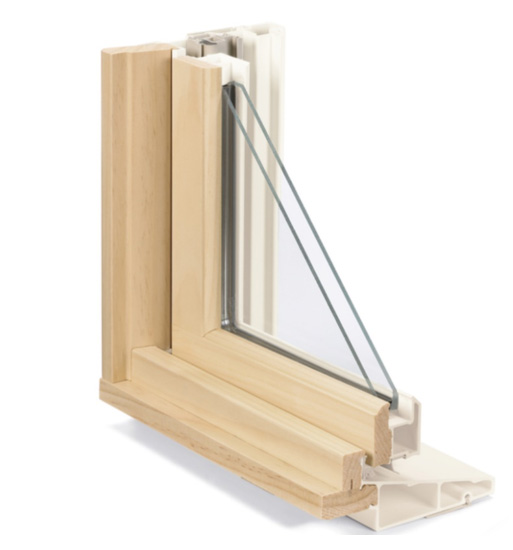
Photo courtesy of Marvin
Ultrex fiberglass exterior with wood interior.
Ultrex
This is the proprietary name for pultruded fiberglass from Marvin. Pultruded fiberglass is a game-changer in the world of fiberglass production. Like some composite wood products, the process aligns fibers to increase strength. The process pulls continuous glass fibers known as fiberglass rovings through a die so that they are aligned and cut to suit the profile that is being created. They are then coated with finish layers that are smooth and meet or exceed all industry standards. The individual pieces are joined with crisp miter joints that are more attractive and durable than those typically found in vinyl and wood/vinyl composite assemblies. With a relatively low rate of expansion and contraction and high strength, it is suitable for larger openings.
High-Density Fiberglass
This frame material is an enhanced pultruded fiberglass that represents a significant improvement over first-generation fiberglass. Its defining characteristic is the higher density of fibers, which are typically compressed and bonded with high-strength resin. The result is a stronger section and improved thermal and acoustic properties.
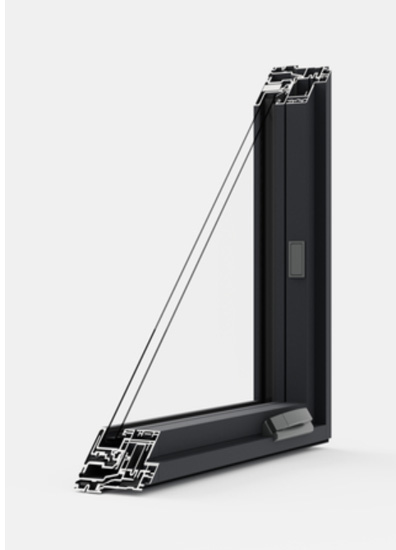
Photo courtesy of Marvin
Fiberglass corner section.
Aluminum
Window and door frames comprised entirely of aluminum are more commonly used in the commercial market for single openings, window wall, storefront, and curtain wall applications. They are available for the custom residential and light commercial market sectors and have some unique advantages. Similar to extruded aluminum wood-clad windows, the exterior profile can take many shapes and be complemented by separate shaped panning pieces that tie the window frame to the surrounding wall. This ability to mimic historic window profiles and moldings with a more durable exterior makes them a good option for adaptive reuse and renovation of older buildings.
As a natural conductor, aluminum frames need to incorporate an effective thermal break to be energy efficient. Again, with contemporary coating technologies, color and textures can be factory applied that last 30+ years. The interior appearance of solid aluminum windows tends to blend best with contemporary or commercial interiors. Although aluminum is strong, it may also need additional reinforcement for long horizontal or vertical spans at intermediate mullions. Similar to vinyl, it is relatively easy to cut and join, which also makes it a good choice for replacement windows when budget is a high priority. Aluminum is a metal, so with exposure to salt water and coastal environments, it can show pitting and corrosion without proper coatings or protection.
Steel
Window and Door frames have been made of steel since it was invented in the mid-1800’s. It was very popular in the early 1900’s and then faded in use due to materials shortages after World War II, when alternative materials like Aluminum became available. It has again regained some popularity, but due to its high cost, its use is primarily for the high-end custom home market and light commercial projects. Steel windows can cost two to four times as much as a similar-sized extruded aluminum wood-clad window. The primary benefit of steel from a design perspective is that, due to its strength, the frames can be quite narrow, resulting in elegant and sleek sightlines. Steel window frames are hot-rolled sections in a variety of profiles that allow for fixed glazing and operable sash of all types. It excels at larger openings due to its overall strength and stiffness. With the introduction of thermal breaks in the frame, which makes it larger, some of the benefit of the narrow steel frame is sacrificed. The thermal breaks are, however, essential for adequate and code-compliant thermal performance. As a natural conductor, it is not as effective in blocking sound as most of the other choices for frame materials.
Design Considerations
Door and Window product lines are often named for a design style or approach, which can provide some guidance to the specifier.
In the hierarchy of decision-making that the Architect navigates when selecting windows, it is first necessary to know what kind of look is being sought. It is also important to know how the windows operate, as this can also impact the selection of the frame material. Some considerations for each type of operable window include:
Hinged or Casement
Operable sash is typically attached to frames with pivot hinge hardware at the sill and head jamb. The size of the sash can be quite large and will add stress or point loads to the frame at the attachment points. The dimensional stability and expansion characteristics of the frame need to be stable to insure that the sash is sealed tight to the frame when closed. These requirements would tend to favor the more robust frame materials, including wood, extruded aluminum clad wood, and thermally broken steel. Aluminum-framed casement windows are also a viable choice when the manufacturer takes special care with the overlap of the sash and frame to ensure a tight seal. Pultruded fiberglass is also a good choice when the point loads at the hardware attachment points are well designed to handle the stress of the sash.
Horizontal Sliding and Double Hung
The operation of these types of windows and doors requires a certain amount of space between the sash and frame to allow it to slide. So again, the frame materials that are more robust are ideal. The materials with a higher rate of thermal movement can also be utilized, but this will necessitate a larger gap to ensure that the sash slides easily in all temperature conditions, which will reduce their energy efficiency. The frame must also be rigid and continuously attached to the structure to allow for smooth operation and prevent binding when too tight or air leakage when too loose.
Hopper and Awning
Hinges for these window types are at the head and side jamb, and similar to the casements, need to be properly designed to handle the point loads of the hinges. These window types generally have smaller operable sash but the issues are still the same as casement windows, so the more robust frame types are preferred.
Sightlines
Architects are typically concerned with sightlines as they can have a big impact on overall appearance. Sightlines refer to the apparent width of the frame on the elevation or face of the building. While frame depth can also impact sightlines, it is primarily the dimension on the exterior and interior face that is most concerning. The specific context of the window in the overall design will govern how much the frame width is perceived. A single, large, fixed window can have a high percentage of glass area to opening area, even with a relatively large frame, while an operable double hung window in a small opening will have a low percentage, even with a narrow frame. So sightlines need to be considered based on the overall opening and operation type that is selected. Again, the stronger and more rigid materials generally yield the best sightlines.
Exterior Considerations
Window and door frame materials are a critical part of the exterior appearance of the building. While the expected useful life of a window or door is in the range of 15 – 50 years, they are more or less a permanent feature of the overall exterior design. The options now available for the exterior of the frame material are virtually endless with factory-applied coatings. Architects should reference AAMA 2605 and 625 for standards for exterior finish based on the material substrate. While most manufacturers offer a limited palette of colors in their product lines, there are several that offer custom colors and or textures for an additional cost. Generally, color retention is best on metals – steel and aluminum, followed by fiberglass, wood, and vinyl.
The frame will also outline each opening of the design, providing a shadow line and transition from wall material to glazing that will affect the overall character of the facade. Multiple square reveals with sharp corners and identical sill, head, and side jambs will have a completely different effect than a flat frame with a different sill type and similar side and head jambs. It is most common that window and door frames have a nailing fin, which establishes a fixed setback between the window and the face of the wall. This places the outer edge of the nailing fin about 1 inch out so that it can receive a wide variety of trim and siding accents as well. More traditional approaches would utilize jambs that have an edge that is flush with the exterior sheathing and then apply flat board casing that is compatible with the adjacent siding. A more contemporary approach would have siding or cladding directly abut the window jamb, which would project from the face of the sheathing. The material selected for the jamb and the available profiles for that material will govern how the opening can be “trimmed,” which will have a big impact on the overall exterior design of the structure.
Interior Considerations
Similarly, window and door materials can have a big impact on the look of the interior. Most window and door jambs do not span the full depth of the wall section without added extension jambs. Some materials, like vinyl, fiberglass, and steel, are not typically available with extension jambs of the same material. Wood and extruded aluminum-clad wood windows can typically be provided with either loose or attached wooden extension jambs.
How the transition from window frame construction to interior wall is approached can be a defining characteristic of the interior design. Wrapping the drywall into the window opening is a more sleek and contemporary approach, while wood extension jambs and shaped or flat board casings, sills, and aprons impart a much more traditional approach. Of course, there are always ways to mix these approaches, but the frame material and profile will dictate how this transition should be designed and detailed by the Architect.
The interior finish options of the window and door frame material can also vary based on the selected frame material. Better quality wood and extruded aluminum-clad wood windows are available with a different wood species on the interior, which includes hardwoods such as oak and cherry, which can add a rich and warm appearance to the interior. Some materials are available in a different color on the interior, which also provides some opportunity to blend the appearance of the window or door with the interior design.
Special or Unique Installations
Architects know that integrating a unique window or door opening requires greater attention to detail and available products. These applications may lend themselves to the use of a single frame material or may be best achieved with multiple frame types or materials. The most prevalent features that require special consideration are multiple windows or doors installed in a single opening. This will involve intermediate vertical or horizontal mullions, which can simply be standard double-wide jambs of unitary window and door frames or require a structural element between window or door units. For modest sizes, factory-mulled units can also have supplemental structural elements installed at the factory. Larger “structural mullions” will need to be designed by the Architect as they are an independent element that is not typically the responsibility of the window or door provider. The structural mullion can be necessary to support the header or beam above the large opening, and or to brace the window frame to resist lateral loads. Depending on the span of the compound opening, the structural mullion may involve steel reinforcing to keep it slender or multiple standard wall framing members that make this mullion wider than the non-structural mullions that utilize the standard window framing. Manufacturers can ship some windows bonded together—factory mulled, which is advantageous in terms of quality and ease of installation. Very large units cannot be factory mulled due to shipping limitations and need to be mulled together on site. Manufacturers’ project managers will typically assist the Architect and prepare the units for this process, including providing additional reinforcement if necessary.
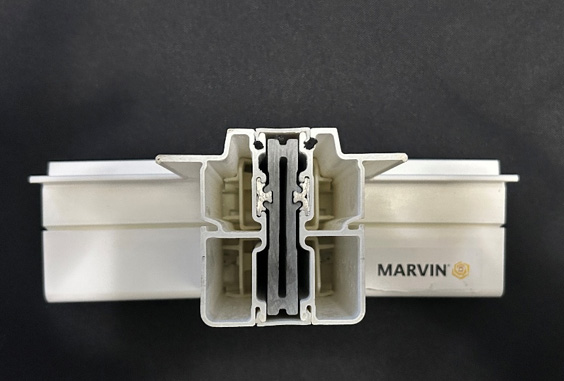
Photo courtesy of Marvin
Steel reinforced vertical mullion.
Green Building and Window and Door Frame Material Selection
The long-term sustainability of a window or door frame material should factor into the selection process, and it has some key considerations, including:
- Life Cycle cost of the material
- Carbon footprint and embodied energy of the material &
- Energy Efficiency of the material
Life Cycle Cost Analysis or LCCA involves the initial cost and the expected useful life of the material or product. Consumers are typically focused on the first or initial cost of products and services, so this is most often used in evaluations of affordability. If a high-quality extruded aluminum-clad wood-framed window initially costs 20% more than a vinyl-framed window but lasts twice as long, it has a much lower life cycle cost. This has both a long-term cost benefit and an environmental one in that it uses less material. The long view is often challenging to adopt when durations for the life of better windows are in the 25-50 year range, and buildings are owned for on average 12-13 years and typically financed for 30-year term mortgages that are refinanced every 7-8 years.
There has been much discussion lately on the carbon impact of the creation of materials and products. This can also be viewed as the initial impact of the window or door prior to purchase, sometimes referred to as the “cradle to gate (of the factory)” phase of the life cycle. Again, the full life of the product or system should also be considered here, which includes the in-service period or “cradle to grave” and the post-service time, which is referred to as “cradle to cradle.” This last view takes into account the ability of the material to be effectively recycled or renewed. There are many factors to review when analyzing how much carbon is used in the cradle-to-grave portion of the life cycle, including the cost of energy (electricity and fuel consumption) for production and delivery. This variability makes it challenging to definitively rank frame materials. There are also many innovations underway by manufacturers to reduce the carbon footprint of materials. For example, some aluminum manufacturers have recently cut their carbon use in half due to changes in production. Generally however, carbon use from highest to lowest is:
- Aluminum
- Steel
- Vinyl
- Composites
- Fiberglass
- Wood
- Acetylated Wood
The ability to recycle the material at the end of its life is generally highest for aluminum, steel, vinyl, and composites, and more challenging for fiberglass. Wood products tend to naturally biodegrade at the end of their service life, so they are not reusable but have little carbon impact at the end of service.
Energy Efficiency
The energy efficiency of frame materials should also be a key consideration in the selection process. Windows are generally evaluated by their insulation value, air leakage, and solar heat gain coefficient. Frame material and design can affect both the insulation value and air leakage ratings.
While it may seem counterintuitive, the opaque window and door frame material generally has a higher U value (conductivity) than the transparent insulated glass assemblies. As a result, the thermal properties of the frame have an outsized impact on the overall energy efficiency of the window or door. U-value ratings for windows and doors are determined by an area-weighted formula, so both the size of the frame and glass and their respective insulating qualities factor into the overall U-value of the assembly. These ratings are generated by the National Fenestration Rating Council (NFRC).
When LEED certification is to be considered as a selection criterion for the frame material, up to 3 points can be awarded for high-efficiency windows in the energy and atmosphere category based on the NFRC rating in the project’s climate zone.
Thermal breaks also impact the energy efficiency of windows and doors. Cold surfaces create drafts and result in discomfort when adjacent to the window or door assembly, which is why fully effective thermal breaks on aluminum and steel windows are absolutely essential.
Air leakage is also a consideration, and frame materials have varying abilities to maintain a tight connection to the sash. The more dimensionally stable frame materials are well-suited to reduce air leakage. Some of the materials that are more impacted by extreme temperatures - like vinyl and thermoplastic composites - are more prone to significant expansion and contraction, which could result in air leakage.
Implementation & Specifications
Specifying window and door frame materials can be complex, depending on the project delivery method. For private clients where proprietary specifications are permitted Architects can work with manufacturers’ standard specifications and modify them as needed for the specific project. Starting with a manufacturer’s product line, the Architect needs to carefully review the many options within each line to ensure that all design decisions are included in the specification. For public projects or projects where some competition on either price, construction details, or delivery times is desirable, a performance-based specification is more appropriate. This type of specification will require carefully listing each component of the window, including frame materials. A thorough understanding of the available frame materials – and their varying qualities – is essential so that the resulting proposals represent roughly equivalent products. For example, a wood window interior with a pultruded fiberglass exterior is not equivalent to a vinyl-clad window with a wood interior based on performance criteria; however, they will appear to be approximately the same.
The required performance of the window or door will, of course, be considered during the specification process. The industry standard rating by the NFRC levels the playing field when evaluating windows and doors. The 2022 edition of AAMA/WDMA/CSA 101/I.S.2/A440, North American Fenestration Standard/Specification for windows, doors, and skylights (NAFS) is the fourth edition of the standard, and supersedes the previous edition published in 2017 under the same title.
This standard is jointly published by the Fenestration & Glazing Industry Alliance (FGIA/AAMA), the Window & Door Manufacturers Association (WDMA), and the Canadian Standards Association (CSA). This Standard/Specification is applicable for use in testing and rating windows, doors, secondary storm products (SSPs), tubular daylighting devices (TDDs), roof windows, and unit skylights, and represents the continuing development of an internationally accepted performance Standard/Specification for all windows and doors.
Architects should include head sill and jamb details in their documents, and most major manufacturers provide details of their products in digital formats for that purpose. It is important for the Architect to then integrate the manufacturer’s data into the specific wall section for the Architect’s design so that both the interior and exterior transition from opening to wall is fully described. Details should be included for both typical conditions and unique areas such as structural mullions, transoms, and corner windows. This project-specific information in the opening details will ensure that the design intent is achieved and the window or door frame is properly attached to the primary structure. After all the research and a careful selection process for the window and door, it is important to make sure it is properly fastened and finished so that it performs as intended from both an aesthetic and energy perspective.
Conclusion
The selection of window and door frame materials is pivotal to the quality of the opening and ultimately the success of the overall design approach. This critical decision process will lead or follow other major design decisions, including exterior cladding, interior trim, color selection, and wall finishes. The material selection generally is linked to a specific product line that will have its own parameters for operation type, size limitations, and finish and color options. So, in choosing a frame material, the Architect essentially selects the approach to all windows and doors.
While some of the choices for materials have been proven over a long period of history, like wood, steel, and aluminum, others are relatively new and innovative. With many materials becoming scarce and ever more costly to procure and produce, we need new, effective, and sustainable alternatives. Pultruded fiberglass, high-density fiberglass, and acetylated wood have posted excellent performance metrics in many categories, and there is no doubt that their use will continue to grow. While they require some due diligence to verify that they will perform, it is liberating to find new alternatives that can provide even more opportunities for expression of the Architect’s design approach.
Russell A Davidson, FAIA, served as a volunteer leader of the architecture profession in numerous roles in the American Institute of Architects, including AIA New York State President and AIA National President. He is a former president and principal of KG+D Architects, an award-winning firm in New York’s Hudson Valley.