New Options for Insulating and Venting Wood-Framed Sloped Roofs
Sponsored by ZIP System® building enclosures | Presented by Chris Clark
Webinar On-Demand
A comprehensive overview of the control layers of a wood-framed sloped roof assembly. New code provisions will be discussed for high-performance, green and sustainable building practices. The differences between vented and unvented assembly requirements will be defined. In conclusion, a review of the emerging 2018 code provisions will be done as well as a comparison of different methods to providing continuous and integrated air, water, and thermal barrier.
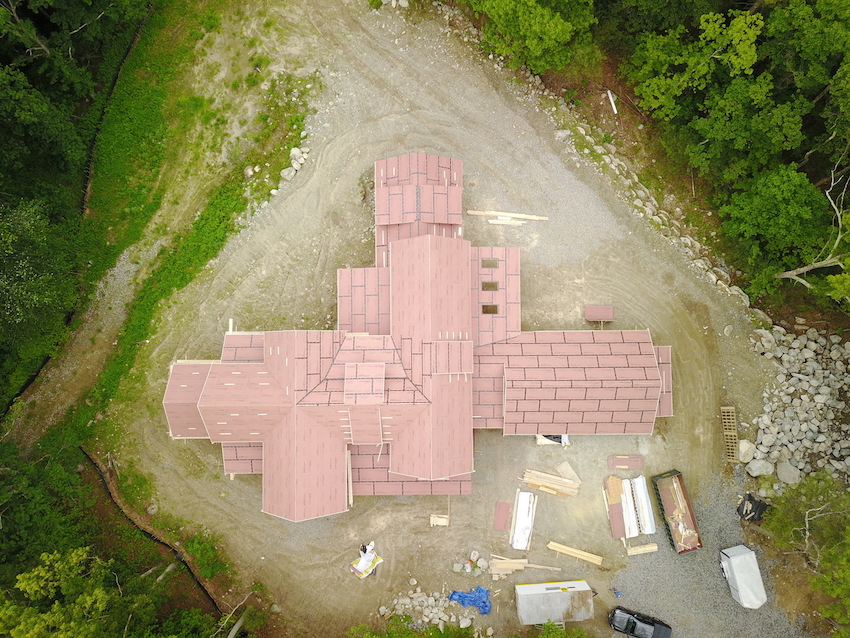
Photo courtesy of Huber Engineered Woods, LLC

|
As manager of Huber Engineered Woods’ Product Engineering Team, Chris Clark is a technical resource providing consulting to contractors on the jobsite, as well as architects and engineers in regards to how HEW products can be incorporated into their design to meet local building codes. Since graduating with a Masters of Science in Civil Engineering with a focus on structural engineering, his decade of industry experience is centered on the design requirements of wood-framed structures. |

ZIP System® building enclosures offer structural and sealing products for a quick rough dry-in. A revolutionary alternative to traditional sheathing and building wrap, ZIP System™ sheathing and tape create a streamlined roof and wall sheathing system with integrated weather and rigid air barriers. The simplified approach to structural roofs and walls helps building teams save time by eliminating installation steps and achieving a quick rough dry-in to accelerate interior work. Backed by a 180-Day Exposure Guarantee and 30-Year Limited Warranty, ZIP System building enclosures not only help keep jobs on track but also provide reliable exterior water management during and after construction. Learn more at ZIPRevolution.com
Originally published in Forge
Originally published in November 2019
LEARNING OBJECTIVES
- Explain the primary functions of a wood-framed sloped roof including four primary, code-based barriers for high performance, green, and sustainable buildings.
- Define the common options for wood-framed sloped roofs relating to venting, insulation, and current (2015) code requirements
- Review the emerging research and 2018 code provisions that address new variations in unvented wood-framed sloped roof assemblies
- Compare some of the different methods for providing continuous and integrated air, water, and thermal barriers in roof assemblies.