The Collision of AGILE and MESSY
Transforming learning through physical space
Sponsored by VS America, Inc. | Presented by David Stubbs II
Webinar On-Demand
Authentic learning can be quite messy, thus the necessity to recognize the requirements and disconnects of space as it relates to clutter. Within the walls of educational environments, cluttered classroom environments are negatively affecting the health, safety, and potential of its learners. As designers, we sometimes continue the delivery of “kitchen cabinets” within classrooms without the knowledge that this antiquated harboring device is simply not suited for today’s set of resources. Subsequent responses of simply removing all available cabinetry, shifting the emphasis to wheels, is placing an additional burden on space.
This presentation will explore fresh, new innovative concepts for appropriate systematic solutions, as well as guidelines and recommendations for the housing of these resources. We will explore a variety of designed solutions and themes, focusing on observed disconnects and hurdles.
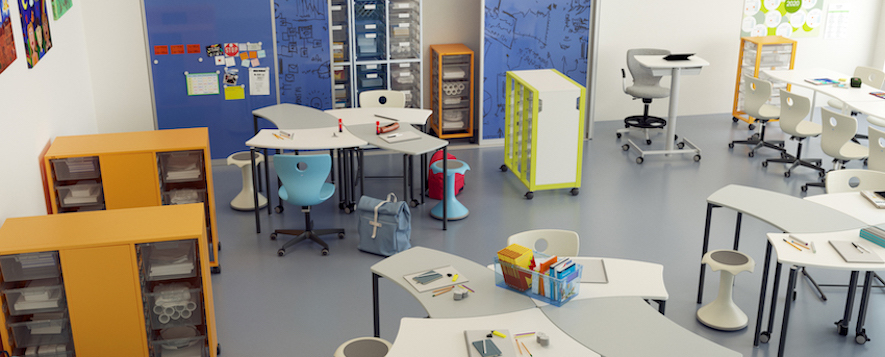
Photo courtesy of VS America

|
David Stubbs Founder of David Stubbs Design, David is the creator of award-winning educational furniture solutions that continue to ignite the industry. From his work in public school facilities, his passion focuses on the social/emotional and physical requirements of our stakeholders while supporting manufacturers, designers, and school communities throughout the world from the disruptive approach to design. David is not only an innovator, researcher, designer, and creator, he is also a writer, consultant, advisor, and speaker. Check out his most recent work: SPACE products by VS and his new book, Hinge and Pivot: Transforming Learning Through Physical SPACE. David can be contacted at david@davidstubbsdesign.com or visit http://www.DavidStubbsDesign.com. |

VS America is dedicated to customer satisfaction and to supplying premium ergonomic and environmentally friendly furniture to our customers. Our product range adapts to the comfort needs of the user and is safely produced from recyclable materials.
Originally published in Mission Critical
Originally published in April 2022
LEARNING OBJECTIVES
- Identify ways in which antiquated mindsets are restricting us from moving forward even after the weak underbelly of educational fabric has been exposed.
- Recognize and discuss the issue of teachers having too much stuff and how this mindset must shift in order to create seamless, designed solutions reinforcing AGILE learning.
- Define authentic SPACE and illustrate how it can be successfully achieved through critical collaboration between instruction and curriculum, defining a precise range of tools.
- Recognize decluttering as a systematic approach to defining the built environment.
- We must modify historic, “conditioned attitudes” of stuff with agency and inclusion.