This CE Center article is no longer eligible for receiving credits.
This listing shows the major types and enclosure sources of indoor air pollutants. However, since many materials and products are manufactured using many ingredients, buildings can yield thousands of chemicals, some of which we do not have complete information on.
Of course the reason to be concerned about any of these items is the health effects on people. These can include respiratory health problems including the growing occurrences of asthma in the U.S. Poor indoor air quality has also been linked to cancer and effects on reproductive systems and development, particularly in school buildings. With the health, safety, and welfare in mind of building occupants, it becomes imperative then, that architects and other design professionals address these potential health risks and exposures in buildings, including the enclosure materials. Specifications that require use of materials with low or no VOCs and no added formaldehyde certified by strong emissions testing protocols can greatly improve indoor air quality. Further, moisture control must be properly addressed since failures can compound IAQ by creating mold, mildew, or other conditions which may complicate any existing health issues of occupants.
Indirect Enclosure Impacts on IA Q
Beyond the direct impacts from pollutants that a building enclosure can have on IAQ, there are indirect impacts that must be addressed since they can be critically important as well. Specifically, IAQ issues are affected by temperature, air pressure, and moisture content which are controlled by both the building envelope and HVAC system as discussed further.
Air movement. Air will move through a building enclosure in various ways, both desirable and undesirable. Unwanted air leakage occurs when air moves through some portion of the building enclosure into cavities or other places within the assembly. Since no building construction is perfect, it is safe to say that all building enclosures leak air. The only question is how much air do they leak and where the leaks are located. Tight buildings will leak a little while others can leak a lot. The key to good performance is controlling that flow and minimizing leaks.
There are multiple areas of concern regarding air leakage. First, bringing in some fresh air is good, sometimes for ventilating cavity spaces or simply allowing the building to “breathe.” But unwanted or excess air leakage can gather, carry, and deposit pollutants either from outdoors or within the assembly, causing potential issues. So when there is leakage, it can actually bring pollutants in, to add to the ones that are already in the materials, thus exacerbating the problem. Fine particles are examples of pollutants that we don’t want to collect in the interior space. Second, using the enclosure to keep contaminants away from people is desirable, but if the enclosure is too tight it can create one set of problems while not building the enclosure tight enough can create another set of problems. Third, moving indoor pollutants out of the building is essential so some controlled way of moving air is needed.
The usual measure of air infiltration is the number of times within an hour that the volume of air in a building can be replaced. This is measured simply as air changes per hour (ACH). Depending on the building type and the circumstances, the preferred ACH level could be very low (less than .5 ACH) to something higher (over 1.0 ACH). The actual level will be determined by the tightness of the air barriers in the envelope, temperature, and the air pressure levels inside and outside of the building. Air pressure is commonly measured in an SI standard unit called a pascal (Pa) named after the French mathematician Blaise Pascal and commonly used for barometric pressure measurement.
Compared to the more familiar pounds per square inch (psi), it takes about 6,895 pascals to equal 1 psi, hence it is a very precise measurement of pressure. Air infiltration can be measured in buildings by using a large fan to pressurize a specific space and then measure the differential in Pa between the inside and outside. Using this information, even relatively small leakage rates can be determined and addressed.
Historical building enclosures have evolved dramatically from simply providing basic shelter with little climate control other than shade and natural breezes. Today modern building enclosures rely on advanced engineering and architectural elements to control a full range of environmental conditions in addition to design aesthetics. In the quest to create higherperforming and environmentally preferable buildings, both new and renovated structures are influenced by a variety of professionals. Often the design of a building envelope is the responsibility of one part of a design team while indoor air quality can be the focus of a separate interiors group. The reality is that these two areas are deeply interconnected. An understanding of those connections allows the entire design team to achieve a building design that truly performs well. Further, a coordinated approach can facilitate meeting certification standards for high-performing buildings.
The Multi-Faceted Building Enclosure
All buildings provide an enclosure to separate its inhabitants from the surrounding natural environment. The function of the enclosure is three-fold: first to protect the people and the interior of the building from the elements — typically the enclosure keeps out heat, cold, water, bugs, UV rays, sound, etc. Second, it can keep in the desired humidity and temperature levels to maintain human comfort levels. And third, it can allow desirable connections to the natural environment such as daylight, views, air, access, etc. through openings in the enclosure.
Richard Rush, author of The Building Systems Integration Handbook, elaborates on the function
and nature of building enclosures, which he refers to as the building envelope. He states: “The envelope has to respond both to natural forces and human values. The natural forces include rain, snow, wind, and sun. Human concerns include safety, security, and task success.” This gets tied all together when the building enclosure “provides protection by enclosing and balancing internal and external environmental forces.” The key is finding the right balance between those internal and external factors.
 |
Building enclosures of all types create the barriers needed to assure good indoor air quality.
|
Enclosure Systems and Layers
With the basic purpose established, the definition of a building enclosure necessarily requires incorporating some version of each of four basic systems:
- Below-grade construction consisting of foundation walls, concrete slabs, or other floor systems, which enclose the bottom side of the building
- Exterior walls that enclose all sides of the building
- Roof systems which define the top of the building
- Fenestration or openings in the walls and roofing in the form of windows, doors, skylights, etc.
The functions of each of these four systems are to provide inherent structural support, moisture control, temperature regulation, air pressure stability, thermal comfort to occupants, and integrity of the assembly over time. Altogether, the enclosure also affects ventilation and energy use within the building. While each of the four systems typically relies on different materials and details to achieve these ends, each is typically constructed of building products assembled in multiple layers. Each layer may serve one or more of the following critical performance purposes:
- Rainscreen or wearing surface. This is the exterior surface that is exposed to the elements.
- Drainage plane. Behind the wearing surface, a secondary provision is made for water to be captured and drain away harmlessly from the rest of the assembly.
- Air barriers. This layer keeps unwanted air infiltration from entering the building or the assembly.
- Vapor barrier. Preventing airborne moisture from penetrating the assembly and/or other locations in the building.
- Thermal barrier. Materials used to slow the transfer of heat through an assembly. In ideal situations, this thermal barrier is not interrupted by structure or other elements.
- Pressure boundary. A successful assembly will hold air back under pressure and not succumb to anticipated air pressure changes.
While the systems and layers may be thought of and designed individually, the goal of a welldesigned building enclosure is that all of these work together for the same purpose.
Building Location
Building enclosures can be expected to respond to moisture, humidity, temperature and air pressure changes but how they do so will be highly influenced on the geographic location of the building. As would be expected, the local climate plays a big part in how the enclosure performs. Different climates have been well documented in engineering maps that identify different climate zones for the U.S. The particular climate zone where a building is located not only identifies the thermal performance criteria for a given building, it also dictates the placement of particular performance layers in the enclosure. This is especially true in locating control layers such as the vapor barrier and the air barrier.
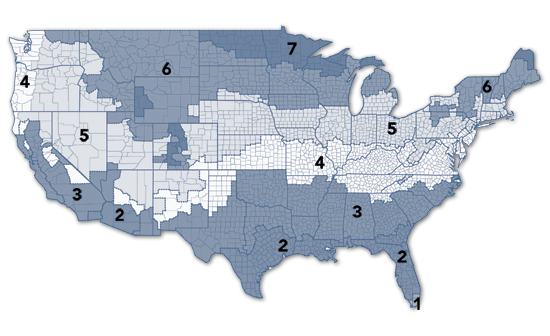 |
Distinct climate zones have been determined in the U.S. in order to inform architects and others involved during the design of building enclosures. Zone 1 includes Hawaii, Guam, Puerto Rico, and the Virgin Islands. All of Alaska is in Zone 7, except for the following boroughs: Bethel, Dellingham, Fairbanks N. Star, Nome,North Slope, Northwest Arctic, Southeast Fairbanks, Wade Hampton, Yukon—Koyukuk
Source: ASHRAE |
Control Layer Continuity
Beyond location, an important aspect of each of the performance layers is the fact that they should all be continuous around the entire enclosure. A simple visual test to determine this continuity of layers involves looking at a cross sectional drawing of a building with all of the appropriate layers identified. Using a pencil and starting at the lowest level, draw a line along each of the layers all the way along the perimeter of the enclosure to see if the layers are in fact continuous. If you need to stop because something interrupts the layer, like a floor slab, structure, or protrusion, then the designer can see that this interruption is actually a breach in the layer and needs to be corrected.
Of particular significance are “thermal bridges” which are defined as conditions which create a breach in the thermal barrier layer. Essentially these conditions allow heat to be transferred directly through a conductive building element where that heat transfer was not intended. For example, an uninsulated concrete floor slab that protrudes out past an insulated exterior wall allows heat to be transferred directly between the inside and outside of a building, thus creating an unwanted thermal bridge.
Even in a carefully designed building, failures in the various systems and material layers can happen. Typically such failures occur in three main ways. First, moisture penetration into an assembly can cause deterioration of materials along with mold and mildew growth. Second, structural gaps, movements, or slab failures can cause a building to have multiple systems breached to the point where the building becomes uninhabitable. Third, people in the building can be exposed to potential health hazards. This third failure is one that we will focus on in the remainder of this article since it is often misconstrued to be limited only to materials used in interior construction. In fact, there are also health exposure hazards from building enclosure materials.
The Building Enclosure/IAQ Relationship
We often hear that people commonly spend 85 to 90 percent of their time indoors, meaning that they are primarily breathing the air from inside buildings. That indoor air is contained and directly influenced by the building enclosure. It is also common to hear that the indoor air quality (IAQ) in many buildings is worse than the outdoor air quality. This is usually because building occupants are exposed within the enclosure to a mix of pollutants including complex indoor chemicals and other irritants such as dust, pollen, mold, and VOCs. Surprisingly, many of these indoor air pollutants are only measured but not regulated by the U.S. Environmental Protection Agency (EPA) like they are for outdoor air contaminants.
|
Source: The Center for Health Design® and Health Care Without Harm, Designing the 21st Century Hospital |
Direct Pollutant Sources
While there has been plenty of attention paid to things like carpeting, furniture, interior finishes, and other materials related to IAQ, the building enclosure has been found to be a significant contributor to indoor air pollutants as well. Depending on the materials used and the assembly design, the building enclosure can exclude, release, or trap pollutants or it can be a possible source of pollutants itself. These pollutants may include:
- VOCs. According to the U.S. EPA, most sources of indoor air pollution come from materials and products that “off gas” or emit VOCs after they are installed. In the building enclosure, sources can include manufactured wood products, adhesives, sealants, caulks, paints, coatings, surfacing, cladding, insulation, air barriers, and even wall board. When the VOCs off gas into the enclosure assembly they are basically airborne and may remain suspended there. However, once any air, moisture, or pressure infiltration occurs, these VOCs can start to move with that infiltration and be transferred to the building interior.
- Formaldehyde. The construction industry is the primary end-user of formaldehyde-based products, representing 70 percent of its use overall. Just like VOCs when formaldehyde outgasses in a building enclosure system, it can be impacted by air or moisture infiltration and permeate into the interior of the building.
- Particulate matter (PM). Dust or other particles can become trapped or built up inside an enclosure assembly. A breach in the assembly or an air infiltration point can move that PM through the open spaces and discharge into the building where it is airborne and accessible to the occupants.
- Plastics. The use of petroleum-based plastics in buildings is widespread and in some cases, growing. This includes foam plastics used for insulation, plasticizers used in certain materials, and solid plastics used for a wide variety of products. As such, plastics are coming to be seen as one of largest health offenders in buildings today. It is important to understand, however that there is a range of safety or harmfulness depending on the particular plastic used. Polyvinyl chloride (PVC) or plastics with hazardous additives are clearly less environmentally preferable. By contrast, bio-based plastics and compounds such as polyethylene, polypropylene, and thermal polyolefin, are much more preferable.
- Persistent bio-accumulative toxins (PBTs). This is a class of contaminants found in various envelope materials such as flame retardants and anti-microbials. The EPA describes PBT pollutants as chemicals that are toxic, persist in the environment, and bioaccumulate in food chains and, thus, pose risks to human health and ecosystems. The biggest concerns about PBTs are that they transfer rather easily among air, water, and land, and span boundaries of programs, geography, and generations.
- Moisture. The right amount of moisture in indoor air is desirable, but when moisture is allowed to pass into an enclosure assembly, it can exacerbate conditions related to IAQ. For example, it may create mold if there is an organic food source material available or its presence on formaldehyde-containing materials may actually increase formaldehyde emissions.
This listing shows the major types and enclosure sources of indoor air pollutants. However, since many materials and products are manufactured using many ingredients, buildings can yield thousands of chemicals, some of which we do not have complete information on.
Of course the reason to be concerned about any of these items is the health effects on people. These can include respiratory health problems including the growing occurrences of asthma in the U.S. Poor indoor air quality has also been linked to cancer and effects on reproductive systems and development, particularly in school buildings. With the health, safety, and welfare in mind of building occupants, it becomes imperative then, that architects and other design professionals address these potential health risks and exposures in buildings, including the enclosure materials. Specifications that require use of materials with low or no VOCs and no added formaldehyde certified by strong emissions testing protocols can greatly improve indoor air quality. Further, moisture control must be properly addressed since failures can compound IAQ by creating mold, mildew, or other conditions which may complicate any existing health issues of occupants.
Indirect Enclosure Impacts on IA Q
Beyond the direct impacts from pollutants that a building enclosure can have on IAQ, there are indirect impacts that must be addressed since they can be critically important as well. Specifically, IAQ issues are affected by temperature, air pressure, and moisture content which are controlled by both the building envelope and HVAC system as discussed further.
Air movement. Air will move through a building enclosure in various ways, both desirable and undesirable. Unwanted air leakage occurs when air moves through some portion of the building enclosure into cavities or other places within the assembly. Since no building construction is perfect, it is safe to say that all building enclosures leak air. The only question is how much air do they leak and where the leaks are located. Tight buildings will leak a little while others can leak a lot. The key to good performance is controlling that flow and minimizing leaks.
There are multiple areas of concern regarding air leakage. First, bringing in some fresh air is good, sometimes for ventilating cavity spaces or simply allowing the building to “breathe.” But unwanted or excess air leakage can gather, carry, and deposit pollutants either from outdoors or within the assembly, causing potential issues. So when there is leakage, it can actually bring pollutants in, to add to the ones that are already in the materials, thus exacerbating the problem. Fine particles are examples of pollutants that we don’t want to collect in the interior space. Second, using the enclosure to keep contaminants away from people is desirable, but if the enclosure is too tight it can create one set of problems while not building the enclosure tight enough can create another set of problems. Third, moving indoor pollutants out of the building is essential so some controlled way of moving air is needed.
The usual measure of air infiltration is the number of times within an hour that the volume of air in a building can be replaced. This is measured simply as air changes per hour (ACH). Depending on the building type and the circumstances, the preferred ACH level could be very low (less than .5 ACH) to something higher (over 1.0 ACH). The actual level will be determined by the tightness of the air barriers in the envelope, temperature, and the air pressure levels inside and outside of the building. Air pressure is commonly measured in an SI standard unit called a pascal (Pa) named after the French mathematician Blaise Pascal and commonly used for barometric pressure measurement.
Compared to the more familiar pounds per square inch (psi), it takes about 6,895 pascals to equal 1 psi, hence it is a very precise measurement of pressure. Air infiltration can be measured in buildings by using a large fan to pressurize a specific space and then measure the differential in Pa between the inside and outside. Using this information, even relatively small leakage rates can be determined and addressed.
Of course, most buildings have some sort of mechanical ventilation system to create a desired flow of conditioned air along a desired path. These systems work best when infiltration from the building enclosure is minimized or at least controlled. If the ventilation system is attempting to pressurize a space, that pressure will be compromised if air is being pushed out through unintended openings in the enclosure. Conversely, a room with intended negative air pressure will be prone to pull outdoor air and associated contaminants through any leaks in the building enclosure, causing increased stress on the mechanical system. The impacts of this leakage on the energy cost and operation of the equipment are direct and obvious. Once again, the key to achieving the desired performance is finding the right balance between desirable air flows and unwanted air infiltration.
Moisture control. Common everyday routines of the inhabitants of a building can produce airborne water vapor which must be addressed and controlled to prevent potential problems. Some of the sources of this water vapor or moisture can include basic human functions like respiration and perspiration, particularly prevalent where large groups of people occupy the building. Operating fundamental building elements such as appliances, equipment, or using showers are a clear source of adding water vapor to the air. And of course there are unintended additions such as pipe leaks or other malfunctions that need to be addressed as they happen. Toward all of these ends, it can be important to understand the intended uses and activities inside a building from the beginning of design to be sure that there is an appropriate understanding of the potential moisture level in a building. Otherwise, it is possible that any ventilation system is simply circulating humid air throughout the whole building.
With the indoor moisture sources are accounted for, our focus turns to controlling its movement, particularly in terms of the building enclosure. There are essentially two ways that moisture moves from inside a building into an enclosure assembly. The first is capillary action where a material or product is porous enough to allow water to permeate through it or even wick it from one location to another in the material. In this case water vapor diffuses through a material (like gypsum board) from a high pressure area to a low pressure area. Typically, the amount of water transferred in this manner is fairly small unless there are unusually humid or high pressure conditions. The second common means of movement is the bulk transfer of moisture. Here moisture flows with air through an opening or gap in the assembly in part due to air pressurization differences that can move and carry substantial amounts of water vapor with it. This is the usual and largest cause of unwanted moisture movement into an enclosure assembly. In either case, that moisture can end up condensing inside an assembly, cause water droplets to form, and lead to deterioration, mold or both.
Turning to the exterior of the building, leaks in the exterior layers can allow rain, snow, or ice to infiltrate a building enclosure system. From there it can run down into the building from above, it can be pulled sideways when the wind blows or even be wicked up from below if the source is soil or other grade level (or below) water sources. Wind can worsen this situation since high pressure forces moisture to areas of lower pressure, i.e. outside to inside.
Design Considerations: Connecting the Dots
In the normal context of designing and renovating buildings, how does all of the above come together? Overall, the key is found in maintaining the right balance between all of these performance issues with the rest of the building design criteria. Of course, if we try to create a building that is perfectly formed, functions perfectly and is totally cost contained, we may find ourselves never building that building since it likely doesn’t exist. Economy must be balanced with the aesthetics and function including controlling sources of problems in assemblies that can’t be accessed after construction. Nonetheless, there are several key points to look at holistically in the process of creating successful building designs.
Accounting for Climate
As noted, the local climate plays a big part in how the enclosure performs and how the assemblies in the envelope are designed. In cold climates the concerns can include thermal bridging in winter which not only leaks heat it can create cold building surfaces that produce frozen condensation. This then becomes a dormant issue that is delayed for weeks or months until temperatures rise and the condensation melts. The resultant water becomes a problem that could have been avoided if the thermal bridge was recognized and treated in the design and construction process using truly continuous insulation. In a hot and humid climate, the thermal bridging issue becomes an issue in the summer as heat is absorbed and wicked into the building, increasing the air conditioning load.
Vapor and moisture penetration are affected by climate as well. Since the intent of a vapor barrier is to avoid condensation occurring on components inside an enclosure assembly the conventional approach is to place that barrier on the side of the enclosure with the most moisture, which is typically the warmer side. Therefore, the location of the vapor barrier is tied directly to the location of the building. So, for a northern climate like Minnesota, conventional practice would locate a vapor retarder to the warmer, more humid side which would be the heated interior side in this case. Conversely, in a warm climate like Florida placing the vapor retarder on the warm side means it goes toward the exterior of the assembly heated by the sun and climate, not on the typically air conditioned interior side. But what is the right location in a mixed climate of hot and cold temperatures? In those cases, there may be reasons to keep options open to allow for a predominant or variable vapor direction. In a coastal climate like the northwestern US that receives lots of rain and humidity, it will be important to allow for drainage and drying in enclosure assemblies. In the end, the whole point is to keep moisture out of the enclosure while maintaining comfortable interior temperature and humidity levels.
IA Q vs. Energy: Myth vs. Reality
Some designers think that the way to achieve good indoor air quality means that energy performance has to be compromised. This is commonly referred to as the Energy IAQ tradeoff and the reality is that it is a misperception. It seems to be born of the mistaken thought that the only effective strategy is to increase the use of mechanical ventilation. But the reality is that a welldesigned building can have both good IAQ and good energy performance.
As we have been seeing, there are many building enclosure design strategies to address IAQ that don’t compromise energy efficiency, in fact they will enhance it. Control and reduction of pollutants at the source can be accomplished by specifying low-emitting materials in the enclosure as well as the interior. The enclosure can be designed and constructed tightly to restrict air flow through it particularly in variable pressure conditions. The HVAC system can be designed to integrate with the tighter enclosure and work more efficiently. The integrated system will then go a long way toward more accurately controlling outside air and air changes per hour.
When it comes to creating continuous barriers that is important for air and vapor but also for thermal barriers. Continuous insulation installed on the outside of structural and other elements helps cover over anything that would otherwise be a “thermal bridge.” In many cases, the insulation may also have air and vapor barrier properties meaning that one product can perform multiple functions very efficiently. Regardless of the material used, however, there are several places in the building enclosure that are critical and require attention to the details. The first is any area of transition where sections of the same materials meet. The junction points and/or seams are prone to leak if not joined together properly. The second area is terminations where two different materials start and stop. Obviously if there are gaps or spaces between these two materials because of framing or differences between the materials then leakage is likely. The third critical area is repetitive features. If a feature is detailed wrong and applies to multiple locations, then each of those locations will have issues.
Paying attention to all of these things in the building enclosure details will create effective systems that are indeed energy efficient and address IAQ at the same time.
Timing of Design Decisions
Anyone managing a project understands the importance of addressing the timing of decision making. This is particularly true in the design of building enclosure systems. Since there are an abundance of choices, it is wise to address the criteria and selection of those systems early on. By starting out with a correctly conceived set of enclosure systems, it is easier to stay on track through a successful completion. Discovering later on in the process that changes are needed for the enclosure to work and perform properly can create significant impacts to the design team, the construction team, or to the ultimate health of the occupants. Therefore, working out the details in the schematic or design development phases of a project means there will likely be minimal cost impact since making adjustments are fairly simple early in the design process. Waiting until construction drawings and specifications are being prepared might mean that the design firm needs to re-design and re-draw portions of the project with potential higher cost impacts. This is especially true if the revised design requires re-bidding or delays the project. Discovering a change needs to be made during construction usually means that a change order is required for re-doing something that may already have been built. That can have professional liability costs for the design team and cause further scheduling delays for the owner. Finally, if a problem is discovered during occupancy, this will likely be the most costly to revise and correct. (See Case Study). The implications of a poorly designed and constructed building enclosure could include loss of use of the building during repairs, creating a remedy that is limited due to inaccessible assembly locations, and damage not only to the building, but to the reputations of all involved.
One activity in particular needs special attention, namely the increasingly common Value Engineering step of a project. A substitution or change in the building enclosure can have some dramatic ripple effects since they affect so many other areas as we have seen. The impacts of any change need to be evaluated based on what it does to each of the control layers individually and collectively as a coordinated assembly. It also needs to be assessed based on the impacts it may have on the HVAC system. Given the importance of the enclosure and the potential building and health impacts, the final determination for making any such changes should rest with the architect or other licensed professional that designed the building enclosure systems.
Conclusion
The extensive and critical nature of the building enclosure is such that it directly and indirectly impacts many aspects of a building including ventilation, energy use, and especially indoor air quality. Since the enclosures that we design and build must respond to both natural forces and human values including human health, all of these must be taken into account during the design of buildings. Starting with the elimination of materials that can pollute the indoor air such as VOCs, formaldehyde, particulate matter, and certain plastics, we make a significant step in the direction of creating buildings that are truly healthy environments. Moving on to create carefully designed and continuous control layers within the four building enclosure systems (bottom, top, sides, and openings) we assure that the enclosure will perform the way we intend it. Coordinating the enclosure with the HVAC and other building systems help boost efficiency and save energy. Studies have shown that ventilation alone will not eliminate health hazards, only through the use of low emitting products AND effective ventilation will the issues of the building enclosure be minimized and the indoor air quality be maximized.
The results of these efforts can be very significant. Good indoor air quality has been shown to create increased productivity, reduced absenteeism, reduced personnel costs, and measured increases in morale. The more we find out about building materials and enclosures and the human health impacts, the more we know that we must address all of the issues and challenges as we design buildings of all types for today.
CASE STUDY #1
Federal Off ice Building, Washington, D.C. |
 |
Federal Office Building, Washington, DC |
A nine-story existing building was purchased by the federal government in Washington, DC for $22 million. It was an older building and the floors showed signs of deflection creating a condition where the furniture wobbled. Before moving everyone in, they removed all the furniture and carpet and laid down a traditional epoxy leveling agent approximately 1 inch thick. They then laid new carpet over it and replaced the furniture.
Almost immediately after moving in, staff in the building began complaining about physical side effects that correlate with poor indoor air quality. These included eye, nose and throat irritation, fatigue, and nausea. After extensive testing, VOCs were found in the indoor air and were linked directly back to the floor leveler used to correct first problem.
With the problem identified, a mitigation strategy was developed that started with the temporary relocation of all tenants. Then, any and all absorptive material had to be completely removed because of the sink effect and potential for re-emitting the chemicals even after the original source was removed. This included removal of carpet, ceiling tiles, and upholstered office furniture. Finally, removal and replacement of the leveler was undertaken with a new, low emitting leveler which was laid 3 to 4 inches thick and allowed to cure completely. New carpet was then laid over top and any furniture could be salvaged was returned although most was replaced.
The end results of this problem: The building was branded a “federal white elephant” by the media and that negative publicity created a bad reputation for the building making it virtually impossible to re-lease. The building was essentially unused for a period of eight years during the mitigation and renovation period creating a “black eye” and embarrassment for all involved. Adding insult to injury, the total cost of this work came to a whopping $6.2 million.
|
CASE STUDY #2
Raised Floor Building, Florida |
 |
Raised floor building, Florida |
A residential building in the hot, humid, coastal climate of Florida was constructed with a common raised bottom floor to keep it above the flood plain. Unfortunately, a combination of items makes this building a case study in the creation of moisture problems and poor pressurization.
The construction process required numerous penetrations of the raised floor to run mechanical, electrical, and structural items. This included rain leaders, chilled water, condensate, electrical, sprinklers, water and sewer. As it turned out the HVAC and envelope people did not talk to each other so no coordination was undertaken.
When completed, the air conditioned building was under negative pressure and had insulation that was problematic. It became apparent that the interior walls throughout were becoming wet and the condition was worse on lower parts indicating that this was not from roof leaks. On further investigation it was determined that warm, humid air was being pulled into the interior walls from the compromised floor beneath. That outdoor air was then condensing on the inside (cavity side) of the wallboard that was cool from exposure to the air conditioning on the other side. It didn’t take long for the partitions to begin growing mold and deteriorate the wall board to the point where vinyl wall covering was literally falling off of the walls.
Direct repair costs were very high since the problem was across the entire building. Further, there were considerable legal costs incurred to determine who was at fault and who would be paying for damages and undertaking repairs. The clear lesson learned was not to forget the bottom of the enclosure and assure that mechanical and electrical systems are integrated with the enclosure design. In particular, the critical importance of continuity of barriers including sealing of all penetrations is evident along with the need for engineers, architects, and contractors to communicate and understand the issues.
|
References
Results from studies conducted as part of the state of Washington’s East Campus Plus Program showed that 96 percent of the VOCs found in a large office building following construction resulted from the materials used to construct and furnish the building (Airfaqs Vol 4 Issue 1, fall 1996).
According to the U.S. Environmental Protection Agency (U.S. EPA), the most effective way to reduce indoor air pollution is to reduce or eliminate the sources harmful chemical emission. http://www.cdc.gov/niosh/topics/indoorenv/ConstructionIEQ.html
Regarding health costs associated with building materials and IAQ:
Selecting Healthy Building Materials and Furnishings for Indoor Environments
For Presentation at NeoCon 96/The Buildings Show
Chicago, IL
Marilyn S. Black, Ph.D.
Air Quality Sciences, Inc.
Peter J. Arsenault, FAIA, NCARB, LEED AP, is a nationally known architect, sustainability consultant, technical writer, and continuing education presenter. www.linkedin.com/in/pjaarch
Paul Bates is an internationally recognized speaker and author of topics related to sustainable products and services.
 |
UL Environment works to advance global sustainability, environmental health, and safety by supporting the growth and development of environmentally preferable products, services, and organizations. They help purchasers find products they can trust. UL Environment offers environmental claim validations, multi-attribute product certifications, environmental product declarations, indoor air quality certification, product emissions testing, organizational sustainability certification, and consulting. www.ul.com/environment |