The Benefits of Mineral Wool as a Continuous Insulation Solution
Sponsored by Owens Corning® | Presented by Tiffany Coppock
Webinar On-Demand
Insulation can help increase overall energy efficiency, minimize the spread of fire, manage risks associated with moisture and mold, and improve occupant comfort. When designing exterior wall assemblies, the type and placement of insulation is critical.
Depending on climate zone and construction type, insulation batts alone may not provide enough thermal resistivity. Continuous insulation is now often required to optimize thermal performance.
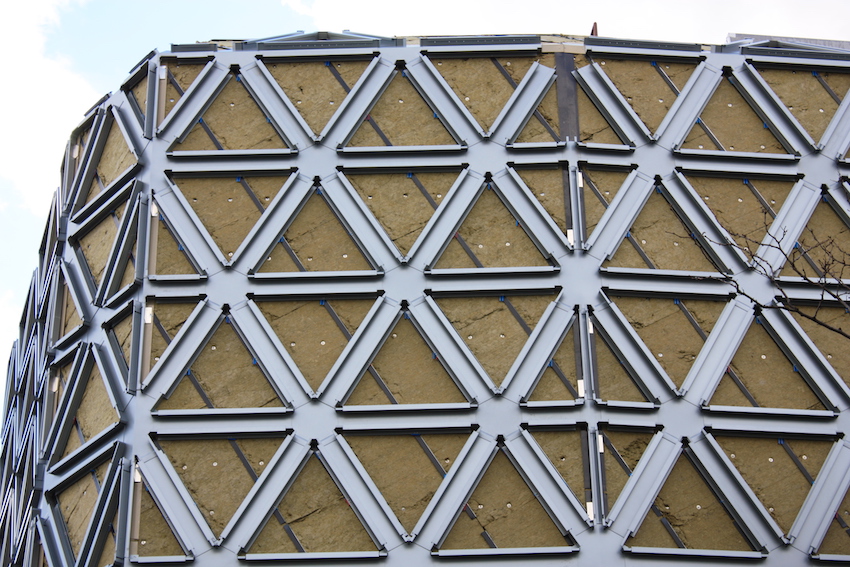
Photo courtesy of Owens Corning

|
Tiffany Coppock, AIA, NCARB, CDT, LEED AP, ASTM, RCI, EDAC, is a commercial building systems specialist with Owens Corning. She provides leadership and technical guidance in building science, testing, and documentation to design professionals and the Owens Corning team. Formerly, Tiffany was a building science manager answering technical questions, reviewing drawings and specifications, and giving educational sessions on topics such as air barriers, waterproofing, vegetative roof assemblies, and insulation. She holds a Bachelor of Environmental Design from Texas A&M University, a Master of Architecture from the University of Colorado, and is a registered architect specializing in health care and historic preservation. |
Owens Corning is a global leader in insulation, roofing, and fiberglass composite materials. Its insulation products conserve energy and improve acoustics, fire resistance, and air quality in the spaces where people live, work, and play. Its roofing products and systems enhance curb appeal and protect homes and commercial buildings alike. Its fiberglass composites make thousands of products lighter, stronger, and more durable. Owens Corning provides innovative products and solutions that deliver a material difference to its customers and, ultimately, make the world a better place. The business is global in scope, with operations in 33 countries. It is also human in scale, with approximately 20,000 employees cultivating local and longstanding relationships with customers. Based in Toledo, Ohio, USA, the company posted 2018 sales of $7.1 billion. Founded in 1938, it has been a Fortune 500® company for 64 consecutive years. For more information, please visit www.owenscorning.com
Originally published in Process Cooling
Originally published in June 2020
LEARNING OBJECTIVES
- Identify the advantages and implications of using continuous insulation (CI) in energy-efficient exterior wall design and construction.
- Discuss key building and energy code requirements related to the use of CI.
- Learn about the raw materials used to manufacture mineral wool CI as well as its manufacturing process.
- Understand the many benefits of mineral wool CI in sustainable, exterior wall assemblies.