This CE Center article is no longer eligible for receiving credits.
Energy Efficiency
The U.S. EPA has estimated that conventional wastewater treatment plants account for 3 percent of the entire U.S.
electrical demand and that the demand for electricity at these plants is expected to grow by approximately 20 percent over the next 15 years. Depending on the scale of the wastewater treatment system, RAC technology-based wastewater treatment systems can require 50 to 75 percent less energy to operate than other biological processes. Additionally, systems utilizing rotating photosynthetic algal contactor wheels typically generate 95 percent less waste solids that would require energy intensive handling and disposal transportation costs. Thermal processes can be used in conjunction with larger RAC-based systems to generate significant amounts of renewable energy.
Solids Handling
By design, RAC-based systems generate more biomass solids than traditional systems. RAC-based systems leverage the nutrients in the wastewater to maximize biomass production. The ultimate goal being to generate enough biomass
to make thermal processing of the biomass economically feasible for wastewater treatment plants. Thermally processing this btu-rich biomass algae and solids mixture generates significant amounts of energy, while reducing the waste solids by 95 percent or more and leaving valuable byproducts. For smaller package plants, algae biomass can be dried and used as "green coal," fertilizer, or can be processed through a digester. More becomes less, and overall waste solids handling expenses and risks are dramatically reduced or eliminated.
 |
Wheels with algae growth
Photo: Jackson Bishop |
The popularity of algae and its use in everything from food supplements and fuel sources, to filters and fertilizers, seems to be growing like...well, like algae on a sunny day. One algae-based application that is getting a lot of green attention is the packaged treatment of wastewater utilizing RAC's, or Rotating Algal Contactors.
RAC technology employs a series of rotating photosynthetic algal contactor wheels which were designed specifically to grow large amounts of algae. The resulting process is not only a very environmentally friendly method for treating wastewater in packaged systems, it also minimizes the amount of toxic chemicals used in the process, reduces nitrogen and phosphorous, and significantly improves energy efficiency and solids handling.
How it Works
The RAC technology was initially developed for use as an aquatic life support system in mariculture and aquaculture systems. The secret to the success of the algae-based RAC technology is that each wheel provides the proper environment for algal growth. Wave surging and light pulsing are basic environmental conditions required for algae growth and these are provided through the unique system design. The wheels are designed to be significantly buoyant in water, and unlike other rotating wheel systems, require no mechanical drive mechanism as the wheels are rotated using a constant air flow. The wheels are supported in water using a modular plastic grid system. The wheels and all components are made of UV stabilized reprocessed plastics, are lightweight, modular, easily assembled in the field, and corrosion proof.
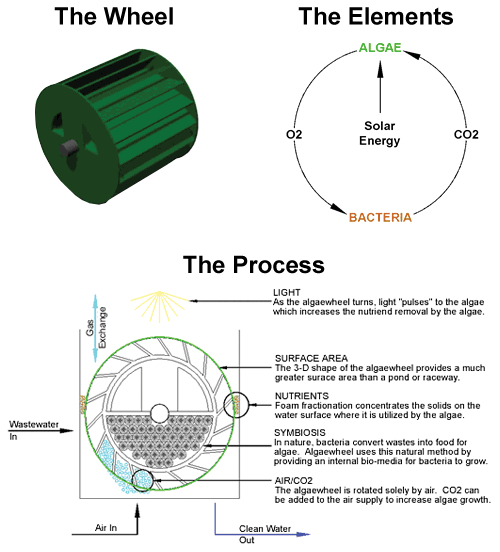 |
RAC-Rotating Algal Contactor Wheel Process
Illustration: Jackson Bishop/Elizabeth LaFrance |
Why it Works
Functionally, each wheel offers a suitable environment where bacteria and algae work in a symbiotic fashion to efficiently synthesize living organic mass from the nutrients in a variety of wastewaters. Algae and bacteria function well together because each organism provides a vital source of energy for the other. Bacteria convert the available organic matter into carbon dioxide (CO2), which is readily useable by algae. Algae create oxygen (O2), which the bacteria use during cellular growth. Bacterial conversion of wastewater nutrients is generally represented in the following equation.
(CH2O) O2 → CO2 H2O
It is important to note that the O2Â consumed in traditional bacterial treatment represents direct energy input since oxygen must be pumped into the treatment process by mechanical means. O2Â added through certain photosynthetic organisms such as algae is generally represented by the following equation where solar energy provides the energy needed to supply oxygen for bacterial conversion.
CO2 2H2O Solar Energy → (CH2O) O2 H2O
As the above equations suggest, there is a mutually beneficial relationship between bacteria and algae. By removal of organic carbon at the front of the process and introduction of CO2Â into the system, algal biomass production is maximized by limiting the competition from bacteria.
 |
Algae-based RAC Treatment System at Bio Town USA-Reynolds, IN
Photo: Jackson Bishop |
Energy Efficiency
The U.S. EPA has estimated that conventional wastewater treatment plants account for 3 percent of the entire U.S.
electrical demand and that the demand for electricity at these plants is expected to grow by approximately 20 percent over the next 15 years. Depending on the scale of the wastewater treatment system, RAC technology-based wastewater treatment systems can require 50 to 75 percent less energy to operate than other biological processes. Additionally, systems utilizing rotating photosynthetic algal contactor wheels typically generate 95 percent less waste solids that would require energy intensive handling and disposal transportation costs. Thermal processes can be used in conjunction with larger RAC-based systems to generate significant amounts of renewable energy.
Solids Handling
By design, RAC-based systems generate more biomass solids than traditional systems. RAC-based systems leverage the nutrients in the wastewater to maximize biomass production. The ultimate goal being to generate enough biomass
to make thermal processing of the biomass economically feasible for wastewater treatment plants. Thermally processing this btu-rich biomass algae and solids mixture generates significant amounts of energy, while reducing the waste solids by 95 percent or more and leaving valuable byproducts. For smaller package plants, algae biomass can be dried and used as "green coal," fertilizer, or can be processed through a digester. More becomes less, and overall waste solids handling expenses and risks are dramatically reduced or eliminated.
|
Wheels with algae growth
Photo: Jackson Bishop |
Elimination of Greenhouse Gas (GHG) Emissions
Recent studies have shown that conventional wastewater treatment plants account for 3 to 4 percent of all greenhouse gas emissions in the world. RAC-based systems, however, are extremely efficient at capturing CO2Â because they generate a lot of algae, which take up significant amounts of CO2. Unlike other biological processes that emit enormous amounts of CO2, either directly or indirectly through biological processes or energy use, RAC technology enables package plants to have a much smaller greenhouse gas footprint, and to become carbon neutral or even carbon negative. RAC-based systems also converts ammonia directly to plant life, unlike conventional systems that create nitrous oxide (N2O) during nitrification. Scientists have determined that N2O emissions from nitrification/denitrification processes in conventional systems are 300 times more potent as a greenhouse gas than CO2. This is important because greenhouse gases are a significant concern, and because the EPA has specifically identified conventional wastewater treatment plants as major contributors to greenhouse gases.
Typical RAC System Components
|
Typical system components include:
| 1 |
Bar screen - to remove unusually large solids. |
| 2 |
Primary, secondary and tertiary clarifiers - used to remove solids and valuable algae biomass. Clarification is enhanced by natural coagulating properties of algae. |
| 3 |
Algae production tanks (with wheels) - remove nitrogen and phosphorous. |
| 4 |
Biomass/Digester tank for collection and/or degestion of biomass. |
| 5 |
Disinfection and Post Aeration - chlorine or ultraviolet disinfection and post aeration if required. |
| 6 |
Dewatering - project specific equipment for biomass dewatering in larger applications. |
| 7 |
Controls - simple electrical controls for system operation and monitoring. |
| 8 |
Greenhouse Covers - in colder climates, greenhouse covers are used to provide controlled conditions for algae growth. |
 |
Illustration: Oldcastle Precast Inc. |
Â
Nitrogen and Phosphorous Removal
Algae can metabolize sewage far more rapidly than bacterial treatment. Treatment is more complete and more rapid since bacteriological treatment is a process of decay, whereas algae treatment is one of conversion of organic matter to live, healthy plant life. Current bacteriological package treatment plants may discharge nitrates, phosphates, sulfates, etc. into a natural body of water for dilution and continued treatment by naturally occurring plant and animal life. Another common method of discharge for package plants is subsurface discharge to a discharge field or subsurface drip irrigation. It is recognized that nutrients in treated effluent water have increasingly become a problem because they cause an increase in the amount of algae in our lakes and streams. RAC-based technology approaches the desired function of discharging water with only its natural mineral elements because of the productive plant life cycle associated with algae. Nitrates, phosphates and their antecedents are plant foods, and as such, are assimilated by the algae through photosynthesis. A package plant utilizing RAC technology achieves this nutrient-removed, tertiary treatment by virtue of the natural growth process of algae.
Water Reuse
A major environmental benefit to package plants utilizing RAC-based technology is that they provide treated water that can be reclaimed and reused. Reclaimed water reuse is becoming a popular environmentally friendly practice. Treatment using rotating photosynthetic algal contactor wheels results in water that can be reused in a wide variety of applications. The most common applications for reuse water are surface and subsurface irrigation.
Algae Biomass
Maximizing biomass production using a variety of nutrient-rich wastewater sources gives algae-based RAC technology treatment a major advantage over bacteria-based treatment processes. Oxygen produced by algae through photosynthesis replaces the need for costly mechanical oxidation of the wastewater. Also the symbiotic relationship between algae and bacteria provide a balanced environment where wastewater nutrients are most efficiently converted into biomass in less time and less cost. The high- value biomass generated can also be used in a variety of renewable energy applications and other beneficial uses such as fertilizers, nutritional and pharmaceutical products, feed additives, and more.
Algae Biofuel
Algae can be utilized for the production of many types of biofuels including biodiesel, ethanol, biobutanol, gasoline, jet fuel, and others. Unlike conventional terrestrial plants such as soybeans, corn, sugar cane, and others, algae can be produced 365 days per year, can be grown in any climate, is not restricted by soil type, and does not compete with food crops. Simple cost-effective greenhouse enclosures have proven adequate in controlling the growing climate for productive light and temperature ranges.
Cost
Tertiary package treatment plants based on RAC technology are comparative in initial cost to plants using conventional technologies. However, treatment plants based on RAC technology cost 25 percent to 50 percent less to operate and maintain because they are designed to be low maintenance, energy efficient, and nearly chemical independent. A high percentage of the cost to build a treatment plant utilizing RAC technology can be recovered through the savings in operation and maintenance costs.
Summary
As long as wastewater exists, effective treatment solutions are required. Given the ever increasing numbers and types of toxic chemicals being introduced into water systems every day, the need to effectively treat wastewater in an environmentally safe manner is greater than ever before. Algae-based treatment methods use natural processes to help eliminate greenhouse gas emissions by reducing and capturing CO2, and will also effectively remove nitrogen and phosphorous during the treatment process. Algae-based treatment methods, such as those provided through RAC technology provide package plants and onsite wastewater system designers some of the most environmentally friendly, green, solutions to wastewater treatment available today.