This CE Center article is no longer eligible for receiving credits.
Between the years 1995 and 2015, a span of only 20 years, a recent research study documented the construction of 70 major stadiums around the United States—56 between 1995 and 2009, plus another 14 between 2009 and 2015.1 On average, that is 3.5 major league sports venues being built and opened per year, which is a notably higher rate of construction compared to any previous time in the United States dating all the way back to the 1920s. In addition, there have been numerous minor league, college, or municipal stadiums and arenas built, not to mention the renovation of existing facilities or sports venues located both inside and outside of the United States. By all accounts, the appetite for sports and entertainment venues is strong.
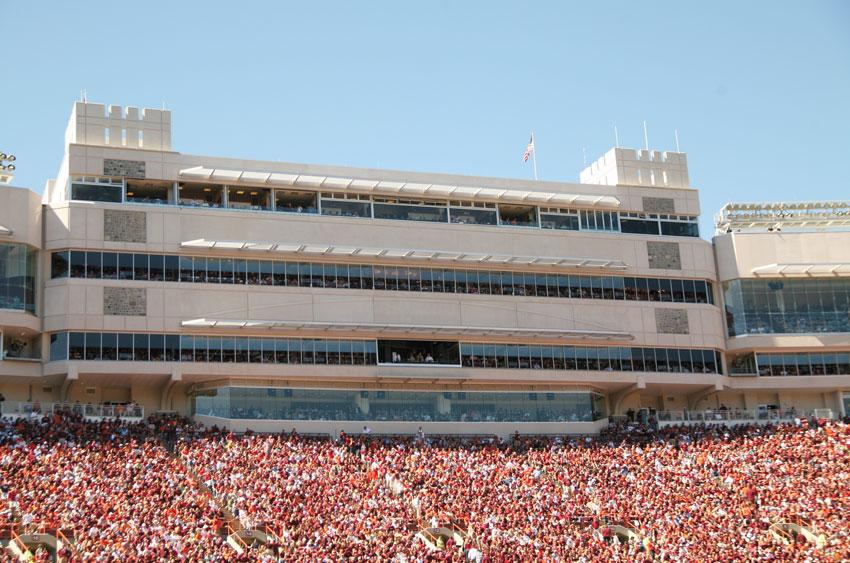
Photo courtesy of NanaWall Systems
Stadiums and arenas, such as the Virginia Tech, Lane Stadium pictured here, have become larger and more diverse in their use and functionality in recent years.
What’s driving all of this activity? It would appear to be multiple things. In some cases, it’s the availability of funding. In others, it’s the recognition that stadiums are helping to drive economic development or urban revitalization. In still others, it can simply be the appeal of a sport or a favorite team to support. Whatever the reason, it all spells opportunities for design and construction professionals, particularly since the average cost of these facilities can reach into hundreds of millions of dollars. In this course, we will look at several important but sometimes overlooked aspects of stadium design. As these facilities get larger and more sophisticated, the ability to create unique spectator experiences, improve durability, and provide clean, safe, comfortable amenities all become critical to good design.
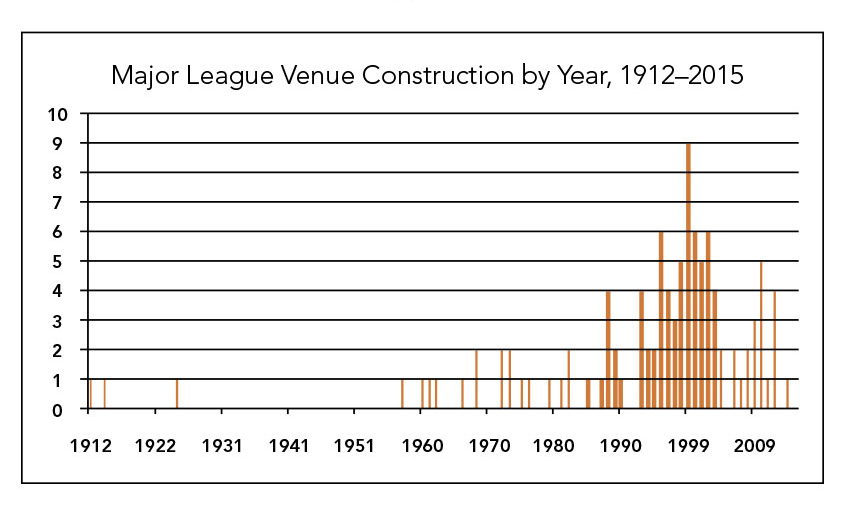
Source: “Trends in Stadium and Arena Construction, 1995–2015”
The construction of new stadiums and arenas saw a significant growth spurt between 1995 and 2015, and indications are that there is more work to come.
Stadium Design Considerations
The internationally known design firm HO+K has focused a significant part of its work on stadium (i.e., open to the sky) and arena (enclosed with a roof) designs. John Rhodes, a director of the firm’s Sports + Recreation + Entertainment group, is a recognized thought leader in this area. He has been interviewed and published based on his own experience and that of the firm about some of the changes and trends in stadium and arena work in the past decade or more.2 He notes that there has been a “clear shift away from single-purpose functional venues toward spaces that cater to a much more diverse event calendar, focused on live entertainment rather than purely sport.” This multi-use capability clearly adds to the design complexity but it also means that the facility can be used for more types and sizes of events and attract more people. He sees this trend continuing, as arenas and stadiums are being more integrated with city centers and becoming anchors of activity for urban areas. “Over the next decade, arenas will start to combine with other community components like education, science and technology, hotels, and parks,” Rhodes says. “To facilitate this, clients will want a team with specialties in all of these areas.” Clearly, the dynamics of the design and the types of criteria are expanding, requiring more professional input and synthesis into a much more complex outcome.
The design professionals at HO+K and others have noted that not only is the multipurpose nature of these facilities impacting the design, but consumer preferences are also coming into play with an expectation of a higher-quality overall experience. Rhodes again notes, “The experience of going to an event needs to exceed the convenience factor of watching online or at home. Venue designers need a better understanding of how people want to use spaces and engage in an event.” With this in mind, let’s look at some specific design considerations.
Enhanced User Experiences with Operable Glass Walls
As fans and event attendees expect more from their surroundings, designers are starting to recognize that the in-game experience can be more important than the game or event itself. Hence, it is no longer appealing to many people to sit outside during inclement weather on a bleacher seat or in other unprotected areas. In fact, it has become more common to expect a level of experience equivalent to deluxe hotels, clubs, and restaurants with private boxes, suites, and party salons increasingly common at all levels of venues. It seems that the seating and space itself must be as competitive as the game and provide the fan or attendee with a unique and comfortable social experience. The willingness of companies and other organizations to pay for and reserve such spaces for employees, clients, friends, and family to gather in a controlled space to experience a game or event appears to be fueling the growth in the design of such spaces.
One means to achieve these separated seating areas is to use operable glass walls. Using such opening glass walls in stadiums enables two key benefits. First, the flexible operability of the glass wall enables suites, gathering areas, and in-stadium restaurants or bars all to have the ability to configure the space based on the needs of the occupants or the event. For instance, when the glass wall is open, the fans experience the crowd directly, but when closed, the operable glass wall provides a transparent barrier with unobstructed viewing. In cases where the playing field is outdoors, the closed wall also provides greater human comfort with protection from wind, cold air, and noise. Secondly, when there are no events taking place, the weather-resistant opening glass walls protect interior spaces and furnishings from exposure and/or unauthorized entry.
This flexibility and controllability creates a number of benefits for everyone involved, such as the stadium operator, the owner, and the attendees. For those buying tickets, the variety of choice in having separate interior spaces or the ability to create flexible suites from standard luxury boxes can be appealing. The overall design approach of providing suites that offer a unique experience for the sports fan or event attendee is enhanced by allowing the occupant the choice to easily open or close operable glass wall panels based on weather, preferences, or size of group. From a revenue standpoint, it allows a basis for different ticket prices based on the level of comfort provided, creating a higher ticket revenue than facilities without the operable wall option. Further, since the operable glass walls can create different size spaces for different events at different times, the facility has the opportunity to serve more groups with more choices in the types and sizes of events—that equates to a more continuous source of revenue between larger events.
Tyson Godfrey, principal with Hubbard Godfrey Architects, worked on San Francisco’s AT&T Park. The design is a “classic urban ballpark” with an old-time feel but with all of the modern amenities. The architect’s use of operable glass walls in the design received recognition when it was named “Sports Facility of the Year” in 2008 by Sports Business Journal. According to Tyson Godfrey, “Configuring the suites with opening glass walls defines a new standard of luxury at AT&T Park. While sightlines to game-day action were a priority, the suite was also conceived as a social and event space with maximum flexibility for one large group or two smaller ones in a variety of seating configurations.”
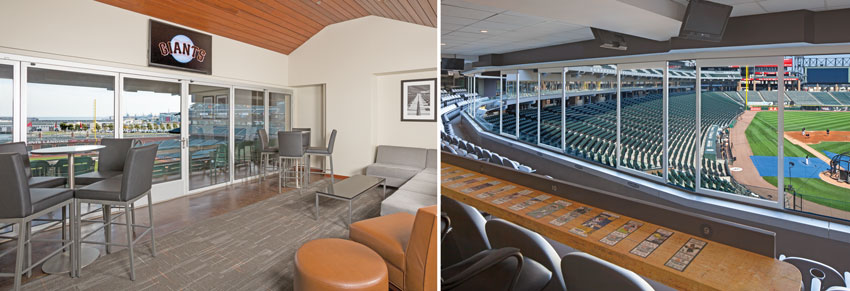
Photos courtesy of NanaWall Systems
Operable glass walls are used to effectively create enhanced guest experiences at the San Francisco Giants Stadium (left) and the Chicago White Sox Stadium (right).
Between the years 1995 and 2015, a span of only 20 years, a recent research study documented the construction of 70 major stadiums around the United States—56 between 1995 and 2009, plus another 14 between 2009 and 2015.1 On average, that is 3.5 major league sports venues being built and opened per year, which is a notably higher rate of construction compared to any previous time in the United States dating all the way back to the 1920s. In addition, there have been numerous minor league, college, or municipal stadiums and arenas built, not to mention the renovation of existing facilities or sports venues located both inside and outside of the United States. By all accounts, the appetite for sports and entertainment venues is strong.
Photo courtesy of NanaWall Systems
Stadiums and arenas, such as the Virginia Tech, Lane Stadium pictured here, have become larger and more diverse in their use and functionality in recent years.
What’s driving all of this activity? It would appear to be multiple things. In some cases, it’s the availability of funding. In others, it’s the recognition that stadiums are helping to drive economic development or urban revitalization. In still others, it can simply be the appeal of a sport or a favorite team to support. Whatever the reason, it all spells opportunities for design and construction professionals, particularly since the average cost of these facilities can reach into hundreds of millions of dollars. In this course, we will look at several important but sometimes overlooked aspects of stadium design. As these facilities get larger and more sophisticated, the ability to create unique spectator experiences, improve durability, and provide clean, safe, comfortable amenities all become critical to good design.
Source: “Trends in Stadium and Arena Construction, 1995–2015”
The construction of new stadiums and arenas saw a significant growth spurt between 1995 and 2015, and indications are that there is more work to come.
Stadium Design Considerations
The internationally known design firm HO+K has focused a significant part of its work on stadium (i.e., open to the sky) and arena (enclosed with a roof) designs. John Rhodes, a director of the firm’s Sports + Recreation + Entertainment group, is a recognized thought leader in this area. He has been interviewed and published based on his own experience and that of the firm about some of the changes and trends in stadium and arena work in the past decade or more.2 He notes that there has been a “clear shift away from single-purpose functional venues toward spaces that cater to a much more diverse event calendar, focused on live entertainment rather than purely sport.” This multi-use capability clearly adds to the design complexity but it also means that the facility can be used for more types and sizes of events and attract more people. He sees this trend continuing, as arenas and stadiums are being more integrated with city centers and becoming anchors of activity for urban areas. “Over the next decade, arenas will start to combine with other community components like education, science and technology, hotels, and parks,” Rhodes says. “To facilitate this, clients will want a team with specialties in all of these areas.” Clearly, the dynamics of the design and the types of criteria are expanding, requiring more professional input and synthesis into a much more complex outcome.
The design professionals at HO+K and others have noted that not only is the multipurpose nature of these facilities impacting the design, but consumer preferences are also coming into play with an expectation of a higher-quality overall experience. Rhodes again notes, “The experience of going to an event needs to exceed the convenience factor of watching online or at home. Venue designers need a better understanding of how people want to use spaces and engage in an event.” With this in mind, let’s look at some specific design considerations.
Enhanced User Experiences with Operable Glass Walls
As fans and event attendees expect more from their surroundings, designers are starting to recognize that the in-game experience can be more important than the game or event itself. Hence, it is no longer appealing to many people to sit outside during inclement weather on a bleacher seat or in other unprotected areas. In fact, it has become more common to expect a level of experience equivalent to deluxe hotels, clubs, and restaurants with private boxes, suites, and party salons increasingly common at all levels of venues. It seems that the seating and space itself must be as competitive as the game and provide the fan or attendee with a unique and comfortable social experience. The willingness of companies and other organizations to pay for and reserve such spaces for employees, clients, friends, and family to gather in a controlled space to experience a game or event appears to be fueling the growth in the design of such spaces.
One means to achieve these separated seating areas is to use operable glass walls. Using such opening glass walls in stadiums enables two key benefits. First, the flexible operability of the glass wall enables suites, gathering areas, and in-stadium restaurants or bars all to have the ability to configure the space based on the needs of the occupants or the event. For instance, when the glass wall is open, the fans experience the crowd directly, but when closed, the operable glass wall provides a transparent barrier with unobstructed viewing. In cases where the playing field is outdoors, the closed wall also provides greater human comfort with protection from wind, cold air, and noise. Secondly, when there are no events taking place, the weather-resistant opening glass walls protect interior spaces and furnishings from exposure and/or unauthorized entry.
This flexibility and controllability creates a number of benefits for everyone involved, such as the stadium operator, the owner, and the attendees. For those buying tickets, the variety of choice in having separate interior spaces or the ability to create flexible suites from standard luxury boxes can be appealing. The overall design approach of providing suites that offer a unique experience for the sports fan or event attendee is enhanced by allowing the occupant the choice to easily open or close operable glass wall panels based on weather, preferences, or size of group. From a revenue standpoint, it allows a basis for different ticket prices based on the level of comfort provided, creating a higher ticket revenue than facilities without the operable wall option. Further, since the operable glass walls can create different size spaces for different events at different times, the facility has the opportunity to serve more groups with more choices in the types and sizes of events—that equates to a more continuous source of revenue between larger events.
Tyson Godfrey, principal with Hubbard Godfrey Architects, worked on San Francisco’s AT&T Park. The design is a “classic urban ballpark” with an old-time feel but with all of the modern amenities. The architect’s use of operable glass walls in the design received recognition when it was named “Sports Facility of the Year” in 2008 by Sports Business Journal. According to Tyson Godfrey, “Configuring the suites with opening glass walls defines a new standard of luxury at AT&T Park. While sightlines to game-day action were a priority, the suite was also conceived as a social and event space with maximum flexibility for one large group or two smaller ones in a variety of seating configurations.”
Photos courtesy of NanaWall Systems
Operable glass walls are used to effectively create enhanced guest experiences at the San Francisco Giants Stadium (left) and the Chicago White Sox Stadium (right).
Expansion Joint System Durability
With their sheer size and surface area, stadiums are subject to significant movement of floors, walls, and roof areas from thermal or other environmental forces. Expansion joint systems are a necessary component then, but they must be engineered to handle several other factors too. First is the need for high durability of the joint materials and covers to withstand pedestrian traffic, push carts, scissor lifts, etc. Another factor is the ability to act as a moisture barrier since expansion joints in exterior walls or roofs must prevent rainwater infiltration or help channel rainwater to drainage points. Finally, if the expansion joint is in a fire-rated assembly, then the joint needs to be fire rated as well. Since wet fire barriers are worthless, preventing water from entering a fire barrier is critical to life safety. In that regard, choosing a supplier for expansion joint systems and fire barriers that are truly effective cannot be overstressed. Stadium projects often involve large concrete pours over long concourses with multiple expansion joints being typical. The ability of the supplier’s representative to provide alternatives and approved adjustments when the pour “doesn’t go quite right” can be critical to achieving fire ratings, not to mention keeping the construction on schedule.
When looking at expansion joint system selection and specification for stadiums and arenas, the following should be considered.
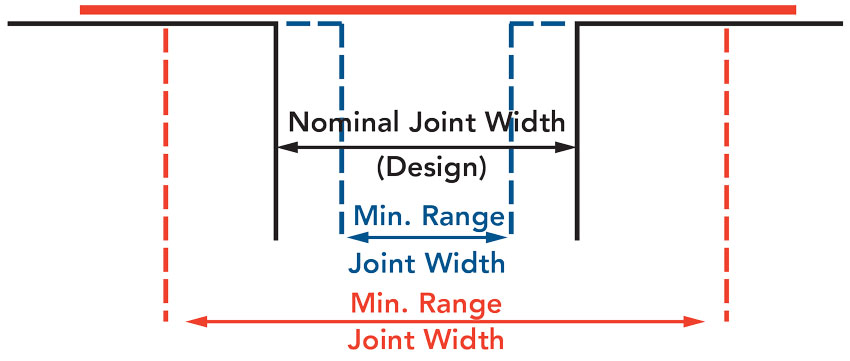
- Nominal joint size: The designed width of an expansion joint at a median temperature is usually determined by a structural engineer and referred to as the nominal joint width. The selection of all expansion joint systems, whether caulking, cover, or concealing systems, starts with understanding the nominal joint size and the range of movement between the minimum fully contracted size and the maximum fully expanded size. The expansion joint system selected needs to accommodate this full movement range.
- Type of movement: Building sections can move due to several common reasons. Thermal movements are most typical and caused by daily environmental temperature changes in and around the structure. Thermal movement is primarily “one directional” in nature and is the result of the expansion and contraction of structural elements as affected by heat, cold, and humidity levels. The amount of thermal movement is typically approximately 10 to 25 percent of the nominal joint size. Seismic activity can also be a source of movement, which may be horizontal, vertical, in shear, or a combination of all three. Seismic joint widths may need to increase with higher floor levels to protect a structure during earthquakes or other seismic events. These joints must have the capacity for movement of approximately 50 to 100 percent of the nominal width. Finally, wind-load induced movement, caused by high winds, can cause a structure to sway back and forth. Such wind-load induced movement can be perpendicular or parallel to the joint.
- Loading requirements: In this case, loading refers to the type of weight and actions that will be induced onto the joint system, including its cover during building occupancy. This could include pedestrians walking over an expansion joint system or small equipment to heavy-duty vehicles driving over or adjacent to the joints. To optimize the design, consider whether the loads applied will be uniform, irregular, or concentrated under the footprint of wheels.
- Applications and location: The project scope could include interior and exterior joints or both. Typically, the joints need to run continuously through all adjacent planes to fully separate building sections and allow independent movement in things like building veneers, soffits, parking decks, patios, and roofing systems.
- Form and appearance: This item usually depends on the adjacent finishes. There may be different design criteria for back-of-house conditions, public corridors, or high-end spaces. Depending on the aesthetic, there are options for incorporating interior finishes into the joint system, such as applying anodized finishes or coatings, or using foam seal colors to complement the décor, provide an accent, or minimize sightlines.
- Fire-resistance and moisture control: Vapor barriers are generally specified in floor, wall, and roof joints to maintain continuity with adjacent vapor-barrier systems. Sound and thermal barriers are becoming increasingly more important, especially with expansion joint systems in buildings with tight, energy-efficient envelopes. Fire-barrier systems are specified in floor and wall joints in fire-rated locations as dictated by codes. Fire-rated joint systems should be tested to meet ASTM Standard E1966 based on fire exposure and ASTM E1399 which tests the ability of the joint to remain intact and perform to the minimum and maximum extents under cyclic movement.
With the above considerations taken into account, the selection of expansion joint systems can be worked into specifications and construction drawings to help assure the stadium or arena is properly allowed to move, remains weather and moisture tight, and protects life safety.
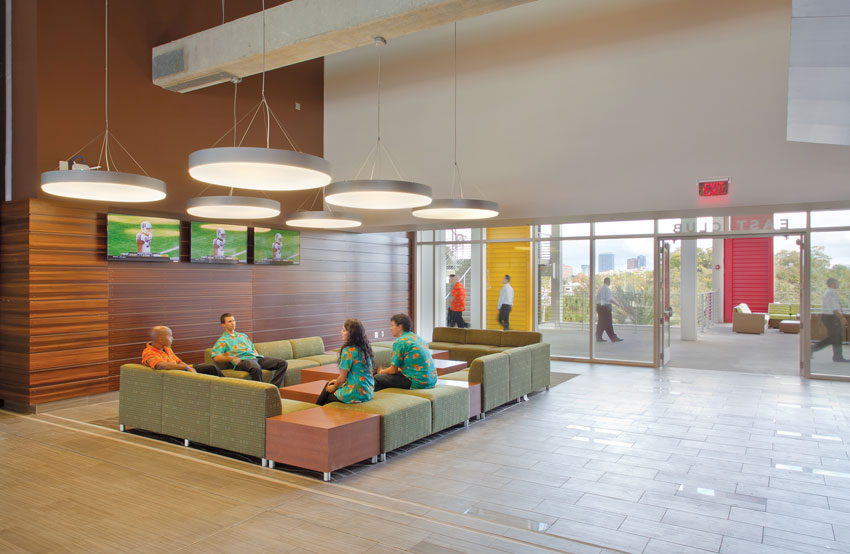
Large buildings such as stadiums need expansion joints for the integrity of the building. But strength and durability can also be coupled with aesthetics and décor, as shown here at the Citrus Bowl stadium in Orlando, Florida. The joint pan incorporates the floor finish, and coordinated seal colors allow the joint to blend right in, which reduces sightline disruption.
Images courtesy of Inpro
Durable expansion joint systems in stadiums and arenas need to be sized properly to allow for the nominal, minimum, and maximum openings due to thermal expansion and contraction.
Restroom and Locker Room Design
Restrooms in a stadium/arena play an increasingly important role in the individual user experience. What may have worked well 20 or 30 years ago may not work today so it is important to view design, as well as product and material choices, with a fresh perspective.
A well-designed restroom can accentuate great memories of a visit by providing a trouble-free or even positive user experience. However, as documented in a variety of instances, a bad restroom experience, particularly on opening day, can prove disastrous for the reputation of the stadium, its owners, and also the design team.
This disproportionate impact restrooms have in the overall user experience of any building comes about for a variety of reasons, but in stadiums, three specific ones stand out: 1) stadium restrooms have a higher frequency of use in a short amount of time compared to most other buildings; 2) using a bathroom by definition is a very personal experience and, in stadiums or arenas, privacy is often hard to achieve; 3) stadium bathrooms must meet a variety of programmatic needs, the needs of a very wide cross section of people, and some fundamental needs, such as safety, hygiene, and speed of use. Satisfying those needs can be achieved as long as the design details are given their requisite attention.
The first response of a design team to meet the needs of stadium restroom users is to locate an appropriate number of restrooms within close physical intervals to accommodate crowds. Within each of the restrooms, there should be an appropriate number of toilet and hand wash stations, and there must be the proper amount of consumables, such as soap, paper hand towels, and toilet tissue rolls, to avoid users being inconvenienced. Of course, there are other variables to address too, based on differences between individual stadiums, their geographic locations, and the varied cross section of visitors.
Cyrus Boatwalla, head of marketing with ASI Group, has noted, “Restrooms in a stadium are typically used in short bursts with a high volume of users. Whether during a seventh-inning stretch, half-time of a basketball game, television timeout in football, or between sets at a music concert, the facility better be ready for an onslaught of people who want to use the restroom quickly and get back to their seat/spot as fast as they can so they don’t miss any of the action.” It is easy to see that restroom maintenance between these short bursts plays a big factor in the user experience. But the design capacity and path of travel to, from, and within the restrooms are significant too. Therefore, factors that can negatively impact the user experience can be mitigated by some well-thought-out designs and layout.
When designing stadium restrooms, it is important to recognize the variety of design criteria that are important to end users (customers), building owners, code officials, and facility maintenance staff. The design team must take the factors below, among others, into account.
- Mitigating safety risks from hazards, such as wet floors. Wet floors are often a function of the location and number of drying stations in respect to sinks since water will drip from wet hands on the way to get them dry. Compounding this issue, some automatic hand dryers push water to the floor or have areas in the dryer where water can collect. Without a proper moisture management or drainage system, that water will overflow onto the floor or be a breeding ground for bacteria if it stays stagnant.
- Allowing for a higher frequency of use than in other buildings during a shorter occupancy time because of how much people drink or eat during their visit.
- Creating efficiently designed restrooms to limit lines, thus allowing customers to quickly use and exit a bathroom so they don’t miss what they came to the stadium for in the first place—the game, a concert, or a professional conference.
- Allowing for accessibility (ADA) compliance with the appropriate number of accessible stalls and stations. Making restrooms accessible in all respects ensures that everyone can have an equally pleasant stadium experience.
- Allowing for diversity. Understand that some stadiums may require restrooms that need to cater to the special needs of people from different cultures or walks of life. If stadium owners or municipal leaders want to ensure an inclusive experience, they must pay attention to the diversity of needs as well.
- Accommodating people with children of all ages, including those who need to have their diaper changed. This allows stadiums to be family friendly, particularly when enough changing stations are provided in both the men’s and women’s restrooms.
- Installing ultimate-privacy stalls in an adequate number with zero sight lines into the stall. Achieving this involves panels and doors that are lower to the floor and higher to the ceiling than typical stalls, thus providing a safe and stress-free environment for those who desire even greater privacy.
- Allowing for different restroom types. Even within the same stadium, there may be many different needs depending on user segmentation. Luxury suites with private restrooms might require unique fixtures, or large public restrooms prone to damage may need thicker-gauge materials. Employee restrooms and team facilities may need different types of lockers, showers, and changing areas.
Beyond design and layout, making good product and material choices also plays directly into the overall user experience of restrooms and locker rooms. This includes toilet partitions, lockers, washroom accessories, and plumbing fixtures. In that regard, it is important to work with manufacturers that can provide a variety of choices for the different restroom needs of a stadium. Some common discussions that go on between architects and manufacturers address ways to optimize restroom design and user experiences in stadiums and arenas. These can include things like the types of materials to use in toilet partitions, with phenolic and solid plastic often being preferred for design versatility, durability, and ease of maintenance. The conversations can also center around ways to keep floors in the restroom dry without water dripping on the floor. High-speed electric hand dryers that have moisture management systems can be a good solution for this situation while reducing paper towel waste. However, paper towels should not be overlooked because some people prefer them over dryers, and if paper towel dispensers are used, then ideally at least one dispenser should be located near each sink for fast, efficient usage.
Overall, stadium restrooms do not follow a one-size-fits-all approach. Rather, architects and designers need to assess the various needs within a stadium facility and then work with manufacturers that can provide the wide range of options to be selected from to suit those needs.
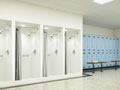
Images courtesy of ASI Group
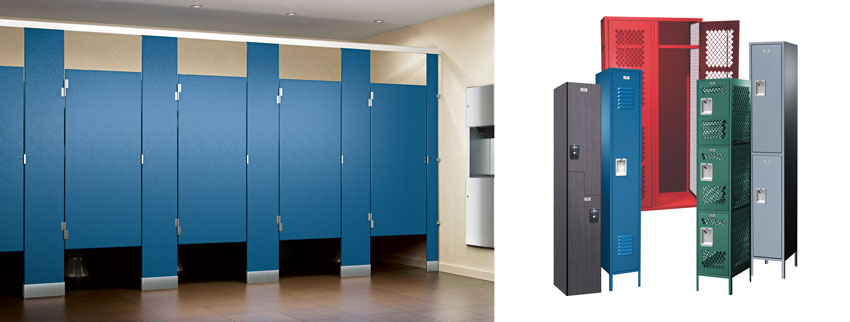
Restroom and locker room design in stadiums must address a wide variety of needs and criteria. Working with manufacturers who can provide the necessary accessories and products to meet those needs is a good design strategy.
Stadium Performance Considerations
While the design considerations of different aspects of stadiums and arenas drive many decisions, so do the performance and durability aspects of many of the products and materials used. In that regard, let’s turn our attention to some of the ways to optimize the overall performance of the systems being considered.
Operable Glass Wall Performance
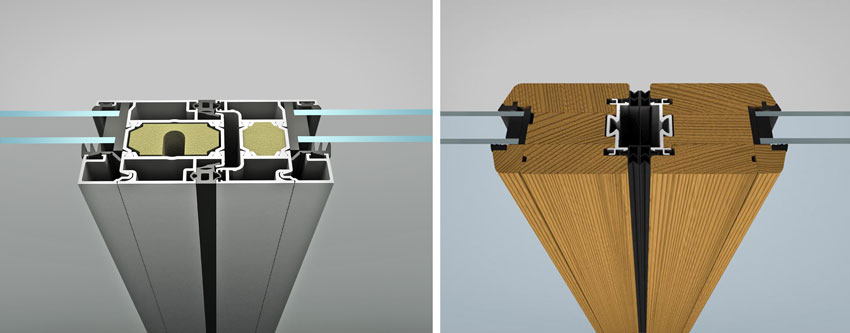
Manufacturers offer operable glass walls that are panelized systems framed in wood or aluminum and can even provide frameless all-glass systems. All of these products are designed and tested to meet multiple design requirements for stadiums either for exterior-facing or interior-only applications. Operable glass walls can be full wall height, match standard door heights, or be used in shorter heights for continuous window style applications as well. The openings can range in width from as little as 9 feet wide up to as much as 300 feet or more. They are typically comprised of uniformly sized panels with a top and bottom track along which the doors either fold or slide. The wood- or aluminum-framed systems provide a traditional look that relies on the frame design to achieve superior performance. Frameless opening glass walls offer an all-glass, low-profile panel for maximum view while still meeting testing criteria for weather resistance. Like any other type of building fenestration, these systems do not carry any structural load from the building but rely on being appropriately attached to the building to operate within a structurally supported opening.
This is all good news for architects who have different design criteria and needs for creating spaces that can be enclosed or open at will but need the assurance that they will perform as intended, particularly when closed. That performance takes several forms, especially when they separate conditioned and unconditioned spaces and need to address a variety of environmental conditions. With the panels open during pleasant weather, they can allow fresh air and connection to the outdoor event area. When the panels are closed, however, they need to create a secure, weather-resistant barrier that protects against rain, snow, humidity, noise, and extreme temperatures. Because of the typically large opening sizes, the corresponding large perimeter area, and multiple joints between panel sections, the ability to seal tightly along all of these locations when closed is important. From an operational standpoint, the glass panels need to easily glide or fold into position, meaning that the mounting and tracking mechanisms must be proven and reliable.
The manufacture and production of operable glass wall systems can certainly vary between suppliers since they require considerable diligence and attention to detail in order achieve high-performance levels. Hence, it is incumbent on specifiers to request independent testing reports on the selected products to determine the results for thermal performance, penetration of wind or water, security, and acoustical characteristics. This stringent and thorough third-party testing ensures optimum performance for specific site conditions. It also means that interior separation of spaces between several smaller groups is effective and does not compromise those users either.
Images courtesy of NanaWall Systems
Operable glass walls are available in aluminum and wood, which can all be specified to meet performance requirements in stadiums and arenas.
Designing for Back-of-House Areas
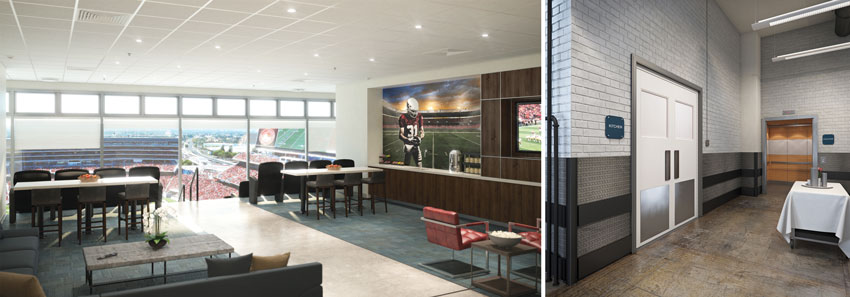
While the public areas of a stadium or arena are what typically come to mind for the experience of spectators or attendees, there are many other areas that require design attention too. These include the “back-of-house” areas, such as kitchens, service corridors, employee lounges, administrative offices, loading docks, storage, media booths, and similar spaces not typically open to the public. In the interest of smooth facility operations, long-term durability, and ease of maintenance, architects need to work with facility managers and other appropriate personnel to be sure that the needs of these important user groups are met too.
Photos courtesy of Inpro
Protecting walls, doors, and other surfaces from damage by people or equipment is particularly important in the back-of-house areas of a stadium, but decorative elements like custom-printed wall protection are fitting for public areas as well.
The back-of-house areas are typically where the actual work of the stadium is conducted—indeed some have referred to it as the “nerve center” for a facility. This is where staff operates, where food and goods are transported on carts, and where furniture or stages and playing fields are moved, assembled, disassembled, and stored. In the case of stadiums, it can also include some of the pedestrian circulation areas, such as stairways and hallways, that connect spaces. Depending on the size of the stadium, the event schedule, or the time of day, these back-of-house spaces can generate a great deal of activity, some of which may not be kind or forgiving to the building walls, floors, doors, or other surfaces. Recognizing these demands, building designers must not only consider aesthetics and design appearance when selecting finish materials and products in these areas, but they must also consider durability and long-term cost effectiveness. Given the high volume of people and the movement of carts or other equipment, these areas have the potential for a lot of interior damage. Sometimes improperly executed “value engineering” is undertaken to reduce first costs, but that can take a toll within the first year of opening. Upfront “cost savings” that are achieved through the selection of “cheaper” materials or the outright elimination of key products eventually show up later on through predictable damage or vandalism. Then the property’s general manager or chief engineer has no choice but to find money in the operating budget to install new products to replace broken/torn ones or to fix damage—all of which would likely have been less expensive to address in the first place during the construction or renovation of the facility.
What type of products are we talking about? Typically, the kinds of things that are noted in Division 10 of architectural specifications, such as corner guards, wall protection materials, wall base, door bumpers, or even interior bollards. All of these are provided to lessen the potential damage to the facility, especially in places like club level suites and back-of-house areas. Typically, back-of-house protection products need to provide a higher level of impact resistance than products used in the front of house. The use of materials like diamond plate steel, HDPE lumber, heavy gauge stainless, and rubber, often in combination, are usually needed in order to stand up to all the wheeled and vehicle traffic running in service corridors. If those corridors contain expansion joints, then heavy-duty covers will be needed to protect them from damage too.
It is worth noting that service corridors often include customer restrooms and may act as a passageway from back-of-house areas. It’s these transition zones that can be overlooked in design and planning and end up looking war-torn and battered within months of the grand opening. In this case, a bit of protective forethought will keep this area looking new and undamaged. However, adding protection doesn’t mean that design needs to suffer. Woodgrain rigid vinyl sheet, stainless steel, and 3-D trim boards have been used extensively in protecting all types of spaces, including elevator cabs. Similar durable products are available that even incorporate wall art. There are also solid surface materials that can provide a clean, durable, high-end look emulating marble or granite but at a fraction of the cost.
There may also be places to consider using durable fabrics, such as for drapes, nets, roller and vertical blinds, awnings, room dividers, upholstery fabrics, and wall coverings. Usually the first consideration for fabrics is fire code ratings for flame-retardant properties, which most commercial fabrics can meet. Beyond that basic requirement is the ability of the fabric to hold up over time in terms of the integrity of the fabric itself, its color-fast properties, and ability to withstand repeated cleanings. Of course, these fabrics are part of the indoor environment and may come in contact with people more so than other building products so their safety in terms of health effects on people needs to be documented.
Specifying Restroom Accessories
Achieving the desired performance in restrooms and locker rooms can often come down to the specifications for the products and components installed. Here are some things to be aware of when looking at ways to achieve the needed performance for a sampling of such products.
- Partitions: There are a lot of material choices in this product category, including stainless steel, solid plastic, phenolic, powder-coated metal, and even plastic laminate. It may turn out that even within the same stadium, different restrooms might need partitions made out of different materials. In that case, it is ideal to find a single supplier that can provide partitions in all the needed materials to eliminate any logistical confusion in coordination, while also making it very easy for the facility manager to follow up with only one supplier. For increased moisture resistance, the best choice in stadiums are phenolic and solid plastic partitions. Phenolic partitions (i.e., comprised of a melamine sheet on each side of multiple layers of resin-impregnated kraft paper) also provide superior strength and durability. Solid plastic (HDPE) partitions are environmentally safe as well as mildew, rust, graffiti, and impact resistant. Both are available in a variety of colors. In some lower-use or more private areas within a stadium, stainless steel partitions or even the newer plastic laminate partitions with more elegant and robust edge banding may be preferred.
- Lockers: For many sports stadiums, the locker rooms get a lot of use and even abuse. Therefore, high-quality locker systems and storage products designed for use in athletic facilities that are made of rugged and durable materials are the best choice in these settings. That may mean that phenolic or solid plastic (HDPE) products should be selected.
- Shower stalls: When it comes to showers in locker rooms, there are several trends pushing for updating the way these are designed. First are changing social and safety issues that have called for replacing “gang showers” popular since the 1960s with private shower stalls. In new facilities, private stalls, with or without private changing areas, are becoming more common for both men’s and women’s locker rooms, while existing facilities are being renovated to include them. Next are health concerns, particularly over outbreaks of the bacteria Methicillin-resistant Staphylococcus aureus (MRSA) in sports and athletic facilities, causing sickness and even death in some cases. While diligence in cleaning is warranted, so is eliminating the places where the bacteria can grow, which is sometimes in the grout between tile used in locker rooms. Hence, the use of more sanitary solid surface materials that are continuous with a minimum of joints is preferred. Because the solid surface sheets are larger than tile, they can cover the entire wall of a shower stall without any joints except at the corners, which can be sealed with a non-organic (and non-bacteria harboring) sealant.
- Soap-dispensing system: One of the challenges for the facility management team in a stadium is to keep consumables filled while the stadium is in use. That includes keeping up with soap dispensers in restrooms. Thankfully, there are products available to make that task easy and cost effective. At least one manufacturer has developed a multi-feed, top-fill soap-dispensing system where a maintenance person can refill up to six soap dispensers at once using a fill-port located on the counter top. This saves time and money because no one needs to go under the sink or fill each individual soap dispenser.
- High-speed hand dryers: In order to reduce waste, help keep restrooms cleaner, and provide a quick drying solution, high-speed hand dryers can work quite well in stadiums. Some have developed technology that will dry hands completely in as little as 12 seconds or less and help to keep the floor dry. At least one has avoided any water collection within the unit by using a moisture management system. This includes a triple-layer filter to capture particles, combat odor, and eliminate 99 percent of bacteria, all of which creates a more hygienic, pleasant hand-drying option.
- Combination units: These systems are comprised of a paper towel dispenser with a waste receptacle and automatic electric hand dryer. Single stainless steel units that provide a paper towel dispenser and waste receptacle have been available for some time. They have the benefit of keeping the paper usage and waste all in one location in a compact and convenient design. It is now possible to specify a unit that also includes a high-speed electric automatic hand dryer in addition to the dispenser and waste receptacle. This puts everything in one place and can allow for greater control of the flow of users and the drying process.
Paying attention to the details of the available products and systems on the market allows a restroom design to be optimized for users, maintenance, and cost effectiveness.

Images courtesy of ASI Group
A wide range of restroom accessories are available that help patrons use them quickly and maintenance staff operate them efficiently, including combination towel dispenser, hand dryer, and trash units, high-speed hand dryers, and multi-fill soap dispensers.
Conclusion
As architects continue to design new and renovated stadiums and arenas, the emerging and variable needs of owners and users will continue to be made known. Addressing the public, private, and restroom areas are all important and require that the design team pay attention to details with good, reliable information from manufacturers.
End Notes
1Komisarchik, Mayya M. and Fenn, Aju J. “Trends in Stadium and Arena Construction, 1995–2015.” SSRN Electronic Journal. Department of Economics and Business, Colorado College. April 2010. Web. 27 March 2017. www.researchgate.net/publication/228304465_Trends_in_Stadium_and_Arena_Construction_1995-2015.
2“Trends Influencing Stadium and Arena Design.” Thought Leadership: Design. HO+K. Reprinted with permission from PanStadia & Arena Management. Web. 10 April 2017. www.hok.com/thought-leadership/trends-in-stadium-and-arena-design/.
Peter J. Arsenault, FAIA, NCARB, LEED AP, is a practicing architect, green building consultant, continuing education presenter, and prolific author engaged nationwide in advancing building performance through better design. www.linkedin.com/in/pjaarch