This CE Center article is no longer eligible for receiving credits.
Winston Churchill is famously quoted as saying, “We shape our buildings, and in turn they shape us.” While that resonates with architects and others in a broad and even philosophical sense, we often need more specific information to justify making design decisions intended to shape people in positive ways. This is particularly true in the world of education and school design, which is paradoxically challenged to promote high student outcomes within very real budget restraints. The question often comes down to priorities and determining where the available funds are able to do the most good.

Photo courtesy of Construction Specialties/IBI Group Inc
Positive, identifiable connections have been found between student performance and some common building design parameters, such as color, complexity, light, connection, flexibility, and choice, according to a recent research study carried out in the United Kingdom. The high school in this photo shows an appropriate use of colorful graphics to stimulate learning.
Toward that end, a recent study of original research published in the journal Building and Environment conducted by a team in the United Kingdom headed by Peter Barrett has shed some light on this subject.1 Titled “A holistic, multi-level analysis identifying the impact of classroom design on pupils’ learning,” Barrett and his colleagues explored ways to measure impacts of school building design on the learning rates of pupils in primary schools. They developed hypotheses under three design principles: appropriate levels of stimulation for students, naturalness of the environment, and individualization. Under these broad categories, they investigated 10 design parameters within a neuroscience framework. These were tested using data collected on 751 pupils from 34 varied classrooms in seven different schools in the United Kingdom.
Based on their data collection and analysis work over the course of a school year, Barrett and his team found strong connections between classroom experiences and six particular building design parameters: color, complexity, light, connection, flexibility, and choice. They also determined that it was possible to estimate how much of an impact these particular design elements played on improved learning. In the case of this study, they found, on average, a 25 percent contribution to better learning due to the classroom design after accounting for other factors. This is strong evidence of the significant impact that design aspects of the built environment can have on pupils’ learning progression. Not only are research findings like this important for policy makers, designers, and users to be aware of, they have great value in making and justifying design decisions.
To illustrate how research like this can be used in day-to-day design situations, we will look at some of the theoretical and practical ways to incorporate the three broad categories (stimulation, naturalness, and individualization) and the six referenced design parameters (color, complexity, light, connection, flexibility, and choice) plus others into new and renovated school designs of the 21st century.
Stimulation and Color
Under the general design principle of appropriate levels of stimulation for students, color was addressed based on the degree to which the “color mood” was appropriate for learning and teaching. While the researchers looked at the color of classrooms, it is the color of all areas of the building that certainly contribute to the overall color mood. In general, they found a tendency for warm colors that may complement the young pupils’ extroverted nature, while cool colors seemed to enhance concentration and learning. As a design guideline, they suggest that warm colors are welcomed in senior grade classrooms and cool in junior grades, as long as it is bright. While many things in the building provide color, they found the constructed walls and floors to be the most important.
The pragmatic design challenge with this finding in schools is how to provide appropriate color in a way that is durable and rugged enough for high use areas and still work within budgetary limits. One of the common material selections to provide wall surfaces and even exterior walkway surfaces is brick masonry. Part of its appeal is that a full range of choices are available that are aesthetically diverse and technologically strong, including custom colors, blends, textures, and shapes. Brick manufacturers often collaborate with architects and interior designers on design concepts to provide unique solutions that efficiently bring vision to reality. Brick is a highly versatile solution that is available in a wide spectrum of colors, with a multitude of shapes and textures.
In some cases, an alternative in the form of thin brick veneer is desirable in a school design. Thin brick veneer expands design potential by reducing the space requirements of brick, creating real space savings throughout a building, while still maintaining a robust choice of colors. This approach can be used in tilt-wall/tilt-up, precast, and adhered veneer installations. Structurally, the reduced depth and lighter weight provides less impact on the supporting structure, with fewer seismic concerns than full brick. Further, less material often means less cost overall as well, with reduced wall costs through the elimination of shelf angles, lintels, and other miscellaneous items. Thin brick installation often reduces man hours 15–20 percent relative to conventional brick installations. And, depending on the substrate, thin brick veneer may be a more sustainable choice since it consumes fewer raw materials and requires less energy for manufacturing and transport.
According to members of the Schenkel/Shultz Architecture firm, “The long-standing reputation for quality products and the ability to manufacture matching thin and full-size brick units that met the design criteria for this project solidified our selection.” This combination of student-enhancing color availability and technical capability give brick and thin brick veneer attributes worth considering in school designs.

Photos courtesy of Glen-Gery
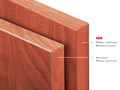
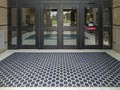
Wall and floor materials of a school building can contribute to the overall color mood, which has been shown to have an effect on student learning.
Winston Churchill is famously quoted as saying, “We shape our buildings, and in turn they shape us.” While that resonates with architects and others in a broad and even philosophical sense, we often need more specific information to justify making design decisions intended to shape people in positive ways. This is particularly true in the world of education and school design, which is paradoxically challenged to promote high student outcomes within very real budget restraints. The question often comes down to priorities and determining where the available funds are able to do the most good.
Photo courtesy of Construction Specialties/IBI Group Inc
Positive, identifiable connections have been found between student performance and some common building design parameters, such as color, complexity, light, connection, flexibility, and choice, according to a recent research study carried out in the United Kingdom. The high school in this photo shows an appropriate use of colorful graphics to stimulate learning.
Toward that end, a recent study of original research published in the journal Building and Environment conducted by a team in the United Kingdom headed by Peter Barrett has shed some light on this subject.1 Titled “A holistic, multi-level analysis identifying the impact of classroom design on pupils’ learning,” Barrett and his colleagues explored ways to measure impacts of school building design on the learning rates of pupils in primary schools. They developed hypotheses under three design principles: appropriate levels of stimulation for students, naturalness of the environment, and individualization. Under these broad categories, they investigated 10 design parameters within a neuroscience framework. These were tested using data collected on 751 pupils from 34 varied classrooms in seven different schools in the United Kingdom.
Based on their data collection and analysis work over the course of a school year, Barrett and his team found strong connections between classroom experiences and six particular building design parameters: color, complexity, light, connection, flexibility, and choice. They also determined that it was possible to estimate how much of an impact these particular design elements played on improved learning. In the case of this study, they found, on average, a 25 percent contribution to better learning due to the classroom design after accounting for other factors. This is strong evidence of the significant impact that design aspects of the built environment can have on pupils’ learning progression. Not only are research findings like this important for policy makers, designers, and users to be aware of, they have great value in making and justifying design decisions.
To illustrate how research like this can be used in day-to-day design situations, we will look at some of the theoretical and practical ways to incorporate the three broad categories (stimulation, naturalness, and individualization) and the six referenced design parameters (color, complexity, light, connection, flexibility, and choice) plus others into new and renovated school designs of the 21st century.
Stimulation and Color
Under the general design principle of appropriate levels of stimulation for students, color was addressed based on the degree to which the “color mood” was appropriate for learning and teaching. While the researchers looked at the color of classrooms, it is the color of all areas of the building that certainly contribute to the overall color mood. In general, they found a tendency for warm colors that may complement the young pupils’ extroverted nature, while cool colors seemed to enhance concentration and learning. As a design guideline, they suggest that warm colors are welcomed in senior grade classrooms and cool in junior grades, as long as it is bright. While many things in the building provide color, they found the constructed walls and floors to be the most important.
The pragmatic design challenge with this finding in schools is how to provide appropriate color in a way that is durable and rugged enough for high use areas and still work within budgetary limits. One of the common material selections to provide wall surfaces and even exterior walkway surfaces is brick masonry. Part of its appeal is that a full range of choices are available that are aesthetically diverse and technologically strong, including custom colors, blends, textures, and shapes. Brick manufacturers often collaborate with architects and interior designers on design concepts to provide unique solutions that efficiently bring vision to reality. Brick is a highly versatile solution that is available in a wide spectrum of colors, with a multitude of shapes and textures.
In some cases, an alternative in the form of thin brick veneer is desirable in a school design. Thin brick veneer expands design potential by reducing the space requirements of brick, creating real space savings throughout a building, while still maintaining a robust choice of colors. This approach can be used in tilt-wall/tilt-up, precast, and adhered veneer installations. Structurally, the reduced depth and lighter weight provides less impact on the supporting structure, with fewer seismic concerns than full brick. Further, less material often means less cost overall as well, with reduced wall costs through the elimination of shelf angles, lintels, and other miscellaneous items. Thin brick installation often reduces man hours 15–20 percent relative to conventional brick installations. And, depending on the substrate, thin brick veneer may be a more sustainable choice since it consumes fewer raw materials and requires less energy for manufacturing and transport.
According to members of the Schenkel/Shultz Architecture firm, “The long-standing reputation for quality products and the ability to manufacture matching thin and full-size brick units that met the design criteria for this project solidified our selection.” This combination of student-enhancing color availability and technical capability give brick and thin brick veneer attributes worth considering in school designs.
Photos courtesy of Glen-Gery
Wall and floor materials of a school building can contribute to the overall color mood, which has been shown to have an effect on student learning.
Stimulation and Complexity
An interesting aspect of the study by Barret and colleagues is the role that the complexity of the environment plays in the process of creating appropriate stimulation for learning. Specifically, they raised the question about the degree to which the school provides appropriate diversity and novelty. Some of this is related to the size and area of the building in providing more potential opportunities for alternative forms of learning. But they also found high ratings of improved learning in areas where interior décor caught the pupils’ attention and arousal. Displays that were stimulating, well-designed, and organized without clutter were good. In a related characteristic, corridors in schools that included large and visible pictures as well as visual landmarks enriched the stimulation and helped with wayfinding.
Architects, designers, and school officials have often sought to add such color and visual characteristics into school settings with an interest in using imaging for mascots, logos, and other creative graphics. Everyone recognizes, however, that such graphics need to be durable and easy to clean if they are going to continue to be seen as an asset. There are, fortunately, new product offerings that deliver all the functional durability required of walls in schools in addition to being able to provide exceptional graphics. One such offering is made of impact-resistant, environmentally preferable, PETG (polyethylene terephthlate glycol-modified) rigid sheet that is PVC free. It also contains no substances labeled as persistent, bioaccumulative, and toxic (PBTs) and no halogenated or brominated fire retardants, making it very suitable for use in schools concerned about the ingredients in building products. The PETG overlay acts as a wall covering material and protective shield for the graphics to safeguard against damage. The rigid sheet also serves as an impact-resistant, easily cleanable wall protection so walls can look great during use and hold up for years to come.
The graphics capability of these products allow for visual freedom with photos, wayfinding, mascots, logos, and other art to be created and preserved on walls throughout schools. Available in standard-size sheets (such as 4-by-8 or 4-by-10 feet), PETG can protect and enhance any wall space where graphics are introduced, from subtle visual textures and refined patterns to vivid, space-defining imagery. Such graphics can provide the appropriate complexity and stimulation while generating school pride, identify fields of study areas, spark enthusiasm for learning, and stylize wayfinding.

Photos courtesy of Construction Specialties/IBI Group Inc
Adding color and complexity to school environments can be accomplished with wall graphics protected by environmentally preferable PETG clear rigid sheet.
Naturalness and Daylight
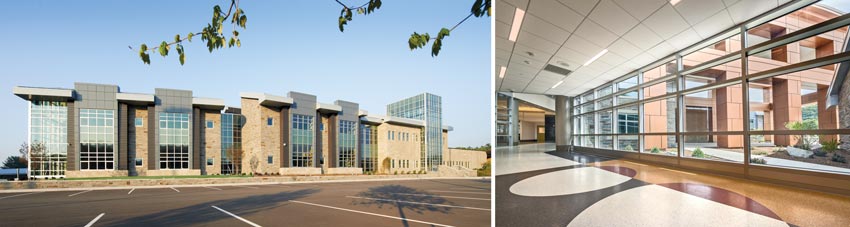
The design principle of naturalness of the environment was taken into account in the Barrett study as a contributor to student learning. Among the classroom features found to be desirable in this regard, natural daylight was seen as significant, preferably from more than one compass orientation. This appears to confirm and reinforce the findings of other studies that have also found daylighting and views to be important to student performance.
Of course, in most buildings, the desire for light and views usually needs to be balanced with the need for energy efficiency and budget. School systems and architects, however, shouldn’t necessarily feel that budget limits will impede any efforts to design with energy performance in mind. The range of high-performance, low-e glass products currently available delivers energy performance that helps buildings run efficiently at multiple price points. With that in mind architects often ask glass manufacturers, “What is the best U-factor and solar heat gain coefficient we can get for this project?” In order to determine the proper answer, the location of the project (to identify the proper climate zone) and the orientation of the glass (south facing, west facing, etc.) are paramount. The other significant factor is the choice to use either clear or reflective glass, which directly impacts visible light transmission and solar heat gain.
Beyond addressing these fundamental questions, some glass manufacturers offer online tools to easily calculate the performance and aesthetic differences between different glass options and create reports comparing choices made by architects. Some also offer a comprehensive digital suite of engineering and analytical reports that demonstrate the advantages of high-performance glass in building facades. One manufacturer points out that the most popular clear glass (not tinted) product selected for education projects has a visible light transmission of 68 percent and a solar heat gain coefficient of 0.38, delivering abundant natural light for most regions. When a lower solar heat gain coefficient is needed, a clear glass product with 62 percent visible light transmission is common, while offering an impressive solar heat gain coefficient of 0.27. Improvements in thermal efficiency currently help to boost U-factor performance, bringing some double-glazed insulating glass units closer to the thermal performance of triple-glazed units. Analyzing all of these factors and using high-performance, low-e glass products can help deliver glass performance that ensures schools can be optimized for daylight and energy use throughout the year.
Brian Schulz, the commercial product manager for Guardian Glass North America, has seen this play out firsthand. “High-performance glass can play a significant role in helping school districts realize utility cost savings by helping to manage solar heat gain, and these glass products can enhance the learning environment by delivering abundant natural light to classrooms, proven to boost learning rates. The total utility savings can be up to 20 to 40 percent annually for new schools, and 20 to 30 percent for renovated schools, just through high-performance glass design concepts.”
Photos courtesy of Guardian Glass/Guy Cali Associates
Abundant natural daylight in schools helps with learning outcomes but also needs to be designed to account for proper energy efficiency based on variables such as climate, orientation, and glass properties.
Natural Light Control
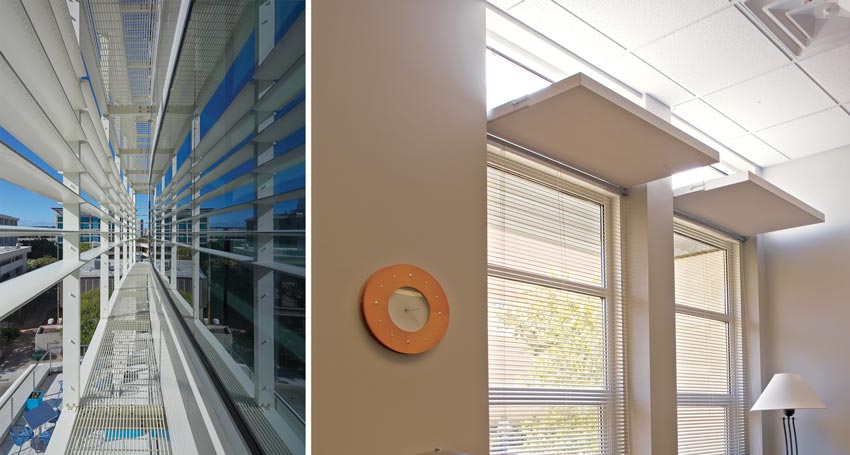
It is one thing to add natural daylight to a building, but it is another thing to control that light. Too much daylight will lead to uncomfortable glare and, depending on the compass orientation, could add more solar heat gain than desired. Interior solutions can help with distribution of light, but interior shades won’t keep unwanted heat from penetrating into the building. The most effective way to address these issues is from the exterior by controlling the amount of sunlight that ever reaches a window.
Exterior sunshades have become a common and popular design solution to promote lower energy costs and reduced glare, allowing filtered light to enter interiors while still allowing occupants to see out. Incorporating such exterior sunshades can take on a variety of forms with intricate patterns, sleek textures, and vivid colors—some can even incorporate LED lighting for dramatic or artistic nighttime appearances. Cantilevered and suspended sunshades typically project horizontally outward from the building facade and are well suited for southerly facing facades. The location and angle of the horizontal bands or louvers can be adjusted to suit particular projects based on specific orientation, latitude location, and facade conditions. This type of sunshade is also ideally suited for installations where loads from wind and snow need to be distributed over a larger area and back to the buildings structural support system. Tube shades are a variation on this concept, which use a hollow extruded aluminum profile with a shape that allows longer spans than traditional Z louver blades. A further variation employs a hollow extruded aluminum airfoil profile that maximizes the span between supports.
Instead of cantilevering outward from the building, exterior sunshades can be suspended closer to the facade in either a horizontal or vertical format. This configuration is particularly well suited for east and west elevations, where low sun angles make sun control challenging. In most cases, vertical sunshades will be the most effective for such east and west elevations if they are spaced properly to fully block the low sun angles. For installations where daylight from any direction is intended to offset the use of electric lights, something is needed to help distribute the daylight evenly in the spaces, such as classrooms. Interior lightshelves have been successfully employed to do just that, particularly with upper or transom style windows. These lightshelves intercept the upper light and redirect it deeply into the building. In this way, they reduce heat and glare, allowing students to sit adjacent to windows comfortably and productively.
Manufacturers of exterior sunshades can demonstrate how their particular products can enhance building designs while lowering environmental impact. For some, though, manufacturing the product is just the beginning. When architects are looking for an exterior sun control solution, certain manufacturers can also provide expert guidance and engineering support in the final design and fabrication of products directly suited to individual projects. Architects can work with product engineers to design a custom system that is code compliant and structurally sound, regardless of how complex the final design may seem.
Photos courtesy of Construction Specialties
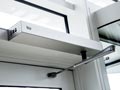
Controlling glare and heat from sunlight in schools is most effectively done on the exterior with a sunshade system specifically designed to suit the building. Distributing daylight inside the building can be achieved with interior lightshelves.
Naturalness and Sound
Although not one of the top six indicators, sound as part of the natural environment of a school was addressed in the research study by Barrett et al. This corroborates with an increasing number of design professionals who have focused on good acoustics, and even more so on acoustic control between spaces, as a key factor connected to learning outcomes in school environments. Independent programs such as LEED for Schools or Collaborative for High-Performance Schools (CHPS) also encourage the use of high-performance acoustic environments in schools. Indeed, the LEED for Schools program now contains both prerequisite and credit options for good acoustics in schools, with a particular emphasis on controlling sound between the spaces where they originate and the spaces where they end up. This is true for many wall assemblies in schools, but one area where this is sometimes overlooked is in the openings in walls, such as windows and doors. Sound energy will move through those openings easily if they are the acoustic weak point of a wall. Certain door companies recognize this and offer the highest-quality specialized door assemblies in both steel and wood that are tested and certified to industry performance standards.
The measure of acoustic performance for doors is found in sound transmission class (STC) ratings based on tests in accordance with ASTM E-330: Standard Test Method for Structural Performance of Exterior Windows, Doors, Skylights, and Curtain Walls by Uniform Static Air Pressure Difference and ASTM E-413: Classification for Rating Sound Insulation. Fortunately, it is possible to specify doors and frame assemblies with high STC ratings based on these testing standards. However, that is not where things end. The door, frame, and related door components all need to be looked at and addressed together in order to achieve satisfactory results. To do so using individual field-installed products and components is possible in theory, but in practice, it is extremely difficult to achieve. The more direct solution is to specify complete door and window frame systems that are manufactured from a single source such that they are coordinated and independently tested together for sound control. In this way, STC ratings can be achieved in a door that can approach or even match those achieved in the walls where the doors are being installed. If separate doors, frames, seal systems, glazing, and hardware are all supplied from different manufacturers, it is nearly certain that they have not been tested as a system to determine STC ratings, and it is even less likely that they can be installed across a school building to consistently attain the acoustic performance needed.
High-performance door and window products also address safety in schools, particularly in terms of tornado-resistant openings in exterior walls. Many of the same attributes that lead to an acoustically superior door also help with tornado resistance when tested in accordance with FEMA 361 & 320 and ICC-500 standards. The goal is to provide doors that enhance the quality of the learning environment and provide critical life safety protection to the occupants. Many schools in certain areas of the country experience the threat of tornados on a more regular basis than they would care for, which has given rise to incorporating tornado safe rooms in schools. Door frame and hardware assemblies along with window frame and glazing assemblies on the perimeter of those rooms need to be capable of resisting the forces imposed on them and protecting the critical life safety of the inhabitants. Properly specified, manufactured, and installed high-performance doors can do exactly that.
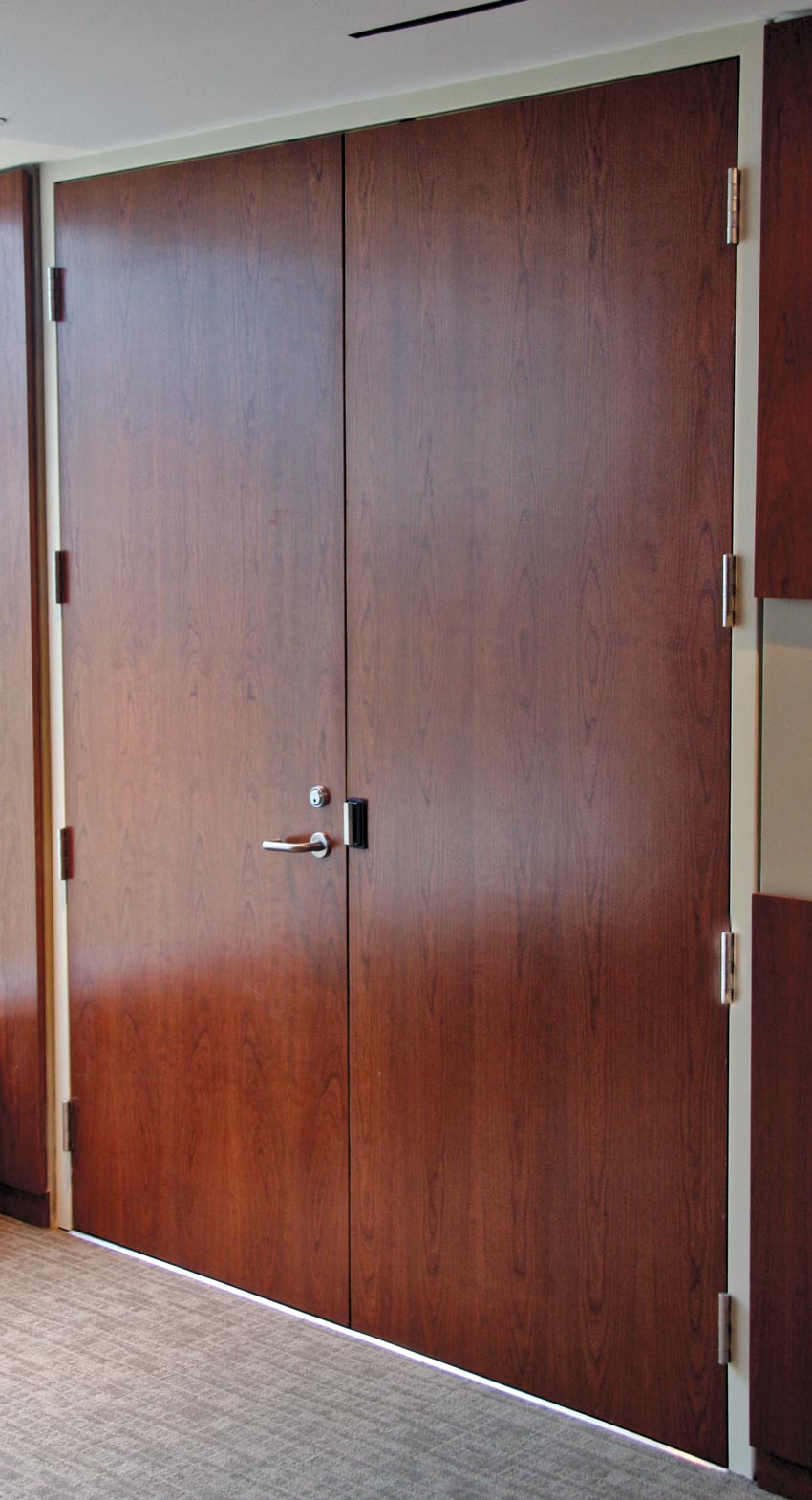
Photo courtesy of AMBICO Limited
Acoustic wood doors in a steel frame all coordinated and supplied by a single manufacturer can be carefully controlled and tested to achieve high performance, such as this door that is verified at STC 51.
Naturalness, Temperature, and Air Quality
Similar to acoustics, temperature and air quality were looked at in the research study we have been following. Some of the indicators of a successful classroom environment suggested that the degree to which the pupils feel comfortable during different seasons and the degree to which manual adjustments can be made are important. This plays directly into the type of cooling and heating system that is used and the ability for it to be responsive to different needs within a school.
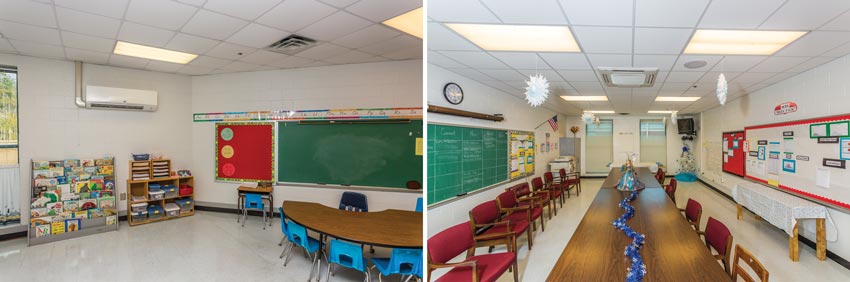
Conventional HVAC systems have served the needs of most buildings for many decades. However, achieving high levels of comfort, versatility, and performance often requires going beyond the conventional. Considerable success has been found in the use of variable refrigerant flow (VRF) systems, which operate in a zoned manner as an energy-efficient method of providing improved comfort control to indoor environments. Zones are defined as single- or multiple-room spaces that are conditioned to a set temperature and are operated independently from other rooms within the same structure.
VRF systems move conditioned refrigerant directly to the zone to be cooled or heated, allowing the temperature of that area to be more precisely controlled. They can simultaneously cool some zones while heating others or just provide conditioning to zones that are in use. VRF systems provide educational buildings with efficient, personalized comfort and can meet the needs of a wide variety of spaces within schools—classrooms, lecture halls, administrative offices, athletic facilities, and more. Further, the quiet operation of VRF systems makes them ideal for environments like libraries and classrooms where students need to focus on their studies. They can also be used with energy recovery ventilators (ERVs) that exhaust outside air to rid school buildings of toxins, odors, bacteria, and other potentially harmful contaminants. ERVs also improve HVAC system efficiency by preheating or cooling incoming outside air with energy recovered from the exhaust air. All of that adds up to a healthier indoor environment for students and staff. For architects, VRF systems with ERVs mean flexibility in design, quiet operation, and the ability to modify the systems as needs change during the design or life cycle of the building.
Photos courtesy of Joe Loehle Photography
Variable refrigerant flow (VRF) cooling and heating systems blend easily into classrooms, offering greater design flexibility, more precise comfort control, and quiet operation.
Individualization and Flexibility
Barrett and his research team make a case that when students and teachers feel a sense of ownership and control over their surroundings, learning outcomes can improve. This is manifested in several ways, but of particular interest to architects is the notion of creating spaces that can be flexible. In particular, spaces that allow the teacher to reconfigure things within learning spaces or provide different zones all contribute to an environment that offers a variety of learning spaces and activities. This finding seems to support many school client requests for more open and shared use of space. Moreover, with square footage becoming a premium, ways to utilize space efficiently is required.
The design question becomes how to achieve this flexibility in a way that enables multiple room layout configurations within a single space or opens transitional areas within circulation areas. Even more so, how can traditional classrooms transform into learning environments that are agile and adaptable, encouraging collaborative learning and facilitating large group, small group, team, and individual activities. If those spaces provide options for direct and open linkage to outdoor learning spaces too, then that certainly adds to the variety and stimulation potential for students, while providing opportunity for natural daylighting at the same time.
One of the solutions being used increasingly in schools are operable glass walls made of panels that can be easily moved to define smaller spaces when they are closed and larger spaces when they are open. From a learning perspective, this solution allows the creation of defined areas for focused learning or the opening up of larger common areas where multiple students can work together on a range of activities utilizing shared resources. Not only does this approach offer the sought after variety for students, it also means that teachers can share resources and support each other, fostering a better managed classroom environment. From an overall design perspective, creating such a flexible classroom configuration with operable glass walls can optimize or even reduce the needed floor space within a building envelope, which can translate into reduced construction costs.
Architects who have used this approach include John Brown, AIA, partner, Hollis + Miller Architects, who points out, “Connectivity, flexibility, and visibility were all very important concepts in the design of the spaces within our school projects. While we still needed the capability of closing off spaces for more traditional classroom and learning spaces, we also needed to open up the walls to accommodate larger groups, which would then allow for collaboration.” David T. Esely, AIA, senior project architect of the same firm, adds, “When closed, very little sound penetrates, which allows for diverse learning opportunities on both sides of the panels simultaneously. When the panels are open, the opportunities within the space transform and can then be tailored to specific instructors’ needs and requirements. This is all done with ease, with speed, and with frequency.”
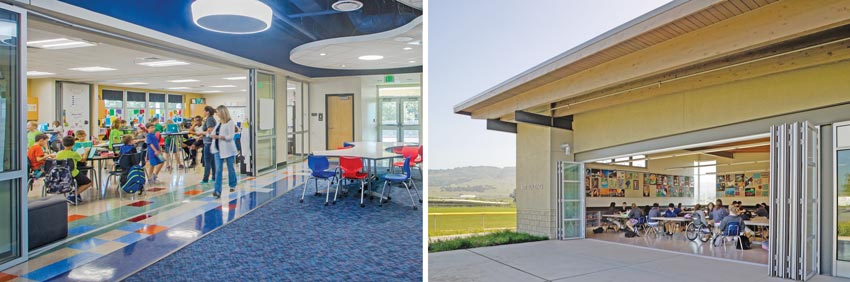
Photos courtesy of NanaWall Systems
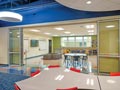
Operable glass walls provide flexibility and connection of student learning spaces to larger, more collaborative spaces or to outdoor learning areas.
Among the practical benefits that these design professionals and others have seen by incorporating operable glass walls into schools, a number are worth noting:
- Collaborative learning is fostered through group work activities. At the same time, the movable walls enable the separation of smaller groups for discussion, group projects, quiet zones, advanced or remedial work, test centers, teacher assistant-led groups, etc. Glass-filled space divisions also allow teachers to monitor multiple activities in functionally separated spaces.
- When parents or other visitors volunteer in the classroom, they can use separated areas to work independently with students.
- Classroom management is enhanced through the use of shared resources that offer common storage space for shared books, supplies, and computers, thus reducing redundant purchases.
- Teamwork is encouraged by joining two or more classrooms with a shared space. This allows teachers to configure space to meet their needs quickly and easily.
- Management of students is streamlined since one teacher can temporarily monitor two classes if another teacher has an emergency or needs a break.
- Visual distractions can be minimized through the use of mixed transparent and opaque glazing, thus allowing seated students to be isolated from excessive distraction beyond the operable wall, while a standing teacher can monitor multiple spaces.
- Separated spaces can also become cool off/recovery areas, offering isolated, private space for behavioral and emotional issues or disciplinary actions.
- Health benefits are possible, particularly if the operable walls open directly to the outdoors and provide natural ventilation in the process.
- Exterior operable glass walls can also add an abundance of natural daylight with the same benefits we have already discussed on this topic.
In multiple ways then, flexible learning spaces using movable glass walls provide architects with great design possibilities, teachers with more flexibility in how to configure spaces, students with more variety for improved learning, and school administrators with potentially better budget control.
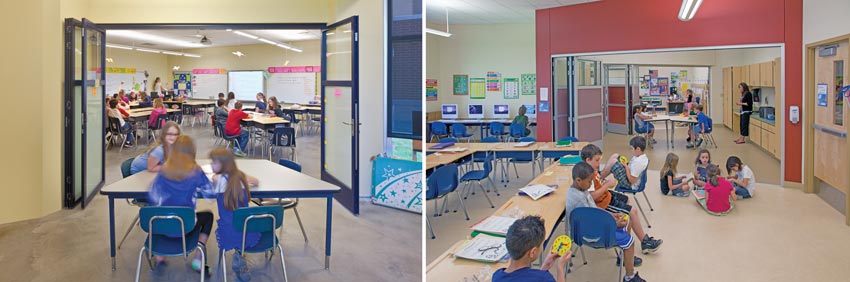
Photos courtesy of NanaWall Systems
Flexible learning spaces that can be closed off for smaller or individual activities or opened up to allow for larger group activities provide benefits to students, teachers, designers, and administrators.
Individualization and Connection
Part of the process of feeling a sense of individual ownership and control within a school building involves having a sense of connection and wayfinding through corridors and public spaces in the building. The Barrett team found significance in having clear and orienting corridors that were wide and used just as corridors, not for storage or breakout spaces. They also identified safe and quick access to the school facility as important, which is right in line with the needs of many school administrators to assure proper access control and safety in schools. That usually means that it is up to architects to specify electronic and mechanical access control products that match the rigorous performance standards required in the K–12 school building environment. It also means providing a serviceable and secure solution for all openings, utilizing both concealed and surface mounted hardware.
Architects and educational programmers are always conscious of building safety and security. Identifying manufacturers and products that readily address those concerns with both traditional master key systems and the integration of electronic access control is often the task at hand in designing schools. Specifically, finding top-grade locks, closers, and exit devices that have been proven in school environments across the country is often paramount for durability, operability, and functionality. In this age of increasing use of electronic access control products, it is equally important to find a manufacturer that can offer a complete, durable, and flexible control system. That can include a full line of electronic, stand-alone, and wireless cylindrical and mortise locks as well as the electronic access control trim for exit devices. In the spirit of a coordinated system not only for function but for aesthetics too, at least one manufacturer offers door-closer products with a consistent look across different types and series due to the use of matching covers and trim. Lever designs for door handles are also consistent from series to series, be it mortise or cylindrical, and the finish options are complementary for all door hardware products.
It is common practice to work with a particular manufacturer during the design and specification writing stage that offers direct specification and product selection assistance to generate the appropriate safety and security solution. Erich Tolksforf, CSI, CDT, senior specification writer for James W. Buckley and Associates Inc., comments, “As a specification writer for an architectural firm, I am always confident in including the manufacturer in our designs. This way, I know the products are reliable, the lines and associated nomenclature are understood, and everyone can take advantage of their service support system. All of these factors are extremely beneficial to me in the execution of my job as well as providing our clients with a quality access control solution that will last for many years.”
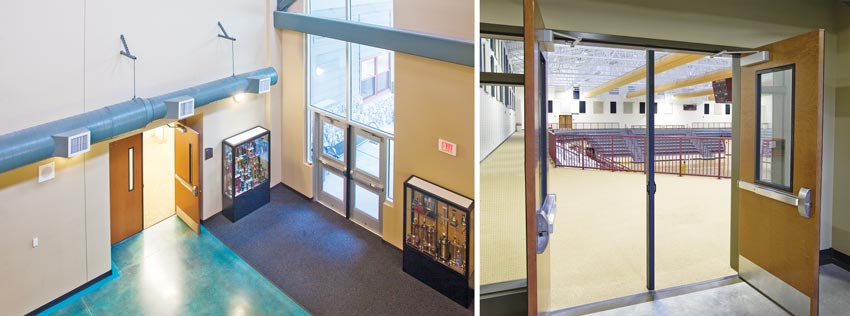
Photos courtesy of dormakaba
School designs that employ wide open corridors that allow students to make connections to different parts of the school are important but they also need to be safely secured with proper access control systems, both manual and electronic.
Individualization and Choice
The design parameter of having a choice in the way students interact with things in the building, like furniture, fixtures, and equipment (FF&E), was found by the Barret research team to help reinforce the notion of ownership and identification with the school in a positive way. High-quality and purposeful design in this area helped to reinforce outcomes in the classroom.
Architects and designers may or may not have much say in some of the FF&E choices in typical school building projects, depending on the client, the budgeting, and purchasing protocols. However, those things that are built in, such as lockers, bathroom fixtures, and accessories, are typically under the architect’s control and should be considered as fully as any other permanent part of the building. In fact, the proper design of bathrooms in a school can influence user experiences significantly more than the design of other parts of the facility. Since there are a wide variety of different products that meet different needs in bathroom and locker-room designs, product selection is instrumental in achieving not only a successful design but also in creating a long service life.
In developing specifications for these types of products, it is important to be aware of both the salient features and the material qualities of the different products being considered. Partitions in restrooms and locker rooms, for example, need to address appearance, functionality specific to the application, and durability. Given the presence of water and high humidity in some of these rooms, products that can stand up to those conditions, as well as the usual rigors of a school environment, are important. Of course, there is a desire to move away from cold, institutional appearances too, so such partitions need to provide an appropriate aesthetic. Plastic laminate partitions have been used as a cost-effective solution for this type of application, but they need to be properly selected and specified in order to avoid delamination or other problems. Toward that end, at least one manufacturer offers an edge-banding system (often the common weak point in the finish) that fuses with the substrate, creating a seamless beveled profile that eliminates any unsightly black lines that normally appear in standard plastic laminate. ASTM tests on this type of system confirm up to three times greater durability with increased resistance to moisture and humidity than standard plastic laminate. From a design standpoint, the edge banding is available in more than 40 different colors and patterns to match laminate on partition doors, panels, and pilasters.
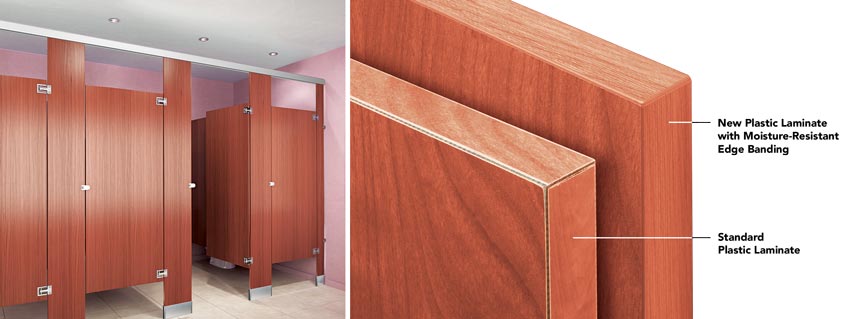
Photos courtesy of ASI Group
The selection and specification of permanent furnishings and equipment in bathrooms and locker rooms in a school can directly influence the design appearance and functional performance of those rooms such as the toilet partitions shown here.
Looking at other aspects of a bathroom design in schools, attention to the permanent accessories can help with the smooth and long-term operation of restrooms, including the ability to easily maintain them. For example, soap dispensing systems often require a lot of time for maintenance staff to refill them on a regular, even daily basis. Products are now available in top-fill soap dispensing systems that can refill up to six soap dispensers with one pour. That saves time, but it can also mean that all dispensers are full and hands are actually washed at school, thus preventing the spread of germs and disease in school environments.
Hand drying is critical for good hygiene and hence an important detail in restroom design. The common options are paper towels and hand dryers, and while each have their pros and cons, there is room for both, even in the same washroom. One manufacturer even makes a three-in-one unit that has a paper towel dispenser, waste receptacle, and a built-in high-speed hand dryer.
While paper towels can generate waste and may be more expensive in the long run (since they are a consumable), there are instances where they are needed for uses besides hand drying, like cleaning up a mess in a washroom or even using them to avoid touching surfaces that people don’t want direct contact with.
As far as hand dryers go, high-speed hand dryers are more energy efficient and quicker (less than 12 seconds drying time). However, with high speed comes noise, which is not great for schools—consider hand dryers with lower decibel levels as well as ones that have the ability to adjust airflow and heat to meet specific needs. Hygiene is most critical in washrooms, and some hand dryers collect water in a trough—a breeding ground for bacteria—and often that water can overflow and spill onto the floor, creating a safety hazard. It is best to investigate hand dryers that have moisture management systems that in effect help eliminate bacteria and other hazards. Dryers that have triple filters (HEPA, odor-fighting, and anti-microbial layers) add a level of hygiene as well. In summary, the key in hand dryer selection is to find dryers that have high-performance parts so that they manage moisture, eliminate bacteria, keep decibel levels low, save energy, and also have the flexibility of adjusting air flow and heat to suit a school’s specific needs.
Cyrus Boatwalla, director of marketing, ASI Group, has a good bit of experience in this area, and architects he has spoken with agree with his observation that “a well-designed bathroom and locker room in an educational facility can be the deciding factor in elevating a building from ‘good to great’. Bathrooms and lockers rooms are more private and personal and are used much more frequently than entryways and building facades. If given the requisite attention to detail, a well thought out bathroom can make a much greater positive impact on the user experience of a building—thus influencing their opinion of the school, the town, and the architects who designed the building.”
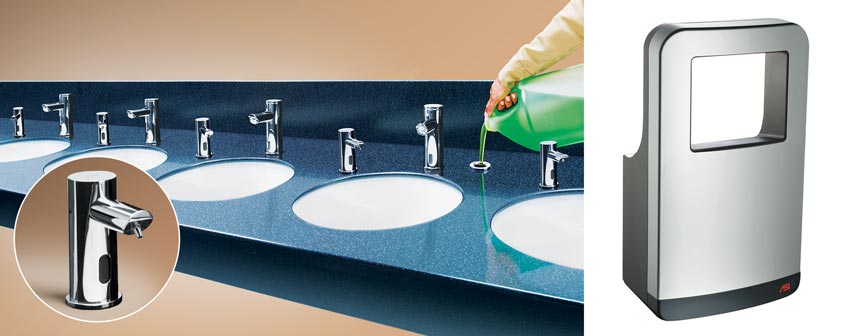
Images courtesy of ASI Group
Permanent bathroom accessories, such as multi-fill soap dispensers and high-speed electric hand dryers, as shown here, can provide choices that make a positive impact on the perception of the people who use the school.
Conclusion
Architects, designers, education planners, and school administrators all need to make decisions about the design and construction of school buildings. Some of those decisions are appropriately based on individual experience and professional training. They can also benefit by being based on the work of researchers who seek to measure design variables in buildings and investigate the impact of those variables on students and other occupants, particularly in terms of how they influence learning. Basing designs on the findings and evidence found in such research (referred to as evidence-based design) allows everyone involved to make informed, up-to-date decisions. In that way, the design can truly make a more positive impact on the people who spend many hours each day inside schools and other buildings.
End Notes
1Barrett, Peter; Zhang, Yufan; Moffat, Joanne; and Kobbacy, Khairy. “A holistic, multi-level analysis identifying the impact of classroom design on pupils’ learning.” Building and Environment. Volume 59, January 2013.
Peter J. Arsenault, FAIA, NCARB, LEED AP, is a practicing architect, green building consultant, continuing education presenter, and prolific author engaged nationwide in advancing building performance through better design.
www.linkedin.com/in/pjaarch