This CE Center article is no longer eligible for receiving credits.
Energy Use and Efficiency
 Used properly, daylighting also reduces building energy loads by replacing electrical lighting, adding controlled thermal gain, and feeding solar-powered systems. Energy efficiency is a central tenet of the certifications. In California, facilities meeting CHPS must meet or exceed the 2008 version of the state's Title 24, Section 6 energy code. In Massachusetts, the state's "Stretch Energy Code," defined as 20% more efficient than a national baseline, serves as the model. LEED for Schools calls for either whole-building energy simulations per ANSI/ASHRAE/IESNA Standard 90.1-2007, or prescriptive paths based on ASHRAE's Advanced Energy Design Guides or the Vancouver, Wash.-based New Buildings Institute's Advanced Buildings Core Performance Guide.
Increasingly, architects focus on enclosure design to meet these benchmarks, says Rick Brow, director of marketing for CENTRIA, a Moon Township, Pa.-based producer of metal panels that analyzed various cladding and enclosure systems. "Many project teams are using thermal modeling to understand the performance of window-wall interfaces, panel attachments or other attributes," he explains. "A break in the enclosure's air/vapor barrier or a thermal bridge can cause moisture intrusion, condensation or thermal conductivity. It's better to test that performance in the lab, not in the field."
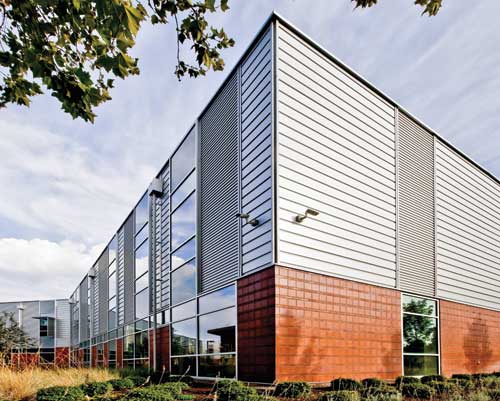 |
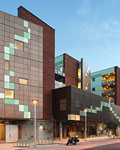
Designed by architect SRG Partnership, the Chemeketa Community College's 74,000-square-foot project revamped the facilities that house space and equipment for nursing, dental hygiene and pharmacy technology students, with a durable metal-panel cladding system incorporating an insulated composite back-up panel.
Photo courtesy of CENTRIA |
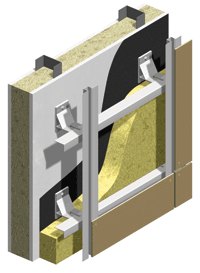 |
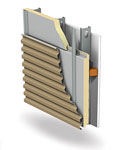
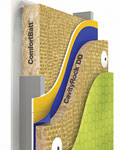
Building envelope insulation, including continuous exterior insulation, is more important than ever for educational facilities, as shown in this cladding schematic.
Image courtesy of Roxul Inc. |
Another impetus has been the growing use of air barriers and continuous insulation (ci), which are increasingly called for by local jurisdictions as well as model building codes such as IBC and IECC. "Continuous insulation is in the codes now, so new and renovated facilities need to have it installed exterior to the building structure or framing," says Cary Robertson, a civil engineer and envelope specifications expert who is U.S. national sales manager for Roxul, the Milton, Ontario-based stone wool insulation manufacturer. "It's accompanied by new questions, such as the fire ratings of these wall assemblies or the need for vapor permeability to maximize the drying potential of walls prone to condensation or moisture migration. Another key issue is that some insulation materials may dissipate in R-value over the long-term."
Within the walls of educational facilities, according to the U.S. Environmental Protection Agency (EPA), energy consumption is driven largely by mechanical systems. In addition to optimized HVAC design, institutional owners are looking for more use of renewable power to offset these costs. "Based on the requirements of LEED for Schools – especially the Gold or Platinum certifications – there's a strong incentive to incorporate nonpolluting and renewable energy sources such as geothermal," says Tony Landers, a former HVAC systems designer who is now director of marketing for Oklahoma City's ClimateMaster, which specializes in water-source heat pumps. Landers points to a nearby high school, Metro Career Academy – the first LEED Gold of its kind in Oklahoma – as an example using underground thermal sources.
 |
A high school for at-risk students, Metro Career Academy – the first LEED Gold of its kind in Oklahoma – uses underground thermal sources to reduce HVAC operating costs.
Photo courtesy of ClimateMaster |
Another factor is the increased heat and energy draw from plug loads, which account for up to 25 percent of the total electricity consumed by schools, according to the National Energy Education Development (NEED) Project, Manassas, Va. This may increase, even as architects see wireless communications and tablet technology revolutionizing how students collaborate and present their work, says Joshua Zinder, AIA, LEED AP, principal of Princeton, N.J.-based Joshua Zinder Architecture + Design. "Yet while the technology is new, their operational and pedagogical characteristics date back to the one-room school house, where tablets and lap boards were standard. Yes, you can do more with today's tablets, but in terms of the effect on organizing classroom space, there are important similarities."
 |
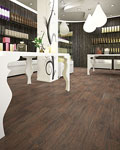
Increasingly, universities and K-12 schools are using ceramic tile and natural stone finishes because of their durability, low toxicity and favorable life-cycle performance. The University of Florida provides an example.
Photo courtesy of Florida Tile |
Materials and Resource Conservation
For these learning tools as much as for novel building materials and finish choices, their effect on educational environments is increasingly viewed through the lens of life cycle analysis or assessment (LCA), say experts in innovative schools design. This shift in emphasis appears in LEED 2009, which employs LCA in its credit weighting, while CHPS generally "rewards the use of materials and products that have undergone life-cycle analysis," specifically in its Credit 6, Sustainable Materials – LCIA. LEED 2009 uses EPA's TRACI1 environmental impact categories – including LCA, industrial ecology and pollution prevention – to weigh credits.
 In product evaluations for educational facilities, LCA techniques help answer questions about toxicity, total greenhouse-gas emissions and durability. It also reduces the sole focus on first cost, instead favoring the life-cycle cost benefits of highly durable materials such as metal, stone and glass block, which have low maintenance needs and consistent long-term performance. "The main advantage of metal surfaces is longevity," says Blake Batkoff, director of marketing and sales with Petersen Aluminum Corp., Elk Grove, Ill. "Once a metal system is installed as roofing or wall cladding, it should be the last application for a school facility."
Related benefits for products with good LCA results include minimal maintenance, low embodied energy, and options for recycling or reuse. Natural materials may also benefit student health. "Natural stone and ceramic tile are natural choices for the walls and floors of K-12 and higher-education buildings because of their inherent antimicrobial and cleaning properties as well as favorable LCA and life-cycle costs. These are highly durable materials," adds Sean Cilona, director of marketing with Lexington, Ky.-based manufacturer, Florida Tile.
"Life-cycle costing is a key improvement to all types of development for our clients and the public in general," says David M. Sikorski, P.E., a managing director with AECOM's Alternative Delivery Group in New York City. "In the not-too-distant past most projects were low bid. While that may have saved the client money up front, it probably did not over the life of the facility. Now we consider life-cycle in design and maintenance costs, and we're producing better results."
Working alongside educators around the country, savvy architects are bringing curriculum-responsive designs and technical innovations to today's K-12 and higher-education environments. On the one hand, this movement stems from the ongoing evolution of building systems, materials, finishes and furnishings specified for cost-effective, sustainable education end-uses. On the other, national and regional programs have helped codify design excellence for learning places, such as EduTopia, Architects of Achievement, and the American Institute of Architects Committee on Architecture for Education (CAE). Two key sustainability certification programs – the U.S. Green Building Council's LEED for Schools and the Collaborative for High Performance Schools (CHPS) – have been adopted by localities, owner groups and a wide range of individual school districts across the country.
The challenges facing U.S. educators today range from social and technology pressures to issues of budgeting and political reform. After almost a decade of focus on new building, facility owners nationwide are turning their attention to adaptive renovations and tactical expansions, with a focus on energy and operational costs. Across campuses and within classrooms, the projects echo new ways to teach and learn – and a changing conception of how schools work.
"Educators are moving away from the factory models of the 19th and 20th centuries," says Mark Quattrocchi, AIA, principal of Santa Rosa, Calif.-based Quattrocchi Kwok Architects. "Instead of lecture-style learning in self-contained classrooms, there's more project-based, student-centered learning. So we're grouping classrooms together and opening up spaces."
The workplace consultant DEGW, a division of Los Angeles-based AECOM, advocates the term "learning landscapes" to describe sweeping changes in how educational interiors are organized. Another macro-trend is revived interest in regional influences and local context. "Creating and reviving this sense of place for a campus strengthens the school's identity and presence," says Daniel Kelley, FAIA, senior partner with MGA Partners Architects in Philadelphia. "The best classroom buildings and places of learning respond to and revive the context of the campus. Through craft – and a modern sensibility – we connect students and the community back to the legacy of earlier campus designs, and forward to a progressive vision."
 |
Linden Grove Middle School, Kalamazoo, Mich.
Architect: TowerPinkster
Photo courtesy of Guardian Industries |
 |
At Bells Mill Elementary School in Potomac, Md., the unique look of the colorful roof cladding belies the strength and durability of the system. Architect: Walton, Madden, Cooper, Robinson, Poness, Inc.
Photo courtesy of Petersen Aluminum Corp. |
Taken together, these core ideas have accelerated the adoption of novel concepts intended to facilitate learning. "Increased transparency of the educational setting is one outgrowth of this confluence of needs, meaning reduced barriers and more glass and moveable or operable separations," says Matt Thomas of NanaWall Systems in Mill Valley, Calif., a maker of operable glass wall systems. "Educators value those visual links, and the improved communication allows teachers and students to relate better." Classrooms can also be converted into shared spaces or other uses, and growing interest in outdoor learning venues has also increased the need for convertible walls.
"Part of acknowledging the varied ways students learn is the recognition that not all learning happens behind the walls of a classroom," says Quattrocchi. "Outdoor learning can provide superior education opportunities including individual contemplative work, group student projects or entire classroom work."
 |
Operable glass walls can increase the transparency and flexibility of the educational setting. At the LEED Gold STEM Academy in Champaign, Ill., the architects Cannon Design and Bailey Edward Design used glass partitions to improve visual links and create larger class spaces.
Photo courtesy of NanaWall Systems |
Increased transparency also translates into improved observation and security. "Fire-rated glass separations are being used more in school environments – as opposed to opaque surfaces or traditional wire glass – and not just to improve fire protection," says Diana San Diego, director of marketing for San Francisco-based Safti First, which produces fire-rated glass and framing systems in the United States. "Fire-rated glass multitasks, bringing in daylight and reducing electrical lighting loads while improving safety and helping educators observe student activity in challenging areas such as egress stairwells."
The benefits of daylight on student performance and teaching efficacy are well established. The seminal "Daylighting in Schools" study in 1999 by Heschong Mahone Group of Fair Oaks, Calif., demonstrated that natural lighting markedly boosts math and reading test scores. Another study by the California Energy Commission showed how outdoor views can boost mental function and memory recall by up to 25 percent. These findings inform new educational practices as well as certifications like CHPS and LEED for Schools.
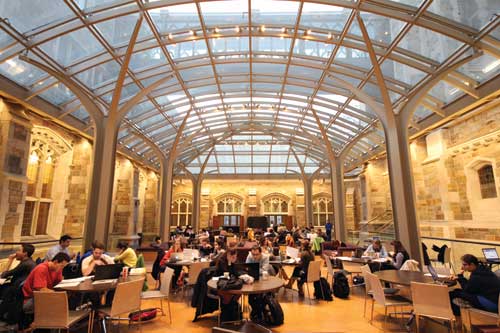 |
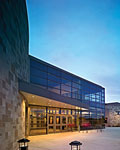
The University of Michigan Law School blended a historical restoration with a contemporary addition including a glazed space-frame canopy, designed by Huntman-Cox and Integrated Design Solutions. Stained glass windows in the 1933 limestone walls were mated with 2-hour rated fire-resistive glass panels to preserve the original look.
Photo courtesy of SAFTI FIRST |
Energy Use and Efficiency
Used properly, daylighting also reduces building energy loads by replacing electrical lighting, adding controlled thermal gain, and feeding solar-powered systems. Energy efficiency is a central tenet of the certifications. In California, facilities meeting CHPS must meet or exceed the 2008 version of the state's Title 24, Section 6 energy code. In Massachusetts, the state's "Stretch Energy Code," defined as 20% more efficient than a national baseline, serves as the model. LEED for Schools calls for either whole-building energy simulations per ANSI/ASHRAE/IESNA Standard 90.1-2007, or prescriptive paths based on ASHRAE's Advanced Energy Design Guides or the Vancouver, Wash.-based New Buildings Institute's Advanced Buildings Core Performance Guide.
Increasingly, architects focus on enclosure design to meet these benchmarks, says Rick Brow, director of marketing for CENTRIA, a Moon Township, Pa.-based producer of metal panels that analyzed various cladding and enclosure systems. "Many project teams are using thermal modeling to understand the performance of window-wall interfaces, panel attachments or other attributes," he explains. "A break in the enclosure's air/vapor barrier or a thermal bridge can cause moisture intrusion, condensation or thermal conductivity. It's better to test that performance in the lab, not in the field."
|
Designed by architect SRG Partnership, the Chemeketa Community College's 74,000-square-foot project revamped the facilities that house space and equipment for nursing, dental hygiene and pharmacy technology students, with a durable metal-panel cladding system incorporating an insulated composite back-up panel.
Photo courtesy of CENTRIA |
|
Building envelope insulation, including continuous exterior insulation, is more important than ever for educational facilities, as shown in this cladding schematic.
Image courtesy of Roxul Inc. |
Another impetus has been the growing use of air barriers and continuous insulation (ci), which are increasingly called for by local jurisdictions as well as model building codes such as IBC and IECC. "Continuous insulation is in the codes now, so new and renovated facilities need to have it installed exterior to the building structure or framing," says Cary Robertson, a civil engineer and envelope specifications expert who is U.S. national sales manager for Roxul, the Milton, Ontario-based stone wool insulation manufacturer. "It's accompanied by new questions, such as the fire ratings of these wall assemblies or the need for vapor permeability to maximize the drying potential of walls prone to condensation or moisture migration. Another key issue is that some insulation materials may dissipate in R-value over the long-term."
Within the walls of educational facilities, according to the U.S. Environmental Protection Agency (EPA), energy consumption is driven largely by mechanical systems. In addition to optimized HVAC design, institutional owners are looking for more use of renewable power to offset these costs. "Based on the requirements of LEED for Schools – especially the Gold or Platinum certifications – there's a strong incentive to incorporate nonpolluting and renewable energy sources such as geothermal," says Tony Landers, a former HVAC systems designer who is now director of marketing for Oklahoma City's ClimateMaster, which specializes in water-source heat pumps. Landers points to a nearby high school, Metro Career Academy – the first LEED Gold of its kind in Oklahoma – as an example using underground thermal sources.
|
A high school for at-risk students, Metro Career Academy – the first LEED Gold of its kind in Oklahoma – uses underground thermal sources to reduce HVAC operating costs.
Photo courtesy of ClimateMaster |
Another factor is the increased heat and energy draw from plug loads, which account for up to 25 percent of the total electricity consumed by schools, according to the National Energy Education Development (NEED) Project, Manassas, Va. This may increase, even as architects see wireless communications and tablet technology revolutionizing how students collaborate and present their work, says Joshua Zinder, AIA, LEED AP, principal of Princeton, N.J.-based Joshua Zinder Architecture + Design. "Yet while the technology is new, their operational and pedagogical characteristics date back to the one-room school house, where tablets and lap boards were standard. Yes, you can do more with today's tablets, but in terms of the effect on organizing classroom space, there are important similarities."
|
Increasingly, universities and K-12 schools are using ceramic tile and natural stone finishes because of their durability, low toxicity and favorable life-cycle performance. The University of Florida provides an example.
Photo courtesy of Florida Tile |
Materials and Resource Conservation
For these learning tools as much as for novel building materials and finish choices, their effect on educational environments is increasingly viewed through the lens of life cycle analysis or assessment (LCA), say experts in innovative schools design. This shift in emphasis appears in LEED 2009, which employs LCA in its credit weighting, while CHPS generally "rewards the use of materials and products that have undergone life-cycle analysis," specifically in its Credit 6, Sustainable Materials – LCIA. LEED 2009 uses EPA's TRACI1 environmental impact categories – including LCA, industrial ecology and pollution prevention – to weigh credits.
In product evaluations for educational facilities, LCA techniques help answer questions about toxicity, total greenhouse-gas emissions and durability. It also reduces the sole focus on first cost, instead favoring the life-cycle cost benefits of highly durable materials such as metal, stone and glass block, which have low maintenance needs and consistent long-term performance. "The main advantage of metal surfaces is longevity," says Blake Batkoff, director of marketing and sales with Petersen Aluminum Corp., Elk Grove, Ill. "Once a metal system is installed as roofing or wall cladding, it should be the last application for a school facility."
Related benefits for products with good LCA results include minimal maintenance, low embodied energy, and options for recycling or reuse. Natural materials may also benefit student health. "Natural stone and ceramic tile are natural choices for the walls and floors of K-12 and higher-education buildings because of their inherent antimicrobial and cleaning properties as well as favorable LCA and life-cycle costs. These are highly durable materials," adds Sean Cilona, director of marketing with Lexington, Ky.-based manufacturer, Florida Tile.
"Life-cycle costing is a key improvement to all types of development for our clients and the public in general," says David M. Sikorski, P.E., a managing director with AECOM's Alternative Delivery Group in New York City. "In the not-too-distant past most projects were low bid. While that may have saved the client money up front, it probably did not over the life of the facility. Now we consider life-cycle in design and maintenance costs, and we're producing better results."
Sustainable, Maintainable Grounds
With more use of indoor-outdoor educational models, architects are also focusing on how to maximize the enterprise life cycle of investments in building sites, landscaping and outside areas such as plazas, terraces, rooftops, and open-air atriums and walkways. The Sustainable Sites (SS) sections in both CHPS and LEED for Schools take aim at increasing open area in general as well as heat-island effects, stormwater control, and restoring native vegetation as natural habitat.
 |
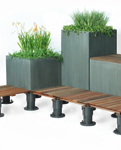
The University of British Columbia Law School, which is LEED Gold certified, includes a landscaped rooftop deck with underfoot tiles made of certified wood – FSC-C013454, to be precise – which can contribute to LEED points.
Photo courtesy of Bison Innovative Products |
As one result, "Applications of vegetated green roofs have gained popularity on college campuses and K-12 facilities," notes Mark Fusco, LEED AP, a green-roof consultant with Bison Innovative Products, a Denver-based manufacturer of wood tiles and pedestal-supported rooftop decking. "Administrators at educational institutions are beginning to understand the human and environmental benefits of adding green roofs to buildings." Fusco points to two LEED Gold projects, including Centennial College near Toronto – which features a green roof and an indoor green wall – as well as the University of British Columbia Law School, with a landscaped rooftop deck that uses wood tiles certified by the Forest Stewardship Council, or FSC.
Green certifications reward these rooftop gardens, raised plantings atop former concrete or asphalt surfaces, and other means for adding habitat. SS credits in LEED for Schools may be earned with facility designs that incorporate high-albedo roof surfaces as well as vegetated roof planes. Albedo can be measured by solar reflectance index (SRI), and LEED for Schools generally requires an SRI of greater than or equal to 29 for paving materials, non-roof surfaces and at least 75% of steep-sloped roof area. For low-slope roofs (less than or equal to 2:12), the SRI requirement jumps to 78 or more. Two calculation methods allow for a combination of high-SRI materials and vegetated areas on rooftops to reduce heat-island effect (LEED for Schools' SS Credit 7.2; see diagram below).

Just as important as specifying the right rooftop materials is integrating the results into the curriculum, says Bernardo Fort-Brescia, FAIA, founding principal of Arquitectonica, headquartered in Miami. "Historically there has been an emphasis on durability, particularly in high schools, but there is a new awareness of materials and systems that teach about sustainability," he explains. Rooftop gardens, such as the one atop the firm's School of International and Public Affairs at Florida International University, allow students and faculty appreciation of Florida's unique climate and plant species.
At the Metro Career Academy in Oklahoma City, says Lander, glass panels allow students to view the geothermal system's inner workings. Other examples include The Willow School in Gladstone, N.J., a new stone-walled independent elementary school that incorporates sustainable-living principles into its curriculum. Each classroom has large windows and a dedicated door so students can readily appreciate "elements of responsible living" such as local flora and an integral rainwater catchment system.
Water Consumption and Capture
Even more powerfully integrated is the science classroom setup at the Bertschi School in Seattle, where San Francisco's KMD Architects planted an indoor green wall and cut a diminutive, sculptural "river" into the floor of its new Living Science wing. When it rains, the glass-topped channel, bordered by ornamental fish icons, flows with water. More than an artistic gesture, the curving channel calls attention to the rooftop's slope, the underground reservoir where rainwater is held, and the relationship of humans and climate.
"Water use is an area where schools are witnessing dramatic improvements, largely due to increased awareness," says Zinder, an adjunct professor at the New Jersey School of Architecture, whose eponymous firm recently designed a truck-wash facility for Rutgers University that uses 100% reclaimed water. "Innovative water use and water-conservation techniques are often used to meet state regulations as well as green-building certifications. But rain gardens and other conservation techniques, including renewable energy, are being used as educational tools and practical examples in science and technology classes."
As regional influences take greater sway on sustainability and educational approaches, school projects in the Southwest are becoming models of water conservation. At Arizona State University's twin-towered student residence, Taylor Place, water efficiency measures resulted in a 43% savings over baseline for similar projects in downtown Phoenix. In addition to the typical low-flow fixtures, says Jeff Stanton, AIA, LEED AP, sustainable design leader at SmithGroupJJR's Phoenix office, "We're implementing strategies to capture and utilize condensate collection and cooling tower blow-down water for both landscape irrigation and flushing of toilets."
IEQ and the Indoor Environment
Other techniques are less about direct teaching and more about indirect benefits. Daylight and outdoor views carry weight in both CHPS and LEED – and educators aren't complaining about the light-drenched interiors and framed vistas. LEED for Schools awards one point for daylighting achieved in 75% of classrooms and core learning spaces; for reaching 90%, the project earns two points. If 75% of "other regularly occupied spaces" are daylighted, a bonus point is given. The views point is earned when 90% of all regularly occupied spaces offer direct lines of sight to the outdoors through glass between 30 inches and 90 inches above the finished floor.
 Teachers are sold on the benefits of daylight and outdoor views, a stark change from the 1960s and 1970s, when "schools without windows" reflected the commonly held belief that students apply themselves harder and daydream less under those circumstances. Still, groups such as Lawrence Berkeley National Laboratories have cautioned against drawing "firm conclusions...about the influence of daylight or outdoor view on school work performance." Architects and their clients see these amenities more as requisites for a humanistic, inspiring learning environment.
"Outside views and outdoor learning spaces are additional innovations to provide a sense of community – not only within the school but also for the purposes of engaging with the greater community," says SmithGroupJJR's Stanton. Often, however, "programmatic and functional issues" make it difficult for all perimeter spaces to take advantage of daylighting, he adds, meaning more use of light wells, light-refracting tubes and atriums.
 |
For a renovation of the Central Carolina Technical College Health Sciences Building in Sumter, S.C., practice labs are open to daylighted common areas and corridors by using 1-hour fire-rated glass and framing. The architects, LS3P Associates, worked to match an existing interior storefront system with the fire-rated partitions.
Photo courtesy of LS3P Associates |
For perimeter situations, another approach is using sliding and folding glass walls, says NanaWall's Thomas, pointing to the Booker T. Washington STEM Academy, a 225-student K-5 school in a northeastern neighborhood of Champaign, Ill., conceived by Cannon Design to accommodate an underserved African American neighborhood with a focused science and mathematics curriculum. "These operable wall systems meet code requirements for energy, fire safety and hurricane resistance, which schools need. Their real advantages, however, are optimizing limited floor space and increasing classroom flexibility, while enhancing student learning and creating a more rewarding teaching environment in some education settings."
The same gains are possible inside the building – even as fire-rated separations – adds SAFTI FIRST's San Diego: "Skillful uses of fire-rated glass walls for interior separations allows natural light to penetrate further into the building, which also maximizes shared lighting between spaces."
In addition to the proper visual environment, educational facility owners are becoming more cognizant of the benefits of carefully tuned acoustics. The decisive study on classrooms by the University of Kansas in 2000 calculated an average speech intelligibility rating of 75% or less for U.S. schoolrooms, suggesting that at least a quarter of what teachers say is unheard – and likely unlearned. A related fact, according to the National Center for Education Statistics (NCES): On average, teachers miss two days per year due to vocal fatigue.
While interior acoustics are addressed by reducing background noise and reverberation time as outlined in the Acoustical Society of America's 2010 ANSI standard for classrooms, more attention is also being paid to exterior wall acoustics, says Roxul's Robertson. "There are new tests to measure OITC, or outside-inside transmission class for façades, windows and doors that protect students against transportation noise and other low- to mid-frequency sounds," he explains. "Similar to the STC rating, a higher number is better, which can result from a more tightly sealed envelope or good acoustical insulation, or both."
Incorporating three prerequisites and 14 unique credits, the IEQ category in LEED demonstrates the importance of innovations in environment for improved learning. Five of the credits relate to pollutant or emissions sources after the construction phase ends, including microbiological contaminants. "The importance of air quality – and regulations relating to air quality – has had a dramatic effect on school design," says Zinder. "This has been caused by a number of mold scares in the region," he adds, along with health issues and minimum standards in the codes and education-related laws.
Outdoor-air delivery monitoring, increasingly used in university and K-12 buildings, is based on the use of CO2 and airflow monitors programmed to meet minimum levels prescribed in the ASHRAE standard 62.1-2007. The technique is especially valuable for variable-air-volume (VAV) mechanical systems. "Schools are required to have a certain number of air exchanges through the day, but while fresh air is considered a positive for the indoor environment, air exchange can be costly when it comes to energy efficiency. Ventilation technology like HRV and heat exchange can address this," says Zinder, alluding to heat-recovery ventilation.
Points for Innovation and Design
As HVAC techniques like HRV become more common in schools, building automation systems and controls are getting more sophisticated, Zinder observes. This is true of many other building systems and entire facilities: Innovative design strategies often require more of the building managers and maintenance teams, even as they become more automated and energy-efficient.
Some advances in school design gain popularity because they have fewer moving parts and even reduce tasks for school operators. Geothermal systems, for example, add underground water loops and heat pumps to the HVAC system, but they obviate the need for new boilers or cooling towers. This saves space and preserves architectural integrity, particularly for retrofit applications, says ClimateMaster's Landers.
For the LEED Gold-rated, 54,000-square-foot Metro Career Academy, an Oklahoma City school for at-risk high school students, an EIFS exterior with continuous exterior insulation and a green roof help to reduce initial energy needs. Below, a ground-loop well field of 121 bores serve a rooftop heat-pump system of 49 modular units delivering earth-supplied heat and air conditioning to individual classrooms.
"Mechanical systems are the highest cost for the schools to manage," notes AECOM's Dekker. "The trend we're observing is although higher-efficient units are becoming more prevalent and cost effective, it is third-party commissioning that brings the biggest benefit to schools." Commissioning helps identify and resolve problems early, she adds; later, the commissioning authority returns to verify MEP systems are functioning as designed. An example is AECOM's use of thermal storage for a new, LEED Gold three-story library at Loyola Marymount University in Los Angeles. "This allowed for enough cooling to add 2 million square feet of new building without increasing the size of the central plant," says Dekker, while also cooling water during off-peak hours, cutting costs.
Adaptive reuse. In addition to strategies for reducing operations costs, universities and K-12 schools are reducing capital costs by means of innovative strategies for repurposing existing structures. "Adaptive reuse of existing building stock has been driven more by the difficult economic times, to meet critical growth needs without the greater expenditures for new facilities," says Jeff Stanton of SmithGroupJJR, adding that the savings are often reinvested by universities and schools for HVAC, lighting and envelope improvements.
When it comes to retrofitting and renovating buildings, says Petersen Aluminum's Batkoff, "The focus seems to be more on recladding or refacing, which works well over concrete structures, EIFS and even existing metal panels. It requires removing some of the cladding to expose the solid structure to attach furring strips. In other cases, these furring strips can be attached directly over the existing substrate."
Some campuses and facilities have benefited from a different strategy, adding new rainscreens or light claddings such as EIFS over masonry or aged brick. Others are adding new buildings or modernizing old ones with larger expanses of high-performance glass and metal combined with multiple materials, including natural, colored and patterned cladding, in some cases to match team colors for stadiums and sports facilities, says CENTRIA's Rick Brow. "When we think of universities, traditional brick and mortar comes into one's mind's eye, but that's not necessarily what's being done at most universities today," he adds. "Metal and glass can lend an image of being more progressive and attractive, for example for a laboratory or science building."
On the other hand, the University of Michigan Law School has blended a historical restoration with the updating of its facilities. Stained glass windows and Collegiate Gothic limestone detailing on its 1933 Hutchins Hall were preserved as part of an addition including a new commons area, with a new glass and steel arched roof to capture more square footage. The new space had to be separated by a 2-hour rated barrier, however, so the original stained glass windows were matched with new stained-glass panels and incorporated clear, 2-hour fire-resistive glazing in between. "A lot of schools that are traditional are seeking to maintain that original campus look, even as they expand and add contrasting modern facilities," says Safti First's San Diego.
Blending tradition and contemporary motifs is a common sight on university campuses, as at the University of Cincinnati, where a master plan by landscape architect George Hargreaves's has included impressive new buildings in contemporary styles, such as the 2006 recreation center by Morphosis and KZF Design.
The same is true at primary and secondary schools, such as The Haverford School in Haverford, Pa., where a 2008 upper school and administration building was added to complete a 15-year master plan. Its 1903 Wilson Hall, the campus's first main building, was saved from the wrecking ball, restored and integrated with a prominent new brick-and-glass wing, certified LEED Gold. "The new building is wrapped in glass curtain wall and flooded with natural light, containing an array of informal gathering areas, paneled meeting pods, open computer stations, study nooks, and exhibition spaces," says MGA Partner's Kelley.
Learning communities and academies. These varied and engaging learning spaces are another important architectural innovation of recent years. At the Haverford School as at public K-12 schools, both adaptive reuse and new construction projects have aimed at increasing student-teacher contact while lessening the chance that students may "fall through the cracks," in the architect Quattrocchi's words. This includes creating learning communities or academies as well as varying the size and character of learning spaces, from small seminar rooms for a dozen students to double-sized classrooms for as many as 60 students and collaborating teachers. The larger spaces often rely on flexible furnishings on casters for breakouts into smaller study teams.
 |
The Haverford School's new upper-school building, designed by MGA Partners Architects, demonstrates the use of varied learning spaces rather than repetitive traditional classrooms. Organized around a "village street" are an array of informal gathering areas, paneled meeting pods, open computer stations, study nooks and exhibition spaces.
Photo courtesy of Halkin Photography |
For Quattrocchi Kwok Architects' new American Canyon High School, a CHPS-verified school in American Canyon, Calif., the campus layout accommodates small groupings of students and teachers in four multiple-discipline "small learning communities," or SLCs. Each houses an assistant principal, a counselor and a mix of science, history, math, and language-arts teachers. "Beyond this core curriculum, American Canyon High School also provides six 'specialized academies,'" says Quattrocchi, in such areas as applied technology, culinary arts, performing arts and global leadership. "Unlike the similarity of design of the SLCs – because of their similar curriculum – the academies are designed for their highly specialized uses."
 |
Quattrocchi Kwok Architects planned American Canyon School to reflect the "small learning communities," or SLCs, favored by the teaching staff. The energy-efficient school is the first CHPS-verified school in California.
Photo courtesy of www.technicalimagery.com / Tim Maloney |
While these kinds of innovative schools rely largely on architectural execution, they also benefit from special technologies that support the space concepts. The use of dry-erase and smart boards, for example, has swept through K-12 education – and the sound of chalk on blackboard is almost a memory, notes Zinder. "Instead of acting as just a piece of A/V equipment that's wheeled to the front of the class when needed, successful classrooms are designed around it, maximizing its value," he explains. "Add wireless and tablet technology and it will revolutionize how students collaborate and present their work."
Gone, too, are the rows of desks and traditional classrooms. In a recent article, the futurist and architect Prakash Nair, with Fielding Nair International in Minneapolis, called the idea "a relic, left over from the Industrial Revolution."
Theme schools. Another important experiment in learning over the last decades has been the creation of magnet, charter and discovery schools – called thematic or intensive schools in Europe – which bring novel opportunities for students to excel. There have also been improved spatial uses, programming and ways to integrate CHPS and LEED prerogatives. Recent examples include the Interdistrict Discovery Magnet School in Bridgeport, Conn., with its science, technology and global education themes. Designed by Svigals + Partners of New Haven, the building features a two-story learning wall embedded with "shapes of dinosaur bones, cassette tapes and other 'fossils'" wrote the Connecticut Post.
Other new theme schools include Minneapolis-based HGA's School of Environmental Studies in Apple Valley, Minn., an "optional high school," organized more like a laboratory and zoo than a secondary school. With communal spaces like a multiple-use commons and forum – and four academic houses overlooking these central spaces with views to a pond, woods and prairie – the school engages students in patterns of activity unlike a traditional high school. In Casper, Wy., the Summit Elementary School, which opened last year, is designed according to museum principles to foster "informal learning," according to an article by Lee H. Skolnick, FAIA, and Jo Ann Secor in the magazine Museum.
Is all this experimenting possibly a passing fad? Not likely, based on ideas espoused by Victoria Bergsagel and the influential group Architects of Achievement. Theme schools are just another way to foster curiosity among students through active, inquiry-based learning and in-depth projects that have relevance to the world beyond the classroom.
Case Studies
Daylighting for Classroom Success
| Photo courtesy of Guardian Industries |
The architects at TowerPinkster chose a high-performance glass to achieve the right balance between transparency and energy efficiency for the Linden Grove Middle School in Kalamazoo, Mich.
|
Innovations in glass technology allow architects and designers to incorporate ample use of glass and natural light into today's schools with proven positive effects. Numerous case studies highlight some of the remarkable results of daylighting, including superior math and reading skills improvement for children in well-daylighted classrooms.
Architects now have a range of options when specifying high-performance, energy-efficient glass. Today's advanced architectural low-emissivity (low-E) glass offers visible light transmission between 40 and 70 percent, while providing lower reflectivity than was possible in the past, with the added benefit of lower solar heat gain. Insulated glass in double or triple glazed units also offers excellent U-factors to lower heating costs and improve occupant comfort. These products are available in a variety of colors, with emphasis on the neutral range of light gray or green to slightly blue in reflective color.
Innovations in glass technology allow architects and designers to incorporate ample use of glass and natural light into today's schools with proven positive effects. Numerous case studies highlight some of the remarkable results of daylighting, including superior math and reading skills improvement for children in well-daylighted classrooms. Daylight is being encouraged as a primary light source for today's school buildings due to the energy-efficient benefits of a well-designed daylit building. Incorporating high-performance glass into educational facility design can reduce the amount of energy used, save thousands in energy-related costs and help earn LEED credits, all while improving the student experience. |
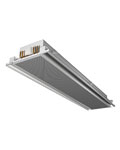
Active Beams Bring Modern Comfort to Historic High School
| Photo courtesy of Hughes General Contractors, Inc |
The renovation at Ogden High School utilized LEED design principles to ensure energy efficiency while maintaining the historic nature of the building.
|
Creating safe, comfortable spaces for the leaders of tomorrow is our shared responsibility, and air distribution is a key component for creating an environment that fosters learning.
When Ogden High School, located in Utah, initiated plans to renovate its existing cafeteria and add a new commons area, a major challenge was to maintain the historic nature of the building while creating a modern and efficient addition.
The existing school had no central air distribution system, and due to the school's heritage status it was not possible to conduct the extensive renovations needed to lower the ceilings and install ductwork.
By utilizing active beams, a solution that integrated seamlessly into the existing structure while minimizing the mechanical footprint was possible. The renovation and addition embodied LEED design principles and is both energy efficient and extremely low-maintenance.
Student comfort and well-being remained a priority, and a beam solution allowed the design team to maintain the historic aesthetic without compromising on the performance goals.
In fact, the beam system in the initial phase performed so well that when plans were unveiled to renovate the entire building, the Ogden City School District did not hesitate in selecting beam technology to be used throughout the school. |