This CE Center article is no longer eligible for receiving credits.
Renovating existing buildings is often more common than new construction projects in many locations or within many firms. Some renovations are motivated by a change in use or in occupancy requiring new layouts, new materials, and/or new building systems. Others are initiated in response to a maintenance assessment that determines the time has come to repair or replace particular components or systems in a building. Still, others may be a simple desire to update the building whether for public appearance and marketability or for improved energy efficiency and performance. Whatever the reason, building fenestration often becomes a key part of the renovation process since it usually plays a very important role in all of these areas of use, performance, and value of a building. Making design decisions about what fenestration to use in a renovation project involves an understanding of the factors related to performance as well as knowledge of the available choices and options. It also recognizes that the final choice may be based as much on the conditions of the existing building as on the available fenestration technology.

Photo courtesy of Graham Architectural Products/Bryan Becker Photography
Existing buildings of all types often require new or updated fenestration to add daylight, improve energy efficiency, or add to the appeal of the building.
Total Fenestration Performance
When thinking about fenestration, it is easy to be lured into thinking only about glass and glazing. Certainly, the performance factors of heat loss or solar heat gain in glass are important as well as visible light transmittance for daylighting purposes. But while these are truly important aspects of most fenestration systems, they are not the only things that affect overall performance. The frame supporting the glazing is also a critical component whether in a fixed window unit, a curtain wall system, or a storefront system. Since the frames are often a significant portion of a fenestration product, such frames have direct impacts on thermal performance in regard to energy efficiency, and human comfort. This is particularly evident in frames that do not adequately address heat transfer, but also when they fail to restrict air leakage or condensation on the unit. Looking closer, it has been demonstrated that even the spacers used in double- or triple-paned insulating glass units can make a notable difference in the overall thermal performance of any fenestration product. In light of all this, it is important then to consider the performance of any fenestration product in its totality, not just on a single component.
During the 1980s, many energy-performance issues were being discussed by manufacturers of fenestration products and claims were being made as to the attributes of their different products based on their own testing procedures. The problem with that, of course, was the absence of industry-accepted standards to follow, meaning no real basis existed for a fair comparison between products. That all changed in 1989, when the National Fenestration Rating Council (NFRC) was formed. This not-for-profit trade association is dedicated to identifying the true overall performance of fenestration systems and products. It has championed the process of fairly and comprehensively rating windows, doors, skylights, and similar products for energy performance. As such, it has developed a uniform testing and rating process that quantifies the key elements of fenestration performance including:
- A procedure for determining the total product thermal transmittance (U-factor), not just the U-factor of the glazing
- Solar heat gain coefficient (solar heat gain or SHGC)
- Visible transmittance (VT)
- Air leakage (AL) in residential window units and
- Condensation resistance (CR)
Together, these individual rating procedures are simply known as the NFRC Rating System, which employs both computer simulation and physical testing by NFRC-accredited laboratories. The NFRC Rating System is supplemented by two separate product certification programs, one for residential products and one for commercial (nonresidential) products, where fenestration manufacturers or responsible parties may certify and label fenestration products to indicate the performance ratings achieved. Both of these product certification programs are current as of April 2014 and are generally updated on a two-year cycle.
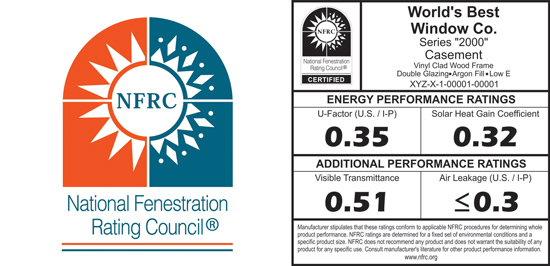
Images courtesy of NFRC (used by permission)
The National Fenestration Rating Council (NFRC) has developed an objective series of standards and testing procedures to rate and compare the total performance of different fenestration products.
Glazing Considerations
As noted, glazing is an important, albeit not the only, component in a fenestration product. When used in renovation projects, it needs to provide a number of different qualities. From a performance standpoint, presumably it will provide an improvement over existing glazing in terms of daylighting, solar heat gain, or thermal energy loss. From a design perspective, it will likely need to blend with an existing visual scheme for a building or contribute to a conscious effort to change the building appearance for the better. If the building is governed by historic preservation guidelines, there may well be restrictions on glass color, thickness, etc. that will need to be assessed and appropriate solutions found. In light of all of this, let’s take a closer look at some glazing options.
Glass Choices
Windows, curtain wall systems, skylights, and other fenestration openings most commonly incorporate glass of one type or another, offering a broad range of characteristics. For example, glass used in renovation projects can be clear or tinted, can be used in various thicknesses, and can be produced with a wide range of coatings to both manage energy performance and facilitate different aesthetic objectives. Some of the fundamental and common choices in glass options that are suitable for renovation projects include the following:
- Float glass: The term “float” refers to the manufacturing process in which molten glass is floated atop a pool of liquid tin in order to establish its surface flatness. Float glass is available as clear, low-iron (in which the trace green tint of clear glass is reduced) or a range of tint colors, including a fairly new series of lighter colors (light gray and light blue). Different thicknesses of float glass are available associated with the structural capacity and deflection control requirements of a broad range of fenestration needs.
- Annealed glass: All float glass is initially produced as annealed, meaning that the glass is gradually cooled to room temperature to relieve residual stress in the glass. Annealed glass can be readily cut, machined, drilled, edged, and polished during the fabrication process.
- Heat-strengthened glass: Heat-strengthened glass is produced by a heat treatment process within which the temperature of the glass is gradually elevated to more than 1,000 degrees Fahrenheit, and then the surfaces of the glass are rapidly cooled in order to develop permanent compressive stresses at the glass surfaces. When heat- treated glass is necessary to resist the thermal stresses on a project (and tempered glass is not otherwise necessary), heat-strengthened glass is often the optimal solution. Heat-strengthened glass is approximately twice as strong as annealed glass.
- Tempered glass: Tempered glass is heat-treated in the same manner as heat-strengthened glass, except that the quenching process is intensified in order to develop higher residual compressive stresses. Tempered glass will break into small dice-like pieces with relatively dull edges, and tempered glass qualifies as safety glazing. While tempered glass is approximately four times as strong as annealed glass, heat-strengthened glass is less likely to escape from its frame in the event of breakage.
- Laminated glass: Laminated glass consists of two or more plies of glass bonded with an interlayer material, most commonly polyvinyl butyral (PVB). Because the interlayer serves to retain shards in the event of glass breakage, laminated glass can constitute safety glazing. It can also provide significant acoustic performance, UV protection, and resistance to hurricane impact, blast, and forced entry.
- Insulating glass units (IGUs): Insulating glass units, consisting of two or more panes of glass separated by a sealed gaseous space, are widely necessary in order to meet energy codes. A low-e coating is commonly implemented on the number-two surface of the unit (the inner surface of the outermost lite of glass) in order to provide energy performance.
In a renovation project, the optimal glass selection will depend upon matching the particular project requirements for performance and aesthetics with the combination of features provided by each glass type. In buildings where increased energy efficiency is sought, then low-e coated insulating glass units can be used to achieve the appropriate level of solar heat gain control as a likely starting point. Aesthetics don’t need to be compromised in this case since there are more choices in such treated glass units than ever before, including some that are very lightly colored to achieve the desired effects. If safety or security are motivating the renovation, then heat-strengthened, tempered, or laminated glass can be used in one or more lites of an IGU to achieve those requirements. There are also numerous other options available to design teams, including a range of tint colors, a palette of coatings, acid-etched glass, patterned glass, ceramic frit of many colors and configurations, colored interlayers, and digitally-printed glass.

Photo courtesy of Guardian Industries Corp.
Glass has many varied properties that contribute to both performance and appearance in renovation and addition projects, such as the Chihuly Glasshouse in Seattle, Washington.
Other Glazing Options
In addition to glass, there are certainly other choices to consider when selecting glazing, such as acrylic or fiberglass reinforced panels. These have been popular in buildings that receive heavy use, such as industrial settings or where vandalism or other abuse needs to be warded off, and have been used in such settings for quite some time. However, there are also other glazing options worth considering.
In renovation projects where vision glazing is not required, but energy efficiency and daylighting are, then translucent, multiwall, cellular polycarbonate sheets have been successfully used as a viable alternative. Multiwall polycarbonate has been commonly used in Europe for some time with growing use in the United States. It is essentially fabricated as an extrusion with two outer sheets of polycarbonate joined together by internal ribs or cellular connectors. As such, it creates a form of insulated double glazing that is available in large sizes to minimize joints—up to 54 feet in length in some cases. Tongue and groove joinery is even available to connect sheets and provide a clean appearance without the need for vertical framing.
The use of cellular polycarbonate glazing has been shown to provide many benefits over other more traditional glazing materials. First of all, it is lighter in weight compared to similarly sized insulated glass units, making handling, installation, and replacement easier to address. It can also provide excellent insulating values on the order of U-0.25 (R-4) for 40-millimeter-thick panels. Polycarbonate as a material provides greater light transmission than other non-vision glazing, such as insulated fiberglass reinforced panels (FRPs). It is also dramatically stronger, demonstrating 250 times more impact resistance than an equivalent thickness of annealed glass. From a code compliance standpoint, polycarbonate is preferred over acrylic because polycarbonate is a cc-1 fire rated material, while acrylic is not. Finally, because of the nature of the product, it can be specified with 100 percent recyclable material, including any framing made from aluminum.
When it comes to installing polycarbonate glazing, it is common for a manufacturer to provide a complete system with glazing, framing, gaskets, etc. that have been tested as an assembly with results available for comparison to other products. The beauty of the system is that it is easily field installed and, when necessary, can be cut on-site into custom shapes and sizes whether to meet the needs of new construction or to cleanly fit into existing openings in renovation projects. It can also be used to create large translucent walls in areas that need daylight but not vision, such as warehouses and aircraft hangars, making it very well suited for retrofitting such buildings.


Photos courtesy of EXTECH/Exterior Technologies, Inc.
Polycarbonate cellular glazing is well suited for high use or industrial buildings that need energy-efficient daylight but not clear vision.
Polycarbonate glazing systems don’t need to be limited to fixed installations. Manufacturers also offer operable systems that can be opened or closed, making them ideally suited to provide natural ventilation while still allowing plenty of daylight in open or closed positions. This can be an ideal solution in many utility and industrial buildings that need both natural light and fresh air. Of course, there is also still the need to protect against rainwater, so at least one manufacturer has developed an innovative solution that allows for an awning-style window arrangement that sheds water while still allowing natural ventilation. Such an operable system provides more control and more fresh air than a louvered system, and it can be applied to fairly large walls in continuous sections up to 150 feet long and 8 feet high.
Consistent with energy code requirements and user needs, the operation can be undertaken manually or electrically and tied into a control system for energy, security, or other reasons. With a central operating feed connected to a line of glazing panels, the entire section can be open or closed at will. Such systems are intended for installations that have high demands so they are typically fabricated from durable and robust materials that allow smooth operation over time. The operators and thermally broken glazing can be configured to work on vertical walls or sloped surfaces to provide window or skylight type solutions. The operators obviously need to be sized to carry the weight and operate the panels, but glazing panel heights of between 3 feet and 8 feet are common. Overall, when properly designed and coordinated, the system provides a lightweight, economical, energy-efficient, and code-compliant option for non-vision glazing.


Photos courtesy of EXTECH/Exterior Technologies, Inc.
Operable panels of lightweight polycarbonate glazing can provide both daylight and natural ventilation in a variety of settings.
Renovating existing buildings is often more common than new construction projects in many locations or within many firms. Some renovations are motivated by a change in use or in occupancy requiring new layouts, new materials, and/or new building systems. Others are initiated in response to a maintenance assessment that determines the time has come to repair or replace particular components or systems in a building. Still, others may be a simple desire to update the building whether for public appearance and marketability or for improved energy efficiency and performance. Whatever the reason, building fenestration often becomes a key part of the renovation process since it usually plays a very important role in all of these areas of use, performance, and value of a building. Making design decisions about what fenestration to use in a renovation project involves an understanding of the factors related to performance as well as knowledge of the available choices and options. It also recognizes that the final choice may be based as much on the conditions of the existing building as on the available fenestration technology.
Photo courtesy of Graham Architectural Products/Bryan Becker Photography
Existing buildings of all types often require new or updated fenestration to add daylight, improve energy efficiency, or add to the appeal of the building.
Total Fenestration Performance
When thinking about fenestration, it is easy to be lured into thinking only about glass and glazing. Certainly, the performance factors of heat loss or solar heat gain in glass are important as well as visible light transmittance for daylighting purposes. But while these are truly important aspects of most fenestration systems, they are not the only things that affect overall performance. The frame supporting the glazing is also a critical component whether in a fixed window unit, a curtain wall system, or a storefront system. Since the frames are often a significant portion of a fenestration product, such frames have direct impacts on thermal performance in regard to energy efficiency, and human comfort. This is particularly evident in frames that do not adequately address heat transfer, but also when they fail to restrict air leakage or condensation on the unit. Looking closer, it has been demonstrated that even the spacers used in double- or triple-paned insulating glass units can make a notable difference in the overall thermal performance of any fenestration product. In light of all this, it is important then to consider the performance of any fenestration product in its totality, not just on a single component.
During the 1980s, many energy-performance issues were being discussed by manufacturers of fenestration products and claims were being made as to the attributes of their different products based on their own testing procedures. The problem with that, of course, was the absence of industry-accepted standards to follow, meaning no real basis existed for a fair comparison between products. That all changed in 1989, when the National Fenestration Rating Council (NFRC) was formed. This not-for-profit trade association is dedicated to identifying the true overall performance of fenestration systems and products. It has championed the process of fairly and comprehensively rating windows, doors, skylights, and similar products for energy performance. As such, it has developed a uniform testing and rating process that quantifies the key elements of fenestration performance including:
- A procedure for determining the total product thermal transmittance (U-factor), not just the U-factor of the glazing
- Solar heat gain coefficient (solar heat gain or SHGC)
- Visible transmittance (VT)
- Air leakage (AL) in residential window units and
- Condensation resistance (CR)
Together, these individual rating procedures are simply known as the NFRC Rating System, which employs both computer simulation and physical testing by NFRC-accredited laboratories. The NFRC Rating System is supplemented by two separate product certification programs, one for residential products and one for commercial (nonresidential) products, where fenestration manufacturers or responsible parties may certify and label fenestration products to indicate the performance ratings achieved. Both of these product certification programs are current as of April 2014 and are generally updated on a two-year cycle.
Images courtesy of NFRC (used by permission)
The National Fenestration Rating Council (NFRC) has developed an objective series of standards and testing procedures to rate and compare the total performance of different fenestration products.
Glazing Considerations
As noted, glazing is an important, albeit not the only, component in a fenestration product. When used in renovation projects, it needs to provide a number of different qualities. From a performance standpoint, presumably it will provide an improvement over existing glazing in terms of daylighting, solar heat gain, or thermal energy loss. From a design perspective, it will likely need to blend with an existing visual scheme for a building or contribute to a conscious effort to change the building appearance for the better. If the building is governed by historic preservation guidelines, there may well be restrictions on glass color, thickness, etc. that will need to be assessed and appropriate solutions found. In light of all of this, let’s take a closer look at some glazing options.
Glass Choices
Windows, curtain wall systems, skylights, and other fenestration openings most commonly incorporate glass of one type or another, offering a broad range of characteristics. For example, glass used in renovation projects can be clear or tinted, can be used in various thicknesses, and can be produced with a wide range of coatings to both manage energy performance and facilitate different aesthetic objectives. Some of the fundamental and common choices in glass options that are suitable for renovation projects include the following:
- Float glass: The term “float” refers to the manufacturing process in which molten glass is floated atop a pool of liquid tin in order to establish its surface flatness. Float glass is available as clear, low-iron (in which the trace green tint of clear glass is reduced) or a range of tint colors, including a fairly new series of lighter colors (light gray and light blue). Different thicknesses of float glass are available associated with the structural capacity and deflection control requirements of a broad range of fenestration needs.
- Annealed glass: All float glass is initially produced as annealed, meaning that the glass is gradually cooled to room temperature to relieve residual stress in the glass. Annealed glass can be readily cut, machined, drilled, edged, and polished during the fabrication process.
- Heat-strengthened glass: Heat-strengthened glass is produced by a heat treatment process within which the temperature of the glass is gradually elevated to more than 1,000 degrees Fahrenheit, and then the surfaces of the glass are rapidly cooled in order to develop permanent compressive stresses at the glass surfaces. When heat- treated glass is necessary to resist the thermal stresses on a project (and tempered glass is not otherwise necessary), heat-strengthened glass is often the optimal solution. Heat-strengthened glass is approximately twice as strong as annealed glass.
- Tempered glass: Tempered glass is heat-treated in the same manner as heat-strengthened glass, except that the quenching process is intensified in order to develop higher residual compressive stresses. Tempered glass will break into small dice-like pieces with relatively dull edges, and tempered glass qualifies as safety glazing. While tempered glass is approximately four times as strong as annealed glass, heat-strengthened glass is less likely to escape from its frame in the event of breakage.
- Laminated glass: Laminated glass consists of two or more plies of glass bonded with an interlayer material, most commonly polyvinyl butyral (PVB). Because the interlayer serves to retain shards in the event of glass breakage, laminated glass can constitute safety glazing. It can also provide significant acoustic performance, UV protection, and resistance to hurricane impact, blast, and forced entry.
- Insulating glass units (IGUs): Insulating glass units, consisting of two or more panes of glass separated by a sealed gaseous space, are widely necessary in order to meet energy codes. A low-e coating is commonly implemented on the number-two surface of the unit (the inner surface of the outermost lite of glass) in order to provide energy performance.
In a renovation project, the optimal glass selection will depend upon matching the particular project requirements for performance and aesthetics with the combination of features provided by each glass type. In buildings where increased energy efficiency is sought, then low-e coated insulating glass units can be used to achieve the appropriate level of solar heat gain control as a likely starting point. Aesthetics don’t need to be compromised in this case since there are more choices in such treated glass units than ever before, including some that are very lightly colored to achieve the desired effects. If safety or security are motivating the renovation, then heat-strengthened, tempered, or laminated glass can be used in one or more lites of an IGU to achieve those requirements. There are also numerous other options available to design teams, including a range of tint colors, a palette of coatings, acid-etched glass, patterned glass, ceramic frit of many colors and configurations, colored interlayers, and digitally-printed glass.
Photo courtesy of Guardian Industries Corp.
Glass has many varied properties that contribute to both performance and appearance in renovation and addition projects, such as the Chihuly Glasshouse in Seattle, Washington.
Other Glazing Options
In addition to glass, there are certainly other choices to consider when selecting glazing, such as acrylic or fiberglass reinforced panels. These have been popular in buildings that receive heavy use, such as industrial settings or where vandalism or other abuse needs to be warded off, and have been used in such settings for quite some time. However, there are also other glazing options worth considering.
In renovation projects where vision glazing is not required, but energy efficiency and daylighting are, then translucent, multiwall, cellular polycarbonate sheets have been successfully used as a viable alternative. Multiwall polycarbonate has been commonly used in Europe for some time with growing use in the United States. It is essentially fabricated as an extrusion with two outer sheets of polycarbonate joined together by internal ribs or cellular connectors. As such, it creates a form of insulated double glazing that is available in large sizes to minimize joints—up to 54 feet in length in some cases. Tongue and groove joinery is even available to connect sheets and provide a clean appearance without the need for vertical framing.
The use of cellular polycarbonate glazing has been shown to provide many benefits over other more traditional glazing materials. First of all, it is lighter in weight compared to similarly sized insulated glass units, making handling, installation, and replacement easier to address. It can also provide excellent insulating values on the order of U-0.25 (R-4) for 40-millimeter-thick panels. Polycarbonate as a material provides greater light transmission than other non-vision glazing, such as insulated fiberglass reinforced panels (FRPs). It is also dramatically stronger, demonstrating 250 times more impact resistance than an equivalent thickness of annealed glass. From a code compliance standpoint, polycarbonate is preferred over acrylic because polycarbonate is a cc-1 fire rated material, while acrylic is not. Finally, because of the nature of the product, it can be specified with 100 percent recyclable material, including any framing made from aluminum.
When it comes to installing polycarbonate glazing, it is common for a manufacturer to provide a complete system with glazing, framing, gaskets, etc. that have been tested as an assembly with results available for comparison to other products. The beauty of the system is that it is easily field installed and, when necessary, can be cut on-site into custom shapes and sizes whether to meet the needs of new construction or to cleanly fit into existing openings in renovation projects. It can also be used to create large translucent walls in areas that need daylight but not vision, such as warehouses and aircraft hangars, making it very well suited for retrofitting such buildings.
Photos courtesy of EXTECH/Exterior Technologies, Inc.
Polycarbonate cellular glazing is well suited for high use or industrial buildings that need energy-efficient daylight but not clear vision.
Polycarbonate glazing systems don’t need to be limited to fixed installations. Manufacturers also offer operable systems that can be opened or closed, making them ideally suited to provide natural ventilation while still allowing plenty of daylight in open or closed positions. This can be an ideal solution in many utility and industrial buildings that need both natural light and fresh air. Of course, there is also still the need to protect against rainwater, so at least one manufacturer has developed an innovative solution that allows for an awning-style window arrangement that sheds water while still allowing natural ventilation. Such an operable system provides more control and more fresh air than a louvered system, and it can be applied to fairly large walls in continuous sections up to 150 feet long and 8 feet high.
Consistent with energy code requirements and user needs, the operation can be undertaken manually or electrically and tied into a control system for energy, security, or other reasons. With a central operating feed connected to a line of glazing panels, the entire section can be open or closed at will. Such systems are intended for installations that have high demands so they are typically fabricated from durable and robust materials that allow smooth operation over time. The operators and thermally broken glazing can be configured to work on vertical walls or sloped surfaces to provide window or skylight type solutions. The operators obviously need to be sized to carry the weight and operate the panels, but glazing panel heights of between 3 feet and 8 feet are common. Overall, when properly designed and coordinated, the system provides a lightweight, economical, energy-efficient, and code-compliant option for non-vision glazing.
Photos courtesy of EXTECH/Exterior Technologies, Inc.
Operable panels of lightweight polycarbonate glazing can provide both daylight and natural ventilation in a variety of settings.
Other Fenestration Components
As noted previously, the NFRC takes into account all components of a fenestration unit, including the frame construction and the spacers between layers of glass in an insulated glass unit (IGU). The reason is that the material used in these frames and spacers can make a notable difference. To achieve optimal performance in the fenestration system, all of the variables (center of glass, frame, and edge of glass) must be optimized to achieve improved u-values and thermal performance. The spacers used will affect the edge of glass and center of glass conditions, while the construction of the frames will directly affect the overall performance.
Glazing Spacers
While the use of spacers is necessary and somewhat dictated by the IGU fabrication process, one of the biggest variables is the selection of spacer material. Typically, aluminum or stainless steel has been used for cost and strength reasons. However, these materials are very good at conducting heat, which means they can create a small “thermal bridge” around the perimeter of the IGU glazing. That will affect the temperature of the edge of the glass and may cause it to be colder than desired, which can lead to condensation forming along the edges. This thermal bridging around the glass edge can also affect the temperature of the center of the glass, making the whole assembly less energy efficient and less comfortable for people to be near. The preferred condition is to maintain a “warm edge” around the glazing. “Warm edge” refers to the thermal interaction between the panes of glass, window frame, and spacer at the sealed edge of an IGU. The lower the energy loss between the inside and outside of the window, the warmer the edge. Warmer edges also reduce the likelihood of water vapor condensation around the perimeter of the glass.
In the interest of creating a warm edge spacer, manufacturers have developed hybrid products that combine the benefits of high-performance polymers and thin stainless steel. The polymer component provides insulation for the spacer, while the continuous stainless steel back provides an excellent inorganic surface for sealant adhesion, creating a gas/moisture barrier. Such a spacer has also been optimized for fabricating IGUs to be sure they retain commonly used inert gases (e.g. argon) and are fully protected against corrosion. They are even offered in a range of colors to complement the colors of glass and glazing frames, while holding up over time to the effects of ultraviolet (UV) radiation from the sun. The results have paid off since independent testing has shown a marked difference in U-factors in glazing that use hybrid spacers compared to using aluminum or stainless steel. The tested difference can be on the order of 10 to 15 percent or more improvement. In a recent project, the well-known energy-
efficient Bullit Center in Seattle, Washington, Javier Bonilla, a glazing contractor with Goldfinch Bros. Inc., noted, “We were able to improve the overall U-factor of the window by replacing the aluminum spacer with a hybrid spacer. The overall U-factor of the window unit improved from 0.25 to 0.17.”


Images courtesy of Technoform North America
Hybrid spacers in insulated glass units produce notably better thermal performance results than aluminum or stainless steel spacers and are available in a wide range of colors to suit design needs.
Fenestration Frame Thermal Breaks
Just as the edge of the glass can be affected by thermal bridging, the frame of an aluminum or other metal window unit can conduct more heat through it than desired if something isn’t done to interrupt it. A thermal break is meant to do just that—stop or slow the flow of heat through the frame of a fenestration unit. This is done by separating the inside portion of the metal frame from the outside portion around the entire perimeter of the unit. In order to maintain the integrity of the window unit, the two halves still need to be joined, just not with metal. Rather, a low heat-conductive material is used with enough rigidity to be effective but enough insulation value to reduce heat flow.
The response by manufacturers has been to create structural insulating strips that can be custom extruded to fit window frame profiles and produce highly favorable thermal performance. Some even incorporate leg extensions for sealing against gaskets and screw channels for corner assembly options for example. By improving the thermal performance of the overall system, these insulating strips can help reduce the energy requirements of the building, increase the comfort of the indoor environment, and reduce health concerns associated with condensation on the windows. From a design standpoint, the continuous separation provided by the structural insulating strip also allows for the interior and exterior portions of the windows to be different colors or finishes.

Image courtesy of Technoform North America
Structural insulation strips can be custom extruded to allow window units to maintain thermally separated interior and exterior frames that can also be finished differently.
Manufactured Fenestration Systems
Manufactured products used for wall fenestration in renovation projects typically fall into three categories: curtain wall systems, storefront systems, and unit windows. Curtain wall systems can be large or small, field assembled or factory built, but are designed to hang continuously outside of a building structural system. Storefront systems are intended for a first or second floor installation and fit between floor and ceiling structures. Unit windows are fit into openings in a wall system and are available in a full range of sizes and types. All three types can achieve NFRC certification, but only some unit windows will carry an actual label. Curtain wall, storefront, and some specialized windows use standardized computerized ratings for certification. In all cases, though, each manufactured unit or system will be assessed in terms of total performance based on the traits and characteristics of the individual components that go into them.
Storefront and Curtain Wall Systems
These systems are available in a wide range of fully customizable options and choices suitable for renovation projects of all types. Advances in technology and design in recent times have provided flexible installation, improved energy efficiency, and a very favorable return on investment in most cases. While storefront framing has not always been regarded as high performance in the past, current products are capable of reaching U-factors as low as U-0.31 (R-3.2) with common low-e glass combinations and U-0.28 (R-3.57) with dual-coated units. “Architects of retail and mixed-use projects can benefit greatly from these latest storefront products, as the energy efficiency of the entire building envelope will be enhanced from the street up,” says Josh Wignall, storefront and curtain wall marketing product manager for EFCO. He points out that such systems are thermally broken and can be used in conjunction with standard entrance systems providing enhanced thermal performance and increasing energy-savings potential. Overall, currently available systems provide thermally efficient curtain wall and storefront systems that have the flexibility and cost-effectiveness for use by architects and glaziers on a wide range of projects. Increasingly known for their superior thermal U-factors and architectural-grade structural performance, these products are widely recognized for their ability to manage hot and cold environmental fluctuations without sacrificing structural capabilities.
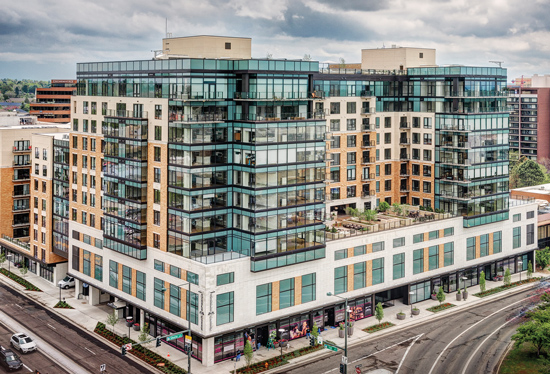
Photo courtesy of Pella EFCO Commercial Solutions
Curtain walls, storefront systems, and unit windows all combine different components to achieve an overall performance rating with many achieving excellent results.
Popular Unit Windows
Many renovation and new projects incorporate standard, premanufactured windows in some popular styles. Double-hung and single-hung windows fabricated in wood or metal have historically been used in many residential and commercial buildings. Manufacturers have found ways to keep the classic look of these windows but meet the increasing performance demands of architects and glaziers to provide energy-saving products with U-factors as low as U-0.26 (R-3.8) with 1-inch low-e coated IGUs. They are also meeting increased needs for economical framing systems that achieve higher strength and durability suitable for use in commercial, government, educational, and multifamily housing projects. Some manufacturers offer a fixed mating frame, which allows for transoms, sidelights, and other custom opening configurations to be readily worked into the design.
Other window types and styles are popular in renovation projects as well, including awning and casement styles that can project inward or project outward. These windows typically offer many design options, allowing for custom designs using standard window products. Glazing can be double or triple paned for improved energy savings, and some offer optional integral window blinds for interior light or privacy control capabilities. If fabricated from aluminum, there are multiple anodized or painted-finish solutions to address economic and aesthetic concerns. All use modern window hardware for enhanced operation and maintenance.
Monumental Windows
In many existing buildings the window openings may be very large, thus being referred to as monumental windows. These are commonly historic buildings, but could be fairly recent too simply with proportioned openings that call for larger than typical window units. Manufacturers have responded to this need as well, providing wood and aluminum-clad wood windows suitably rated for commercial projects. According to Stacy Seelye, Pella product specialist, “The new monumental hung windows are a welcome addition to the available choices in the market.” Architects can now select the full range of sizes from a single manufacturer for virtually any low- to mid-rise commercial project, especially for building retrofits, where historical accuracy and energy efficiency can be equally important. Such windows are available in size range up to 6 feet wide by 12 feet high with optional triple-pane insulated glass for improved thermal performance on the order of a total unit U-factor of 0.28 (R-3.5) in double-glazed units with argon gas and U-0.18 (R-5.5) in triple-glazed units with krypton gas.

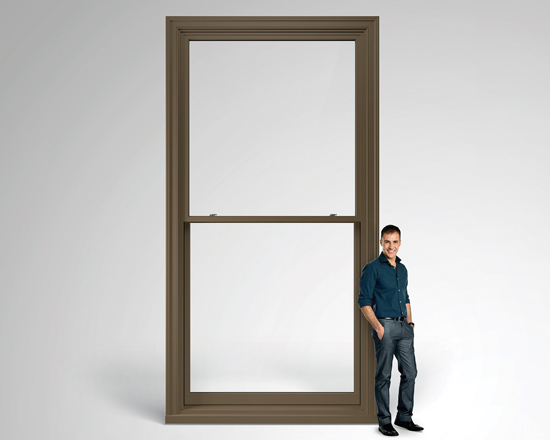
Photos courtesy of Pella EFCO Commercial Solutions
Monumental windows are now available in very large sizes to suit historical conditions and improve energy efficiency.
Tilt and Turn Windows
An innovative and flexible window type, one that can either tilt open or swing open, has been commonly used in Europe for many years and is becoming more popular in the United States. In fact, at least one company with roots in German engineering has established a manufacturing plant here in the United States to respond to the growing demand for these high-performance windows with a unique form of operation. They rely on a combination of engineering design, custom window hardware, and continuous gasketing to operate successfully. An interior handle rotates the hardware in one of three positions. In the locked position, the movable sash is closed firmly against the gasketed frame to seal the window unit tightly against air and weather infiltration. In the first open position, the window sash tilts inward from a hinge engaged at the bottom. This allows a basic amount of ventilation, while still limiting exposure to the elements—in this position, water just rolls off the slanted sash and drains out. By closing and re-opening the window into the second open position, it swings inward like an inward-projecting casement window, allowing for maximum light and natural ventilation.
Beyond the operational aspects of tilt and turn windows, they are also known for the attention to detail to produce a range of beneficial outcomes, including very high thermal performance, enhanced acoustics, ease of use/functionality, security (resistance to forced entry), and interior comfort. Many profiles and configurations are available, including profiles that offer narrow sight-lines such that large areas of glass can be available throughout. While all of this usually translates into additional cost compared to other American windows, the extra investment is generally regarded as small compared to the benefits. Of course, as performance of all windows continues to improve and as manufacturing of tilt and turn products develops further, the price gap between them may well shrink as precision units become more efficiently produced at more competitive prices. In some cases, they are even provided on a factory direct basis to a project, eliminating distributor cost mark-ups.
Another common attribute of tilt and turn windows is the use of sash frames that are wide enough to accommodate triple glazing. This allows glass U-factor values in the range of 0.12 or 0.13 (R-7.69 to R-8.33) with warm edge technology incorporated to optimize energy performance of the total window unit. That means large areas of glass can be used to bring in the benefits of daylighting, while still balancing thermal heat transfer. It also means building occupants experience greater interior comfort from the warmer interior glass surfaces.
Todd F. Bachelder, chief executive officer of Menck Windows, sums up the high performance and innovative operation of tilt and turn windows this way: “Building owners need fenestration products that will last and keep the building more comfortable, while reducing energy consumption, maintenance costs, and carbon emissions. Architects need to be able to select and specify products based upon the latest building technology from manufacturers that stand behind their products and services. Everyone needs windows that help ensure a long-lasting, energy-efficient, sustainable building—one that’s going to appreciate in value over time.”
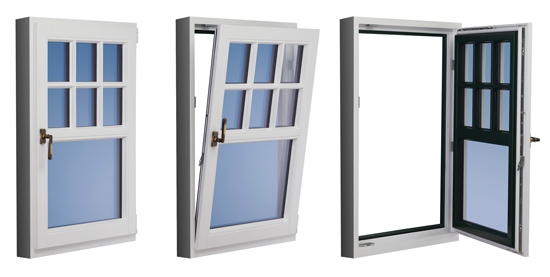
Image courtesy of Menck Windows
Tilt and turn windows allow for an innovative operation as shown in these photos: (left) in the closed and locked position, (middle) in the tilted inward position with the bottom hinges engaged, and (right) in the fully open position with the sash turned inward engaging the side hinges.
Custom Windows
There are cases where building renovations require windows to fit some pre-existing conditions or incorporate custom features to achieve results that match design, function, or historic needs. In those cases, there are manufacturers available who can provide full-service design support and supply high-quality, architectural-grade windows. Of course, these same manufacturers can do this for new construction, too, so architects can call on their experience and support for a full range of building construction projects. Some go beyond unit windows and have a full line of curtain wall, window wall, and storefront options to help ensure a functional system, regardless of the type of fenestration. For this discussion, let’s remain focused on some examples of custom unit windows.
Custom window manufacturers pride themselves in being able to craft windows to meet virtually any need. Dependent on the architectural vision, many times these windows can be an architectural highlight of the overall design, in which case they can be a main building feature. In addition to meeting the aesthetic needs, these custom windows still protect occupants from the elements and allow natural daylight into the building. They can also be specified to provide high thermal performance and can be tested for such. A large percentage of renovation projects require custom shapes that simply may not be available without a custom fabrication. Customization can also include an entire new product, unique panning and trim, or enhancing an existing product to meet specific project performance requirements.
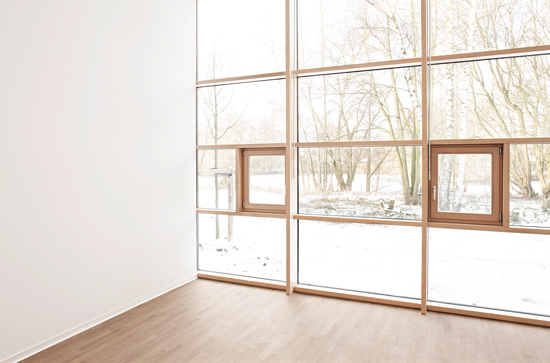
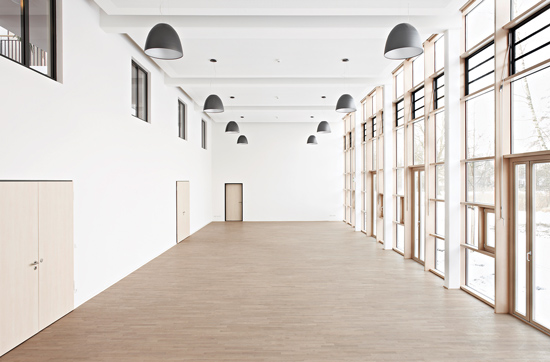
Photos courtesy of Menck Windows
Triple-glazed tilt and turn windows incorporated into a larger timber-based curtain wall system provide high-performance lighting and ventilation.
By way of example, consider a situation where double-hung windows are being replaced or installed, but the sash can be quite heavy to operate. Historically, that meant there were counterweights in the wall hung on pulleys to make the operation easier. A modern, custom alternative, however, is to use self-balanced windows, where both sashes operate simultaneously and counter balance each other. This eliminates the maintenance involved with traditional balance hardware and virtually eliminates sash-weight design issues. It also allows for increased natural ventilation since a greater window area is open at once. Custom systems such as this have been tested and found to meet or exceed industry standards for life-cycle testing.
Conversely, consider a condition where the windows are no longer desired to be operational but the look of a double-hung window still needs to be maintained. In this case, off-set fixed windows can be custom fabricated that simulate a double-hung window but with fixed sashes. This can reduce the overall cost of projects since fixed windows are less costly than operable windows. This approach can also save energy since fixed windows commonly have less air infiltration than operable windows, leading to better thermal performance. Since there are no moving parts or hardware, they also require less maintenance. From a design perspective, this custom approach allows some off-set fixed windows to be used that can seamlessly match adjacent operable hung windows using the same frame depth.
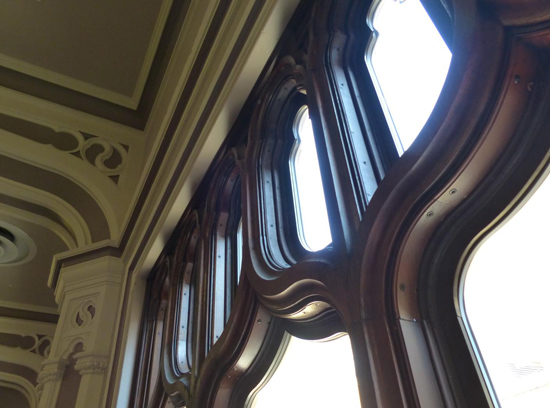
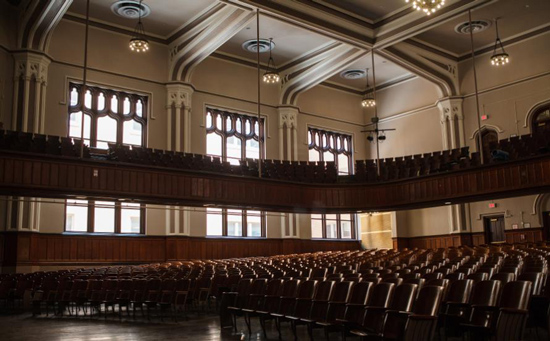
Photos courtesy of Graham Architectural Products
Custom windows made from cast aluminum were fabricated to replace the original wood windows that had deteriorated in this historically significant school auditorium.
Design Support Services
In order to fully account for the impact of windows on building performance, they should be looked at as part of an overall envelope analysis with an emphasis on the contributions offered by glazing types, air sealing, occupant comfort, and improved aesthetics. This is an important step on any project but especially on the renovation of existing buildings, particularly if the building is being converted from some other use (i.e. warehouse, school, etc.) into multifamily housing as has become very popular in many areas.
This analysis can be done in-house by architectural firms using available computer modeling software or by working with window manufacturers who have customized software to analyze the options of different window systems in a given building envelope system. Either way, a baseline building can be modeled and the relative changes can be compared by modeling specific window designs, types, and options.
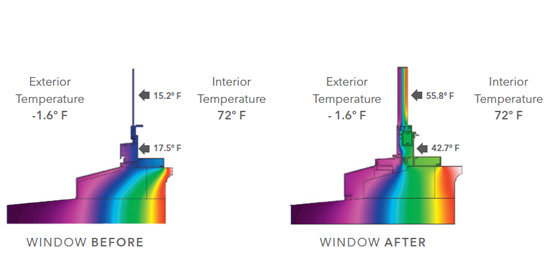
Some manufacturers offer a whole-building analysis service, which is truly unique from the component approach. According to Doug Phelps, Director of Commercial Business Development at Pella EFCO Commercial Solutions, “Using envelope analysis, we’re able to analyze and run ‘what-if’ scenarios to compare potential envelope improvements in terms of energy savings, occupant comfort, and building aesthetics. Every project has specific goals, and we are able to support the project team with flexible, real-time analysis.” Services are also available to provide a thermal analysis, which helps the design team understand the difference in thermal performance between existing windows and new windows.
Images courtesy of Pella EFCO Commercial Solutions
The images above show how first-generation single-pane windows (left) would have an interior glazing temperature much closer to the relative exterior air temperature. Additional panes and improved design have greatly reduced the amount of heat transfer, reducing energy use and improving comfort for occupants.
Conclusion
Incorporating new or replacement fenestration into a building renovation can make a dramatic difference on the overall performance, longevity, and appearance of the renovated building. Understanding the performance principles and standards in the design process can yield significant results in the operation of the building. Staying up to date on available products, systems, and other manufactured fenestration choices can provide designers with a broad palette to create significant design statements. Overall, fenestration can be used by architects to create buildings that are better designed, more appealing to users, and more cost effective to operate.
Peter J. Arsenault, FAIA, NCARB, LEED AP, is an architect and green building consultant who has authored more than 120 continuing education and technical publications as part of a nationwide practice. www.linkedin.com/in/pjaarch