This CE Center article is no longer eligible for receiving credits.
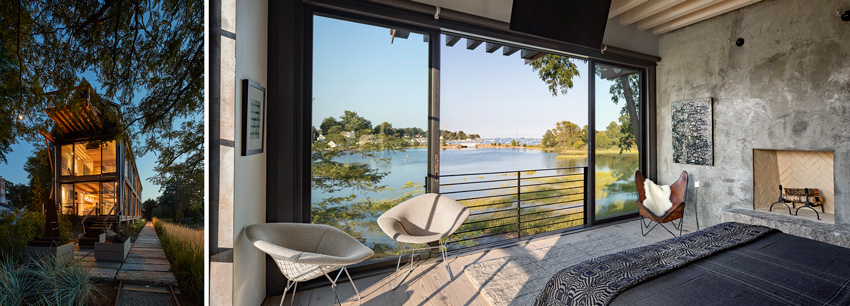
"We wanted clients to be able to seamlessly move outside and make the connection with what they are visually taking in,” says Fogelstrom Design Build Principal Designer Brett Fogelstrom in reference to a recently completed project in Oregon.

Photo courtesy of LaCantina Doors
Selecting multi-slide glass doors creates a seamless transition between indoor and outdoor living spaces.
Creating a connection between indoors and outdoors is a design goal for both commercial and residential buildings. While glass offers a visual channel to connect to the outside, too often the actual physical transition to exterior environments is abrupt or dissonant.
Modern design means not only embracing a structure’s surrounding natural environment, but it also upholds the benefits of bringing the outdoors in by capturing daylight, bolstering indoor air quality, and improving the overall health of occupants.
New product offerings using multiple sliding door panels, or multi-slide doors, that stack or store in wall pockets now make it possible to fully connect indoor and outdoor spaces without interruptions. When open multi-slide doors allow indoor spaces to extend outward, creating an outdoor living experience with all the benefits of fresh air and daylight. When closed, attention to details and performance characteristics assure that multi-slide doors provide the needed protection from weather and climatic conditions.
Eliminating Divides with Multi-Slide Glass Doors
Not only does the integration of outdoors and indoors enhance occupant health, but many building designs also envelop outdoor spaces and incorporate them as part of the overall usable building footprint. This can capture valuable square footage for use.
Commercial building designs, restaurants, office buildings, and apartments all can benefit when welcoming outdoor weather conditions allow for activities like dining and meetings to occur both indoors and out. In residences, rooms that flow into patios, decks, or natural outdoor areas such as beaches or wooded areas give residents a direct connection to those outdoor spaces.
As the focal point of modern design embraces open spaces, architects and designers need products that can capture this attribute. Multi-slide doors offer a dynamic solution that transforms and innovates open spaces. Thoughtful selection of materials mean multi-slide doors are well suited for many different environments and climates and will enhance and complement any architectural style, creating an outdoor living experience for any space. By eliminating a wall or standard door installation, multi-slide products remove the distinction between the indoors and outdoors, creating a healthier, more comfortable environment with natural light and open air.
How to craft a transition that both allows for enjoyment of the outdoors yet still maintains the functional needs of the indoor spaces becomes the key design focus.
The Adaptability of the Multi-Slide Door
The uses for multi-slide doors are only limited by the imagination and creativity of the building designer.
Multi-slide glass doors are used today in a full range of building types and functional applications. Multi-slide doors allow residential buildings to open up entire walls and connect main living areas with outdoor spaces. Multifamily developments use multi-slide doors to create a larger living unit by extending floorplans to include outdoor balcony and common spaces. Restaurant and retail buildings can cater to customers who prefer to relax in outdoor spaces while still being directly connected to the indoor facilities. Resorts and hotels similarly can provide their guests with a convenient and inviting indoor/outdoor experience for individual rooms and common lobby, restaurant, or functional areas. Educational buildings that need the ability to expand or contract a space to accommodate gatherings can use multi-slide glass doors to redefine footprints. Offices that open to a central atrium or courtyard can use multi-slide doors to provide open access when desired or be closed off when needed.
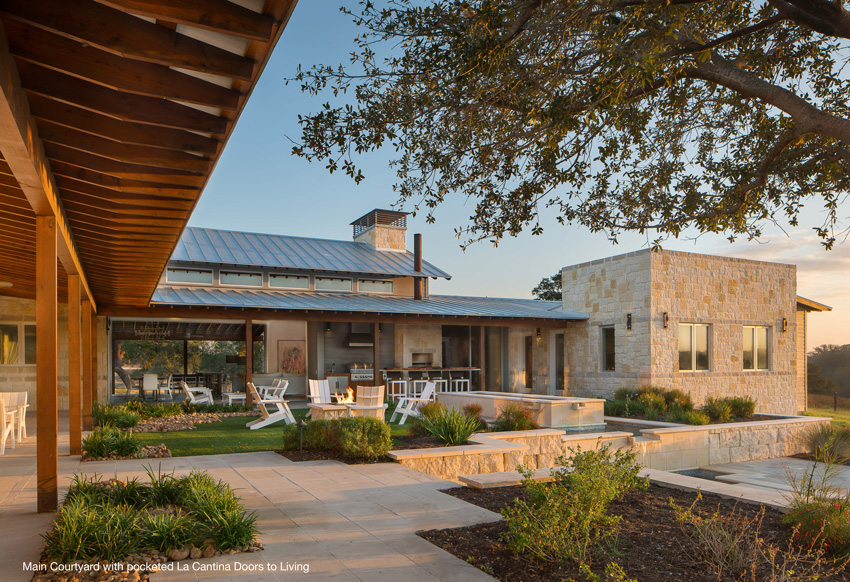
"We wanted clients to be able to seamlessly move outside and make the connection with what they are visually taking in,” says Fogelstrom Design Build Principal Designer Brett Fogelstrom in reference to a recently completed project in Oregon.
Photo courtesy of LaCantina Doors
Selecting multi-slide glass doors creates a seamless transition between indoor and outdoor living spaces.
Creating a connection between indoors and outdoors is a design goal for both commercial and residential buildings. While glass offers a visual channel to connect to the outside, too often the actual physical transition to exterior environments is abrupt or dissonant.
Modern design means not only embracing a structure’s surrounding natural environment, but it also upholds the benefits of bringing the outdoors in by capturing daylight, bolstering indoor air quality, and improving the overall health of occupants.
New product offerings using multiple sliding door panels, or multi-slide doors, that stack or store in wall pockets now make it possible to fully connect indoor and outdoor spaces without interruptions. When open multi-slide doors allow indoor spaces to extend outward, creating an outdoor living experience with all the benefits of fresh air and daylight. When closed, attention to details and performance characteristics assure that multi-slide doors provide the needed protection from weather and climatic conditions.
Eliminating Divides with Multi-Slide Glass Doors
Not only does the integration of outdoors and indoors enhance occupant health, but many building designs also envelop outdoor spaces and incorporate them as part of the overall usable building footprint. This can capture valuable square footage for use.
Commercial building designs, restaurants, office buildings, and apartments all can benefit when welcoming outdoor weather conditions allow for activities like dining and meetings to occur both indoors and out. In residences, rooms that flow into patios, decks, or natural outdoor areas such as beaches or wooded areas give residents a direct connection to those outdoor spaces.
As the focal point of modern design embraces open spaces, architects and designers need products that can capture this attribute. Multi-slide doors offer a dynamic solution that transforms and innovates open spaces. Thoughtful selection of materials mean multi-slide doors are well suited for many different environments and climates and will enhance and complement any architectural style, creating an outdoor living experience for any space. By eliminating a wall or standard door installation, multi-slide products remove the distinction between the indoors and outdoors, creating a healthier, more comfortable environment with natural light and open air.
How to craft a transition that both allows for enjoyment of the outdoors yet still maintains the functional needs of the indoor spaces becomes the key design focus.
The Adaptability of the Multi-Slide Door
The uses for multi-slide doors are only limited by the imagination and creativity of the building designer.
Multi-slide glass doors are used today in a full range of building types and functional applications. Multi-slide doors allow residential buildings to open up entire walls and connect main living areas with outdoor spaces. Multifamily developments use multi-slide doors to create a larger living unit by extending floorplans to include outdoor balcony and common spaces. Restaurant and retail buildings can cater to customers who prefer to relax in outdoor spaces while still being directly connected to the indoor facilities. Resorts and hotels similarly can provide their guests with a convenient and inviting indoor/outdoor experience for individual rooms and common lobby, restaurant, or functional areas. Educational buildings that need the ability to expand or contract a space to accommodate gatherings can use multi-slide glass doors to redefine footprints. Offices that open to a central atrium or courtyard can use multi-slide doors to provide open access when desired or be closed off when needed.
Laying the Right Foundation: How to Specify Multi-Slide Glass Doors
When specifying multi-slide glass doors, there are choices and specification details to pay attention to so that the best products are selected for the application and design. The Master Format section number commonly used is 08 32 13: Sliding Aluminum-Framed Glass Doors.
Part 1: General
When it comes to specifying the most appropriate multi-slide glass door for a particular building, especially a green building, the first place to look at is testing performance criteria. Make sure to compare similar testing methods between manufacturers and specify accordingly. The appropriate AAMA Product Performance Class should be indicated along with the minimum design pressure (DP) rating. Water penetration should be tested under ASTM E-547 and air infiltration tested under ASTM E-283. Structural load deflection testing is carried out under ASTM E-330 and performance criteria should be related to the size of the panels. Finally, and in particular, look for NFRC-certified and -labeled systems to address thermal performance and require those accordingly.
Submittals will be similar to most window and door products for product information and shop drawings if needed. They should indicate full coordination details with the construction drawings, and the sizes should be double checked since they are custom fabricated to suit the designed opening. Working with a selected manufacturer during the design process will allow for better coordination in the spirit of integrated project delivery. Other general specification items should include warranty requirements for the glazing, other materials, and overall system consistent with available 10-year warranties in the marketplace.
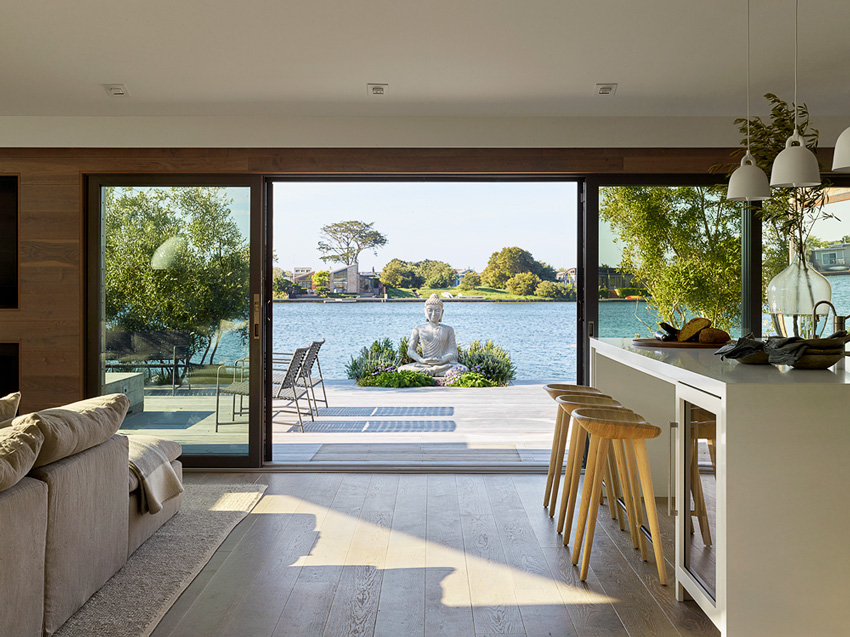
Photo: © Matthew Millman Photography
Stinson Beach Retreat
Architect: John Kleman of Kleman Design
Multi-slide doors create moveable glass walls. The design result is a place of deep serenity in which sunlight, ocean air, and uncluttered views become the center of one’s experience.
Part 2: Products and Options
Identifying the specific multi-slide door products, materials, and options that are desired means considering factors like weather, use, aesthetics, and application.
- Frame materials: The choice needs to be made between the three commonly available frame materials. Aluminum-only frames generally carry the lowest cost; thermally broken aluminum frames address energy efficiency; and aluminum wood frames, with or without a thermal break, address exterior maintenance and interior appearance. Certain manufacturers also feature a clad product that offers an extruded aluminum exterior and wood interior and features a narrow 2 15⁄16-inch stile-and-rail profile for all-around perfect symmetry, providing a clean aesthetic and more natural daylight.
- Frame colors, finishes, and sizes: Frames using extruded aluminum can be finished in common aluminum color choices such as bronze or clear anodized or white paint. They are also available from some manufacturers in colors to match popular window brands, allowing for a consistent exterior or interior appearance with the rest of the building. If none of these are appropriate, then it is also possible to use a Kynar paint finish to customize the frames to virtually any color. Innovative manufacturers offer frame designs that split finish options for the interior and exterior to provide maximum design flexibility. If aluminum wood is selected for the frames, then the wood color or finish should be specified from such options as vertical-grain Douglas fir, mahogany, maple, oak, walnut, or even dark cherry. Certain manufacturers may also offer a narrow rail and stile profile, allowing doors with different operational styles to appear the same when closed, preserving a design’s aesthetics.
- Glazing: With the frame selected, the glazing infill options need to be finalized. Typically, most applications use double-pane insulating glass units with low-e coatings and inert gas fill for energy efficiency. Single and triple glazing are also options, as the location or energy goals may warrant. Specialty glazing may also be available with privacy or obscured glass, acoustic control, impact resistant, art glass, or even solid material possible to be specified.
- Tracks and sills: The configuration and makeup of the upper tracks are usually determined by the configuration of the multi-slide doors. The profile is matched to the door manufacturer’s system for hanging the door, while the number of tracks will match the number of stacking panels in the multi-slide assembly. They are typically installed flush with the ceiling or head of the door opening, but their height should be known and verified to determine the proper rough opening height. Similarly, the sill needs to be coordinated and will match the manufacturer’s system and number of door panels. Sills are available in at least three different profiles and should be specified according to the project design needs. Flush sills are intended to be recessed into the floor such that they are level with the finished floor surface and can incorporate the same finish flooring between the sill tracks. Raised sills are intended to set up above the outside walking surface and may come in varying interior leg heights to create a greater degree of weather resistance. These raised sills can be made ADA compliant when needed by virtue of a ramped edge when there is more than a 1⁄2-inch change in the sill height compared to the walking surface. Regardless of type, sills are typically thermally broken and should specified accordingly.
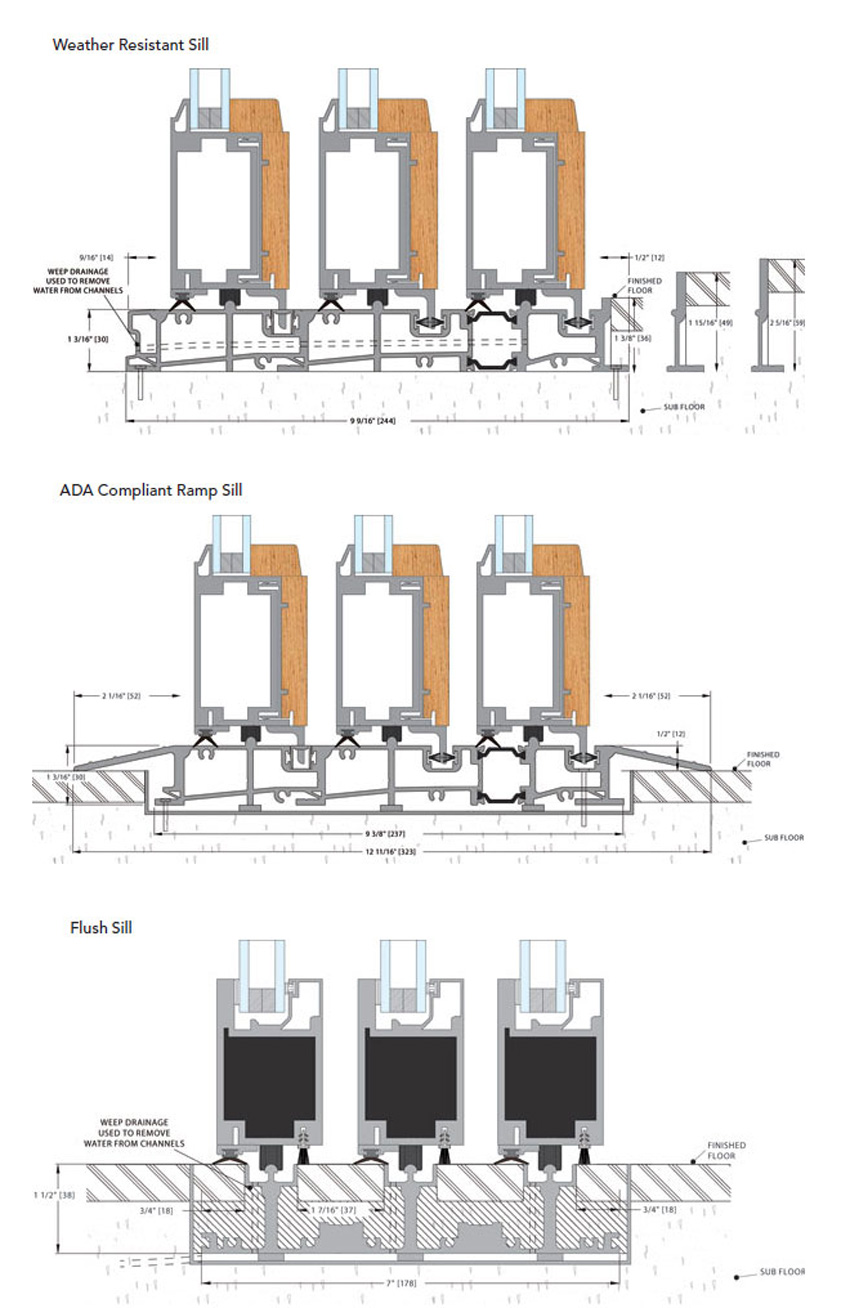
Image courtesy LaCantina Doors
Shown are an ADA-compliant ramp sill, a weather-resistant sill, and a recessed flush sill.
- Hardware and locking: Hardware is typically provided by the manufacturer since it necessarily needs to be recessed so as not to interfere with the door operation. Recessed hand pulls are common on door panels, and sliding locking mechanisms are generally used on the primary or end panel. The lock itself relies on recessed or concealed locking at either two or three points depending on the height of the panels. Some manufacturers offer a sliding locking mechanism with an exterior keyed lockset providing easier access when the door is locked while still maintaining greater security. Although there may not be many choices in hardware or locking mechanisms, there is a choice of hardware color that can be specified to match the rest of the project. To preserve a contemporary aesthetic, manufacturers may offer locking hardware comprised of a single-piece back plate and latch, which reduces overall size and is flush to the surface. Multi-slide doors use stainless steel or acetal (polyoxymethylene [POM] plastic) wheels. Advanced, AAMA-certified, low-profile acetal wheels increase durability and offer smoother performance and quieter operation. Stainless-steel wheels and hardware can be specified on taller, heavier doors and can be rated up to 1,000 pounds.
- Automatic controls: It is possible to specify doors that are moved manually or with an electric operation. In that case, the space required for the electric motion devices, wiring, and control pad must all be designed in and specified. Since this is something that will vary between products, it is best to work directly with a selected manufacturer to determine what is available and how to coordinate its installation. Similar to other automation devices, both wall-mounted and handheld remote options may be available to open, close, lock, and unlock a multi-slide glass door. Some can even be linked to a smart phone or as part of a whole-house automation system.
- Screens: In areas where insects are an issue, adding screens to the opening is an option. There are two types available for large openings: a non-pleated screen mesh and blind that is fabricated as an integral part of the door or a more economical pleated mesh screen that collapses and moves out of the opening, allowing for maximum open space. From an aesthetic standpoint, both the non-pleated and pleated screens remain concealed and out of view when not in use.
Part 3: Installation
Installing multi-slide glass doors requires appropriate attention to detail to assure the desired outcome is achieved.
- Installation requirements: Sliding doors require attention on all sides of the opening, but the critical element is the installation of the track and the sill. Placement needs to align with the elements of the building that are intended to support the door and integrate with the finishes. The track length and location will depend on whether the door divides in half and stacks to both sides or stacks to a single side, and adequate clearances will be needed in either case. Once the track and sill are secured, the doors can be set into place. If the sliding door is electrically operated, the operator will need to be installed, the control pad located, and the electrical connections made.
- Cleaning and maintenance: Regardless of the door details, the final installation steps include final cleaning and testing. The door should operate smoothly and close securely in all cases. The seals should engage and prevent air leakage between inside and outside. From a maintenance standpoint, the doors should be routinely checked to ensure they continue to perform over time as when they were installed. If not, they should be repaired promptly by qualified personnel to prevent energy loss or weather penetration.
Typical Sizes and Configurations
Multi-slide glass doors are used to create large openings in walls or to take the place of an exterior wall altogether. The size of the panels and the total door unit can vary and is usually custom fabricated to suit a particular building project. As a practical matter, the glass in an individual multi-slide panel is generally limited to 60 square feet in size with the caveat that the height is generally limited to 12 feet while the width is generally limited to 8 feet. The number of individual panels can vary to suit the overall opening size, but there is typically a maximum of six panels that can be stacked up in each direction as a practical matter. Note that while these products are commonly used in door sizes, they can also be designed and used in shorter window sizes such that they function as multi-slide windows resting on a wall portion below and above them.
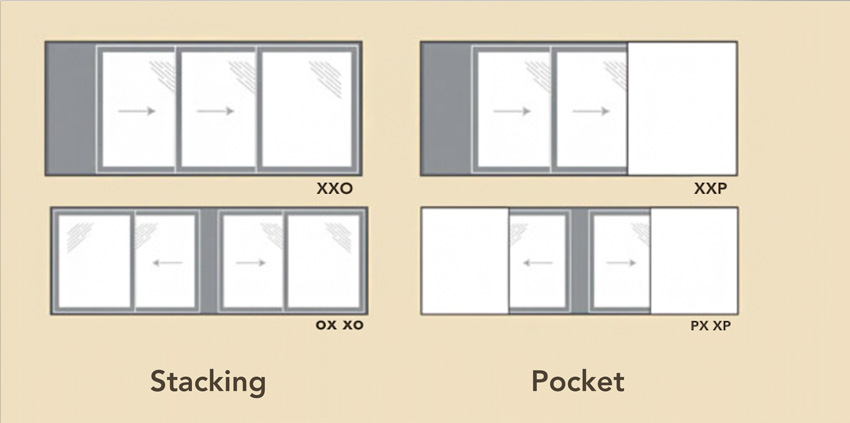
Image courtesy LaCantina Doors.
Shown are multi-slide door configuration types.
The configuration of the panels can be designed so that either all panels stack behind each other on one side of the opening or the panels are split to stack on both sides of the opening. Either way, there are two basic options in designing how the sliding panels stack. The first option is to keep one glass panel fixed or stationary and slide the adjacent panels to stack evenly behind the stationary unit. When stacked in this manner, some manufactured designs appear as a single panel when viewed from the inside or outside, maintaining a clean aesthetic. The second option is to conceal the sliding panels in a wall pocket. In this case, the sliding panels disappear altogether, giving the appearance of a full opening in an otherwise solid wall area.
When laying out multi-slide doors, the door units need not be limited to a single wall plane. Manufacturers have developed methods to allow doors to meet at a corner location such that a post or other element is not needed. That means that, when open, the corner disappears, allowing a full visual and physical three-dimensional connection between outdoors and inside. When closed, the door panels come together to form either an inside or outside corner again.
Some manufacturers have adapted multi-slide door panel technology to window applications. This allows for whole vistas of windows to disappear, capturing the same benefits of multi-slide doors.
Design Coordination
Multi-slide glass doors can be incorporated into a wide range of building types in a number of ways. They can be fully integrated with the building’s construction to create a seamless and flush appearance, allowing the doors to disappear altogether when open. In other cases, they can create a large feature in a facade by allowing for a distinctly defined opening. The flexibility of multi-slide doors can be used to work with the overall building design to enhance or even define a particular aesthetic.
When it comes to coordinating the visual appearance of the multi-slide doors with the other doors in the building, it is appropriate to pursue a visual balance amongst all the doors. In that regard, architects often seek doors that can provide clean and even sightlines between different functioning doors to create a consistent daylight opening and complete overall design. Manufacturers offering a “perfect match” stile and rail can ensure that, regardless of operation, doors across the facade are balanced.
Bringing Energy Efficiency and Health to the Table: Understanding the Performance Characteristics of Multi-Slide Glass Doors
There are clear design opportunities and advantages for multi-slide doors, but to be truly efficient product, their functional performance must be equal to their aesthetics. Any window or door product needs to use quality materials that are fabricated to provide a smooth and tight operation. In order to provide a good value to the owner, they must be durable enough to continue to operate well over their lifespan. And doors and windows must meet the thermal demands of the climate where they are installed, managing heat transfer and air infiltration.
Multi-slide glass doors satisfy performance needs using a variety of tools. The first tool they bring to bear are the materials used in their fabrication. The performance of the material selected translates into the performance of the overall unit.
It is most common for the door panels to use aluminum frames surrounding the glass, either with or without thermal breaks, as may be needed. A unique design innovation is an aluminum and wood combination system. This aluminum wood frame uses a low-maintenance aluminum exterior combined with a natural wood interior to enhance the interior design scheme of the building. Certain manufacturers offer a clad option that marries an extruded aluminum exterior with wood interior that can meet the most progressive energy code requirements with standard glass options. This thicker 2¼-inch panel provides increased thermal efficiency for year-round comfort. This is particularly significant as more stringent energy codes have been adopted nationwide.
The door’s frame supports and holds the door’s glass, which itself can be selected from a range of single, double, or triple glazing options. Overall U-factors in the door panels can be achieved at or near the common fenestration target of 0.30 or better, depending on specific glazing selections and fills.
The glazed door panels fit into a track, running along the door head. This track guides the panels and is commonly made of extruded aluminum, with thermal breaks as needed. The track depth will vary to suit the number of door panels used in the multi-slide door. The door sill is also made from extruded aluminum and is available in a variety of flush or raised. The wheels that allow the door panels to slide are commonly made either from acetal, for smoother, quieter operation in lighter-weight panels, or from stainless steel for heavier-weight door panels.
Altogether, the door panel assembly is intended to be more rigid, more durable, and longer lasting than conventional residential sliding glass doors with full customization of the overall door size.
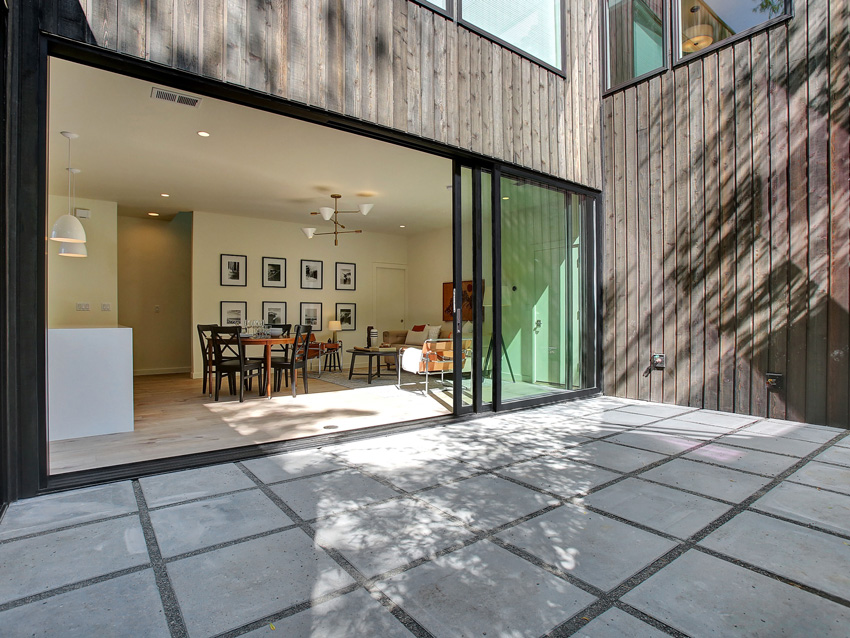
Photo courtesy LaCantina Doors.
Manufacturers that offer multi-slide panels with consistent width stiles and nails create minimal sight lines for balance and symmetry. Thermally controlled frame materials provide enhanced structural integrity, design versatility, and increased energy efficiency.
Understanding Structural and Weathering Performance
Structural integrity is clearly of highest value in all window and door units to maintain proper fit and operation of the products under conditions of wind, rain, and other weather stresses.
Structural load deflection testing is routinely carried out by manufacturers under ASTM E-330. This test is used for multi-slide doors as well, with the results directly dependent on the size of the panels.
The American Architectural Manufacturers Association (AAMA) publishes the primary standard for commercial windows and doors in its document AAMA/WDMA/CSA 101/I.S.2/A440-08: North American Fenestration Standard (NAFS)/Specification for windows, doors, and skylights. This standard defines four different Product Performance Classes: R, LC, CW, and AW. It also identifies the minimum Performance Grade (PG) that is required to satisfy the criteria of each class. The defining criteria is the minimum DP that a unit must resist such that Class R must withstand 15 pounds per square foot (psf) of pressure, Class LC 25 psf, Class CW 30 psf, and Class AW 40 psf.
In addition, each class must meet minimum water-resistance test pressures ranging from 2.9 psf for Class R, 3.75 for Class LC, 4.50 for Class CW, and 8.0 for Class AW. Water penetration is tested by ASTM E-547 with the sill configuration routinely having a direct influence on the results. Clearly water entering through a closed multi-slide door wall would be disconcerting at least and damaging to the building at worst. Since such water penetration must not occur, water must either be sealed out completely or managed so that if it does penetrate any part of the system, it will drain away harmlessly. Multi-slide glass doors have been tested using these ratings and standards and have been found to meet overall DP ratings of up to 45, with additional structural elements up to 90 psf, and no water leakage at up to 6.8 psf.
Understanding Thermal Performance
Identifying the true thermal performance of fenestration systems and products has been the focus of a not-for-profit trade association known as The National Fenestration Rating Council (NFRC). Since 1989, it has championed the process of fairly and comprehensively rating windows, doors, and skylights, including multi-slide glass doors. Prior to the formation of NFRC, window manufacturers used different tools to measure and report the energy efficiency of their products. In 1993, NFRC developed the first consensus method for evaluating the thermal transmission of windows. NFRC 100: Procedures for Determining Fenestration Product U-factors is now the accepted standard for rating windows, doors, and skylights for U-factor. This standard establishes standardized environmental conditions, product sizes, and testing requirements so that architects and others can make informed choices by comparing the performance of different products fairly and accurately.
One of the most important improvements NFRC 100 offered the industry was that the determination of heat loss encompasses losses of the entire window unit, not just the glazing. A multi-slide glass door that is tested and subsequently rated in accordance with NFRC 100 gets credit for all of the energy-efficient features, including low-e glass, thermally improved frames, and even the spacer used between layers of insulated glass. However, if a manufacturer is deficient in any of these areas, the testing will reveal that as well. Therefore, when comparing performance between different manufactured systems it is advisable to always look for products that have U-factors determined in accordance with NFRC 100.
Beyond direct thermal transfer through materials, codes, and standards, the NFRC has increasingly recognized air leakage (AL) as a very significant factor in fenestration performance. Therefore, it is becoming required for fenestration products to meet minimum standards for this leakage or air infiltration and be tested, certified, and labeled as such, which the NFRC does. The total system must be able to withstand wind pressures associated with its location, and air leakage must be controlled not only for energy performance but also for occupant comfort and long-term durability of the fenestration system.
In addition to the AAMA testing discussed, air infiltration testing under ASTM E-283 will indicate cubic feet per minute per linear feet of crack. Multi-slide glass doors address this need to control air leakage, and in the process weather leakage, by using an appropriate mix of perimeter seals on the door panels, usually custom fabricated to match the doors. Top seals can be brush type to allow for the smooth operation of the door but still restrict the transfer of air and weather. The bottom or sill seal may be of low-friction coated rubber applied to the bottom of the door, creating a full seal but still allowing for the smooth operation of the door panels.
As the panels come together and interlock, continuous seals along the edges can include compression rubber gaskets, fin brush seals, or both. In all cases, the intent is to provide a tight seal when the doors are closed and maintain the pressure- and weather-resistant performance as tested.
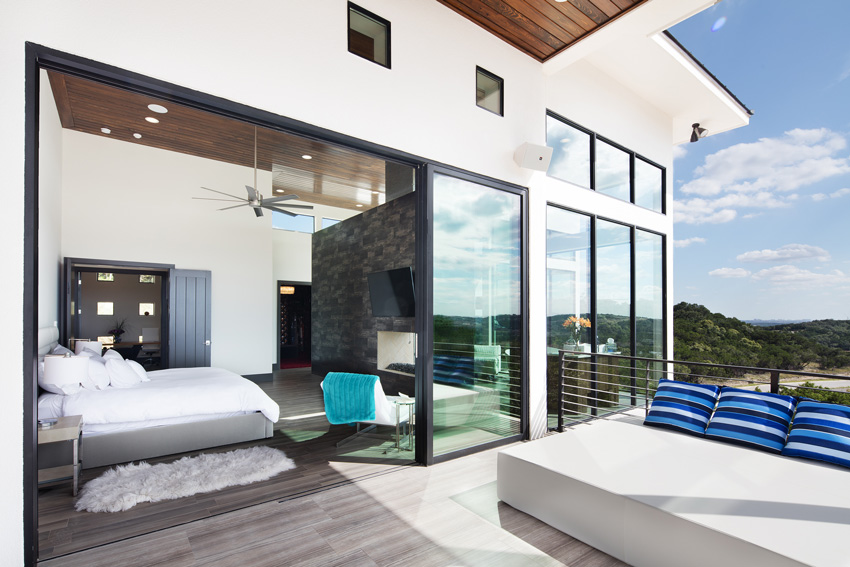
Photo: © Kevin G. Saunders Photography
Londrie Residence
Architect: Oscar Flores Design Studio
Understanding energy ratings and performance testing is vital, as more stringent energy codes have been adopted nationwide. Multi-slide doors, specified correctly, offer increased thermal efficiency for year-round comfort.
NFRC testing also looks at other overall performance characteristics, including the solar heat gain coefficient (SHGC), which measures how much solar energy passes through a particular glazing (versus being reflected away), creating heat gains inside a building. This performance factor is usually adjusted through coatings applied to the glass to allow more light (and resulting solar heat) where it may be desired in cold climates or less where it is not wanted in hot climates. NFRC testing also responds to green building standards by assigning a value to the visible light transmittance (VT) that comes through a tested product. This VT determines the effective light available for daylighting so finding the right balance between how much light and resulting solar heat is transmitted versus how much to exclude needs to be assessed on a project-by-project basis.
At the end of all of this testing, a comprehensive view of thermal performance of tested products is determined, providing a more accurate, credible, and uniform energy rating for fenestration products. The test results are documented through the NFRC Product Certification Program (NFRC 700, PCP), which sets forth the specific requirements for rating, certification, and labeling of a manufactured fenestration product. Manufacturers who participate in the NFRC Certification Program have their products listed in the NFRC Certified Products Directory that contains thousands of certified products and is available at www.nfrc.org. In addition, each tested unit is then shipped with a standard label that identifies the key elements of performance, much the way mileage rating stickers are applied to cars or nutrition labels are applied to food.
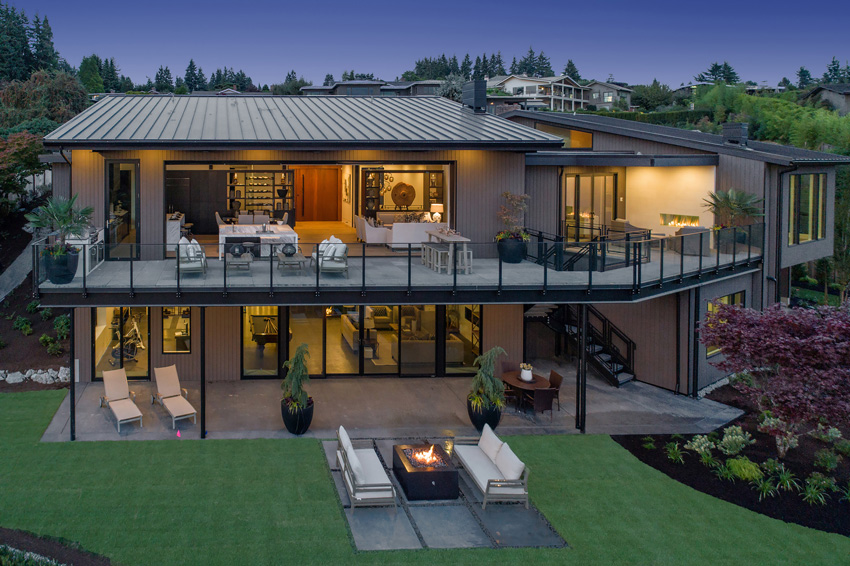
Photo by LaCantina Doors
Clyde Hill Modern
Architect: Dean Homes
Balancing thermal performance, solar heat gain, natural daylighting, and energy efficiency plays into the selection and placement of doors and windows in a project.
The ultimate balancing activity in any design is how much fenestration to use as a percentage of the overall wall area of a building. The energy codes tend to use 40 percent as the benchmark. In some cases, all of this glazing can be concentrated on one or two facades as appropriate to a location. Building designs that use multi-slide glass doors with more than 40 percent window-to-wall ratios are possible, but offsetting measures elsewhere in the building envelope are required. The rationale for this benchmark seems to rely on the fact that a well-insulated wall will inherently perform better thermally than any type of fenestration. Nonetheless, they also recognize that only fenestration allows the natural daylight and potentially beneficial solar heat gain into buildings. Simple energy modeling of different scenarios during the earliest stages of design will help to determine the most appropriate balance of opaque wall to fenestration. This is particularly important when different facade orientations—north, south, east, or west—are taken into account since the best-performing buildings usually do not treat all facades equally. The talent, experience, and skill of the architect used in finding this appropriate balance will determine not only design quality and code compliance, but also in a very real way help determine the overall energy performance and utility costs experienced by the owner and users of the building.
Defining Green Building Contributions of Multi-Slide Glass Doors
The green building movement has created quantifiable rating systems that seek to establish specific levels of achievement in the creation and performance of green buildings.
Leading multi-slide door manufacturers may support green design and have membership to the USGBC. Green products today reach beyond simply utilizing energy-efficient NFRC-rated glass to also encompassing practices such as using recycled packaging and materials to offering LEED certification.
Multi-slide doors help a space capture natural daylighting. Allowing for more glass and light, large door systems can create a good passive heat source and minimize use of electricity for daytime lighting. They also expose occupants to the benefits of sunlight, as opposed to artificial lighting.
Multi-slide doors also engineer maximum use from a space. Their innovative design connects both indoors and out, maximizing any space and defines a true outdoor living experience.
A critical aspect of green and sustainable design involves ensuring indoor air quality for healthy living environments. Multi-slide door systems open up areas typically blocked by walls and aid in whole-house air circulation, bringing clean and fresh air into any structure. Fresh-air ventilation plays a powerful role in maintaining indoor environments.
The best known of these green building rating systems is USGBC’s LEED rating system. The contributions that multi-slide doors can make are generally described within the common green building categories as follows.
Optimize Energy Performance
As part of an overall building envelope design, multi-slide doors can have a big impact on the energy performance due to their contribution to desirable passive solar heat gain when the building is designed to take advantage of it. By incorporating passive solar strategies such as overhangs and building orientation, solar gain can be used to an advantage in the heating season and reduced in the cooling season. The result is reduced use of purchased fossil fuel energy. In commercial buildings where daylighting is desired, then multi-slide doors can be used to provide an abundance of natural light into the space. With proper controls and lighting arrangements, this can reduce not only the amount of artificial lighting needed but also reduce the associated cooling load imposed from heat given off by electric lighting. The net result is a reduction in electrical energy use. The actual optimized energy performance can best be determined by using energy modeling and adjusting the size and configuration of multi-slide doors accordingly.
Materials and Resources
In some cases multi-slide doors are available with recycled content positively impacting a life cycle assessment of the product. During the construction process, the prefabricated, custom nature of the product limits or reduces scrap and construction site waste. During their use in the building, their ability to close and seal tightly will reduce air infiltration and heat transfer. At the end of their service life, the door panels can be salvaged and reused in other buildings. Manufactured in the United States means regional material contribution is possible and the impact of transportation is lessened.
Indoor Environmental Quality
Large-format multi-slide doors provide the notable and desirable addition of daylight and views that contribute directly to indoor environmental quality. In the open position, they also provide ample natural ventilation and exchange of fresh air into the building. Finally, since little or no paints, coatings, adhesives, or harmful sealants are needed in the product, they do not contribute to VOC content in the indoor air.
Innovation in Design
With green design, size matters. Building size is a significant contributing factor to resource efficiency and in the end will affect energy use too. The move to smaller and more efficiently planned spaces makes flexibility, functionality, and expansion capabilities all the more important. Multi-slide glass doors provide a variable connection to the outdoors, allowing for living spaces to be smaller while still feeling large.

Photo: Steve Hall, © Hedrich Blessing
New Buffalo Modern Lake House
Architect: Booth Hansen
Multi-slide doors are a preferred choice for turning open spaces and indoor/outdoor transitions into design focal points.
Welcoming the Outdoors In
Multi-slide glass doors offer architects the ability to create flexible spaces that are able to seamlessly connect the outdoors with interior spaces, providing benefits like daylighting and natural ventilation and capitalizing on available views. Selecting glass door panels with thermally broken frames, low U-factor glazing, and complete edge-seal systems can help the building exploit passive solar energy while controlling unwanted heat loss.
Multi-slide doors that capture the aesthetic of clean lines and large, open expanses of glazing are a part of the overall design of an elegant and quality building. Because of their flexibility, range of options, and custom fabrication, multi-slide glass doors can be used in different building types, from single-family detached residential units to commercial spaces, hospitality, and education facilities. Understanding specifications and available options and working with manufacturers early on in the design process can help to create buildings that are vibrant, sustainable, and durable over the long term.
Amanda Voss, MPP, is an author, editor, and policy analyst. Writing for multiple publications, she also serves as the managing editor for Energy Design Update.