This CE Center article is no longer eligible for receiving credits.
Room acoustics, privacy, and patient safety are vital to ensuring that patients are able to get the rest they need to heal. Noise-reduction and safety-protection products can improve the health, safety, and welfare of patients as well as hospital staff. They also provide patients with the comfort needed to rest and heal.
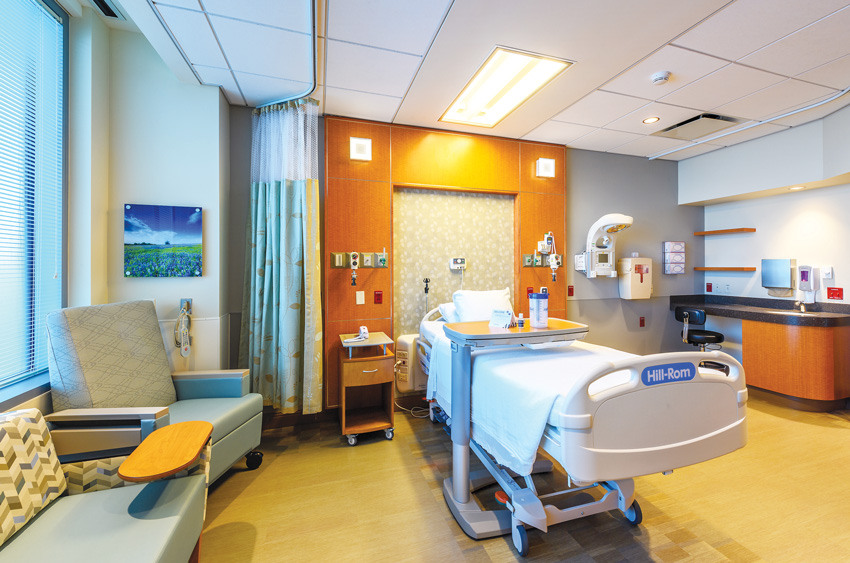
Photo: © Geoffrey Lyon, supplied by CertainTeed Ceilings; Architect: Page; Location: Houston Methodist West Hospital
This hospital room features products specified to improve the patient experience and promote health, safety, and welfare.
Walls, doors, and ceilings are part of every hospital. By selecting superior products, each of these building components has the potential to improve the patient experience and also provide a better working environment for the hospital staff. Inside the building, other products can be added to walls, doors, ceilings, floors, and spaces throughout the hospital to improve patient comfort and safety. These products include cubicle curtains and tracks, both of which provide safety and comfort for occupants, as well as ligature-resistant and bariatric handrails that offer safety to specific groups of patients.
Walls and Wall-Protection Products
Walls make up one of the largest elements of an interior. In addition to creating spaces within the interior, walls also can help reduce the transmission of sound and provide aesthetically pleasing spaces through the use of bright colors or graphics. However, if walls are damaged or dingy, they can create negative impressions or even anxiety for patients who come to the facility to heal. Specifying quality wall materials and wall protection can not only protect the walls but also create a more positive environment for patients.
Wall panels made from long-lasting materials that quickly lock into place allow for easy installation. These panels can be installed by one person in almost half the time when compared to traditional z-clip systems. Because they are easily installed, they can also be easily removed for repairs. Panels that snap into place can be butted up to each other and installed almost flush with the ceiling.
To further increase the durability and life of walls, wall protection can be added to walls and is recommended especially for high-traffic areas. Wall protection often comes in the form of rigid plastic sheets and is available in a range of colors and patterns. While rigid plastic is extra durable, there are other alternatives available for those in search of a different aesthetic. A new class of flexible wall-protection materials is now available and has changed the look of wall coverings without sacrificing quality and function. These new materials incorporate intentional textures and are as durable as rigid plastic. They can also fend off stains and marks and be installed seamlessly, providing a professional appearance.
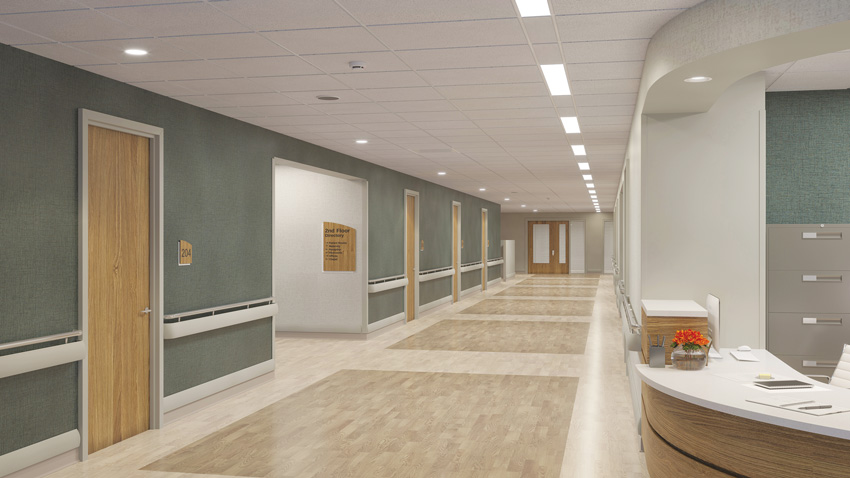
Photo courtesy of Inpro
Durable wall products installed in hospital settings reduce the damage caused by carts, wheelchairs, and beds.
Doors
Doors are another interior element prevalent in hospitals. While doors are common in most buildings, not all doors are the same quality or designed to handle the level of use that hospital doors can see. In high-traffic areas, such as between waiting rooms and treatment rooms, doors are constantly being opened and closed as well as bumped by machinery, carts, and possibly wheelchairs or gurneys. Doors can also separate public spaces such as hallways from sterile spaces like clean rooms, labs, and operating rooms. When specifying doors, it is important to understand the various types of doors as well as the amount of use the door is likely to receive in a specific area.
In high-traffic areas, it is important to select
durable materials that can be quickly and efficiently
repaired and easily cleaned. Doors made
from materials resistant to germs and bacteria
are ideal in health-care facilities where germ
transmission is likely and occupants are already
compromised. Durable door and doorway materials
can reduce wear and tear and also provide
environmental benefits and cost savings.
In health-care environments, interior
elements have to fulfill many functions, and
multiple goals must be balanced. Kristin Ledit,
IIDA, senior vice president and director of
interiors at FKP Architects, explains the factors
that drove the selection of interior doors
for the Nemours/Alfred I. duPont Hospital for
Children in Wilmington, Delaware.
“All products were chosen to equally meet aesthetic, durability, and functionality requirements,” she says. “This is often the most challenging aspect of product selection. The doors were selected for their durability, compatibility with integral blind solutions, and overall palette coordination. Doors were strategically specified at all areas where impact resistance was the most critical element of the patient and staff journey.”
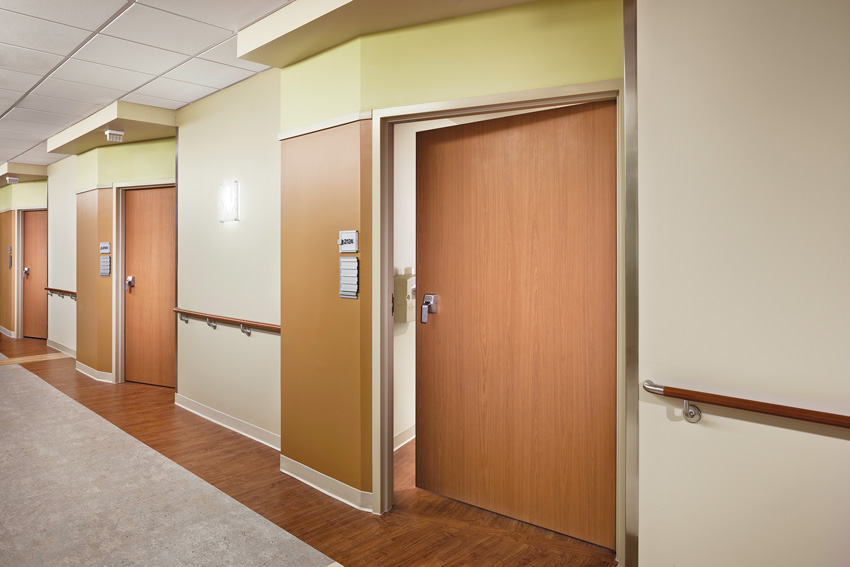
Photo courtesy of Construction Specialties
Durable door materials reduce the risk of unsightly damage and costly repairs.
Ceilings
Ceilings are a necessary part of construction that also provide protection to occupants and can affect air quality. Design elements that go into ceilings can add extra protection and also reduce noise.
Many buildings, including health-care facilities, are not acoustically optimized for their intended purpose. A wall-to-wall ceiling is most often the most efficient solution, but in some cases, this is not achievable. There are three product families that can support aesthetic design, technical challenges, and construction-based limitations all while achieving improved sound environments. These include free-hanging clouds and baffles, direct-to-deck panels, and wall panels.
Cubicle Curtains and Tracks
Cubicle curtains can divide large spaces into smaller enclosures in areas where multiple patients are being treated. The curtains provide a private enclosure for patients.
Cubicle curtain design has evolved in recent years. The opening and closing of older cubicle curtain products creates noise that can disturb patients trying to rest. Innovations such as bendable cubicle tracks and smooth-glide designs allow for quiet movement of carriers along the track. This can lower the decibel level when compared to traditional track products.
Newer designs made from easily laundered materials also help reduce the occurrence of health-care-associated infections (HAIs) by providing separations between patients. Frequent cleaning and laundering can prevent the spread of germs and bacteria.
Ligature-Resistant Brackets and Bariatric Handrails
In-patient suicides and self-harm are serious issues in health-care facilities that focus on behavioral health. Hanging is the most common method of suicide and requires the use of a ligature, which is an item used to bind one thing to something else. Ligature-resistant products are commonly used in both behavioral health-care facilities and facilities accessed by the general public. Ligature-resistant products help prevent self-inflicted harm by preventing patients from binding themselves to a structure (for example, for the purpose of hanging themselves) or hurting themselves on sharp corners or edges.
Patient falls are one of the most common dangers in health-care environments. Handrails can reduce the risk of falling by providing support and helping patients maintain balance; however, these handrails must at times accommodate patients who are obese, also referred to as bariatric patients. Products such as bariatric brackets can reinforce handrails to accommodate more weight, providing increased safety for patients and occupants.
Noise Reduction
Noise is inevitable in busy places like hospitals and health-care facilities. In addition to being a nuisance, noise causes fractured sleep and slower healing for patients while also causing stress and distractions for health-care personnel. For patients, good acoustic environments can lower blood pressure, improve quality of sleep, and reduce the intake of pain medication. Healthy acoustic levels also lower stress and improve communication, which is vital when a doctor is relaying health information to a patient. They also improve patient safety while enhancing staff well-being, which leads to better job performance and higher job satisfaction.
With all of the technological advancements in 21st century hospitals and machinery, combined with the considerable foot traffic from doctors, medical practitioners, patients, and visitors, there is significant potential for harmful noise that not only prevents patients from resting but also can cause hospital staff fatigue. Hospital staff fatigue can lead to burnout and even mistakes.
There are many manmade and machine noises in hospitals, such as device alarms, overhead paging and intercom systems, and even conversations between hospital staff in the corridors. While all these things that create noise are vital to hospital operations and patient care, the noise can prove to be harmful to patients and hospital staff.
Noise can be mitigated and reduced through design. High-quality products and materials that go into the construction of floors, walls, curtains, and doors can significantly reduce sounds, thus improving health, safety, and welfare of both patients and staff.
Sound-absorbing products not only benefit patients who need quiet spaces to sleep, but they also allow doctors and patients to communicate without excess background noise. A quieter environment makes it easier for health-care professionals to think clearly while making life-or-death decisions.
Room acoustics, privacy, and patient safety are vital to ensuring that patients are able to get the rest they need to heal. Noise-reduction and safety-protection products can improve the health, safety, and welfare of patients as well as hospital staff. They also provide patients with the comfort needed to rest and heal.
Photo: © Geoffrey Lyon, supplied by CertainTeed Ceilings; Architect: Page; Location: Houston Methodist West Hospital
This hospital room features products specified to improve the patient experience and promote health, safety, and welfare.
Walls, doors, and ceilings are part of every hospital. By selecting superior products, each of these building components has the potential to improve the patient experience and also provide a better working environment for the hospital staff. Inside the building, other products can be added to walls, doors, ceilings, floors, and spaces throughout the hospital to improve patient comfort and safety. These products include cubicle curtains and tracks, both of which provide safety and comfort for occupants, as well as ligature-resistant and bariatric handrails that offer safety to specific groups of patients.
Walls and Wall-Protection Products
Walls make up one of the largest elements of an interior. In addition to creating spaces within the interior, walls also can help reduce the transmission of sound and provide aesthetically pleasing spaces through the use of bright colors or graphics. However, if walls are damaged or dingy, they can create negative impressions or even anxiety for patients who come to the facility to heal. Specifying quality wall materials and wall protection can not only protect the walls but also create a more positive environment for patients.
Wall panels made from long-lasting materials that quickly lock into place allow for easy installation. These panels can be installed by one person in almost half the time when compared to traditional z-clip systems. Because they are easily installed, they can also be easily removed for repairs. Panels that snap into place can be butted up to each other and installed almost flush with the ceiling.
To further increase the durability and life of walls, wall protection can be added to walls and is recommended especially for high-traffic areas. Wall protection often comes in the form of rigid plastic sheets and is available in a range of colors and patterns. While rigid plastic is extra durable, there are other alternatives available for those in search of a different aesthetic. A new class of flexible wall-protection materials is now available and has changed the look of wall coverings without sacrificing quality and function. These new materials incorporate intentional textures and are as durable as rigid plastic. They can also fend off stains and marks and be installed seamlessly, providing a professional appearance.
Photo courtesy of Inpro
Durable wall products installed in hospital settings reduce the damage caused by carts, wheelchairs, and beds.
Doors
Doors are another interior element prevalent in hospitals. While doors are common in most buildings, not all doors are the same quality or designed to handle the level of use that hospital doors can see. In high-traffic areas, such as between waiting rooms and treatment rooms, doors are constantly being opened and closed as well as bumped by machinery, carts, and possibly wheelchairs or gurneys. Doors can also separate public spaces such as hallways from sterile spaces like clean rooms, labs, and operating rooms. When specifying doors, it is important to understand the various types of doors as well as the amount of use the door is likely to receive in a specific area.
In high-traffic areas, it is important to select
durable materials that can be quickly and efficiently
repaired and easily cleaned. Doors made
from materials resistant to germs and bacteria
are ideal in health-care facilities where germ
transmission is likely and occupants are already
compromised. Durable door and doorway materials
can reduce wear and tear and also provide
environmental benefits and cost savings.
In health-care environments, interior
elements have to fulfill many functions, and
multiple goals must be balanced. Kristin Ledit,
IIDA, senior vice president and director of
interiors at FKP Architects, explains the factors
that drove the selection of interior doors
for the Nemours/Alfred I. duPont Hospital for
Children in Wilmington, Delaware.
“All products were chosen to equally meet aesthetic, durability, and functionality requirements,” she says. “This is often the most challenging aspect of product selection. The doors were selected for their durability, compatibility with integral blind solutions, and overall palette coordination. Doors were strategically specified at all areas where impact resistance was the most critical element of the patient and staff journey.”
Photo courtesy of Construction Specialties
Durable door materials reduce the risk of unsightly damage and costly repairs.
Ceilings
Ceilings are a necessary part of construction that also provide protection to occupants and can affect air quality. Design elements that go into ceilings can add extra protection and also reduce noise.
Many buildings, including health-care facilities, are not acoustically optimized for their intended purpose. A wall-to-wall ceiling is most often the most efficient solution, but in some cases, this is not achievable. There are three product families that can support aesthetic design, technical challenges, and construction-based limitations all while achieving improved sound environments. These include free-hanging clouds and baffles, direct-to-deck panels, and wall panels.
Cubicle Curtains and Tracks
Cubicle curtains can divide large spaces into smaller enclosures in areas where multiple patients are being treated. The curtains provide a private enclosure for patients.
Cubicle curtain design has evolved in recent years. The opening and closing of older cubicle curtain products creates noise that can disturb patients trying to rest. Innovations such as bendable cubicle tracks and smooth-glide designs allow for quiet movement of carriers along the track. This can lower the decibel level when compared to traditional track products.
Newer designs made from easily laundered materials also help reduce the occurrence of health-care-associated infections (HAIs) by providing separations between patients. Frequent cleaning and laundering can prevent the spread of germs and bacteria.
Ligature-Resistant Brackets and Bariatric Handrails
In-patient suicides and self-harm are serious issues in health-care facilities that focus on behavioral health. Hanging is the most common method of suicide and requires the use of a ligature, which is an item used to bind one thing to something else. Ligature-resistant products are commonly used in both behavioral health-care facilities and facilities accessed by the general public. Ligature-resistant products help prevent self-inflicted harm by preventing patients from binding themselves to a structure (for example, for the purpose of hanging themselves) or hurting themselves on sharp corners or edges.
Patient falls are one of the most common dangers in health-care environments. Handrails can reduce the risk of falling by providing support and helping patients maintain balance; however, these handrails must at times accommodate patients who are obese, also referred to as bariatric patients. Products such as bariatric brackets can reinforce handrails to accommodate more weight, providing increased safety for patients and occupants.
Noise Reduction
Noise is inevitable in busy places like hospitals and health-care facilities. In addition to being a nuisance, noise causes fractured sleep and slower healing for patients while also causing stress and distractions for health-care personnel. For patients, good acoustic environments can lower blood pressure, improve quality of sleep, and reduce the intake of pain medication. Healthy acoustic levels also lower stress and improve communication, which is vital when a doctor is relaying health information to a patient. They also improve patient safety while enhancing staff well-being, which leads to better job performance and higher job satisfaction.
With all of the technological advancements in 21st century hospitals and machinery, combined with the considerable foot traffic from doctors, medical practitioners, patients, and visitors, there is significant potential for harmful noise that not only prevents patients from resting but also can cause hospital staff fatigue. Hospital staff fatigue can lead to burnout and even mistakes.
There are many manmade and machine noises in hospitals, such as device alarms, overhead paging and intercom systems, and even conversations between hospital staff in the corridors. While all these things that create noise are vital to hospital operations and patient care, the noise can prove to be harmful to patients and hospital staff.
Noise can be mitigated and reduced through design. High-quality products and materials that go into the construction of floors, walls, curtains, and doors can significantly reduce sounds, thus improving health, safety, and welfare of both patients and staff.
Sound-absorbing products not only benefit patients who need quiet spaces to sleep, but they also allow doctors and patients to communicate without excess background noise. A quieter environment makes it easier for health-care professionals to think clearly while making life-or-death decisions.
Acoustics in Hospital Spaces
Acoustics should be considered in multiple areas of health-care facilities, including patient rooms, waiting areas, corridors, neonatal intensive care unit (NICUs), and lobbies or atriums. With so many people, machines, phones, and other products including gurneys, wheelchairs, and carts being moved around, the potential for noise is everywhere.
Waiting areas are often full of people, from patients waiting to be seen to loved ones waiting to hear news about a patient. For those who are spending time in a waiting area, the reason for their visit is likely stressful; therefore, sound absorption achieved through a combination of ceiling and wall products is vital for creating a calming atmosphere for patients and families in potentially stressful situations.
Corridors are a main thoroughfare for patients, hospital staff, and visitors. High acoustic performance including both sound absorption and sound blocking is important to keep extraneous noise confined to the corridor.
Sound absorption is required in the NICUs to counteract the high concentration of medical equipment in order to protect the health of tiny patients.
Large open spaces, such as lobbies and atriums, require special attention in order to reduce reverberation. As with most high-profile health-care spaces, design impact and indoor air quality are key.
Mechanical Systems and Interior Finishes
There are many design elements that can be used to dampen sound and reduce noise from mechanical systems and interior finishes in health-care facilities.
Mechanical systems in buildings can transmit noise through the building structure and ducting. Strategies to reduce this noise include centrifugal airfoil, plenum, and mixed-flow fans to reduce ventilation noise. Larger ducts also can be installed to reduce friction rates. Discharge rates for variable air volume (VAV) terminal boxes should be addressed in the design.
Vibration-isolation products can be used to reduce the transmission of noise and vibration from mechanical equipment. In hospital settings, no special treatment is required when using vibration isolation products; however, performance requirements should be reviewed. Since flexible fiber ducting is usually prohibited in hospitals, films and metal no-fill silencers can be an effective tools in reducing duct noise.
Interior finishes also can reduce noise in patient spaces and corridors. For example, ceiling tiles made from glass fiber can be very effective at absorbing sound. Ceiling plenum equipment also can be a source of noise. This noise can be reduced by specifying and using mineral fiber ceiling panels that are designed to absorb sounds.
Ceilings
As discussed earlier, there are three product families that can improve sound performance; these can either enhance wall-to-wall ceilings or mitigate for those situations where wall-to-wall ceilings are not possible. These product families include free-hanging clouds and baffles, direct-to-deck panels, and wall panels.
Clouds. Clouds can be used with wall-to-wall ceilings to boost noise control in areas where many people are speaking at the same time, such as a hospital contact center, reception area, lobby, or dining area in a health-care facility. Adding lowered clouds directly above tables or desks dramatically reduces the overall noise level and sound propagation. Clouds of any shape and color can be installed in layers, on angles, and at any desired depth to create a range of effects, from minimalist acoustic control to dramatic sculptural installations. Available in multiple shapes, sizes, and colors, the premium painted surfaces available on high-quality clouds (on both sides and all edges) can present a finished look from every angle.
Baffles. Baffles are distinct from clouds in that they are installed vertically. In spaces with standard proportions and average ceiling heights, baffles can create a uniquely modern linear visual, providing excellent sound absorption with a relatively shallow system depth. In large atriums and clerestory spaces such as lobbies, suspended baffles are an even better option than clouds, as they visually maintain the magnitude of the space without disrupting sight lines to the top of the building. Baffles come in multiple sizes and colors. As with clouds, the painted surfaces present a finished look from every angle.
Direct-to-deck panels. With the popularity of adaptive reuse projects in urban areas across the country, it is not surprising that roughly 40 percent of ceilings are destined for remodeling projects. Remodels, renovations, and adaptive reuse projects, including urgent-care facilities and hospitals being built in urban areas, can be especially challenging. When applied to the entire ceiling, direct-to-deck panels can simulate a monolithic drywall finish while providing excellent sound absorption. Applied in fields or as individual panels, they can also be used for acoustic remediation in existing spaces. Direct-to-deck panels are available in multiple colors and edge details.
Wall panels. Wall panels and wall protections are particularly helpful in reducing echoes and improving speech intelligibility in spaces with high ceilings and/or highly reflective walls. They are available in many colors, shapes, and sizes, thus allowing for creative patterns. High-density fiberglass wall panels and insulation can contribute to superior sound absorption, thus providing quieter spaces for patients and health-care staff.
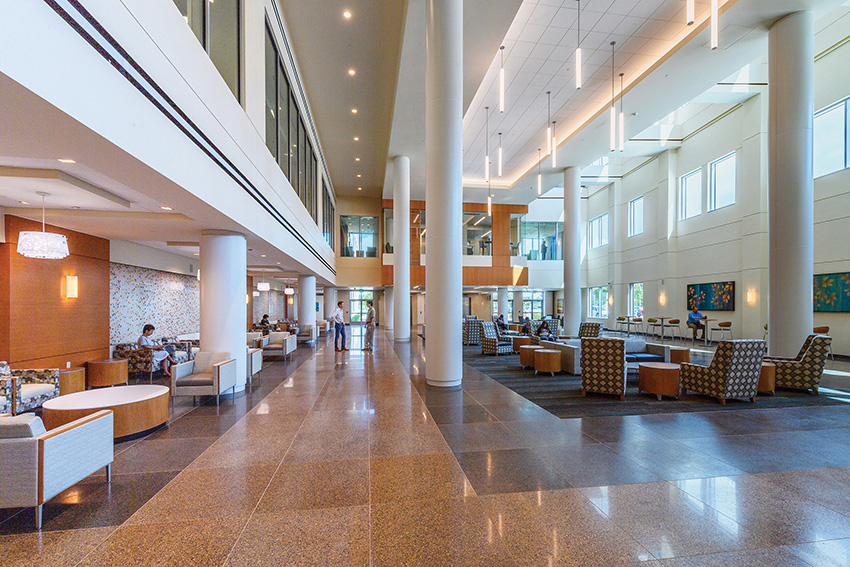
Photo: © Geoffrey Lyon, supplied by CertainTeed Ceilings; Architect: Page; Location: Houston Methodist West Hospital
Houston Methodist Hospital’s atrium features a high-density fiberglass ceiling to help with sound absorption while creating a high-end aesthetic.
Floors
With foot traffic, the transportation of patients via wheelchairs and beds, and the movement of heavy carts and machinery down corridors, standard floors have the potential to transmit considerable noise. By specifying floor materials that absorb sound, such as rubber, carpet, or materials containing gypsum, footfalls and carts create less noise when traveling in and out of patient rooms and along the corridors. Sound reduction from footfalls and items being moved from place to place not only have the potential to affect those on the same floor as the movement but also on floors below. Gypsum materials installed in the floor materials as well as the ceiling materials can reduce the transmission of sound both at the source (from the footfall and carts) and at the point where they could enter the room below (the ceiling).
Another way to mitigate sound transmission is by providing a tight seal between floors and walls. Unsealed gaps at these junctions can cause noise leaks. By considering these design elements early in the process, the potential for these types of noise leaks can be mitigated during construction.
Walls Panels and Protections
Wall panels and wall protection are particularly helpful in reducing echoes and improving speech intelligibility in spaces with high ceilings and/or highly reflective walls. They are available in many colors, shapes, and sizes, allowing for creative patterns. High-density fiberglass wall panels and insulation can contribute to superior sound absorption and so provide quieter spaces for patients and health-care staff.
Doors
Doors that provide sound-transmission control can alleviate unwanted noise by reducing the sound energy that is passed between door openings. Doors that provide this level of sound control can be made from solid materials that are 13⁄4 inch thick, then sealed with additional gaskets to prevent moisture intrusion as well as dampen sound. Reinforced edges help reduce damage by impact. If these stainless edges are ever damaged, they can be replaced.
Privacy Curtains
Privacy curtains provide patient privacy and allow doctors and nurses to cordon off sections of a room as needed. Some cubicle curtains are also specifically designed to reduce noise that occurs during curtain movement. These types of products are ideal for recovery rooms, birthing centers, and critical-care areas. Heavy-duty extruded white PVC vinyl tracks offer quieter operation while providing more peaceful environments for patients.
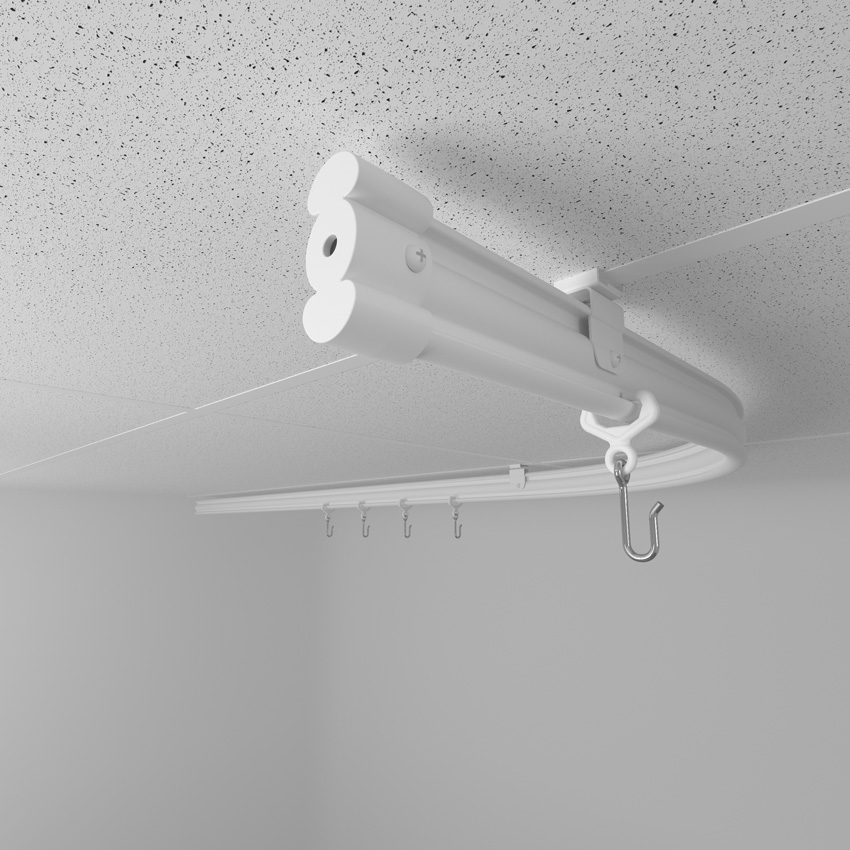
Photo courtesy of Inpro
This curtain track is bendable and designed to be quieter than typical cubicle curtains and tracks.
Designs That Enhance Durability, Safety, and Healing
Design elements are not just for aesthetics and noise reduction; they can also enhance the health, safety, and welfare of occupants. Health-care facilities are busy places, filled with machines, carts, and people day after day. Many people who visit health-care facilities are ill or accompanying someone who is ill, which can cause anxiety and stress. A good design will contribute to health, safety, and welfare by helping provide a calming environment for patients and loved ones and also preventing HAIs. Design elements using high-quality materials offer damage protection and fire protection and can promote patient safety for specific populations.
Providing a Positive, Comforting Environment for Healing
Large walls in a facility provide a blank canvas for aesthetically pleasing images and colors. According to Robert Niemenen, in an article published by interiors+sources, art work on the walls of health-care facilities can provide a positive impact on patients entering a facility for treatment.1
Wall protection and panels can also be canvases for motivational art work or statements, or colors and images designed to allow patients to feel they are in a calm, soothing place, such as out in nature viewing a snowcapped mountain or walking through a field of flowers. Cheerful or calming colors and images can help reduce stress for both patients and their loved ones. Stress and anxiety induced by health situations coupled with a fear of the sterile, uninviting setting of a hospital facility can make treatment more difficult or create a barrier for those seeking help. Calming or inspiring images can be customized to reflect natural scenes from a certain geographical area or fit areas that cater to certain demographics. For example, the walls of a pediatrics center could include art that is more children focused. At Cooks Children’s Medical Center in Fort Worth, Texas, for example, each area has a theme and accompanying art work. Two elevator cabs were renovated and incorporate the custom “flying hat” theme designed by Andy Keller, extending the theme from the adjacent area. The brightly colored hats against a blue sky dotted by white clouds help lift the spirits of children and parents who have to come to the facility for doctor’s visits or treatments.
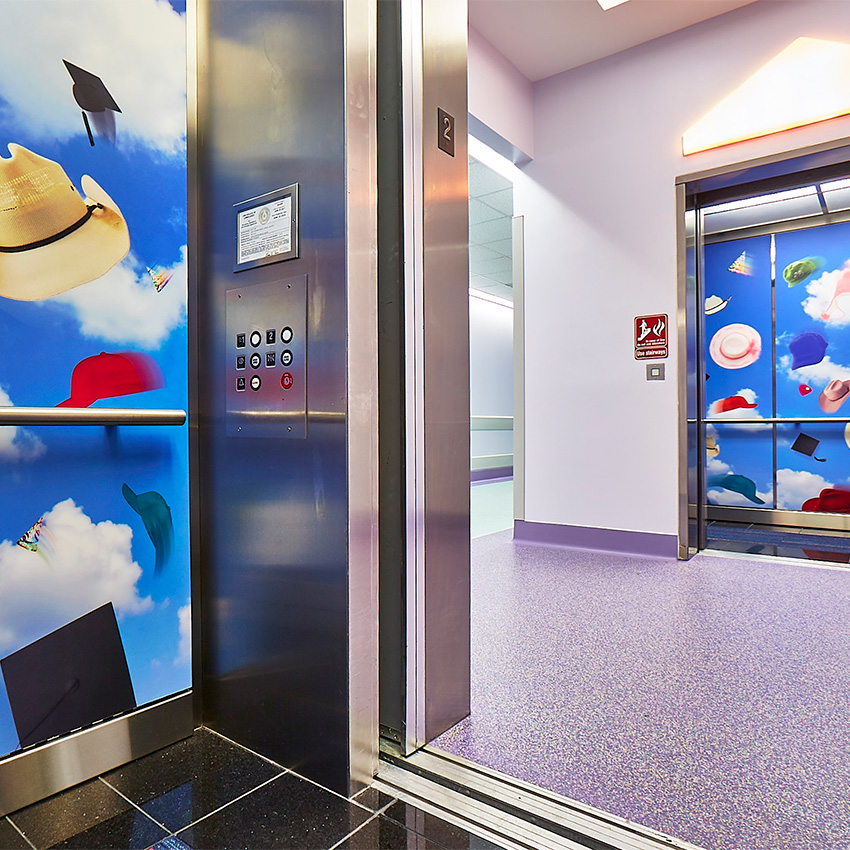
Photo courtesy of Inpro
Colorful, aesthetically pleasing wall-protection materials provide protection as well as decoration.
Providing an aesthetically pleasing space is most important in areas like atriums and waiting areas, which are often the first places patients see when they enter a health-care facility. By providing a warm and inviting space full of colors and lights, patients and their loved ones will feel more at ease, making it easier for hospital staff to meet their needs.
Reducing the Risk of HAIs
While patients go to hospitals to get well, the risk of HAIs is a real concern and can be very dangerous. According to the CDC, on any given day, approximately one in every 25 patients has at least one HAI.2
Doors and Cubicle Curtains
Germs can be spread in many ways in health-care facilities. These buildings have high occupancy rates from patients, staff, and visitors. As people pass through the facility, they often touch doors, door handles, and walls. By specifying doors that are easy to clean, health-care staff can help prevent the spread of germs and bacteria. Quality products with bacterial and fungal-resistant properties also contribute to patient health and safety. Doors can be tested using standards ASTM G22 (1996) and ASTM T21 (2013). ASTM G22 is a test method for determining the resistance of plastics to bacteria. It is designed to test the resistance of synthetic polymeric materials, such as molded materials or surface-treated articles, to bacterial attack.
Cubicle curtains and tracks not only provide sound reduction and noise control for patients but also allow for patient privacy to help uphold Health Insurance Portability and Accountability Act (HIPAA) laws. They also have the potential to reduce HAIs. Cubicle curtains and tracks with hinged loading systems and panels that easily snap into place can assist with laundering and inventory maintenance. This is not only beneficial to patients but also to nurses who have to regularly remove curtains for cleaning. Systems with curtains that snap into place allow for easy removal and can cut changeover time by 60 to 80 percent when compared to a standard carrier-and-hook style system. Frequently laundering curtains can reduce the chance of HAIs in a hospital.
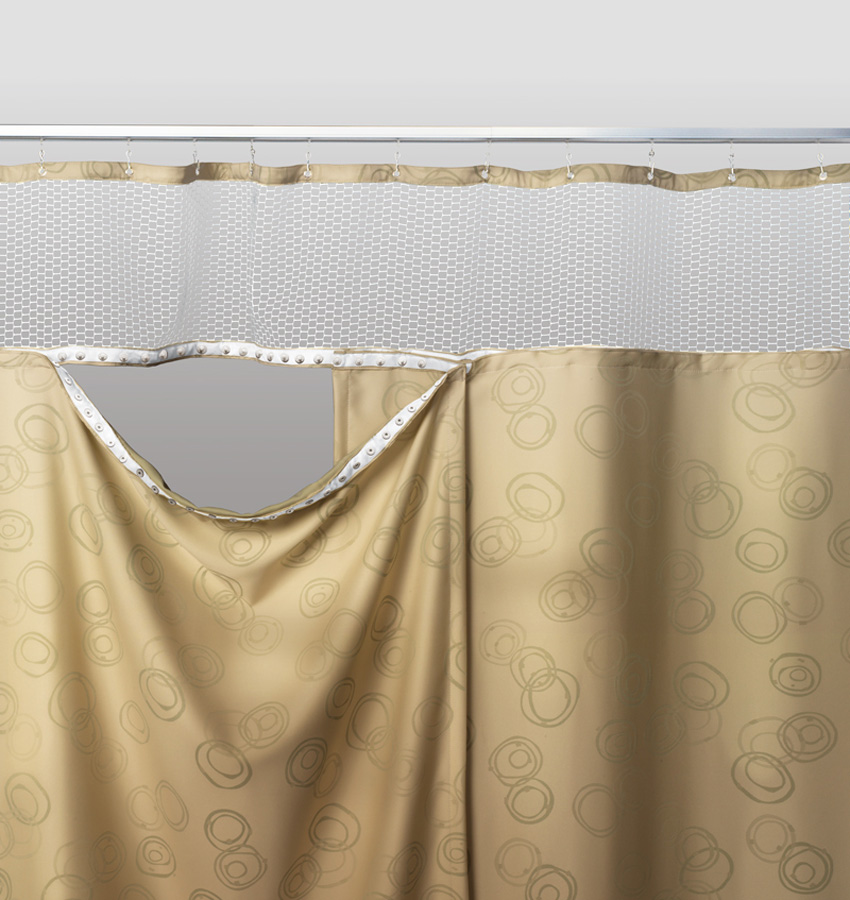
Photo courtesy of Construction Specialties
Easy-to-remove cubicle curtains allow for more frequent laundering and also reduce strain on health-care professionals who have to regularly replace them.
Walls and Wall Protection
Walls and wall-protection materials can be designed to fend off stains, marks, and vandalism. By specifying materials that are easy to clean, hospital staff can wipe down surfaces using standard cleaning agents and reduce the transmission of germs and bacteria. Wall-protection products can be tested using ASTM D-1308 to check for chemical and stain resistance. Products that meet or exceed this standard offer superior stain resistance and can stand up to harsh cleaning agents. Wall protection materials can also be tested using ASTM D-4060-07, which tests products for abrasion resistance, and ASTM G-22-76/G21-96, which tests resistance to fungal growth. Walls and wall-protection products can be tested and certified to the Wallcoverings Association Sustainability Standard (NSF/ANSI 342).
Ceilings
When most of us think of cleaning, we tend to focus on floors, table surfaces, and perhaps even walls because they are in our direct line of sight. For patients in health-care facilities who spend a lot of time lying in bed, especially when being transported, the ceiling is often in their direct line of sight. A dirty or stained ceiling is not only unhygienic, but it also can contribute to a patient’s perception of the sanitation of the facility and the environment. Dirt or stains on the ceiling may cause anxiety for patients who are trying to recover. Ceiling panels that are highly cleanable and consist of stain- and water-resistant surfaces are ideal for patient rooms as well as labs, cleanrooms, and NICUs where cleanliness is of utmost importance. In addition to being hygienic and reducing the potential for HAIs, clean ceilings may reduce stress for patients. Specifying ceiling materials and finishes, such as those that are easy to clean and resistant to moisture intrusion and mold, can help prevent HAIs and improve patient comfort and welfare, as well.
Damage Protection
In high-traffic areas that see heavy use, the walls and corners of corridors and lobbies and doors that lead to various spaces in facilities have the potential to be damaged due to foot traffic, transport of patients, and cart activity.
One way to mitigate damage to walls is to use materials that protect them from the start. Using sturdy wall protections to cover surfaces like drywall can reduce drywall breakage, decreasing the amount of dust and debris in a facility, and positively affect patient safety and wellness. Flexible wall protection can be applied in large sheets and encapsulate any dust and debris caused by cracked drywall underneath the protection. These come in various textures and colors and also can reduce the visibility of unsightly scuffs and marks.
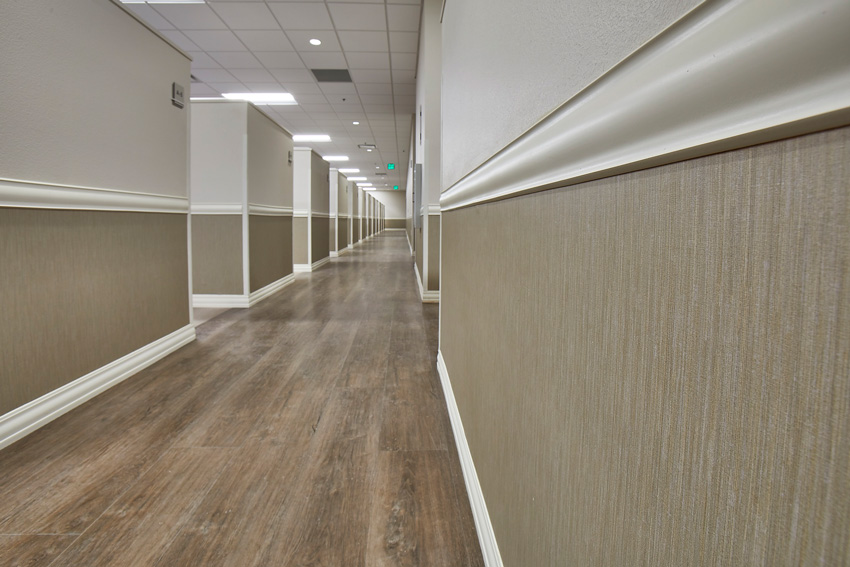
Image courtesy of Inpro
Shown is an installation of flexible wall protection at the new St. Vincent de Paul Family Resource Center in Phoenix.
Crash Rails and Corner Guards
Crash rails and corner guards are available in various materials, colors, and styles to help protect walls from damage. Depending on the material type, crash rails and corner guards have excellent shock-absorbing qualities and can save not only the physical integrity of walls and corners but also the aesthetic design seen by all who pass through the common areas.
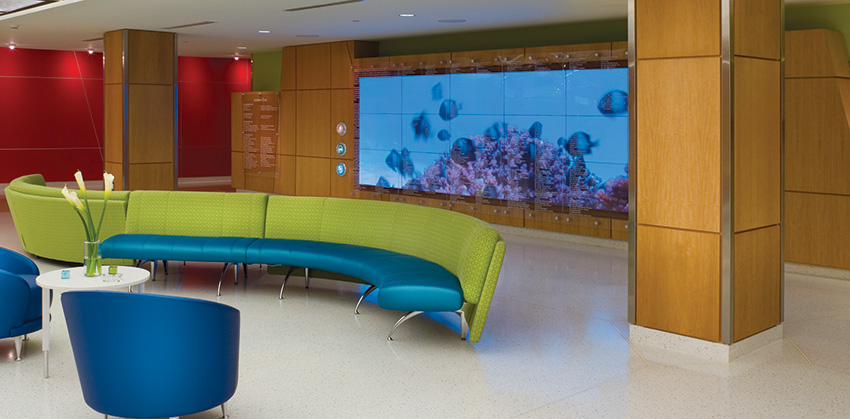
Photo courtesy of Construction Specialties
Corner guards protect wall edges from damage in high-traffic areas.
Doors
Doors are another building feature that are regularly used in high-traffic areas. Depending on the building usage, different materials can be specified. The four main types of door materials are wood veneer, plastic laminate, hollow metal, and doors with a sturdy inner core that are clad in a protective material.
Wood veneer doors are made from a thin piece of wood treated either with or without a protective varnish. Wood veneer doors are often lightweight and specified because of their lower initial investment cost. When these doors become damaged, they can be repaired using putty that is cured onto the door. This repetitive fix is visible and not ideal for high-traffic areas.
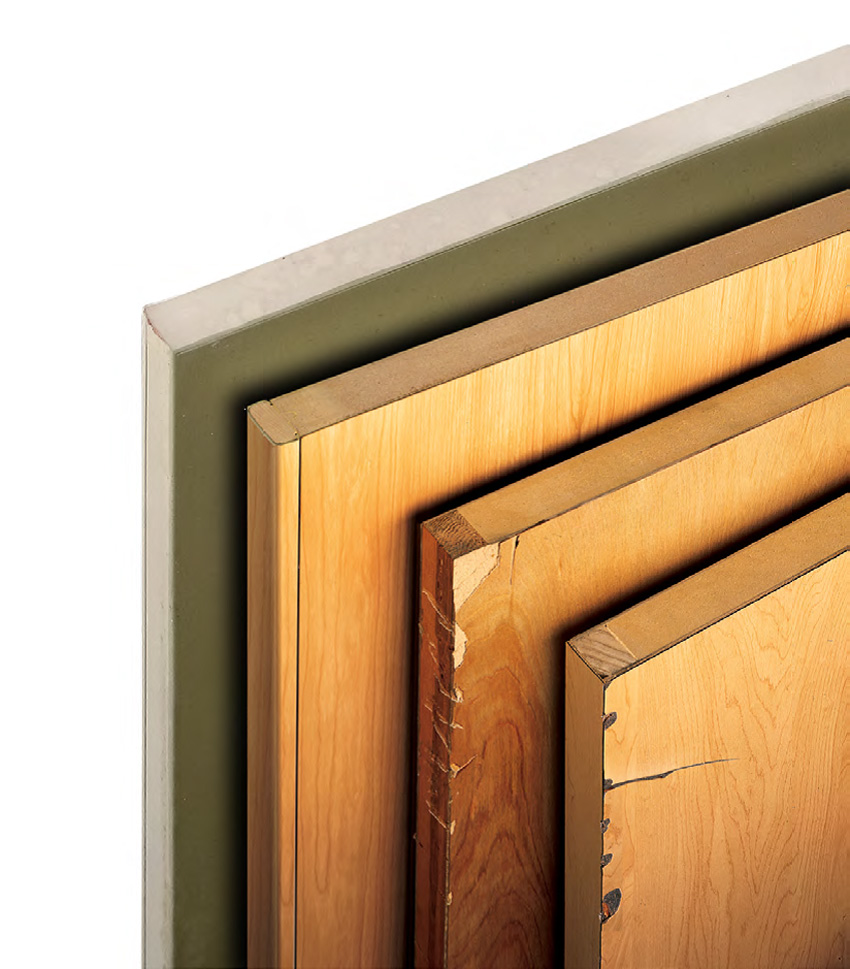
Image courtesy of Construction Specialties
Wood veneer doors show damage, even after repairs are made.
Plastic laminate doors have a surface layer that is adhered to the door’s core. The core material is usually wood, particle, or composite materials. Like wood veneer doors, plastic laminate doors are suitable for low traffic. These doors have a low initial cost but are difficult and time consuming to repair.
Hollow metal doors are made from metal or aluminum and may feature a cardboard core. While these doors are suitable in areas with medium traffic, they often look like structures that belong in institutions, which do not provide an inviting aesthetic appeal. They also can be dented easily and must be repainted twice a year.
The ideal door solution is a door with a sturdy inner core that is clad in protective material. This protective material will prevent damage caused by foot traffic, the transport of patients, and the movement of heavy machinery and carts from place to place. While these products are often more expensive up front, long-term cost savings can recover initial costs because they do not need to be repaired as frequently.
Fire Protection
In case of fire, materials that are fire rated can prevent the spread of fire or increase the amount of time available for occupants to safely escape. ASTM E 84 tests are used by code officials and regulatory agencies in the acceptance of interior finish materials for various applications. The flame spread Index and Smoke Developed Index are dictated by ASTM E84.
Interior finish materials that can be used on ceilings, walls, and doors are classified in accordance with ASTM E-84. The International Fire Code (IFC) sets requirements for the classification of interior finish materials. They are grouped in three classes in accordance with their Flame Spread and Smoke Developed Indexes:
Class A or I: Flame Spread 0-25; Smoke Developed: 0-450
Class B or II: Flame Spread 26-75; Smoke Developed: 0-450
Class C or III: Flame Spread 76-200; Smoke Developed: 0-450
Walls and Wall Protection
Wall-protection materials are rated using the tunnel test dictated by ASTM E84. When selecting wall protection materials and products, look for products that allow less flame spread and also ones that develop less smoke. In large facilities that contain a large percentage of wall area, resistance to flame spread and smoke development can mean the difference between life and death for patients and occupants trying to escape or be rescued.
Doors
Fire-protection standards for doors are dictated by the National Fire Protection Association (NFPA). NFPA 80 provides standards for fire doors and other openings. When selecting materials for doors and specifying products, look for fire-rated doors that comply with clearance requirements and references to the quality standard for fitting in accordance with the requirements listed in NFPA 80. Some doors are fire rated up to 90 minutes, which can increase the time for firefighters or internal sprinklers to put out fires and occupants to safely vacate or be rescued.
Safety Protection for Specific Populations
Ligature-resistant brackets and handrails are typically used in behavioral health environments to provide an additional level of patient safety; however, today many facilities are focusing on making mental health accommodations available in all health-care facilities, not just those specific to behavioral health treatment.
Ligature-resistant products reduce patients’ ability to bind themselves to objects, which can help reduce the occurrence of self-inflicted harm. Ligature-resistant brackets made from continuous aluminum can be used on handrails. Cubicle curtains and tracks are also available in ligature-resistant designs, thus reducing the potential for self-harm through the use of these materials that are often in patient treatment areas. Ligature resistance is also considered in door-handle design in specific applications.
In health-care facilities, patient falls are a common danger and concern. One way to reduce the risk of falls is to provide handrail support in common areas as well as in restrooms, showers, and in patient rooms between traffic areas, such as from the bed to the bathroom.
Bariatric handrails are stronger and more resilient than typical handrails. They can accommodate up to 1,000 pounds when installed per the manufacturer’s guidelines. Guidelines for handrails can be found in the 2010 FGI Guidelines for Design and Construction of Health-Care Facilities. Products that meet or exceed these guidelines are ideal for use in health-care settings, especially when accommodating specific patient needs.
Specifying the Right Materials for the Job
When specifying products for hospitals and other health-care facilities, designers must consider how ceilings, walls, doors, floors, curtains, and handrails contribute not only to the aesthetics but also the function of medical facilities. One of the main contributors to durability and functionality is the materials that are chosen for each component of the design.
When determining materials, there are many considerations including cost, cleanability, sustainability, environmental concerns, and energy or replacement costs. Resources such as health product declarations (HPDs), environmental product declarations (EPDs), and volatile organic compound (VOC) documentation can help designers and architects determine which chemicals are in products as well as the life-cycle environmental impact of products. Industry groups such as the USGBC are embracing HPDs and EPDs and including the use of these declarations within LEED guidelines.
The Benefits of Proper Light Reflectance
As stated earlier, specifying high-quality products that make ceilings easy to clean can increase the health and safety of occupants. In addition to being easy to clean, quality ceiling materials will have high-light-reflectance qualities that can reduce fading and replacement cost. Additionally, light-reflectance qualities can extend daylight further into a space and reduce energy use by limiting the amount of electrical light needed. This is especially true in areas like atriums and lobbies, which are often the first places that patients and visitors see when entering a health-care facility.
Corridors also see a lot of traffic and therefore need proper lighting and light reflectance. This is especially important because corridors are often windowless. Specifying wall and ceiling materials that are smooth, cleanable, and light colored yield adequate light reflection.
Sustainability and Environmental Protection and Cost Savings
Products that are designed to last a long time not only reduce waste and positively impact the environment, but they also can allow health-care facilities to save money on repair and replacement costs.
Doors and walls that are built and covered using durable, batter-resistant materials can lead to longer product life cycles. While the upfront costs for quality materials may be higher, those costs can be recuperated through reduced replacement and repair costs. Often when doors need to be repaired, they have to be removed from the frame, causing a negative impact on the facility and occupants.
When considering the true costs of wood veneer, plastic laminate doors, hollow metal doors, and doors with a sturdy inner core that are clad in a protective material, the following table shows the costs savings that can be achieved over a 10-year period.
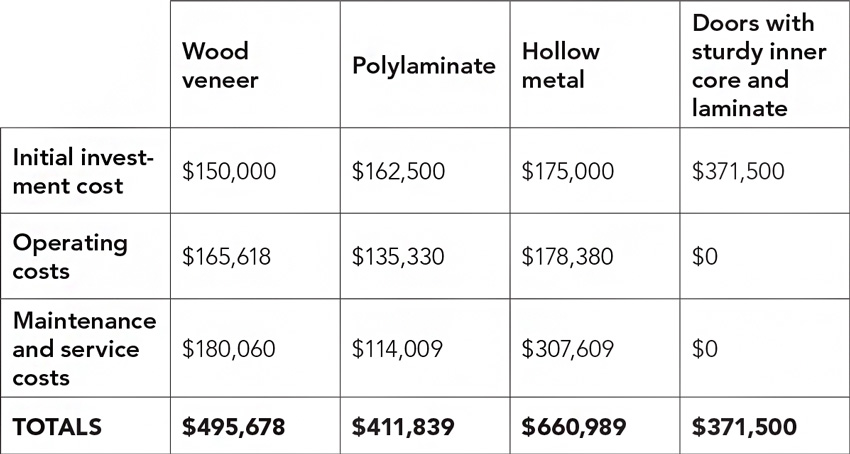
Source: Construction Specialties
This table shows the total costs of various door materials over a 10-year period.
Another potential area for waste in health-care facilities is the use and disposal of single-use or limited-use products, such as cubicle curtains in critical care, isolation, and emergency areas in health-care facilities. Recyclable cubicle curtains help reduce the amount of waste that ends up in the landfill, thus positively affecting the environment. High-quality recyclable curtains look just like fabric and are cost-effective when compared with the life-cycle cost of traditional fabric curtains.
Transfer Showers
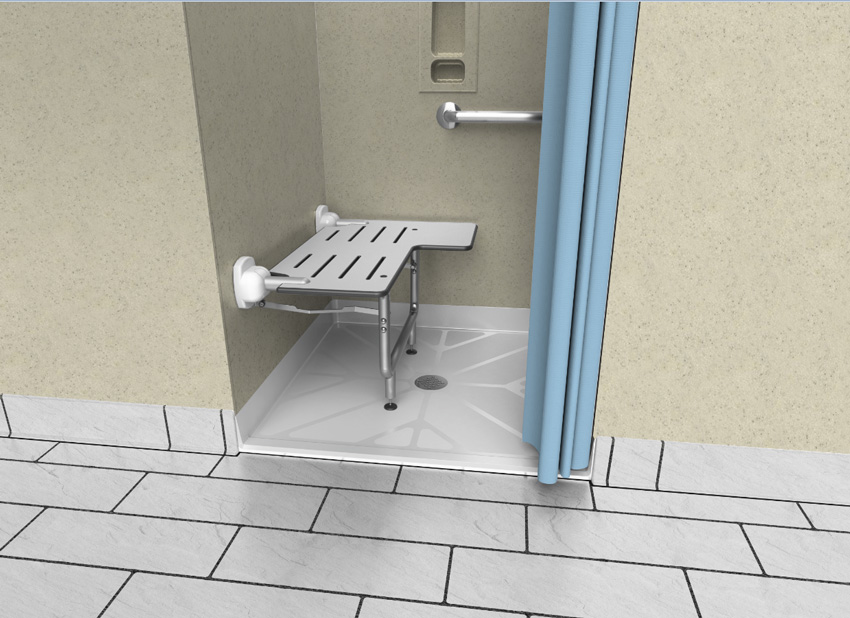
In hospitals, user-friendly restrooms and showers are vital, as patients who are there for an extended stay may be experiencing mobility challenges. Universally accessible showers, often called transfer showers, are ideal for hospital settings, as they allow all occupants, regardless of ability, to enter and safely use them. The Americans With Disabilities Act (ADA) provides guidelines for showers that will accommodate users of all needs. The ADA mandates a 36-inch-wide wide minimum entry for shower bases to accommodate a wheelchair. A beveled threshold, finished wall flange, and nonslip floor texturing can be specified for ease of use and safety. Additionally, surfaces that are nonporous can prevent the growth of mold and mildew, thus promoting the health, safety, and welfare of occupants and allowing for easier cleaning and less maintenance.
Conclusion
There are a number of factors to consider when specifying materials and products for hospitals and other health-care facilities. These health-care environments must support patients, visitors, and staff by ensuring safety and privacy, providing noise control, and reducing the likelihood of the spread of infectious diseases. Many products and elements that serve these functions also enhance aesthetics, helping provide a pleasant and soothing environment for healing. Specifying the right products and materials for the job can help provide a safe, sanitary, and pleasant healing environment.
End Notes
1Nieminen, Robert. “The Art of Healing Spaces That Perform.” interiors+sources. Stamats Communications. 3 Jan. 2017. Web. 5 Nov. 2018.
2Healthcare-associated infections. Centers for Disease Control and Prevention. U.S. Department of Health & Human Services. Web. 5 Nov. 2018.