This CE Center article is no longer eligible for receiving credits.
Traditional development is, officially, a thing of the past. Developers, designers, architects, and builders are rethinking development and design to improve the health and well-being of individuals and the community as a whole. Third-party certifications offer the assurance of performance in today’s dynamic and innovative market sector. They allow for confident selection and installation of cutting-edge materials and products, securing the best indoor environmental quality (IEQ) to improve the health and well-being of individuals, while also creating an attractive and high-investment return for developers and builders.
When addressing IEQ, knowing with certainty what is in each product becomes crucial. Specifying materials is a complex and time-consuming project, requiring knowledge about the comfort, health, and safety of occupants, the interaction of building systems, and an understanding of how to control common indoor pollutants to provide quality indoor air. Selecting a material type is the beginning of a process that includes taking steps to mitigate exposure to VOCs and minimize the impact of any cleaning and maintaining. There are numerous programs, organizations, and certifications that can assist in determining the right materials for the building, occupants, and activities.
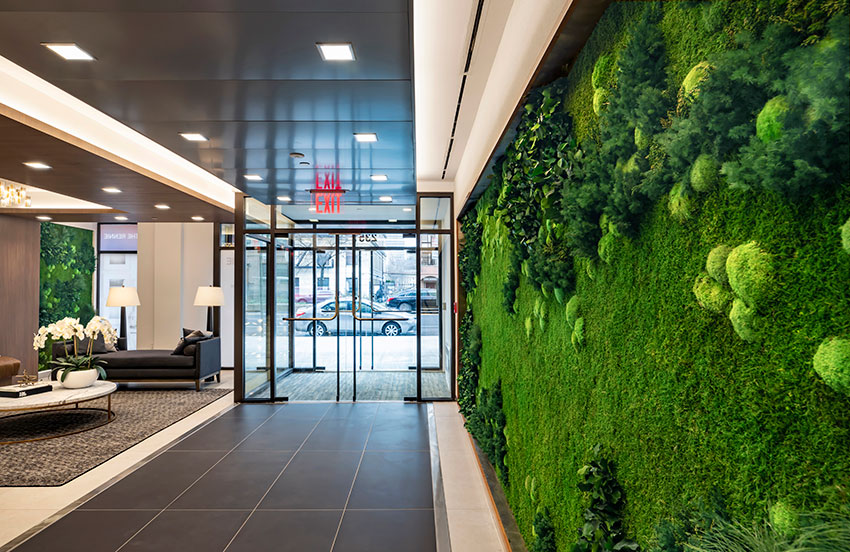
Photo courtesy of Garden on the Wall®
The impact of material choice has a powerful role to play in augmenting overall occupant welfare.
Standing Behind Materials And Products: Assurance From Third-Party, Independent Certification
“Of all conformity assessment procedures that give assurance that a product, process, or service conforms to specified requirements (safety, health, and the environment), third-party certification provides the greatest value,” according to the American Council of Independent Laboratories (ACIL).1 The most authentic and trustworthy certifications are those awarded by an independent third party that has no business or monetary relationship with a product’s manufacturer, or with a building’s contractor, designer, or specifier.2 Third-party certification is valuable because it is independent. Independent testing produces safer and more reliable products, it bolsters product acceptance in the marketplace and boosts consumer confidence, and it distinguishes manufacturers making compliant products. Third-party certification systems are also transparent. Transparency in testing means that the certification uses clear and standardized specifications to assess products, systems, or buildings.
Given its independence and transparency, third-party certification is especially valuable in bringing to market safer and more reliable products. According to ACIL, products that are third-party certified tend to have immediate acceptance in the marketplace because consumers, retailers, and distributors recognize and have confidence in the third-party certification mark. Third-party-certified products are tested and certified through surveillance and verification of continued compliance. The product not only performs well but has been tested to comply with safety, health, or environmental standards. Any product claims have been verified independently, rather than relying on a manufacturer’s word. Audits of a manufacturer’s facilities prior to certification also occur under certain certification systems, allowing consumers to understand how a product or material is produced and providing a transparent view into the product’s life cycle.
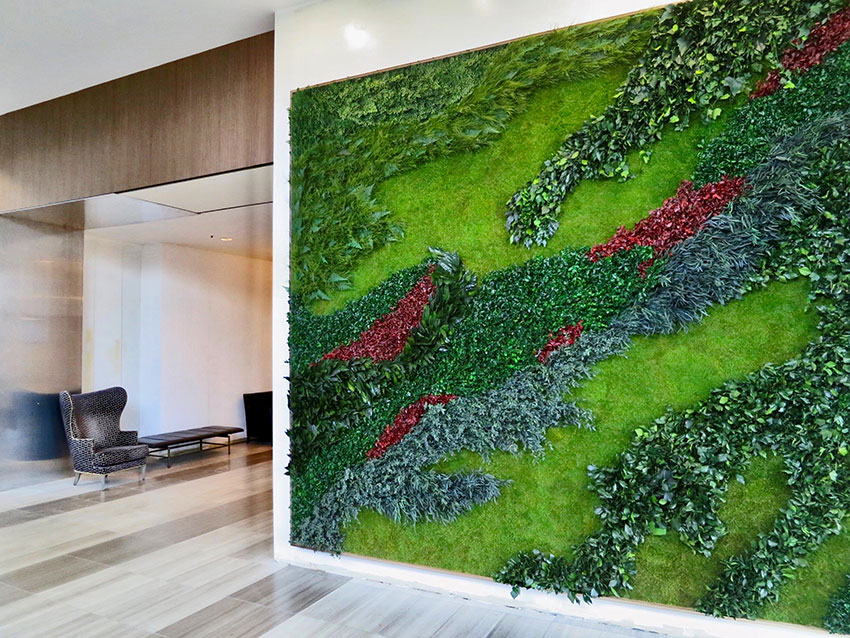
Photo courtesy of Garden on the Wall®
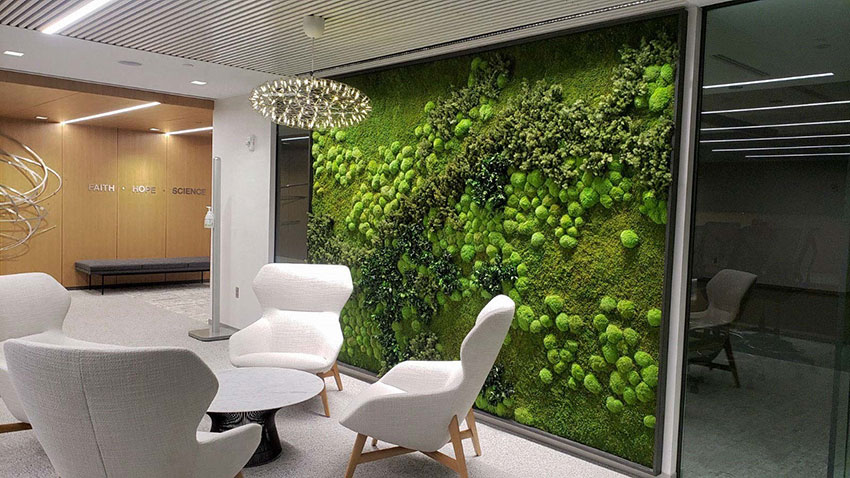
Preserved garden installations are much more efficient than living walls and plants due to their longevity and low energy consumption, including no need for water irrigation, specific light, avoidance of soil infestations, and no trimming and pruning or periodic maintenance.
Materials In Use: Certified Garden And Plant Designs To Enhance IEQ
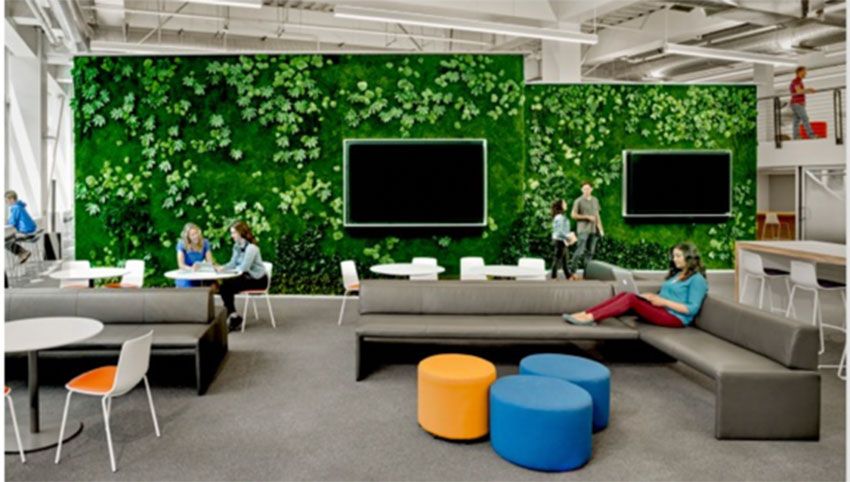
Stephen Baker of Baker Design Group, who designed the LEED Platinum TripAdvisor World Headquarters in Needham, Massachusetts, takes seriously the design of workspaces to increase employee satisfaction and productivity.
TripAdvisor HQ received LEED Platinum certification by the U.S. Green Building Council in 2017, the highest green rating achievable. TripAdvisor HQ achieved LEED certification for implementing practical and measurable strategies and solutions aimed at achieving high performance in: sustainable site development, water savings, energy efficiency, materials selection, and indoor environmental quality.
The TripAdvisor team completed the 280,000-square-foot interior fit-out project in 2015, and with their dedication to innovation and sustainability, the team exceeded the original goal of LEED Gold certification.
“Good office design,” Baker said, “incorporates as many of the best environmental elements as possible, including spaces that accommodate different working styles, beautiful and comfortable furniture to support each working style, integrated audio visual and internet technologies, fresh air, natural light, good artificial light, acoustic design, and biophilic design. If all these elements are brought together successfully, along with a sense of hospitality (which means treating your employees like guests in your home) you will find that employees will be able to focus or collaborate better, feel less stressed, and be happier about their work. Companies with well-designed working environments often find it easier to hire new employees, and the existing employees stay longer.”
Bringing the outdoors in is a growing focus in development today. Biophilic design recreates patterns of nature inside by harnessing natural light, incorporating natural materials like wood, stone, water, and plants, and capturing views of landscapes outside. These designs enhance IEQ by increasing workplace efficiency, encouraging environmental responsibility, and boosting community well-being. Elements of biophilia stimulate cognitive function, lower blood pressure, reduce stress levels, balance hormone levels, and may even contribute to longevity, according to a recent Harvard study.
However, including greenery and plantings in indoor designs can be a challenge, as plants require water, soil, fertilizer, and upkeep. Introducing plants, while beneficial, raises the challenges of addressing additional relative humidity and moisture load within the building, as well as occupant exposure to new allergens.
An Introduction to Preserved Plants
A principal driving force of creation is need. Stepping into the gap to balance desire for biophilic design against the issues involved in live plant introduction is the concept of preserved plants. Launched initially by Patrick Blanc’s concept of ‘Mur Végétal’ in 1998, plant and flower foliage are harvested at their peak to attain maximum vibrancy. Once harvested, a nontoxic, plant-based, and biodegradable preservation liquid is used to replace the plant sap. Garden installations created with preserved plants require no water, no misting or irrigation, no sunlight, no soil, and no trimming or pruning, but retain their vibrancy, fresh-cut look, and feel for a minimum of five years, with a typical installation lasting between seven to 10 years.
Preserved garden installations are custom created following a design and sketch rendering process and are installed by a trained crew to ensure visual, longevity, and safety standards are met. Depending on the manufacturer, it is possible to refurbish garden installations to extend their life span for an additional five years by reintroducing the preservation solution at the display location.
Preserved garden installations provide excellent value as they facilitate integration of maintenance-free nature to interior designs, allowing significant savings by avoiding monthly maintenance required for living walls. Preserved garden installations are much more efficient than living walls and plants due to their longevity and low energy consumption, including no need for water irrigation, specific light, avoidance of soil infestations, and no trimming and pruning or periodic maintenance. This results in a significantly lower carbon footprint when compared to both fresh-cut and artificial plants.
Preserved gardens are, however, for interior applications only where the temperature should be between 60-85°F with a humidity of less than 70%.
Typical plant species available include moss, fern, eucalyptus, flower foliage, and certain tree foliage. Flat moss commonly acts as a canvas for the installation.
Materials In Use: Certified Copper-Clad Steel Designs To Enhance Health And Welfare
Architectural metal mesh creates unique design applications for architects and interior designers, in both exterior and interior applications. In design situations where a need arises to deliver a degree of separation, for safety, or to differentiate spatial uses, a solid wall or partition may not be needed. In fact, it is often desirable to provide for some connectivity between spaces for visual, airflow, sound, or other benefits. An emerging, innovative material choice is the use of coiled wire fabric.
Woven or coiled wire fabric is a versatile product with wide-ranging applications and functions. It is a durable, thin material that is lighter in weight than traditional free-standing partitions and offers more design flexibility. For interiors, architects and engineers can use coiled wire fabric for curtains, ceiling treatments, wall coverings, security gates, and even as complete partitions. Coiled wire fabrics are available with a range of attachment systems, allowing for different building conditions and finish treatments.
Coiled wire fabric manufacturing begins with a base metal wire, typically available in varieties of steel, aluminum, brass, copper, or stainless steel. Architectural metal mesh material and gauge can be selected based on desired weight, functionality, and aesthetics. The naturally strong and durable coiled wire fabric material looks and performs like traditional architectural metal mesh at a more affordable price point.
Traditional development is, officially, a thing of the past. Developers, designers, architects, and builders are rethinking development and design to improve the health and well-being of individuals and the community as a whole. Third-party certifications offer the assurance of performance in today’s dynamic and innovative market sector. They allow for confident selection and installation of cutting-edge materials and products, securing the best indoor environmental quality (IEQ) to improve the health and well-being of individuals, while also creating an attractive and high-investment return for developers and builders.
When addressing IEQ, knowing with certainty what is in each product becomes crucial. Specifying materials is a complex and time-consuming project, requiring knowledge about the comfort, health, and safety of occupants, the interaction of building systems, and an understanding of how to control common indoor pollutants to provide quality indoor air. Selecting a material type is the beginning of a process that includes taking steps to mitigate exposure to VOCs and minimize the impact of any cleaning and maintaining. There are numerous programs, organizations, and certifications that can assist in determining the right materials for the building, occupants, and activities.
Photo courtesy of Garden on the Wall®
The impact of material choice has a powerful role to play in augmenting overall occupant welfare.
Standing Behind Materials And Products: Assurance From Third-Party, Independent Certification
“Of all conformity assessment procedures that give assurance that a product, process, or service conforms to specified requirements (safety, health, and the environment), third-party certification provides the greatest value,” according to the American Council of Independent Laboratories (ACIL).1 The most authentic and trustworthy certifications are those awarded by an independent third party that has no business or monetary relationship with a product’s manufacturer, or with a building’s contractor, designer, or specifier.2 Third-party certification is valuable because it is independent. Independent testing produces safer and more reliable products, it bolsters product acceptance in the marketplace and boosts consumer confidence, and it distinguishes manufacturers making compliant products. Third-party certification systems are also transparent. Transparency in testing means that the certification uses clear and standardized specifications to assess products, systems, or buildings.
Given its independence and transparency, third-party certification is especially valuable in bringing to market safer and more reliable products. According to ACIL, products that are third-party certified tend to have immediate acceptance in the marketplace because consumers, retailers, and distributors recognize and have confidence in the third-party certification mark. Third-party-certified products are tested and certified through surveillance and verification of continued compliance. The product not only performs well but has been tested to comply with safety, health, or environmental standards. Any product claims have been verified independently, rather than relying on a manufacturer’s word. Audits of a manufacturer’s facilities prior to certification also occur under certain certification systems, allowing consumers to understand how a product or material is produced and providing a transparent view into the product’s life cycle.
Photo courtesy of Garden on the Wall®
Preserved garden installations are much more efficient than living walls and plants due to their longevity and low energy consumption, including no need for water irrigation, specific light, avoidance of soil infestations, and no trimming and pruning or periodic maintenance.
Materials In Use: Certified Garden And Plant Designs To Enhance IEQ
Stephen Baker of Baker Design Group, who designed the LEED Platinum TripAdvisor World Headquarters in Needham, Massachusetts, takes seriously the design of workspaces to increase employee satisfaction and productivity.
TripAdvisor HQ received LEED Platinum certification by the U.S. Green Building Council in 2017, the highest green rating achievable. TripAdvisor HQ achieved LEED certification for implementing practical and measurable strategies and solutions aimed at achieving high performance in: sustainable site development, water savings, energy efficiency, materials selection, and indoor environmental quality.
The TripAdvisor team completed the 280,000-square-foot interior fit-out project in 2015, and with their dedication to innovation and sustainability, the team exceeded the original goal of LEED Gold certification.
“Good office design,” Baker said, “incorporates as many of the best environmental elements as possible, including spaces that accommodate different working styles, beautiful and comfortable furniture to support each working style, integrated audio visual and internet technologies, fresh air, natural light, good artificial light, acoustic design, and biophilic design. If all these elements are brought together successfully, along with a sense of hospitality (which means treating your employees like guests in your home) you will find that employees will be able to focus or collaborate better, feel less stressed, and be happier about their work. Companies with well-designed working environments often find it easier to hire new employees, and the existing employees stay longer.”
Bringing the outdoors in is a growing focus in development today. Biophilic design recreates patterns of nature inside by harnessing natural light, incorporating natural materials like wood, stone, water, and plants, and capturing views of landscapes outside. These designs enhance IEQ by increasing workplace efficiency, encouraging environmental responsibility, and boosting community well-being. Elements of biophilia stimulate cognitive function, lower blood pressure, reduce stress levels, balance hormone levels, and may even contribute to longevity, according to a recent Harvard study.
However, including greenery and plantings in indoor designs can be a challenge, as plants require water, soil, fertilizer, and upkeep. Introducing plants, while beneficial, raises the challenges of addressing additional relative humidity and moisture load within the building, as well as occupant exposure to new allergens.
An Introduction to Preserved Plants
A principal driving force of creation is need. Stepping into the gap to balance desire for biophilic design against the issues involved in live plant introduction is the concept of preserved plants. Launched initially by Patrick Blanc’s concept of ‘Mur Végétal’ in 1998, plant and flower foliage are harvested at their peak to attain maximum vibrancy. Once harvested, a nontoxic, plant-based, and biodegradable preservation liquid is used to replace the plant sap. Garden installations created with preserved plants require no water, no misting or irrigation, no sunlight, no soil, and no trimming or pruning, but retain their vibrancy, fresh-cut look, and feel for a minimum of five years, with a typical installation lasting between seven to 10 years.
Preserved garden installations are custom created following a design and sketch rendering process and are installed by a trained crew to ensure visual, longevity, and safety standards are met. Depending on the manufacturer, it is possible to refurbish garden installations to extend their life span for an additional five years by reintroducing the preservation solution at the display location.
Preserved garden installations provide excellent value as they facilitate integration of maintenance-free nature to interior designs, allowing significant savings by avoiding monthly maintenance required for living walls. Preserved garden installations are much more efficient than living walls and plants due to their longevity and low energy consumption, including no need for water irrigation, specific light, avoidance of soil infestations, and no trimming and pruning or periodic maintenance. This results in a significantly lower carbon footprint when compared to both fresh-cut and artificial plants.
Preserved gardens are, however, for interior applications only where the temperature should be between 60-85°F with a humidity of less than 70%.
Typical plant species available include moss, fern, eucalyptus, flower foliage, and certain tree foliage. Flat moss commonly acts as a canvas for the installation.
Materials In Use: Certified Copper-Clad Steel Designs To Enhance Health And Welfare
Architectural metal mesh creates unique design applications for architects and interior designers, in both exterior and interior applications. In design situations where a need arises to deliver a degree of separation, for safety, or to differentiate spatial uses, a solid wall or partition may not be needed. In fact, it is often desirable to provide for some connectivity between spaces for visual, airflow, sound, or other benefits. An emerging, innovative material choice is the use of coiled wire fabric.
Woven or coiled wire fabric is a versatile product with wide-ranging applications and functions. It is a durable, thin material that is lighter in weight than traditional free-standing partitions and offers more design flexibility. For interiors, architects and engineers can use coiled wire fabric for curtains, ceiling treatments, wall coverings, security gates, and even as complete partitions. Coiled wire fabrics are available with a range of attachment systems, allowing for different building conditions and finish treatments.
Coiled wire fabric manufacturing begins with a base metal wire, typically available in varieties of steel, aluminum, brass, copper, or stainless steel. Architectural metal mesh material and gauge can be selected based on desired weight, functionality, and aesthetics. The naturally strong and durable coiled wire fabric material looks and performs like traditional architectural metal mesh at a more affordable price point.
Certified Benefits of Coiled Wire Fabric
Coiled wire fabrics also provide significant building performance and environmental benefits. Independent testing shows reduced energy consumption by up to 3.3% for interior window and glazing applications. When located to the exterior, independent testing shows reduced energy consumption by up to 12.3%. Coiled wire fabric is also an effective product for retrofit projects where high-performance glazing has not been installed.
With reduced energy consumption comes a significant increase in the thermal comfort of occupants in both interior and exterior applications. Thermal comfort is enhanced by mitigating the effects of direct sunlight and cooling down spaces. Coiled wire fabrics also create increased visual comfort and minimize glare without reducing views and illumination.
Besides third-party verification of energy savings and thermal comfort, certain coiled wire fabric products have been independently assessed for health metrics. Superior products will be certified as Living Building Challenge Red List Free and may have a Declare label with the International Living Future Institute. These certifications provide the certainty that no harmful materials are being introduced with a product. They also demonstrate that no toxic chemicals are used in the manufacturing process. The best manufacturing process uses minimal energy, no toxic chemicals or solvents, and produces almost no scrap. Eco-friendly powder coatings should be specified, containing no solvents and emitting negligible, if any, polluting VOCs. As an added benefit, these powder coatings can be recycled and reused, generating zero hazardous waste, and rendering the certified woven fabric product 100% recyclable. This also ensures a low carbon footprint, enhanced by wire that is domestically sourced, durable, and easy to maintain. Natural wire finishes that require no painting are preferred, as these introduce no VOCs.
Maintenance is another important piece of the IEQ puzzle. A product that needs heavy upkeep and cleaning introduces additional chemicals and solvents into the indoor environment. Coiled wire fabric is low maintenance. The powder coated and low-VOC clear lacquer finishes will not fade or darken, and the material tends to shed dust. Coiled wire fabric is also naturally flameproof, has a low life-cycle cost, and is ideal for public area applications due to its superior strength.
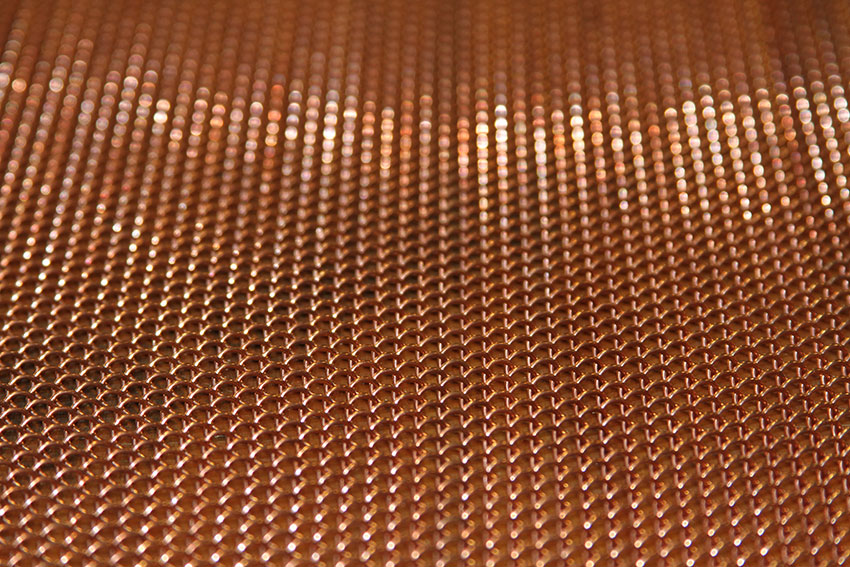
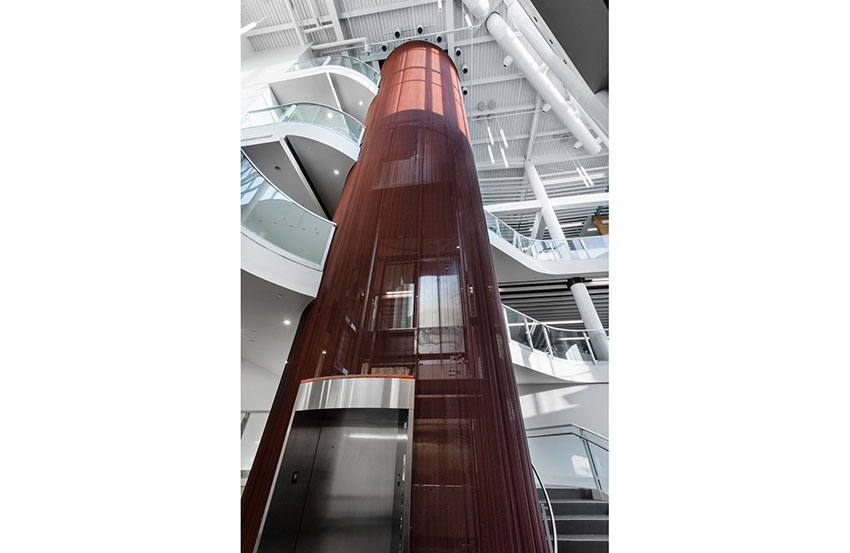
Photo courtesy of Cascade Architectural
Coiled wire fabrics are available with a range of attachment systems, allowing for different building conditions and finish treatments.
Using Third-Party Certification As A Design Tool For Health Goals
As defined by the National Institute for Occupational Safety and Health (NIOSH), indoor environmental quality (IEQ) refers to the quality of a building’s environment related to the health of occupants within it.3 IEQ is determined by many factors, including lighting, air quality, and damp conditions. The influences on indoor environments are incredibly complex and varied. Occupant health can be affected not only by dampness and ventilation in the building, but also by contaminants emitted from products within the building.
This includes building materials, carpets and furnishings, and even cleaning products. Understanding the sources of indoor environmental contaminants and controlling them can help prevent or resolve building-related symptoms in workers, according to the Centers for Disease Control and Prevention (CDC).
When making decisions for the health of a building and its occupants, look for products that are transparent and supported with life-cycle assessment documentation. Product transparency means that all relevant product information is fully and freely available to the public. This disclosure and accountability helps designers, specifiers, and end-users make informed purchasing decisions about which materials should be placed in buildings.
The Declare Label
The International Living Future Institute (ILFI) Declare certification creates a process for disclosing product ingredients in a transparent way, allowing manufacturers an opportunity to provide a clear list of materials in each building product. By facilitating and simplifying the exchange of complex ingredient information, Declare’s stated goal is to positively change the materials marketplace to enable the creation of buildings that support human and environmental health.4 For designers, the Declare product database streamlines material specification and certification for sustainable design.
Manufacturers voluntarily disclose all product information on Declare labels, which have a user-friendly format. These labels report all product ingredients and use a simple color code system to flag any chemicals of concern. Declare labels disclose all intentionally added ingredients and residuals at, or above, 100ppm (0.01%) present in the final product by weight. Each ingredient must be reported with a chemical name, Chemical Abstract Services (CAS) number, and percentage or percentage range. Further information is provided on the product’s final assembly locations, life expectancy, end-of-life options, and overall compliance with relevant requirements of the Living Building Challenge (LBC).
An active Declare label with a status of LBC Red List Free, LBC Red List Approved, or LBC Compliant at the time of specification is sufficient documentation of product compliance with I13 Red List. The Living Building Challenge (LBC) Red List represents the “worst in class” materials, chemicals, and elements. These ingredients are known to pose serious risks to human health and the greater ecosystem and, unfortunately, are prevalent in the building products industry. The ILFI believes that these materials should be phased out of production due to human and environmental health and toxicity concerns. ILFI worked with the Healthy Building Network and the Pharos Project to develop the original Red List in 2006.
All active Declare labels are accessible on a free and searchable database. The database is used by designers, large real estate owners, and homeowners to specify trusted products. The Declare label also demonstrates alignment with other requirements within the Living Building Challenge and Core Green Building Certification as well as LEED and WELL certifications. These requirements include ingredient disclosure thresholds, VOC content and emissions, embodied carbon, and responsible sourcing, including FSC Chain of Custody.
Additional Certification Tools
When addressing indoor environmental quality, knowing with certainty what is in each possible product becomes crucial. Successfully specifying materials is a multifaceted assignment, requiring the best information about a number of factors. However, verifying that the best materials and products are going into a building sets the foundation for achieving green and healthy building goals.
The Health Product Declaration (HPD) Open Standard, Mindful Materials, and UL Environment’s GreenGuard offer additional, independent reporting tools that disclose the precise material make-up of products. The Health Product Declaration (HPD) Open Standard is a process for the accurate, reliable, and consistent reporting of product contents and associated health information. The mindful MATERIALS Library is a multi-stakeholder initiative developed by the building industry for the building industry, providing a common platform to access and clearly communicate transparency and optimization information for building products. UL GreenGuard certifies products for chemical emissions, with certifications based upon building type.
A building’s materials create a product portfolio designed to take on the biggest sustainability and development challenges. Each product should offer carefully designed, innovative, and sustainable solutions for occupant comfort, safety, and for the benefit of the environment. However, far from being design constraints, using third-party-verified materials that support IEQ goals create beautiful additions to any project. New products are bringing a wealth of aesthetic, health, and wellness benefits to the projects in which they are used.
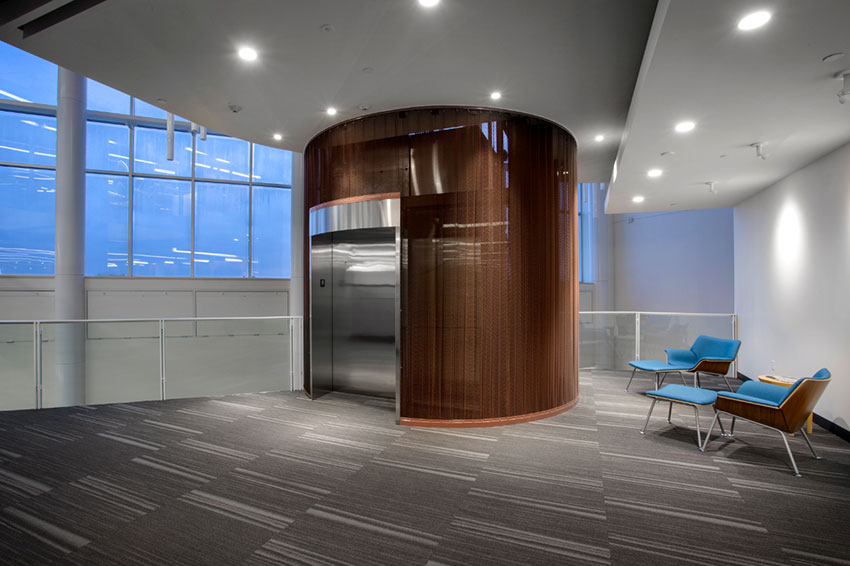
Photo courtesy of Cascade Architectural
Third-party certified products are tested and certified through surveillance and verification of continued compliance. Any product claims have been verified independently, rather than relying on a manufacturer’s word.
Health – Antimicrobials And Copper Coiled Wire
Besides general health measures, like choosing products that protect indoor air quality (IAQ), the COVID-19 pandemic has focused attention on the ways that viruses and bacteria can be spread or contained. With the enhanced focus on the transfer of germs and bacteria, can the surfaces occupants interact with daily play a meaningful role in their health? Even more, can building materials and products step into this new arena by shortening or reducing the amount of time that bacteria or viruses survive on surfaces that people touch?
The most prevalent strategy to combat this problem is to use materials that kill or stop the growth of microorganisms on as many touchable surfaces as possible. Antimicrobials are a class of chemicals designed to kill or inhibit the growth of microbes. Antimicrobials are commonly used in soaps and building materials, including countertops, paints, and doorknobs. However, there are definite risks associated with chemical antimicrobials. Nineteen antimicrobials were banned in soaps and bodywashes by the U.S. Food and Drug Administration (FDA) in 2016. Antimicrobials used in building materials are regulated by the U.S. Environmental Protection Agency as a pesticide. According to the EPA, “an antimicrobial pesticide is intended to disinfect, sanitize, reduce, or mitigate growth or development of microbiological organisms or protect inanimate objects, industrial processes or systems, surfaces, water, or other chemical substances from contamination, fouling, or deterioration caused by bacteria, viruses, fungi, protozoa, algae, or slime. Wood preservatives and anti-foulants are classified as antimicrobial pesticides if the products have antimicrobial claims.”5
While any health benefits of chemical antimicrobial use have not been fully authenticated. The evidence for their risks is well-known. The Red List classifies some antimicrobials as endocrine disruptors, which have been shown to impair learning and weaken muscle function.
Nevertheless, finding ways to control or eliminate the spread of disease is becoming increasingly important anywhere there is an unwanted risk of people becoming sick. This includes such shared spaces as retirement communities, assisted living facilities, spa and wellness centers, schools, public buildings, and even in private residences. However, relying on chemical antimicrobials added to building materials poses an unknown and potentially greater risk to health. So, what are the options?
The term antimicrobial can also be applied to materials that have demonstrated that capability naturally. One such material is copper, whether in pure form, or in an alloy such as brass, bronze, or copper-nickel alloy. While copper has, historically, been attributed to a reduction in illness, it is only recently that its impacts on bacteria and viruses has been scientifically analyzed. The current research into the antimicrobial effects of copper suggests that it affects tested bacteria in two sequential steps. In the first step, through a direct interaction between the surface and the bacterial outer membrane, the bacterial membrane ruptures. The second step occurs as the cell loses vital nutrients and water through the rupture holes in the outer membrane, causing a general weakening of the cell to the point of killing off the bacteria altogether.
Copper alloy materials are registered by EPA (Reg. Nos. 82012-1 to 6) to make public health claims against six specific bacteria:
- E. coli O157: H7, a food-borne pathogen that has been associated with large-scale food recalls;
- MRSA (Methicillin-Resistant Staphylococcus aureus), one of the most virulent strains of antibiotic-resistant bacteria and a common culprit of hospital and community-acquired infections;
- Staphylococcus aureus, the most common of all bacterial staphylococcus (i.e., staph) infections that can cause life threatening diseases, including pneumonia and meningitis;
- VRE (Vancomycin-Resistant Enterococcus faecalis), an antibiotic resistant organism responsible for 4% of all Healthcare‐Associated Infections;
- Enterobacter aerogenes, a pathogenic bacterium commonly found in hospitals that causes opportunistic skin infections and impacts to other body tissues;
- Pseudomonas aeruginosa, a bacterium that infects the pulmonary tracts, urinary tracts, blood, and skin of immunocompromised individuals.
To date, there is still very limited information and testing available on copper’s performance against COVID-19 or other similar coronavirus microbes. However, the EPA Antimicrobial Stewardship Website for Copper Alloys has issued some clarifying statements in this regard:6 “Media reports and public inquiries to CDA have noted several independent studies reporting antimicrobial efficacy of uncoated copper and copper alloy surfaces against human pathogens, including one strain of coronavirus (HuCoV-229E) reported in mBio by Warnes et al.7 There also has been widespread media coverage of a recent U.S. government-funded study conducted by researchers at the National Institutes of Health and the Centers for Disease Control and Prevention (CDC) reporting that the SARS-CoV-2 virus, which causes the disease COVID-19, remained viable for up to two to three days on plastic and stainless steel surfaces vs. up to four hours on copper.”8
While there is limited evidence of copper’s performance against SARS-CoV-2, further testing can assess the effectiveness of copper surfaces against these newly emerged viruses.
Achieving Health Goals with Copper Designs
Copper-clad coiled wire fabric is an innovative product that can be incorporated into building interiors as part of an overall design scheme, bringing with it demonstrated antimicrobial properties. Copper-clad coiled wire fabric uses pure copper metallurgically bonded to the surface of low carbon steel wire. This copper-clad wire exhibits a brilliant red polished finish when extruded in a continuous solid-cladding process. When left bare and untreated, the wire’s appearance will slowly change to brownish hues, ultimately resulting in the grey-green patina of aged copper.
Left in its natural form, copper-clad wire is naturally antimicrobial, resulting in increased public health safety, as well as increased durability and beautiful aesthetics. IEQ is positively affected, as the natural product brings with it no chemicals or VOCs that would harm IAQ or inhibit occupant health. Leading coiled wire fabrics are Living Building Challenge Red List Free and feature a Declare label with the International Living Future Institute, guaranteeing the health and material properties of the design. Copper-clad wire conforms to ASTM standards for both interior and exterior applications and is available in a wide variety of wire gauges.
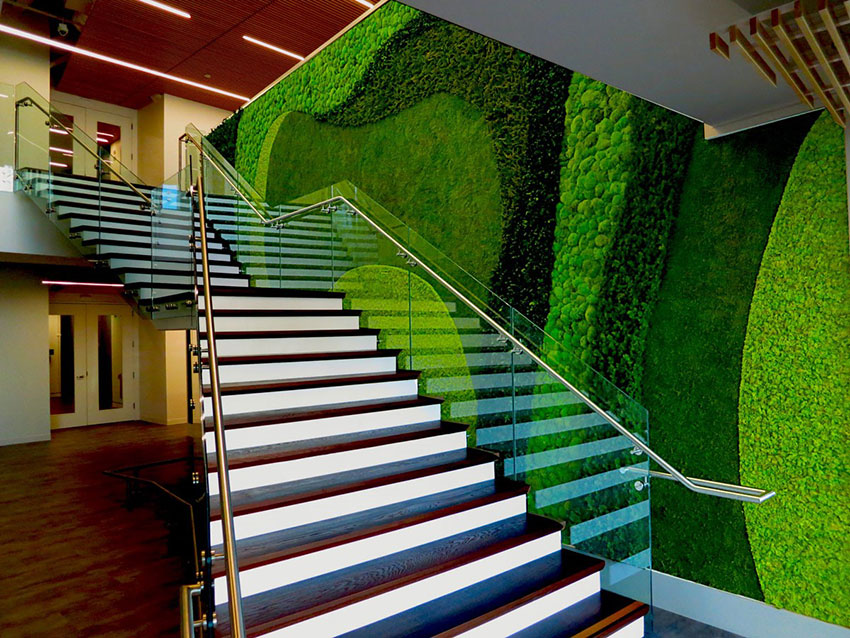
Photo courtesy of Garden on the Wall®
Good office design incorporates as many of the best environmental elements as possible, including fresh air, natural light, good artificial light, acoustic design, and biophilic design.
Certified Benefits – Meeting Certification Goals With Preserved Gardens
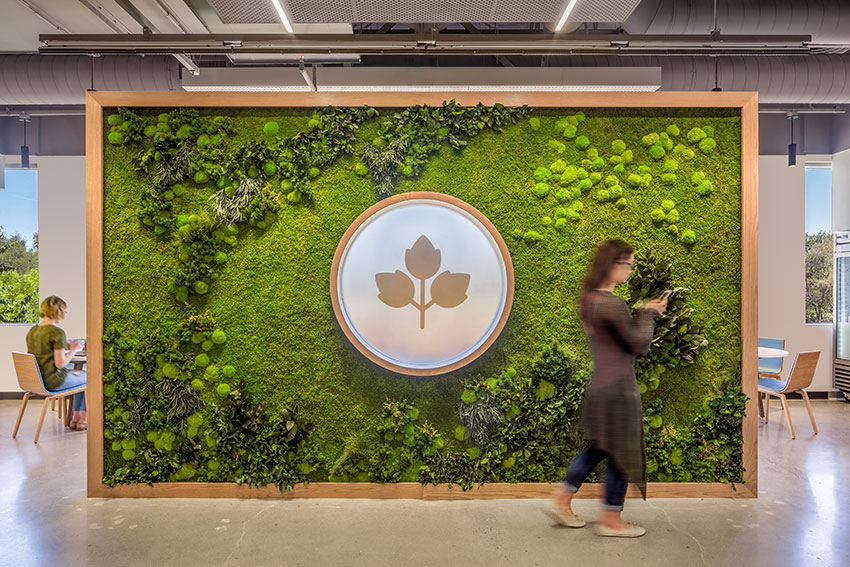
Whether it’s a custom planter insert, wall or ceiling garden, or a custom-shaped garden integrating a logo, the versatility of elements available for the creation of preserved garden installations allow for seamless integration into built environments. With an average depth of 3 inches for vertical applications, incorporating preserved gardens is as simple as adding a framed picture.
But biophilic elements can fall short if their materials do not support their health claims. Preserved garden suppliers should be committed to product transparency, sustainable design, and safety. To be certain of the quality of the specified product, request the following third-party certifications:
- ASTM E84 (third party) testing completed for all Preserved Garden Types (not only for Lichen/Reindeer moss) and are categorized as Class 1 (& A) for Flame Spread and Smoke Index.
- A published Health Product Declaration (version 2.2) to disclose the ingredients in the system, up to 1000 parts per million. A published Health Product Declaration (HPD) allows the project teams to specify the products with confidence.
- Installations that are offered with a warranty.
- Installations that offer rejuvenation services after a period of years or in case there is a light or sun damage.
- Installations that contribute to achievement of LEED v4.1.
- Installations that contribute to achievement of WELL Building Standard v.2.
- Installations that contribute to achievement of Fitwel.
- Installations that comply with BREEAM.
- Compliance with California Department of Public Health’s VOC standards for both Classroom and Office Scenarios.
- Compliance with “Healthy Hospitals Initiative.”
- Listed in the mindful MATERIALS database.
- Listed in the Transparency Catalog.
- Certified as Red List Free.
- Reuse, Reduce, Repurpose, Recycle, Composting programs that demonstrate commitment to minimize landfill.
- 100% Biobased Carbon Content per ASTM 6866 to secure no off-gassing.
Additionally, some preserved garden installations can offer sound absorbing properties, to help with acoustic levels indoors. These should be tested in accordance with ASTM C423-9a, to verify the wall garden installation’s noise reduction coefficient (NRC).
A Lens on Mental Health: Neurodiversity and Plants
Between 30% and 40% of the population are thought to be neurodiverse, according to ADHD Aware.10 This includes neurodiverse conditions such as ADHD, autism, dyspraxia, dyslexia, and Tourette’s syndrome. Neurodiversity refers to variations in human neurocognitive functioning; the different ways people think, process information, and relate to others.
Global design firms Tarkett and HOK explore challenges for the neurodiverse and how workplace environments can be adapted in their ‘Sensory Processing, Neurodiversity and Workplace Design’ April 2022 report.11 HOK and Tarkett conducted a survey of 202 neurodiverse employees in the United States, United Kingdom, and Canada to help identify key sensory issues in office environments. Genius Within, an organization dedicated to helping neuro-minorities maximize their potential, provided advisory services to help address how issues can be resolved through workplace design and strategy.
The survey found several challenges these individuals face when it comes to workplaces, noting that a majority (77%) of respondents reported being hypersensitive to noise and sound in the workplace. Over half of the respondents (62%) were hypersensitive to visual distractions, including movement, color, and light, in the office. Women surveyed reported greater overall sensory sensitivity challenges in the workplace when compared to men, particularly when it came to temperature and light: 62% and 59%, compared to 46% and 44%, respectively.
The report recognized several design solutions to better facilitate working conditions. These include offering all employees a diverse range of workspaces from which to choose, ranging from open office environments to private rooms to help better address sensory stimulations. Spaces that support and encourage physical movement and natural light were ranked highly by survey respondents as supportive and inclusive.
The benefits of embracing nature in design and material stand out. Elements of biophilic design, including natural light, connecting to nature and natural materials, and experience of space and place enable a better and more productive experience for the neurodiverse. The evidence for the restorative qualities of biophilic attributes, or the extent to which the presence of such elements in a built environment can help foster recovery of stress and mental fatigue, has been studied. Empirical evidence supports the use of plants, water, wood, and other natural materials in creating spaces that provide an opportunity for human well-being.12
Design in the built environment should be committed to helping bring natural elements to the forefront. As individuals today spend more than 90 percent of their time indoors, they are increasingly disconnected from meaningful, natural interactions. The biophilic design revolution not only has aesthetic and energy benefits, it also positively engages the whole person of the occupant. By combining natural light, natural materials, water features, plants, and natural greenery into innovative designs, mental health, mood, productivity, and circadian rhythms of occupants are better regulated.
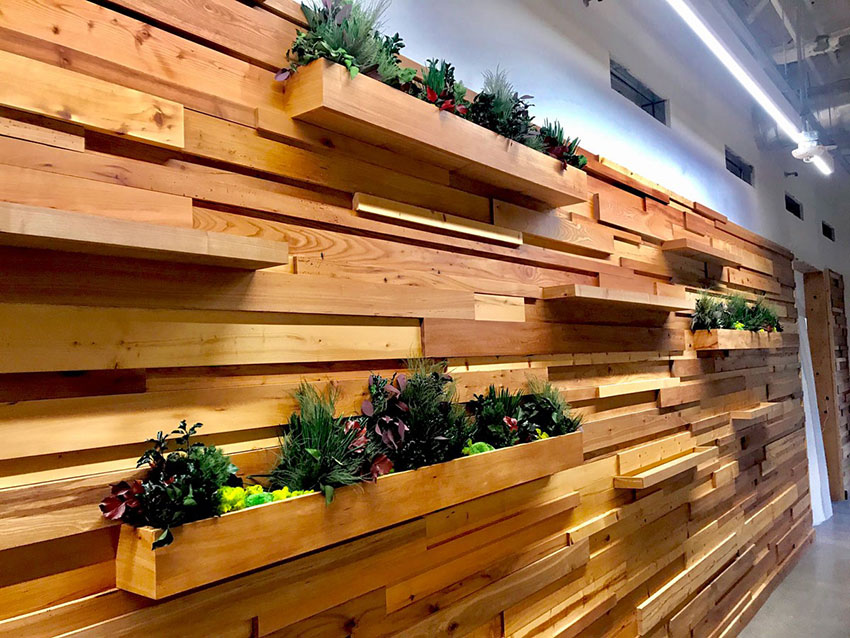
Photo courtesy of Garden on the Wall®
Incorporating third-party certified materials and products results in confident design decisions and the real enhancement of comfort, productivity, and efficiency across age and ability groups.
Certified Materials For The Future
The percentage of Health Hazard Evaluations (HHE) that the National Institute for Occupational Safety and Health (NIOSH) at the Centers for Disease Control and Prevention (CDC) conducted related to indoor air quality increased from 0.5% of all evaluations in 1978 to 52% of all evaluations since 1990. This means that, in a span of less than 25 years, the evaluations related to air quality concerns have increased from one of every 200 evaluations to one of every two.15 Resolving the health of buildings means ensuring the well-being of occupants. Much of the solution to indoor air quality issues, and overall IEQ, lies in the materials used for building and renovating.
For architects, designers, and builders dedicated to providing the best IEQ for clients’ health, the choice of materials and products becomes even more critical. In order to optimize design and beauty in their projects, incorporate cutting edge innovations, and achieve IEQ goals, third-party certifications provide decision making with assurance. Third-party certificates and registries offer independent, transparent, and valuable assessments that save time and money and bring to market safer and more reliable products that will perform well and result in a happier and healthier client.
Amanda Voss, MPP is an author, editor, and policy analyst. Writing for multiple publications, she has also served as the managing editor for Energy Design Update.