This CE Center article is no longer eligible for receiving credits.
Commercial interiors seem to be ever evolving, ever changing, and ever focused on meeting new criteria. Some of these changes are driven by building owners, occupants, or users who simply have changing desires, tastes, or functional needs for operations. Others are driven by updates to codes and standards that require more attention to details of health, safety, or welfare, including the health and well-being of people in a building. And of course, some are simply driven by a need for maintenance of and upgrades to a building because everything has a useful service life. In this course, we look closer at some of these drivers of change and some of the practical ways that they can be addressed and incorporated into well-designed building interiors.
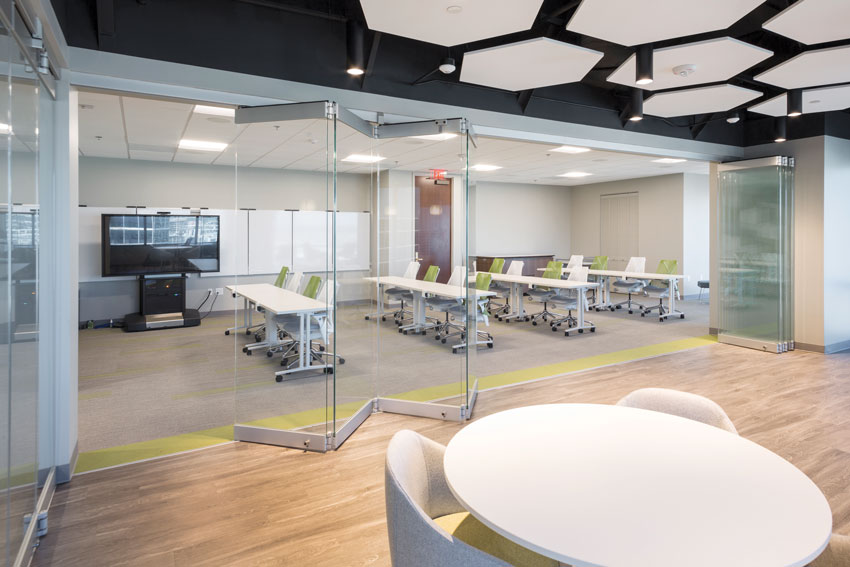
Photo courtesy of NanaWall Systems
The ever-changing needs of building owners and occupants continue to drive innovation and new options for the design of interior spaces.
Biophilia in Design
A growing interior design trend that is directly related to human health and welfare is the use of biophilia in contemporary buildings. Defined literally as a love of living things or a love of nature, biophilic design is a concept focused on increasing occupant connectivity to the natural environment in creative ways. Theorists argue that this design approach taps into the hard wiring of human beings who, over the span of history, have developed an affinity for the life-supporting aspects of the natural world.
One biophilic approach is to allow building occupants to have direct access to nature through areas like a rooftop garden, an adjacent nature walk, or a garden courtyard. If that is not feasible or practical, then providing living “green walls” or plants in the space is a good alternative. Direct views out to natural areas work well too. These approaches have tremendous merit in improving mood, air quality, and the overall look of the space.
Photos courtesy of Inpro
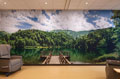
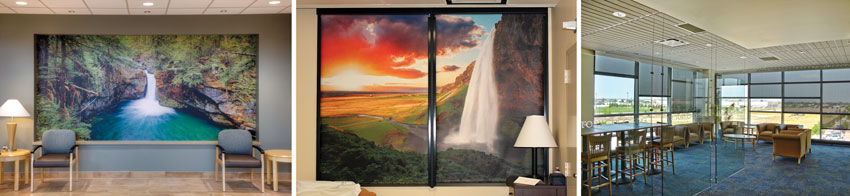
Biophilic design can be incorporated into buildings using large scale graphics back-printed on clear wall protection sheets (left) or onto roller shades (center). When natural views are available, solar shades allow for direct views with effective glare control (right).
There is another approach that is also effective and often more readily incorporated into a building, namely the use of graphics and imagery that portray scenes from nature. As part of an interior design strategy, there are at least three ways in which to do this effectively on a large scale, including the following:
Digitally printed wall cladding and art: Imagine turning nature scenes into whole-wall imagery or using large-scale graphics to create inspiring biophilic designs. This is now possible using printed wall-protection products that combine high-resolution images with durable wall protection. These are fabricated by back-printing a graphic image onto a clear, resilient sheet. Along with truly endless design capabilities, this approach also provides high-impact durability to wall surfaces. Since the graphic is back-printed on the protective sheet, there is no worry about the image being scratched over time. That means high-resolution photographs, artwork, or any other biophilic graphic can be printed and incorporated onto as large a wall space as a design may require.
Printed roller shades: If entire walls are not available for biophilic design graphics, then perhaps windows are. Views out of windows can sometimes be less than pleasing and look onto areas that are not natural or soothing. In cases like this, one option is to incorporate printed images onto roller-shade fabrics. Depending on the density and weave of the shade, daylight can still be allowed in, but the image looking out can be much more natural and uplifting.
Solar shades: When views are to natural areas, positive biophilic effects can be achieved. Incorporating solar shades with fabrics containing more openness in the weave can reduce the sun’s glare and heat gain, yet still allow for those outside views.
Balancing Acoustics and Collaboration
Many indoor environments are designed around fostering collaboration, interaction, and communal activity. This is true in commercial settings, such as offices with open-concept floor plans, schools with collaborative learning spaces, and universities with open, informal meeting areas. However, these indoor environments, regardless of their function, require that attention be paid to how noise and sound travels in order to protect privacy, promote productivity, and even safeguard health.
However, a Harvard Business School study has challenged the practice of all of these open spaces. It analyzed the effects of open floor plans in office spaces and discovered that it actually is not an ideal layout for optimal productivity. The study reported a decrease in coworker interaction, productivity, and direct communication between team members, as well as increased distraction and poor decision-making by employees.
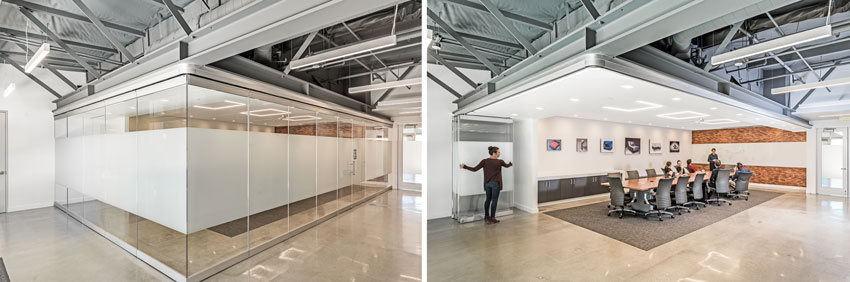
In light of this information, an emerging trend now shifts design strategies away from an open concept and instead focuses on reconfigurable spaces to increase flexibility. This flexibility of spaces is achieved by using movable or operable glass walls that can open to accommodate group gatherings when desired and close to create smaller, more private spaces when needed. The operable glass walls still provide natural light transmission when closed and can also achieve very high degrees of sound control. Contemporary workspaces that incorporate this reconfigurable design approach seem to deliver higher levels of worker productivity and satisfaction. They can also increase the sense of flow and connectivity between different spaces within a building while allowing for more efficient space planning.
With the above in mind, architects and designers who recognize the benefits of such reconfigurable spaces need to consider several factors that go into a successful design.
Photos courtesy of NanaWall Systems
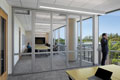
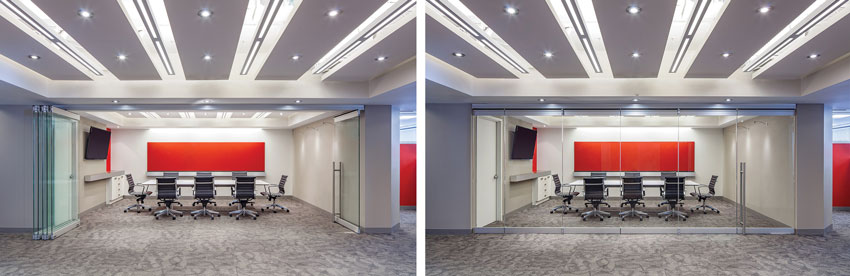
The offices of SK&A Structural Engineers located in Washington, D.C., were designed by MV+A Architects and include a prominent operable glass wall at the lobby conference room to allow for a balance between collaboration and acoustical control.
Commercial interiors seem to be ever evolving, ever changing, and ever focused on meeting new criteria. Some of these changes are driven by building owners, occupants, or users who simply have changing desires, tastes, or functional needs for operations. Others are driven by updates to codes and standards that require more attention to details of health, safety, or welfare, including the health and well-being of people in a building. And of course, some are simply driven by a need for maintenance of and upgrades to a building because everything has a useful service life. In this course, we look closer at some of these drivers of change and some of the practical ways that they can be addressed and incorporated into well-designed building interiors.
Photo courtesy of NanaWall Systems
The ever-changing needs of building owners and occupants continue to drive innovation and new options for the design of interior spaces.
Biophilia in Design
A growing interior design trend that is directly related to human health and welfare is the use of biophilia in contemporary buildings. Defined literally as a love of living things or a love of nature, biophilic design is a concept focused on increasing occupant connectivity to the natural environment in creative ways. Theorists argue that this design approach taps into the hard wiring of human beings who, over the span of history, have developed an affinity for the life-supporting aspects of the natural world.
One biophilic approach is to allow building occupants to have direct access to nature through areas like a rooftop garden, an adjacent nature walk, or a garden courtyard. If that is not feasible or practical, then providing living “green walls” or plants in the space is a good alternative. Direct views out to natural areas work well too. These approaches have tremendous merit in improving mood, air quality, and the overall look of the space.
Photos courtesy of Inpro
Biophilic design can be incorporated into buildings using large scale graphics back-printed on clear wall protection sheets (left) or onto roller shades (center). When natural views are available, solar shades allow for direct views with effective glare control (right).
There is another approach that is also effective and often more readily incorporated into a building, namely the use of graphics and imagery that portray scenes from nature. As part of an interior design strategy, there are at least three ways in which to do this effectively on a large scale, including the following:
Digitally printed wall cladding and art: Imagine turning nature scenes into whole-wall imagery or using large-scale graphics to create inspiring biophilic designs. This is now possible using printed wall-protection products that combine high-resolution images with durable wall protection. These are fabricated by back-printing a graphic image onto a clear, resilient sheet. Along with truly endless design capabilities, this approach also provides high-impact durability to wall surfaces. Since the graphic is back-printed on the protective sheet, there is no worry about the image being scratched over time. That means high-resolution photographs, artwork, or any other biophilic graphic can be printed and incorporated onto as large a wall space as a design may require.
Printed roller shades: If entire walls are not available for biophilic design graphics, then perhaps windows are. Views out of windows can sometimes be less than pleasing and look onto areas that are not natural or soothing. In cases like this, one option is to incorporate printed images onto roller-shade fabrics. Depending on the density and weave of the shade, daylight can still be allowed in, but the image looking out can be much more natural and uplifting.
Solar shades: When views are to natural areas, positive biophilic effects can be achieved. Incorporating solar shades with fabrics containing more openness in the weave can reduce the sun’s glare and heat gain, yet still allow for those outside views.
Balancing Acoustics and Collaboration
Many indoor environments are designed around fostering collaboration, interaction, and communal activity. This is true in commercial settings, such as offices with open-concept floor plans, schools with collaborative learning spaces, and universities with open, informal meeting areas. However, these indoor environments, regardless of their function, require that attention be paid to how noise and sound travels in order to protect privacy, promote productivity, and even safeguard health.
However, a Harvard Business School study has challenged the practice of all of these open spaces. It analyzed the effects of open floor plans in office spaces and discovered that it actually is not an ideal layout for optimal productivity. The study reported a decrease in coworker interaction, productivity, and direct communication between team members, as well as increased distraction and poor decision-making by employees.
In light of this information, an emerging trend now shifts design strategies away from an open concept and instead focuses on reconfigurable spaces to increase flexibility. This flexibility of spaces is achieved by using movable or operable glass walls that can open to accommodate group gatherings when desired and close to create smaller, more private spaces when needed. The operable glass walls still provide natural light transmission when closed and can also achieve very high degrees of sound control. Contemporary workspaces that incorporate this reconfigurable design approach seem to deliver higher levels of worker productivity and satisfaction. They can also increase the sense of flow and connectivity between different spaces within a building while allowing for more efficient space planning.
With the above in mind, architects and designers who recognize the benefits of such reconfigurable spaces need to consider several factors that go into a successful design.
Photos courtesy of NanaWall Systems
The offices of SK&A Structural Engineers located in Washington, D.C., were designed by MV+A Architects and include a prominent operable glass wall at the lobby conference room to allow for a balance between collaboration and acoustical control.
Flexibility
Studies have also shown that part of creating a productive work environment means providing a variety of different workspaces that employees can choose to utilize at will. This includes large conference rooms that can be divided into smaller, more intimate meeting rooms to offer collaborative or independent workspaces as needed. It also means combining private offices, cubicle banks, and open floor plans as well as communal areas and sound-proof rooms where employees can concentrate. When operable glass wall systems are used, they allow for a smaller footprint with more multifunctional, sound-controlled office enclosures and meeting rooms, while reducing the need for extraneous dedicated rooms that serve only one function.
Natural Light
According to the WELL Building Standard, a building certification program focused on health and well-being, natural daylighting has a substantial impact on building occupants. It includes guidance on how occupied spaces with good natural lighting enhance productivity, provide visual acuity, and minimize circadian rhythm disruption. There are other noted positive effects on people in the form of stress reduction, cognitive performance, concentration, and overall mood enhancement. Operable glass wall systems allow architects and designers to create flexible enclosed spaces that allow such natural light transmission. Whether open or closed, the transparent nature of an opening glass wall system ensures greater diffusion of natural light within the space.
Privacy
Privacy, like collaboration, is essential for better workplace engagement, innovation, and advancement. Focused work is often valued as the most important activity in a workplace and takes up the majority of an employee’s time. To efficiently complete such work, a sizeable amount of visual, auditory, and spatial privacy must be provided. These essential ingredients allow individuals to work without distraction, accurately communicate sensitive information, clarify ideas, focus, and recharge. Operable glass walls can provide this privacy through the use of tinted or shaded glass, art glass, or operable shades.
Sound
Sound control and transparency typically are the “oil and water” (i.e., they do not mix) of office environments. The benefits of the open, transparent, collaborative spaces can be quickly overshadowed by the downside of unwanted noise causing distractions and interruptions. Uncontrolled noise can happen in just about any indoor environment, and it can be enough to distract employees or students and lower their productivity. In extreme cases, when the noise is continual, it can make it hard to concentrate and add stress to the workplace, which in turn can reduce morale, make some people irritable, and even introduce adverse health effects.
Of course, some spaces do not require acoustic control all of the time and instead can benefit from acoustic barriers that can be folded away when they are not needed. Offices with flexible or reconfigurable meeting spaces are a great example of this. Operable glass wall systems offer sound control when needed at differing levels. Among the best, sound transmission class (STC) ratings of up to STC 45 are available. At this rating, loud conversations in adjacent spaces are reduced down to low levels of speech, while common speech is reduced to an unintelligible, quiet murmur.
Overall, operable glass wall products can be specified to achieve the desired characteristics of flexible, reconfigurable spaces while still meeting the critical needs of privacy, light, and sound control. Options are available that include standard bifold doors, a single-track sliding system, frameless interior opening glass walls, and a minimally framed large panel sliding system. All of these can be fine-tuned to meet performance needs with specific enhancements, such as higher-STC glass or specialized seal and track systems.
Improved Wood Interiors
Many commercial and residential interiors desire the use of wood for a more natural and comfortable indoor environment. In the interest of sustainability, it has become very popular to use reclaimed wood for such interior designs. With a distressed look and color variations, designers are creating unique, rustic, and occasionally eclectic spaces that appeal to many building owners and occupants. However, there are plenty of uncertainties about the quality of reclaimed wood since only so much information may be available about its sourcing or previous use.
Similarly, there are design trends that incorporate charred cedar known as shou sugi ban, named after a Japanese tradition of charring the face of the wood for longevity. The dark or black appearance also appeals to many design schemes; however, it also creates a cleanliness issue indoors since the surface (essentially charcoal) can rub off onto people or other things in the space.
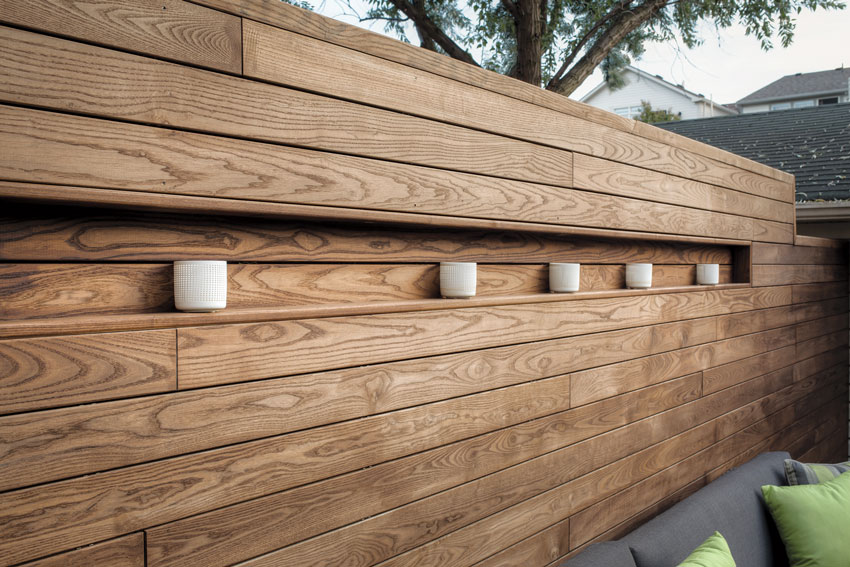
Photo courtesy of Thermory USA
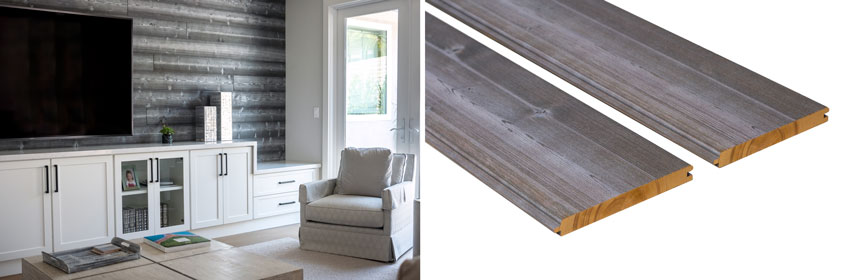
Thermally modified wood retains the look of wood but has enhanced performance characteristics for
durability, longevity, and sustainability.
Instead of using reclaimed or charred wood, a new option has emerged known as thermally modified wood. This is a process where a common species of wood, such as ash, pine, or spruce, is treated with heat and steam in a very precise, scientifically controlled manner. When done properly, thermal modification of wood results in boards that are more durable, dimensionally stable, and rot resistant than virtually any other wood product currently available. Further, because the basic wood species used are readily available, they can be specified based on requiring responsible sourcing, sustainable harvesting, and minimizing carbon footprint throughout the milling and delivery processes. This can all be documented and verified by recognized sustainability organizations, such as the Forest Stewardship Council (FSC) or others. As such, thermally modified wood is coming to be seen as a sustainable alternative to tropical woods, reclaimed wood, and charred wood.
The process of thermally modifying wood focuses on enhancing virtually every fiber of the wood, from the surface all the way through to the core. Nonetheless, the wood still retains its natural beauty since the grain is preserved and the coloration is enhanced. While the surface can be coated with a clear finish if desired, the thermal modification process is intended to allow the wood to be exposed and weather naturally over time without degrading. As such, it is delivered in natural colors that are the result of the heat process rather than a stain. Over time, this color can lighten to a natural light grey in much the same way exposed cedar and teak naturally age in color. All the while, the integrity and natural beauty of the wood remains visible and intact.
From a performance standpoint, thermally modified wood has been tested to show some very attractive traits. First, in terms of durability, thermally modified white ash has achieved a Class 1 durability rating of more than 25 years, while thermally modified Scots pine is rated for 20-plus years of rot resistance. More specifically, testing has been conducted with fungus spores introduced to thermally modified ash samples with the intention of promoting fungal growth over a period of time. These samples were contrasted with control samples to interpolate the class of rot resistance based on European standards. The result was Class 1 rot resistance achieved in thermally modified ash, meaning that, on average, it can be expected to last outdoors for at least 25 years or more with minimal maintenance or added oils.
Overall, thermally modified wood is both beautifully appealing and very practical. The clean modification process uses only heat and steam for a completely nontoxic product, leaving each board highly stable and rot resistant. With these attractive qualities, there are currently three types of thermally modified wood to consider for interior as well as exterior applications as follows.
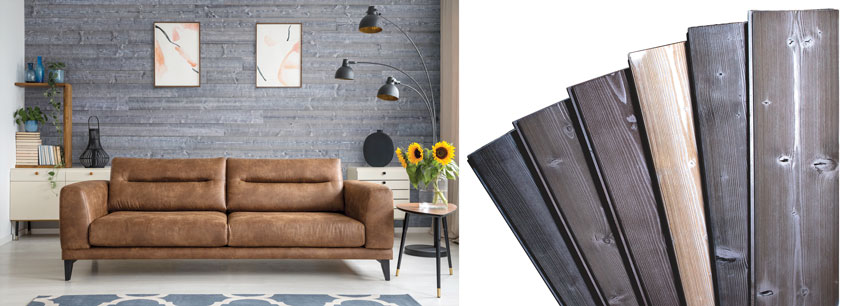
Photos courtesy of Thermory USA
Thermally modified spruce is available in a range of colors that are more predictable and perform better overall than reclaimed wood or barn boards.
Traditional Wood Look
Common species of wood like ash and pine are thermally processed to offer the simple, timeless beauty of clean, natural wood. The modification process leaves each board a rich color that will vary from species to species. Building owners have the choice to oil the boards yearly to maintain this color, or leave them unoiled to allow the wood to naturally undergo a truly unique and beautiful color evolution. Over time, the wood will transform with an elegant color change to platinum grey, offering a new take on an elegant aesthetic. These wood cladding products routinely undergo a meticulous milling process, leaving them exceptionally straight, flat, and smooth to the touch.
Reclaimed Wood Look
Thermally modified spruce is another option that can create a weathered look nearly indistinguishable from reclaimed wood. Available in a range of realistically weathered colors, they offer the reliability that comes from thermal modification plus the aesthetic desired to bring many designs to life. This type of thermally modified cladding offers the look of reclaimed wood, or barn wood, without the risks. Reclaimed wood is beautiful but difficult to source, difficult to vet, and often contains debris like stray nails, insects, or hidden rot spots. Thermally modified spruce mimics the look of reclaimed wood, but the modification process ensures consistent quality. In addition, if manufacturer-applied brushing and staining is selected, then each board will have the texture and color of naturally aged wood, ultimately providing the same effect with more control over the result.
Charred Wood Look
For designers seeking the ancient look of traditional shou sugi ban, or charred cedar, thermally modified, black-colored spruce can be a superior option. The ancient Japanese method of preserving wood by charring the surface is beautiful but difficult to achieve. On old-growth cedar, this process was effective, but today, it leaves the center of the boards vulnerable. Plus, charred wood is messy unless properly sealed. Thermally modified products provide the look without the hassle. They offer a bold, charred wood aesthetic that truly merges ancient traditions with modern design via the consistency of thermally modified wood in a deceptively flame-free process. There is no mess or residue; rather, the wood is stained and embossed to look realistically charred. It is available in brushed or dragon-scale textures for both interior and exterior cladding.
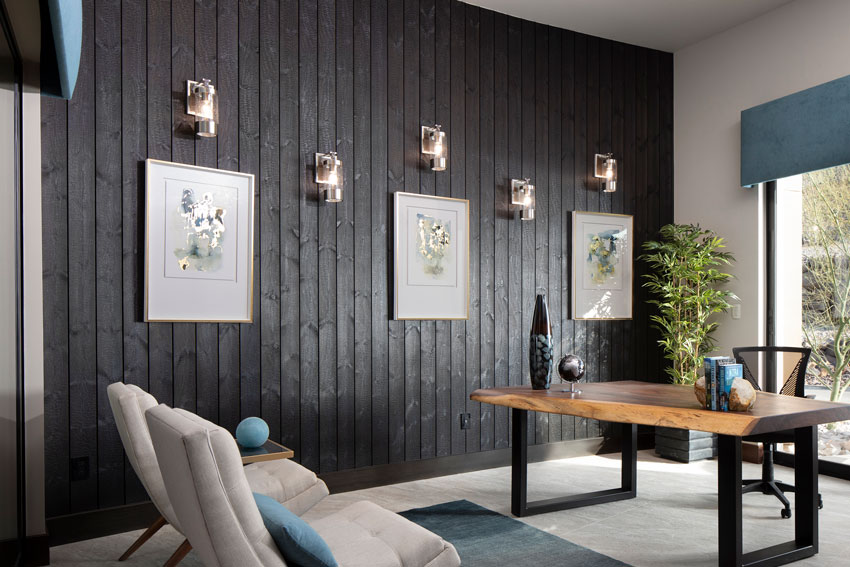
Photos courtesy of Thermory USA
Dark-colored thermally modified wood is an ideal choice for the look of shou sugi ban, or charred cedar.
Better Restroom Design
Every commercial building has restrooms, and all of them are used by almost everyone who enters the building. Public infectious health concerns (most recently, COVID-19 and flu outbreaks in particular) necessitate that restroom cleaning and maintenance support reliable handwashing for building visitors and occupants as well as a clean restroom environment. A leading manufacturer conducts a Healthy Handwashing Survey annually. The latest one has determined that 93 percent of Americans say that they employ at least one evasive measure in commercial restrooms to eliminate the risk of touching surfaces that might house germs. Similarly, 65 percent use a paper towel to avoid contact with a door handle, faucet, or toilet flusher. In addition, the survey shows that the top improvement Americans would like to see in commercial restrooms is making everything “touchless” (i.e., relying on sensors to activate fixtures rather than touching them with hands).
Based on all of the above, it is not surprising that designers and manufacturers spend considerable time and effort in making restrooms both look and function to high standards. Consider several examples of better restroom design discussed as follows.
All-in-One Handwashing
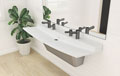
Typical restrooms often incorporate separate fixtures for dispensing soap, water, and hand drying. However, there is a new concept that is gaining popularity: innovative “all-in-one” handwashing fixtures are now available that incorporate a soap dispenser, a water faucet, and an electric hand dryer all in one streamlined wash bar unit. When paired with an appropriately designed sink, these touch-free fixtures support hygienic handwashing, reduce germ touchpoints in restrooms and improve overall facility cleanliness. All-in-one handwashing models are designed with accessible, easy, and intuitive handwashing interaction for users. LED lighting and easy-to-identify icons guide handwashing while keeping touch-free soap, water, and dryer in close reach. The dryer and bowl work in tandem to keep water from splashing outside the basin onto the floor, walls, or user, improving restroom cleanliness and safety. Integrating soap, water, and dryer into one fixture also eliminates deck and restroom clutter.
Certain all-in-one handwashing models have several features that curb germ transmission and improve restroom cleanliness. This includes a cleaning mode that allows maintenance staff to temporarily disable the functions so that the handwashing fixture can be cleaned. Similarly, a larger, 1-gallon soap container can be incorporated that requires fewer refills. Similarly, a larger, 1-gallon soap container can be incorporated that requires fewer refills. When the low-level LED indicator illuminates, the soap container is replaced with a new full container, minimizing germ contamination associated with refills. Finally, to stop germs and bacterial growth in the fixture between uses, it is programmed to purge water every 24 hours for 5 seconds if the unit has not been activated. In effect, stagnant water is drained from the piping system and flushed with water to reduce and prevent the growth of bacteria.
In all, this cohesive handwashing design enhances user-friendly touch-free handwashing functionality while elevating cleanliness, safety, and aesthetics in restrooms.
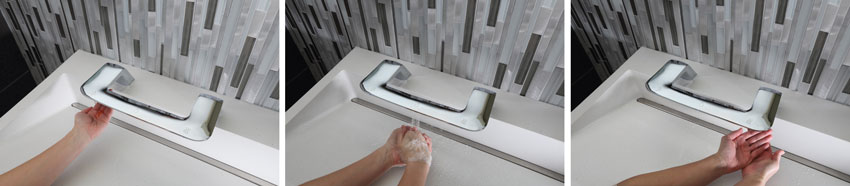
Photos courtesy of Bradley Corp.
Innovative “all-in-one” handwashing fixtures include touchless functions of soap dispensing (left), water washing/rinsing (center), and hand drying (right).
Coordinated Soap and Faucet Sets
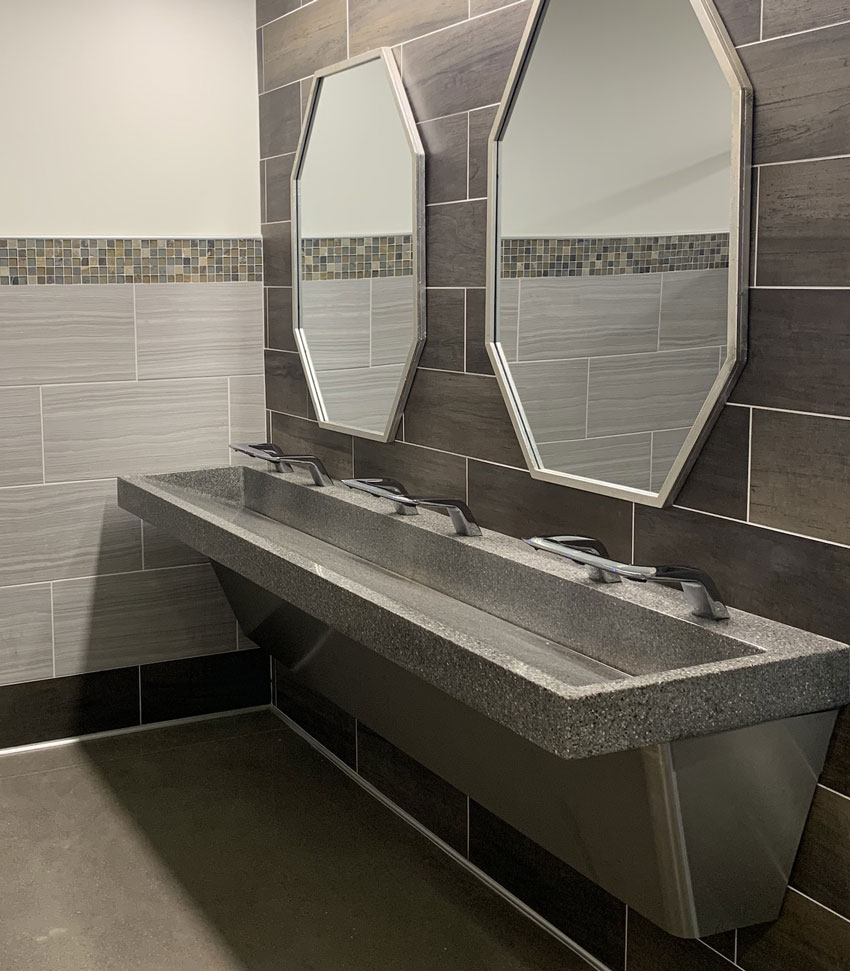
If all-in-one fixtures are not appropriate for a given project, then well-coordinated separate fixtures should be considered. Specifying matching soap dispensers and faucets harmonizes the overall appearance and adds a unified design element to washbasins. New touch-free models are universally designed and can be used on all types of basins. Such attractive handwashing fixtures create a cohesive and unified aesthetic in restrooms.
With advanced sensing technology, new soap and faucet pairs come in an array of styles, popular finishes, and advanced features. Some of the newest features include hidden sensors to deter tampering, optimized sensing to eliminate false activations, longer spouts for increased handwashing space, and cast brass spout construction with popular and environmentally friendly PVD finishes. Newer faucets offer dual-sensor technology that provides highly accurate activation while optimizing battery life. Faucets should have multiple low-flow options to match water-savings preferences and multiple run-time options to fit the application. To minimize germ buildup, an auto-flush feature is available to flush the water line every 24 hours. A manual valve override feature is also available for longer water flushing.
Some soap dispensers are designed with a wide range of top-fill options and a smart sense system with LED light indicators that display low soap and battery. Audible and visual alert systems guide refilling to avoid soap overfilling or spilling. The dispensers use universal bulk soap in foam and liquid options. For high-traffic applications using multiple handwashing stations, a top fill multi-feed soap system can supply soap up to six dispensers at once. The system includes a translucent ring that illuminates when the tank begins to run low on soap or power.
Matching soap dispensers and faucets come in popular finishes such as polished chrome, brushed black stainless, brushed nickel, brushed stainless, brushed brass, and brushed bronze. They are also available in modern and classic styles that range from elegant to sleek to organic to complement and integrate with any restroom design.
Privacy Partitions
With privacy emerging as a key user preference in commercial restrooms, privacy partitions add extra height, width, and discretion to create the feeling of an individual room. Using privacy partitions helps architects create comfortable, durable restroom retreats for users.
Privacy partition models feature 72-inch-tall doors and panels mounted 6 inches above the finished floor for standard stalls, and 69-inch-tall doors and panels mounted 9 inches above the finished floor for ADA stalls. To provide additional space, panels are available up to 84 inches deep and feature a stacked panel design that is seamed together with an aluminum H-bracket, providing a cleaner design aesthetic and faster installation. Other options are also available to eliminate gaps between doors, pilasters, and panels to deliver even more privacy. These partitions are available in a variety of high-quality and durable materials like stainless steel and solid plastic that stand up to everyday wear, high traffic, and vandalism attempts.
This need for privacy is not a new concept. According to a noteworthy study on restroom design, "The Bathroom" by Alexander Kira, Americans have been uncomfortable with the lack of privacy in restrooms for decades. The above-mentioned Healthy Handwashing Survey found that greater privacy surrounding restroom stalls is the top improvement that Generation Z would like to see in their school restrooms.
Further, a number of facilities could use extra depth for restroom partitions. For example, airports and hotel lobbies often need extra space and enclosed areas for luggage. Facilities that accommodate small children and their parents, such as restaurants, malls, and amusement parks, are also good applications for partitions with extra depth.
Finally, in the age of mitigating COVID-19, using extended partition walls can be useful in the containment of germs inside restroom stalls.
Accessible Showers
Restroom privacy is a particular concern when showers are included in the design. It is further the focus of design attention when accessibility is required. While most design professionals are familiar with the requirements of the International Building Code (IBC) and Americans with Disabilities Act (ADA) related to restrooms, the details of showers should not be overlooked since they are included in a wide range of accessible buildings.
The intent of accessible or “universal” design is to move toward inclusion and accommodation of people with physical disabilities to mainstream them wherever possible versus separating them from everyone else. Showers need to embrace this universal design too. No-threshold or curbless shower stalls are often used to achieve this, which allow ease of pedestrian access as well as wheelchair movement in the bathing space. A trench drain allows for better control of drain water flow and linear access, easing wheelchair maneuverability. Where a no-threshold or curbless shower may not be feasible, the installation of ADA-compliant ramps can be used.
With all of the above as a basis, many designers find that solid-surface panels are an excellent choice as a shower-enclosure material. Since solid surface is nonnutritive, it does not promote the growth of mold and mildew, and it resists bacterial growth. The inclusion of “active” antimicrobials like copper within the solid surface itself can reduce odor-causing bacteria. By contrast, with tile and grout, the porous grout is usually where the first black splotches of mold start growing. Where grout cracks or falls out, there is risk of water getting behind the tile, leading to tiles failing or moisture seeping into the gypsum board or other substrate. Cleaning and resealing tile means more work for maintenance staff and leaves room for error.
Solid-surface showers also mean quicker turnaround on installation over traditional tile. From start to cured finish, solid-surface showers can be ready to use in as little as four to five days compared to 12 days for traditional tile work. Slid surface receptors (floor pans) can be installed in as little as 1 hour versus three days for tile.
Solid-surface shower receptors can be poured and fabricated into many standard or custom shapes (L shapes, T shapes, neo angles, etc.) in a wide variety of sizes. The integral nonskid surface helps prevent slips and falls, and ADA edges and ramps can ease the transition from floor to receptor.
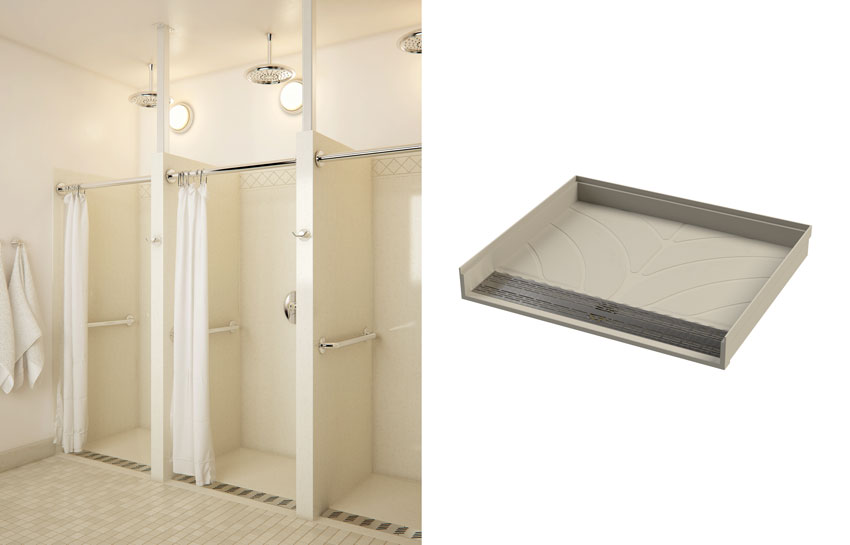
Photos courtesy of Inpro
Accessible showers made of solid-surface material provide clean, appealing conditions with receptor pans that can include trench drains for better access and water flow control.
A common misconception among designers and contractors is that shower receptors must always have the drain in the dead center of the receptor, but this is not true. Being able to put the drain hole in virtually any position—and slope the pan accordingly—is critical to easier field installation that accommodates unusual field conditions or plumbing locations. Drain locations can be set to match existing plumbing, and trench drains are also an option.
Modernized Elevator Cab Interiors
Among the most used interior spaces in a multistory building are the elevator cabs. The walls of these cabs have been discovered by many building owners as a means to communicate with visitors, tenants, and others about some aspect of the building use. In essence, the elevator cab can become a daily ambassador of the message or branding of the building. However, these cabs are subject to deterioration and damage precisely because of their heavy use. Therefore, the elevator cabs need to be upgraded regularly either to overcome a worn and unsightly appearance or simply upgrade the look to be consistent with the organization or other parts of the building. Further, leaving an old, damaged elevator cab out of a larger building renovation project can very well make the appearance look worse and leave an otherwise beautiful upgrade with a serious black eye.
The most cost-effective and innovative way to carry out such an elevator cab upgrade is to use preconfigured elevator cab renovation systems from a manufacturer that has a specialty line of products to address these needs. This system can include any or all of the following elements.
New panels: The elevator panels that line the walls are what primarily make up the appearance of the cab. These panels also typically take quite a beating from hospital beds to luggage carts, tenant move-ins and -outs, construction equipment, vandalism, and whatever else may come their way. Fortunately, the panels can be made of durable and rugged materials that can be made to look like any range of materials, from wood to metal to stone or custom choices.
New ceilings and lighting: Elevator ceilings come in many different styles and can be selected to suit an overall design concept. Lighting in elevator cabs can be chosen from among common lamping options, such as halogen, incandescent, fluorescent, or energy-efficient LED. Keep in mind that people tend to be more comfortable in a well-lit interior, so combining a brighter ceiling with increased lighting output can help people feel more relaxed inside, not to mention creating a newer and cleaner look. The energy efficiency of elevator cab lighting is notable since these lights typically stay lit 24 hours a day, seven days a week, meaning they are running for 8,760 hours a year. Further, selecting energy-efficient LED lighting means the lamps have a much longer service life, notably reducing maintenance costs for replacements.
New handrails: Handrails in elevators get attention for ADA or accessibility code requirements, but they also provide stability for users (i.e., something to grasp) while the elevator stops and starts. This is particularly true for elderly, disabled, or injured people who need help to reduce the risk of a fall. Beyond the people aspect of handrails, they provide a means for a complete look to the cab and can act as a wall guard too. By providing a standoff surface from the wall of the cab, they can reduce the chance of equipment or furniture striking the wall panels. As part of a total system for elevator cabs, handrails come in different shapes, sizes, and finishes.
Paying attention to both the appearance and durability of elevator cabs can be beneficial in terms of creating successful, innovative interiors.
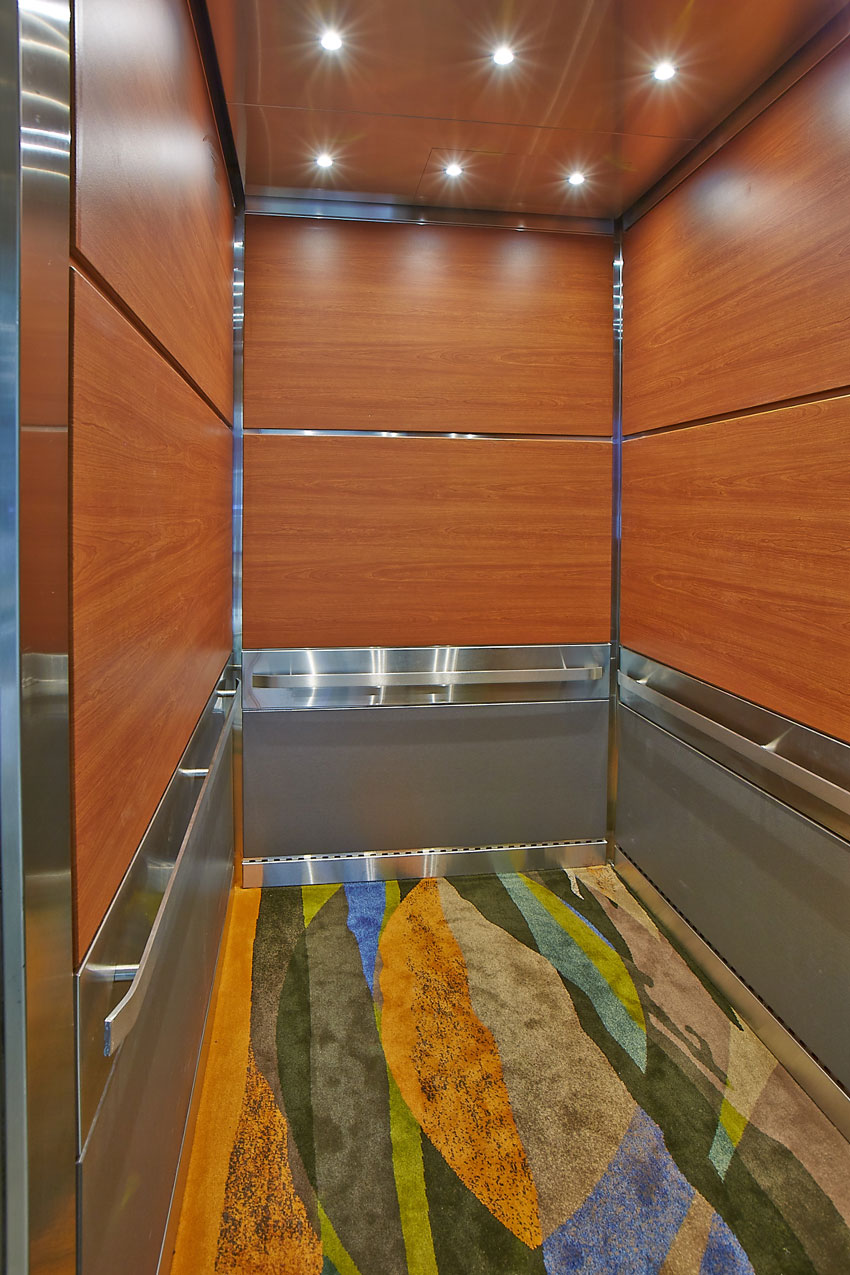
Photo courtesy of Inpro
Renovated elevator cabs complete the interior design of a building, offer opportunities to make a better first impression, and can include durable, protective materials.
Conclusion
Supporting the health and wellness of building occupants can be directly addressed through current interior design trends. Biophilic design can be incorporated in many creative ways. Reconfigurable spaces can be achieved through the use of acoustically superior operable glass walls. Durable, thermally modified wood can provide the look of reclaimed wood or barn wood with more predictable results. Restrooms can be designed to incorporate hygienic, touchless design and privacy. Elevator cab renovation can complete an overall design and improve durability. Overall, innovations like these can be used by design professionals on all types of buildings to keep up with both changing trends and owner needs.
Peter J. Arsenault, FAIA, NCARB, LEED AP, is a nationally known architect, consultant, continuing education presenter, and prolific author advancing building performance through better design. www.pjaarch.com, www.linkedin.com/in/pjaarch