This CE Center article is no longer eligible for receiving credits.
This course provides architects and design professionals who must now contend with evolving design expectations due to the COVID-19 pandemic with restroom design strategies that minimize disease transmission by maximizing hygiene, optimizing space and traffic flow, and selecting products that enable proactive sanitation and maintenance. All recommendations are rooted in official Centers for Disease Control and Prevention (CDC) guidelines.
Challenges of Designing Public Restrooms in The Covid-19 Era
First, we will explore and evaluate the hygiene challenges for public restrooms in the face of the COVID-19 pandemic, including the science of virus and bacteria transmission, and CDC guidance for cleaning, disinfecting, and using public spaces.
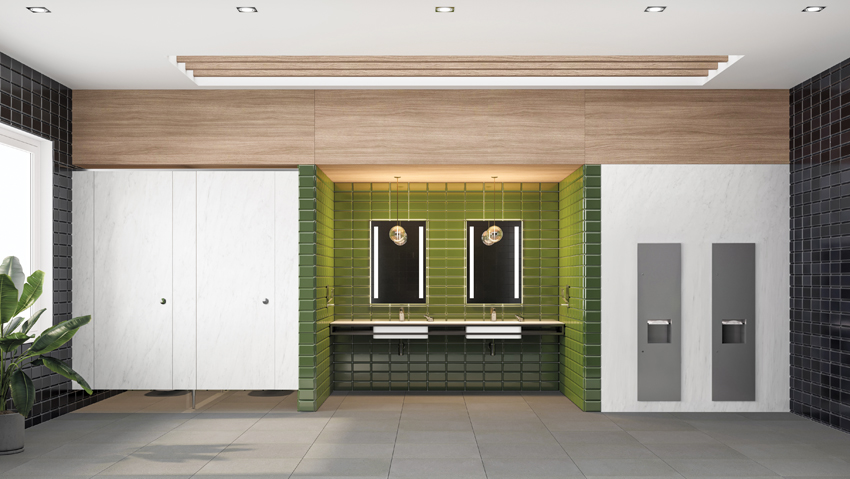
Image courtesy of Bobrick Washroom Equipment, Inc.
The Centers for Disease Control and Prevention (CDC) offers guidance for cleaning, disinfecting, and returning to public spaces during COVID-19.
Disease Transmission
Before evaluating the potential risk to human health in commercial restrooms and solutions to current hygiene challenges, it is important to first understand how diseases, such as COVID-19, can be transmitted from person to person.
According to the World Health Organization (WHO), the COVID-19 virus can spread from an infected person’s mouth or nose, in small liquid particles known as droplets, when the person coughs, sneezes, speaks, sings, or breathes heavily.
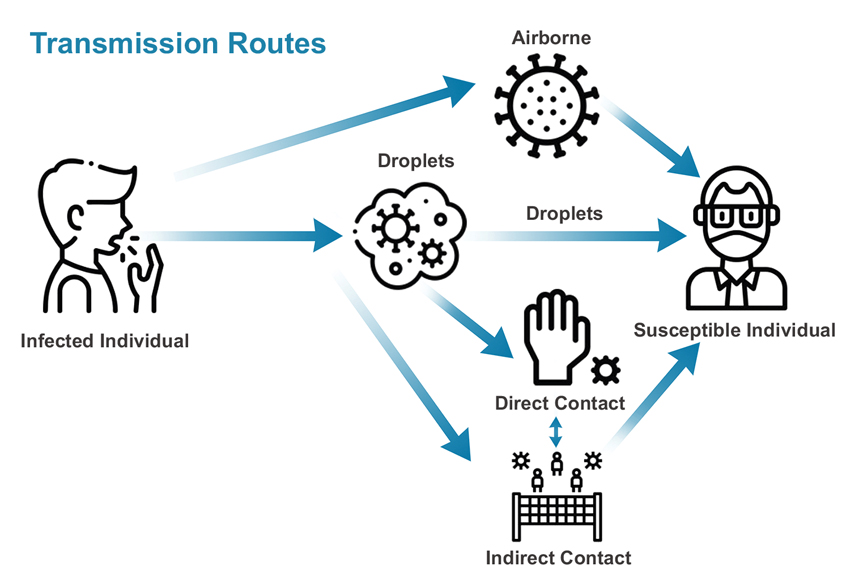
Source: Journal of Hospital Infection 92 (2016) 235–250
These liquid particles are different sizes, ranging from larger respiratory droplets to smaller aerosols. Diseases like COVID-19 can also be transmitted when the virus comes into contact with a person’s mouth, nose, or eyes. This is more likely to occur when people are in direct or close contact—less than 3 feet away from an infected person.
These different methods of transmission are important to understand as we design spaces that minimize both direct and indirect contact while still maintaining efficient traffic flow in shared spaces.
From the research that has been done on the transmission of the COVID-19 virus, we know that restaurants, malls, and gyms have been identified as places with the greatest risk of transmission. Where individuals gather (both indoors or outdoors), the overall crowd density, and patrons’ ability to keep their masks on throughout their visits are all significant factors in whether a building carries a high or low risk of transmission.
While all restrooms moving forward will require modified design approaches, knowing which building types are at highest risk can help prioritize solutions.
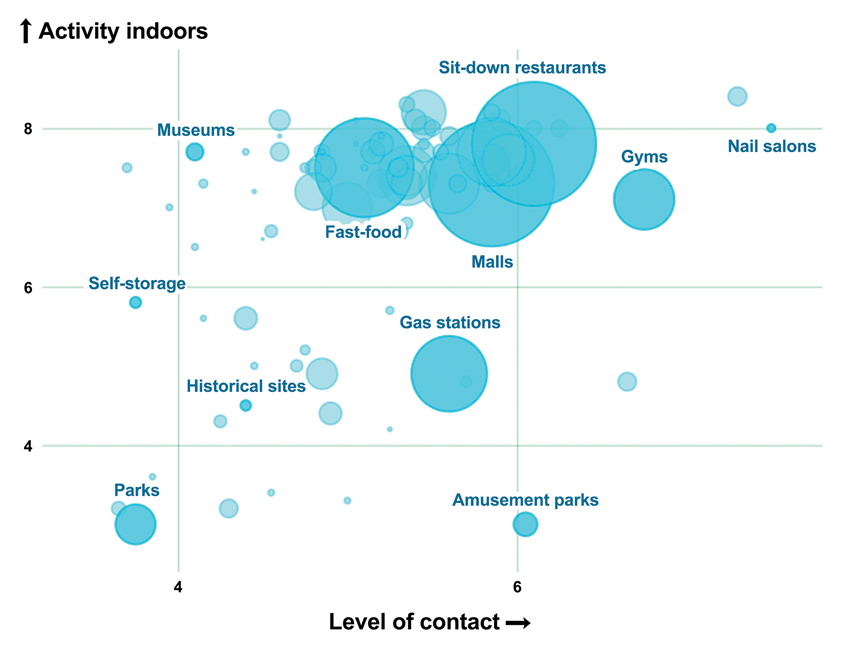
Source: “Is It Safer to Visit a Coffee Shop or a Gym?” New York Times, May 6, 2020
Top Challenges for Public Restrooms
Possibly the biggest challenge facing public restrooms from an infection-prevention standpoint is how crowded and enclosed they tend to be. The reason we hear so much about maintaining a 6-foot distance between patrons is that respiratory viruses such as COVID-19 can be spread easily by respiratory droplets that transmit from 3 to 5 feet. Transmission can occur either from person to person or via the contamination of surfaces within a space.
Other factors that encourage the spread of viruses in this setting include poor air circulation as well as moisture. Viruses live longer on smooth, moist surfaces.
Restrooms also have numerous touchpoints, which promote the spread of disease and pose design challenges. In fact, some restrooms can have up to nine or 10 total physical touchpoints. A single user can touch an entry door handle, a toilet-compartment door pull, a toilet-compartment door latch, a toilet-tissue dispenser, a toilet flush lever, a manual soap dispenser, a manual faucet, a paper-towel dispenser, and an exit door handle all in one trip to the restroom.
Another challenge is the placement of hygiene amenities. Poor placement of amenities like soap and paper towels can lead to water trails in the restroom, which encourage the growth of bacteria.
Entry and exit points are also a design challenge, as they can create very tight quarters and challenging touchpoints, which makes social distancing difficult and contact with contaminated surfaces an issue.
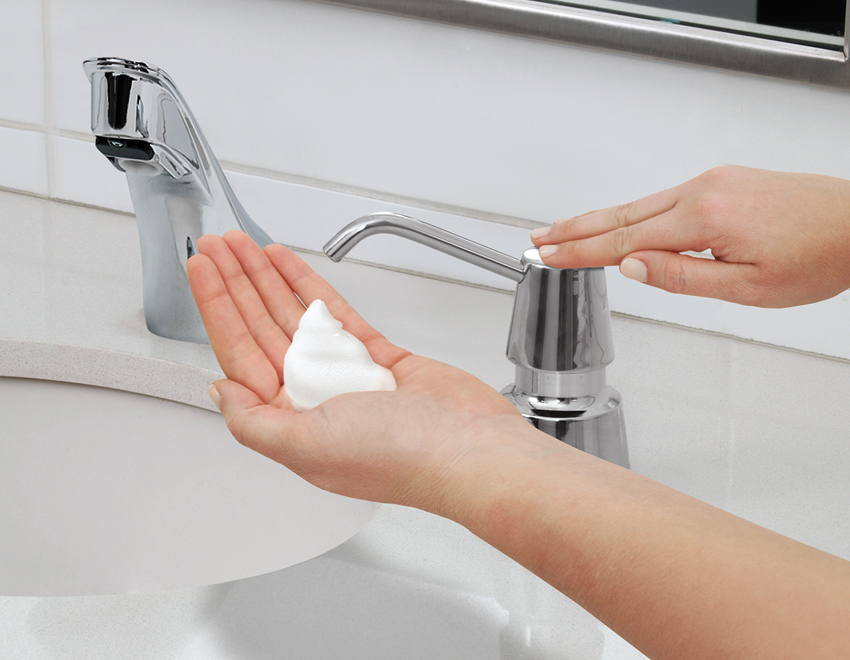
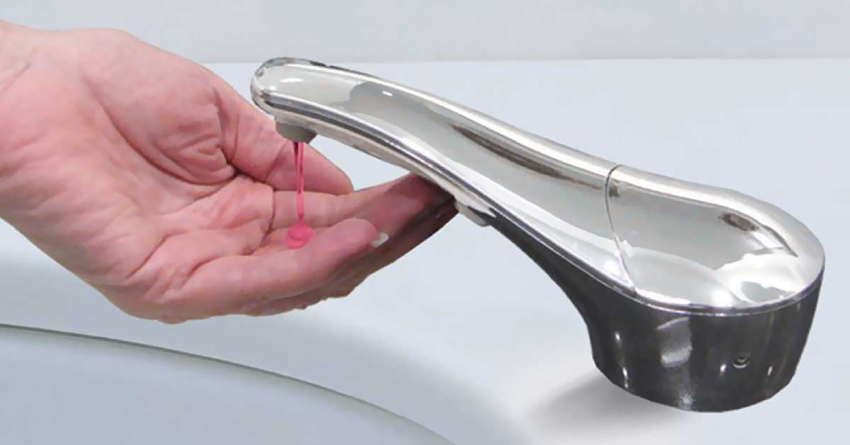
Photos courtesy of Bobrick Washroom Equipment, Inc.
Patrons and building owners prefer automatic soap dispensers over manual for reduction of
physical touchpoints and peace of mind.
Centers for Disease Control and Prevention (CDC) Guidance
The CDC guidance on returning to the workplace environment, which can lead to many design and operational challenges, advises that one of the most effective ways to stop the spread of infections is with frequent, proper hand hygiene—specifically handwashing and drying. Restrooms must be safe spaces where people can clean their hands and feel good about the process.
The CDC also suggests that when returning to the workspace, the traffic flow and occupancy of both workspaces and restrooms needs to be considered. Overcrowding leads to easier disease transmission.
Another key point to consider is the condition and design of airflow to restrooms. Are there adequate air exchanges and outside ventilation?
Another design consideration for the public restroom is the placement of signage and the materials used for the signage or indicators.
Finally, the cleaning and disinfection of public restrooms is a significant factor. The CDC has a list of Environmental Protection Agency (EPA) approved disinfectants for COVID-19 and suggests increasing the frequency that the surfaces are cleaned, when possible.
From a design standpoint, it is critical to consider the types of surfaces used for moisture control, their ease of cleaning, and their ability to stand up to the repeated exposure to disinfectants and general longevity. Viruses and bacteria like to live in any small crack or space they can find. So, considering the surface and the long-term condition of the surface is critical.
This course provides architects and design professionals who must now contend with evolving design expectations due to the COVID-19 pandemic with restroom design strategies that minimize disease transmission by maximizing hygiene, optimizing space and traffic flow, and selecting products that enable proactive sanitation and maintenance. All recommendations are rooted in official Centers for Disease Control and Prevention (CDC) guidelines.
Challenges of Designing Public Restrooms in The Covid-19 Era
First, we will explore and evaluate the hygiene challenges for public restrooms in the face of the COVID-19 pandemic, including the science of virus and bacteria transmission, and CDC guidance for cleaning, disinfecting, and using public spaces.
Image courtesy of Bobrick Washroom Equipment, Inc.
The Centers for Disease Control and Prevention (CDC) offers guidance for cleaning, disinfecting, and returning to public spaces during COVID-19.
Disease Transmission
Before evaluating the potential risk to human health in commercial restrooms and solutions to current hygiene challenges, it is important to first understand how diseases, such as COVID-19, can be transmitted from person to person.
According to the World Health Organization (WHO), the COVID-19 virus can spread from an infected person’s mouth or nose, in small liquid particles known as droplets, when the person coughs, sneezes, speaks, sings, or breathes heavily.
Source: Journal of Hospital Infection 92 (2016) 235–250
These liquid particles are different sizes, ranging from larger respiratory droplets to smaller aerosols. Diseases like COVID-19 can also be transmitted when the virus comes into contact with a person’s mouth, nose, or eyes. This is more likely to occur when people are in direct or close contact—less than 3 feet away from an infected person.
These different methods of transmission are important to understand as we design spaces that minimize both direct and indirect contact while still maintaining efficient traffic flow in shared spaces.
From the research that has been done on the transmission of the COVID-19 virus, we know that restaurants, malls, and gyms have been identified as places with the greatest risk of transmission. Where individuals gather (both indoors or outdoors), the overall crowd density, and patrons’ ability to keep their masks on throughout their visits are all significant factors in whether a building carries a high or low risk of transmission.
While all restrooms moving forward will require modified design approaches, knowing which building types are at highest risk can help prioritize solutions.
Source: “Is It Safer to Visit a Coffee Shop or a Gym?” New York Times, May 6, 2020
Top Challenges for Public Restrooms
Possibly the biggest challenge facing public restrooms from an infection-prevention standpoint is how crowded and enclosed they tend to be. The reason we hear so much about maintaining a 6-foot distance between patrons is that respiratory viruses such as COVID-19 can be spread easily by respiratory droplets that transmit from 3 to 5 feet. Transmission can occur either from person to person or via the contamination of surfaces within a space.
Other factors that encourage the spread of viruses in this setting include poor air circulation as well as moisture. Viruses live longer on smooth, moist surfaces.
Restrooms also have numerous touchpoints, which promote the spread of disease and pose design challenges. In fact, some restrooms can have up to nine or 10 total physical touchpoints. A single user can touch an entry door handle, a toilet-compartment door pull, a toilet-compartment door latch, a toilet-tissue dispenser, a toilet flush lever, a manual soap dispenser, a manual faucet, a paper-towel dispenser, and an exit door handle all in one trip to the restroom.
Another challenge is the placement of hygiene amenities. Poor placement of amenities like soap and paper towels can lead to water trails in the restroom, which encourage the growth of bacteria.
Entry and exit points are also a design challenge, as they can create very tight quarters and challenging touchpoints, which makes social distancing difficult and contact with contaminated surfaces an issue.
Photos courtesy of Bobrick Washroom Equipment, Inc.
Patrons and building owners prefer automatic soap dispensers over manual for reduction of
physical touchpoints and peace of mind.
Centers for Disease Control and Prevention (CDC) Guidance
The CDC guidance on returning to the workplace environment, which can lead to many design and operational challenges, advises that one of the most effective ways to stop the spread of infections is with frequent, proper hand hygiene—specifically handwashing and drying. Restrooms must be safe spaces where people can clean their hands and feel good about the process.
The CDC also suggests that when returning to the workspace, the traffic flow and occupancy of both workspaces and restrooms needs to be considered. Overcrowding leads to easier disease transmission.
Another key point to consider is the condition and design of airflow to restrooms. Are there adequate air exchanges and outside ventilation?
Another design consideration for the public restroom is the placement of signage and the materials used for the signage or indicators.
Finally, the cleaning and disinfection of public restrooms is a significant factor. The CDC has a list of Environmental Protection Agency (EPA) approved disinfectants for COVID-19 and suggests increasing the frequency that the surfaces are cleaned, when possible.
From a design standpoint, it is critical to consider the types of surfaces used for moisture control, their ease of cleaning, and their ability to stand up to the repeated exposure to disinfectants and general longevity. Viruses and bacteria like to live in any small crack or space they can find. So, considering the surface and the long-term condition of the surface is critical.
Although the actual cleaning methods may not change due to an outbreak, diligence and frequency may be intensified during an outbreak. Therefore, carefully consider your choices for lavatory countertop surfaces and toilet partition materials, as ease of cleaning and disinfection of these surfaces is critical.
To help address these challenges, Gensler architects have established these five key protocols for restrooms in the COVID-19 era: occupancy, signaling, queuing, door entry, and active use.
The occupancy protocol aims to limit the number of people using the restroom at once. Addressing this protocol may involve assessing the potential peak usage times, occupancy per floor, male-to-female split, and occupancy signage. All of these factors can influence the occupancy strategy of the restroom.
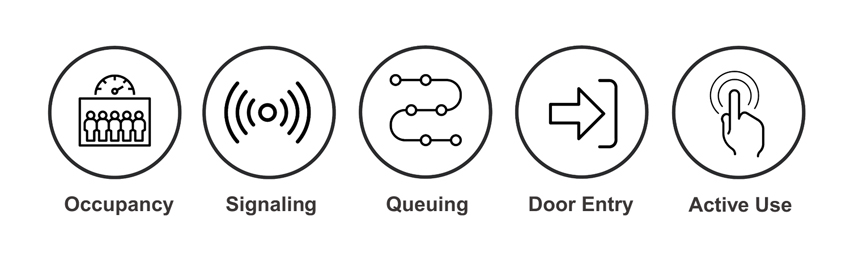
Image courtesy of Gensler
The signaling protocol focuses on communication through products, hardware, and signage. Standard solutions include door locks, while smart solutions may involve sensors. For a low investment, manual or digital occupancy indicators can be used at entrances and toilet-compartment doors. As a mid-tier investment, digital occupancy/in-use signage can be installed at the door, with remote sign integration. And, for a higher investment, dynamic occupancy signs can be mounted at the door.
However, even with signaling, queues are likely to form during peak hours. Design and operational strategies can work together to optimize queues. Operationally, staff can be encouraged to time their breaks to avoid peak demand. A design solution may include vinyl floor decals to demarcate queue distancing.
Entry, exit, and partition or cubicle doors are another challenge. While removing or blocking restroom doors may be an option in certain situations, when restrooms or toilet compartments face the workplace directly, doors must remain. Simple hardware solutions exist, but viability depends on privacy locks and latches.
To solve these challenges, personal antiviral touch keys are available for a touchless entry experience or self-cleaning touchpoint skins can be installed, as well as hands-free or foot-operated door pulls. As a higher investment solution, hands-free electronic sensors or door openers can be utilized.
Much of this course will focus on the active use protocol. Active use refers to the user’s physical interaction and activation—via touch, gesture, or otherwise—with products and technologies in their environments. A person utilizing a manual soap dispenser is an example of active use, as is that same person using a touchless dispenser. In addition, janitorial staff refilling a soap dispenser is also active use, as a secondary user is interacting with the product within its scope of intended use.
In the COVID-19 era, active use of technology and accessories will continue to shift toward touchless solutions, from paper-towel dispensers, soap dispensers, and faucets to toilets and urinals—and signage will encourage healthy behaviors/habits. Meanwhile, smooth surfaces without nooks and crannies are becoming preferred due to ease of cleaning.
Healthy Product Solutions
For a healthy, safe restroom, products can work together to help address today’s design challenges and meet the Gensler protocols—both at the lavatory and inside the toilet compartment.
In the restroom environment, product solutions for healthy handwashing and drying include a touchless faucet and soap dispenser, as well as a personal device holder for storing cell phones, tablets, purses and bags away from potentially wet or unsanitary surfaces.
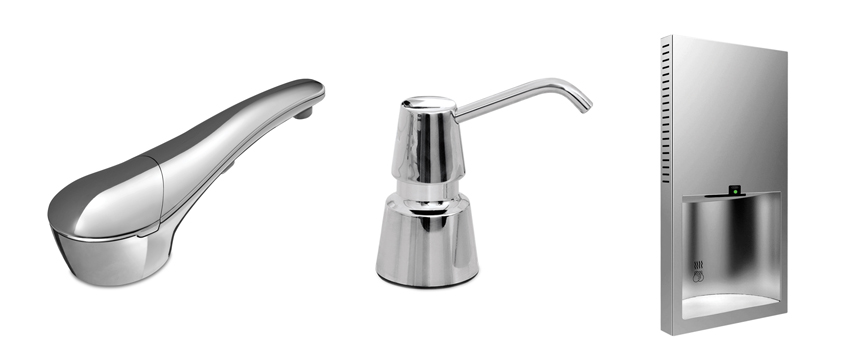
Image courtesy of Bobrick Washroom Equipment, Inc.
Hygienic soap-dispensing and hand-drying solutions must be considered based on traffic type.
Recessed hand dryers also can contribute to a healthy restroom by containing air plume and minimizing unsanitary water trails, as the patron’s hands are placed in a cabinet alcove. Nonporous surfaces are used throughout the room, including the countertop, for effective sanitization.
In this cubicle environment (pictured right), toilet-compartment panels, doors, and urinal screens are increased to a minimum of 84 inches high and extend to within 3 inches of the floor. This supports physical-distancing spacing. In addition, the cubicle material—high-pressure laminate (HPL)—is easily cleanable with EPA-approved antibacterial solutions. Cubicle and toilet partition materials, such as high-pressure and wood veneer laminate, solid-color reinforced composite, and compact-grade laminate, are all easily cleanable with most cleaning solutions.
Later in the course, we will address how restroom layouts must be modified to achieve effective physical distancing and control and reduce restroom capacity.
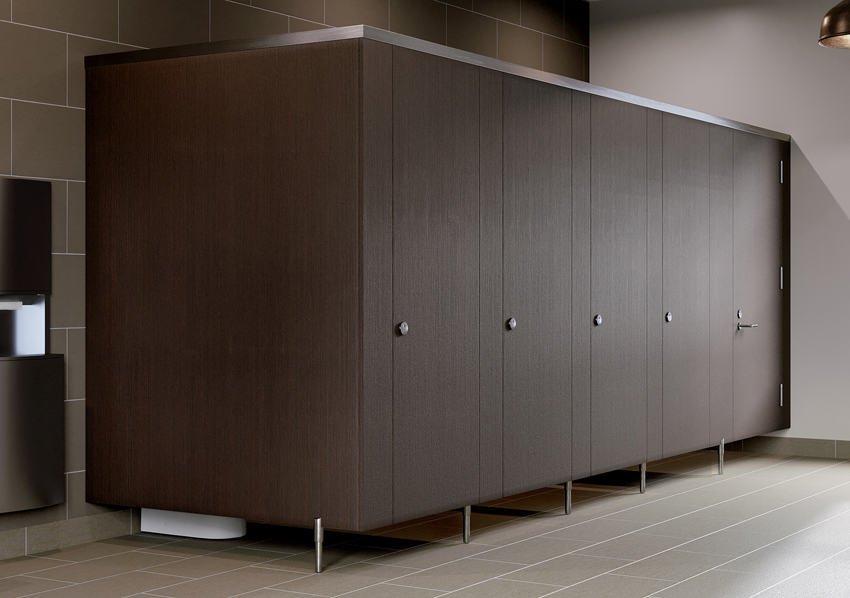
Image courtesy of Bobrick Washroom Equipment, Inc.
Increased-height toilet compartments can provide a larger physical barrier between users.
A 360-Degree Perspective for Evaluating COVID-Safe Restroom Design
Throughout this course, we will explore a case study that illustrates some of the learning objectives by providing a 360-degree view of a restroom project designed for the COVID-19 era. We encourage this 360-degree evaluation to help architects design restrooms that are optimized for health and wellness.
First, evaluate your restroom designs from an overall risk-assessment standpoint, addressing building use, occupancy, and density. Infection prevention is always a top consideration, even during normal times, and there are different considerations depending on whether the building is a hospital, mall, or low-occupancy building.
It is also important to consider your specifications from a product-selection standpoint in terms of how users’ hygiene needs are being met. Then, evaluate the space and layout design in terms of entries and exits, queuing and gathering, and other considerations. Finally, look at your project from a cleaning, maintenance, and mitigation perspective. Consider how design decisions that influence cleaning and maintenance can reduce risk for the facility and its occupants.
Evaluating Product Strategies for Maximizing Hygiene
Next, we will evaluate product strategies for maximizing hygiene in commercial and public restrooms through effective handwashing and drying.
Before considering specific products, remember that restroom layout, product operation, and placement must comply with applicable accessibility standards’ requirements for building location, jurisdiction per ADA, ICC/ANSI A117.1, or individual state requirements. This remains the top priority, even before hygiene. Then, restroom design and operation should support control of bacteria transmission and CDC cleaning and disinfecting guidelines.
Effective Handwashing and Drying
Touchless, automatic soap dispensers and hand-drying solutions are now preferred by most facilities for the peace of mind they offer patrons. Touchless products minimize the number of touchpoints in the restroom to support the active use protocol, which aims to facilitate hygienic operation of products by patrons and maintenance staff. In addition to automatic soap dispensers, touchless hand-sanitizer dispensers, paper-towel dispensers, and automatic hand dryers also can support hygienic handwashing and drying.
However, in effect, manual soap dispensers are inherently the same as touchless dispensers, as the user interacts with them only before they wash their hands. Many manual soap dispensers can offer benefits that make them superior for a particular project. For example, ease of refilling and the ability to keep the dispenser filled with soap may be preferable to some facilities on modest budgets.
Facilities have unique hand-drying needs. Designers should evaluate the pros and cons of paper towels versus hand dryers. While paper-towel dispensers are often preferred for hygiene, some hand dryers may be appropriate. For example, an automatic hand dryer that contains the hands as they are being dried (pictured right) can prevent unsanitary water trails and promote good hygiene.
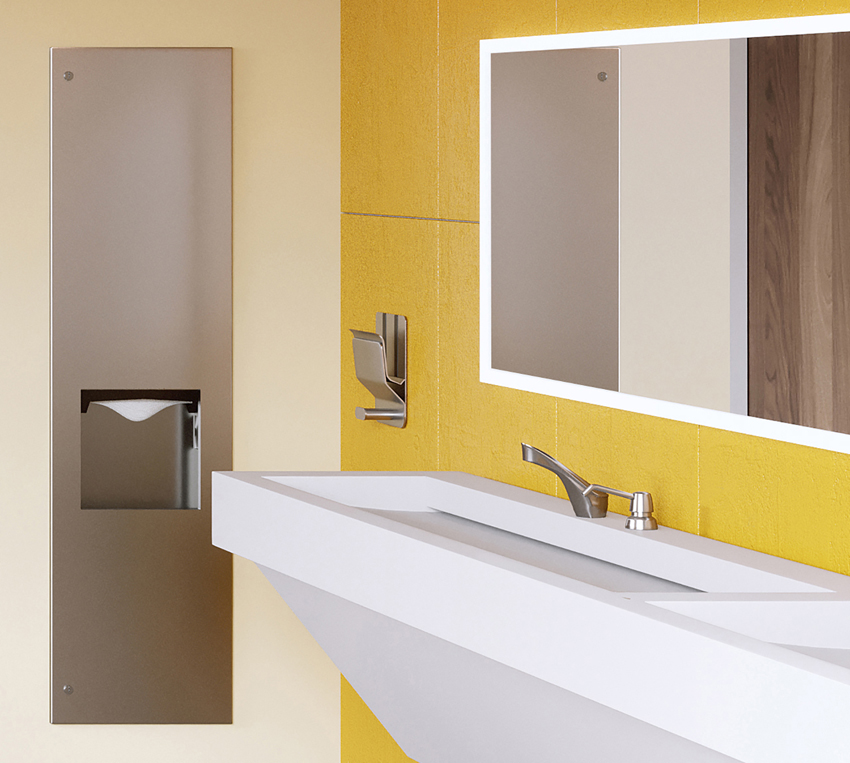
Photo courtesy of Bobrick Washroom Equipment, Inc.
For effective handwashing and drying in today’s restroom environments, products and design need to work together to create a healthier restroom.
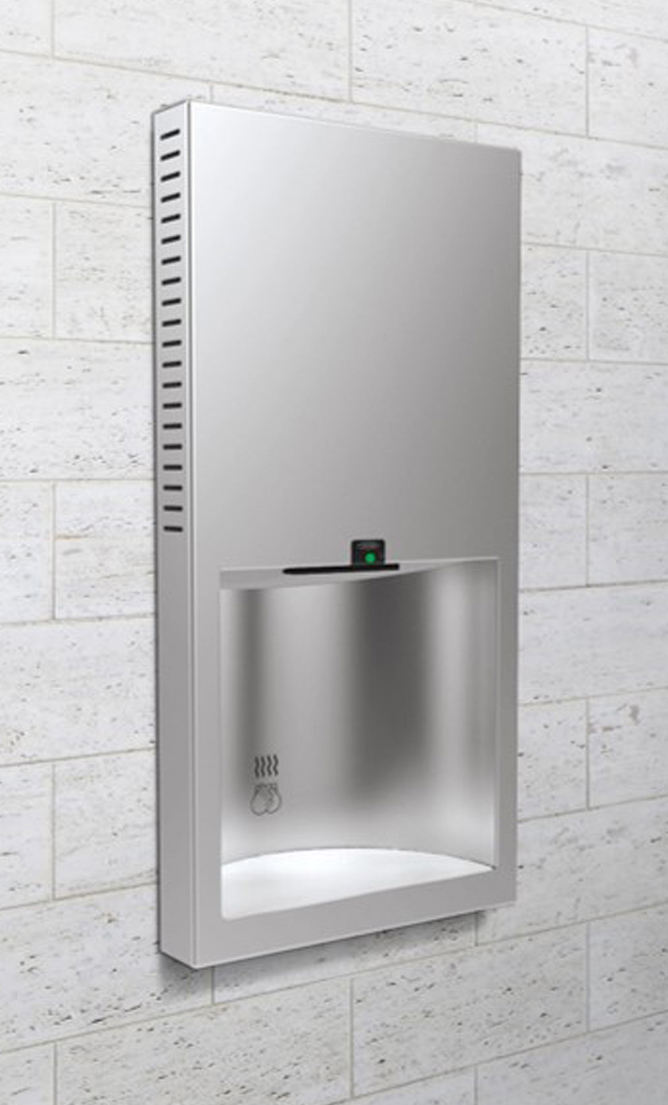
Photo courtesy of Bobrick Washroom Equipment, Inc.
Automatic hand dryer
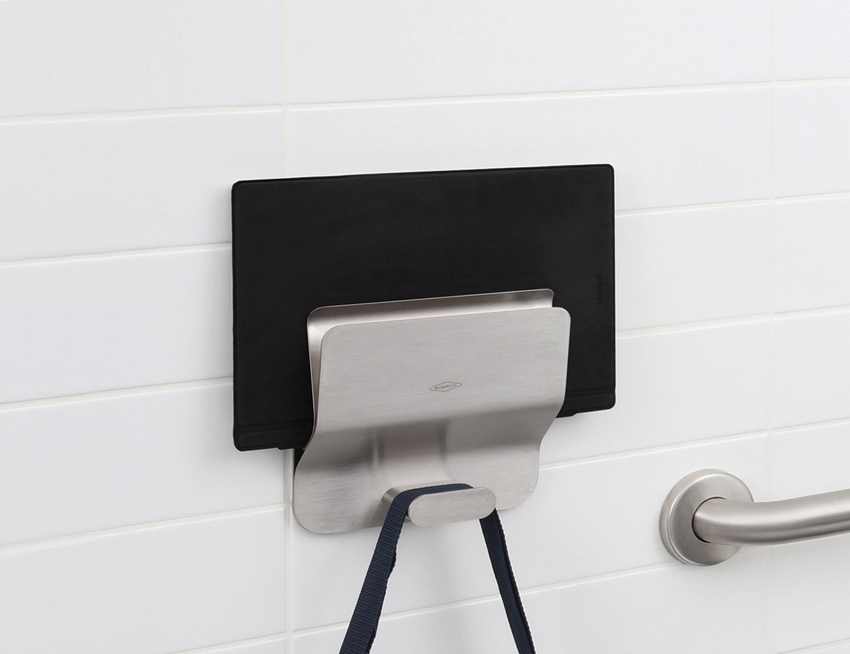
Photo courtesy of Bobrick Washroom Equipment, Inc.
Personal device holder
Additional Product and Design Solutions
Aside from handwashing and drying, a variety of other product strategies can help support health and wellness in the restroom while also addressing the active use protocol.
At the lavatory, counter-mounted accessories, such as soap dispensers, can help eliminate unsanitary water trails. In addition, reducing the distance between the lavatory and the hand-drying solutions and waste receptacle ensures a smooth transition from handwashing to drying. Touchless, floor-standing waste receptacles can also be added between lavatories to accommodate increased waste capacity and help enforce physical distancing.
Another design strategy is to combine touchless hand dryers in cabinets with paper-towel dispensers and waste receptacles, which facilitates completely drying hands while retaining airflow within the cabinet, minimizing dispersion of airborne droplets and reducing paper-towel usage.
To further reduce risk of transmission of disease, consider adding personal device holders to the lavatory area for safe storage of cell phones, tablets, and purses. These products keep personal items off wet and unsanitary countertops and floors.
Antimicrobial Surfaces and Cleanability
Hygienic, nonporous surfaces are recommended for patron health and wellness in restrooms for their antimicrobial properties and ability to be cleaned effectively. Some restroom accessories, such as baby-changing stations, come with antimicrobial additives that inhibit the growth of bacteria, mold, and mildew on the surface of the product and provide antimicrobial protection for the life of the product.
Antimicrobial copper is one of the most effective touch-surface materials, killing greater than 99.9 percent of bacteria. Several independent studies have reported antimicrobial efficacy of uncoated copper and copper alloy surfaces against human pathogens, including one strain of coronavirus. Some toilet cubicles are available with copper handles and latches.
When antimicrobial materials cannot be used, which may often be the case due to budget and other considerations, any nonporous surface will be easier to clean by maintenance staff. This includes stainless steel accessories and countertops manufactured with materials that have grout-less surfaces for infection control and easy cleaning and disinfecting.
Toilet-Compartment Solutions
When designing toilet copartments and cubicle interiors, remember that you must comply with applicable accessibility standards for building location, jurisdiction per ADA, ICC/ANSI A117.1, or individual state requirements. This remains the top priority, even before hygiene.
Inside the toilet compartment, the objective is to provide products that patrons feel are “tools” for their use to ensure their hygienic safety from contacting bacteria. For example, placing a horizontal combination dispenser-disposal under the grab bar provides patrons with a toilet-seat-cover dispenser, toilet-tissue dispenser, and personal waste disposal all within easy reach.
Touchless plumbing fixtures support hands-free operation on toilets and urinals. Adding paper-towel dispensers, waste disposals, and hand-sanitizer dispensers inside toilet compartments, at urinals, and adjacent to entry and exit doors can help patrons to protect hands from touching grab bars and compartment latches.
Specify toilet compartment door latches that operate without grasping the latch with fingers. They can be operated manually using the elbow, forearm, or the side of the fist. Some compartment door handles and latches can also be made with antimicrobial copper for added protection.
Various occupancy indicator solutions are available to assist with signaling and facilitate physical distancing.
Like other areas of the restroom, use toilet compartments and urinal screens manufactured of materials that have grout-less, nonporous surfaces for infection control and easy cleaning and disinfecting.
Proper Waste Disposal
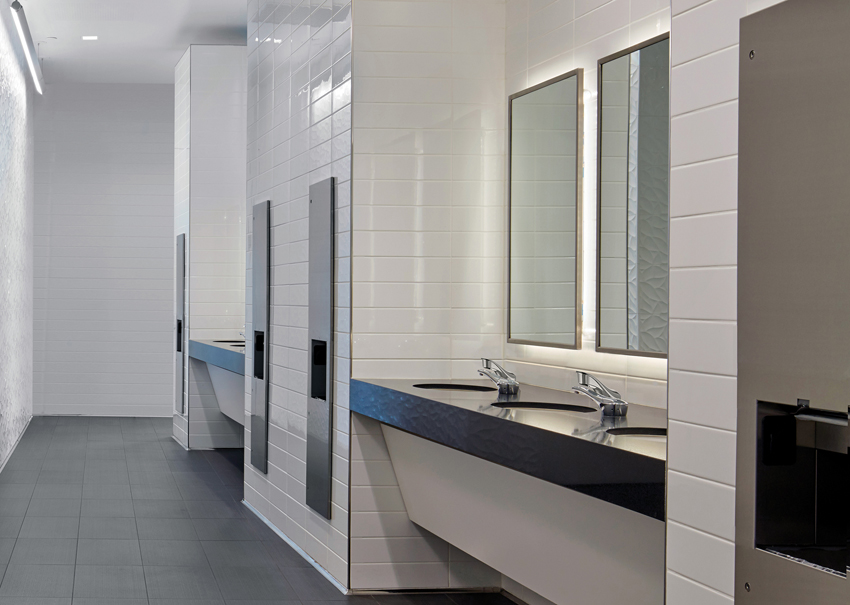
Waste disposal can also impact the cleanliness of restrooms and patron health. Waste receptacles are available in a range of configurations to support design objectives. To support well-designed restrooms, recessed waste receptacles and combination units help maintain a low-profile design and minimize the spatial footprint of waste-disposal solutions.
Automatic or foot-operated waste receptacles provide yet another opportunity to reduce the number of touchpoints in the restroom, and placing freestanding waste receptacles near entries, exits, or corners provides a place to dispose of paper towels that patrons may use to grab door handles.
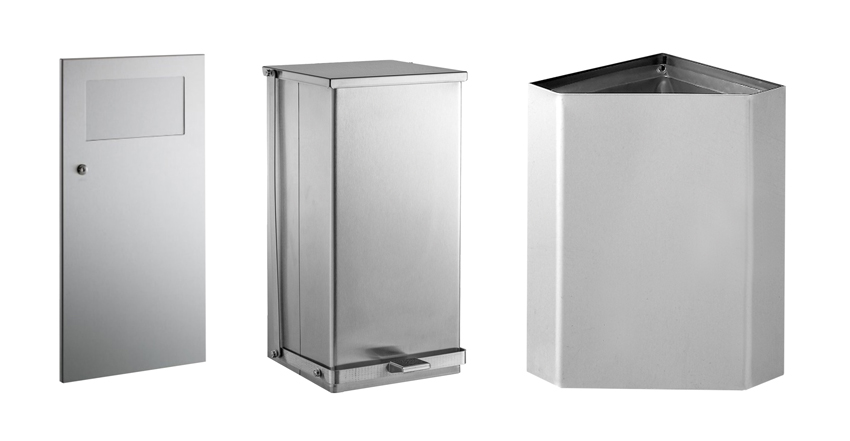
Images courtesy of Bobrick Washroom Equipment, Inc.
Proper touchless or corner-optimized waste-disposal solutions maximize hygiene.
Other Considerations
Several other product solutions can influence health and wellness in the public restroom more indirectly. A number of touchless entrance and exit solutions are emerging on the market, from antiviral touch keys to hands-free sensors, and dividers and screens can provide a physical barrier between patrons, at urinals, or even at handwashing stations.
CDC guidelines indicate that air quality and ventilation can influence the ability for viruses to transmit in indoor spaces. A number of HVAC solutions can help address this, such as increasing HVAC system capacity to increase fresh air intake and changes per hour; increasing frequency of air flushing of existing, contaminated air; programming HVAC to flush air 2 hours before and after occupancies, per ASHRAE standards; advance maintenance and quality of air filtration; reducing and maintaining relative humidity of 40–60 percent in restrooms; and reducing amplification of airborne microbes, per UL standards.
Signage
Signage itself is emerging as an essential product solution to enhance health and wellness in the restroom, supporting the signaling protocol.
Signage can encourage users to wash and dry their hands properly, dispose of waste properly, maintain 6 feet of distance between patrons, and wear a mask while using the restroom. Signage should reinforce CDC virus-containment best practices.
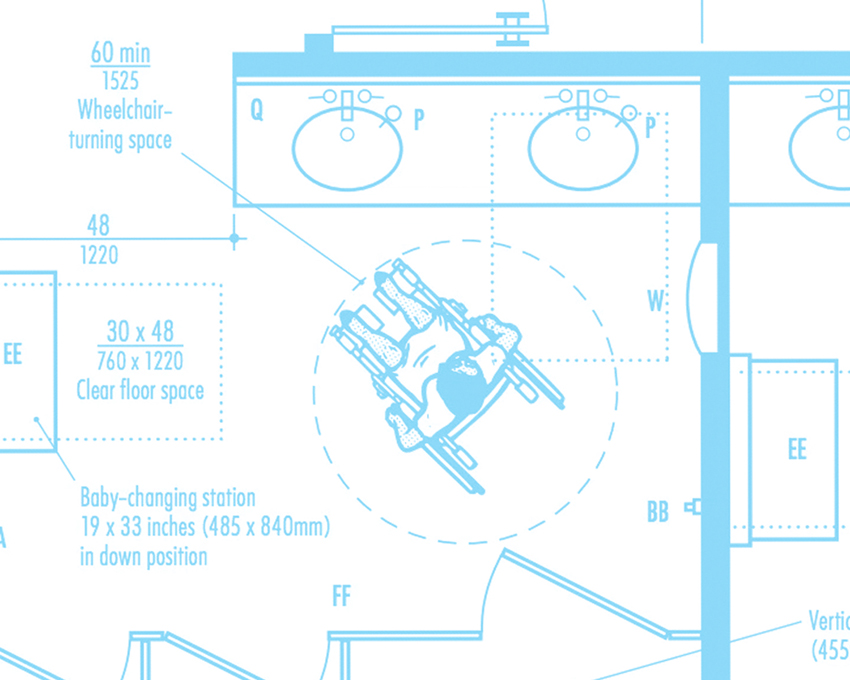
Image courtesy of Bobrick Washroom Equipment, Inc.
Optimizing traffic flow while maintaining accessibility is a top priority.
Examining Space-Planning Strategies to Optimize Traffic Flow and Physical Distancing
Optimizing space-planning and layout strategies can support both the occupancy and queuing protocols. Reimagining restrooms for enhanced health and wellness often requires designers to reevaluate their density and design assumptions. When designing commercial restrooms, the following strategies should be considered:
- The locations and layouts of handwashing stations;
- The locations of entrances and exits, and whether they have doors;
- How patrons will queue or gather;
- The traffic flow of the restroom, including from the compartment or urinal to the lavatory and waste disposal; and
- The ability of the restroom to be efficiently and effectively cleaned and maintained.
Space-Planning Solutions
In today’s environment, there are several planning strategies that can optimize traffic flow and physical distancing between patrons while simultaneously maintaining accessibility. The following space-planning solutions are emerging to address current health and wellness challenges:
- Remove or block open exit/entry doors to eliminate germ transfer points on door handles and plates that must be cleaned daily. Waste receptacles should also be placed near the exit opening.
- Reduce restroom capacity by blocking off or alternating adjoining lavatories, toilet compartments, and urinals.
- Add 6-foot-distance floor marking outside the restroom and in front of lavatories, toilets, and urinals.
- Add screens between lavatories above the countertop surface. These can be up to 84 inches in height, extending the full depth of the countertop to achieve 6 feet of physical-distancing spacing at lavatories.
- Toilet compartments and urinal screens also can be increased height to maximize privacy and provide a larger physical barrier between patrons.
- As an extra level of safety, place hand-sanitizer stations outside the restroom.
In addition, shared, non-gendered handwashing stations (pictured below) are emerging as a new strategy that uses social pressure to incentivize proper handwashing. This strategy is employed at the headquarters of Bobrick Washroom Equipment, Inc. in North Hollywood, California. The common handwashing station helps ensure handwashing hygiene norms are consistently followed, as social pressure incentivizes that hands are washed “every time” in public view. The single station also facilitates frequent and thorough cleaning of countertop and lavatory surfaces, removal of waste, and resupply of paper towels and liquid soap.
Occupancy Signaling
In toilet compartments, occupancy-signaling solutions can help facilitate physical distancing while reducing queuing times and contact. Standard occupancy indicator latches provide a cost-effective solution for ensuring privacy because users can see easily which compartments are in use.
As a midrange solution, external occupancy indicators are available, which can be mounted on compartments with left or right hinges and with doors that swing in or out. LED indicators, which eliminate the need for conventional lock indicators, are also available on higher-end systems.
Maintaining Accessibility
Although hygiene has become a top design requirement, accessible design remains nonnegotiable. Good design ensures that new space-planning strategies do not compromise ADA requirements.
Entrances and exits must be laid out to minimize congestion and for universal access. Remove doors or block doors open to maximize access.
Passageways and access aisles must be a minimum of 42–60 inches wide. Limit the leading edges of protruding objects into circulation routes to 4 inches maximum between 27–80 inches above the floor. Fully recessed restroom accessories can help satisfy this requirement.
Consider increased wheelchair-turning spaces for oversized wheelchairs. Provide 30-inch x 48- to 52-inch clear floor space centered at each accessory and plumbing fixture. Lavatory, toilet compartment, and urinal dimensional layouts must comply.
When six or more toilets and urinals are in one restroom, provide an ambulatory-accessible compartment in addition to the wheelchair-accessible compartment. Make sure the baby-changing station does not block access to accessories and plumbing fixtures.
Gensler LA Offices: Circulation and Queuing
Going back to the Gensler LA Office redesign and looking at it from a space-planning perspective, the firm instituted a circulation path throughout the office that only goes in one direction. That same strategy was applied to the restroom.
However, in addition, Gensler provided a two-sided entry/exit to the restroom, which helps the flow of traffic. Users enter at one side of the restroom and exit on the other side. This helps significantly with distancing and the overall traffic flow.
To communicate this circulation strategy to people, Gensler installed signage to ensure users follow the guidelines that have been established. In the queuing area, it provided signals for the entry and exit points and encourages physical distancing with floor decals.
Gensler also located the entry to the restrooms along the wall perpendicular to the side corridors off the main circulation, which provides a place to queue while also providing circulation. From an infection-prevention standpoint, these circulation and queuing strategies encourage people to maintain safe physical distancing. Plus, the layouts are easy to navigate for a person using a wheelchair.
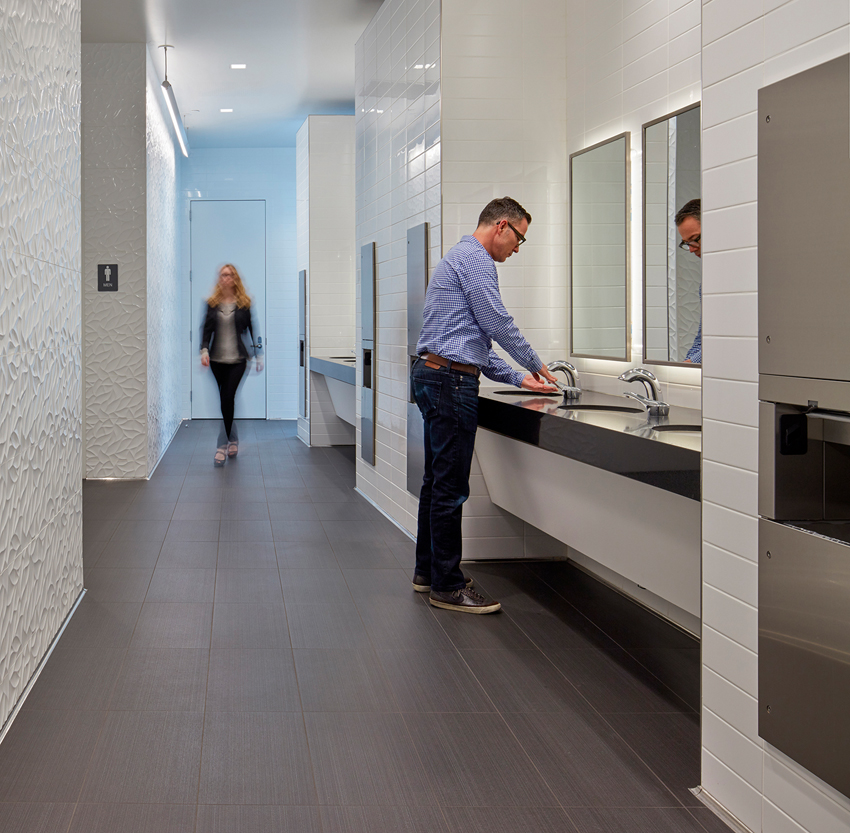
Photo courtesy of Bobrick Washroom Equipment, Inc.
Space-planning solutions include allowing for 6-foot physical-distancing spacing and shared, non-gendered handwashing stations.
Assessing Design Strategies to Enable Proactive Cleaning and Maintenance
While designers and manufacturers have important roles to play in hygienic restrooms, facilities must carry these strategies across the finish line. Specifically, there are several cleaning and maintenance issues that should be considered in the facility design, including:
- Is there sufficient staff to clean effectively?
- Are they trained to operate, disinfect, and sanitize properly and efficiently?
- Do they know which cleaning/hygiene products and equipment to use when and where?
While architects typically do not have much influence in some of these areas, they have a tremendous influence in product selection. First, architects should ensure the accessories they specify support hygiene. Check specifications, technical data sheets, and support documents to confirm that they meet hygienic design requirements.
If the accessories specified by the architect do not work for any reason or are not durable enough, this compromises patron health and safety for the long term. Design professionals should understand the relationship between product durability and a facility’s ability to support hygiene.
Positioning Facilities for Handwashing Success
Specifically, architects have a role to play in positioning facilities for handwashing success, especially from a maintenance standpoint.
To state the obvious, if buildings do not have soap, towels, and hot water, patrons will not be able to wash and dry their hands effectively. Facilities must make sure their fixtures and supplies are in order—and architects can help with that.
Non-operating soap dispensers are a common issue. This is why product selection for architects is so critical. Products that do not work efficiently or break easily lead to “dispenser downtime.”
To ensure soap dispensers and fixtures are free of buildup, debris, or contaminants, they should be easy to disinfect, sanitize, and restock. Products with flat surfaces and stainless-steel surfaces are typically easier to clean than products with lots of nooks and crannies. Finally, products should be easy to obtain refills for and to refill.
Specifically, proprietary cartridges may pose risks to facilities that wish to provide reliable hygiene. Proprietary, cartridge-based soap-dispensing systems require the facility to use smaller, individual plastic soap cartridges. With each refill, janitorial staff must replace the previous plastic cartridge with a new one.
Proprietary soap cartridges may be prone to supply-chain interruptions. If facilities do not have the correct cartridge or product, they cannot operate safely and reliably. Further, the soap-cartridge manufacturer could be out of stock, resulting in dispenser downtime. Cartridge soap also generally empties faster than bulk systems. Over time, this excess packaging can lead to more waste.
Finally, cartridge systems can be expensive and are more labor-intensive, requiring staff to bend under counters to change them out.
On the other hand, when specifying a non-proprietary or “bulk” soap system that uses open-market soap or paper towels, facilities stand a much better chance of keeping their dispensers and stock rooms full through reliable supply-chain availability. Plus, they are easier to refill and produce less waste.
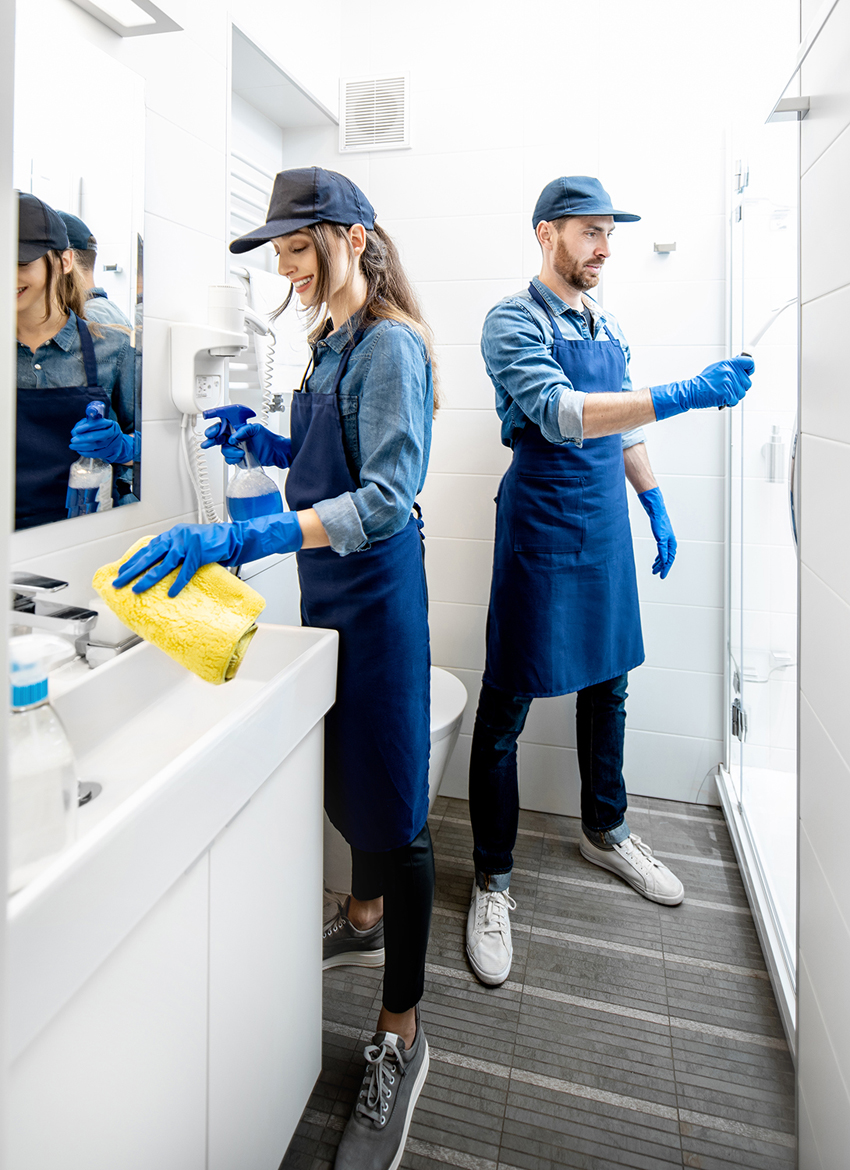
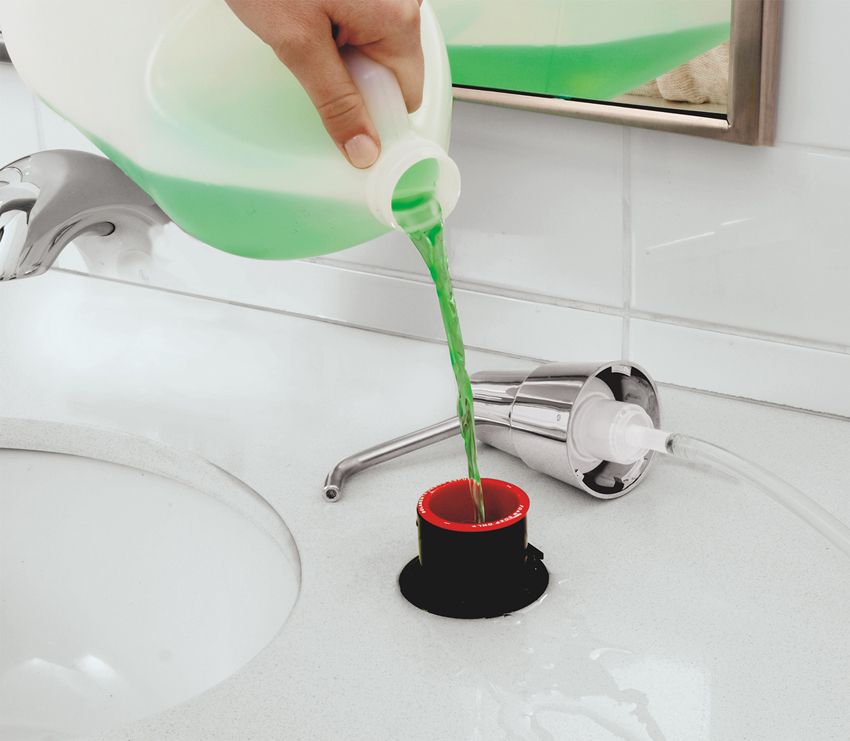
Photos courtesy of Bobrick Washroom Equipment, Inc.
Design strategies like top-filling soap dispensers enable reliable operation and optimal hygiene.
Considerations for the Future
Looking ahead to the future, architecture firms and manufacturers are watching several prominent areas for innovation, which may emerge as basis-of-design, including:
- Gender neutral, single-occupancy toilet compartments;
- Air-filtration and ventilation upgrades;
- Sensor and automation innovations;
- Turnaround corner entryways to eliminate sightlines into the restroom and optimize traffic flow when doors are eliminated; and
- New standards and building codes to ensure safety and hygienic operation.
When designing restrooms for optimized human health and wellness, remember to adopt a holistic, 360-degree perspective. Evaluate the restroom designs first from an overall risk assessment standpoint, addressing building use, occupancy, and density. Consider your specifications from a product-selection standpoint, in terms of how users’ hygiene needs are being met. Evaluate your space and layout design in terms of entries and exits, and queuing and gathering. And lastly, look at your project from a cleaning, maintenance, and mitigation perspective.
Conclusion
As one of the spaces impacted most by COVID-19, restroom design requires more attention than ever. All restrooms moving forward will require modified design approaches, and design teams should consider adapting new protocols to ensure that their designs are both hygienic and accessible for all patrons.
In summary, you should now understand:
- The hygiene challenges for post-COVID-19 restrooms, including the science of virus and bacteria transmission, and CDC guidance for cleaning, disinfecting and returning to public spaces.
- Product strategies for maximizing hygiene in commercial and public restrooms through effective handwashing and drying.
- Space-planning strategies to optimize traffic flow and physical distancing between patrons while maintaining accessibility.
- Design strategies to enable proactive sanitation, cleaning, and maintenance for reliable operation and optimal hygiene.