This CE Center article is no longer eligible for receiving credits.
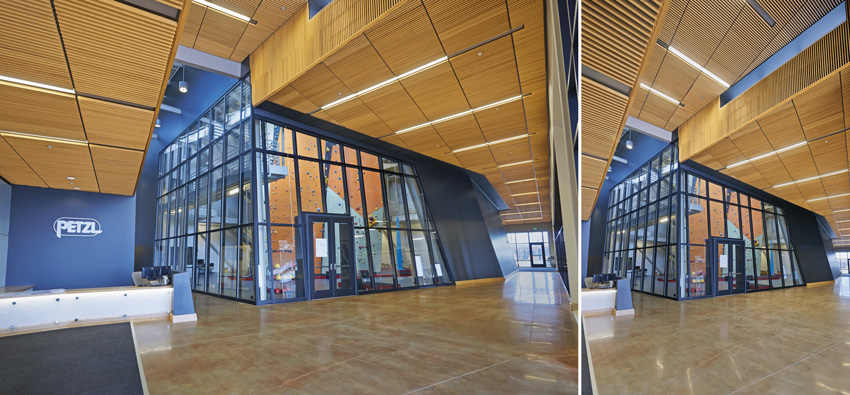
The sheer visual impact of wood means that it is often chosen as a focal point in dramatic “statement” spaces, such as corporate headquarters, research centers, performance spaces, and other signature buildings from university campuses to city halls. Wood, one of the oldest and most traditional of building materials, is now being used as the heart of some of the most inventive new designs, meeting exacting technical requirements.
Beautiful wood ceilings are certainly not new, but traditionally, they were made by hand, and until recently, piece-by-piece custom millwork was still the primary option for specialty wood interiors, even in commercial spaces.
All photos courtesy of Armstrong Ceiling and Wall Solutions
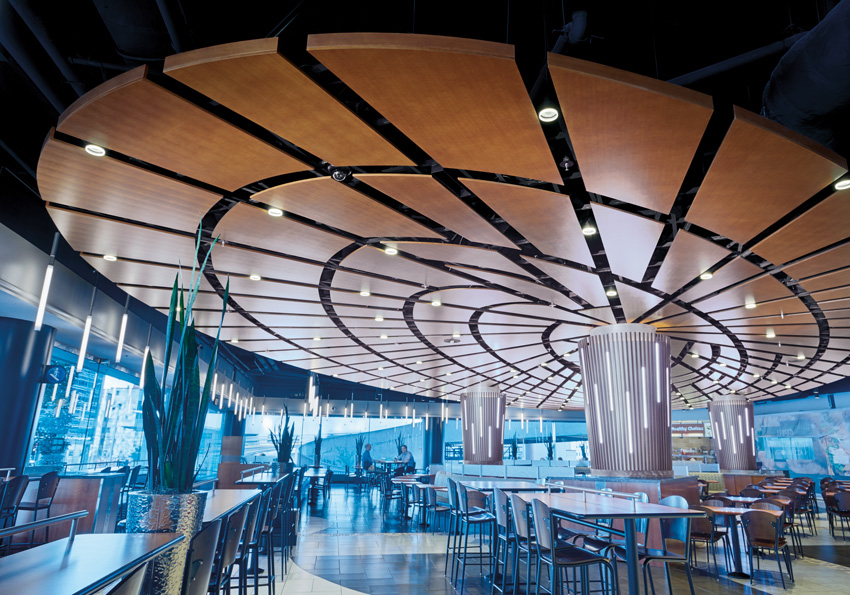
Project: Gulf Canada Square Food Court
Location: Calgary, Alberta, Canada
Architect: Stantec
Figure 1: Wood ceilings make powerful visual statements in focal point spaces. Acoustic, seismic, environmental, and fire performance are built into the aesthetics of the installation.
Now new manufactured panels and systems make it possible to combine the design versatility and intrinsic appeal of wood with the performance, reliability, precision, durability, and cost advantage of manufactured components and systems. Almost unlimited choices in finish, form, and size are available, from various combinations of standard components to custom shapes and layouts to the creation of one-of-a-kind, entirely bespoke ceilings and walls.
However, aesthetic choices in today’s systems are closely related to performance. The essential characteristics of wood and the way it is manufactured determine not only visual effects but critical aspects of performance and a long, durable service life: acoustics, fire and seismic safety, efficient access to the plenum, moisture resistance, sustainable materials, and healthy interiors. Effectively integrating these features with other elements within the ceiling and in the rest of the space is the key to delivering these benefits along with a specialty ceiling’s good looks.
The earlier in the design process the architect can see the range of possibilities and understand the implications of each design and manufacturing decision, the lower the cost, the shorter the lead time, and the better the performance.
Aesthetics as Performance
Although the design of wood specialty ceilings is highly technical in many respects, one of the primary reasons wood is chosen in many projects is more emotional: the innate connection of humans to natural materials. In this sense, the aesthetic value of wood interiors is an important performance attribute.
The positive impact of wood in a person’s surroundings is used in health-care settings to emphasize calm and promote healing, in education facilities for statement spaces, in offices to reduce stress and improve concentration, and as shown in some of the examples in this course, to heighten design effects, such as adding warmth to an industrial space, bringing a sense of community to a civic space, or emphasizing aspects of the surrounding landscape.
These effects are achieved through combinations of many variables in size, shape, form, finish, wood species, perforation pattern, and installation type. The following are major categories of design options, with examples of how they have been used in a range of remarkable interiors.
Material: Most manufactured panels are made of veneer, a thin layer of real, high-grade wood, adhered to a substrate, typically a composite of wood material called medium-density fiber board (MDF). Veneered panels, unlike solid wood, can meet Class A fire performance requirements for finish materials used in commercial spaces. Solid wood is typically limited to decorative elements, railings and moldings. In general, veneered panels are dimensionally more stable than solid wood. The infinite variations in the color, grain, and texture of both solid wood and wood veneer give ceilings and walls their beauty. (See Fire Performance.)
Veneer: Thousands of species of wood can be made into veneer. Each species has a unique color, shade, and graining pattern and receives stain differently. Each individual tree is unique as well, so visual possibilities are almost unlimited. Many common species can also be stained to match more exotic, expensive, difficult-to-obtain, or environmentally sensitive species. When large quantities of a certain veneer are needed, careful attention is required to make sure different finishes match, complement, or contrast as envisioned in the design.
In properly manufactured panels, veneers are applied to both sides of the substrate for balanced construction and to eliminate warping. This is just one of many factors of manufacturing that can affect appearance, performance, and durability. (See Manufacturing.)
Perforation patterns: Like any hard surface, wood panels inherently reflect sound. One of the major strategies for improving acoustic performance in wood ceilings and walls is to make openings, or perforations, in the face of the panel to allow sound to penetrate the panel and be absorbed by acoustical material. The pattern of perforations can also have a striking visual effect. Perforations of different shapes can be used in a number of standard patterns—rows, slots, diagonals—and also in imaginative schemes that enhance the design as well as the acoustics; for example at Randall Children’s Hospital shown in Figure 2. (See Acoustic Performance.)

Project: Randall Children’s Hospital at Legacy Emanuel
Location: Portland, Oregon
Architect: ZGF Architects LLP
Figure 2: The custom perforations provide visual appeal and an acoustical solution.
Panel sizes: In general, the larger the panel, the more costly the ceiling will be. At the same time, very large panels are used to great effect in spaces such as the 4-foot-by-4-foot panels in areas of the La-Z-Boy Headquarters shown in Figure 3. Panels can come in a wide variety of sizes, with a general range of standard 24 by 24 inches to 48 by 96 inches (typically the maximum size). Because of the dimensional stability of wood, particularly veneered wood, panels can be significantly larger with less concern for pillowing or sagging. But large size can also affect installation; for example if the weight of panels requires safety cables and additional personnel, adding to cost. Where access is not required, it is sometimes easier to attach suspension directly to the back of larger panels. (See Installation.)
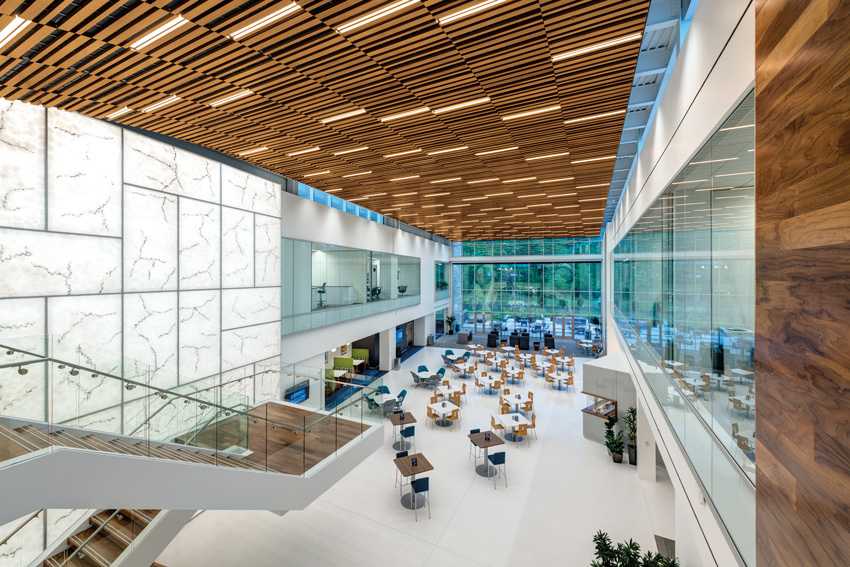
Project: La-Z-Boy Furniture World Headquarters
Location: Monroe, Michigan
Architect: The Collaborative Inc.
Figure 3: The grille look of the wood ceiling of the three-story atrium is inspired by the company’s original wooden patio chair from 1928.
Shapes and forms: Throughout this course, you will see examples of the sizes, shapes, lines, and curves available with wood ceilings. A large manufacturer specializing in ceilings will have a broad portfolio of standard components in a variety of finishes, sizes, edge treatments, reveal profiles, and other options that can be mixed, matched, and combined. Even the simplest, easiest-to-install, standard flat panels can be varied by the sizes and shapes of the panels, the design of the suspension system, or by staggering or canting the panels. Curved elements can adjust to different heights and angles, and mounting hardware can be concealed for a clean look when the panels can be seen from above and below.
But the possibilities only begin there. Some of the elements available for wood ceilings include:
- Linear components, flat, channeled or tapered, including panels, planks, slats, and grilles.
- Curved edges on panels for a radius effect.
- Canopies formed in convex and concave curves—hills and valleys—as well as s-curves, as individual elements, or installed to create waves or clouds.
- Three-dimensional effects, such as facets, coffers, and open cells.
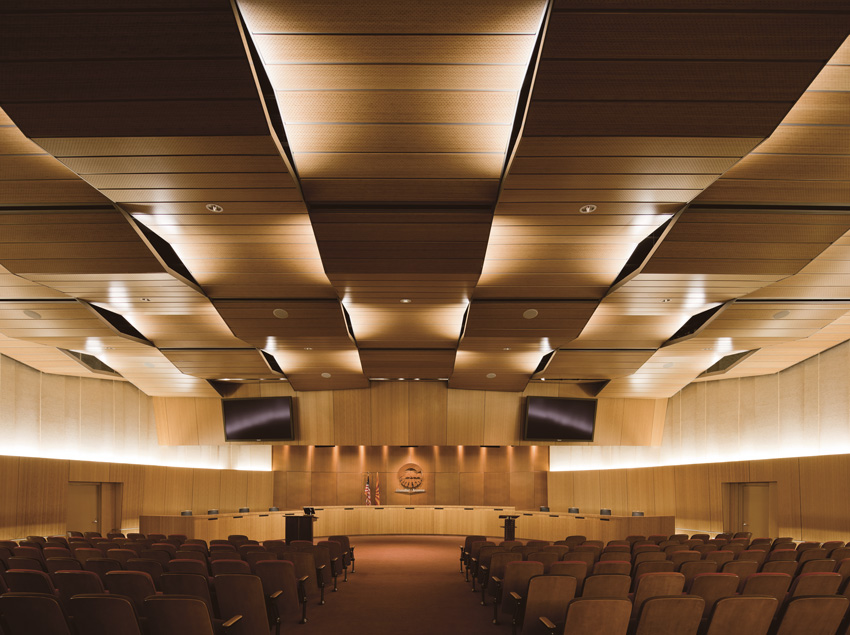
- Installations can conceal the suspension entirely with a continuous monolithic surface or partially in clouds. The design of the Botanical Research Center shown in Figure 4 features panels of different sizes installed in a series of large clouds with a reveal every 10 feet and uses a completely integrated premanufactured access system, which is discussed in more detail below. A wood ceiling comprised of a series of clouds is also a prominent design element in the Chandler City Hall Council Chambers (Figure 5). The matching curved walls are canted slightly outward to add a sense of intimacy to a space designed to be a community gathering spot.
- Ceiling planes installed at different angles or continuing down into walls.
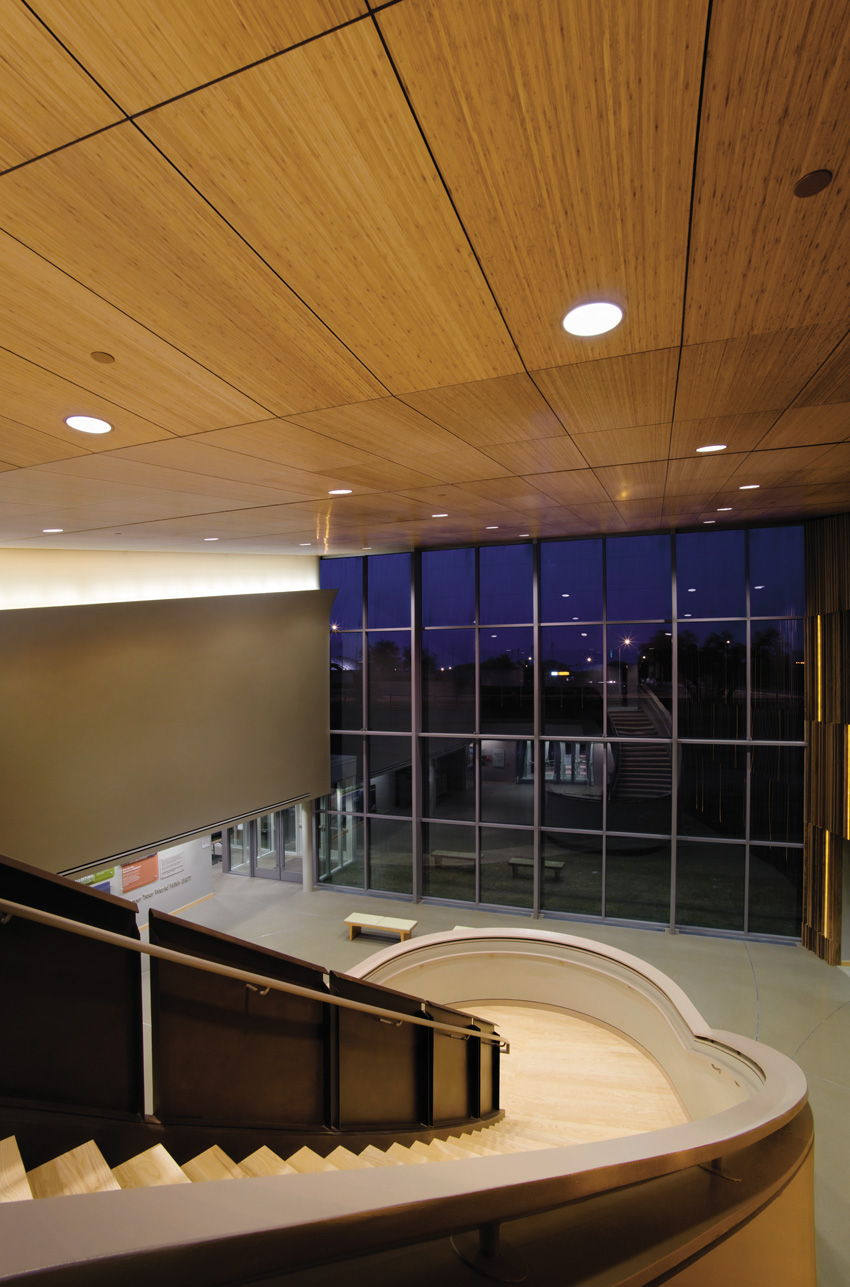
Project: The Botanical Research Institute of Texas
Location: Fort Worth, Texas
Architect: H3 hardy Collaboration Architecture and Corgan Associates
Figure 4: This is an example of many aspects of excellence in wood ceiling design, including beauty, acoustics, a preengineered integrated system for plenum accessibility, and LEED-NC Platinum sustainability.
Project: Chandler City Hall Council Chambers
Location: Chandler, Arizona
Architect: SmithGroup
Figure 5: The dramatic saw-tooth wood ceiling is comprised of 1-foot-by-8-foot planks, perforated for sound absorption and installed in a series of clouds. Matching finishes are used in the custom curved 4-foot-by-8-foot wood walls.
In all of these ambitious designs, the aesthetic possibilities of the materials and shapes interact with performance. In the La-Z-Boy World Headquarters, wood panels in a linear grille form were selected to give a three-story atrium a sense of warmth and intimacy, and also for a very specific reason related to the company’s products and history. The 6,000-square-foot wood ceiling’s grille look recalls the very similar linear slats of the original La-Z-Boy wooden patio chair from 1928. The ceiling panels are a custom 4 feet by 4 feet, on a traditional grid system, but within each panel, the width of the slats varies, some 2 inches wide and some 33/4 inches wide. The variation gives the ceiling its unique look and also allows the incorporation of 4-inch-wide light fixtures in the gaps between slats.
In another gesture recalling the movement of the original La-Z-Boy chair, the ceiling curves down at the back of the atrium near the top of a dramatic staircase. The curved section of the ceiling was accomplished using panels with a flexible backer installed on a faceted grid system.
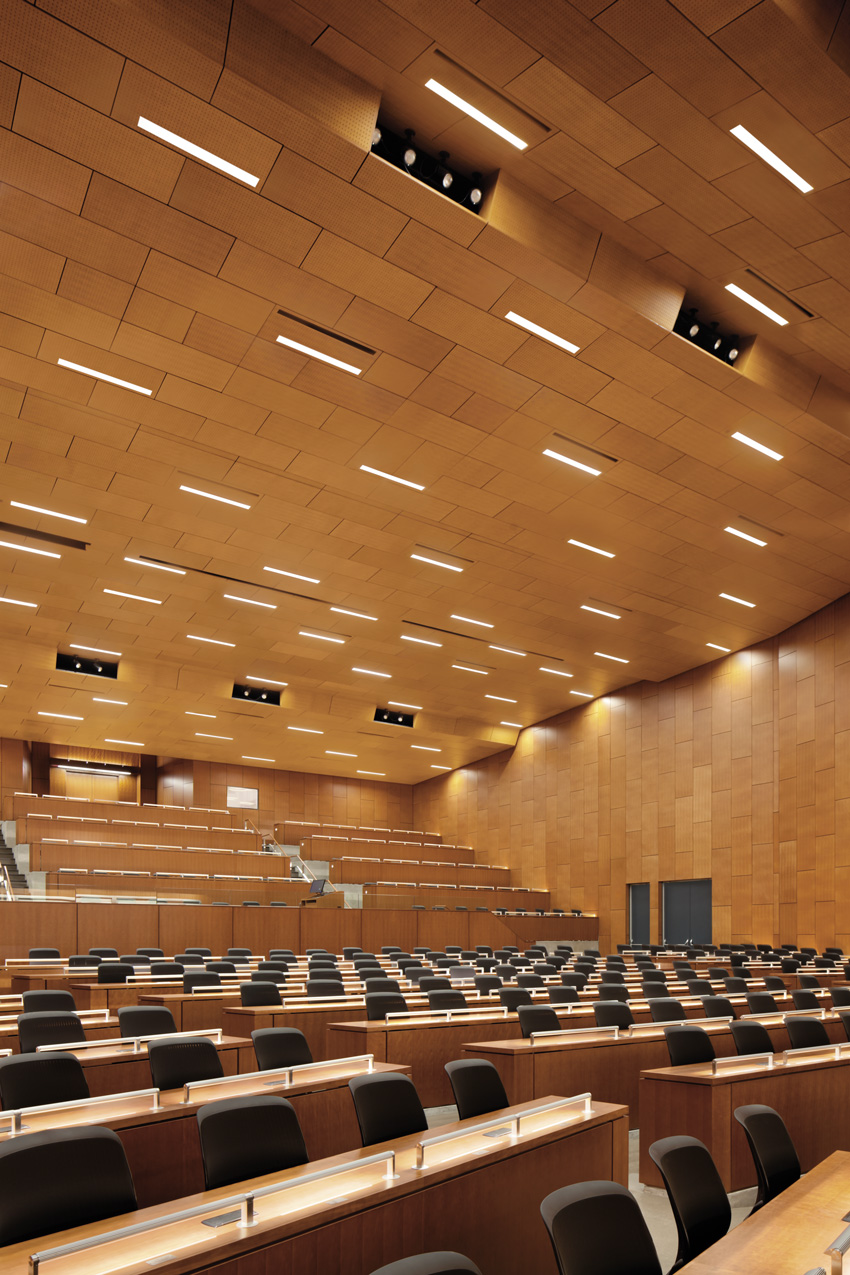
Acoustic performance is carefully calibrated in perforation patterns that are also essential to the visual effect in the UCSD Telemedicine & Medical Education Building (Figure 6 ). Nearly 28,000 square feet of custom wood ceilings and walls in a matching cherry finish are installed in the center’s auditorium and computer learning center. The sloped, stepped ceiling has five different elevations from front to back.
Project: University of California San Diego Telemedicine & Medical Education Building
Location: La Jolla, California
Architect: Skidmore Owings & Merrill
Figure 6: Nearly 28,000 square feet of custom wood ceilings and walls in a coordinating cherry finish impart a warm ambience to the auditorium and computer learning center. Panels incorporate custom perforation for acoustic performance and visual effect.
The majority of the panels are 2 feet by 5 feet in size, although 15 different sizes are part of the overall design. All panels incorporate custom perforation for carefully calibrated acoustic performance. In areas where sound reflection is desired, the perforations only go halfway through the panel. Where more sound absorption is required, the perforations go all the way through and are backed with a black acoustical fleece or infill panel.
The wall panels match the ceiling panels in size, finish, and perforation pattern, and the panel joints are staggered to create an interesting modular pattern. The rows of perforations, however, are in perfect alignment, panel to panel.
The following sections discuss in more detail important considerations for combining beauty, performance, and cost-effectiveness in wood ceilings and walls, focusing on:
- Acoustics
- Fire performance
- Seismic performance
- Accessibility to the plenum
- Sustainable spaces, including LEED contribution
- Installation type and process, and integration with other elements in the space, particularly the walls, and within the ceiling itself, such as, lighting, HVAC, and fire protection.
Acoustic Performance
Noisy, chaotic environments have always been unpleasant, but decades of research confirm that they are also unhealthy and unproductive. The acoustics of a space can directly affect human performance—not just in theaters and concert halls but in all the other spaces where people spend much more time: health-care settings, where quiet has a direct impact on sleep and healing; educational settings for concentration and clear communications; and workspaces to create the ability to focus when needed, or to achieve speech privacy, productivity, and to minimize stress and discomfort that damages performance and leads to low employee satisfaction. Office spaces with open plenums and exposed structures have proven to be especially problematic, as sound reflects off the deck above and bounces between open-plan cubicles, resulting in excessive reverberation and high overall noise levels.
Avoiding negative acoustic conditions is one issue. Creating positive responses and improved performance is another. Multisensory integration is a concept originating in cutting-edge neurological research and videogame design, now being applied to the design of interior spaces to enhance positive human response. In simple terms, the idea is that the five senses, particularly the dominant ones of vision and hearing, work closely together, and when both are stimulated, the result is “superadditive:” intensified far beyond the sum of what each sense might contribute separately.
Until very recently, however, in the case of ceilings, there was a severe tradeoff between sight and sound, aesthetics, and acoustics. Today, there is a broad range of options that effect acoustical performance; panel size, edge details, trims, and accessories, all enhancing the acoustics in traditional and specialty ceilings.
For ceilings and walls in particular, how well materials and systems will accomplish the desired acoustic performance in the space is basically a combination of sound absorption (noise reduction coefficient, or NRC), and sound blocking (ceiling attenuation class, or CAC). NRC measurements are on a scale from 0, representing perfect reflection, and 1, perfect absorption. A ceiling system with an NRC of 0.65 would absorb 65 percent of the noise energy striking it.
The CAC metric indicates how well the material blocks sound transmission, including noise traveling from one room to another through the ceiling plenum or to spaces above or below a room. For example, a ceiling system with a CAC of less than 35 would be unable to achieve sound blocking that would deliver confidential speech privacy. A CAC of 35 or greater represents high performance.
For effective acoustic performance within a space, both NRC AND CAC numbers are important. To simplify a complex interaction, higher NRC absorbs noise within a space from bouncing back into the room off the ceiling, reducing noise levels and reverberation time and enhancing speech intelligibility for clear communication. Higher CAC reduces noise from adjacent spaces, ensuring speech privacy and providing the quiet needed for concentration and focus.
In the past, only NRC values were available for wood, but now both NRC and CAC are possible, allowing wood specialty ceilings to provide a range of creative options, including integrated systems that can provide several levels of measured acoustic performance on a “good, better, best” model to fit the needs of the specific space.
The two most important strategies for improving the acoustic performance of wood ceilings generally work together: perforations that allow sound to penetrate the panel and the addition of acoustical material to absorb the sound energy. A variety of design styles allows varying degrees of openness, blending aesthetics with acoustics.
The percentage of open area has significant impact on the acoustical absorption of the panels. The NRC can range from 0.15 with no acoustical backing to as high as 0.85 for a 20 percent open panel with acoustical backing. Perforation pattern examples include round, oval, slotted, straight, and diagonal or unique patterns. The openings can also be virtually invisible and still absorb significant sound striking the panel surface.
Acoustical materials used with wood ceilings include either “fleece,” composed of materials such as mineral and plant fiber, factory-applied backing on panels, or separate panels or infill, in varying configurations, including options for channeled ceilings.
Installing panels to create acoustical clouds can also have an impact on acoustic performance. In some designs acoustical canopies and clouds can provide greater sound absorption than a continuous ceiling of the same surface area because sound is absorbed from both the front and back surfaces.
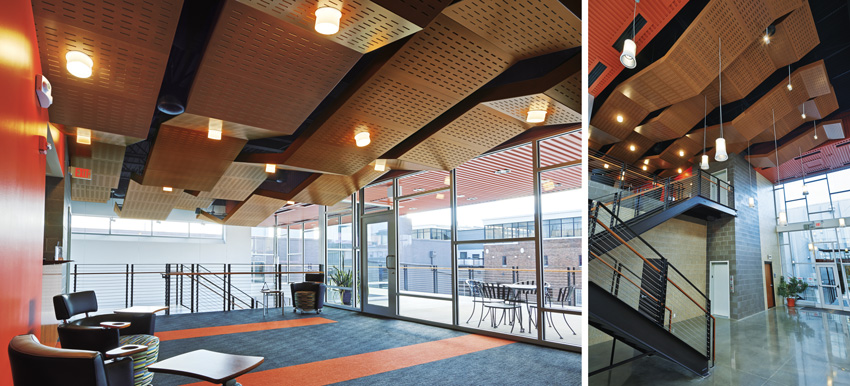
In the Lyric Opera Administration Building (Figure 7), five acoustical clouds consisting of dark cherry wood veneer panels were suspended in a sloped, ribbon-like pattern above the concrete and glass lobby area. While adding warmth to an industrial space, the wood veneer panels also improved acoustics in the noisy lobby and reception areas. The panels are perforated in an oval, straight-slotted pattern and backed with a fiberglass infill for noise absorption.
Project: Lyric Opera Administration Building
Location: Kansas City, Missouri
Architect: Hu Jarvis Meyer Architects
Figure 7: Acoustical clouds installed in a ribbon-like pattern add warmth and improve acoustics in the concrete and glass lobby and reception areas.
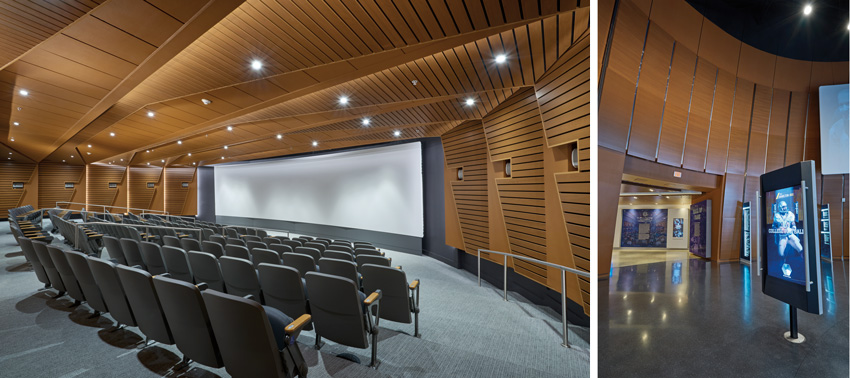
The College Football Hall of Fame (Figure 8) also needed to control noise from large numbers of visitors in a space with a high ceiling and hard surfaces. In the Hall of Fame room where the game’s greatest legends are revered, the channeled wall panels contribute to the formal atmosphere of the space. Perforated with an acoustical backing, the panels have an NRC of 0.70. In the theater, the perforated linear panels are installed in folded planes that go up the walls and across the ceiling, with an NRC of 0.60. Layers of specialized acoustic panels with an NRC of 0.90 are installed between the folds in the ceiling to bounce sound within the space and keep it from traveling into other spaces.
Project: College Football Hall of Fame
Location: Atlanta, Georgia
Architect: tvsdesign
Figure 8: Some people think the exterior of the rotunda calls to mind a football, some a helmet, and the interior was designed to reflect the vibe of the game. The wood ceiling and wall system was selected to soften the raw stadium aesthetic but also control noise from thousands of visitors.
Fire Performance
Increasing the fire performance of wood in all construction materials has been a focus of intense research, product development, and testing in recent years. Wood walls and ceilings meet the levels of fire ratings appropriate for applications in virtually all commercial interiors. Although fire protection is a complex issue, there are a number of basic considerations important for comparing wood ceiling materials for the critical life safety criterion of fire performance.
The majority of regional, state, and local codes are based on the International Building Code (IBC), which defines classifications for the flame spread and smoke development of a building material. The classifications are based on the material’s test results according to ASTM E84: Standard Test Method for Surface Burning Characteristics of Building Materials. Different maximum values are permitted depending on building occupancy, where the material will be located in the building, and the presence of active fire protection systems, such as sprinklers.
Class A, the highest performance rating, typically requires flame spread ratings (FSI) of 25 or less. Many codes also require the smoke developed index rating (SDI) to be 50 or less.
Achieving both ratings—25/50—is a higher standard for building materials. ASTM E1264: Standard Classification for Acoustical Ceiling Products states that Class A products must have a flame spread of 25 or less and a composite smoke developed rating of 50 or less. The National Fire Protection Association (NFPA) requires 25/50 performance in order for panels to be used in a return-air plenum assembly.
Solid wood panels cannot meet this standard, as mentioned earlier, and there are strict limitations on how solid wood can be used in commercial interiors, although they can be highly attractive design elements for decorative features like accents, moldings, and railings. However, ceiling and wall systems composed of high-quality veneered wood can meet a range of fire performance requirements, including the highest ratings.
The following are additional important considerations when evaluating a specific manufacturer’s product information.
- Make sure all references to codes are up to date. For example, some manufacturers of wood ceiling and wall material still incorrectly reference UBC, the now obsolete Uniform Building Code.
- In all cases, tests should be conducted on a complete, assembled, composite panel, exactly as it is intended to be used in the space: veneer fully adhered to substrate, using the same adhesives as the final product. Testing individual components does not represent the data necessary to determine actual performance.
The importance of factory finishing of wood panels is critical to fire performance. The stringent requirements for low flame spread and low smoke development are generally not possible with millwork because it is often finished with “conversion varnishes,” lower-cost two-part lacquers applied by hand. It is not possible to predict fire performance consistently with this type of finishing.
Seismic Performance
Just as with fire performance, designing and specifying buildings and interiors for seismic performance involves many complex technical issues, but there are a number of key considerations related to wood ceiling and wall systems.
Seismic performance in wood ceilings is primarily determined by the installation of the suspension system. The purpose of installation requirements for suspended ceilings in areas where seismic performance is a factor is to provide a suspension system strong enough to resist lateral forces imposed upon it without failing and to prevent border panels from falling from the ceiling plane.
Currently, all 50 states, Washington, D.C., and the Virgin Islands use the IBC at a local or state-wide level. The IBC states that a Seismic Design Category, designated A–F, must be established for each construction project based on anticipated ground motion, soil type in a specified geographic area, and occupancy category. These are determined for the entire building and specified by a professional engineer or registered architect on the project drawings.
The installation of ceilings can be divided into three tiers of increasingly stringent requirements, based on the designated Seismic Design Category:
- Categories A & B ceilings are installed to meet requirements in ASTM C636.
- Category C projects must meet ASTM C636, plus additional provisions listed in ASTM E580 for light to moderate seismic.
- Categories D–F must follow ASTM C636 and ASTM E580 for severe seismic.
The titles of these standards refer to metal ceilings, but the requirements are the same for wood ceilings. Some additional points applying specifically to wood ceilings include:
- No matter the building Design Category, any panel weighing 2.5 pounds per square foot or more (which is most wood) must be installed per the additional installation requirements of Seismic Design Category D, E, and F.
- Some jurisdictions, including the California Building Code, require wood or other hard or heavy panels to be positively attached to the suspension system.
- In some applications or areas with high seismic risk, there may be a need for additional measures, such as specialized clips or safety cables, to prevent heavy panels from falling during a seismic event.
Working with manufacturers who perform substantive, documented seismic performance testing on a large scale is a major advantage in code compliance and streamlined installation. Ceiling panel performance is not well defined in the IBC requirements. A large manufacturer with specialized research partnerships and capabilities can provide tested and approved safety and performance data based on full-scale seismic tests for standard and non-standard ceilings. Integrated preengineered ceiling solutions have been developed that include tested seismic suspension systems, with all components and installation support from a single source, as well as a range of options for veneer, surface configuration, acoustic performance, fire rating, accessibility, and environmental features.
Accessibility
Ease of access to the plenum throughout the service life of a ceiling is a priority for building owners and facility maintenance managers, particularly as the equipment overhead is becoming increasingly complex. In addition to the routine cleaning and servicing of many separate systems, such as lighting fixtures, ductwork, plumbing, air diffusers, and fire protection, there are new demands requiring easy accessibility; for example, the need to install wireless access points, or change out old for new generations of cable or lighting technology.
Suspended ceilings with flat panels either completely or partially concealing the space above, with “hook-on” installation providing removal of panels for full downward accessibility, are among the easiest to install and most economical wood ceiling types. More complex wood ceilings can also be designed for efficient access, including custom flat, radial, curved, and torsion spring ceilings. Accessibility is another area where manufacturers have developed complete, preengineered installation systems, featuring the same range of options discussed throughout the course, in visual effects and performance.
Tested systems and careful attention to details will avoid common problems with some accessible ceilings, such as surface scratching, corner damage, and most important, potential physical injury to the worker.
To design an accessible wood ceiling that works safely and efficiently and provides all the other benefits of wood ceilings, there are a number of important basic questions to consider in the early stages of design:
- What is the anticipated frequency and type of access needed?
- What is the overall weight of the ceiling? Veneered wood panels can weigh up to 3 pounds per square foot. Heavy panels will require special design to make sure they can be removed safely.
- Is there a need for a special tool for downward accessibility?
- Will the accessible ceiling comply with all other relevant codes? For example, the overall system may need to be tested in accordance with IBC for use in your seismic category. The type of access permitted can also be a factor in fire ratings.
- How will trim (e.g., upturns or perimeter trim) be used to hide suspension elements?
- Where ceilings are continuous with walls, how will veneer be coordinated?
- Does the manufacturer have a program in place to train facility and building managers on removal or replacement of panels?
The Botanical Research Institute shown in Figure 4 is an excellent example of many aspects of wood ceiling design, including a high level of sustainability as discussed below. In addition, it uses a new preengineered integrated system to provide plenum access, streamline installation, and deliver its performance attributes and design appeal. In fact, accessibility was an important part of the building’s sustainable design. The building uses a geothermal HVAC system, so no large air-handling units are needed. Instead, numerous air handlers much smaller in size are installed above the ceiling. The preengineered wood ceiling system included patented hook-on panels to provide maintenance crews safe, efficient access to the units.
Moisture and Humidity Resistance
All wood panels are hygroscopic, meaning they respond to changing humidity levels by expanding or contracting. This natural response is accounted for in all furniture design and construction, and should be considered in the effective design of wood used in walls or ceilings.
According to the U.S. version of the North American Architectural Woodwork Standards (NAAWS) 3.0 published by the Woodwork Institute: “The space in which architectural woodwork is to be installed needs to be engineered with appropriate humidity controls to maintain its optimum relative humidity.” Virtually all wood ceiling and wall manufacturers have the same requirements to ensure this. The conditions to be maintained are in a range achievable with normal HVAC in operation:
- Temperature: 50 to 86 degrees Fahrenheit (10 to 30 degrees Celsius)
- Relative humidity: 25 to 55 percent
Proper manufacturing of wood panels is important to this aspect of performance as with almost every other, and thus has a direct effect on the ceiling’s long-term durability. For example, dimensional stability in a veneered panel is achieved by matching the species of the face veneer and back veneer. This is similar to a bar joist: the strength is in the top and bottom chord. If the veneer species on the face and back do not match, they will react differently to humidity, and this can cause warping of the panel.
Sustainable Spaces
Solid wood and bamboo veneer are inherently sustainable materials, made from renewable resources, and with documented low-life cycle costs and a low carbon footprint. The ability to reclaim and repurpose wood materials is another factor in its positive environmental impact profile.
The Botanical Research Institute shown in Figure 4 illustrates how wood materials are used to express a deep commitment to environmental excellence through inventive design and carefully selected products. For example, several types of wood and plant-based materials, including rapidly renewable, FSC-certified bamboo, were chosen for the LEED-NC Platinum project for both environmental and aesthetic reasons.
In the Lawrence University-Richard and Margot Warch Campus Center (Figure 9), FSC-certified wood in the ceiling systems contributed to a LEED-NC 2009 Materials & Resources Credit 7.0 (Certified Wood). The facility was awarded LEED-NC Gold, the first higher-education building in Wisconsin to achieve this level of recognition.
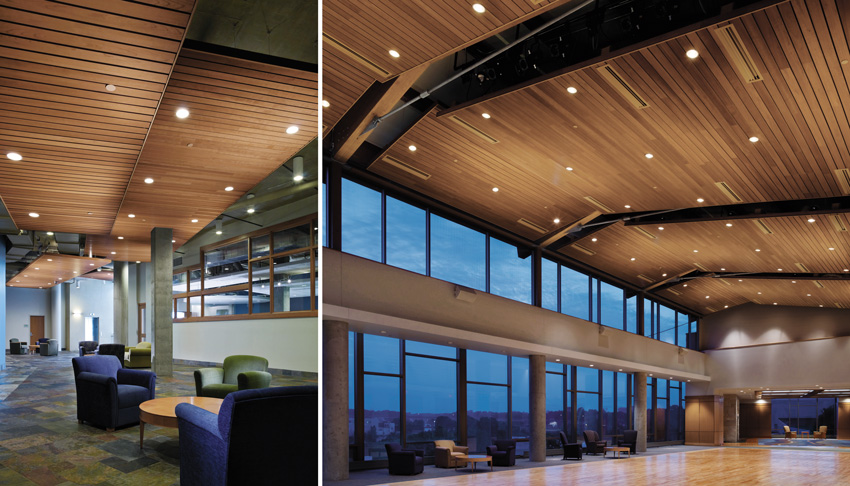
Project: Lawrence University, Richard and Margot Warch Campus Center
Location: Appleton, Wisconsin
Architect: Uihlein-Wilson Architects and KSS Architects
Figure 9: This project exemplifies state-of-the-art ceiling design, acoustics, accessibility, and LEED-NC Gold sustainability. An open plenum look in the atrium combines with two different wood ceiling systems to offset the view of the exposed mechanical system.
The wood industry has focused intensely in recent years in improving, measuring, and documenting the outdoor and indoor environmental performance of wood products. Some of the important certifications and guidelines to be aware of when comparing the sustainability of wood ceiling and wall products include:
Forest Stewardship Council (FSC) Certification: This ensures that products come from responsibly managed forests. Independent certifiers with third-party verification assess forest management and chain of custody using FSC standards.
Rainforest Alliance: This is a founding member of the FSC and a third-party certifier of wood products sourced from forests managed to protect endangered species, forest areas with high conservation value, and their workers and communities. Look for the Rainforest Alliance Certified seal to ensure compliance.
U.S. Department of Agriculture BioPreferred: This program works to assist development of markets for biobased products derived from plants and other renewable agricultural, marine, and forestry sources. More than 2,500 products in 100 different product categories have been certified to date. Products that are part of the BioPreferred program are listed on the USDA website. Look for biologically based, rapidly renewable, and high recycled content in acoustic fleece, backing, and panels, and solvent-free lacquers for surface finishes.
California Air Resources Board (CARB): This maintains a comprehensive production standard for formaldehyde emissions from composite wood panels. CARB Phase 2 certifies compliance with stringent formaldehyde emission levels that particleboard panels, MDF panels, and hardwood plywood panels must meet.
Environmental product declarations: An EPD for a specific product is a standardized, internationally recognized, independently verified, and comprehensive way of identifying the product’s full environmental impact, including many aspects of life-cycle cost, energy use, environmental impact, and global warming potential, from material extraction to end-of-service recycling or disposal.
LEED: Because of the variety of natural substrate and veneer materials available and the relative cost of these systems, they can make a significant contribution to LEED credits. (Note that wood veneers applied to metal panels do not deliver the same credits because the value of the veneer is well under 10 percent of the overall panel cost and represents less than the 70 percent of the panel’s composition required by LEED).
Although specific products and projects will vary greatly, in general, veneered wood panels contribute in these ways:
LEED 2009
- Recycled Content (MRc4)
- Regional Materials, dependent on project location (MRc5)
- Rapidly Renewable Materials (MRc6)
- Certified Wood (MRc7)
- Low Emitting Materials – Composite Wood (EQc4.4)
LEEDv4
- Regional Materials, dependent on project location (MR credits)
- Building Life Cycle Reduction, Interiors Life Cycle Impact Reduction (MRc BD&C, MRc ID&C)
- Building Disclosure and Optimization – EPD (MRc BD&C, MRc ID&C)
Installation and Integration
Just as with almost every building product and system, proper installation is the stage in the process that determines whether the imaginative design and the precise manufacturing of the wood ceiling and walls will achieve either the aesthetic or the performance. Safety features like seismic compliance and fire resistance rely directly on proper installation. The dramatic effects of unique sizes and shapes, such as sloped, curved, or faceted ceilings, or transitions between wood ceilings and walls, may add another layer of complexity to installation.
Standard veneered panels in a range of shapes can be hung from a standard suspension system with specialized hook-on panels to provide safe and secure downward accessibility. Panels with factory-applied fleece or infill panels are available as options. A standard system should include panels, suspension system, factory edge-banded trim, hardware, pre-drilled holes, and product specific installation instructions. Technical support is a consideration of specialty systems.
Complete installation systems are also available for installation of ceiling to wall, transitions at a 90 degree angle, or in a curved ceiling-to-wall installation. Upturns can be created for clouds with veneer-wrapped trim. Suspension systems and panels from one manufacturer can provide reliable, tested installation and prevent problems and delays.
In addition to standard systems, custom installation systems can implement the most imaginative designs. For example, in the Lyric Opera Administration Building lobby (Figure 7), custom splice plates and grid clips were used to create 30-degree angles in the clouds. The ceiling clouds were suspended from a heavy-duty galvanized steel suspension system. Each cloud consists of a single row of standard 2-foot-by-4-foot panels with coordinated 6-inch trim and a narrow 1/4-inch reveal between each panel.
Taking both standard and custom systems one step further, preengineered integrated ceiling solutions are also available in a variety of options. These systems can deliver complete integrated solutions. “Everybody loves the look and feel of wood, but in the past, most wood specialty ceilings involved a lot of on-the-job custom millwork,” says LeShay Grant, superintendent, Anning-Johnson Company, Atlanta, “which really drove up costs and made it almost impossible to quantify technical performance where it’s really important, like fire ratings and acoustics. Being able to specify exact requirements in a preengineered system lowers cost. But what’s really more important is that it makes performance consistent and reliable.”
Examples discussed earlier include systems for different levels of acoustic performance, torsion spring systems pretested for seismic performance, and systems making complex ceiling installations completely accessible. In another example, a wood ceiling system delivers the look and performance advantages of wood, while also building in “technical zones,” compartments organizing services, such as recessed lighting fixtures, chilled beams, air diffusers/returns, and sprinkler systems. The manufacturer works with partner companies to provide equipment and accessories prequalified for fit and finish.
The ability to standardize effective, reliable installation and integration with all the other components of the ceiling itself, and with the rest of the space, is one of the major benefits of working with a manufacturer that can deliver complete, tested systems and detailed installation support, including training videos, technical support, and on-site installation consultation.
How Manufacturing Affects Cost and Performance
An understanding of how a wood panel is manufactured is useful in understanding both the possibilities and the limitations of the material when specifying components of wood walls and ceilings. Virtually every step has a direct impact on how the panels will look and how they will perform. For example, the first part of the manufacturing process is sourcing the wood veneer. Hundreds of sheets of veneer can be sliced from a single log, and the visual characteristics of every tree are slightly different. One set of veneer sheets from the same tree, called a “flitch,” (see Figure 10) assures that visual characteristics are similar. The way veneer sheets are applied to panels also affects how it will look in the space.
For standard material, the panels will match designs and finishes the manufacturing facility is already familiar with so costs are typically lower. Manufacturers typically maintain inventories of flitches of frequently used veneers.
Before the production of a custom system even begins, the architect will approve shop drawings showing the size, shape, quantity, and perforations the finished panels will have. The architect also signs off on a sample with the same veneer and finish.
The basic steps in the process are:
Source
Hundreds of veneer sheets, or “flitches,” from a single tree will share similar visual characteristics.
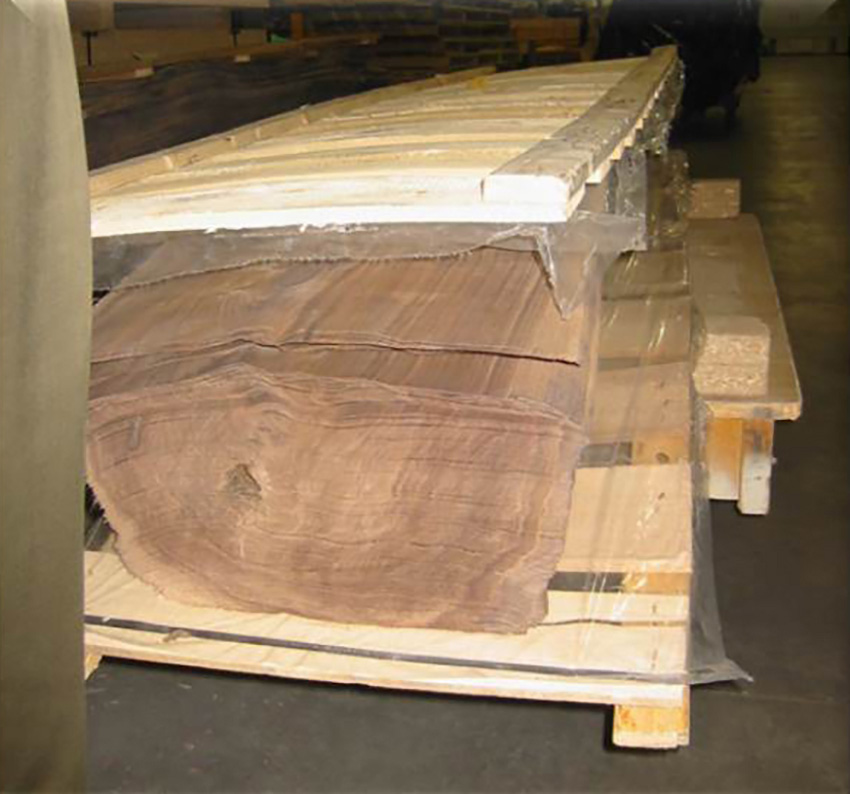
Figure 10
Splicing of the Veneer
Wood from the outside of the tree, called “sap wood,” is a different color and consistency than the true veneer so it is removed before the veneer is sliced from the log. Veneer leaves are typically narrow. Since panel sizes vary and larger panels are desirable, the sheets of veneer are spliced together using carefully applied adhesive, heat, and pressure to make larger sheets. How these sheets are laid out, as shown here, in relation to each other is important to the final visual.
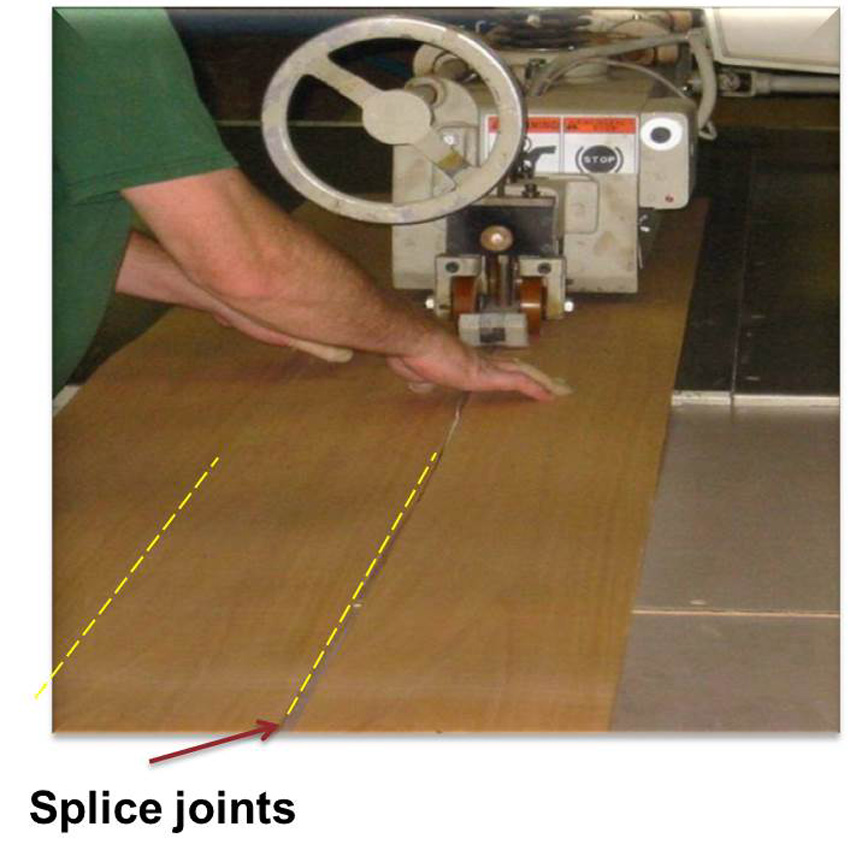
Figure 11
After splicing, each sheet of veneer is inspected to insure a quality splice was achieved and that there are no other imperfections on the veneer.
Application of Veneer to Substrate
Heat-activated adhesives bond the two together as they pass through the oven press. Veneers should be applied to both sides for balanced construction and to eliminate warping. After veneer has been adhered to a substrate, it is run through an oven press. The oven applies 2 minutes of pressure and heat to create a permanent bond.
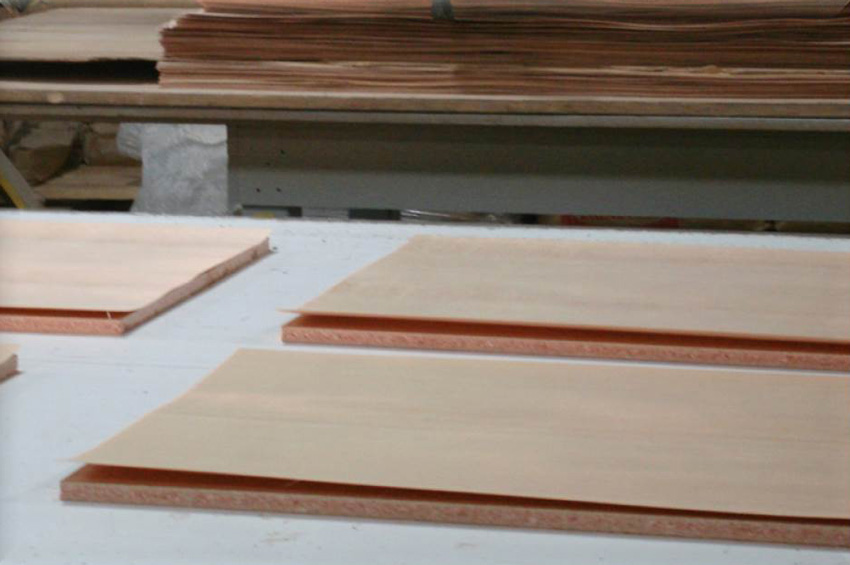
Figure 12
Perforation
Once panels have been trimmed to size, veneer is applied to the edges, a process called edge-banding that improves looks and performance. For acoustical performance, perforations can be added using either multiple drilling units, or more often computer numerical control (CNC), particularly for slotted perforations.
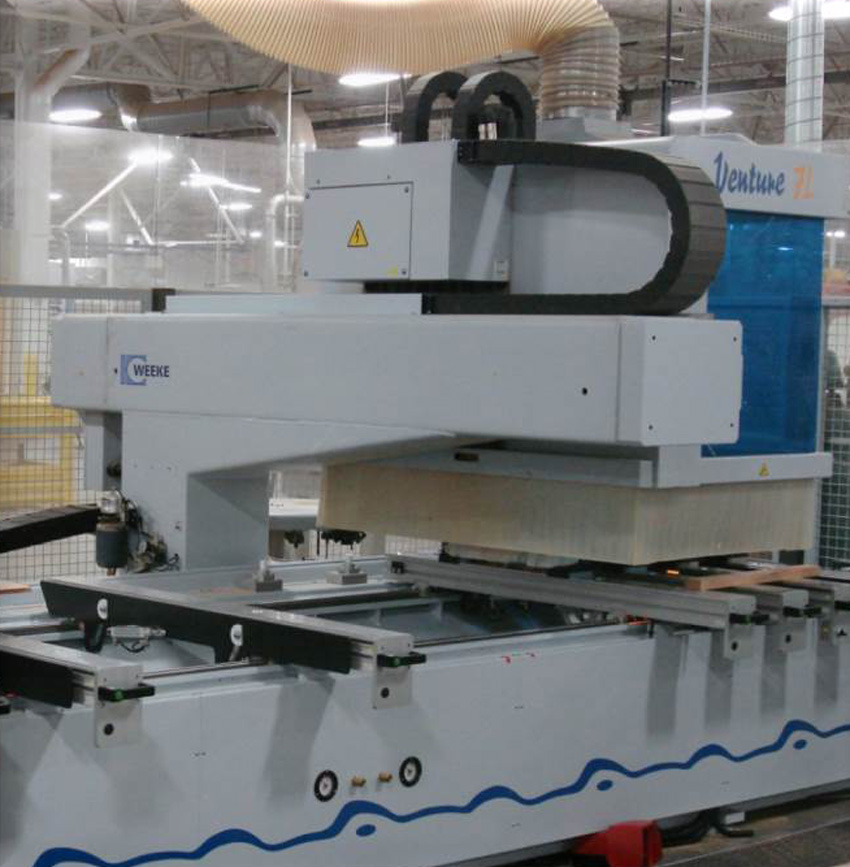
Figure 13
Curving of Panels
For curved panels or canopies, the panels can be gently formed into the desired shape using a mold or template and a vacuum system to hold them in place over time. This adds manufacturing time but is preferable to attempting to curve the panel in the field by forcing it, using shaping slats or ribs, which creates uneven pressure or tension in the panels themselves.
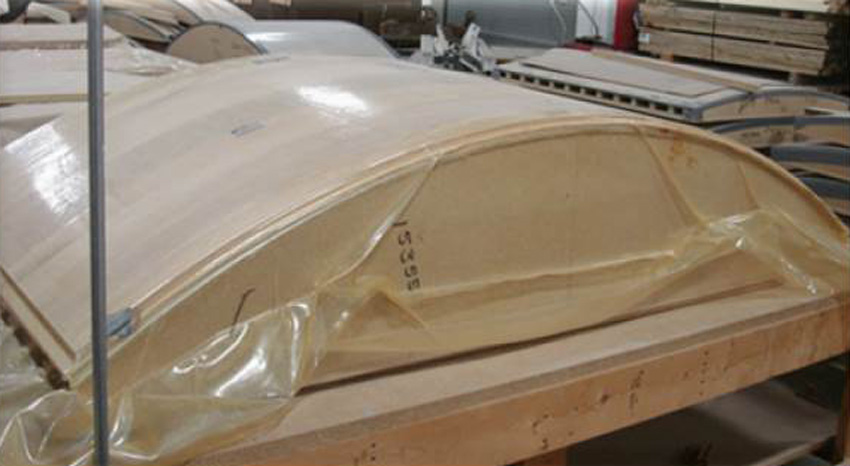
Figure 14
Finishing Line
Panels are prepared for staining by brushing and sanding the surface to a consistent level. Any imperfections will be highlighted when stain is applied so this is a key step in the manufacturing process. Stain must be applied in exactly the amount and color used on the submittal samples so it will match what the architect is expecting, which often means matching other finishes like walls, furniture, or doors.
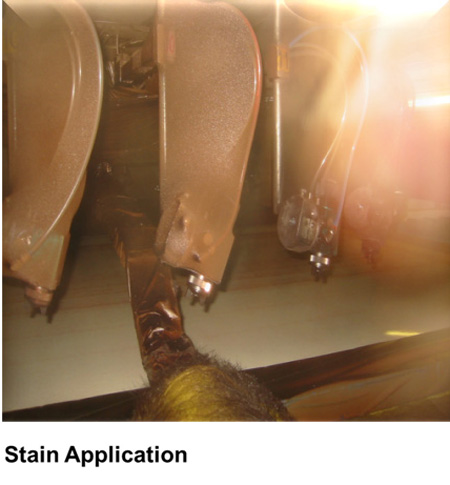
Figure 15
Stain is applied via mechanized spray heads in the stain booth, shown here. Only mechanized spray heads can produce an even, consistent coat. The panel is then dried to fix the stain to the surface of the panels. The panel will probably go through several more rounds of finish application and drying. Some panels require only clear coat over the natural finish, with no stain applied. This can be much more economical and allows the true character of the natural wood to show through. Protective finish layers are often applied as well.
As mentioned earlier, factory finishing of panels is critical to fire performance. In contrast, millwork is often finished with untested varnishes applied by hand. It is not possible to predict or ensure fire performance consistently with custom millwork.
Packaging
Finished panels are carefully packed to ensure damage-free delivery to the jobsite.
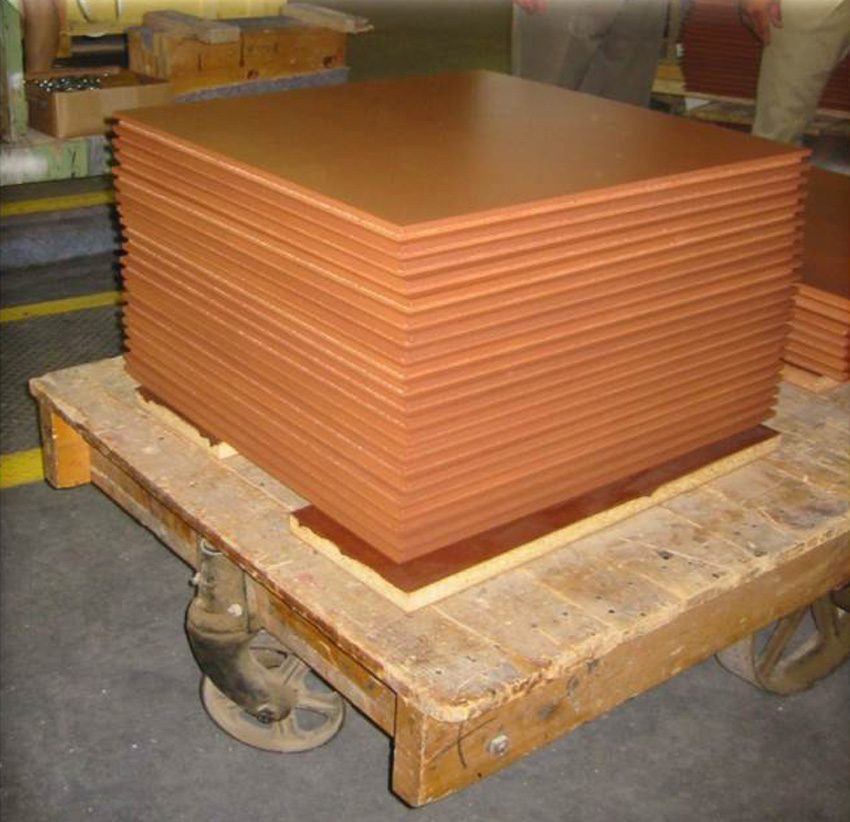
Figure 16
Working with a Manufacturer
Early planning ensures good results and cost efficiency. Some vital steps in a successful process include consideration of specific performance needs, the ability to use standard components and systems in imaginative ways where necessary to save on costs, or to use the limitless range of design choices available with wood materials to create original spaces.
Selecting a manufacturing partner is also a key advanced step. With custom systems, this should be one of the earliest parts of the process. A few fundamental considerations:
Manufacturer should be able to:
- Demonstrate state-of-the-art manufacturing capabilities and quality control.
- Provide current testing for key performance areas: fire, acoustics, seismic.
- Be able to exchange—efficiently and electronically—design details, preliminary drawings, reflected ceiling plans, section cuts, and perimeter details.
- Support the writing of the specification and review it before the project goes to bid.
- Understand how standard materials can be used along with or instead of unique panel types in designs to meet your design and budget needs.
Summary: Delivering Performance
Wood specialty ceilings and walls are now available to bring the beauty and natural character of wood into virtually any design. From the most straightforward standard systems to customized configurations and the spectacular one-of-a-kind interiors discussed in this course, manufactured wood panels and integrated systems can provide a range of predetermined performance levels in the areas most important for the health, safety, and productivity of people who will live and work in those spaces: excellent acoustics, safe spaces with tested fire and seismic performance, durable and easy-to-maintain spaces that are moisture resistant and accessible, and healthy, sustainable spaces with good air quality and low negative impact on the environment.
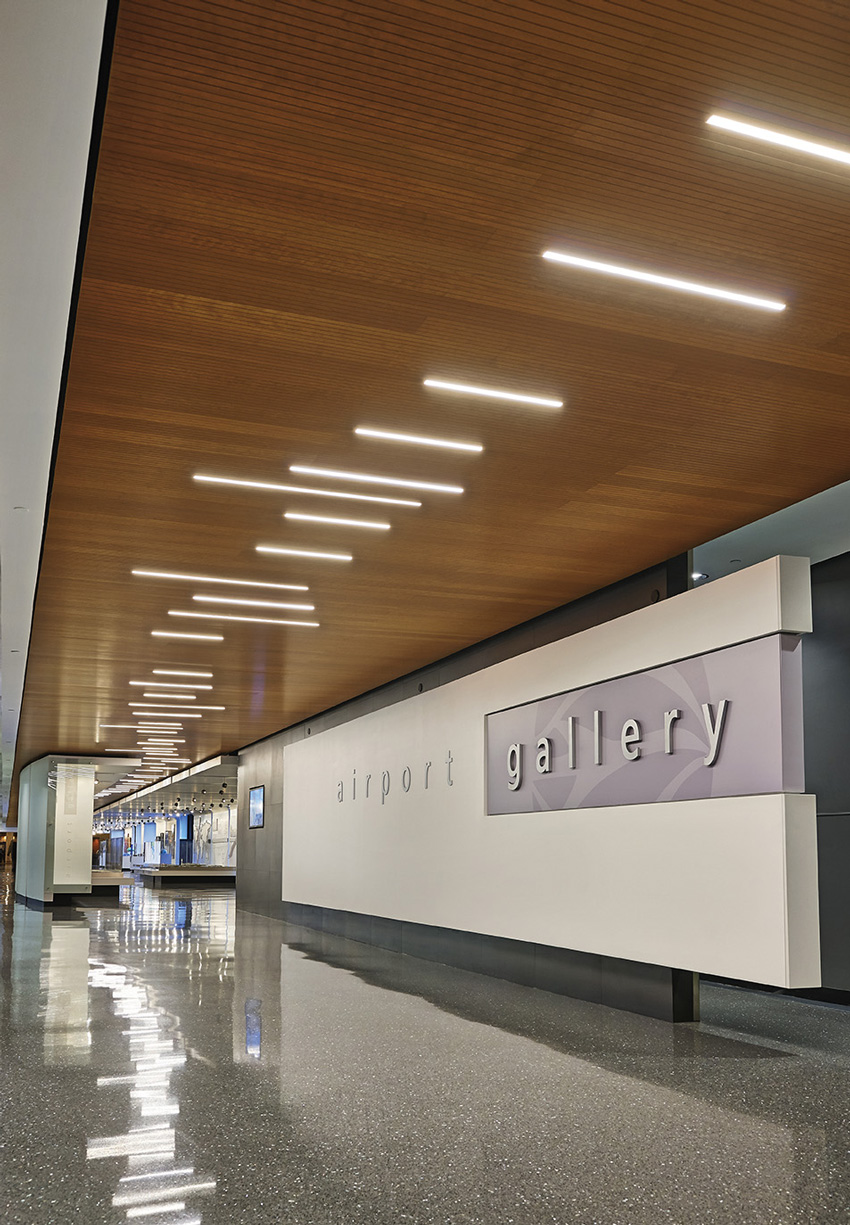
Project: Tampa International Airport
Location: Tampa, Florida
Figure 18: Wood ceilings bring a relaxing element to any space, including busy airports..

|
Armstrong Commercial Ceiling and Wall Solutions is the global leader in acoustical ceilings and wall systems with the broadest portfolio of standard and custom metal and wood options available, including clouds, canopies, baffles, and blades. armstrongceilings.com/commercial
|