This CE Center article is no longer eligible for receiving credits.
The design of K-12 school buildings has garnered a lot of attention in recent years, focused on ways to create genuinely better learning environments for students. Those involved in working with school boards, administrators, and teachers have no doubt engaged in discussions and debates over the need for optimized instructional spaces, healthier and safer buildings, reduced energy usage, better environmental integration, and other factors contributing to better student performance overall. These issues aren't limited to new construction since they are often primary drivers of modernization programs in existing school buildings as well. Fortunately, the interest in these issues has spawned some research and performance-based programs to help inform all those involved when it comes to making design decisions. This information allows architects to consider various available design strategies to help create truly effective, modern learning environments where students can flourish.
Context: School Status and Trends
Industry sources generally acknowledge that school construction is often the largest sector of total nonresidential construction put in place in any given year. An organization known as the 21st Century School Fund has founded a collaborative program known as Building Educational Success Together (BEST) that has reviewed and compiled information based on U.S. Census data, available state data, and direct surveys to document some specific details. In 2011, they published a summary of Public School Facility Infrastructure which indicates that nearly 90 percent of all of the 55.5 million school-age children in the U.S. attend nearly 100,000 public schools in the U.S. More precisely, they count 98,706 PreK-12 public schools (including 4,694 public charter schools) representing an estimated 6.6 billion gross square feet of existing space and over 1 million acres of land or site areas. Since the BEST focus is on the condition of these facilities, they cite a significant backlog of deferred maintenance and capital improvements on the order of an estimated $271 billion or approximately $4,883 per student. They further estimate that since 1999, an average of 80 percent of the capital outlay of school districts has been on new construction and additions with 20 percent on existing buildings.
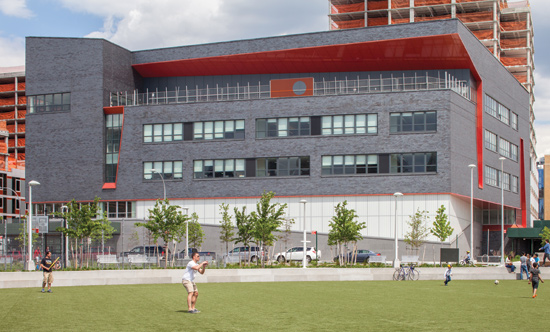
Photo courtesy of Endicott Clay Products
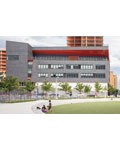
Modern school design increasingly needs to address a variety of concerns related to the experience of students in and around those buildings such as Hunter’s Point in Queens, New York, designed by FXFowle.
Turning to future outlooks, other sources suggest that enrollment will continue to grow on the order of 2.5 million more students through 2018 with annual capital spending nationally projected on the order of $25 billion or more each year through then. Observable trends include a growth in school additions and renovation to help address potential overcrowding. There has also been a clear trend observed in school designs becoming more flexible and adaptable for changing demographic and classrooms needs. In response to incidents of violence and other security concerns, there has also been a growing effort to create schools that are safer.
Green and sustainable design has also been a significant, ongoing movement that is expected to continue in schools, creating spaces with more connection to the natural environment, more natural light, healthier indoor air, and better energy performance. This effort is boosted by programs such as the LEED® for Schools program from the U.S. Green Building Council (USGBC). A related USGBC effort is the national Center for Green Schools which helps educate designers and educators on specific characteristics for safe, healthy schools including a program to bring sustainability education into the classroom. In 2012, the Center for Green Schools partnered with the McGraw Hill Financial Research Foundation and published “The Impact of School Buildings on Student Health and Performance.” It was based on a 2006 National Research Council report entitled “Green Schools: Attributes for Health and Learning.” Both documents use six categories related to student experiences in school buildings and cite research studies as their basis. We will use the same six categories in the following sections to illustrate not only the connections between student performance and their surroundings, but also to suggest some potential design strategies and examples of their implementation. In all cases, the focus is on improving the conditions in which everyone involved can thrive.
1. How Students Think and Learn
Connecting good school facilities with good student learning outcomes is a complicated proposition at best since there are many building variables and many human variables that can come into play. Nonetheless, there have been some observational studies that have produced some promising findings. For example, a study in one school district in Connecticut found that student test scores increased notably in schools after school construction projects were undertaken. (Neilson and Zimmerman, 2011.) The researchers accounted for differences in socioeconomic levels and other confounding factors to reach their conclusions so it is reasonable to infer that some direct correlation exists between the improved conditions and student test taking, although they cite the need to undertake a larger study on a national scale. Other observational studies have connected environmental factors with students' abilities to be fully alert or simply attend classes, both of which have obvious direct impacts on learning.
So what general design strategies would help students be more alert, or simply more engaged to think and learn better? The trend for more flexible spaces may play directly into this. If a learning environment can be easily and readily adapted to meet the particular needs of a grade level, a specific class, or even a particular student, might it not follow that their engagement with the environment directly facilitates engagement with learning?
Movable Walls
One strategy is to incorporate movable wall systems instead of purely fixed walls into the design of a learning area to create a truly dynamic and flexible learning environment. Opening a movable wall can create a shared space between two adjacent classrooms while closing the wall can separate and isolate them when needed. Similarly, movable wall systems can open up multiple classrooms or grades to a common area that is shared for group learning activities. This design strategy offers the benefits of allowing the same spaces to be used for smaller project-based learning activities or for larger common exercises where students work together on a range of activities, utilizing shared resources such as technology centers and presentation areas. Creating such flexible classroom configurations can optimize limited floor space, allowing for potentially less square footage and reduced construction costs. In addition, such multi-use spaces can contribute to reduced operating costs since teachers can share resources, cross-collaborate, and create a more efficiently run school.
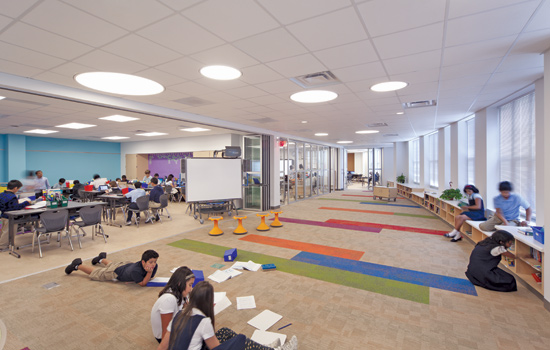
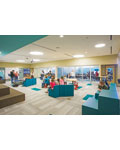
Photo courtesy of NanaWall Systems
Movable walls provide flexible, collaborative spaces that enhance learning at the Booker T. Washington STEM Academy in Champagne, Illinois, by CannonDesign.
This movable, flexible wall approach was employed at the Booker T. Washington STEM Academy in Champagne, Illinois. Serving 225 students, the school is separated into three academies with each grade further stratified into three learning studios which share a communal gathering space. The architectural firm of CannonDesign determined that the use of movable glass wall systems allowed the three studios to either function as separate learning environments or to open up and share the larger communal space. As observed by Stuart Brodsky, AIA, LEED AP, an associate principal at CannonDesign, “The movable glass walls enable multiple room configurations and sizes without building additional space. This flexibility allows teachers to gain access to shared resources and adapt space for small and large groups as well as project-based learning activities.” They also allow each learning studio to maximize activities within the communal gathering and project workspace—what CannonDesign calls a “piazza for discussion and collaboration.” This open-plan layout is meant to mirror professional settings, helping students prepare for real-world future collaborations.
Creative Classroom Furnishings
For students to learn and think in a classroom setting, the furnishings that they use need to work with their learning styles and the teaching style of the instructor. In addition, all furniture has become increasingly focused on good ergonomic design using environmentally friendly materials and manufacturing processes. Recognizing these needs, the school furniture industry has responded in dramatic fashion, offering unique combinations of seating, work surface, and storage options that enable the end users to effectively and efficiently create their own environments. This design strategy is not about reinventing the classroom as much as it is about blending historic educational values and strategies with flexibility and creative learning environments. The end goal remains the creation of healthier, higher-performing learning environments so the selection of furnishings should reflect that goal. It should be noted that there are lines of educational furnishings that directly respond to the principles and design guidelines of USGBC, the Center for Green Schools, and other such national programs.
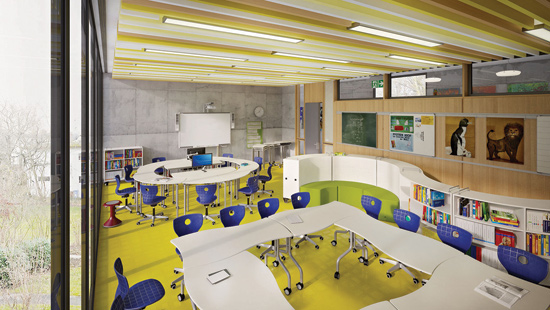
Photo courtesy of VS America
Flexible and movable furniture systems empower both teachers and students to create classroom environments that directly suit the teaching and learning needs of a particular class for different subjects or activities.
The impact on design from flexible furniture systems means that classrooms don't need to be restricted to a planning process based on rows of desks alone. Rather, the room becomes an enclosure that allows for variable forms and shapes to promote class-wide learning or separation into smaller groups within the classroom. When these new and variable environments are created, it is possible to think in terms of a holistic approach to design and how it fits with educational goals and styles. According to David A Stubbs II, owner of Cultural Shift and the designer of Shift+, when teachers and students are empowered to adjust, move, and otherwise rearrange the furniture to suit different needs, it has been observed that 100 percent engagement has occurred. This full level of engagement in combination with minimalized distractions, has been shown to demonstrate improved learning and more effective teaching strategies.
The design of K-12 school buildings has garnered a lot of attention in recent years, focused on ways to create genuinely better learning environments for students. Those involved in working with school boards, administrators, and teachers have no doubt engaged in discussions and debates over the need for optimized instructional spaces, healthier and safer buildings, reduced energy usage, better environmental integration, and other factors contributing to better student performance overall. These issues aren't limited to new construction since they are often primary drivers of modernization programs in existing school buildings as well. Fortunately, the interest in these issues has spawned some research and performance-based programs to help inform all those involved when it comes to making design decisions. This information allows architects to consider various available design strategies to help create truly effective, modern learning environments where students can flourish.
Context: School Status and Trends
Industry sources generally acknowledge that school construction is often the largest sector of total nonresidential construction put in place in any given year. An organization known as the 21st Century School Fund has founded a collaborative program known as Building Educational Success Together (BEST) that has reviewed and compiled information based on U.S. Census data, available state data, and direct surveys to document some specific details. In 2011, they published a summary of Public School Facility Infrastructure which indicates that nearly 90 percent of all of the 55.5 million school-age children in the U.S. attend nearly 100,000 public schools in the U.S. More precisely, they count 98,706 PreK-12 public schools (including 4,694 public charter schools) representing an estimated 6.6 billion gross square feet of existing space and over 1 million acres of land or site areas. Since the BEST focus is on the condition of these facilities, they cite a significant backlog of deferred maintenance and capital improvements on the order of an estimated $271 billion or approximately $4,883 per student. They further estimate that since 1999, an average of 80 percent of the capital outlay of school districts has been on new construction and additions with 20 percent on existing buildings.
Photo courtesy of Endicott Clay Products
Modern school design increasingly needs to address a variety of concerns related to the experience of students in and around those buildings such as Hunter’s Point in Queens, New York, designed by FXFowle.
Turning to future outlooks, other sources suggest that enrollment will continue to grow on the order of 2.5 million more students through 2018 with annual capital spending nationally projected on the order of $25 billion or more each year through then. Observable trends include a growth in school additions and renovation to help address potential overcrowding. There has also been a clear trend observed in school designs becoming more flexible and adaptable for changing demographic and classrooms needs. In response to incidents of violence and other security concerns, there has also been a growing effort to create schools that are safer.
Green and sustainable design has also been a significant, ongoing movement that is expected to continue in schools, creating spaces with more connection to the natural environment, more natural light, healthier indoor air, and better energy performance. This effort is boosted by programs such as the LEED® for Schools program from the U.S. Green Building Council (USGBC). A related USGBC effort is the national Center for Green Schools which helps educate designers and educators on specific characteristics for safe, healthy schools including a program to bring sustainability education into the classroom. In 2012, the Center for Green Schools partnered with the McGraw Hill Financial Research Foundation and published “The Impact of School Buildings on Student Health and Performance.” It was based on a 2006 National Research Council report entitled “Green Schools: Attributes for Health and Learning.” Both documents use six categories related to student experiences in school buildings and cite research studies as their basis. We will use the same six categories in the following sections to illustrate not only the connections between student performance and their surroundings, but also to suggest some potential design strategies and examples of their implementation. In all cases, the focus is on improving the conditions in which everyone involved can thrive.
1. How Students Think and Learn
Connecting good school facilities with good student learning outcomes is a complicated proposition at best since there are many building variables and many human variables that can come into play. Nonetheless, there have been some observational studies that have produced some promising findings. For example, a study in one school district in Connecticut found that student test scores increased notably in schools after school construction projects were undertaken. (Neilson and Zimmerman, 2011.) The researchers accounted for differences in socioeconomic levels and other confounding factors to reach their conclusions so it is reasonable to infer that some direct correlation exists between the improved conditions and student test taking, although they cite the need to undertake a larger study on a national scale. Other observational studies have connected environmental factors with students' abilities to be fully alert or simply attend classes, both of which have obvious direct impacts on learning.
So what general design strategies would help students be more alert, or simply more engaged to think and learn better? The trend for more flexible spaces may play directly into this. If a learning environment can be easily and readily adapted to meet the particular needs of a grade level, a specific class, or even a particular student, might it not follow that their engagement with the environment directly facilitates engagement with learning?
Movable Walls
One strategy is to incorporate movable wall systems instead of purely fixed walls into the design of a learning area to create a truly dynamic and flexible learning environment. Opening a movable wall can create a shared space between two adjacent classrooms while closing the wall can separate and isolate them when needed. Similarly, movable wall systems can open up multiple classrooms or grades to a common area that is shared for group learning activities. This design strategy offers the benefits of allowing the same spaces to be used for smaller project-based learning activities or for larger common exercises where students work together on a range of activities, utilizing shared resources such as technology centers and presentation areas. Creating such flexible classroom configurations can optimize limited floor space, allowing for potentially less square footage and reduced construction costs. In addition, such multi-use spaces can contribute to reduced operating costs since teachers can share resources, cross-collaborate, and create a more efficiently run school.
Photo courtesy of NanaWall Systems
Movable walls provide flexible, collaborative spaces that enhance learning at the Booker T. Washington STEM Academy in Champagne, Illinois, by CannonDesign.
This movable, flexible wall approach was employed at the Booker T. Washington STEM Academy in Champagne, Illinois. Serving 225 students, the school is separated into three academies with each grade further stratified into three learning studios which share a communal gathering space. The architectural firm of CannonDesign determined that the use of movable glass wall systems allowed the three studios to either function as separate learning environments or to open up and share the larger communal space. As observed by Stuart Brodsky, AIA, LEED AP, an associate principal at CannonDesign, “The movable glass walls enable multiple room configurations and sizes without building additional space. This flexibility allows teachers to gain access to shared resources and adapt space for small and large groups as well as project-based learning activities.” They also allow each learning studio to maximize activities within the communal gathering and project workspace—what CannonDesign calls a “piazza for discussion and collaboration.” This open-plan layout is meant to mirror professional settings, helping students prepare for real-world future collaborations.
Creative Classroom Furnishings
For students to learn and think in a classroom setting, the furnishings that they use need to work with their learning styles and the teaching style of the instructor. In addition, all furniture has become increasingly focused on good ergonomic design using environmentally friendly materials and manufacturing processes. Recognizing these needs, the school furniture industry has responded in dramatic fashion, offering unique combinations of seating, work surface, and storage options that enable the end users to effectively and efficiently create their own environments. This design strategy is not about reinventing the classroom as much as it is about blending historic educational values and strategies with flexibility and creative learning environments. The end goal remains the creation of healthier, higher-performing learning environments so the selection of furnishings should reflect that goal. It should be noted that there are lines of educational furnishings that directly respond to the principles and design guidelines of USGBC, the Center for Green Schools, and other such national programs.
Photo courtesy of VS America
Flexible and movable furniture systems empower both teachers and students to create classroom environments that directly suit the teaching and learning needs of a particular class for different subjects or activities.
The impact on design from flexible furniture systems means that classrooms don't need to be restricted to a planning process based on rows of desks alone. Rather, the room becomes an enclosure that allows for variable forms and shapes to promote class-wide learning or separation into smaller groups within the classroom. When these new and variable environments are created, it is possible to think in terms of a holistic approach to design and how it fits with educational goals and styles. According to David A Stubbs II, owner of Cultural Shift and the designer of Shift+, when teachers and students are empowered to adjust, move, and otherwise rearrange the furniture to suit different needs, it has been observed that 100 percent engagement has occurred. This full level of engagement in combination with minimalized distractions, has been shown to demonstrate improved learning and more effective teaching strategies.
Seating in Multipurpose Spaces
Most K-12 school buildings require spaces for large group gatherings such as gymnasiums, cafeterias, and auditoriums. A common and favored strategy is to make such rooms serve multiple purposes since large gatherings for different reasons don't necessarily occur at the same time. The design challenge is found in creating a single room that can accommodate the different spatial and functional needs of those different uses. Further, a single large room may not always be used to capacity; in fact, it may be more desirable to allow several small groups to use portions at the same time.
Photos courtesy of Hussey Seating Company
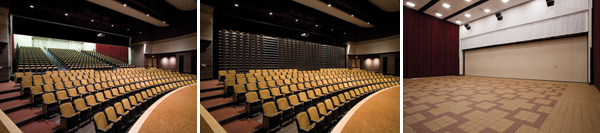
A combination of fixed and telescopic seating creates a full auditorium (left). When the telescoping seating is closed, it creates a dividing wall and smaller auditorium on one side (middle) and a usable open area on the other (right).
A common design strategy for multipurpose spaces is to incorporate seating that is movable in some manner to allow greater flexibility in the use of the space. Telescopic seating has typically been used in school gymnasiums in the form of bleachers. However, it is also possible to use the telescoping concept with a platform system in a more contemporary manner with a variety of seating types for different comfort levels. When electrified, these telescoping systems can be operated easily by one person to convert gymnasiums or other spaces from open areas to seating areas. Adding the use of fully portable chairs, benches, or other seating allows even more opportunities to meet the needs of different student activities. Taking that one step further, “tip and roll” platforms can be moved into place to provide a presentation space or additional seating for particular activities.
Combining telescoping seating with fixed-in-place seating can provide other choices and options in how large group spaces are used. For example, in Michigan, the Whitmore Lake High School needed a large auditorium but they didn't need it all the time. They did need some smaller open spaces that could provide other functions while a smaller seating area in front of the stage area was sometimes adequate too. The solution was found in a rather innovative combination of seating types. In front of the stage, seven rows of stepped, fixed seating were installed. Behind that an area of telescoping seating on platforms was installed such that when open, it looked like a natural extension of the seating in the auditorium. However, by using a reverse folding operation, the closed seating forms a dividing wall between the fixed seating and the space otherwise occupied by the open seating. This approach allows that space to be used for other activities such as lunch, community functions, and classes. Having the flexibility in the way this space is used allows students to learn in environments suited to the activity.
Exterior Learning Spaces
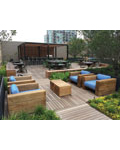
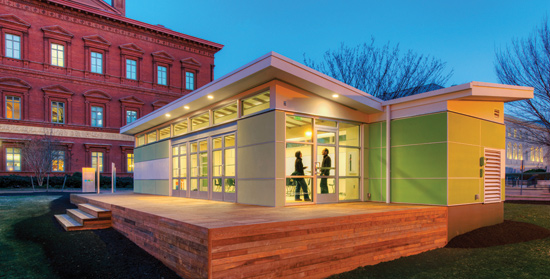
Learning spaces don't need to be limited to indoor spaces. In fact there are a lot of creative ways that outdoor learning spaces can be incorporated into school designs to allow hands-on learning of outdoor focused subjects. In multistory schools, particularly in urban settings, rooftop decks and elevated deck areas provide a safe and structured area for students to learn, play, and enjoy the outdoors. Perhaps one of the biggest outdoor learning opportunities is to see how things grow in gardens. But when land area is not available, then planters can be used on top of outdoor decks to create the same opportunity. Finished, accessible outdoor spaces can be created by using wood deck systems that rest on adjustable screwjack pedestals to support and level modular wood deck tiles. Outdoor deck systems can also provide pedestrian access to other features such as planted green roofs for students to discover and monitor the benefits of that sustainable design attribute.
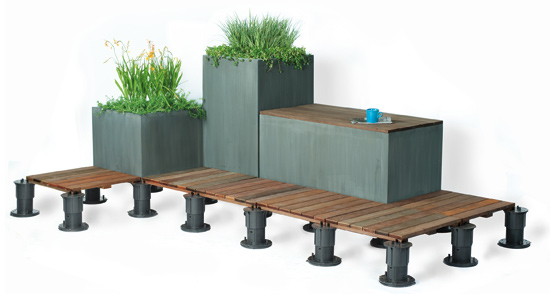
Photos by Sam Kittner, courtesy of Bison Innovative Products
Outdoor learning spaces with elevated decks and planters can be used on roof areas or on modular classroom structures like this one designed by Perkins+Will.
This strategy of including outdoor learning space in schools has been incorporated into a demonstration project carried out by the international design firm of Perkins+Will in conjunction with numerous sponsors. Recognizing the popular use of modular units to address school expansion needs, they have put together a healthy, sustainable, and flexible modular classroom designed to meet the needs of a 21st century classroom. In addition to addressing the range of interior design needs for students and teachers, they have included outdoor learning and garden patio areas as part of the basic design of the module. This garden patio allows students to interact directly with nature and the outdoors, rather than just reading about it or learning from electronic media.
2. How Students Move
Students, teachers, staff, and visitors all move through a school building by walking—how much and how far is often a matter of design. In this era where only about 5 percent of all students walk or ride their bike to school, concerns about encouraging more physical activity in buildings for good health and to fight childhood obesity are certainly valid. Similarly, safety in schools has been an ongoing public concern suggesting more attention be given to entrances and exits from the building. In this context, the process of moving, wayfinding, and controlling access in a public school building is part of the overall equation, driving strategies for successful designs.
Controlling Entrance and Interior Doors
The role of entrances and doors in contemporary schools buildings is a bit paradoxical. On the one hand, they need to be open and inviting for students, parents, and community members. On the other hand, they need to be restrictive and controllable to address safety and security concerns. Add to that the need to function seamlessly while standing up to the high traffic and abuse of any educational environment and it is easy to see why doors consume a fair amount of design time.
A big part of the solution to the functionality of doors lies in how they are operated which usually means selecting the appropriate control hardware. Since most school entrance and corridor doors need to meet code egress requirements, heavy-duty, durable, exit devices are often required. Some have smoother, reduced projection touchbar assemblies which are more aesthetic and minimize catch hazards. Similarly, heavy-duty door closers can be applied to these doors that use a hydraulic control system to allow for a full range of spring power adjustment and backcheck that can be specified to meet different conditions. Whenever controlled release and closing of doors is necessary for safety or convenience, door holders composed of a door-mounted catch plate and a floor- or wall-mounted electromagnet are appropriate to use in conjunction with door closers. Products are available with built-in protection and low residual magnetism so they release easily, even in applications meeting ADA requirements, with minimal spring force door closers.
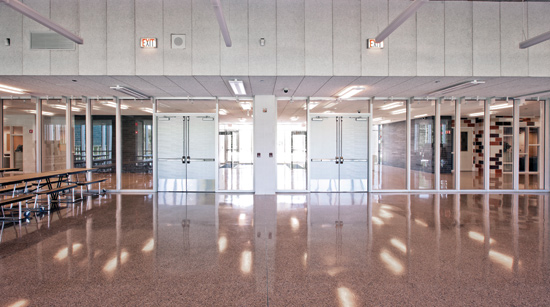
Photo courtesy of DORMA
Doors in schools can be designed and configured to foster appropriate movement of students while maintaining control for safety.
Of course, doors need to be locked and secured at different times and in different locations. Many schools are incorporating an electrified system that includes a central console for remote control and monitoring of doors around the school building. This requires electrical power coordination to those doors but modular systems are commonly available to meet the specific needs of virtually any electric lock system. A well-organized installation for individual or multi-door systems may include locking devices, access controls, and station controls all coupled with consoles for remote control, annunciation, and interface with fire and life safety systems.
Sliding Doors
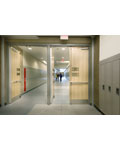
Not all doors need to be swinging nor do they all need to be limited to a single leaf. The use of sliding doors in single or multiple panels not only allow access, they can also create appropriately sized, transformative study spaces. When closed, sliding multiple door panels produce privacy on demand with the option of an embedded swinging door to maintain access. When opened by students or teachers, larger team study spaces can be easily created. Such sliding doors are typically made out of aluminum frames with a very high recycled content adding to their green and sustainable attributes. Since aluminum also typically requires no on-site finishing, there is no contribution of harmful vapors to the indoor air. Inside the aluminum frames, glass panels can provide the additional advantage of natural or borrowed light. This means that the space being enclosed does not need to be dark simply because the doors are shut. If privacy is needed, then it is entirely possible to use glass that is translucent, tinted, or otherwise treated to achieve the desired effect.
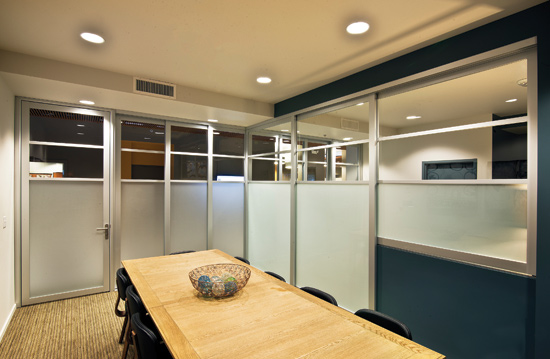
Photo courtesy of Space Plus, a division of The Sliding Door Company
Multi-panel sliding doors can enclose a small study room or open up to create a larger collaborative space.
A significant advancement related to the way students move about a building, is their increasing use of tablets, laptops, or smartphones for taking notes or learning electronically. In other words, students are moving around the school with a “bring your own devices” (BYOD) mindset. Allowing for wireless connections to access the appropriate educational information creates great freedom and flexibility in their use and the opportunities for learning. It also means that movable portions of walls and sliding doors don't need to provide wired connections, but they do need to allow appropriate separation of space when students need to work in collaborative environments on group assignments on their own devices. Sliding door solutions are being used to accommodate this trend in many small and large group study rooms as well as larger, open, collaborative work areas.
Making High-Traffic Areas Durable
School common areas such as corridors are, by nature, high foot traffic areas used virtually every day that school is in session. That means they need to be easily cleaned daily and the flooring material needs to be durable enough to handle all the traffic, cleaning, and other demands over the life of the building. One durable and sustainable choice for such flooring, stairs, and even corridor walls, is terrazzo, which is a traditional material that has been modernized to meet current needs. Terrazzo is a composite system consisting of either a cement or resinous matrix with an aggregate of marble, granite, onyx, or glass (in resinous systems). It is poured-in-place, cured, and ground to a smooth hard surface finish. Terrazzo is non-porous and does not support microbial growth, nor does it allow moisture to accumulate, contributing to a mold-free, healthy environment. Additionally, terrazzo is comprised of zero-VOC materials, and exhibits little to no off-gassing over the life of the cured material. As a very low-maintenance system, terrazzo can be cleaned with an environmentally friendly, neutral-pH cleaner which will not irritate sensitive eyes or noses.
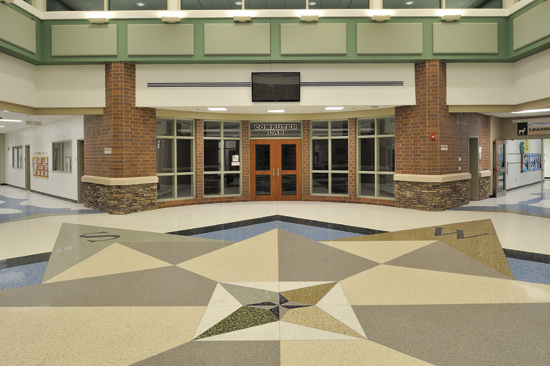
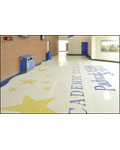
Photo courtesy of National Terrazzo & Mosaic Association
Terrazzo flooring can incorporate designs that assist with wayfinding or educational topics.
The custom nature of terrazzo installations means that designs of all types and colors can be incorporated into the flooring. For example, wayfinding information can become part of the floor to help students become oriented and find other areas of the school building. Alternatively, maps, historical events, scientific facts, numbers, poems, or other educational information can be displayed in the floor for educational and space-making purposes. And in the interest of fostering school spirit, athletic mascots and school seals can also be included in prominent locations.
In regard to durability, terrazzo has been documented numerous times to withstand not only normal wear and tear, but dramatic events such as floods and hurricanes. The Central Intermediate School in Ottawa, Illinois, was inundated by flooding in 2008 and the only sections found perfectly intact were the terrazzo corridor floors. When the decision was made to rebuild the school in a new location, terrazzo was selected not only for the corridors, but also for the cafetorium and restrooms as well. “That the school district installed terrazzo again in the new building is a testament to their recognition of its longevity and durability,” said George Reigle, project architect with Green/Associates of Deerfield, Illinois.
3. How Students Hear
With educational space planning and movement concerns addressed, we turn our attention to some specific sensory needs of students. In regards to the sense of hearing, the Center for Green Schools/McGraw Hill study of 2012 points out that ample evidence exists showing classrooms can have a negative impact on students' ability to hear, thus clearly making it difficult for them to absorb and retain information. Hence acoustical control of school spaces has appropriately become an important design issue.
A basic acoustical control concern in schools is background noise that can originate from within or outside of the building. Obviously, separating classrooms acoustically whether using fixed or movable walls and doors is a first place to start and has become a part of green building rating systems for schools. For fixed walls or floor/ceiling assemblies, one available strategy is to use noise-reducing gypsum board that is specifically designed to reduce airborne sound transmission between two adjoining spaces.


Photos courtesy of Mitsubishi Electric Cooling & Heating and CertainTeed Gypsum
By looking at all aspects of acoustics in a classroom, including quieter HVAC systems, students can hear better, teachers can talk in normal voice tones, and learning is enhanced.
Other acoustical control measures are important as well. For example, noise from outdoors can penetrate exterior walls and windows, making it more difficult for students to hear and for teachers to speak without raising their voices. Addressing the acoustic qualities of exterior walls in the same manner as interior ones will help in this regard. When it comes to windows, a common strategy is to use laminated glass in one or more of the layers of an insulated glass assembly. The laminated glass has been shown to create noise reduction benefits as well as enhancing security in schools.
Within the classroom, background noise can sometimes be generated by mechanical heating or cooling equipment. Selecting such equipment or systems with attention given to the amount of sound generated within the space will be important. Ductless or split systems are available that can deliver comfort without compromising acoustics by operating at decibel levels quieter than a whisper.
4. How Students See
Historically, daylight was used as the predominant source of light for students to see inside school buildings. The energy crisis of the 1970s, however, gave rise to school buildings with few or even no sources of natural light in an effort to reduce heating or cooling energy. Experience has since shown that natural daylight combined with appropriate electrical lighting provides both the right quantity and proper quality of light to enhance learning and academic performance. Further, the positive impacts of natural daylight on student health and performance have been studied and documented in numerous studies showing improvements ranging from slight to significant. One well-known study showed that 8,000 students in grades three through six who learned in fully daylit classrooms demonstrated significantly greater improvement over the course of a school year in standardized test scores than students who were learning in non-daylit classrooms (Heschong Mahone Group, 2003, as cited in “The Benefits of Glass” prepared by the University of Michigan Taubman College of Architecture and Urban Planning in partnership with Guardian Industries Corp.). In a separate study, the California Energy Commission reported learning rates improved 21 percent for 21,000 California elementary school students in classrooms with the most daylight compared to those in classrooms with the least daylight. (October 2003, by New Buildings Institute based on research by Heschong Mahone Group.)
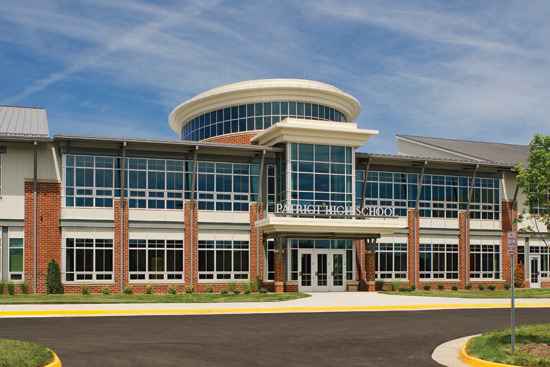
Photo courtesy of Guardian Industries Corp.
Modern glass technology allows abundant daylighting, views, and controllable impacts on energy performance in school buildings.
Better Glass and Glazing
Over the past several decades, glass manufacturers have developed ways to address daylight and energy performance. Rosie Hunter of Guardian Industries Corp. observed, “Today, many different glass products exist to help architects create better learning environments. The days of a row of small windows in classrooms have ended as architects have taken advantage of advancements in glass technology to increase the use of glass in school designs while still addressing energy performance.” By using glass products with varying degrees of visible light transmission and solar heat gain coefficients, architects can use the sun's energy to create a passive heat source in cold climates or to limit solar heat penetration in warmer climates. Hence, energy use and glare can be addressed and balanced to create a positive light quality for students to see and work in.
In addition to daylight, the other beneficial aspect of windows is to facilitate students seeing longer distance views outside of the classroom. Doctors have known that eyestrain and visual acuity problems can develop if students have only short distance views available to them. It is suggested that in order to keep eyes healthy, long distance views are needed. The color of the glass certainly comes into play in this case and many clear, neutral blue, green, and gray colors are available that can enhance specific views, control glare, and generally create desirable visual conditions.
Glass use is not limited to exterior walls, however. Using glass in interior walls is often desirable to allow light and views to be shared from one space to another. In schools, this is problematic when the walls are fire rated. The solution is found in glass that is also specifically formulated to be fire rated and safe. The Safety Glazing Certification Council (SGCC) rates such glass which commonly uses a plastic interlayer laminated between glass outer layers. This combination helps the laminated layers hold together if a glass outer layer is shattered.

Photo by Lefstead Architectural Photography, courtesy of AGC Glass Company North America
Laminated safety glass, fire-protective glass, and fire-resistive glass all allow light and views to pass through from space to space while meeting a range of fire code and security requirements.
There are further distinctions in the types of fire-rated glass available. Fire-protective glass may be laminated (or use other means) to meet SGCC ratings for safety and fire protection, but it is not a barrier to heat transmission. Fire-resistive glass has an intumescent interlayer which expands at about 250°F to form a rigid and opaque barrier, blocking heat transmission from both convection and radiation. Complete, coordinated glazing systems are available that combine fire-resistive glass with pronounced or minimal frames. There are even butt-glazed solutions that eliminate vertical mullions completely and still provide the needed fire protection. Todd Danciak of AGC Glass Company North America pointed out, “As our society has changed, modern schools are being designed to provide a safer and more secure environment for our children, in addition to a place of learning and enrichment. The proper selection of glass can assure the building occupants of a highly visible, safe, and secure space.”
Glass is also commonly used in stairwells and exterior corridors raising security concerns in schools. Laminated glass and glazing provides a very workable solution since it is able to endure abuse due to interlayers of durable, clear films that keep the glass from breaking apart even when damaged. Further, it fits directly into standard window and glazing frames, making installation very straightforward. Altogether, laminated and fire-resistive glass offers the multiple benefits of code compliance and security enhancement while still allowing light and views to be incorporated into the overall design of school spaces.
Glass Block
In addition to glazed windows, the use of glass block in school buildings has been a recognized strategy to enhance lighting schemes in both exterior and interior walls. Glass block has long been used to help architects design schools that are both creative and sustainable. Among its attributes, glass block provides daylighting with the option of obscuring views or allowing them, which means privacy and transparency can be controlled as desired. Since glass block is thicker than glass, it offers strength against damage or vandalism with surfaces that are easy to clean of graffiti. The make-up of the glass block allows for higher degrees of sound reduction compared to traditional windows. And, similar to glass, fire-rated glass block can be used in fire-rated wall assemblies to allow light to be shared between spaces.

Photo courtesy of Pittsburgh Corning
Glass block can be an integral part of a school design to provide a durable and effective way to provide natural light in a space.
In Hudson, Wisconsin, the 93,450-square-foot River Crest Elementary School took advantage of glass block to enhance the design for 588 students in grades kindergarten through five. Commissioned in 2006, the school was to be a highly sustainable and innovative education center. Glass blocks enabled the designers to meet the prerequisite challenge of acoustics to ensure classrooms are quiet enough for learning while still providing natural light and helping to reduce energy costs. In the final design, glass block was used in three separate areas. First, patterned glass blocks introduce light passing through windows and the main foyer into the guidance office, creating a distinctive design. Second, a different pattern was used in the story area of the library to borrow light from an adjacent window. For symmetry, glass blocks were also used between the story area and the adjacent computer lab. Third, glass block with a ripple pattern was used in the cafeteria to frame the opening to a central platform. In all, glass block proved to be an effective and desirable design strategy to allow light to transfer through spaces while meeting other operational needs.
Electric Lights
As noted earlier, the quality of light is essential just as the quantity of light is in creating better learning environments. Good light quality allows students to see clearly, have a feeling of warmth and comfort, and brings clarity into a space, thus allowing them to think clearly, inspiring their thoughts, ideas, and work. Electric lighting used in conjunction with daylighting, therefore, should be a positive reinforcement to the learning environment. The Illuminating Engineering Society (IES) reinforces this notion in The Lighting Handbook 10th Edition, Section 24.1 – Lighting for Education, where it states, “Knowledge acquisition and the process of learning involve the visual exploration of tangible forms and the discovery of concepts from written and graphical displays on paper, computer, and projection. Lighting's role is fundamental. However, lighting also sets the scene for listening, developing social skills, comprehending situations, and recognizing and understanding places.”

Photo by Joe Nuess, Nuess Photography; courtesy of ELP Lighting
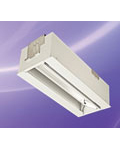
Recessed wall wash fixtures illuminate the white boards while indirect/direct luminaires provide general illumination at Sunset View Elementary School in Kennewick, Washington, designed by MMED Architecture.
In the context of modern classrooms and study spaces, quality lighting is needed not just for general ambient lighting, but also for specific needs related to white boards, wall displays, coves, exterior walkways, video conferencing, or distance learning applications. In order to meet varied needs, fixtures are available specifically for school designs that distribute light in asymmetric or other specific patterns in a variety of fixture shapes, sizes, and energy-efficient lamping options (i.e. LED and fluorescent). This variety means that they can be selected and specified to provide the particular lighting needed for specific situations. For example, in the case of Sunset View Elementary School in Kennewick, Washington, the classrooms are complex in their uses with the availability of many different media that can be used as teaching tools. The classrooms have a white board or smart board on the wall and above is a flat-screen monitor for video reception. While the white/smart boards need to be illuminated, light on the flat screen will wash out the image. Hence, adjustable wall wash fixtures were used to solve this problem by allowing adjustment of the light distribution so there is no light above the top of the white/smart board. Further, for the general area, suspended direct/indirect fixtures were used that provide very good dispersion of light and good light quality overall.
5. How Students Breathe
It is well known that building systems and materials have the potential to create a negative impact on the overall air quality in a building. Enclosed classroom spaces where students and teachers spend most of their time can accumulate unwanted things in the air they breathe including particulate matter, volatile organic compounds (VOCs), and other toxic materials that can have a variety of negative health impacts including respiratory issues, visual disorders, and memory impairment. The most prominent VOC, formaldehyde (present in many composite wood products), as well as Phthalates and Bisphenol A (BPA) (both present in many plastics used in construction), are still being studied. Further, moisture intrusion in building materials can lead to problems with mold contributing to respiratory illness and asthma.
How should we best deal with creating positive, healthy indoor air? One conventional means is to add more ventilation. According to researchers at Lawrence Berkeley National Laboratories, when ventilation rates are at or below minimum standards (roughly 15 cfm per student), an associated decrease of 5 to 10 percent occurs in certain aspects of student performance tests (LBNL IAQ Resource Bank). They also found that when ventilation rates were lowered from 17 cfm/person to 10 cfm/person, they saw a 15 percent increase in symptom prevalence for Sick Building Syndrome. All of this reinforces the significance of good ventilation but doesn't address the presence of the troubling materials in the first place.
Better Material Selection
The approach of green building design and construction is to use materials that don't contribute to the problem of indoor air quality. Selecting materials with very low or even no VOC content has become a common practice, particularly in schools, but there are other things that can be done as well.
Many school buildings have concrete floors, which of course require the use of water in their pouring and curing. If floor coverings are put down too soon, then some moisture may get trapped in the concrete and can eventually cause the deterioration and failure of the flooring, not to mention the creation of mold in the flooring material. In those cases, the floor covering needs to be removed and new flooring installed—a rather expensive and disruptive procedure that could have been avoided by specifying the most appropriate concrete mix for the school to begin with.
Fortunately, rapid-drying concrete is available for these situations in ready-mixed form that reduces the drying time and risks associated with excess moisture vapor in concrete slabs. This enables faster, more effective floor topping installations and, because of the reduced final moisture content, reduces the likelihood of mold formation. Peter Craig, a concrete floor specialist, observed, “Rapid-drying concrete dries naturally in as little as 30 days and because it consumes its free water internally, shrinkage and curling are significantly reduced.” He considers its use a “no-brainer” for any project where trapped moisture is a concern or where size tolerances are important.

Photo courtesy of U.S. Concrete
Rapid-drying concrete can be specified to reduce the presence of retained moisture in floors that can help eliminate mold concerns in schools.
What about walls and ceilings when it comes to indoor air quality? Once again finding materials that have few if any problematic toxins or chemicals is the best place to start. But it is unlikely that they will be totally eliminated, particularly since they can be brought in from furnishings and equipment, raising the question of how to best address their presence. In response, a family of innovative gypsum board products has been developed that has been shown to help clean the air and improve indoor air quality. The specially formulated gypsum board permanently absorbs and removes specific VOCs and formaldehyde, the most prominent VOC, which may be circulating within indoor air. Using advanced technology, this class of gypsum board captures and converts formaldehyde into inert compounds, so that it cannot be re-emitted into the air. The effectiveness of the process has been tested in accordance with ISO 16000-23 and validated by UL Environment through their Environmental Claims Validation (ECV) program. It has been shown to continue to effectively clean the air even when used with multiple coats of water-based acrylic or epoxy paints and breathable wallpaper based on tests conducted by independent laboratories. It also contains materials that offer superior protection against moisture and mold. These gypsum board products can be installed and finished like regular gypsum board and are recyclable at the end of their useful life.

Photo courtesy of CertainTeed Gypsum
Specially formulated gypsum board can be used to absorb and eliminate specific VOCs from the air in classrooms. The VOCs are given off by furniture or other sources.
The Northern Lehigh School District in Pennsylvania remodeled an elementary school using gypsum board to improve indoor air quality and help control sound attenuation. Greg Deer, the director of support services for the school district, commented, “We've gotten very favorable results from the new classrooms—sound is contained, the spaces are very comfortable, indoor air quality has improved, and allergy complaints have dropped. The selected drywall was crucial to us achieving these results that have helped create a top-notch learning environment for our students.”
Reducing the Spread of Germs

Photo courtesy of KIMBERLY-CLARK PROFESSIONAL*
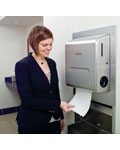
Paper towels in dispensers have been shown to spread less bacteria than air dryers, thus helping to reduce possible sickness among students and teachers.
In addition to chemical concerns, school environments are notorious for contributing to the spread of germs and sickness. Given the concentration of children and the ease with which germs can spread, it is easy to see why students miss an average of 4.5 days of school per year while teachers tend to miss more at 5.3 days per year. Even if they are not out of school, when they are fighting off illness, they are often not functioning at their best.
Data shows one of the best ways to reduce the spreading of germs and absenteeism is by washing hands. However, a new European study has pointed out that drying hands is part of the equation too. Research on “Microbiological comparison of hand-drying methods: the potential for contamination of the environment, user, and bystander” carried out by expert medical microbiologists E.L. Best, P. Parnell, and M.H. Wilcox in England has been printed in the Journal of Hospital Infection (August 2014). It compared the spread of bacteria using three hand-drying methods: 1) jet-air style hand dryers, 2) warm air hand dryers, and 3) paper towels. In so doing, they documented that air dryers cause bacteria and water droplets to be blown into the air, onto users and bystanders, thus risking cross contamination between washroom users.
Among their specific findings:
• Air bacterial counts close to jet air dryers were 4.5 times higher than around warm air dryers and 27 times higher compared to using paper towels.
• Next to the dryers, bacteria persisted in the air well beyond the 15-second drying time, with 48 percent of microbes still airborne after 5 minutes. Some were still detected in the air 15 minutes after hand drying.
• Drying with warm air and jet air dryers resulted in widespread droplet release; contamination was found on all areas of the body demonstrating potential for spread and inhalation to other washroom users.
• Airborne bacteria were dispersed over 3 feet away within the first 5 minutes of sampling and bacteria were found over 6 feet away.
In response to these findings, it is suggested that paper towels be used for drying hands in washrooms. For environmental reasons, paper towels can be purchased that are made from recycled material and there are even some that are sourced from alternative non-tree fibers such as bamboo and wheat straw, which are rapidly renewable materials. For practical reasons, many school facility management departments prefer high capacity (over 1,000 feet) roll paper towel dispensing systems to reduce labor and reduce the risks of product run-outs. This may lead them to add high capacity dispensers with sustainably sourced paper products after the construction stage is complete. To prevent retrofitting after completion, discussions with the owner should take place ahead of time to allow appropriate space. Such dispensers can be manual or automatic and coordination with the vendor may be warranted for particular details. Similarly, dispensers for soap and hand sanitizer should be worked into the overall washroom design and coordinated as well.
6. How Students Feel
Studies dating back as far as the 1930s have supported the idea that classroom interiors needed to be kept within a small band of temperatures to feel comfortable, but, in recent years it has become evident that basic temperature control is not the whole story. Thermal comfort in schools is also related to other things such as user control, air velocity, clothing and activity level. This suggests that the ability to moderate and control temperature within a school space, relative to other factors is important. It also means that thermal comfort in schools needs to balance student needs along with lower energy consumption.
Wall Construction
The thermal comfort of all buildings is directly influenced by the design and construction particulars of the exterior wall assembly. The combination of interior and exterior cladding surfaces along with the appropriate air, water, and vapor barriers plus thermal insulation combine to control the flow of heat, moisture and air through the total assembly. In school buildings, the added requirements of durability and longevity are needed which leads many architects to choose brick and masonry. By combining well known and proven construction techniques, exterior cladding using architectural brick helps create an energy-efficient, long-lasting wall system that is relatively maintenance free and easy to care for.
Brick use isn't limited to exterior use of course. By incorporating it within the thermal envelope of a building, it can function and be recognized as thermal mass which moderates uncomfortable temperature swings and helps with energy code compliance. In this manner, it isn't limited to walls, but is often used on floors in the form of pavers or tile over an appropriate substrate. The end result is a more comfortable indoor learning environment that helps students and teachers all around.
Brick has the additional characteristic of being available in a wide range of colors and textures to suit a variety of design intents to create buildings that can be warm and inviting or striking and bold. Gary Davis of Endicott Clay Products has found that “Architects are constantly on the search for exterior cladding products that can make their next project unique while enhancing efficiency. They want to make a statement while creating a building that meets or exceeds user expectations. They can find both when they work with brick.” This has been evidenced in the newly created Hunter's Point Community School at the Hunter's Point Campus in the borough of Queens, New York.
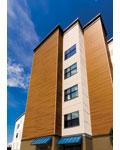
The building is clad in manganese ironspot utility size brick and incorporates numerous special shapes. It was conceived by FXFOWLE as a dark rock anchoring a developing neighborhood on the waterfront along New York City's East River. The dark brick color complements the formidable presence of this structure and makes a strong statement when viewed from the United Nations headquarters across the river in Manhattan. “You can't even put a value on it, it's so fabulous,” says Edgar Rodriguez, the high school principal. “We have the most beautiful school building in the whole city.”

Photo courtesy of Endicott Clay Products
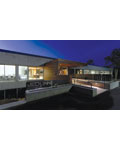
The striking color of the brick on the Community School at Hunter’s Point Campus in New York also serves as a durable and efficient cladding.
Innovative HVAC Systems
Once the building envelope and materials are addressed, then the HVAC systems become the focus of regulating how students feel within a learning environment. An innovative strategy in this regard is the use of Variable Refrigerant Flow (VRF) zoning as an energy-efficient method of providing precise comfort control to indoor environments. It is based on setting up thermal zones, which are single or multiple room spaces that are conditioned to a set temperature, each with the ability to be independently operated and controlled. VRF systems utilize ductless technology moving refrigerant, instead of air, directly to each specific zone to be cooled or heated. The rate of refrigerant flow is based on personalized demand and temperature settings, thus allowing the thermal conditions of each zone to be more precisely controlled. Some VRF systems can simultaneously cool some zones while heating others or provide personalized comfort control only to zones that are in use. VRF systems can be used with individual zone controllers located within the space or with larger, centralized controllers used to tie an entire building's HVAC, and other mechanical systems, together. Each indoor unit also contains a filter to assist in providing higher quality air to the space. Since VRF zoning units do not require the use of ductwork, the potential for particulates to build up or become introduced to the space is eliminated.
VRF technology was used quite successfully for an energy efficient renovation of the 1960s era Falmouth Elementary School in Stafford, Virginia. The existing through-wall unit ventilators on a two-pipe system were not only inefficient, they weren't working properly. The design team brought in to solve the problem included b2E Consulting Engineers of Leesburg, Virginia who, working with the school district, decided on a new mechanical system that included a VRF zoning system. b2E Founder, Bruce E. Beddow, PE said, “As a result of installing the VRF zoning system, we were able to keep the original ceiling heights and planned suspended ceiling heights, improve lighting levels, reduce sound levels in classrooms, and improve occupant comfort.” From a utility bill comparison, it appears that they met their goal. The Facilities Office of the school district estimates a 25-30 percent average reduction in energy use, which is impressive considering that the building size also increased by about 20 percent or 13,000 square feet.
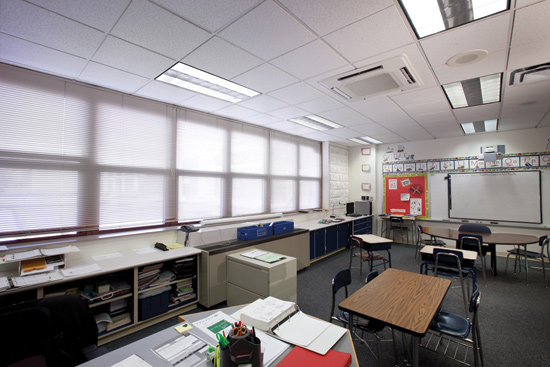
Photo courtesy of Mitsubishi Electric Cooling & Heating
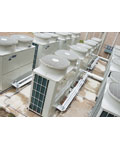
Ductless Variable Refrigerant Flow (VRF) HVAC units can be located strategically in specific rooms to allow for energy-efficient and comfortable thermal control of those spaces.
Conclusion
There is no single strategy that will assure a successful school project. Rather, the best results require a holistic approach to achieve healthier, safer, and more efficient learning environments. This is true whether we are working on new school construction or existing buildings. Either way, the true measure of success is the impact on the students, teachers, and staff who benefit from better, more positive experiences because of the design decisions made along the way.
Peter J. Arsenault, FAIA, NCARB, LEED AP, has authored over 100 continuing education and technical publications as part of his national architecture and green building practice. www.linkedin.com/in/pjaarch