READY FOR TAKEOFF
BY JOANN GONCHAR, FAIA
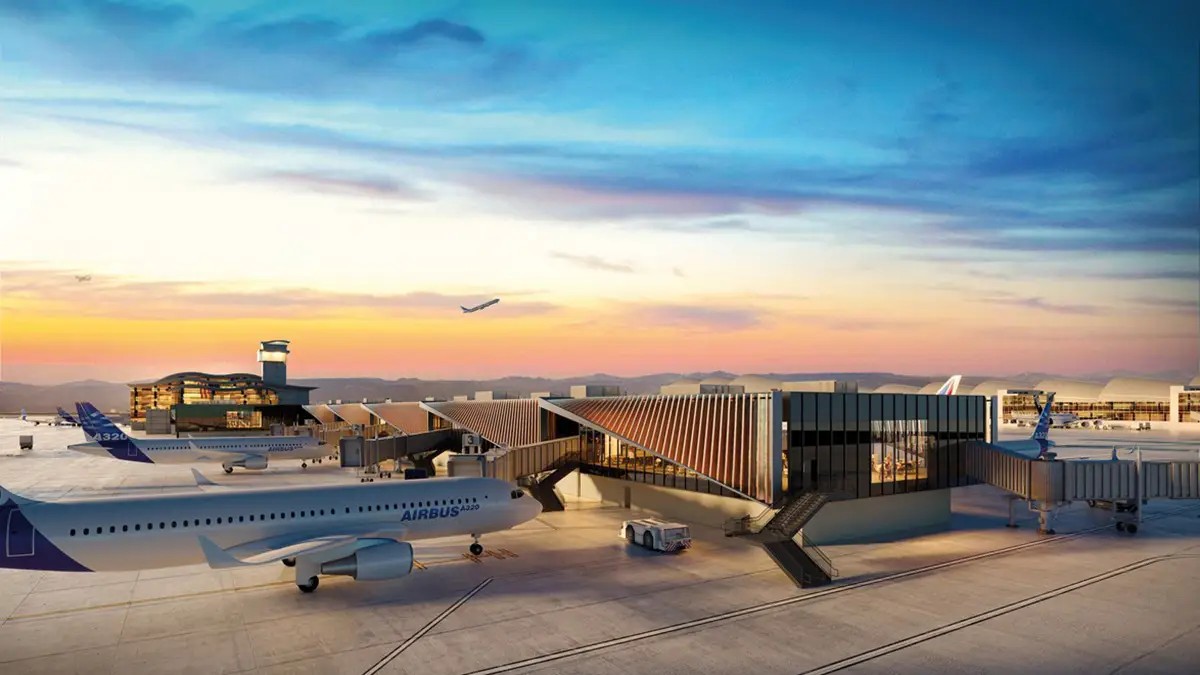
Image courtesy Woods Bagot
The new concourse at LAX will open late this year.
An emerging trend at U.S. airports, modular construction, promises new facilities with less disruption
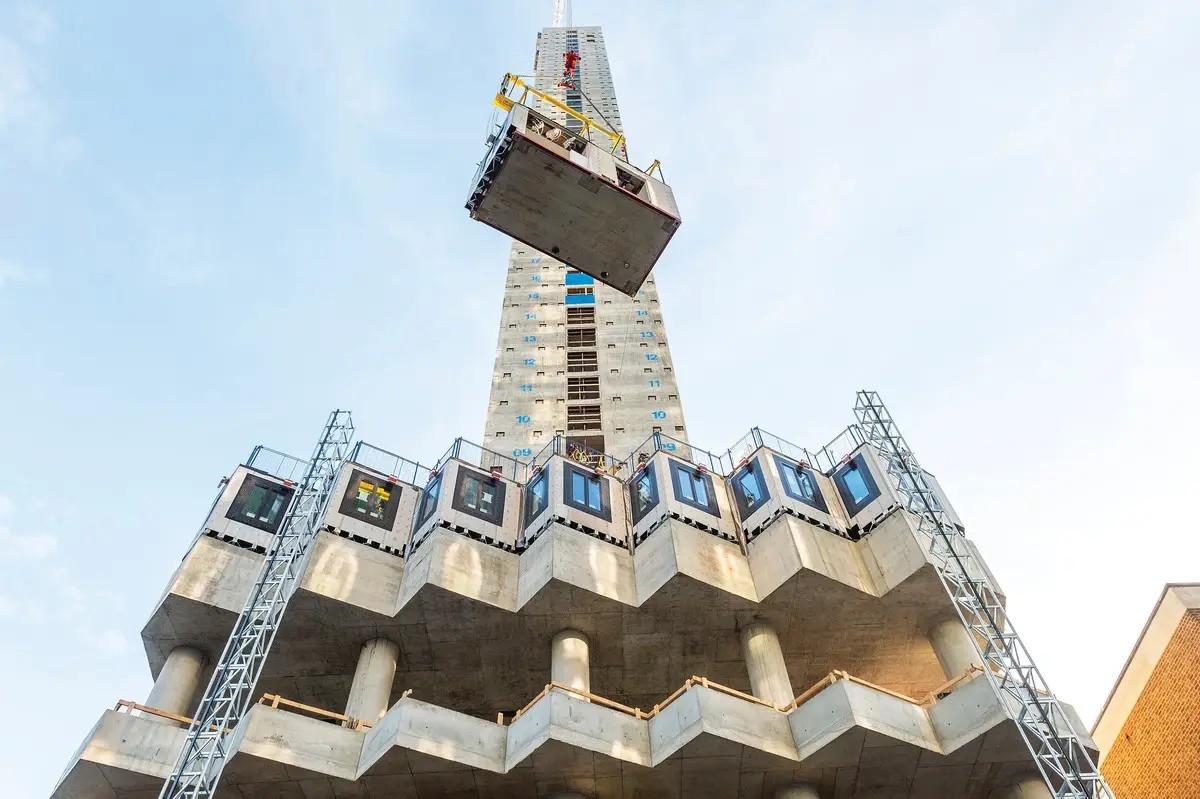
EXPANSIONS and modernizations at airports can be logistically tricky. They often involve shutdowns and delays, adding to travel headaches and causing a loss of revenue. But prefabrication and modular construction are emerging trends for airports, promising benefits that include fewer disruptions, shorter project timelines, and safer work sites, according to advocates of the methodology.
Current projects at Los Angeles International Airport (LAX) and Hartsfield-Jackson Atlanta International Airport (ATL), while not the first in the country to use remote construction, nevertheless illustrate the potential of different variations on the approach. LAX is extending its Midfield Satellite Concourse to the south, adding 146,000 square feet and eight gates for narrow-body aircraft in a process that design architect Woods Bagot calls off-site construction and relocation (OCR). In Atlanta, architects Corgan and Goode Van Slyke are relying on a hybrid of modular and traditional construction to expand ATL’s 44-year-old Concourse D by 75 percent to accommodate larger airplanes and more travelers.
Spick-and-Span
BY MATTHEW MARANI

Photo © Conné Van D’Grachten
The Danube Valley Bridge spans the Danube.
A new bridge suspends its steel-and-concrete deck between adjacent mountainsides
THE DANUBE RIVER flows from Germany’s Black Forest some 1,800 miles across Europe before pouring into the Black Sea. As the continent’s second-longest river, it has served as a west-to-east conduit, giving rise to the many cities that line its banks, like Vienna, Budapest, and, in north-central Austria, the provincial capital of Linz. There, the Danube Valley Bridge, completed in October 2024 and designed by Stuttgart, Germany– based engineer Schlaich Bergermann Partner (SPB), spans it—the longest earth-anchored suspension bridge in the world.
The project began in 2003 with a design competition that called for a pylon-free bridge to reach over this bend of the river. It connects two segments of the first completed phase of the A26 Linz motorway—they are tunneled through two mountainsides that are designated nature preserves—above existing highways and trunk lines flanking both riverbanks. The company led the winning bid alongside architecture firm Gerkan, Marg & Partners, based in Hamburg, and Innsbruck, Austria–based civil engineer Baumann + Obholzer Ingenieure. Rather than opting for a more traditional arched structure, the design team proposed a nearly 1,000-foot-long suspension bridge, fully anchored within the abutting rocky slopes, with a composite structure of prefabricated steel and concrete supporting it.
SHIP TO STORE
BY DAVID RIFKIND
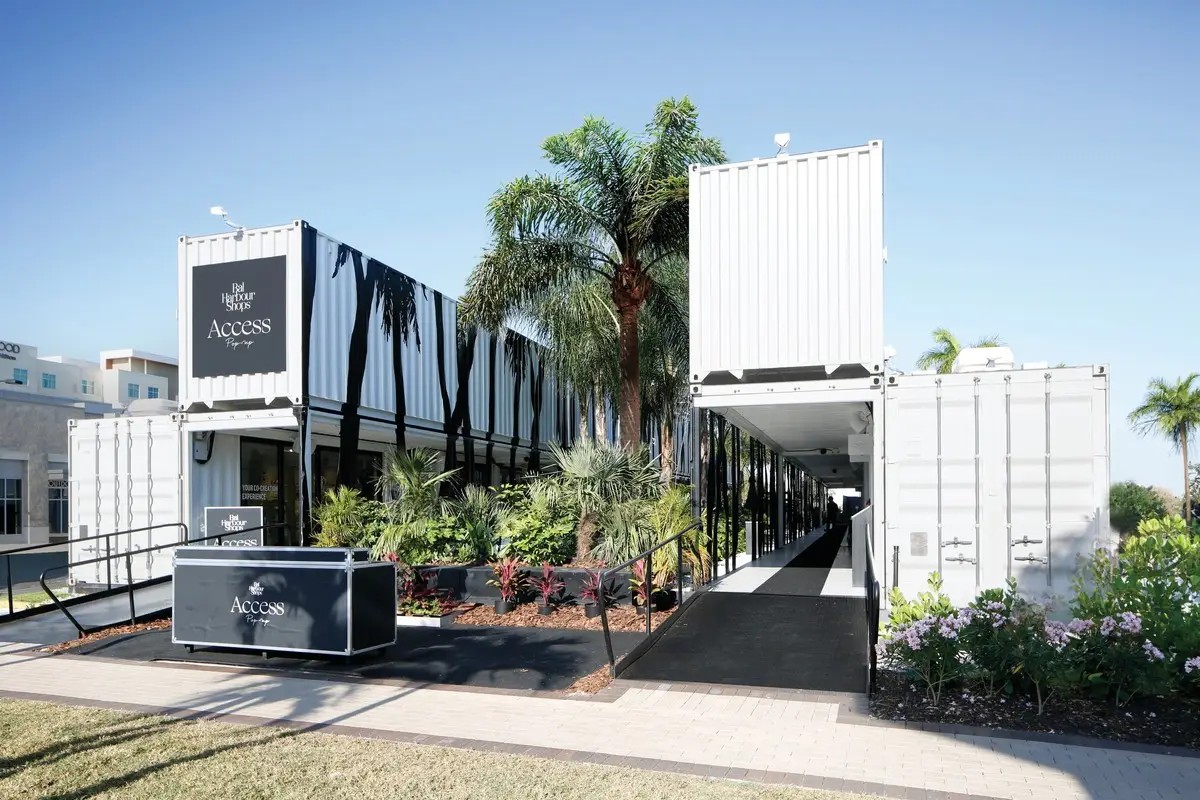
Photo © Danny Bright
Bal Harbour Shops Access Pop-Up.
The Bal Harbour Shops Access Pop-Up transforms humble cargo containers into a retail oasis
PART OF THE PLEASURE of experiencing a LOT-EK building firsthand stems from the craft-like care with which the firm transforms ordinary objects of industrialized mass production into thoughtprovoking works of architecture. Since the early 2000s, partners Giuseppe Lignano and Ada Tolla have focused on one particular object in their practice—the ISO intermodal freight container—and their design for the Bal Harbour Shops Access Pop-Up in West Palm Beach, Florida, reflects more than two decades of research into the constructive potential of standardized cargo infrastructure.
The temporary retail and dining facility hosts such luxury brands as Tiffany & Co., Balmain, and Dolce & Gabbana in an assemblage of 28 40-foot shipping containers designed to be easily relocated seasonally across the southeastern United States. The project was commissioned by Whitman Family Development, which opened its historic Bal Har- bour Shops mall in Florida in 1965. The Bal Harbour Shops Access Pop-Up was launched in November 2023, in Raleigh, to expand the high-end shopping center’s reach. It has been set up in four subsequent locations in the Carolinas and Florida, and is currently open in West Palm Beach through January 12. The client and design team sought to reproduce the experience of Bal Harbour in miniature, which meant replicating the open-air shopping mall’s lushly planted courtyards and intimately scaled boutiques using components that could be easily shipped and reassembled.