Cities and Culture - Fabrizio Barozzi
Sponsored by Architectural Record Innovation Conference 2020, Archtober, Arktura, Armstrong World Industries, B&D Builders, Benjamin Moore & Co., Bison Innovative Products, Bradley Corp., CertainTeed, CLADIATOR®, Draper, Inc., Dri-Design, Fräsch, GKD Metal Fabrics, Guardian Glass, Hofmann Facades, Hoover Treated Wood Products, Kohler, Landscape Forms, Móz Designs, Oldcastle BuildingEnvelope, Precast/Prestressed Concrete Institute, Rieder USA, Skyco Shading Systems, Inc., Tedlar, The Ornamental Metal Institute of New York, The Steel Institute of New York, Think Wood, and Unilock | Presented by Fabrizio Barozzi
Webinar On-Demand
The Barcelona-based partner of Barozzi Veiga will explore his office’s acclaimed cultural architecture within the context of urban place making, in such projects as Musee Cantonal Des Beaux-Arts in Lausanne, boldly situated along railroad tracks, and the Tanzhaus Zurich, a performance space and dance school ingeniously tucked along the banks of the Limmat River. Though known for their elegantly rational architecture, the firm’s urban design skills clearly helped the architects land the commission to design a major transformation of the Art Institute of Chicago last year.
|
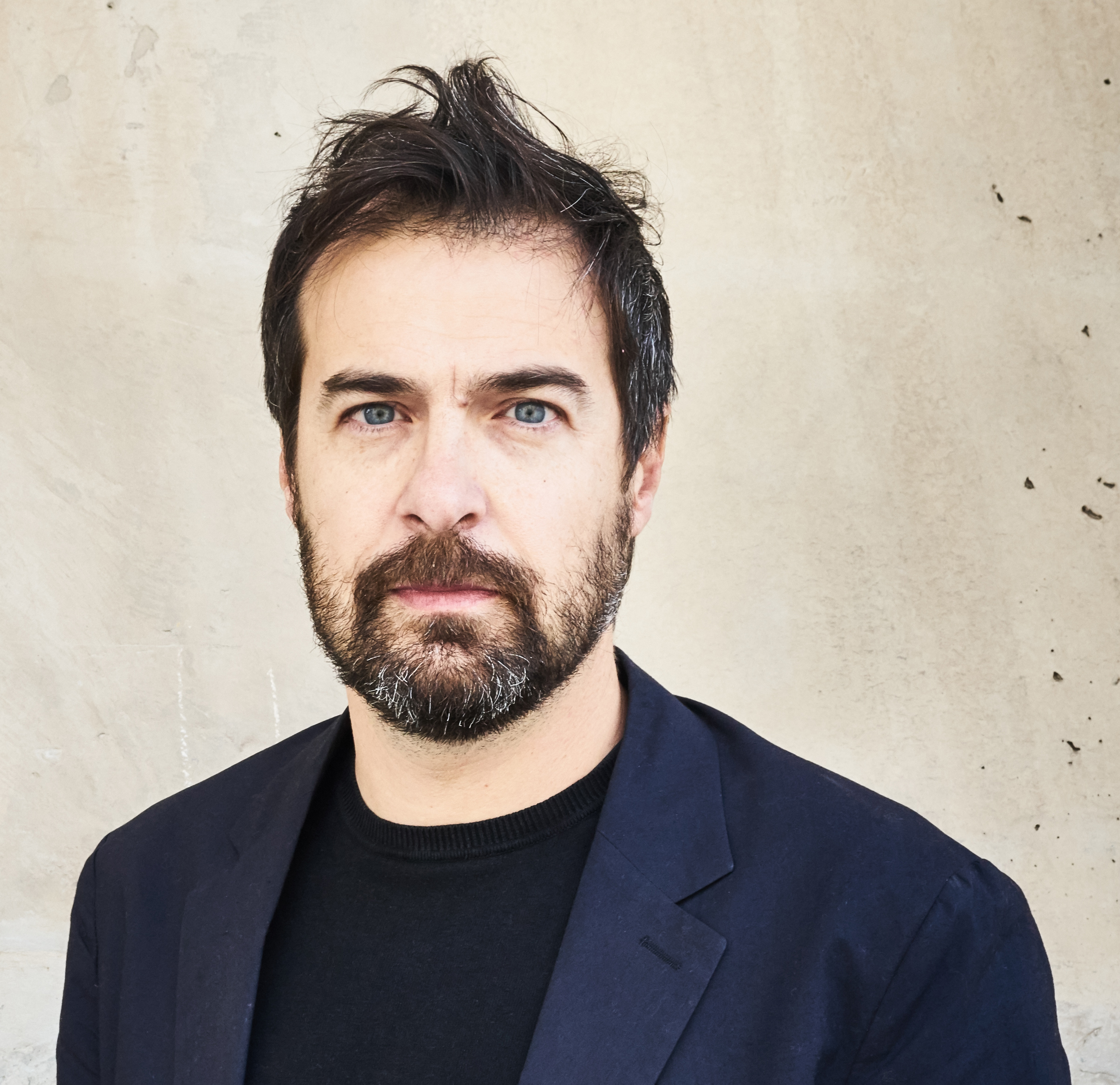
Fabrizio Barozzi (1976 Rovereto, Italy) studied architecture at the Istituto Universitario di Architettura di Venezia and completed his academic studies at the Escuela Técnica Superior de Arquitectura de Sevilla and at the Ecole d’Architecture de Paris La Villette. In 2004, together with Alberto Veiga, he founded the architecture office Barozzi Veiga. The practice has since worked internationally in public and private projects receiving several prestigious distinctions. Its built work includes the Ribera del Duero Headquarter (2011), the Auditorium Infanta Elena in Águilas (2011), the Szczecin Philarmonic Hall (2014), the Ragenhaus Musikschule in Bruneck (2018) and the Bündner Kunstmuseum in Chur (2018). The most recently completed projects are the Musée cantonal des Beaux-Arts Lausanne (2019) and the Tanzhaus Zürich (2019). Between the important prizes, Barozzi Veiga has been distinguished with the Ajac Young Catalan Architect Award (2007) and the Barbara Cappochin International Architecture Award (2011). In 2012 the Ribera del Duero Headquarter, Barozzi Veiga’s first built work, was awarded with the Gold Medal for Italian Architecture for the Best Debut Work 2012. In 2015 the project for the Szczecin Philharmonic received the prestigious Mies van der Rohe Award for European Architecture and the International FAD Award. In 2018 the Bündner Kunstmuseum in Chur, Switzerland, was awarded with the RIBA Award for International Excellence, which distinguished the best 20 buildings constructed worldwide during the last three years. More recently, Barozzi Veiga has been granted the Chicago Atheneum International Award (2019), the Best Architects 20 Award (2019) and the AD Award Architects of the Year (2019). During the years, the office has been invited to contribute to several international exhibitions, between which the Chicago Architecture Biennal (2017) and to the Biennale di Venezia (2014 and 2016). In 2016 Barozzi Veiga presented ‘A sentimental monumentality’, an installation and an essay that defined the conceptual framework of its work, later compiled in the monographs Barozzi Veiga edited by Park Books (2014), a+u 535 (2015) and A-Mag (2018). Since the beginning of his career, Fabrizio maintained a balance between his professional activity and his academic involvement. Between 2007 and 2009, he has been Professor at the International University of Catalonia in Barcelona and, in 2009, he was Professor at the University of Girona. He has been Visiting Professor at the Istituto Universitario di Architettura di Venezia (2013-2015) and at MIT Massachusetts Institute of Technology, (2016-2018). In 2020 he is going to teach again as Visiting Professor at the Cornell University in Ithaca, New York. |



























Originally published in Security
Originally published in November 2020
LEARNING OBJECTIVES
- Demonstrate how architecture is an essential tool in defining an urban area.
- In the context of urban development, show how buildings can use minimalistic elements to stand out, yet complement existing structures.
- Create spaces that invite the public and create a new centrality.
- Use design to connect buildings to their surroundings through selective planning.