This CE Center article is no longer eligible for receiving credits.
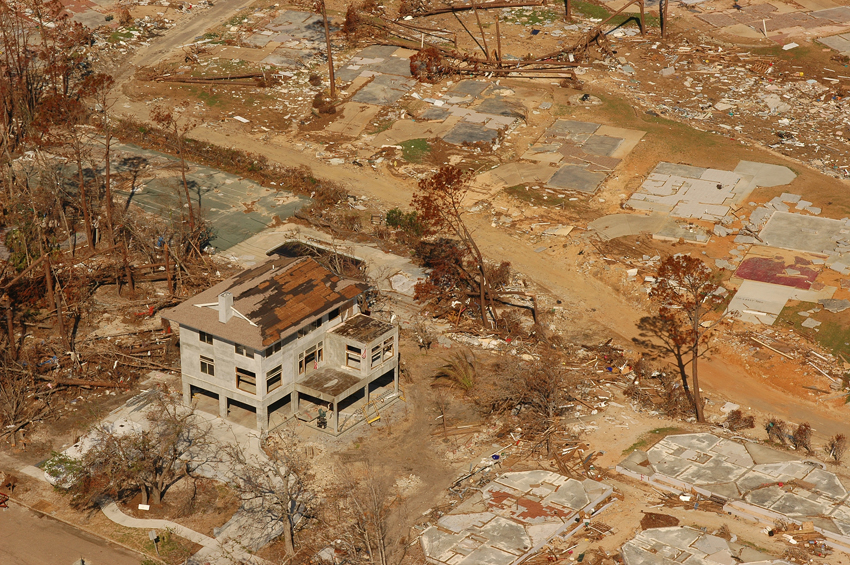
For millions of people in the United States, the consequences of natural disasters have become increasingly real, personal, and devastating. According to the National Oceanic and Atmospheric Administration (NOAA), 2017 was the costliest year on record for natural disasters in the United States, with a price tag of $322 billion (see Figure 2). Hurricane Harvey broke a rainfall record for a single tropical storm with more than 4 feet of rain in southeast Texas, resulting in $131 billion in damages, second only to Hurricane Katrina at $170 billion. Puerto Rico experienced the longest blackout in U.S. history after Hurricane Maria, and nearly 3,000 are estimated to have died in the storm and its aftermath. The Tubbs Fire in Northern California killed 22 people and damaged more than 5,600 structures.
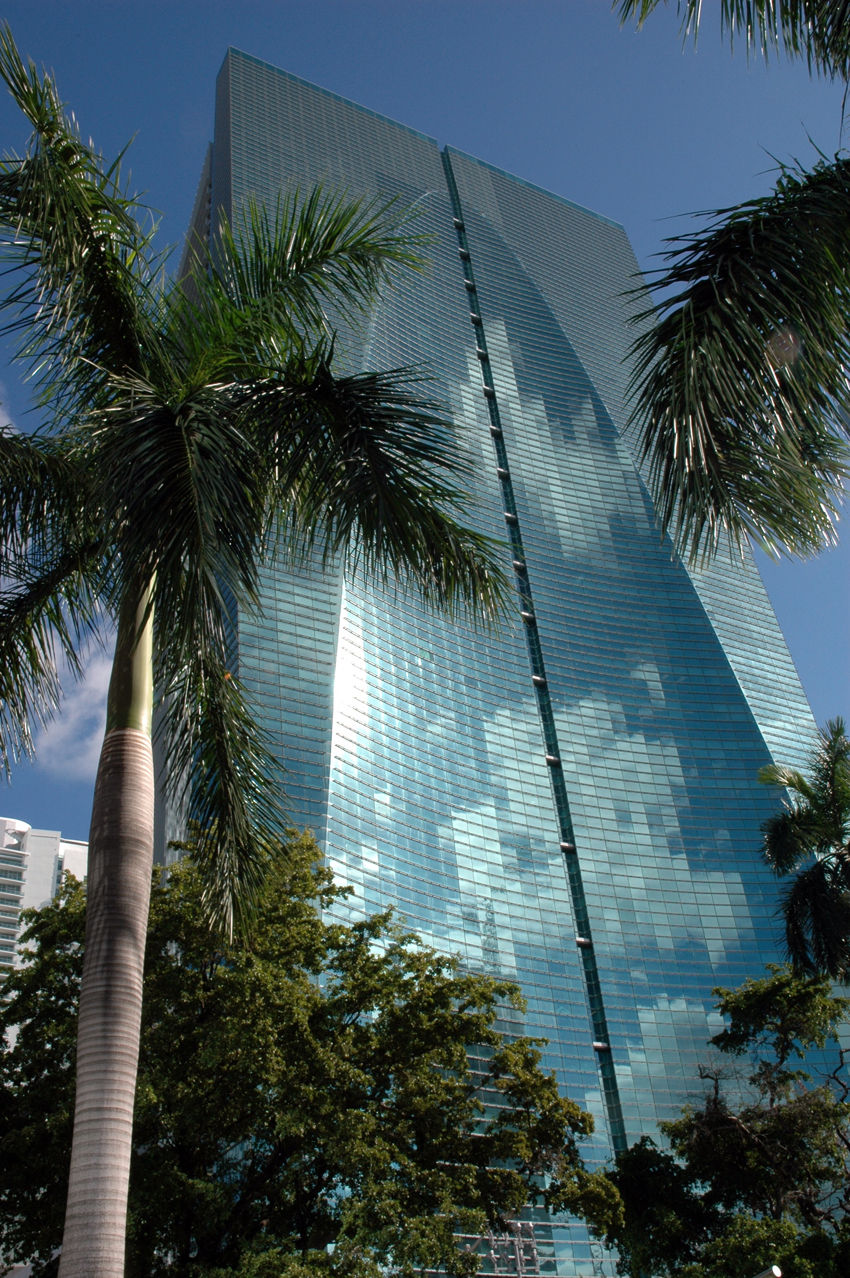
Photo: Kevin Finn/Adobe Stock
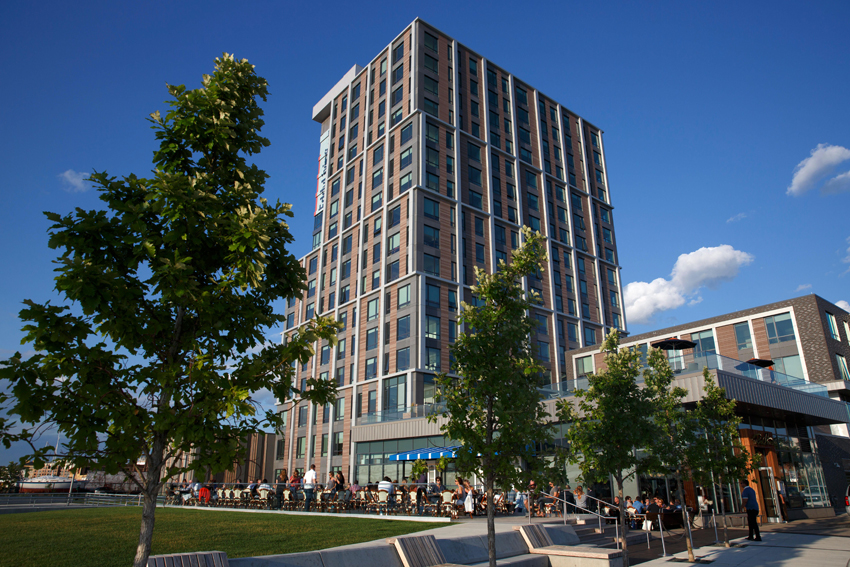
Figure 1: The Brickell in Miami, Florida, was designed to resist natural disasters and achieve long-term operability.
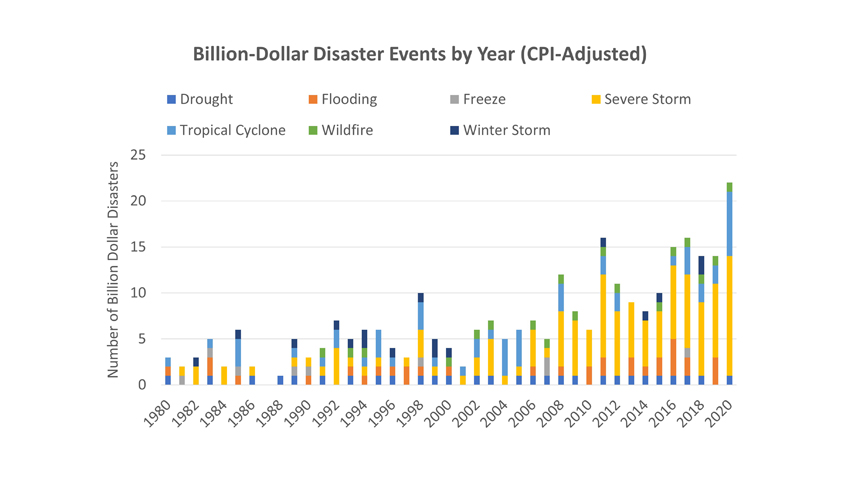
According to NOAA, 2020 set the new annual record for billion-dollar disaster events at 22, shattering the previous record of 16 set in 2011 and 2017 (see Figure 3). This is the sixth consecutive year in which 10 or more billion-dollar climate-related disasters have impacted the United States—and this trend is accelerating. Since 1980, the years with 10 or more separate billion-dollar disaster events include 1998, 2008, 2011–2012, and 2015–2020.
In 2018, Category 5 Hurricane Michael made landfall at Mexico Beach, Florida, with devastating winds of 160 miles per hour (mph) and storm surge more than 15 feet. Mexico Beach was nearly destroyed, and Panama City suffered extensive damage. Florida’s Tyndall Air Force Base suffered a direct strike. In total, the event caused $26 billion in damages.
Last year saw a recordbreaking U.S. wildfire season, burning more than 10.2 million acres. California wildfires burned more than 4.1 million acres, which doubled the previous record set in 2018. Five of the top six largest wildfires on record in California burned during August and September of 2020. The 2020 California wildfires destroyed approximately 10,500 structures. Oregon, Washington, and Colorado also had severe wildfires in 2020. Dense smoke produced hazardous air quality that affected millions of people in major cities for weeks.
And most recently, the unprecedented winter storms in February 2021 across the southern United States caused billions of dollars in damages to structures and loss of life. In Texas, low temperatures caused massive power outages for millions. It is estimated that at least 80 people have died because of the storm, and at one point nearly 14 million people were without water because of burst or frozen water lines.
What is disturbing about these tragedies is that they are preventable. Disaster mitigation works and is cost-effective. Spending time and money up front to reduce the likelihood of loss during a natural hazard event can provide significant benefits to building owners and communities, including lower insurance costs, higher property values, security to residents, maintaining a consistent tax base, and minimizing the cost of disaster response and recovery. This course offers a view on emerging risks and opportunities as human and economic losses from disasters increase, with the overarching goal of supporting and advancing resilience in future construction of buildings and critical infrastructure.
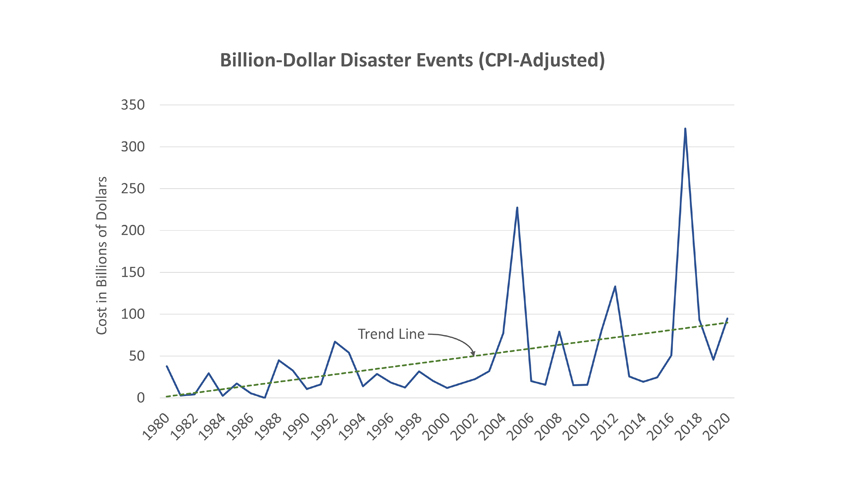
Figure 2: Cost of Billion-Dollar Disaster Events by Year
Images: National Oceanic and Atmospheric Administration
Figure 3: Number of Billion-Dollar Disaster Events by Year.
Why Are Disasters Costing More?
In the past several decades, the population in the United States has increased and migrated toward the coasts, concentrating along both the earthquake- and wildfire-prone Pacific coast and the hurricane-prone Atlantic and Gulf coasts. More than 60 percent of the U.S. population currently lives within 50 miles of one of its coasts, including the Great Lakes. At the same time, wealth and the value of possessions have increased substantially. For example, while California’s Los Angeles County accounts for only 2.5 percent and Florida’s Miami-Dade County accounts for only 14 percent of their respective states’ land area, they contain 30 percent of their states’ property value. These changes in the concentration of population and property values are significant contributors to the increased human and property losses from natural hazards.
Disasters result not as much from the destructive agents but more so from the way in which communities are (or are not) prepared for them. Disasters happen when the natural systems are disrupted by human development. In fact, there is no such thing as a “natural” disaster in the sense that losses caused by a hazard event are greatly influenced by the degree to which society chooses to mitigate against the hazard. When a disaster occurs, lives, assets, products, and crops are lost; livelihoods are cut off; and economic growth is curtailed or sent into reverse. It is apparent that there needs to be a significant shift in how we address natural disasters, moving away from the traditional focus on response and recovery and toward an emphasis on resiliency—that is, preventive actions to mitigate the effects of natural hazards.
What Is Resilience?
The Urban Land Institute (ULI) defines resilience as “the ability to prepare and plan for, absorb, recover from, and more successfully adapt to adverse events.” Basically, addressing changes in the environment, whether the changes are natural or man-made, requires actions to mitigate their negative effects and adapt to those changes. If we identify resiliency, not solely as a state of preparedness for disaster (such as stocking up on food and water and having a plan in place to search and recover people in distress), but as a desired characteristic of a sustainable society, one that has more control of its basic human needs such as shelter, food, water, energy, communications, and commerce, we can begin to see the relationship between resilience and sustainability.
For a community to be truly resilient, it must address all human needs to some degree, but the very basic of all human needs is shelter. This means designing buildings to resist hazards, such as flooding, wind, sea level rise, wildfires, and other hazards. For a building to be sustainable, one must consider the potential for future use and reuse, and design for a long service life with minimal maintenance costs. Otherwise, the environmental, economic, and societal burden of our built environment could be overwhelming. A building that requires frequent repair and maintenance or complete replacement after a disaster would result in unnecessary cost from both private and public sources as well as environmental burdens, including energy, waste, and emissions due to disposal, repair, and replacement.
Of course, it is one thing to describe resilience in generalities and another to design a building to mitigate natural disasters. There is significant guidance on reducing environmental impacts with green building codes and rating systems, such as LEED, International Green Construction Code, and Green Globes, among others. But the guidance for designing a building to adapt to and mitigate the effects of natural hazards are now only beginning to take shape.
For millions of people in the United States, the consequences of natural disasters have become increasingly real, personal, and devastating. According to the National Oceanic and Atmospheric Administration (NOAA), 2017 was the costliest year on record for natural disasters in the United States, with a price tag of $322 billion (see Figure 2). Hurricane Harvey broke a rainfall record for a single tropical storm with more than 4 feet of rain in southeast Texas, resulting in $131 billion in damages, second only to Hurricane Katrina at $170 billion. Puerto Rico experienced the longest blackout in U.S. history after Hurricane Maria, and nearly 3,000 are estimated to have died in the storm and its aftermath. The Tubbs Fire in Northern California killed 22 people and damaged more than 5,600 structures.
Photo: Kevin Finn/Adobe Stock
Figure 1: The Brickell in Miami, Florida, was designed to resist natural disasters and achieve long-term operability.
According to NOAA, 2020 set the new annual record for billion-dollar disaster events at 22, shattering the previous record of 16 set in 2011 and 2017 (see Figure 3). This is the sixth consecutive year in which 10 or more billion-dollar climate-related disasters have impacted the United States—and this trend is accelerating. Since 1980, the years with 10 or more separate billion-dollar disaster events include 1998, 2008, 2011–2012, and 2015–2020.
In 2018, Category 5 Hurricane Michael made landfall at Mexico Beach, Florida, with devastating winds of 160 miles per hour (mph) and storm surge more than 15 feet. Mexico Beach was nearly destroyed, and Panama City suffered extensive damage. Florida’s Tyndall Air Force Base suffered a direct strike. In total, the event caused $26 billion in damages.
Last year saw a recordbreaking U.S. wildfire season, burning more than 10.2 million acres. California wildfires burned more than 4.1 million acres, which doubled the previous record set in 2018. Five of the top six largest wildfires on record in California burned during August and September of 2020. The 2020 California wildfires destroyed approximately 10,500 structures. Oregon, Washington, and Colorado also had severe wildfires in 2020. Dense smoke produced hazardous air quality that affected millions of people in major cities for weeks.
And most recently, the unprecedented winter storms in February 2021 across the southern United States caused billions of dollars in damages to structures and loss of life. In Texas, low temperatures caused massive power outages for millions. It is estimated that at least 80 people have died because of the storm, and at one point nearly 14 million people were without water because of burst or frozen water lines.
What is disturbing about these tragedies is that they are preventable. Disaster mitigation works and is cost-effective. Spending time and money up front to reduce the likelihood of loss during a natural hazard event can provide significant benefits to building owners and communities, including lower insurance costs, higher property values, security to residents, maintaining a consistent tax base, and minimizing the cost of disaster response and recovery. This course offers a view on emerging risks and opportunities as human and economic losses from disasters increase, with the overarching goal of supporting and advancing resilience in future construction of buildings and critical infrastructure.
Figure 2: Cost of Billion-Dollar Disaster Events by Year
Images: National Oceanic and Atmospheric Administration
Figure 3: Number of Billion-Dollar Disaster Events by Year.
Why Are Disasters Costing More?
In the past several decades, the population in the United States has increased and migrated toward the coasts, concentrating along both the earthquake- and wildfire-prone Pacific coast and the hurricane-prone Atlantic and Gulf coasts. More than 60 percent of the U.S. population currently lives within 50 miles of one of its coasts, including the Great Lakes. At the same time, wealth and the value of possessions have increased substantially. For example, while California’s Los Angeles County accounts for only 2.5 percent and Florida’s Miami-Dade County accounts for only 14 percent of their respective states’ land area, they contain 30 percent of their states’ property value. These changes in the concentration of population and property values are significant contributors to the increased human and property losses from natural hazards.
Disasters result not as much from the destructive agents but more so from the way in which communities are (or are not) prepared for them. Disasters happen when the natural systems are disrupted by human development. In fact, there is no such thing as a “natural” disaster in the sense that losses caused by a hazard event are greatly influenced by the degree to which society chooses to mitigate against the hazard. When a disaster occurs, lives, assets, products, and crops are lost; livelihoods are cut off; and economic growth is curtailed or sent into reverse. It is apparent that there needs to be a significant shift in how we address natural disasters, moving away from the traditional focus on response and recovery and toward an emphasis on resiliency—that is, preventive actions to mitigate the effects of natural hazards.
What Is Resilience?
The Urban Land Institute (ULI) defines resilience as “the ability to prepare and plan for, absorb, recover from, and more successfully adapt to adverse events.” Basically, addressing changes in the environment, whether the changes are natural or man-made, requires actions to mitigate their negative effects and adapt to those changes. If we identify resiliency, not solely as a state of preparedness for disaster (such as stocking up on food and water and having a plan in place to search and recover people in distress), but as a desired characteristic of a sustainable society, one that has more control of its basic human needs such as shelter, food, water, energy, communications, and commerce, we can begin to see the relationship between resilience and sustainability.
For a community to be truly resilient, it must address all human needs to some degree, but the very basic of all human needs is shelter. This means designing buildings to resist hazards, such as flooding, wind, sea level rise, wildfires, and other hazards. For a building to be sustainable, one must consider the potential for future use and reuse, and design for a long service life with minimal maintenance costs. Otherwise, the environmental, economic, and societal burden of our built environment could be overwhelming. A building that requires frequent repair and maintenance or complete replacement after a disaster would result in unnecessary cost from both private and public sources as well as environmental burdens, including energy, waste, and emissions due to disposal, repair, and replacement.
Of course, it is one thing to describe resilience in generalities and another to design a building to mitigate natural disasters. There is significant guidance on reducing environmental impacts with green building codes and rating systems, such as LEED, International Green Construction Code, and Green Globes, among others. But the guidance for designing a building to adapt to and mitigate the effects of natural hazards are now only beginning to take shape.
Steps to Disaster Resilience
There are essentially two ways to approach disaster mitigation. There are voluntary programs where communities or building owners voluntarily reduce their risk of natural disaster through enhancements in structures, warning systems, and education. The second approach is to install mandatory building requirements such that communities and building owners are obligated to design buildings and infrastructure to be more disaster resilient. The following are steps, combining both voluntary and mandatory mitigation strategies, to achieving disaster resilience:
- Adopt updated building codes.
- Adopt high-performance building standards.
- Incentivize disaster resilient construction.
- Build with robust materials.
1. Adopt Updated Building Codes
A common misconception is that a new code-compliant building in the United States will be resilient against considerable damage after a major hazard event. This is not always the case. The building code sets standards that guide design and construction of structures for minimum life safety, the first step toward resilience. However, maintaining the functionality of structures after a disaster is also important, and building codes do not address functionality effectively. Sadly, special interests have convinced some state legislatures to reduce the stringency or limit the adoption of the latest building code.
According to the International Code Council (ICC), Alaska, Arkansas, Indiana, Tennessee, and Texas have statewide building codes from 2012 or earlier, and Arizona, Colorado, Delaware, Illinois, Kansas, Missouri, and Nevada still do not have a statewide building code but pass the responsibility to local jurisdictions. Florida, the state that faces more hurricanes than any other, decided in 2017 to weaken its code-adoption process. The North Carolina state legislature decided to placate homebuilders and update the building code only once every six years instead of every three. Builders claimed that weaker codes makes it easier and cheaper to build in North Carolina, but new homes were ill-prepared for Hurricane Florence’s high winds, storm surge, and rainfall. These states are not alone. Unchecked development remains a priority for powerful lobbyists, creating short-term economic gains for some while increasing risks for everyone else. As a result, the American taxpayers are footing the bill for disaster relief.
If we are to take people’s vulnerability seriously, we must deploy—and insist on—much greater emphasis in mandatory code adoption. While the design community can provide some of the expertise, its voice is not being effectively considered on the planning and policy level. The missing element is participation among practitioners, the development community, and policymakers interested in public safety over economic opportunism.
2. Adopt High-Performance Building Standards
Buildings should not be a burden on their communities. They should have sufficient functionality after a hazard event and not place excessive demand on community resources such as emergency responders, including fire, police, and hospitals. Communities with disaster-resilient buildings are more likely to be able to operate schools and businesses after a disaster. Stronger homes and buildings mean people will have places to live and work after a disaster. Less disruption for a community means robust commerce and consistent tax revenue.
Resilient buildings should consider a higher level of performance to protect property. Property protection means the building can withstand impacts and continue to provide its primary functions after a major disruptive event. The following are programs and standards aimed at incorporating resilient building techniques into construction to provide an optimum level of protection against a variety of natural hazards.
Enhanced Building Codes
Enhanced building codes can be developed and adopted through the building code appendices. The appendices are provided in the International Building Code (IBC) and the International Residential Code (IRC) to offer supplemental criteria to the provisions in the main chapters of the code.
After damaging windstorms in 2008, the Georgia Department of Community Affairs created the Disaster Resilient Building Construction (DRBC) appendices to the IBC and IRC, which form the basis for the Georgia State Building Code. The DRBC appendices offer an affordable, flexible, and simplified approach to improving resiliency at the local level. Local jurisdictions can adopt the complete appendices to improve building resiliency against flooding and high winds, or they can adopt select sections that apply to specific hazards in their geographic areas.
Floods are the most frequent hazard resulting in disaster declarations. For those jurisdictions seeking to enhance their local floodplain management regulations, a compilation of flood-resistant provisions is provided in Appendix G of the IBC. Like the Georgia DRBC appendices, the provisions contained in Appendix G are not mandatory unless specifically referenced in the adopting ordinance. The appendix helps minimize the expenditure of public money in many ways, including flood-control projects, the need for rescue and relief efforts, prolonged business interruption, damage to structures, and ultimately protecting human life.
FORTIFIED Programs
The FORTIFIED Home and FORTIFIED Commercial programs of the Insurance Institute for Business and Home Safety (IBHS). The program provides enhanced design criteria relative to code minimum and the necessary construction and inspection oversight to ensure high-performing structures that are truly disaster resilient. The IBHS is a not-for-profit applied research and communications organization supported by the insurance industry.
USRC Building Rating System
The U.S. Resiliency Council (USRC) is a national organization dedicated to improving the sustainability and resiliency of buildings during earthquakes and other natural hazards. The performance-based USRC Building Rating System assigns one to five stars along the dimensions of safety, damage expressed as repair cost, and recovery expressed as time to regain basic function. Certified buildings are expected to perform in a manner that will preserve the life safety of the occupants, limit damage to repairable levels, and allow functional recovery within a reasonable time period after a major seismic event.
REDi Rating System
The Resilience-Based Earthquake Design Initiative (REDi) Rating System is a set of specific design performance criteria that aims to minimize building damage and promote contingency planning for utility disruption and other threats to functional recovery. The success of the resulting design in meeting specific monetary loss and recovery time is demonstrated by performing a modified FEMA P-58 loss assessment developed specifically for REDi.
RELi Standard
The RELi standard is a point-based system recently adopted by the U.S. Green Building Council (USGBC). It includes many LEED-centric credits along with risk mitigation credits at the building and neighborhood scale. The intent is to provide greater adaptability and resilience to weather and other natural hazards in the built environment as a complement to LEED. USGBC is currently refining RELi to provide a comprehensive list of resilient design criteria.
3. Incentivize Disaster Resilient Construction
According to AON, the total insured losses from natural catastrophes in 2020 totaled $75.1 billion, up from $39.6 billion in 2019 and $62.7 billion in 2018, but down from the record of $133.1 billion in 2017. Natural catastrophes are events that cause at least $25 million in insured losses, 10 deaths, 50 people injured, or 2,000 filed claims of homes and structures damaged. Unfortunately, not all damages caused by natural catastrophes are covered by insurance. For example, in 2020, there was $119 billion in losses from natural catastrophes, of which only $75.1 billion was insured.
Resilient buildings reduce the risks associated with property insurance. States can encourage building owners to build resilient structures by legislating insurance premium reductions to all policyholders if they build to specific resilient design criteria. Alabama, Georgia, Mississippi, and North Carolina have enacted such laws. These states now require insurers to lower the cost of property insurance for building to the IBHS FORTIFIED standard.
Hazard mitigation increases loan security for lending institutions and decreases business interruptions and improved bond ratings for property owners and communities. Therefore, other potential incentives should be encouraged, including:
- Building permit rebates;
- Property tax reductions;
- Accelerated local permitting and inspection procedures for resilient properties;
- Zoning benefits (e.g., density or height bonuses);
- More-favorable developer agreements for the construction of resilient properties; and
- Revolving loan programs.
4. Build with Robust Materials
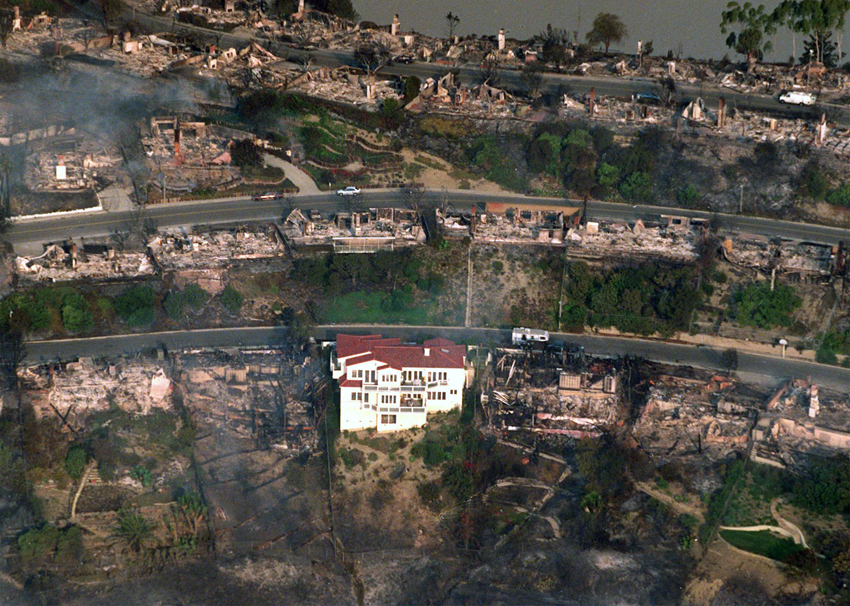
The last step toward disaster resilience is to build with robust building materials. Some of the qualities of robust building materials include versatility, strength, wind and water resistance, seismic resistance, fire resistance, energy efficiency, and durability. It is heartbreaking for homeowners to survive a major earthquake, hurricane, or tornado only to witness their home burn down in the aftermath. This was the case in Breezy Point, New York, after Hurricane Sandy in 2012. Structural fires frequently occur after a natural disaster. Of all disasters, fire is by far the most common and deadliest. The U.S. Fire Administration reports that every year, fire kills more Americans than all other natural disasters combined.
Increased fire resistance of building elements reduces the amount of damage to the building and its contents. Additional benefits are enhanced life safety, less demand on community resources, especially for emergency response, and facilities that are more readily adaptable for reuse. As the population grows in western states, we witness increased conflagrations from wildland-urban interfaces that devastate property, lives, and economic growth. Regardless of location, the best approach to reducing fire losses can be accomplished by adopting Appendix D of the IBC, which establishes Fire Districts where combustible construction is limited.
Chicago and New York City both employ Fire Districts to limit combustible construction within dense urban boundaries. The City of Sandy Springs, Georgia, and other adjacent communities have enacted similar ordinances to preserve the health, safety, and welfare of its citizens.
Concrete building systems are especially suited to provide resistance to natural hazards. Leslie Chapman-Henderson, president of the Federal Alliance for Safe Homes, called concrete homes “the ideal” for withstanding extreme weather. Concrete has the necessary hardness and mass to resist the high winds and flying debris of tornadoes and hurricanes. Concrete is fire resistant and nonflammable, which means it can contain fires and will not contribute to the spreading of fire. Reinforced concrete framing systems can be designed to resist the most severe earthquakes without collapse. Concrete does not rot or rust even if it is subject to flooding.
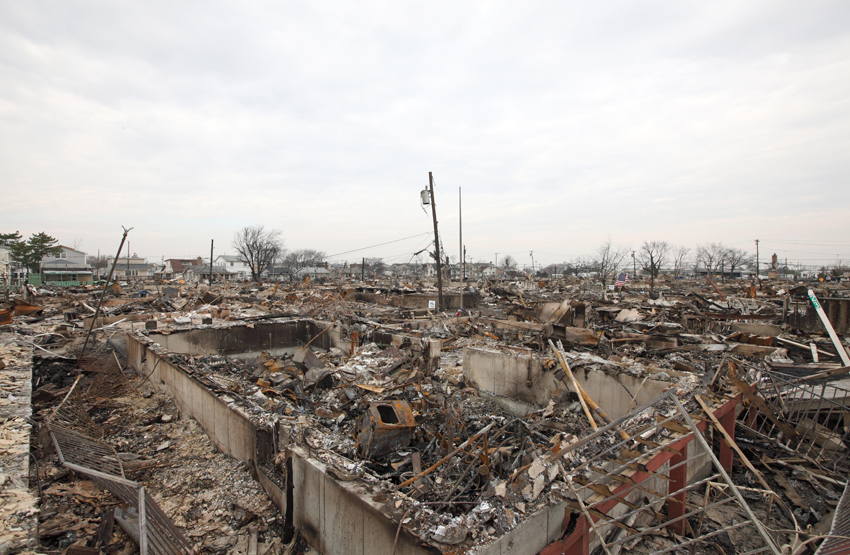
Photo: Steven Greaves/Alamy Stock Photo
Figure 5: Shown are burned-out buildings and debris in the aftermath of Hurricane Sandy in Breezy Point, New York, on November 11, 2012.
Quantifying the Benefits of Resilient Construction
Building to a higher standard potentially adds cost, and for an owner to accept the higher initial cost, there must be convincing evidence of long-term savings. There are several studies that attempt to quantify the benefits of resilient construction.
Urban Land Institute (ULI)
In its report “Returns on Resilience: The Business Case,” the Urban Land Institute (ULI) explores the economic benefits of resilient construction. The report presents 10 detailed case studies that demonstrate cost savings from implementing resilient strategies. The study is based primarily on interviews with developers, property owners, and their consultants to identify motivations to protect assets against climate-related threats, what resilience strategies were selected, the design and development processes, and ultimately the projects’ performance. Hazards addressed included inland flooding, drought, hurricane wind, and storm surge. In all cases, the projects were able to demonstrate economic justification for spending more up front to design and build resilient structures.
NRMCA Insurance Cost Study
The National Ready Mixed Concrete Association (NRMCA) undertook a research study to understand if insurance companies offered lower insurance rates for structures built using noncombustible materials for both builder’s risk insurance and commercial property insurance. One of the main drivers behind the study was the enormous loss in buildings each year due to structure fires.
Structure fires, whether caused by accident, arson, or wildfires, result in significant loss of life and property each year. Designing buildings using a balanced design approach—combining active and passive fire protection strategies—can help save lives and reduce property damage. According to a 2017 report titled “Total Cost of Fire in the United States” by the Fire Protection Research Foundation and the National Fire Protection Association (NFPA), the total cost of fires in 2014 was $328.5 billion, equaling 1.9 percent of the U.S. gross domestic product. The total cost of fire is divided into categories of expenditures and losses. The expenditures—items such as fire department budgets, fire-protection devices, and equipment—constitute $273.1 billion (83.1 percent of total) and the losses constitute $55.4 billion (16.9 percent of total).
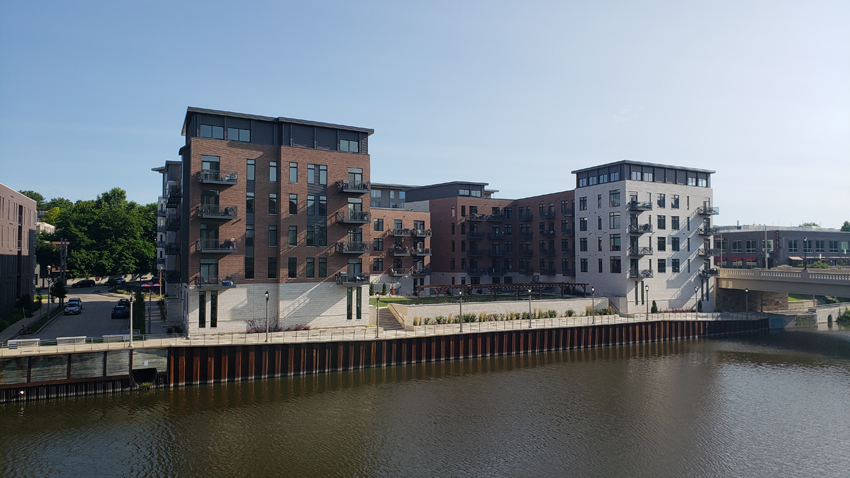
Photo courtesy of NRMCA
Figure 9: Bedford Development used concrete walls built using insulating concrete forms (ICFs) for Walker’s Landing located in Milwaukee, Wisconsin, for fire resistance, among other benefits.
According to NFPA, there were 481,500 structure fires in 2019, causing 2,980 civilian deaths, 13,900 civilian injuries, and $12.3 billion in damages. NFPA estimates that 264,500 fires occurred in homes, resulting in 2,390 deaths, 8,800 injuries, and $6.4 billion in damages, and 75,000 occurred in apartment buildings, resulting in 380 deaths, 3,400 injuries, and $1.3 billion in damages. Property damages from fires have been increasing over time.
The NRMCA study titled “Survey of Insurance Costs for Multifamily Buildings” revealed that insurers are aware of the risks of building with combustible construction and the benefits of building with noncombustible construction. In summary, builder’s risk insurance is 22–72 percent less for noncombustible construction, depending on location. Commercial property insurance is 14–65 less for noncombustible construction, also depending on location. According to the study, some agents suggested that the gap between rates for wood frame and concrete is likely to grow in the future and that a growing number of insurers are declining to serve as sole insurer for wood-frame apartment buildings. Additionally, insurers of such buildings are increasingly requiring that the insured take extra measures to protect against fire loss.
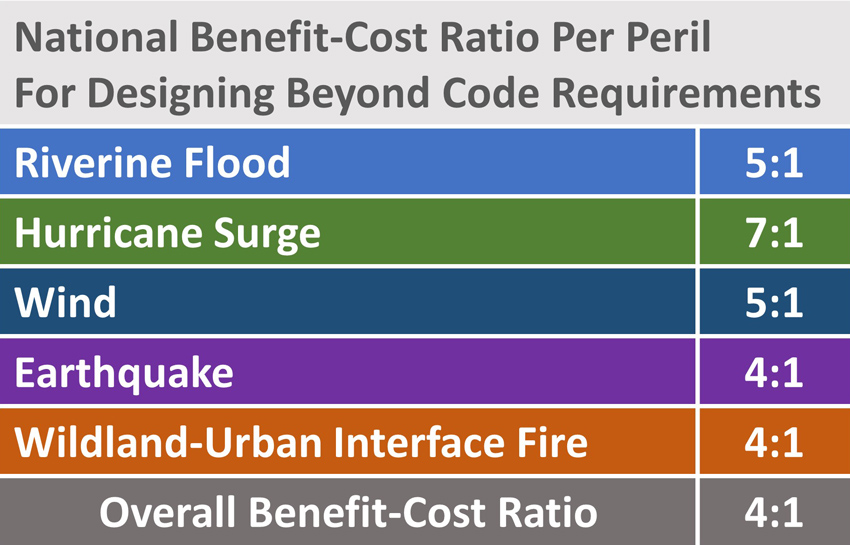
Image: National Institute of Building Sciences
Figure 10: The national cost-benefit by hazard when building beyond 2015 IBC requirements.
National Institute of Building Sciences (NIBS)
The National Institute of Building Sciences (NIBS) undertook a study in 2017 to quantify the value of designing buildings to exceed the 2015 IBC or IRC for hazards, including riverine flooding, hurricane surge, wind, earthquakes, and wildfires, with the objective of reducing losses. Results revealed that for every dollar spent on building above code, the amount of money saved ranged from $4 to $7 depending on the hazard.
The report suggests that architects and engineers can help clients understand the potential risks associated with a project and determine an owner’s risk tolerance and ability to mitigate these risks. Strategies to exceed minimum requirements of the 2015 building codes include:
- For flood resistance (to address riverine flooding and hurricane surge), build new buildings higher above base flood elevation than required by the 2015 IBC.
- For resistance to hurricane winds, build new homes to comply with the IBHS FORTIFIED Home Hurricane standards.
- For resistance to earthquakes, build new buildings stronger and stiffer than required by the 2015 IBC.
- For fire resistance in the wildland-urban interface, build new buildings to comply with the 2015 International Wildland-Urban Interface Code (IWUIC).
The NIBS report suggests that all major stakeholders, including developers, lenders, tenants, and communities, benefit from resilient construction. The greatest benefits are afforded to building owners who do not have to spend as much to repair and rebuild after a disaster, but there are other benefits too.
Tenants benefit from having functioning shelter and places to work after a disaster, and the community benefits from reduced cost of disaster recovery both in terms of reduced loss of life and business continuity.
MIT Break-Even Mitigation Percentage Tool
Too often, building developers make decisions about materials or building techniques to keep initial costs down. Although the resulting structures are built to code, these codes often fail to factor in the long-term costs or impacts on future owners and communities. Researchers at the Massachusetts Institute of Technology (MIT) Concrete Sustainability Hub (CSHub) have developed a new tool to calculate the economic benefits of investing in more hazard-resistant structures in hurricane-prone areas. MIT’s Break-Even Mitigation Percentage (BEMP) tool evaluates the cost-effectiveness of mitigation for a building in a location by factoring in the expected damage a conventional building designed to code would endure over its lifetime. Then it compares that to the cost of a more resilient, enhanced building design to justify building to a higher standard. As would be expected, the greatest cost savings comes from building resilient buildings in counties directly on the Atlantic and Gulf coasts.
Conclusion
Resiliency planning offers communities, building owners, and design professionals an opportunity to play a key role in determining the essential services and infrastructure needs that underpin economic vitality, health, and safety of citizens and support sustainability. National codes and standards are valuable, but the most effective method would be actively engaging in the local planning and code-development process. By participating in code development so that building standards include hazard mitigation for fire safety, water access, energy conservation, and property protection, a community makes the conscious choice to invest in its own future.
Resilient building standards are not a panacea for all problems. Nevertheless, to subject our vulnerable population to the all too often shortsighted political or economic decisions that trump safety considerations is unconscionable when the technology and economic returns of disaster resilience are well understood. Put simply, we all know that we must embrace change and build differently if we are to have a resilient future. High-performance standards can help to make this happen. And, by promoting the development and adoption of advanced codes, standards and ratings systems, incentives, and other measures that emphasize and encourage resilience, architects and engineers can lead by example.
In the end, no community can ever be completely safe from all hazards. Generally, it would be uneconomical to design commercial or residential buildings to survive a direct blow from a tornado with 300-mph wind speeds or magnitude 9.0 earthquakes. But resilience promotes greater emphasis on what communities can do for themselves before a disaster hits and how to strengthen their local capacities, rather than be dependent on our overwhelmed governmental agencies and aging infrastructure. Disasters are inevitable, but their consequences need not be.