This CE Center article is no longer eligible for receiving credits.
On the market since 1980, acrylic foam tape is found in a multitude of applications in a cross section of industries around the globe. But it has only recently become available in the U.S. as an effective alternative to structural silicone and spacer tape for commercial curtain wall applications. Available outside of the U.S. since 1990 for structural glazing, it has been used in over 3,000 curtain wall projects in South America, India, Europe, and Asia. As architects, curtain wall fabricators and contractors discover its features and analyze potential production cost and time savings, acrylic foam structural glazing tape for structural glazing should become a viable choice for specifiers of curtain wall glazing systems.
Acrylic foam tape is two-sided, pressure-sensitive, closed-cell acrylic foam. Used within and outside the construction industry, it is designed to bond to a wide range of substrates including most metals, glass, many plastics, composites, sealed wood, paints, and powder coatings. Suitable for both indoor and outdoor applications, it typically replaces liquid adhesives, spot welds, screws, rivets, and other mechanical fasteners. Its many applications range from fastening panels to horse trailers in order to achieve durability and a smooth surface, for attaching flex electronic circuit boards and bonding ceiling panels to suspension frames at Chicago's O'Hare Airport.
In the early 1980's, applications broadened in the commercial construction industry to include permanent bonding and sealing of architectural metal panels to a variety of surfaces including frames, stiffener attachments, I-beams, and metal cladding. Among the many applications from Australia to Brazil and the U.S. to the United Arab Emirates, are high profile examples where acrylic foam tape replaced screws, rivets, welds, and silicones. One is the Frank Gehry-designed Walt Disney Concert Hall in Los Angeles, completed in 2003, where the stainless steel panels were bonded by tape to stiffeners and aluminum framework. Another U.S. application is on the $355 million Dearborn Center in Chicago, IL, completed in 2003, and designed by Ricardo Bofill Taller de Arquitectura of Spain and DeStefano & Partners Ltd. of Chicago. Considered to be one of the most technologically advanced buildings in the world at the time, acrylic foam tape was used to bond stiffeners to the exterior metal trim cladding.
 |
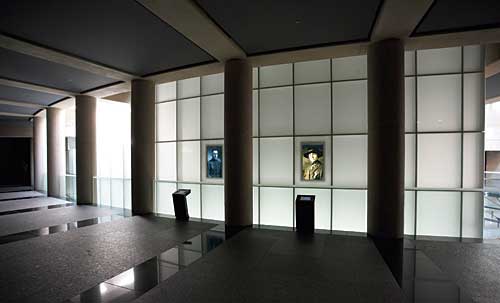
Liberty Memorial Museum, Kansas City, MO. Architect: ASAI Architecture, 2006. Structural
glazing with acrylic foam tape conforms with the interior luminous white drum curtain wall.
Courtesy of 3M |
|
|
Examples on other continents include Skidmore, Owings & Merrill's Adelaide Convention Center in South Australia, opened in 2001, where acrylic foam tape bonded aluminum composite panels to a galvanized frame. In Dubai, U.A.E., aluminum composite panels of W.S. Atkins & Partners-designed Burj Al Arab Hotel, opened in 1999, were bonded by acrylic foam tape to the framework to resist high wind loads in this harsh and warm environment.
Acrylic Foam Tape as Bonding System
for Curtain Walls
Glazed curtain walls are one of the most commonly used fenestration systems for commercial buildings. Fabricated on site or delivered pre-assembled, glazed curtain walls are classified by how they are built. This is in contrast to windows, which are classified by how they operate. In addition to different construction methods, curtain walls are also distinguished by both the glass selected and the glazing system used for weatherproofing and to hold the glass in place.
Glazing systems support the glass in the frame and seal the dissimilar materials from the weather. Structural glazing is a system of bonding glass to a building's structural framing members utilizing a high strength, high performance product (conventionally, silicone sealant) specifically designed and tested for structural glazing. In structural glazing applications, dynamic wind loads are transferred from the glass, by the structural glazing product, to the perimeter structural support.
Structural glazing is conventionally achieved by using a spacer adhesive tape to hold the insulated glass unit off the frame. Structural-grade silicone sealant is then shot into the space between the frame and glass. The dimensions of the spacer tape govern the thickness of the silicone to be used, and are calculated according to wind load requirements. Common spacer tape dimensions are 1/4 inch thick by 1/2 inch wide.
Acrylic foam structural glazing tape replaces both spacer tape and structural silicone for structural glazing. A single product comprising a solid adhesive construction, it serves as the primary bonding agent and a secondary sealing agent. Spacer tape is sometimes referred to as "structural glazing tape" and should not be confused with acrylic foam structural glazing tape.
Acrylic Foam Structural Glazing Tape:
Features and Benefits
One of the significant features that distinguish acrylic foam structural glazing tape is its viscoealasticity. Viscoelasticity describes materials that exhibit both viscous and elastic characteristics. Viscous materials are inherently tacky and flexible yet resist shear flow and strain when a stress is applied. Elastic materials strain when a stress is applied and return to their original state once the stress is removed. Viscoelastic materials have elements of both of these properties and, as such, exhibit time and force dependent strain. Other significant features are its strength, durability, resistance to moisture and chemicals, productivity, convenience and uniform appearance.

Walt Disney Concert Hall, Los Angeles, 2003.
Architect: Gehry Partners, LLP. Acrylic
Foam tape was used to bond stainless steel panels to stiffeners and frame attachments.
Courtesy of 3M |
|
|
|
Viscoelasticity. Being viscoelastic in nature, the foam has the unique property of absorbing energy and relaxing stress at the bond line thereby providing bonding strength while protecting the bondline at the adhesive/substrate interface-and accommodating shear strain up to 300 percent of its thickness.
Resistance. One hundred percent closed cell construction forms a tight seal protecting against moisture penetration, dirt and chemicals, while its acrylic chemistry resists degradation due to ultraviolet (UV) exposure
and weathering.
Productivity. Another feature of acrylic foam structural glazing tape is an advantage in overall productivity. In terms of materials-only cost savings, there is little difference between using acrylic foam structural glazing tape and conventional structural glazing materials. But in terms of productivity, waste factor, installation and clean-up time, there can be significant cost savings, time savings and more accurate forecasting of materials required. With structural silicone it is possible to have a messy waste factor of 10 percent to 25 percent in ensuring there is enough silicone to fill and overshoot joints.
Mixing two-part silicone in the correct ratio requires testing and operator time to achieve quality control because of silicone's reactive chemistry. It also requires expensive high-maintenance equipment. Acrylic foam structural glazing tape, on the other hand, is delivered fully cured, in pre-defined thickness and width, ready to use and typically incurs a waste factor of less than 5 percent. Another advantage is not having to allocate time for silicone clean up and equipment maintenance.
Perhaps the biggest advantage is the immediate handling strength of acrylic foam structural glazing tape over structural silicone. When panels are assembled in the plant, the silicone needs to cure before they can be oriented vertically or handle significant movement. In contrast, panels bonded with acrylic foam structural glazing tape can be immediately handled (typically 50 percent of the ultimate adhesive bonding strength is achieved after pressure application), so the panels can be moved with far less delay, thus freeing up both time and valuable storage and production space at the manufacturing plant.
It's important to note that there are many acrylic foam tapes available in the market place today. However, only fully tested and qualified acrylic foam structural glazing tapes should be considered for this demanding application. It is also important to have full technical support from a knowledgeable staff at the tape manufacturer when considering acrylic foam structural glazing tapes.
Appearance. Another significant feature is appearance. The conventional process of using spacer tape and silicone results in having two different materials side by side. Since the colors don't often match, the line between the materials is visible. The color of the silicone can also have a streaky appearance on occasion. In addition, there is the possibility that the silicone is not shot properly into the joint. In which case there is air entrapment or bubbles, which may be visible and worse, compromise the integrity of the joint.
First U.S. Application of Acrylic Foam Tape
for Structural Glazing
|
|

Typical assembly configuration of structural glazing using acrylic foam structural glazing tape. Drawing supplied by 3M |
|
|
|
Appearance was the driving force behind the decision to use acrylic foam tape for the first time in the U.S. for structural glazing. The Liberty Memorial, in Kansas City, MO., is a National Historic Landmark dedicated in 1921 to commemorate World War One. The new museum, designed by ASAI Architecture, (since merged with PGAV Architects) features an underground addition with the original memorial tower at its center.
The core of the underground museum is enclosed by a large glass drum wall, 300-feet in diameter, two stories high and made up of approximately 4-feet wide, 6-feet high, pieces of glass. Steve Abend, FAIA, principal and lead designer, explains that the entire drum is designed as a luminous translucent time capsule that rises out of the earth and appears to be going through the roof. Clad with laminated glass with a white inner layer, the drum glows and provides the only light for the entire lobby of the museum.
The glass is structurally glazed to a mullion system located out-of-sight behind the glass in an interstitial space for lighting and maintenance. Since he required the mullion system to be as invisible as possible, Abend wanted the joints to be white like the glass so it would read as a ghost. Since there was no white silicone sealant with the needed structural properties on the market, he selected white acrylic foam tape. In addition to being the correct matching color, the tape had the additional advantage of delivering very crisp lines. "The edges of the tape were all pre-cut so it was much more precise than we could have gotten from a sealant," reports Abend. By eliminating the sealant, which normally would have occurred between the glass pieces, he adds, it is now possible to see the crystalline edges of the glass.
|
 |
 |
| Liberty Memorial Museum, 2006 |
Application of acrylic foam structural glazing tape involves no curing time,
no liquid mess and less waste. |
|
|
ACRYLIC FOAM TAPE PRODUCT INFORMATION |
| Adhesive |
High perfomance acrylic |
| Adhesive carrier |
Conformable acrylic closed cell foam |
| Thickness |
0.090 in (2.3 mm) |
| Tolerance |
+/- 10 Percent |
| Density |
45 lb/cu ft (720 kg/cu m) |
| Standard Tape Color |
Gray or Black |
| Liner |
0.005 in (0.125 mm) Red polyethylene film |
|
Typical Acrylic Foam Structural Glazing Tape Product Information.
Note: This technical information and data should be considered representative
or typical only and should not be used for specification purposes. |
"It saved us some money by eliminating the sealant," Abend says. "And we're told by the contractor that the erection−installation time was reduced. So it benefited the project with some modest cost savings. It benefited the contractor with some cost savings. And it gave us the look we needed for the project." As required with every acrylic foam tape structural glazing project., the tape manufacturer provided much technical support throughout the project-one example: sending a technical representative to the contractor's shop to train and demonstrate proper installation techniques that helped with quality control and reduced installation time.
Specifications Best Practices
|
|

Philips Headquarters in Hamburg, Germany. Acrylic foam structural
glazing tape was used to bond 2,400 glazed panels.
Photo: Oliver Heissner |
|
|
|
When evaluating new products for design and specification, architects should review available information carefully, including independent third party technical testing data documenting structural capacity, weathering capability, and longevity. They should investigate other installations and applications, as well as project types, testing performed, and the results. Other important considerations are installation procedures, appearance, direct and indirect costs, and warranties. Manufacturers should ideally provide technical advice and support for questions that may arise, especially during the design and construction phases.
When, in the late 1990s, Terry Bell, AIA, partner, Gehry Partners, LLP, began researching acrylic foam tape for bonding exterior stainless steel panels to stiffeners and aluminum frame for the Disney Concert Hall, he talked to users in other fields, did in-house research, laboratory testing, and built full size mock-ups. (He recalls the difficulty of removing the tape from panels when disassembling the performance mockup in Miami). The benefits of the tape, aside from its high bond strength, he says, include allowing for differential lateral thermal movement of the stainless steel panels and the aluminum sub-frame, preventing telegraphing of the framing locations onto the panel, and being able to handle materials immediately after bonding.
International Applications of Acrylic Foam
Structural Glazing Tape
Acrylic foam structural glazing tape has many structural glazing applications across several continents in various climates and construction environments.
Since 1990, acrylic foam structural glazing tape has performed in hot and cool, high humidity and UV conditions in more than 2,500 projects in Brazil. Among them, a building for Aché, the largest pharmaceutical laboratory in the country, hotels, and office towers. It was used for an office tower in Guatemala in 1994 under similar climatic conditions, and in several projects in Mexico where pollution added to the challenges of heat and UV. In Austria's cold, hot and humid climate, the tape was employed on a project completed in 1999, and in Portugal, met Portuguese building codes for a tower constructed in 2002. Four major projects were completed in Israel in 2003. And in 2005, the tape complied with Germany's rigorous building code requirements for glazing 2400 glass panels for Philips Headquarters in Hamburg.
Benefits of Using Acrylic Foam Structural
Glazing Tape for Structural Glazing |
Performance
- Improved quality control because of consistent thickness and width.
Product comes fully cured from the tape manufacturer
- Bonds and seals simultaneously.
- Provides uniform stress distribution along the bond line.
- Has proven durability as acrylic foam tapes have been in use for over 25 years.
- Foam dampens vibration and reduces acoustic noise.
- 300 percent shear strain capability accommodates differential thermal
expansion and contraction.
- Viscoelastic characteristics give a proper balance of properties for reliability
against wind, vibration and temperature changes.
- Resistant to solvents, chemicals and UV.
- Resistant to temperature cycling.
- Third party testing documentation. (ASTM Structural Performance Tests for
Structural Glazing)
Productivity
- Immediate handling strength. Faster throughput and delivery.
- Reduces need for storage space since there is no cure time.
- Reduced number of components for structural glazing. Spacer tape or gaskets
are eliminated.
- More accurate forecasting of materials required and therefore reduced
overall costs.
- Eliminates need for mix/ratio testing.
- Minimal equipment required thereby reducing equipment maintenance costs.
- Relatively short learning curve for installation.
- Less waste compared with using structural silicone.
- Saves clean-up time.
- Reduced installation time.
- Tape can be cut to fit any length, shape, size or profile.
- Reduced labor costs because of less number of fabrication steps and
faster process
- 100 percent nondestructive testing capability with a tape glazed system
Appearance
- Tape has clean crisp edge
- Design and appearance enhanced by virtually invisible fastening, which gives,
smooth and clean look
- Uniform thickness creates repeatable results
- No color mismatch between structural silicone, spacer tape and gasket
- Color remains consistent from one end to the other
- Standard choice of colors − gray and black
- Smaller gap between frame and glass
- Tape bonds, seals and conforms to a variety of surfaces
|
|
|
3M is a diversified technology company with a worldwide presence in the following markets: consumer and office; display and graphics; electro and communications; health care; industrial and transportation; and safety, security and protection services. What makes us so diverse is our ability to apply our technologies--often in combination--to an endless array of customer needs.
www.3M.com/vhb/structuralglazing.com |
|
|
|

Iguatemi Corporate office building, Porto Alegre, Brazil . The curtain
wall is bonded with acrylic foam structural glazing tape.
Courtesy of 3M |
|
|
|
When reviewing global product applications, it is useful to review the local building construction practices such as whether building codes apply, and how they impact the introduction of new products and construction installation methods. In many regions of the world it is common practice to do a mock-up testing of the building facade before construction. A two or three-story high mock-up is built according to the specifications of the project and then tested for wind load, structural performance and other conditions. In Singapore, mock-up testing is mandatory.
In India, where over 200 projects with acrylic foam structural glazing tape have been completed since 1995, there are no building codes for glazing and mock-ups are uncommon. Builders generally follow established practices and, once drawings and specifications are approved, begin construction. The introduction of acrylic foam structural glazing tape for structural glazing, therefore, required a cautious approach. In some cases, a manufacturer may set up a local laboratory facility to study and test performance and safety before product fabrication.
2005 ASTM Structural Performance Tests for Structural Glazing (Winwall Technology Pte Ltd − Singapore)
Third Party Testing Data. Acrylic foam structural glazing tape has undergone a number of key ASTM construction related tests, plus structural performance tests in Brazil in 1998, the country which had the first and subsequently the majority of applications of tape used for structural glazing. The most significant test in terms of informing architects and curtain wall fabricators in the U.S. are the 2005 ASTM Structural Performance Tests for Structural Glazing. This included testing according to ASTM E283, ASTM E331, ASTM E330 and additional temperature cycling from -13°F to 158°F. They were undertaken at Winwall Technology Pte Ltd, in Singapore, an independent accredited 3rd party test facility specializing in the testing of curtain wall mock-ups in South-east Asia. This testing was also observed by Dr. E. C. C. Choi, Ph.D., C.Eng., FIC (UK), MASCE (USA), MHKIE (Hong Kong), MIE and CPEng. (Australia), civil engineering and curtain wall consultant, professor, School of Civil & Environmental Engineering, Nanyang Technological University, Singapore, and specialist in wind characteristics, wind loading, weather tightness, curtain wall, and building envelope technology.
Performance. The objective of the test was to compare the performance of panels mounted using acrylic foam structural glazing tape with those mounted using structural silicone sealants. The glazed panels submitted for the tests were built at a leading manufacturer of architectural curtain wall panel systems using designs, materials, assembly procedures and factory conditions typical of the construction industry.
The first sequence of test panels consisted of laminated glass bonded with acrylic foam structural glazing tape, a double glazed unit (DGU-insulated glass) bonded with acrylic foam structural glazing tape, and a DGU bonded with a one-part structural silicone sealant. The three panels in the second test sequence consisted of a single pane tempered glass bonded to acrylic foam structural glazing tape, a single pane tempered glass bonded with a one-part structural silicone sealant and a DGU bonded with acrylic foam structural glazing tape. (The DGU bonded with acrylic foam structural glazing tape was subjected to the complete testing protocol twice).
Overall, the test result showed that the performance of the panels mounted using acrylic foam structural glazing tape was as good as the panels mounted using the conventional structural silicone sealant. All the panels performed satisfactorily; there was no measurable air infiltration, no water penetration was observed, and the panels withstood pressures up to the design pressure of 60 psf (2.9 kPa) even after the panels had gone through twenty cycles of extreme temperature cycling of -13°F to 158°F (The pascal (Pa) is the System International (SI) unit of pressure or stress). The pressure cycling was conducted first at ambient temperature conditions of 90°F according to ASTM E330. Upon passing of all panels at this temperature, the pressure cycling was then repeated up to 60 psf at -13F and then again at 158°F. All panels passed this additional pressure cycling demonstrating the capability of the acrylic foam structural glazing tape to withstand high windloads in hot and cold environments. Once this was completed the integrity of the air seal was again measured with no leakage observed with any of the glazed panels. The windload pressure cycling was then repeated up to more than twice the design pressure without showing any sign of delamination or damage, The panels in the second test sequence sustained a peak load of 210 psf (10 kPa) without failure. It should be noted that the DGU bonded with acrylic foam structural glazing tape was subjected to the entire test sequence twice. In the first test sequence, the laminated glass panel fractured at a negative pressure of 175 psf (8.4kPa). On inspection, it was observed that along the four edges of the glass panel where the acrylic foam structural glazing tape glazed the panel, the broken glass remained adhered to the frame. This demonstrated that the tape mounting was stronger than the glass panel.
PHYSICAL PROPERTIES AND PERFORMANCE CHARACTERISTICS |
Peel Adhesion:
(stainless steel, ASTM D 3330) |
20 lb/in width (350 N/100 mm) |
Normal Tensile:
(aluminum T-block, ASTM D 897 |
70 lb/sq in (480kPa) |
Dynamic Overlap Shear:
(stainless steel, ASTM D 1002) |
65 lb/sq in (450 kPa) |
Static Shear:
(stainless steel, 72ºF (22ºC)
ASTM D 3654) 150ºF (66ºC)
200ºF (93ºC) |
1000 g/0.5 sq.in (holds 10,000 min.)
500 g/0.5 sq in (holds 10,000 min.)
500 g/0.5 sq in (holds 10,000 min.) |
| Solvent Resistance: |
Excellent |
| UV Resistance: |
Excellent |
Temperature Resistance:
Short Term: (minutes, hours)
Long Term: (days, weeks) |
|
|
Acrylic foam structural glazing tape: typical physical properties
and performance characteristics. Note: This technical information
and data should be considered representative or typical only and
should not be used for specification purposes. |
For the structural performance tests, slightly higher deflection values were recorded for the tape-mounted panels when compared to the panels bonded with the structural silicone sealant. Deflection values at the glass edge were approximately 2 percent − 11 percent greater than the equivalent panels bonded with structural silicone. This was possibly due to the compressibility of the acrylic foam structural glazing tape. These values were for the tests carried out under the design pressure of 60 psf at the three different temperatures. The increased deflection values are still considered low and acceptable and were not of concern.
Glazed Curtain Wall Terminology |
By Stephen Kisielnicki, CCS
The American Architectural Manufacturers Association (AAMA) is the primary source for industry standards related to typical curtain wall types and components1. The following curtain wall elements and systems are outlined as described by AAMA.
Glazed curtain wall assemblies are a combined system of window lites within framing elements forming the building envelope.
Glass and glazing options
Standard float glass
- Industry standard.
- Typical thicknesses range from about 2.4-mm to 25 mm (3/32 in. to 1 in.)
- Annealing used in conjunction with the float process eliminates stresses imposed
- upon the glass during the manufacturing process, reducing breakage.
Tempered glass
- Better impact resistances, increased bending strength for wind loads, and shatter
control for life safety.
- Shatters into very small pieces instead of large shards, providing a greater degree
of safety for occupants.
- Cutting, drilling, or edging required in the manufacturing process must be done
prior to tempering, else the glass will shatter.
- Exhibits some visual distortion.
Heat-strengthened glass
- Strength between standard annealed float glass and tempered glass.
- Good compromise when there is a possibility of breakage but life safety is not
an issue.
- Larger shards than tempered glass, though not as sharp as annealed glass.
- Less distortion and less costly than tempered glass.
Laminated glass
- Vinyl, polycarbonate, or cured resin interlayer bonded to one or more layers of
glass to form a monolithic lite; interlayer holds the pieces together when the glass
is broken and keeps the glass from shattering.
- Effective solution for the many safety and security requirements becoming
prevalent in architectural design.
- Can be assembled in combination with any other type of glass to produce a very
strong, secure lite.
Other glass considerations
Tinted and reflective glasses block portions of solar light transmittance, and are typically used to control the amount of light entering a building or for aesthetic reasons.
Spandrel glass is tinted, reflective-coated, or film-coated, and is typically used for aesthetic reasons in the fenestration. Solid insulated metal panels are often used in lieu of glass lites.
Insulating glass units (IGUs) are manufactured with a powdered gas or air-filled space between two or more panes of glass to provide energy efficiency.
Types of glazing
Glazing is the system or process used to support the glass in the frame and seal the dissimilar mating surfaces from the elements. There are several basic glazing options for curtain walls:
Wet glazing: preformed tape or gunnable (typically applied with a caulk gun) liquid sealant used to set the glass in the frame; versatile and adaptable to site conditions.
Dry glazing: manufactured compression gasket of rubber or vinyl used to support the glass; minimizes quality-control issues because it is pre-manufactured.
Structural glazing: in addition to sealing the assembly, the glazing material also
carries a portion of the live and dead loads imposed on or by the glass.
- Four sided: Sealant material utilized on four sides without the additional support
of a frame on the exterior side of the glass. Has a "frameless" look.
- Two sided: structural glazing sealant used on two sides, with traditionally glazed
metal frame used on two sides.
Wet and dry glazing can be used effectively for factory, shop, or on-site glazing. Structural glazing is primarily accomplished once the glass is installed on-site.
Glazed curtain wall types and limitations
Glazed curtain walls are classified by how they are built, unlike punched opening windows which are classified by how they operate.
Stick system
- First and most common curtain wall type developed by manufacturers.
- Off-the-shelf components assembled on-site with individual mullions and rails
to frame the vision and/or spandrel panels.
Unit panel system (unitized)
- Pre-assembled, pre-glazed at the factory or shop, or glazed on-site and installed
as panels of lites.
Unit mullion system
- Compromise between the stick and unitized systems.
- Pre-assembled units-pre-glazed or glazed on-site-are installed behind one- or
two-story individual mullions.
Column cover and spandrel systems
- Units can be pre- or site-assembled with infill vision glass and spandrel panels
between the columns, and with column covers.
- Units can be entirely pre-assembled or assembled on-site.
Notes
1 See AAMA MCWM-1,Metal Curtain Wall Manual.
Stephen Kisielnicki, CCS, is Associate and Senior Project Manager at the Baltimore, MD office of Gale Associates Inc., a consulting engineering firm specializing in building envelope technology. |
|
|
|

Acrylic foam structural glazing tape used for structural glazing
on the Movenpick Hotel, Frankfurt, Germany.
Courtesy of 3M |
|
|
|
Dr. Choi concluded the results indicated that the acrylic foam structural glazing tape was a good medium for the mounting of glass curtain wall panels. The performance of the panels mounted using the tapes were as good as the panels mounted using a conventional structural silicone sealant. The test mock-up had been subjected to the high temperature of 158°F as well as the low temperature of -13°F, and the performance of the tape-mounted units compared favorably with the silicone-mounted units and perhaps better (moisture condensation was observed on the silicone-mounted units but not on the tape-mounted units).
He reported that the structural strength of the tape in bonding the glass panels to the metal frame was shown to be extremely good. Test pressure (suction) of more than twice the design pressure was applied onto the units. In one case (the second test sequence) there was no failure. For the other case, the first test sequence, the glass fractured but delamination was not observed on the four edges of the glass panel.
Durability. Another major concern in the use acrylic foam tape in any construction process is its durability. Various types of durability tests have been carried out, all with good results, reports Dr. Choi. Findings include:
- After acrylic foam tape was aged for more than 5 years at 150°F (65°C), the roll yielded
92 percent retention of peel adhesion. (Peel adhesion (ASTM D3330) is a measurement
of the bond strength to the substrate as well as the strength of foam.)
- In accelerated weathering tests, the tape bond was subjected to heat, humidity and
concentrated ultraviolet light exposure. The bond strength did not deteriorate below its
original performance level, even after exposure of 7,500 hours in a weatherometer
(an apparatus in which specimen materials are subjected to high intensity UV light,
cycling heat and humidity.)
- Outdoor weathering tests typically demonstrate about 100% bond strength retention
after 2 to 5 years aging cycles in the hot, humid climate of Florida, the hot, dry and very
sunny climate of Arizona and the cold to hot extremes of Minnesota on bonds to
aluminum, glass, PVC and painted metal. In Minnesota, the tape showed a constant
performance after 5 years of outdoor aging.
- Long-term continuous submersion in water and brine (2 weeks, 10 years) caused no
significant reduction in adhesion to substrate (tape submerged in water).
Dr. Choi concluded that the results of the series of vigorous tests showed that the performance of acrylic foam structural glazing tape was as good as the conventional structural silicone sealant for use in curtain wall construction. It performed as well for air infiltration and water penetration tests and sustained a high pressure loading in the structural load test, well beyond what the joint was designed for.
Design Guidelines
For tape area calculations, the following guidelines can be used:
Dynamic Loads (with dead load support of glass) For dynamic tensile or shear loads (such as wind loads), a design strength of 12 pounds per square inch (psi) or 85 kPa is used for acrylic foam structural glazing tape. This design strength provides a safety factor of five and was established based on material property testing as well as ASTM dynamic load testing for curtain wall applications.
Static Loads (no dead load support) For static tensile or shear loads (such as dead weight loads, snow loads, and other long-term loads), a design strength of 0.25 psi (1.7 kPa) is used for acrylic structural glazing foam tape. This means four sq in of tape per one pound of load should be used to support static loads. This guideline provides a safety factor of at least five.
Dynamic and static load calculations should be performed on unsupported deadload structural glazing applications. The calculations resulting in the wider tape width should be used as the appropriate tape width for the application. No dead load support should only be considered for monolithic glass applications. Always consult the tape manufacturer when considering an application with no deadload support.
Application Guidelines
Each acrylic foam structural glazing tape application should be reviewed on a project specific basis by the tape manufacturer. Application guidelines should be based upon adhesion test results generated by the tape manufacturer, who should provide application guidelines to be followed during the bonding process.
Typical Application Guidelines
- For maximum bond strength, all non-glass surfaces should be thoroughly cleaned with
a 50/50 isopropyl alcohol (IPA) and water mixture to remove contaminants. Some
surfaces may need additional treatment with a primer. Glass surfaces should be cleaned
and then treated with a mixture of an IPA, water, and silane solution (silane is a chemical
compound that serves as a stabilizing coupling agent) prior to tape application.
A properly mixed silane solution is used to promote adhesion of acrylic foam structural
glazing tape to the uncoated glass surface. Glass is hydrophilic (water loving) in nature
and may lead to performance issues over time in humid or wet environments due to
water vapor undercutting the bondline and interfering with normal adhesion forces.
A silane solution treats the glass surface creating a hydrophobic surface that will act to
protect the tape bondline.
- Ideal tape application is accomplished when temperature is between 70°F and 100°F
(21°C and 38°C). Initial tape application to surfaces at temperatures below 60°F
(16°C) is not recommended. However, the use of a primer may lower the minimum
application temperature.
- Bond strength is dependent upon the amount of adhesive-to-surface contact developed.
Firm application pressure develops better adhesive contact and helps improve bond
strength. Generally, this means that the tape should experience at least 15 psi (100 kPa)
in roll down or platen pressure.
• After application, the bond strength will increase as the adhesive flows onto the surface.
At room temperature, approximately 50 percent of the ultimate strength is achieved after
pressure application, 90 percent after 24 hours and 100 percent after 72 hours. The use
of a primer may greatly accelerate the bond strength build rate.
On the market since 1980, acrylic foam tape is found in a multitude of applications in a cross section of industries around the globe. But it has only recently become available in the U.S. as an effective alternative to structural silicone and spacer tape for commercial curtain wall applications. Available outside of the U.S. since 1990 for structural glazing, it has been used in over 3,000 curtain wall projects in South America, India, Europe, and Asia. As architects, curtain wall fabricators and contractors discover its features and analyze potential production cost and time savings, acrylic foam structural glazing tape for structural glazing should become a viable choice for specifiers of curtain wall glazing systems.
Acrylic foam tape is two-sided, pressure-sensitive, closed-cell acrylic foam. Used within and outside the construction industry, it is designed to bond to a wide range of substrates including most metals, glass, many plastics, composites, sealed wood, paints, and powder coatings. Suitable for both indoor and outdoor applications, it typically replaces liquid adhesives, spot welds, screws, rivets, and other mechanical fasteners. Its many applications range from fastening panels to horse trailers in order to achieve durability and a smooth surface, for attaching flex electronic circuit boards and bonding ceiling panels to suspension frames at Chicago's O'Hare Airport.
In the early 1980's, applications broadened in the commercial construction industry to include permanent bonding and sealing of architectural metal panels to a variety of surfaces including frames, stiffener attachments, I-beams, and metal cladding. Among the many applications from Australia to Brazil and the U.S. to the United Arab Emirates, are high profile examples where acrylic foam tape replaced screws, rivets, welds, and silicones. One is the Frank Gehry-designed Walt Disney Concert Hall in Los Angeles, completed in 2003, where the stainless steel panels were bonded by tape to stiffeners and aluminum framework. Another U.S. application is on the $355 million Dearborn Center in Chicago, IL, completed in 2003, and designed by Ricardo Bofill Taller de Arquitectura of Spain and DeStefano & Partners Ltd. of Chicago. Considered to be one of the most technologically advanced buildings in the world at the time, acrylic foam tape was used to bond stiffeners to the exterior metal trim cladding.
|
Liberty Memorial Museum, Kansas City, MO. Architect: ASAI Architecture, 2006. Structural
glazing with acrylic foam tape conforms with the interior luminous white drum curtain wall.
Courtesy of 3M |
|
|
Examples on other continents include Skidmore, Owings & Merrill's Adelaide Convention Center in South Australia, opened in 2001, where acrylic foam tape bonded aluminum composite panels to a galvanized frame. In Dubai, U.A.E., aluminum composite panels of W.S. Atkins & Partners-designed Burj Al Arab Hotel, opened in 1999, were bonded by acrylic foam tape to the framework to resist high wind loads in this harsh and warm environment.
Acrylic Foam Tape as Bonding System
for Curtain Walls
Glazed curtain walls are one of the most commonly used fenestration systems for commercial buildings. Fabricated on site or delivered pre-assembled, glazed curtain walls are classified by how they are built. This is in contrast to windows, which are classified by how they operate. In addition to different construction methods, curtain walls are also distinguished by both the glass selected and the glazing system used for weatherproofing and to hold the glass in place.
Glazing systems support the glass in the frame and seal the dissimilar materials from the weather. Structural glazing is a system of bonding glass to a building's structural framing members utilizing a high strength, high performance product (conventionally, silicone sealant) specifically designed and tested for structural glazing. In structural glazing applications, dynamic wind loads are transferred from the glass, by the structural glazing product, to the perimeter structural support.
Structural glazing is conventionally achieved by using a spacer adhesive tape to hold the insulated glass unit off the frame. Structural-grade silicone sealant is then shot into the space between the frame and glass. The dimensions of the spacer tape govern the thickness of the silicone to be used, and are calculated according to wind load requirements. Common spacer tape dimensions are 1/4 inch thick by 1/2 inch wide.
Acrylic foam structural glazing tape replaces both spacer tape and structural silicone for structural glazing. A single product comprising a solid adhesive construction, it serves as the primary bonding agent and a secondary sealing agent. Spacer tape is sometimes referred to as "structural glazing tape" and should not be confused with acrylic foam structural glazing tape.
Acrylic Foam Structural Glazing Tape:
Features and Benefits
One of the significant features that distinguish acrylic foam structural glazing tape is its viscoealasticity. Viscoelasticity describes materials that exhibit both viscous and elastic characteristics. Viscous materials are inherently tacky and flexible yet resist shear flow and strain when a stress is applied. Elastic materials strain when a stress is applied and return to their original state once the stress is removed. Viscoelastic materials have elements of both of these properties and, as such, exhibit time and force dependent strain. Other significant features are its strength, durability, resistance to moisture and chemicals, productivity, convenience and uniform appearance.
Walt Disney Concert Hall, Los Angeles, 2003.
Architect: Gehry Partners, LLP. Acrylic
Foam tape was used to bond stainless steel panels to stiffeners and frame attachments.
Courtesy of 3M |
|
|
|
Viscoelasticity. Being viscoelastic in nature, the foam has the unique property of absorbing energy and relaxing stress at the bond line thereby providing bonding strength while protecting the bondline at the adhesive/substrate interface-and accommodating shear strain up to 300 percent of its thickness.
Resistance. One hundred percent closed cell construction forms a tight seal protecting against moisture penetration, dirt and chemicals, while its acrylic chemistry resists degradation due to ultraviolet (UV) exposure
and weathering.
Productivity. Another feature of acrylic foam structural glazing tape is an advantage in overall productivity. In terms of materials-only cost savings, there is little difference between using acrylic foam structural glazing tape and conventional structural glazing materials. But in terms of productivity, waste factor, installation and clean-up time, there can be significant cost savings, time savings and more accurate forecasting of materials required. With structural silicone it is possible to have a messy waste factor of 10 percent to 25 percent in ensuring there is enough silicone to fill and overshoot joints.
Mixing two-part silicone in the correct ratio requires testing and operator time to achieve quality control because of silicone's reactive chemistry. It also requires expensive high-maintenance equipment. Acrylic foam structural glazing tape, on the other hand, is delivered fully cured, in pre-defined thickness and width, ready to use and typically incurs a waste factor of less than 5 percent. Another advantage is not having to allocate time for silicone clean up and equipment maintenance.
Perhaps the biggest advantage is the immediate handling strength of acrylic foam structural glazing tape over structural silicone. When panels are assembled in the plant, the silicone needs to cure before they can be oriented vertically or handle significant movement. In contrast, panels bonded with acrylic foam structural glazing tape can be immediately handled (typically 50 percent of the ultimate adhesive bonding strength is achieved after pressure application), so the panels can be moved with far less delay, thus freeing up both time and valuable storage and production space at the manufacturing plant.
It's important to note that there are many acrylic foam tapes available in the market place today. However, only fully tested and qualified acrylic foam structural glazing tapes should be considered for this demanding application. It is also important to have full technical support from a knowledgeable staff at the tape manufacturer when considering acrylic foam structural glazing tapes.
Appearance. Another significant feature is appearance. The conventional process of using spacer tape and silicone results in having two different materials side by side. Since the colors don't often match, the line between the materials is visible. The color of the silicone can also have a streaky appearance on occasion. In addition, there is the possibility that the silicone is not shot properly into the joint. In which case there is air entrapment or bubbles, which may be visible and worse, compromise the integrity of the joint.
First U.S. Application of Acrylic Foam Tape
for Structural Glazing
|
|
Typical assembly configuration of structural glazing using acrylic foam structural glazing tape. Drawing supplied by 3M |
|
|
|
Appearance was the driving force behind the decision to use acrylic foam tape for the first time in the U.S. for structural glazing. The Liberty Memorial, in Kansas City, MO., is a National Historic Landmark dedicated in 1921 to commemorate World War One. The new museum, designed by ASAI Architecture, (since merged with PGAV Architects) features an underground addition with the original memorial tower at its center.
The core of the underground museum is enclosed by a large glass drum wall, 300-feet in diameter, two stories high and made up of approximately 4-feet wide, 6-feet high, pieces of glass. Steve Abend, FAIA, principal and lead designer, explains that the entire drum is designed as a luminous translucent time capsule that rises out of the earth and appears to be going through the roof. Clad with laminated glass with a white inner layer, the drum glows and provides the only light for the entire lobby of the museum.
The glass is structurally glazed to a mullion system located out-of-sight behind the glass in an interstitial space for lighting and maintenance. Since he required the mullion system to be as invisible as possible, Abend wanted the joints to be white like the glass so it would read as a ghost. Since there was no white silicone sealant with the needed structural properties on the market, he selected white acrylic foam tape. In addition to being the correct matching color, the tape had the additional advantage of delivering very crisp lines. "The edges of the tape were all pre-cut so it was much more precise than we could have gotten from a sealant," reports Abend. By eliminating the sealant, which normally would have occurred between the glass pieces, he adds, it is now possible to see the crystalline edges of the glass.
|
|
|
| Liberty Memorial Museum, 2006 |
Application of acrylic foam structural glazing tape involves no curing time,
no liquid mess and less waste. |
|
|
ACRYLIC FOAM TAPE PRODUCT INFORMATION |
| Adhesive |
High perfomance acrylic |
| Adhesive carrier |
Conformable acrylic closed cell foam |
| Thickness |
0.090 in (2.3 mm) |
| Tolerance |
+/- 10 Percent |
| Density |
45 lb/cu ft (720 kg/cu m) |
| Standard Tape Color |
Gray or Black |
| Liner |
0.005 in (0.125 mm) Red polyethylene film |
|
Typical Acrylic Foam Structural Glazing Tape Product Information.
Note: This technical information and data should be considered representative
or typical only and should not be used for specification purposes. |
"It saved us some money by eliminating the sealant," Abend says. "And we're told by the contractor that the erection−installation time was reduced. So it benefited the project with some modest cost savings. It benefited the contractor with some cost savings. And it gave us the look we needed for the project." As required with every acrylic foam tape structural glazing project., the tape manufacturer provided much technical support throughout the project-one example: sending a technical representative to the contractor's shop to train and demonstrate proper installation techniques that helped with quality control and reduced installation time.
Specifications Best Practices
|
|
Philips Headquarters in Hamburg, Germany. Acrylic foam structural
glazing tape was used to bond 2,400 glazed panels.
Photo: Oliver Heissner |
|
|
|
When evaluating new products for design and specification, architects should review available information carefully, including independent third party technical testing data documenting structural capacity, weathering capability, and longevity. They should investigate other installations and applications, as well as project types, testing performed, and the results. Other important considerations are installation procedures, appearance, direct and indirect costs, and warranties. Manufacturers should ideally provide technical advice and support for questions that may arise, especially during the design and construction phases.
When, in the late 1990s, Terry Bell, AIA, partner, Gehry Partners, LLP, began researching acrylic foam tape for bonding exterior stainless steel panels to stiffeners and aluminum frame for the Disney Concert Hall, he talked to users in other fields, did in-house research, laboratory testing, and built full size mock-ups. (He recalls the difficulty of removing the tape from panels when disassembling the performance mockup in Miami). The benefits of the tape, aside from its high bond strength, he says, include allowing for differential lateral thermal movement of the stainless steel panels and the aluminum sub-frame, preventing telegraphing of the framing locations onto the panel, and being able to handle materials immediately after bonding.
International Applications of Acrylic Foam
Structural Glazing Tape
Acrylic foam structural glazing tape has many structural glazing applications across several continents in various climates and construction environments.
Since 1990, acrylic foam structural glazing tape has performed in hot and cool, high humidity and UV conditions in more than 2,500 projects in Brazil. Among them, a building for Aché, the largest pharmaceutical laboratory in the country, hotels, and office towers. It was used for an office tower in Guatemala in 1994 under similar climatic conditions, and in several projects in Mexico where pollution added to the challenges of heat and UV. In Austria's cold, hot and humid climate, the tape was employed on a project completed in 1999, and in Portugal, met Portuguese building codes for a tower constructed in 2002. Four major projects were completed in Israel in 2003. And in 2005, the tape complied with Germany's rigorous building code requirements for glazing 2400 glass panels for Philips Headquarters in Hamburg.
Benefits of Using Acrylic Foam Structural
Glazing Tape for Structural Glazing |
Performance
- Improved quality control because of consistent thickness and width.
Product comes fully cured from the tape manufacturer
- Bonds and seals simultaneously.
- Provides uniform stress distribution along the bond line.
- Has proven durability as acrylic foam tapes have been in use for over 25 years.
- Foam dampens vibration and reduces acoustic noise.
- 300 percent shear strain capability accommodates differential thermal
expansion and contraction.
- Viscoelastic characteristics give a proper balance of properties for reliability
against wind, vibration and temperature changes.
- Resistant to solvents, chemicals and UV.
- Resistant to temperature cycling.
- Third party testing documentation. (ASTM Structural Performance Tests for
Structural Glazing)
Productivity
- Immediate handling strength. Faster throughput and delivery.
- Reduces need for storage space since there is no cure time.
- Reduced number of components for structural glazing. Spacer tape or gaskets
are eliminated.
- More accurate forecasting of materials required and therefore reduced
overall costs.
- Eliminates need for mix/ratio testing.
- Minimal equipment required thereby reducing equipment maintenance costs.
- Relatively short learning curve for installation.
- Less waste compared with using structural silicone.
- Saves clean-up time.
- Reduced installation time.
- Tape can be cut to fit any length, shape, size or profile.
- Reduced labor costs because of less number of fabrication steps and
faster process
- 100 percent nondestructive testing capability with a tape glazed system
Appearance
- Tape has clean crisp edge
- Design and appearance enhanced by virtually invisible fastening, which gives,
smooth and clean look
- Uniform thickness creates repeatable results
- No color mismatch between structural silicone, spacer tape and gasket
- Color remains consistent from one end to the other
- Standard choice of colors − gray and black
- Smaller gap between frame and glass
- Tape bonds, seals and conforms to a variety of surfaces
|
|
|
3M is a diversified technology company with a worldwide presence in the following markets: consumer and office; display and graphics; electro and communications; health care; industrial and transportation; and safety, security and protection services. What makes us so diverse is our ability to apply our technologies--often in combination--to an endless array of customer needs.
www.3M.com/vhb/structuralglazing.com |
|
|
|
Iguatemi Corporate office building, Porto Alegre, Brazil . The curtain
wall is bonded with acrylic foam structural glazing tape.
Courtesy of 3M |
|
|
|
When reviewing global product applications, it is useful to review the local building construction practices such as whether building codes apply, and how they impact the introduction of new products and construction installation methods. In many regions of the world it is common practice to do a mock-up testing of the building facade before construction. A two or three-story high mock-up is built according to the specifications of the project and then tested for wind load, structural performance and other conditions. In Singapore, mock-up testing is mandatory.
In India, where over 200 projects with acrylic foam structural glazing tape have been completed since 1995, there are no building codes for glazing and mock-ups are uncommon. Builders generally follow established practices and, once drawings and specifications are approved, begin construction. The introduction of acrylic foam structural glazing tape for structural glazing, therefore, required a cautious approach. In some cases, a manufacturer may set up a local laboratory facility to study and test performance and safety before product fabrication.
2005 ASTM Structural Performance Tests for Structural Glazing (Winwall Technology Pte Ltd − Singapore)
Third Party Testing Data. Acrylic foam structural glazing tape has undergone a number of key ASTM construction related tests, plus structural performance tests in Brazil in 1998, the country which had the first and subsequently the majority of applications of tape used for structural glazing. The most significant test in terms of informing architects and curtain wall fabricators in the U.S. are the 2005 ASTM Structural Performance Tests for Structural Glazing. This included testing according to ASTM E283, ASTM E331, ASTM E330 and additional temperature cycling from -13°F to 158°F. They were undertaken at Winwall Technology Pte Ltd, in Singapore, an independent accredited 3rd party test facility specializing in the testing of curtain wall mock-ups in South-east Asia. This testing was also observed by Dr. E. C. C. Choi, Ph.D., C.Eng., FIC (UK), MASCE (USA), MHKIE (Hong Kong), MIE and CPEng. (Australia), civil engineering and curtain wall consultant, professor, School of Civil & Environmental Engineering, Nanyang Technological University, Singapore, and specialist in wind characteristics, wind loading, weather tightness, curtain wall, and building envelope technology.
Performance. The objective of the test was to compare the performance of panels mounted using acrylic foam structural glazing tape with those mounted using structural silicone sealants. The glazed panels submitted for the tests were built at a leading manufacturer of architectural curtain wall panel systems using designs, materials, assembly procedures and factory conditions typical of the construction industry.
The first sequence of test panels consisted of laminated glass bonded with acrylic foam structural glazing tape, a double glazed unit (DGU-insulated glass) bonded with acrylic foam structural glazing tape, and a DGU bonded with a one-part structural silicone sealant. The three panels in the second test sequence consisted of a single pane tempered glass bonded to acrylic foam structural glazing tape, a single pane tempered glass bonded with a one-part structural silicone sealant and a DGU bonded with acrylic foam structural glazing tape. (The DGU bonded with acrylic foam structural glazing tape was subjected to the complete testing protocol twice).
Overall, the test result showed that the performance of the panels mounted using acrylic foam structural glazing tape was as good as the panels mounted using the conventional structural silicone sealant. All the panels performed satisfactorily; there was no measurable air infiltration, no water penetration was observed, and the panels withstood pressures up to the design pressure of 60 psf (2.9 kPa) even after the panels had gone through twenty cycles of extreme temperature cycling of -13°F to 158°F (The pascal (Pa) is the System International (SI) unit of pressure or stress). The pressure cycling was conducted first at ambient temperature conditions of 90°F according to ASTM E330. Upon passing of all panels at this temperature, the pressure cycling was then repeated up to 60 psf at -13F and then again at 158°F. All panels passed this additional pressure cycling demonstrating the capability of the acrylic foam structural glazing tape to withstand high windloads in hot and cold environments. Once this was completed the integrity of the air seal was again measured with no leakage observed with any of the glazed panels. The windload pressure cycling was then repeated up to more than twice the design pressure without showing any sign of delamination or damage, The panels in the second test sequence sustained a peak load of 210 psf (10 kPa) without failure. It should be noted that the DGU bonded with acrylic foam structural glazing tape was subjected to the entire test sequence twice. In the first test sequence, the laminated glass panel fractured at a negative pressure of 175 psf (8.4kPa). On inspection, it was observed that along the four edges of the glass panel where the acrylic foam structural glazing tape glazed the panel, the broken glass remained adhered to the frame. This demonstrated that the tape mounting was stronger than the glass panel.
PHYSICAL PROPERTIES AND PERFORMANCE CHARACTERISTICS |
Peel Adhesion:
(stainless steel, ASTM D 3330) |
20 lb/in width (350 N/100 mm) |
Normal Tensile:
(aluminum T-block, ASTM D 897 |
70 lb/sq in (480kPa) |
Dynamic Overlap Shear:
(stainless steel, ASTM D 1002) |
65 lb/sq in (450 kPa) |
Static Shear:
(stainless steel, 72ºF (22ºC)
ASTM D 3654) 150ºF (66ºC)
200ºF (93ºC) |
1000 g/0.5 sq.in (holds 10,000 min.)
500 g/0.5 sq in (holds 10,000 min.)
500 g/0.5 sq in (holds 10,000 min.) |
| Solvent Resistance: |
Excellent |
| UV Resistance: |
Excellent |
Temperature Resistance:
Short Term: (minutes, hours)
Long Term: (days, weeks) |
|
|
Acrylic foam structural glazing tape: typical physical properties
and performance characteristics. Note: This technical information
and data should be considered representative or typical only and
should not be used for specification purposes. |
For the structural performance tests, slightly higher deflection values were recorded for the tape-mounted panels when compared to the panels bonded with the structural silicone sealant. Deflection values at the glass edge were approximately 2 percent − 11 percent greater than the equivalent panels bonded with structural silicone. This was possibly due to the compressibility of the acrylic foam structural glazing tape. These values were for the tests carried out under the design pressure of 60 psf at the three different temperatures. The increased deflection values are still considered low and acceptable and were not of concern.
Glazed Curtain Wall Terminology |
By Stephen Kisielnicki, CCS
The American Architectural Manufacturers Association (AAMA) is the primary source for industry standards related to typical curtain wall types and components1. The following curtain wall elements and systems are outlined as described by AAMA.
Glazed curtain wall assemblies are a combined system of window lites within framing elements forming the building envelope.
Glass and glazing options
Standard float glass
- Industry standard.
- Typical thicknesses range from about 2.4-mm to 25 mm (3/32 in. to 1 in.)
- Annealing used in conjunction with the float process eliminates stresses imposed
- upon the glass during the manufacturing process, reducing breakage.
Tempered glass
- Better impact resistances, increased bending strength for wind loads, and shatter
control for life safety.
- Shatters into very small pieces instead of large shards, providing a greater degree
of safety for occupants.
- Cutting, drilling, or edging required in the manufacturing process must be done
prior to tempering, else the glass will shatter.
- Exhibits some visual distortion.
Heat-strengthened glass
- Strength between standard annealed float glass and tempered glass.
- Good compromise when there is a possibility of breakage but life safety is not
an issue.
- Larger shards than tempered glass, though not as sharp as annealed glass.
- Less distortion and less costly than tempered glass.
Laminated glass
- Vinyl, polycarbonate, or cured resin interlayer bonded to one or more layers of
glass to form a monolithic lite; interlayer holds the pieces together when the glass
is broken and keeps the glass from shattering.
- Effective solution for the many safety and security requirements becoming
prevalent in architectural design.
- Can be assembled in combination with any other type of glass to produce a very
strong, secure lite.
Other glass considerations
Tinted and reflective glasses block portions of solar light transmittance, and are typically used to control the amount of light entering a building or for aesthetic reasons.
Spandrel glass is tinted, reflective-coated, or film-coated, and is typically used for aesthetic reasons in the fenestration. Solid insulated metal panels are often used in lieu of glass lites.
Insulating glass units (IGUs) are manufactured with a powdered gas or air-filled space between two or more panes of glass to provide energy efficiency.
Types of glazing
Glazing is the system or process used to support the glass in the frame and seal the dissimilar mating surfaces from the elements. There are several basic glazing options for curtain walls:
Wet glazing: preformed tape or gunnable (typically applied with a caulk gun) liquid sealant used to set the glass in the frame; versatile and adaptable to site conditions.
Dry glazing: manufactured compression gasket of rubber or vinyl used to support the glass; minimizes quality-control issues because it is pre-manufactured.
Structural glazing: in addition to sealing the assembly, the glazing material also
carries a portion of the live and dead loads imposed on or by the glass.
- Four sided: Sealant material utilized on four sides without the additional support
of a frame on the exterior side of the glass. Has a "frameless" look.
- Two sided: structural glazing sealant used on two sides, with traditionally glazed
metal frame used on two sides.
Wet and dry glazing can be used effectively for factory, shop, or on-site glazing. Structural glazing is primarily accomplished once the glass is installed on-site.
Glazed curtain wall types and limitations
Glazed curtain walls are classified by how they are built, unlike punched opening windows which are classified by how they operate.
Stick system
- First and most common curtain wall type developed by manufacturers.
- Off-the-shelf components assembled on-site with individual mullions and rails
to frame the vision and/or spandrel panels.
Unit panel system (unitized)
- Pre-assembled, pre-glazed at the factory or shop, or glazed on-site and installed
as panels of lites.
Unit mullion system
- Compromise between the stick and unitized systems.
- Pre-assembled units-pre-glazed or glazed on-site-are installed behind one- or
two-story individual mullions.
Column cover and spandrel systems
- Units can be pre- or site-assembled with infill vision glass and spandrel panels
between the columns, and with column covers.
- Units can be entirely pre-assembled or assembled on-site.
Notes
1 See AAMA MCWM-1,Metal Curtain Wall Manual.
Stephen Kisielnicki, CCS, is Associate and Senior Project Manager at the Baltimore, MD office of Gale Associates Inc., a consulting engineering firm specializing in building envelope technology. |
|
|
|
Acrylic foam structural glazing tape used for structural glazing
on the Movenpick Hotel, Frankfurt, Germany.
Courtesy of 3M |
|
|
|
Dr. Choi concluded the results indicated that the acrylic foam structural glazing tape was a good medium for the mounting of glass curtain wall panels. The performance of the panels mounted using the tapes were as good as the panels mounted using a conventional structural silicone sealant. The test mock-up had been subjected to the high temperature of 158°F as well as the low temperature of -13°F, and the performance of the tape-mounted units compared favorably with the silicone-mounted units and perhaps better (moisture condensation was observed on the silicone-mounted units but not on the tape-mounted units).
He reported that the structural strength of the tape in bonding the glass panels to the metal frame was shown to be extremely good. Test pressure (suction) of more than twice the design pressure was applied onto the units. In one case (the second test sequence) there was no failure. For the other case, the first test sequence, the glass fractured but delamination was not observed on the four edges of the glass panel.
Durability. Another major concern in the use acrylic foam tape in any construction process is its durability. Various types of durability tests have been carried out, all with good results, reports Dr. Choi. Findings include:
- After acrylic foam tape was aged for more than 5 years at 150°F (65°C), the roll yielded
92 percent retention of peel adhesion. (Peel adhesion (ASTM D3330) is a measurement
of the bond strength to the substrate as well as the strength of foam.)
- In accelerated weathering tests, the tape bond was subjected to heat, humidity and
concentrated ultraviolet light exposure. The bond strength did not deteriorate below its
original performance level, even after exposure of 7,500 hours in a weatherometer
(an apparatus in which specimen materials are subjected to high intensity UV light,
cycling heat and humidity.)
- Outdoor weathering tests typically demonstrate about 100% bond strength retention
after 2 to 5 years aging cycles in the hot, humid climate of Florida, the hot, dry and very
sunny climate of Arizona and the cold to hot extremes of Minnesota on bonds to
aluminum, glass, PVC and painted metal. In Minnesota, the tape showed a constant
performance after 5 years of outdoor aging.
- Long-term continuous submersion in water and brine (2 weeks, 10 years) caused no
significant reduction in adhesion to substrate (tape submerged in water).
Dr. Choi concluded that the results of the series of vigorous tests showed that the performance of acrylic foam structural glazing tape was as good as the conventional structural silicone sealant for use in curtain wall construction. It performed as well for air infiltration and water penetration tests and sustained a high pressure loading in the structural load test, well beyond what the joint was designed for.
Design Guidelines
For tape area calculations, the following guidelines can be used:
Dynamic Loads (with dead load support of glass) For dynamic tensile or shear loads (such as wind loads), a design strength of 12 pounds per square inch (psi) or 85 kPa is used for acrylic foam structural glazing tape. This design strength provides a safety factor of five and was established based on material property testing as well as ASTM dynamic load testing for curtain wall applications.
Static Loads (no dead load support) For static tensile or shear loads (such as dead weight loads, snow loads, and other long-term loads), a design strength of 0.25 psi (1.7 kPa) is used for acrylic structural glazing foam tape. This means four sq in of tape per one pound of load should be used to support static loads. This guideline provides a safety factor of at least five.
Dynamic and static load calculations should be performed on unsupported deadload structural glazing applications. The calculations resulting in the wider tape width should be used as the appropriate tape width for the application. No dead load support should only be considered for monolithic glass applications. Always consult the tape manufacturer when considering an application with no deadload support.
Application Guidelines
Each acrylic foam structural glazing tape application should be reviewed on a project specific basis by the tape manufacturer. Application guidelines should be based upon adhesion test results generated by the tape manufacturer, who should provide application guidelines to be followed during the bonding process.
Typical Application Guidelines
- For maximum bond strength, all non-glass surfaces should be thoroughly cleaned with
a 50/50 isopropyl alcohol (IPA) and water mixture to remove contaminants. Some
surfaces may need additional treatment with a primer. Glass surfaces should be cleaned
and then treated with a mixture of an IPA, water, and silane solution (silane is a chemical
compound that serves as a stabilizing coupling agent) prior to tape application.
A properly mixed silane solution is used to promote adhesion of acrylic foam structural
glazing tape to the uncoated glass surface. Glass is hydrophilic (water loving) in nature
and may lead to performance issues over time in humid or wet environments due to
water vapor undercutting the bondline and interfering with normal adhesion forces.
A silane solution treats the glass surface creating a hydrophobic surface that will act to
protect the tape bondline.
- Ideal tape application is accomplished when temperature is between 70°F and 100°F
(21°C and 38°C). Initial tape application to surfaces at temperatures below 60°F
(16°C) is not recommended. However, the use of a primer may lower the minimum
application temperature.
- Bond strength is dependent upon the amount of adhesive-to-surface contact developed.
Firm application pressure develops better adhesive contact and helps improve bond
strength. Generally, this means that the tape should experience at least 15 psi (100 kPa)
in roll down or platen pressure.
• After application, the bond strength will increase as the adhesive flows onto the surface.
At room temperature, approximately 50 percent of the ultimate strength is achieved after
pressure application, 90 percent after 24 hours and 100 percent after 72 hours. The use
of a primer may greatly accelerate the bond strength build rate.