Continuous Insulation in Framed Exterior Walls
Sponsored by ZIP System® building enclosures
There is no audio associated with this presentation.
Building codes and green building standards are continuing to raise the bar on energy efficiency and high performance in buildings. In wood-framed buildings designing for thermal and moisture management in wall cavities, as well as the air tightness of the building enclosure, are all core components to creating advanced building enclosures. This course will discuss the need for exterior insulation to manage heat transfer and reduce condensation in exterior walls by providing step-by-step examples of how to determine the amount of continuous insulation required to meet prescriptive code requirements depending on climate zone.
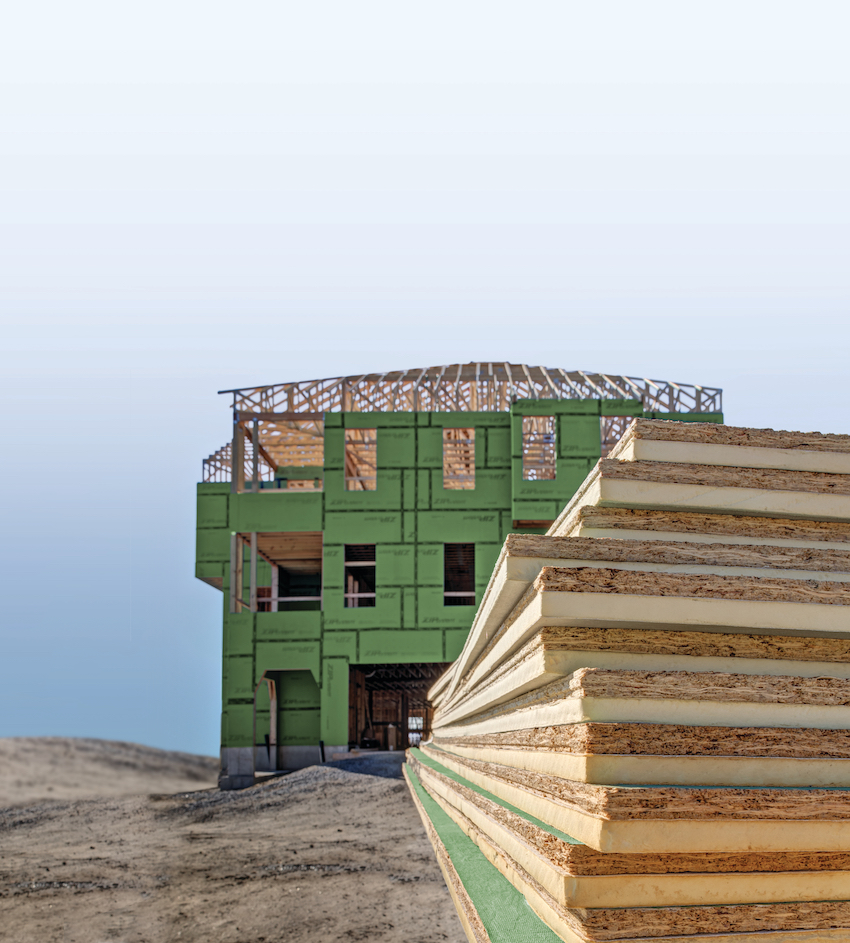
Photo Courtesy of Huber Engineered Woods LLC
The energy performance of exterior walls is enhanced by including exterior continuous insulation. With new integrated sheathing, this layer is built in to the back of the nailable sheathing that goes directly against the framing.

|
ZIP System® building enclosure products, are next-generation solutions for high performance building envelopes. Innovated to meet today’s design and construction challenges, ZIP System sheathing and sealing products help protect time lines and mitigate risk of water penetration, air leakage and installation error by reducing installation steps. Learn more about the integrated layers of protection provided by the insulated ZIP System R-sheathing panel, now available in R-3, R-6, R-9 and R-12 values, at InsulateYourBuild.com |

ZIP System® building enclosures offer structural and sealing products for a quick rough dry-in. A revolutionary alternative to traditional sheathing and building wrap, ZIP System™ sheathing and tape create a streamlined roof and wall sheathing system with integrated weather and rigid air barriers. The simplified approach to structural roofs and walls helps building teams save time by eliminating installation steps and achieving a quick rough dry-in to accelerate interior work. Backed by a 180-Day Exposure Guarantee and 30-Year Limited Warranty, ZIP System building enclosures not only help keep jobs on track but also provide reliable exterior water management during and after construction. Learn more at ZIPRevolution.com
Originally published in SDM
Originally published in October 2019
LEARNING OBJECTIVES
- Explain the concept of thermal bridging and how it impacts building energy usage.
- Define the commercial and residential wood-framed wall insulation requirements found in the 2015 International Energy Conservation Code (IECC).
- Discuss how condensation forms in wall cavities, and investigate strategies to mitigate risk of damage to construction, while promoting healthful indoor environments.
- Compare green or sustainable building characteristics of various continuous insulation alternatives, as part of the exterior wall assembly.