This CE Center article is no longer eligible for receiving credits.
When it comes to designing new buildings and major retrofits, architects are increasingly expected to create structures that are aesthetically pleasing and functional, as well as energy efficient and environmentally sustainable. The green building market has been growing steadily over the past decade, and it is estimated to now exceed 50 percent of total construction in the nonresidential market. Between this trend, and changes to energy codes and their associated requirements, architects must reach increased performance targets. Practitioners need to be able to adapt to these changes and think differently about building design. While the building performance goals have changed, many architects are still using a traditional design process. As a result, they are finding the task of meeting requirements focused on building performance related to resource use, occupant experience, and environmental impact to be challenging.

Image courtesy of Sefaira
Some of the more common problems with applying a traditional design process to achieve rigorous performance targets stem from the fragmented nature of the building industry. Indeed, the disjointed nature of today’s project-delivery methods works against achieving high-performance design. Complex projects often have so many stakeholders with different responsibilities that information is not shared early enough for informed decision making. The traditional design process puts most performance criteria, including energy efficiency, thermal comfort, and daylighting, into the hands of engineers and specialists, who are often not involved until after the architect has already established the fundamentals of the design. At this point, it may be too late to change suboptimal design decisions.

© Inscape Publico
Expectations for higher-performing buildings have prompted many architects to search for an improved and smarter way to meet design and energy-efficiency goals in projects.
The rapid and fluid nature of modern design requires instant feedback and collaboration between architects, specialists, and engineers; however, neither architects nor engineers have historically had access to software tools that analyze designs quickly enough to keep pace with their ever-changing design needs. Traditional tools typically support only later-stage work: providing very precise, very detailed data based upon a fully fleshed-out and highly detailed design.
New buildings are complex systems, and designers often find that meeting growing performance expectations can be challenging, especially if they rely on a traditional linear and sequential design process. In essence, building design—especially for high-performance buildings—requires a new approach. Achieving performance demands an iterative and analytical approach now known as performance-based design.
What is Performance-Based Design?
Performance-based design (PBD) is a goal-oriented design approach that specifically addresses performance-related criteria, such as energy use, operating cost, occupant comfort, daylighting, and HVAC size and cost, among others. At the heart of PBD is the intent to create an open and collaborative building process that includes architects, specialists, and engineers from the very beginning of a project.
Unlike the traditional design process, PBD requires architects and designers to set project performance goals early in the design phase so that they can understand and influence the elements that are impacting the design’s performance. Once goals are set, analysis is used from the very start of the design process to assess the impact that various design decisions will have on performance goals.
It is important to note that PBD is an approach to building design that uses iterative analysis to inform decisions, supporting optimum occupant experience, lowered resource use, and minimal negative environmental impact. PBD is an approach that works to meaningfully inform building design in a way that can impact everything from energy consumption and operating costs to occupant comfort and environmental impact, and it is used from schematics and conceptual design through to the construction phase. This holistic approach is what PBD is all about, and it can empower the architect in ways that were previously not possible.
PBD can help architects understand:
- Opportunities to impact performance
- Building/project constraints
- How their design compares to other buildings, to an ASHRAE 90.1 baseline, or to 2030 Challenge goals
When using PBD in their practices, architects obtain continuous feedback throughout the design process. This iterative, analytical approach is beneficial to designers and projects because this feedback helps them better understand the spaces they are designing, see how design options will impact these spaces, and make more informed decisions about their design. As a result, architects can address performance issues as part of their creative process, all while improving building design and performance.
When it comes to designing new buildings and major retrofits, architects are increasingly expected to create structures that are aesthetically pleasing and functional, as well as energy efficient and environmentally sustainable. The green building market has been growing steadily over the past decade, and it is estimated to now exceed 50 percent of total construction in the nonresidential market. Between this trend, and changes to energy codes and their associated requirements, architects must reach increased performance targets. Practitioners need to be able to adapt to these changes and think differently about building design. While the building performance goals have changed, many architects are still using a traditional design process. As a result, they are finding the task of meeting requirements focused on building performance related to resource use, occupant experience, and environmental impact to be challenging.
Image courtesy of Sefaira
Some of the more common problems with applying a traditional design process to achieve rigorous performance targets stem from the fragmented nature of the building industry. Indeed, the disjointed nature of today’s project-delivery methods works against achieving high-performance design. Complex projects often have so many stakeholders with different responsibilities that information is not shared early enough for informed decision making. The traditional design process puts most performance criteria, including energy efficiency, thermal comfort, and daylighting, into the hands of engineers and specialists, who are often not involved until after the architect has already established the fundamentals of the design. At this point, it may be too late to change suboptimal design decisions.
© Inscape Publico
Expectations for higher-performing buildings have prompted many architects to search for an improved and smarter way to meet design and energy-efficiency goals in projects.
The rapid and fluid nature of modern design requires instant feedback and collaboration between architects, specialists, and engineers; however, neither architects nor engineers have historically had access to software tools that analyze designs quickly enough to keep pace with their ever-changing design needs. Traditional tools typically support only later-stage work: providing very precise, very detailed data based upon a fully fleshed-out and highly detailed design.
New buildings are complex systems, and designers often find that meeting growing performance expectations can be challenging, especially if they rely on a traditional linear and sequential design process. In essence, building design—especially for high-performance buildings—requires a new approach. Achieving performance demands an iterative and analytical approach now known as performance-based design.
What is Performance-Based Design?
Performance-based design (PBD) is a goal-oriented design approach that specifically addresses performance-related criteria, such as energy use, operating cost, occupant comfort, daylighting, and HVAC size and cost, among others. At the heart of PBD is the intent to create an open and collaborative building process that includes architects, specialists, and engineers from the very beginning of a project.
Unlike the traditional design process, PBD requires architects and designers to set project performance goals early in the design phase so that they can understand and influence the elements that are impacting the design’s performance. Once goals are set, analysis is used from the very start of the design process to assess the impact that various design decisions will have on performance goals.
It is important to note that PBD is an approach to building design that uses iterative analysis to inform decisions, supporting optimum occupant experience, lowered resource use, and minimal negative environmental impact. PBD is an approach that works to meaningfully inform building design in a way that can impact everything from energy consumption and operating costs to occupant comfort and environmental impact, and it is used from schematics and conceptual design through to the construction phase. This holistic approach is what PBD is all about, and it can empower the architect in ways that were previously not possible.
PBD can help architects understand:
- Opportunities to impact performance
- Building/project constraints
- How their design compares to other buildings, to an ASHRAE 90.1 baseline, or to 2030 Challenge goals
When using PBD in their practices, architects obtain continuous feedback throughout the design process. This iterative, analytical approach is beneficial to designers and projects because this feedback helps them better understand the spaces they are designing, see how design options will impact these spaces, and make more informed decisions about their design. As a result, architects can address performance issues as part of their creative process, all while improving building design and performance.
Understanding the Importance of Performance-Based Design
The energy performance of a building is impacted significantly by internal systems, like HVAC systems and lighting systems, and by the building envelope. While the environmental and financial benefits of a PBD approach are discussed later in the course, it is important to understand how and why design decisions can impact certain systems. When it comes to designing high-performance buildings, energy use is one of the most important considerations, and the decisions surrounding it can impact occupant comfort as well as operational costs. For example, when a PBD approach is used for a project, architects and designers can quickly and iteratively explore the energy and comfort impacts of different glazing and shading strategies for a building’s windows, and this can directly impact HVAC and electrical system needs. By comparing the tradeoffs between desired daylighting levels, energy use, and comfort needs, architects can make sure they include properly sized mechanical systems, appropriate window materials and glazing, and alternative electrical systems if needed. For example, the capital cost of installing photovoltaic cells may be offset by the lifetime operating costs of electricity. PBD can help designers understand this tradeoff at the start of the project.
Because of the complexity of modern design, the various aspects of building performance, comfort, health, and safety are interrelated and can’t be considered in isolation.
Windows are a prime example of this. Adjusting the size, glazing, and thermal performance of the window affects more than just the quantity of light entering the building. Window performance has a cascading impact on the comfort of the occupants and the overall energy use of the building. Window performance determines how much solar gain gets into the space, which affects the cooling load. Windows also impact heat loss by conduction through the glass, which affects the heating load. In turn, expected heating and cooling loads should determine the size and type of the HVAC system, which then impacts capital costs and operational energy costs. The traditional design approach often has HVAC and envelope decisions, like windows, made independently rather than considering their impacts together. With a PBD approach, if an architect reduces glazing area or adds shading to a project, the PBD tool would incorporate this potential reduction in cooling load and, in response, reduce the size of the system or suggest a different system type altogether.
To better understand the impact of PBD, let’s examine some of the potential benefits to this new design philosophy when attempting to create more sustainable, comfortable, and safe buildings.
Construction Resource and Energy Use
Green building has become mainstream, to such an extent that every phase of construction—from resource extraction, processing, and transportation to physically constructing the building—must now be taken into account when evaluating a project’s sustainability. And the ability to understand and evaluate all of these interrelated inputs early in the design phase—by using a PBD process—can help optimize the performance of the design.
Post-Construction Energy Costs
Post-construction energy costs are just as important, if not more so, than the energy costs incurred during construction. The operational costs associated with machinery and HVAC equipment, electrical systems, as well as ongoing maintenance costs all contribute to the lifetime cost of the building.
Projects that use a PBD approach in their design process can better estimate the ongoing energy needs of the building before it is even created. Operational costs are a direct result of design decisions and will impact the energy use and maintenance costs of the building over the course of its entire functional lifetime. The PBD approach helps designers minimize these costs by setting performance goals and metrics, and determining the best way to meet those goals through the decisions they make early in design.
Proper Sizing of HVAC Equipment
Architects and builders need to understand how to size their HVAC systems to match the actual needs of a project in order to maximize the project’s efficiency, and they need to make sure that the system is properly installed in order to maintain energy efficiency, particularly in a high-performance building.
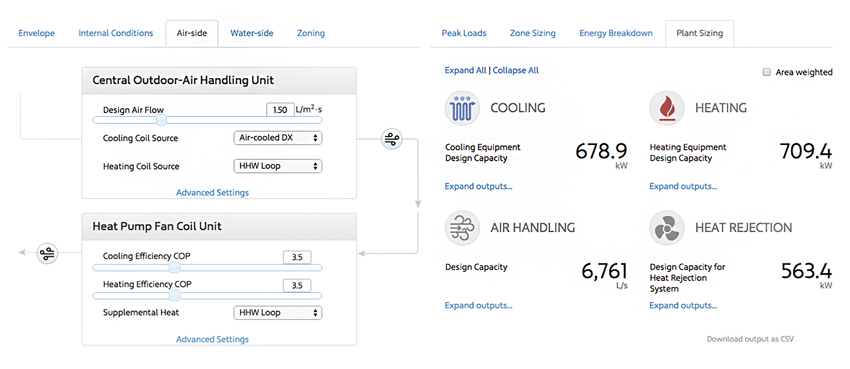
Image courtesy of Sefaira
Properly sizing the HVAC system is critical not only for both occupant comfort and energy costs, but also for capital costs.
When it comes to HVAC systems, more often than not, architects rely on engineers to properly size equipment. Engineers, wanting to avoid costly mistakes, build redundancy into their systems, which often means “bigger is better.” But with high-performance, energy-efficient buildings, “bigger” may simply mean more costly and energy intensive, and may result in over-heated and over-cooled buildings, which ultimately negatively affect occupant comfort. A system that is much too small for the space will fail to meet occupants’ comfort needs. However, a slightly undersized HVAC system—roughly 10 percent or less—has been found to operate more efficiently than a perfectly sized system. Moreover, a system that has been designed for continuous operation can provide more uniform heating and cooling, as well as help maintain proper air humidity levels.
A properly sized HVAC system paired with a carefully designed and operated building can reduce the capital costs of a project when compared to an oversized system, and can improve occupant comfort, all while reducing utility costs and improving overall operating efficiency. The PBD process considers heating and cooling loads early enough that they can still be meaningfully changed by adjusting the design, whereas the traditional design process takes heating and cooling loads as a given, then designs an often oversized HVAC system to meet those needs. The PBD approach allows for a much more comprehensive evaluation that includes all the known parameters before committing to an HVAC system for the project.
Daylighting
As noted earlier, daylighting (i.e., using natural light to illuminate a building’s interior) is one of the more important elements to consider when designing for occupant comfort. The challenge, however, is that too much natural light can be too bright for occupants, and it can increase cooling loads and energy use. A beautiful view that brings in sunlight for a good part of the day may be great for the occupant experience, but not if it means that the space is too bright or too warm, especially in already warm environments. Moreover, the stress that too much daylight can have on the HVAC system (i.e., cooling) can affect both the capital and operational costs of the building, as the system may need to be replaced sooner and may be required to run more often.
As a way of avoiding some of these problems, a building designed with the PBD approach can introduce, analyze, and ultimately balance the many interrelated factors that can affect daylighting performance. From the very start of the project, architects and designers can consider window glazing ratios, glazing locations, and glazing materials, as well as how different shading strategies may impact building design, occupant comfort, energy use, and HVAC size.
Implementing a PBD approach on a project can help architects and designers better understand the impact of daylight and direct sunlight. They can thus improve their designs and find the balance between aesthetics, occupant comfort, and overall performance. Some of the common design questions that architects can deal with more effectively using a PBD process include: detailed shading design, passive solar design, exterior solar access, sunlight prevention to light-sensitive spaces, and how to meet certification requirements.
Implementing Performance-Based Design
Once an organization or project team has decided to incorporate a PBD approach, initiating the process can be relatively simple, but it requires a thoughtful review of the current methods and design tools used. The critical milestones in the PBD process includes: setting relevant performance goals for a project, performing an analysis of those goals, and evaluating the results. At each of these milestones, it is important the design team be able to easily communicate with all the key players in the process and then “course correct” as needed to achieve project goals.
Setting Goals
Let’s look at the first step: setting measurable project goals. Goals are critical to the process because they do three key things. First, they let the team link client values to measurable performance metrics. If a client is interested in achieving net-zero energy in a project, for example, an obvious and measurable goal would be optimizing energy use and energy generation such that the net energy use of the building is zero. Second, setting goals focuses the team on asking relevant questions for the project. Again, this links to the goals and to the client requests, and the questions help narrow the focus to a measurable metric. For example, a client may wish to emphasize annual energy efficiency in the building design, but is unable to pinpoint what specific level of energy performance he or she is seeking. With precise, measurable goals, the team can work through iterative analysis to achieve the desired level. Finally, setting project goals is useful for clear communication both within the design team and with the client. When the team sets up a clear structure for its goal setting and has a clear plan for iterative analysis, it can present its findings and progress very clearly to the client over the course of the project.
As an example, consider a common goal in modern design—the request for “good daylighting.” The design team might translate this into a daylight autonomy target based on best practices or specific guidelines, such as LEED daylight credits. Clearly established project goals set the design limitations and needs for the entire project. This “eye on the prize” approach helps focus the entire design and construction team on achieving measurable performance criteria and requires that every part of the building process be aligned with these criteria.
Analysis
Once these goals are set, a PBD approach implements a phase of iterative analysis. This phase links directly to the project goals, and can help the team identify its design direction. The iterations may include performance comparisons across a variety of alternative options or optimized performance for a single design, and they can be done very early in the design process. After the initial performance goals are set, the design team should plan to:
- Ask specific questions about the design.
- Undertake a lot of small analyses.
- Focus on the deliverable and the output.
By asking questions about the design—both internally and with the client—the design team can better narrow down its own analyses and perhaps think differently about ways to approach design problems in the project.
Traditional design is a more isolated and independent approach that separates architects from engineers and specialists until specific questions need to be addressed. PBD, on the other hand, requires ongoing collaboration, where each design decision is evaluated for its impact on the overall goals of the project. Fortunately, new tools have been developed to enable PBD and the collaboration it requires.
The Power of Advanced Software
Analysis of the building as a whole can be done almost instantaneously and in an open and collaborative context thanks to new software applications.
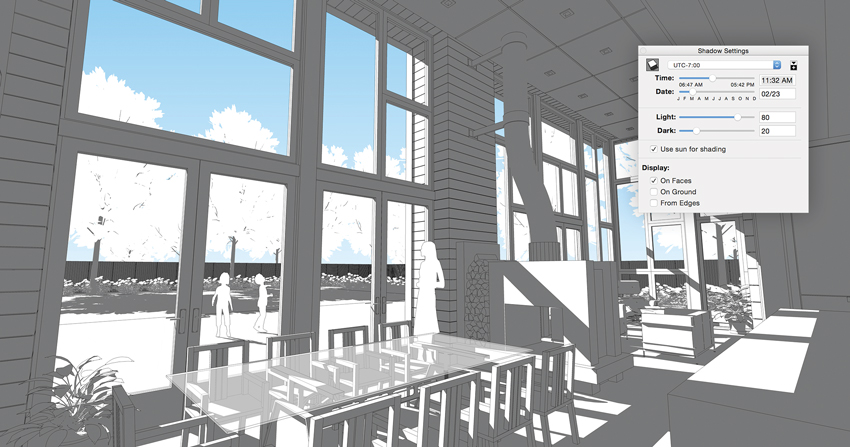
These 3-D drawing tools enable the three-dimensional modeling of every design element of a project, from the building space to the interior design. The iterative element of the tools means that designers can quickly explore the implications of their design choices. Moreover, these tools can easily turn designs into 2-D construction documents. Advanced 3-D modeling software is a critical, if not necessary, part of the modern PBD process.

Image courtesy of SketchUp
Modeling software that incorporates performance analysis supports architects' pursuit of high-performance design solutions.
Kerger Truesdell, product manager at Sefaira, a developer of cloud-based software for the design of sustainable and high-performance buildings, believes that leveraging modern technology with PBD helps architects define, quantify, and optimize the energy, water, carbon, and financial benefits of relevant design strategies. This combination of PBD with intuitive software tools helps architects become more competitive.
“High-performance buildings are becoming increasingly common, with demand coming from both owners and tenants. Performance includes not just lower energy use and good daylighting, but also lower operating costs,” says Truesdell. “Architects that can consistently deliver these design outcomes in their projects are winning more work and developing a positive reputation as leaders in the market.”
One of the key benefits to using a advanced software to facilitate PBD is the ease and speed of obtaining performance feedback and analysis.
“Modern computer software can now directly import the architect’s model into the application platform, and then—by simply inputting the site location and HVAC system—the software can deliver information on sizing and peak loads within minutes,” notes Sterner. This near-instant feedback on performance expectations is a significant improvement over the traditional evaluation approach, which would require architects to wait for analysis results compiled by engineers.
In addition, performance-based design helps architects reduce rework later by addressing potential challenges early in the process. Also, for projects that have specific green building certification requirements, like meeting the 2030 Commitment or attaining LEED certification, architects can reduce the risk of missing those targets because they can align the project early on with those performance goals.
It is important that architects choose the right design tools to implement and achieve performance-based design goals. Software that integrates with other platforms and allows a whole-building approach tends to be the most versatile. Architects and designers benefit most from a nimble system that can track and maintain building performance goals throughout the project life cycle. The platform should also be able to provide comparative massing studies and to analyze potential design solutions as early in the project as possible.
A successful collaborative software application includes these key attributes:
- Flexible design parameters and easy data entry
- Iterative design
- Multiple stakeholder input
- Design tracking and reporting
- Intuitive use
Performance-based design software can benefit architects and their firms by helping them set clear performance goals, carefully iterate on and analyze their designs, and clearly report their design decisions both for their own records and for their clients. Software that easily facilitates this process can shift architects to a more accountable, data-driven practice.
Evaluation
The final phase of the PBD process is evaluating performance results. Once the design team has worked through several iterations of performance, it will be in a position to compare the performance results with the initial goals that it and the client set. These results will directly impact design, whether through the selection of envelope system materials, mechanical systems, glazing, shading, or any number of other design decisions. Collaboration and communication are key elements to the evaluation portion of the PBD process because every decision made early in the process can significantly impact the likelihood of reaching defined goals and meeting client expectations.

Image courtesy of SketchUp
Collaboration includes not only integrating communication between different stakeholders but also access to information across various devices and applications.
Collaboration within the design process is important no matter what the project, but it is critical for high-performance building design. Moreover, the PBD approach can help address some of the common challenges to a collaborative design process, such as identifying integrated design strategies, managing tradeoffs, and explaining design decisions to clients, as well as helping the firm know what worked well and why.
In addition to being able to collaborate with each other through the design process, the design team must also be able to clearly communicate with the client about the proposed designs. This is particularly important with the iterative analysis that is part of a performance-based design process, where key parameters may change with the various iterations. The design team needs to be able to track—and justify—these changes, but it also needs to be able to explain them to the client. By using a PBD process, the design team can focus on the deliverable and the output, and can provide the client with clear design comparisons that highlight the tradeoffs for different design decisions. This process can take place from as early on as site evaluation and should continue through the construction phase.
Using modern software to enhance and enable the PBD process during the evaluation phase can also help with setting and achieving realistic client expectations. For instance, early in the design phase, PBD software can evaluate a smaller, discrete portion of the project to demonstrate how changing a single factor might impact the overall design. This process is easier to grapple with than tackling a much larger, more complex study of the building.
For example, a team designing a K-12 school might ask, “What is the right glazing strategy for our classrooms that will provide great daylighting but not significantly increase energy costs?” Then, by using PBD design software, the design team can quickly and easily do a tradeoff analysis looking specifically at daylight and energy for a prototypical classroom of the expected size, with the aim of creating a list of the most viable options. By presenting this list and the potential impact of these options to the client, it can demonstrate how incremental choices can impact the overall energy use, maintenance costs, health, safety, and welfare of occupants after construction is finished. This type of instant and collaborative analysis helps the design team to stay focused on the initial performance goals, and can better communicate to the client how and why the design team took the design direction that it did.
Benefits of PBD
There are many benefits associated with the PBD process that can create a positive ripple effect, which extends from the design team to the client to the occupant and the world at large. PBD can be applied to specific projects or as an overall design approach that could help define a firm’s capabilities. Increasingly, clients are requesting design that can address the more demanding energy requirements, and architects and firms need to be able to meet those needs. For the architecture firm, there are benefits from consistently delivering high-performance designs in the form of a positively differentiated profile and stronger competitive position.
Let’s take a look at how PBD can also benefit other stakeholders in the design process.
Occupant Experience and PBD Projects
A performance-based design approach to a project helps architects and builders deliver the best occupant experience they can, all while keeping capital and operational costs under control. The balance between occupant experience and cost comes down to architects being able to analyze performance quickly and accurately, and to do so in the very early phases of the design before committing to major design decisions.
Occupants of office buildings, schools, and hospitals can all benefit from quality daylight, well-thought-out views, and stable thermal comfort. These factors are all linked with optimal employee productivity—up to 18 percent higher—and with improved learning in schools. Data also shows that patients in hospitals have improved recovery rates because of the carefully designed daylight and thermal comfort elements. These results are possible through traditional design, but a PBD process ensures that these outcomes are delivered reliably, at lower cost, and that they are truly integrated into the overall design and aesthetic.
Beyond occupants, building owners and managers also benefit from high-performance buildings in several ways, depending on the building type. Multi-unit residential buildings, such as large condominium and rental apartments, tend to benefit from a higher asset value when the building is designed with high-performance standards as a goal. Price premiums can be up to 30 percent more than buildings designed with approaches that don’t consider performance early in the design process. Occupied rental unit rates can be up to 17 percent higher and occupancy rates up to 23 percent compared to conventional buildings. These numbers stem from occupant experience with daylighting, views, and thermal comfort paired with lower operating costs and lower replacement costs of the properly sized (usually smaller) HVAC systems.
Comfort
Occupant comfort is key in building design, regardless of the use, and should be set as one of the core goals for a project. With a PBD project, occupant comfort can be addressed through defined metrics for daylighting, glazing, shading, air quality, and thermal comfort, among other parameters. By including and analyzing these factors in the preliminary design process, architects can reduce unexpected occupant comfort problems once the building is completed.
Health, Safety, and Welfare
As with occupant comfort, health, safety, and welfare are all critical goals that need to be addressed at the very start of the design process. A PBD approach makes addressing these elements straightforward. The iterative process, especially when combined with an appropriately linked 3-D drawing and modeling system, can produce informed design choices that meet all code requirements for the health, safety, and welfare of the specific building type.
Environmental Benefits of PBD Projects
Commercial and residential buildings consume almost 40 percent of the primary energy and about 70 percent of the electricity in the United States. New buildings are built more quickly than old buildings are retired, so building energy use continues to increase. Electricity consumption in the commercial building sector doubled between 1980 and 2000, and is expected to increase another 50 percent by 2025.1
The environmental benefits of PBD projects appear in just about every phase, from design to construction, and through the building’s long-term operating and maintenance phases. Because architects and designers can make more accurate projections in each phase, they can make better decisions about which materials to use, how best to have the materials delivered, and how the building can be designed to be as environmentally friendly as possible.
Another important aspect of the PBD approach is that the process helps designers avoid having to rework parts of the design. By locking in a well-informed design early in the process, designers can better meet performance standards and the ever-changing energy codes, such as IECC and ASHRAE Standard 90.1. A clear design pathway helps architects avoid late-stage rework, which, in addition to being costly, can add to the environmental cost of the project.
Whole building energy use and carbon emissions can both be reduced through energy-efficient building envelopes and properly designed HVAC systems.
Carbon Reduction
The building sector is the top contributor of greenhouse gas emissions in the world. One of the best ways to change this ranking is to shift toward energy-efficient buildings and overall greener construction practices both during construction and after occupancy. A performance-based design approach can make carbon reduction a design priority and can drive the design in ways that have not previously been done. Whether this comes through setting performance goals of having net-zero carbon emissions or by designing the building envelope for energy efficiency, PBD can help architects understand the tradeoffs that emerge through the design process.
Green Building Certifications
High-performance buildings designed with the PBD approach are rapidly being seen as competing with the cost of traditionally designed projects, and they excel in meeting green building goals as well. Whether a project includes a new build or a significant retrofit, performance-based design can help make achieving green goals and certifications part of the design process and relatively easy to do.
Green building goals and certifications can be achieved through three main strategies, namely:
- Using the whole building energy analysis as a design tool to identify and assess ways to save money and improve performance
- Conducting a critical analysis of material selection to improve durability, sustainability, and overall health, safety and welfare of occupants
- Using efficient, passive design to reduce the cost and energy use of mechanical systems
When used together as part of a building design strategy, each of the above elements can help meet green building goals and certifications, such as LEED.
Conclusion
Performance-based design represents what may soon be seen as an important shift in how architects, designers, and their firms conduct their design process. High-performance buildings that meet increasingly stringent energy requirements will increasingly become standard, and a PBD approach and related software can help designers navigate these changes in the building industry.
End Notes
1Conti, John J., Paul D. Holtberg, Joseph A. Beamon, James M. Kendell, and Andy S. Kydes. "Annual Energy Outlook 2005 (AEO2005)." February 2005. Energy Information Administration (EIA). Web. 27 Oct. 2016. http://www.eia.gov/forecasts/archive/aeo05/pdf/0383(2005).pdf.
References

|
Sefaira is a leader in software for real-time Performance-Based Design. Sefaira allows design professionals to understand the daylighting, comfort, and energy performance of their designs directly in their SketchUp and Revit design environment so that they can create better and higher-performing buildings with lower capital and operating costs. sefaira.com
|

|
SketchUp is the most intuitive way to design, document, and communicate your ideas in 3D. sketchup.com
|