This CE Center article is no longer eligible for receiving credits.
Development brings changes to the hydrologic cycle. With development comes paved surfaces, which may well be the most ubiquitous structures ever built. In the United States alone, paved surfaces cover more than 43,000 square miles—anarea nearly the size of Ohio—according to research published in the June 2004 issue of Eos, the newsletter of the American Geophysical Union.
But not all pavement is created equal. Impervious pavements can be concrete or asphalt, roofs or parking lots, but they all have at least one thing in common—water runs off of them, not through them. They collect and accumulate pollutants which run directly into water bodies. Because impervious surfaces promote less infiltration, peak flows of stormwater runoff are larger and arrive earlier, increasing the magnitude of urban floods.
By contrast, pervious pavement is designed to allow percolation or infiltration of stormwater through the surface into the soil below where the water is naturally filtered and pollutants are removed. Segmental pavements have been used since the Romans built the Appian Way over 2,000 years ago. In recent years, flexible segmental paver systems, notably permeable interlocking concrete pavements (PICPs), have provided environmentally sound engineered solutions for municipal, commercial, and industrial applications.
This article will explore the impacts of development on the hydrologic cycle, explaining low-impact development as a way to mitigate negative effects, and assessing the importance of permeable pavement systems in achieving sustainable stormwater control. Also discussed will be the LEED categories to which permeable pavement contributes, and examples of how PICP systems function in real-world applications.
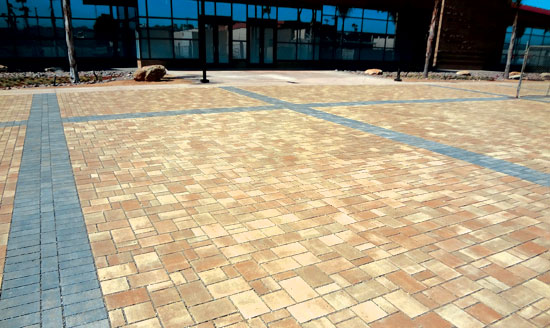 |
Permeable pavement such as this system at Camp Pendleton in California contributes to green building goals.
Photo courtesy of Oldcastle Building Products |
The Hydrologic Cycle Explained
To understand the contribution of permeable segmental pavements to sustainable sites, it is important to understand the dynamics of the hydrologic cycle.
The natural hydrologic cycle involves recycling of water, the continuous circulation of water between the oceans, atmosphere, and land. Precipitation events produce stormwater, which can take a number of paths. It can become part of the groundwater, which feeds streams, wetlands, and underground aquifers and supplies much of our drinking water. It can form lakes or enter topsoil and evaporate, or it can be absorbed by plants and eventually evaporate from plant tissues. This cycle is contained to a degree within a watershed, which is naturally bounded by hills or ridges.
Managing stormwater runoff is critical and it constitutes a major part of site design. Nature has always provided a solution to manage stormwater runoff, naturally. Man, on the other hand, does not always get it right. As it was put in Understanding Stormwater Management: An Introduction to Stormwater Management Planning and Design, Ontario Ministry of the Environment, ©Queen's Printer for Ontario, 2003, “Humans interact with the hydrologic cycle by extracting water for agricultural, domestic, and industrial uses, and returning it as wastewater which may degrade water quality. Urban development also interferes with the natural transfers of water between storage compartments of the hydrologic cycle. There is decreased infiltration (seepage into the soil) of precipitation and snowmelt which leads to increased stormwater runoff.”
When land is developed and covered with impervious surfaces like roads, buildings, and parking lots, the rain no longer infiltrates, or nourishes plant growth. In a post-development scenario, infiltration and evapotranspiration, both drop dramatically and runoff increases by 45 percent. Additionally, the runoff is often picking up pollutants which might include motor oils, gasoline, fertilizers, and pesticides. This type of pollution is called non-point pollution, and according to the U.S. Environmental Protection Agency (EPA), it is the leading remaining cause of water quality problems.
The initial flow of stormwater that runs off a surface or catchment area typically contains a much higher pollutant load than the stormwater that follows. This first flow is called the “first flush.” The ability to catch and treat this first flush before releasing it into a stormwater system controls most of the pollution. Cities are particularly concerned with the quantity of urban stormwater discharge and its impact on streams and rivers. Not only does this large volume of water erode stream banks and streambeds, change the shape and dimension of river channels, and alter aquatic habitat and channel stability, in extreme cases it leads to floods and will affect the built environment through washed out roads and bridges.
Stormwater runoff also carries dust, dirt, and debris that can also degrade aquatic habitats. In some climates, collecting stormwater via impervious surfaces will raise the temperature of the water, which when released to streams and rivers, can harm aquatic species.
The Total Suspended Solids (TSS) measurement calculates the amount of dirt and some pollutants in runoff for a value used by regulating bodies to ensure the cleanliness of stormwater discharge. This is expressed as a percentage of removal where test results of surface removal of TSS were impacted by various sizes of chips in the voids, per a Florida Gulf Coast University study. According to the EPA, a Total Maximum Daily Load, or TMDL, is “a calculation of the maximum amount of a pollutant that a water body can receive and still safely meet water quality standards. The most common pollutants coming from stormwater sources include sediment, pathogens, nutrients, and metals.” TMDL levels are set by regulating bodies.
Stormwater Management
Managing stormwater supports sustainability goals, and municipalities and developers have created strategies to prevent stormwater pollution and designed systems that treat stormwater and route it safely back into the natural environment. Traditional stormwater management techniques have taken a collect, convey, and centralize approach that views water as a waste product. The methodology focuses on collecting stormwater in pipes and transporting it off site as quickly as possible, either directly to a stream or river, to a large stormwater management facility, or combined sewer system linked to a wastewater treatment plant.
Common components of this method are impervious surfaces and retention ponds, both of which have their drawbacks. Traditional retention ponds use valuable surface area and have proven to be expensive to maintain, usually requiring draining and dredging. Impervious pavements have a high cost of maintenance, they transfer pollutants and sediment to sewers and waterways, and increase winter maintenance expenses, providing a poor life-cycle cost.
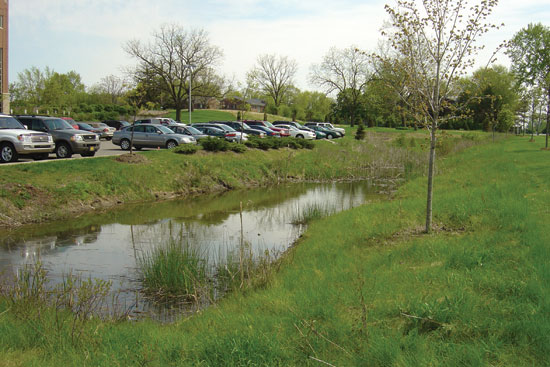 |
Retention ponds use valuable surface area.
Photo courtesy of Oldcastle Building Products |
Ecological Strategies
A more modern and sustainable view of stormwater management maintains the natural hydrologic cycle, prevents increased risk of flooding and stream erosion, protects water quality and the health of water bodies, and provides human uses of water. Low-impact development (LID) promotes these methods. Working to minimize impacts of development on the hydrological cycle of a watershed, LID addresses stormwater concerns through a variety of techniques, including strategic site design, measures to control the sources of runoff, thoughtful landscape planning, preserving and recreating natural landscape, and minimizing imperviousness to create practical, appealing site drainage systems that treat stormwater as a resource rather than a waste product. Examples of these techniques include bioretention facilities, rain gardens, vegetated rooftops, rain barrels, and permeable pavements.
By implementing LID principles and practices, stormwater can be managed to reduce the impact of built areas and promote the natural movement of water within an ecosystem or watershed. Applied on a broad scale, LID can maintain or restore a watershed's hydrologic and ecological functions. (For more information on LID see: www.lowimpactdevelopment.org/index.html.)
Best Management Practices
Best Management Practices (BMP) have been developed in order to help municipalities and other entities effectively control stormwater runoff. Comprising stormwater management and conservation practices proven to effectively control the movement of pollutants and prevent degradation of soil and water resources, BMPs can be divided into two categories: structural and nonstructural. Performance-based BMP tools allow for monitoring and adjustment to achieve wastewater volume and quality goals that will:
• Work within the landscape
• Focus on prevention
• Micromanage stormwater
• Keep it simple
• Allow for multifunctional landscape designs
• Capture and treat stormwater runoff at its source
• Maintain and sustain LID tools such as permeable pavement systems
In short, LID involves the three D's of stormwater control: disconnect, distribute, decentralize, that is, disconnect storm sewers, distribute the stormwater on-site, and decentralize this runoff by promoting groundwater recharge where possible. Central to this system is permeable interlocking concrete pavement (PICP), which is able to capture rainwater for full exfiltration into the soils below or for capture and reuse locally.
PICPs—An Ecological Approach
Defined as a system of concrete pavers with joints that allow for infiltration of water through the pavement, PICPs are an engineered ecological system that captures, treats, and stores stormwater. The pavement uses an open-graded base and sub-base for water infiltration and/or storage. These systems can be designed for full exfiltration of the captured water or complete storage. They can stand alone or be used in conjunction with swales, ponds, or storage tanks.
PICP systems can be designed for 100-year hydrological events, with treatment zones that can also be included to encourage the use of naturally occurring enzymes to establish a bacteria colony that will break down the first flush pollutants within the system. In contrast to impervious systems, PICPs have demonstrated ability to provide competitive capitalization costs, reduce winter maintenance costs, and improve long-term savings by providing a 50-year pavement design.
 |
PICP is a system of concrete pavers with joints that allow for infiltration of water.
Image courtesy of Oldcastle Building Products |
Used in conjunction with bioremediation, PICP is a BMP treatment train used effectively in the U.S. for the past 10 years and in Europe for the past 20 years to mitigate peak flows and improve water quality. A method of removing pollutants using microorganisms in soil, bioremediation can occur naturally or it can be spurred on via biostimulation, which is the addition of fertilizers to increase the bioavailability within the medium. Recently, the addition of microbe strains matched to the medium have successfully enhanced the resident microbe population's ability to break down contaminants. Bio-swales have proven effective in this regard as well.
Designing a PICP System
PICP systems are very site-specific, engineered systems, as are all site solutions involving water, soils, and loading conditions. However, generalizations can be made for purposes of discussion. It is important to note that every PICP system requires a set of site parameters and must be designed and reviewed by a design professional—civil engineer, geotechnical engineer, or other qualified land planner/designer. PICP systems are most effective if treated as a first design strategy by engineers or other qualified professionals.
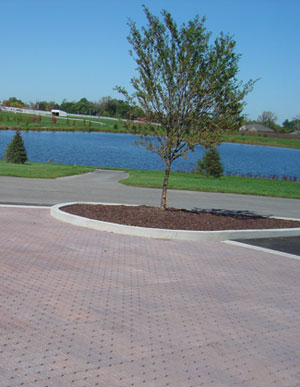 |
PICP systems are most effective if treated as a first design strategy.
Photo courtesy of Oldcastle Building Products |
Soil Considerations
The first step in designing a PICP system is a hydrologic analysis of in-situ soils or the sub-grade, with an additional structural analysis required for vehicular applications. Sub-grades should be at 92 percent density. For full exfiltration, the sub-grade should not be compacted during installation. If soils do not demonstrate a percolation rate greater than ½ inch per hour, a partial or no exfiltration strategy should be considered. This would require compaction of sub-grade to 95 percent as well as use of an underdrain engineered to clear water from the loaded areas of the sub-grade within 24 (36) to 36 (72) hours. Clay soils lose strength when saturated; soil strengths are measured at a 96-hour saturated condition and will not perform as designed if saturated for a longer period.
Also, municipal peak discharge rates are set at 24 hours, and mitigating peak flows will be met by a permeable pavement system without compromising soil strength within this timeframe. If a longer time of concentration is required, the water should be moved to a non-vehicular loaded area or a structural tank, or a deeper aggregate cross-section should be considered to reduce excessive loading on the soils.
Aggregate System
PICP systems have three layers of aggregates, increasingly larger stones for the subbase, base, and bedding layers. The aggregates play an important part in filtering pollutants.
Most pollutants should be filtered out of the stormwater before it is discharged into the ground. In areas of higher pollutant levels or with high water tables, capture and treatment of the water are necessary. Depending on the pollutant level, a liner and biofiltration system may be used for a no-exfiltration system. A minimum of 12 inches of soil under the sub-base is necessary and will encourage removal of chlorides and some heavy metals with a full ex-filtration system.
Pollutants can be removed by the setting bed and void fill materials, or via the filtration action of the water passing by the aggregates laden with enzymes that will create a bacteria colony.
 |
|
Image courtesy of Oldcastle Building Products |
Void areas of the base and sub-base aggregate material play a key role in the system's reservoir capacity. Stormwater runoff is calculated for a site prior to development and expressed in a volume, e.g. cu-ft or ac-ft. When the site is developed, another hydrological analysis determines the increase in volume of runoff, the difference being the volume required for a detention or retention pond based on local regulations for a 2-year or 25-year or 100-year storm. The base and sub-base depth is designed to hold this increase in volume of water within the voids of the aggregates.
The void area or porosity of the sub-base aggregate will vary based on quarries and material runs and should be known prior to design. Typically, ASTM #2 develops voids at 41 to 45 percent, with a conservative value of 40 percent recommended to determine the appropriate detention/retention volume. The base material, #57, usually is credited at 32 to 35 percent void value. These values are also used to determine the depth of the aggregate sub-base based on area covered.
PICP System Design
ASTM #2 aggregate is used to build the sub-base. This will bridge clay soils without the use of a geotextile and provide a detention area of 40 percent suitable for detention/retention requirements. The base layer will act as a choking layer using ASTM #57 washed fractured stones that do not exceed a 4-inch depth. The setting bed layer will be washed and screeded to a level condition to receive the permeable pavers. Concrete permeable pavers that have been designed with ¼-inch minimum joints (and may or may not have non-structural openings larger than the joints called voids) when filled with ASTM #8, or #89 or #9 washed aggregates, will provide load transfer and infiltration and act as a filter. A concrete curb or edge restraint is required, and a bio-swale may be used as well to better enhance water quality. This system will provide a 20-year hydrological design value of 10 to 15 inches per hour.
Specifications and other guidelines may be reviewed at www.icpi.org; a design manual for PICP by ICPI is available as well as other design software for permeable pavement design.
Benefits of PICP
While the capture of stormwater at pre-development levels is a key benefit of PICP systems, they also offer a number of other advantages.
• Filtering Pollution. The absorption of the first flush of stormwater reduces the temperature of the rainwater, and the layers of aggregate act as natural filters. Also, naturally occurring bacteria in the aggregate layers and soil are able to break down some of the stormwater pollutants. Finally, underground storage negates need for retention/detention ponds.
• High Suspended Solid Removal Rate. PICP systems can provide a TSS (Total Suspended Solids) removal rate of 80 to 90 percent. Studies have shown TMDL (Total Maximum Daily Loads) may be met with PICP as well. The use of open-graded aggregates will promote infiltration rates that will exceed 150 inches an hour at initial construction. This aspect of PICP systems allows them to easily capture and treat first flush pollutants.
• System Durability. The PICP system can be designed and engineered for a 50-year pavement design. Municipalities would be well served to review plans for new streets, as well as existing streets that need replacement, and compare capitalization budgets and maintenance/replacement costs of conventional pavement and stormwater construction with PICP systems.
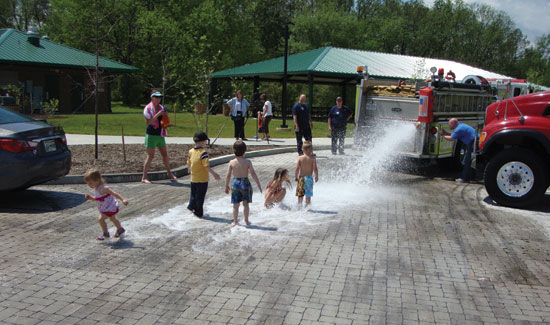 |
PICP projects are engineered to carry fire trucks, while providing an upscale aesthetic.
Photo courtesy of Oldcastle Building Products |
• High Loading Capacity Under Pressure. PICP systems may be engineered to accept axle loads well in excess of 20,000 pounds. Often PICP systems are designed to meet hydrological requirements first and structural loading second. Subsequent evaluations for both static and dynamic loading will find an over-designed system for vehicular use due to the base and sub-base requirements of stormwater detention/retention demand. A fire truck demonstration shows the ability of the PICP system to take large amounts of water without any runoff.
 |
In the largest installation of permeable pavers in the United States, McCord Toyota of Vancouver, Washington, used more than eight acres of a PICP system in its renovation. The loading of this pavement accepts transport carriers as well as RV vehicles and trailers which are sold at this site. The PICP was designed to capture, treat, and promote groundwater recharge; the type of sub-grade supported this full exfiltration strategy, and was backed by the city of Vancouver.
Photo courtesy of Oldcastle Building Products |
• Pedestrian Friendly. Permeable paver surfaces are pedestrian friendly and will meet or exceed ADA requirements. The ADA requires that openings in horizontal pedestrian traffic areas cannot exceed 13mm (½ inch) and must not have any lippage greater than ¼ inch. Elevation changes greater than ½ inch must have a ramp. Permeable pavers with 2mm chamfers will provide a smooth surface especially for wheelchair users. Handicap delineation as well as parking lanes and other markings may be more permanently constructed with the use of different colored pavers or engraved logos.
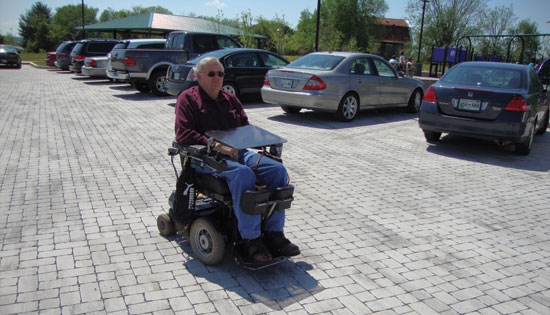 |
Permeable surfaces are pedestrian friendly and will even exceed ADA requirements.
Photo courtesy of Oldcastle Building Products |
• A Viable BMP. The federal government and many state agencies have recognized PICP as a viable BMP especially when used as an integral part of a treatment train. Various studies have been conducted in the U.S. and Canada since the early 1990s and much is known regarding water quality, volume reduction, sediment collection, and temperatures within the base and sub-base. A typical bio-aquifer storm system has surface openings somewhere between 8 and 12 percent depending on paver shape. Borgwardt determined that surface flow rates are dependent on aggregate chips used and will experience a 50 percent reduction in flow rate within the first five to eight years, due to sediment collection at the joint level. Sand should never be used as a joint filler as it yields the lowest flow rates and will clog the system, requiring remedial maintenance much sooner. Another study by Bean suggests the use of a sand filter at a discharge point would also improve water quality, while grid pavers using sand fill coincided with Borgwardt's findings. They also determined that temperature reduction for discharge flow to streams is lowered with PICP systems as compared to discharge from asphalt surfaces and does not prove harmful to the aquatic life.
Stormwater Management in Action
Local regulations will vary but all typically are mandated to comply with the water quality and quantity requirements of the Federal Clean Water Act and meet the NPDES Phase II rule (National Pollutant Discharge Elimination System) for capturing and treating the first flush from storms. Stormwater management objectives generally include:
- Water Quantity
- Retain/infiltrate runoff volumes and peak flows
- Imitate pre-development conditions
- Control amount of impervious cover
- Reduce stormwater utility fees
- Water Quality
- Capture percentage of storms
- Control specific nutrients, metals
The following projects demonstrate how PICP has helped achieve these objectives.
Elmhurst College—Reducing Runoff
Elmhurst College is a LEED Silver project which incorporated two acres of PICP, designed with underground storage within the sub-base capable of storing runoff from a 100-year event. The volume of runoff storage is 3.3 ac-ft. Since its installation, the site experienced a 100-year 24-hour event exceeding 12 inches of rain without any standing water. The same event hit O'Hare airport 20 miles away, causing the airport to shut down because 9 inches of rain was sitting on the runways and hardstand areas. During construction of phase II, the completed phase I was driven on. Even though it had not been designed for this type of loading, more than 1,000 loaded trucks in a 60-day period brought in and removed materials required without any damage to the pavement. A study reviewed the water flow for this parking lot. Rainfall was captured and measured at outfall during September and October 2010, determining that a 24-hour event of greater than .75 to 1.25 inches was required for water discharge from the system. This indicates that there would be zero discharge for over 80 percent of rainfall events, resulting in no discharge to the city's storm sewer or into Salt Creek where the sewer dumps and eventually travels to the Gulf of Mexico.
Knoxville Church Parking Plaza—Mitigating Peak Flows
At St. John's Church in Knoxville, Tennessee, permeable pavements were used in a parking plaza which also accepts runoff from an adjacent asphalt parking lot. Monitoring runoff flow from the pavement and its water quality, Dr. John Tyner of the University of Tennessee moved his equipment three times, ultimately abandoning his research as all the water was being captured by the PICP—a prime example of the pavement's ability to reduce flow and impact to infrastructure, and mitigate peak flows and downstream loading and scouring.
Maxwell Street—Reduced Maintenance Costs
The City of Chicago revitalized the Maxwell District, rebuilding a parking lot with a PICP system. The Chicago Department of Transportation (CDOT) measured water quality, flow rates, and internal temperature, placing temperature probes within the three aggregate layers to compare air temperature and aggregate temperature on a daily and hourly basis. Again, with infiltration rates greater than ½ inch per hour, the runoff entered the soils beneath the PICP without providing any data for water quality. In -7 degree January temperatures, the aggregate layers were all above freezing as the void areas within act as insulation barriers to provide a thermal transition from a constant ground temperature. That phenomenon explains why snowmelt moves into these aggregates and does not reform as ice on the surface, an advantage that translates to reduced salt use and maintenance costs.
Storm Capture—Harvesting for Gray Water Needs
Fresh potable water is a vital resource that in the future may be as limited as oil, if steps aren't taken to preserve it now. Using non-potable water or gray water collected via PICP water harvesting for gray water needs like irrigation or toilet flushing, preserves potable water for human consumption. PICP systems may be employed to capture, treat, and store this water in concrete tanks or other materials and recycle when needed.
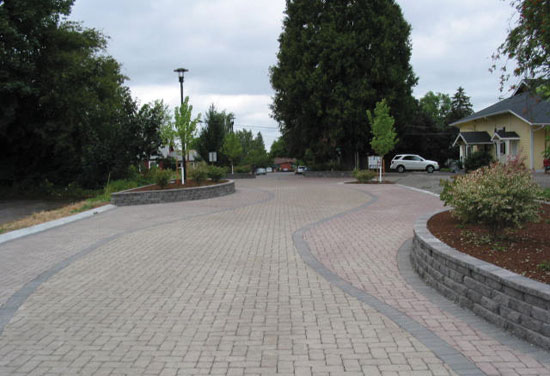 |
Gresham, Oregon, engineered a PICP street with an open-graded aggregate base and sub-base to accept vehicular traffic while capturing and treating rainwater.
Photo courtesy of Oldcastle Building Products |
As an example, the city of Gresham, Oregon, engineered a PICP street with an open-graded aggregate (OGA) base and sub-base to accept vehicular traffic yet have the capacity to capture and treat any rain that fell or ran onto this street. The capture was handled by a concrete tank at the street's lower end. The sub-grade was installed with a 2 percent slope, and the OGA acted as a conveyance to the discharge point, where it was collected in a PVC perforated pipe and moved into the concrete tank. Any overflow exited the top of the tank to an adjacent city storm sewer.
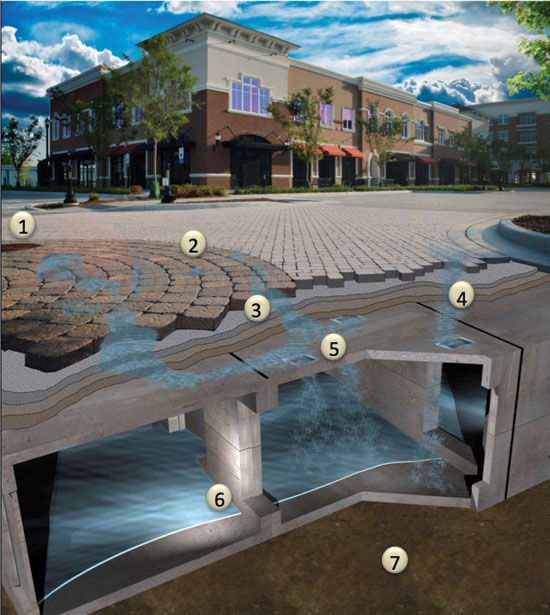 |
This is an example of a tank system with pavers for a no-exfiltration system, or zero discharge, for water harvesting.
1. Maintenance Access
2. Permeable Pavers
3. Drainage Aggregate
4. Permeable Base
5. Flow Vents
6. Storm Capture Modules
7. Subgrade Soils
Image courtesy of Oldcastle Building Products |
PICP and LEED
USGBC's LEED (Leadership in Energy and Environmental Design) green building certification program is the nationally accepted benchmark for the design, construction, and operation of green buildings. LEED covers the performance of materials in aggregate, not that of individual products or brands, so that products that meet the LEED performance criteria can only contribute toward earning points needed for LEED certification; they cannot earn points individually. PICP systems may contribute to numerous LEED rating system credits:
• SS Credits: 6.1 and 6.2 Stormwater Design: Quantity Control and Credit 7.1 Heat Island Effect: Non-Roof.
Dark, non-reflective hardscape surfaces absorb and radiate the sun's heat and contribute to the heat island effect. Heat island effect can raise urban temperatures by 2 to 10ºF. The use of light colored pavers or pavers with a high Solar Reflectance Index (SRI) will reduce this effect. The SRI is a measure of the paver surface's ability to reflect solar heat, as shown by a small temperature rise. LEED Credit 7.1 requires the paver to have an SRI of at least 29. Higher SRI values for pavers may be achieved and used on ballast type roofs or in conjunction with green roof systems.
High SRI pavers also provide enhanced night illumination because of their high reflectivity, reducing the need for larger and higher wattage light fixtures, a result witnessed by the Chicago DOT during implementation of its Green Alley program, where lower wattage exterior lights used in conjunction with high SRI pavers lowered electricity consumption.
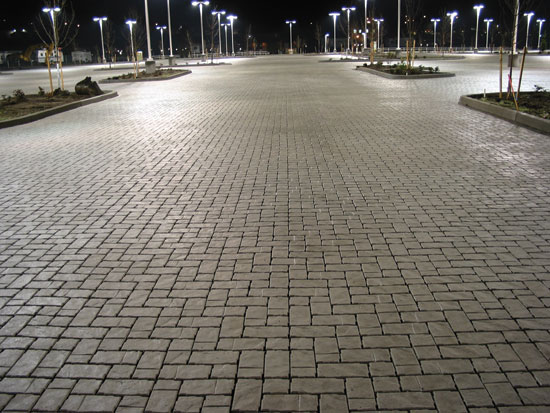 |
High SRI pavers also provide enhanced night illumination because of their high reflectivity, reducing the need for larger and higher-wattage light fixtures.
Photo courtesy of Oldcastle Building Products |
• WE Credit: 1.0 Water Efficient Landscaping.
• MR Credits: 2 Construction Waste Management, 3 Materials Reuse, 4 Recycled Content and 5 Regional Materials.
PICP Construction and Maintenance Considerations
One prevalent misconception is that PICP systems are too costly—a belief that is not borne out in practice. When systems are constructed by competent contractors with a history of similar projects, and when full life-cycle costs including maintenance are considered, PICP is more cost effective than asphalt.
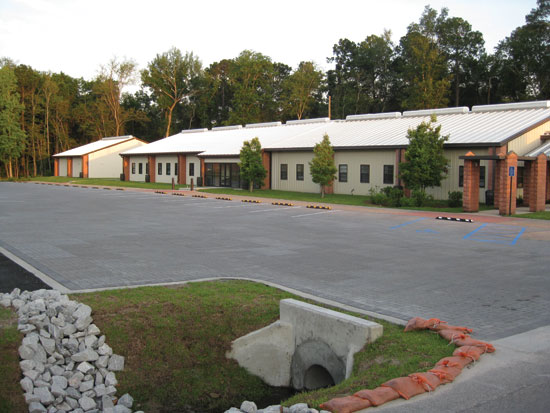 |
Responding to a presidential order that all federal buildings and sites conform to LEED Silver status during new construction or renovations, Fort Stewart, the largest Army installation east of the Mississippi River, included PICP as a part of its parking lot rehabilitation. This site accepts garbage trucks and delivery trucks and serves as the base’s test area for various green strategies. Fort Stewart has now completed phase II, with more than 100,000 square feet of PICP currently in use and the intention to employ the pavers basewide, including in a lot for a planned hospital. This PICP was able to contribute to both the LEED Recycled Content credit and the Regional Materials credit.
Photo courtesy of Oldcastle Building Products |
Morton Arboretum—Confirming Minimal Maintenance
In 2002 the Morton Arboretum in Lisle, Illinois, compared PICP to asphalt for a new 500-car parking lot designed to accommodate an increase in visitors consistent with the 20-year master plan. Based on a 50-year life span and minimal maintenance for a PICP system and at least one replacement for asphalt in the same timeframe, the total 50-year cost for asphalt was approximately $80 per square yard as opposed to $45 per square yard for the PICP, even with its slightly higher initial costs The break-even point for PICP appeared at 23 years, and at 50 years the cost of building, maintaining and replacing the asphalt was 40 times more expensive than the pavers. The paver installation and maintenance costs have been half of what was predicted. For further information on the Arboretum study, refer to “The Morton Arboretum's 'Green' Parking Lot: Demonstrating low-impact development BMPs in the Midwest,” by Andrew J. Sikich, Patrick D. Kelsey.
The PICP areas not only serve as parking for school buses, but also for service from delivery trucks at the loading dock area as well as daily garbage truck traffic. In 2009, a maintenance workshop covering the Arboretum's PICP areas was conducted by Dr. William Hunt of NCSU, ICPI and CDOT and Advanced Pavement Technology. Hunt reported that the engineered system has performed very well. In one area where snow debris was piled, there was a reduction in flow with some localized clogging due to sediment from the stored snow.
In general, normal maintenance procedures and costs for PICPs should not exceed those for impervious pavements. PICP maintenance is minimal. While removal of sediment and detritus from the surface openings is necessary to maintain infiltration rates, when the surface and sediment is dry, a mechanical sweeper or a regenerative air sweeper can be used one to two times per year to maintain the openings. In some cases a leaf blower has proven effective for regular maintenance.
Remedial maintenance. Unless standing water sits on PICP surface, only regular maintenance is required. Typically, remedial maintenance should not be necessary for at least 15 to 20 years after installation. Should larger areas require cleaning, a vacuum sweeper should be employed. At the Morton Arboretum maintenance workshop, a vacuum sweeper was used. It was able to remove the entire 3-inch vertical column of aggregates in the voids. The joint aggregates did not come out as they are involved with load transfer which provides interlock between the pavers.
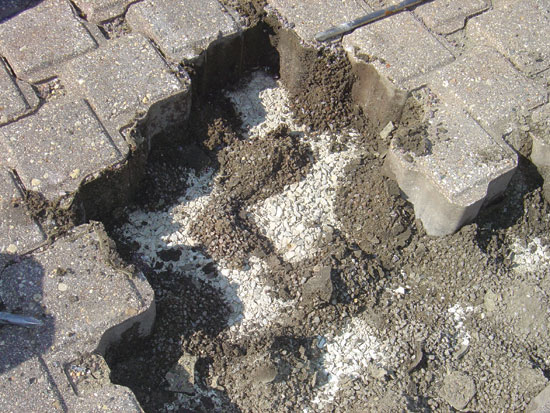 |
This profile of a clogged paver demonstrates sediment travel path and principle of an infiltration trench that collects pollutants and improves water quality.
Photo courtesy of Oldcastle Building Products |
Snow maintenance. Plowing snow on a PICP surface will not damage the pavers because of their chamfered edges; however, as the Morton Arboretum discovered, snow debris should not be stacked over PICP. The snow will pick up a good deal of sediment while being plowed and leave enough sediment to clog the PICP openings which will then require removal using standard or remedial maintenance techniques. For severe clogging, the joint material can be removed with vacuuming and replaced with clean material. Sand should never be used on a PICP system as a method to increase vehicle traction on ice, as it will accelerate clogging. It is important to note that #89 or #9 chips should be used when ice conditions occur.
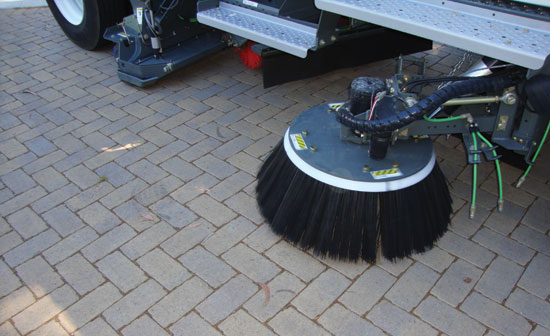 |
A vaccuum sweeper is used at the Naval Post-graduate Facility in Monterey, California, for routine maintenance.
Photo courtesy of Oldcastle Building Products |
During the Arboretum workshop which was attended by over 125 U.S. and Canadian city officials and stormwater professionals, pavers were removed and examined for sediment travel. Many thought the fines and particulates would migrate into the base, compromising detention storage. However, the fines were trapped within the first 1 to 1½ inch of the joints and voids where they attached themselves to aggregate faces and caused the joint and voids to fill and clog. In areas where there was no joint material, sediment was able to travel further down the sides of the paver. Also, there were no sediment particles in the base or the setting bed materials. Hunt was able to state with certainty that sediment travel is contained to the first 1 to -2 inches of the surface. Because of this, remediation is simple and limited to removal of the sediment and replacement of the joint material with new clean material. This will reinstate original infiltration rates.
 |
Research shows that because sediment travel is contained to the first 1 to -2 inches of the surface, remediation is a simple process.
Photo courtesy of Oldcastle Building Products |
A Sustainable Solution
Though development has a deleterious effect on the hydrologic cycle, those impacts can be mitigated by low impact development scenarios and best management practices. As an engineered ecological system that captures, treats, and stores stormwater, PICP plays a major part in the mitigation efforts, and has proven its ability to capture and treat first flush pollutants. Embraced as a first design strategy by engineers and design professionals, the full potential of permeable pavement systems in restoring a watershed's hydrologic functions can be realized.
 |
Oldcastle Architectural is the leading North American manufacturer of concrete masonry, lawn, garden, and paving products and a regional leader in clay brick. The group also produces packaged cement mixes, lightweight aggregates, bagged decorative stone, and lime and concrete rooftiles. Oldcastle Architectural operates across 35 states and 2 Canadian provinces. www.Belgardcommercial.com |