This CE Center article is no longer eligible for receiving credits.
Special Considerations of Walls in Health Care
Just as linear drains have been designed to address the hospital need for effective water management in barrier-free showers, a new printed wall solution has been designed to satisfy the hospital demand for walls that contribute toward the carefully crafted healing aesthetic, while offering enough durability to withstand the daily wear and tear that can occur in high-traffic areas filled with rolling patient beds, wheelchairs, and equipment carts.
Promote Healing with Digital Art
The notion that art may make a positive impact in the health-care environment is not new or novel. In the introduction of “Visual art in hospitals: case studies and review of the evidence” by L. Lankston (et. al), published in the December 2010 issue of the Journal of the Royal Society of Medicine, the authors state: “There is moreover increasing evidence that the display of visual art, especially images of nature, can have positive effects on health outcomes, including shorter length of stay in hospital, increased pain tolerance, and decreased anxiety.”

Photo courtesy of Inpro
Use printed wall art to incorporate calming images of nature throughout a health-care interior, while ensuring it can withstand abuse from wheelchair traffic and equipment carts.
For quite some time, designers have supported this general idea and used color and art as instrumental components of a healing space. Advances in technology and printing capabilities are expanding the possibilities of the scope and quality of images that can be used for this purpose. Outfitting hospital walls with large-scale, high-resolution digital artwork can contribute much more to the overall aesthetic than paint or wallpaper. With these new visual art products, designers can use the hospital walls as a canvas to showcase serene and calming panoramic views of nature, share inspirational quotes or dramatic photography, offer directional cues for wayfinding, provide information, or tastefully incorporate facility logos and branding throughout a building.
An advantage of digital artwork is that it is entirely scalable and can be printed to fit the dimensional needs of any space, from hanging a singular art piece on a wall to creating an expansive photomural to run the length of a corridor.
Withstand Wear and Tear and Resist Dirt
Finishes and artwork used in hospital interiors must be capable of withstanding significant wear and tear. These busy interior spaces host patients, staff, and visitors 24/7, and the corridors are super highways for patient beds, wheelchairs, equipment carts, and food delivery and maintenance gear.
In the past, designers who have used the walls in a hospital to contribute toward the healing aesthetic have searched in vain for a solution that would safeguard the image, without covering it up and obscuring it in plastic protection. Now, the design is the protection. Scalable, digital artwork is printed onto a durable substrate, also referred to as a rigid sheet, that protects the image from receiving scratches, dents, and scrapes. The rigid sheet is then covered with an invisible barrier film, which assures that any imperfections that may exist on the wall will not be visible through the image. This new product combines the limitless aesthetic possibilities of digital art with high-impact wall protection.
In order to compare the relative strengths of different surface coatings, the American Society for Testing and Materials (ASTM) developed a test method to evaluate the abrasion resistance of a coating referred to as ASTM D4060-14: Standard Test Method for Abrasion Resistance of Organic Coatings by the Taber Abraser. When specifying a product that claims to resist damage from impact, request the results of the ASTM Abrasion Resistance test to verify product performance and compare solutions.
Not only do these new printed wall solutions withstand dents and scratches, but they are also designed to resist dirt and grime and be easily cleaned. The ASTM D6578: Standard Practice for Determination of Graffiti Resistance determines the ability of a coating to resist graffiti and evaluates how easily the surface can be cleaned. The test divides products into five levels of cleanability. Level 1 refers to coatings where the graffiti was completely removed with a dry cotton cloth. Level 2 coatings can be completely cleaned with a 1 percent aqueous detergent solution. A coating that earns a Level 3 rating indicates that graffiti can be completely removed with a citrus cleaner. On a Level 4 coating, graffiti can be removed with isopropanol. A Level 5 cleanability rating signifies that graffiti can be removed from the coating with methyl ethyl ketone (MEK). If a coating is deemed Not Cleanable by the ASTM test, graffiti remained after all of the cleaning solutions were used, or the gloss ratio was substantially reduced. There are printed wall solutions that have earned the highest rating of stain resistance and cleanability on the ASTM D6578 test.
Interior spaces are designed for a purpose. They are designed to be spaces where learning can occur or healing can take place. They are designed to inspire creativity or reflection or productivity. As spaces with a purpose, they also have special needs. The challenges in designing one interior space include meeting different applicable building and energy codes, applying the latest findings in evidence-based design to create spaces that are constantly better in some way than what was previously done—healthier, more environmentally friendly, or more efficient—and selecting finishes and furnishings that make an appropriate aesthetic statement, while being functional, staying on budget, and addressing the conflicts that arise between these goals when they occur, all while ensuring that the space fulfills its original purpose.
New products are constantly being developed to help designers address the challenges in different interior spaces. Technological advancements in drains, wall coverings, and flooring make it possible for designers to select products that do more, achieve design objectives more easily or completely, or equip spaces to perform at a level not previously possible. This course will examine a few different specific types of space: health-care interiors, high-traffic interiors, commercial interiors and bathrooms and the new drains, wall coverings, and flooring now available that are making it easier for designers to do more with their designs.

Images courtesy of Inpro
New products have been developed to help designers address common challenges in health-care interiors.
Health Care Interiors
There may be no better example of interior space with a purpose than the interiors of hospitals and health-care facilities. As such, the challenges posed when creating a space designed for healing are complex. Spaces must be designed to accommodate people at all stages of health and mobility, and the finishes and furnishings must be easy to clean, appear clean, and contribute toward the cleanliness, without feeling sterile or institutional. It is a place where the functional performance of the space must support the talented professionals who work there, and the aesthetic environment and indoor air quality must cater to the sensitive patients who are healing there. As with any interior environment, it is created through the application of the design practice, the selection of the right products and materials, and systems that work together to create something bigger—something with a purpose.
Create Barrier-Free, ADA-Compliant Showers
The Americans with Disabilities Act (ADA) 2010 Section 608.1 offers the following advisory statement: “Shower stalls that are 60 inches wide and have no curb may increase the usability of a bathroom because the shower area provides additional maneuvering space.” For years, designers have struggled to create barrier-free showers in health-care applications, which are showers without a curb or obstruction at the shower entrance, that are ADA compliant and effectively manage the movement and drainage of water in the shower space. Linear drains can provide the barrier-free drainage solution they have been seeking.

Photo courtesy of Infinity Drain
For years, designers have struggled to create barrier-free showers in health-care applications, and now linear drains can provide the barrier-free drainage solution they have been seeking.
ADA-Compliant Shower Compartments
There are three types of ADA-compliant shower compartments detailed in Section 608. They are: the transfer type shower compartment, the standard roll-in type shower compartment, and the alternate roll-in type shower compartment. The transfer type shower compartment is designed for bathers that do not require an aide and can physically transfer themselves onto a seat in the shower compartment. This is the smallest shower enclosure allowed by the ADA and the only configuration that allows the presence of a curb up to two inches tall. The two roll-in type compartments are designed to accommodate the use of a wheelchair in the shower and allow a small curb along the threshold of the compartment that is no taller than ½-inch and beveled to make it easier to roll over.
The open shower is another type of barrier-free shower design that is found in a hospital. The open shower concept employs a shower curtain to create the visual barrier, instead of a physical shower enclosure.
Creating an ADA-compliant shower for a hospital requires the inclusion of many unique elements. Beyond satisfying the dimensional minimums of the space, designers must incorporate grab bars, controls, hand-held sprays, accessible trays or shelves, and seats (where applicable). In terms of creating a barrier-free shower, the drain is a critical piece of the water management solution.
Drain Options: Linear vs. Traditional
There are essentially two types of shower drains available on the market today. The traditional center-placed drain and the linear drain. Traditional center-placed drains require that the shower floor feature a four-way pitch, creating a 360-degree bowl around the drain. Linear drains are often positioned along a wall or along the threshold of the shower enclosure. The shower floor slopes in one direction, instead of four, toward the drain.
One of the advantages to using a linear drain in a barrier-free hospital shower area is that the linear drain can serve as the floor drain for the entire bathroom. This is useful because without a physical boundary, such as a curb, to keep water from moving beyond the boundary of the shower area, often referred to as a wet area, to the dry area where the sink and toilet are located, it is practical to waterproof the entire room and equip the wet room with a floor drain. Traditional center-placed drains must be located in the center of the shower compartment and are ill-equipped to manage water that escapes beyond the boundary of the shower space.
There are three important design considerations when using a linear drain to create a barrier-free shower space: create a wall-to-wall fit, provide the necessary pitch in the floor to direct water toward the drain effectively, and achieve equal floor heights between the shower area or wet room and adjacent rooms.

Images courtesy of Infinity Drain
There are two common types of drains: traditional center-placed drains and linear drains.
Wall-to-Wall Fit
The linear drain is often placed along the threshold of the shower to create the barrier-free or curbless shower. When designing a bathroom with the linear drain in this location, it critical that the linear drain achieve a wall-to-wall fit. If the drain is too short, and there is a gap, water can run from the shower into the surrounding space. If the drain is too long, it will be impossible to install, as it cannot be installed through a wall. Avoid installation issues by identifying the finished wall-to-wall dimension and ensure that the linear drain is sized appropriately.
Appropriate Floor Pitch
The pitch of the floor is responsible for directing the water to the drain and out of the space. The typical recommended slope in the shower is 1/4-inch rise per foot. The recommended slope on the dry side of the space is a more gradual 1/8-inch rise per foot.
Consistent Floor Height
Creating a consistent floor height from one area to the next is a basic tenet of good design. In hospitals and other spaces where the mobility of occupants may be limited, consistent floor heights that are easy to navigate are especially important.
When designing a barrier-free shower, the depth of the linear drain is a significant contributor in determining the final height of the floor. Deeper drains require more buildup to accommodate and result in greater floor heights, which may require that designers create a more managed transition to help occupants move from one floor height to the next. Shallower drains can help to keep floor heights low, making the transition to other spaces easier.
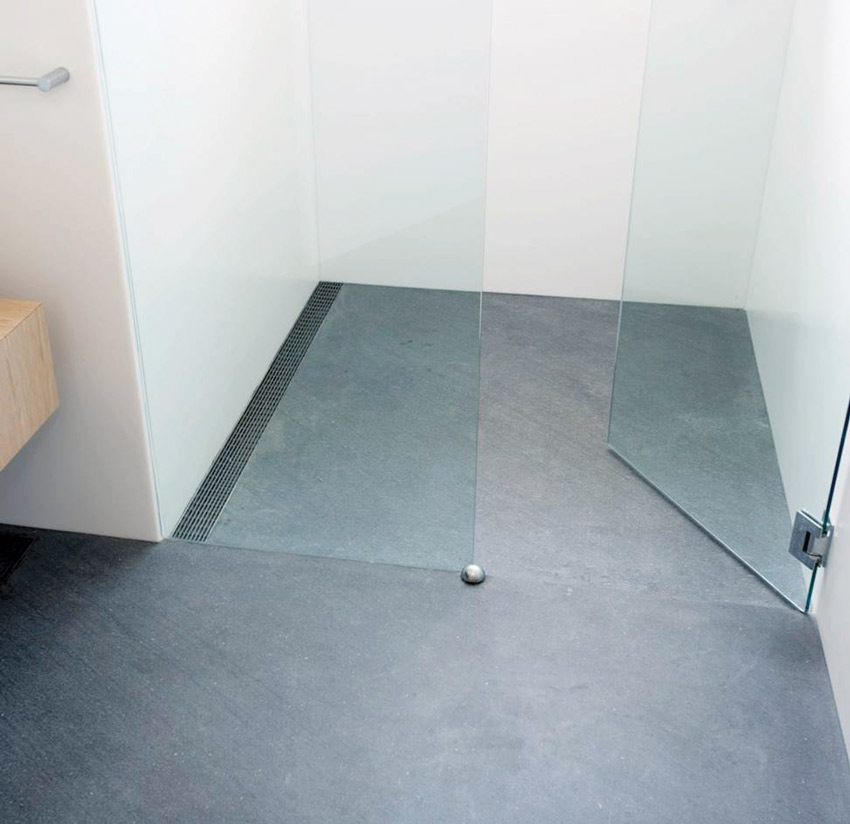
Photo courtesy of Infinity Drain
Shallower drains make it easier to keep the floor heights consistent between the wet area in a bathroom and adjacent areas.
The Waterproofing Myth
Many designers believe that any drain will work in any type of waterproofing. This is untrue, and pairing a waterproofing technique with an unsuitable drain can have disastrous effects on the jobsite. It is critical to be aware of the waterproofing technique that will be used by the project team and select a linear drain accordingly.
Here is a basic description of the two different types of waterproofing and why they affect drain selection. The two types of waterproofing are referred to as traditional waterproofing and modern waterproofing. The modern waterproofing technique uses materials that make it possible to tile directly on top of the waterproofing surface, which saves a lot of floor height and can accommodate a shallower linear drain. It is also easier to waterproof an entire space with the newer method because the waterproof membrane is simply painted or laid on. Traditional waterproofing materials require an additional mortar layer between the waterproof surface and the tile, which adds thickness, and the typical waterproofing membrane is a pan liner, which is nearly impossible to form to accommodate an entire bathroom area in order to create a wet room.
A hybrid of these traditional and modern waterproofing techniques also exists and is often used in hospitals and health-care facilities. This method uses a waterproof sheet that must be clamped to a drain. The waterproof sheet is also used as the final flooring throughout the entire bathroom. This allows for a seamless waterproofing room with minimal buildup. Common materials for these applications include vinyl “safety flooring,” epoxy coatings, and others.
Special Considerations of Walls in Health Care
Just as linear drains have been designed to address the hospital need for effective water management in barrier-free showers, a new printed wall solution has been designed to satisfy the hospital demand for walls that contribute toward the carefully crafted healing aesthetic, while offering enough durability to withstand the daily wear and tear that can occur in high-traffic areas filled with rolling patient beds, wheelchairs, and equipment carts.
Promote Healing with Digital Art
The notion that art may make a positive impact in the health-care environment is not new or novel. In the introduction of “Visual art in hospitals: case studies and review of the evidence” by L. Lankston (et. al), published in the December 2010 issue of the Journal of the Royal Society of Medicine, the authors state: “There is moreover increasing evidence that the display of visual art, especially images of nature, can have positive effects on health outcomes, including shorter length of stay in hospital, increased pain tolerance, and decreased anxiety.”
Photo courtesy of Inpro
Use printed wall art to incorporate calming images of nature throughout a health-care interior, while ensuring it can withstand abuse from wheelchair traffic and equipment carts.
For quite some time, designers have supported this general idea and used color and art as instrumental components of a healing space. Advances in technology and printing capabilities are expanding the possibilities of the scope and quality of images that can be used for this purpose. Outfitting hospital walls with large-scale, high-resolution digital artwork can contribute much more to the overall aesthetic than paint or wallpaper. With these new visual art products, designers can use the hospital walls as a canvas to showcase serene and calming panoramic views of nature, share inspirational quotes or dramatic photography, offer directional cues for wayfinding, provide information, or tastefully incorporate facility logos and branding throughout a building.
An advantage of digital artwork is that it is entirely scalable and can be printed to fit the dimensional needs of any space, from hanging a singular art piece on a wall to creating an expansive photomural to run the length of a corridor.
Withstand Wear and Tear and Resist Dirt
Finishes and artwork used in hospital interiors must be capable of withstanding significant wear and tear. These busy interior spaces host patients, staff, and visitors 24/7, and the corridors are super highways for patient beds, wheelchairs, equipment carts, and food delivery and maintenance gear.
In the past, designers who have used the walls in a hospital to contribute toward the healing aesthetic have searched in vain for a solution that would safeguard the image, without covering it up and obscuring it in plastic protection. Now, the design is the protection. Scalable, digital artwork is printed onto a durable substrate, also referred to as a rigid sheet, that protects the image from receiving scratches, dents, and scrapes. The rigid sheet is then covered with an invisible barrier film, which assures that any imperfections that may exist on the wall will not be visible through the image. This new product combines the limitless aesthetic possibilities of digital art with high-impact wall protection.
In order to compare the relative strengths of different surface coatings, the American Society for Testing and Materials (ASTM) developed a test method to evaluate the abrasion resistance of a coating referred to as ASTM D4060-14: Standard Test Method for Abrasion Resistance of Organic Coatings by the Taber Abraser. When specifying a product that claims to resist damage from impact, request the results of the ASTM Abrasion Resistance test to verify product performance and compare solutions.
Not only do these new printed wall solutions withstand dents and scratches, but they are also designed to resist dirt and grime and be easily cleaned. The ASTM D6578: Standard Practice for Determination of Graffiti Resistance determines the ability of a coating to resist graffiti and evaluates how easily the surface can be cleaned. The test divides products into five levels of cleanability. Level 1 refers to coatings where the graffiti was completely removed with a dry cotton cloth. Level 2 coatings can be completely cleaned with a 1 percent aqueous detergent solution. A coating that earns a Level 3 rating indicates that graffiti can be completely removed with a citrus cleaner. On a Level 4 coating, graffiti can be removed with isopropanol. A Level 5 cleanability rating signifies that graffiti can be removed from the coating with methyl ethyl ketone (MEK). If a coating is deemed Not Cleanable by the ASTM test, graffiti remained after all of the cleaning solutions were used, or the gloss ratio was substantially reduced. There are printed wall solutions that have earned the highest rating of stain resistance and cleanability on the ASTM D6578 test.
Important Features in Health-Care Flooring
Technological advancements in flooring have transformed this interior finish from a simple underfoot surface to a solution that can help hospitals and health-care facilities achieve important performance goals, improve the overall patient experience, and offer a safer work environment for staff and visitors. Flooring today can help to protect indoor air quality, stop the spread of infection, manage sound, resist tough stains, and contribute to the level of cleanliness perceived by patients and staff.
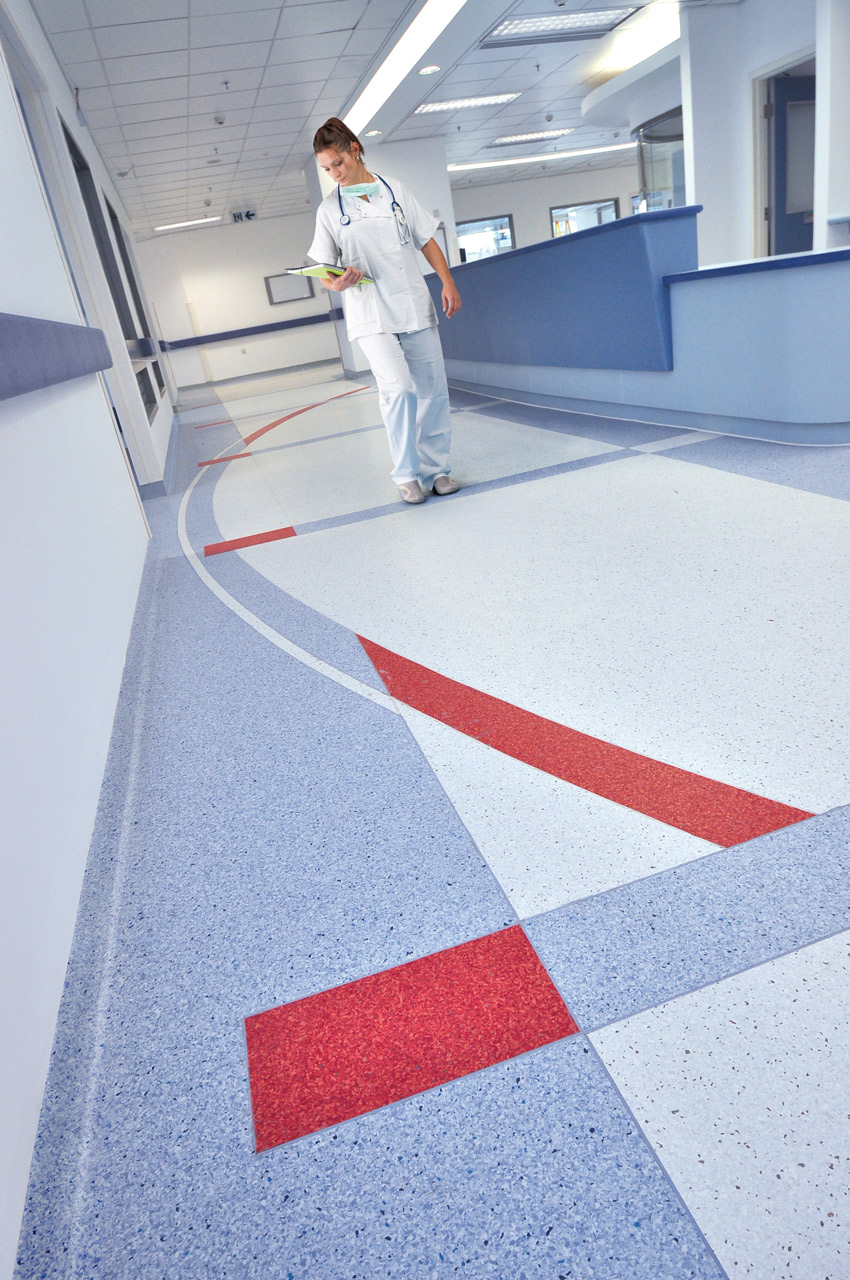
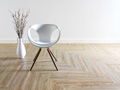
Photo courtesy of Gerflor USA
Flooring today can help to protect indoor air quality, stop the spread of infection, manage sound, resist tough stains, and contribute to the level of cleanliness perceived by patients and staff.
Floorscore® Certified for Low VOC Emissions
Protecting the indoor air quality of hospitals is extremely important in designing interiors that promote health, healing, and well-being. When selecting flooring, a product’s emission levels of specific volatile organic compounds (VOCs) is a primary concern for designers hoping to maintain the integrity of their interior environment.
FloorScore® certification, managed by the Scientific Certification Systems (SCS), was developed to test and certify flooring products as being in compliance with the indoor air quality emission requirements adopted in California. The California standard, titled California Department of Public Health Standard Method for Testing and Evaluation of Volatile Organic Chemical Emissions from Indoor Sources Using Environmental Chambers, commonly referred to as CA 01350, has become the dominant standard for product emissions testing and is commonly referenced in rating systems and building codes.
Flooring products that bear the FloorScore seal have been independently certified to comply with the VOC emissions criteria of the CA 01350 standard and are deemed products that will contribute to good indoor air quality.
No-Wax Flooring
Vinyl composition tile (VCT) was once the standard flooring choice in health-care and education facilities. Although durable and good in high-traffic areas, these products required a rigorous strip, wax, and buff regimen to maintain their shiny and polished appearance and protect the floor. There are many notable disadvantages to this maintenance routine.
Floor stripping refers to the removal of old wax, soil, and debris found on the floor. The stripping process is both labor and time intensive, and it is common for even experienced cleaning professionals to make mistakes when stripping floors. Furthermore, the products used to wax and strip the floors often contain toxic VOCs, such as formaldehyde (a known carcinogen). A life-cycle study of flooring installation and maintenance found that the amount of VOCs emitted from a single waxing of a floor may be comparable to the amount of VOCs emitted from the flooring itself over its entire life.1 Floors regularly required this routine once or twice a year. The maintenance costs in time and attention were tremendous.
In response to the overwhelming need for a better flooring solution, manufacturers have developed flooring products that offer the shine and durability, without the use of wax. These no-wax floors are easier to maintain and are not stripped or waxed throughout the life of the product. Eliminating the use of the stripping agents and wax finishes, and the harmful chemicals they contain, is better for the overall indoor air quality of a hospital.
Antimicrobial
On any given day, about one in 25 hospital patients has at least one healthcare-associated infection (HAI), according to the Centers for Disease Control and Prevention (CDC). HAIs are infections that patients develop during the course of receiving health-care treatment. In 2011, there were an estimated 722,000 HAIs in U.S. acute-care hospitals, and roughly 75,000 patients with HAIs died during their hospitalizations.2 Prevention of the spread of these infections is critical to hospital performance and patient recovery.
Many manufacturers are now developing products with antimicrobial properties that inhibit the growth of the microorganisms responsible for causing these infections. The International Organization for Standardization (ISO) developed ISO 22196:2011, the internationally recognized test method for evaluating the antimicrobial activity of treated plastic materials.
Today, flooring is available that has been tested in accordance with the ISO 22196 method and found to inhibit the growth of 99 percent of bacteria, including E. coli, S. aureus, and MRSA.
Comfort Backing
Many of the flooring products found in health-care interiors contain multiple layers. For example, the thickness and type of wearlayer will provide durability and wear resistance. It could also have a surface treatment designed to provide stain resistance and a no-wax maintenance regimen. Other layers will provide color or patterned aesthetic, and fiberglass grids and a compact interlayer (or back layer) create the structure and support for the floor and provide resistance to indentation. Some floors also incorporate a layer referred to as a comfort backing. This layer is comprised of a very-high-density (VHD) foam. The addition of the comfort backing creates a floor that has some cushion or give to it.
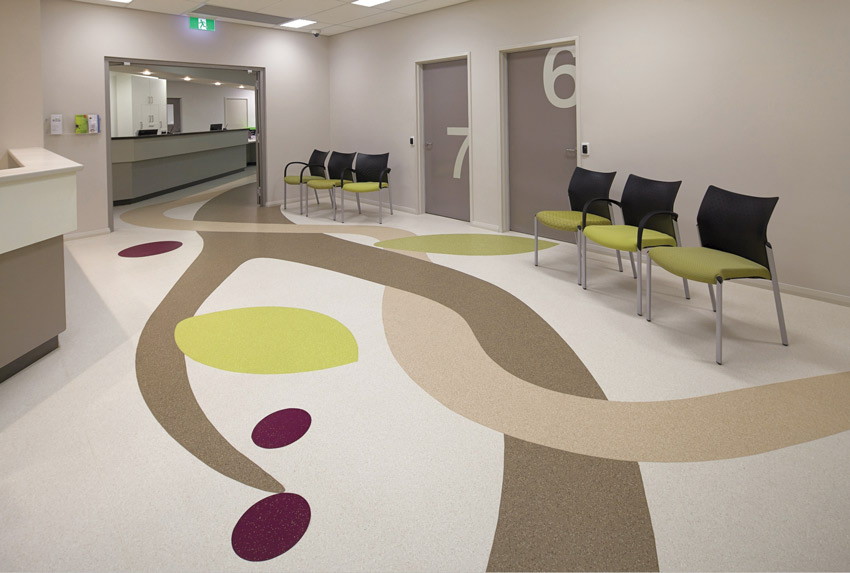
Photo courtesy of Gerflor USA/Robert Frith
There are two primary benefits associated with the presence of comfort backing in a flooring product: improved comfort for staff spending long periods standing and noise control.
There are two primary benefits associated with the presence of comfort backing in a flooring product: improved comfort for staff spending long periods standing and noise control. The underfloor cushioning is often specified in areas like nursing stations to provide additional support and comfort where staff spend long hours on their feet. The VHD foam also imbues the flooring with sound management properties, enabling the floor to reduce the amount of sound that is created when an item is dropped on it or better control the sounds produced as staff, patients, and visitors walk on it. Better acoustic control improves the overall healing atmosphere of the hospital by making it more quiet and serene.
In fact, sound management has been identified as an important factor in gauging the overall patient experience in a hospital. The Hospital Consumer Assessment of Healthcare Providers and Systems (HCAHPS) is a patient satisfaction survey required by the Centers for Medicare and Medicaid Services (CMS) for all hospitals in the United States. Designed to provide an apples-to-apples comparison of hospitals throughout the country and increase the transparency of the quality of provided care, the results are published publicly. The survey encompasses nine key topics. Two of these components, acoustics and patient room cleanliness, can be directly impacted by design and construction.
Corridors are the origin of a significant amount of noise within health-care interiors. Specifying flooring with a comfort backing in hospital corridors will help to reduce the noise level that exists in these areas and assist in keeping corridor noise from entering patient rooms and disrupting the healing experience.
Excellent Stain Resistance
Interiors in the health-care environment need to not only be clean, they need to be perceived as clean. This means that the flooring should be free from visible stains and large scuff marks. Unfortunately, hospitals use many chemical solutions that can be incredibly staining, such as betadine, eosin, concentrated nitric acid, and iodine. There are also many items in a hospital that can cause scuff marks, from shoes to wheelchairs and the many wheeled carts pushed through the hospital daily.
In such a stain-intensive environment, the surface treatment of the flooring is designed to provide stain resistance and durability to keep the floor looking clean. Advancements in technology and technique continue to improve the strength and resistance of the flooring solutions available.
Various Levels of Contrast in Floor Design
The design of the flooring in a health-care interior must be matched to the unique needs of the specific space in which it is installed. It has been found that designs with a great degree of visual contrast or texture are readily perceived as cleaner surfaces and more successfully hide dirt and blemishes. Consider specifying high-contrast or textured designs in patient rooms and corridors to promote the perception of cleanliness and effectively camouflage the corridor areas that receive the greatest foot traffic. Other spaces, such as operating rooms, require low-contrasting designs on the floors to ensure that dropped tools or other items can be easily spotted and retrieved.
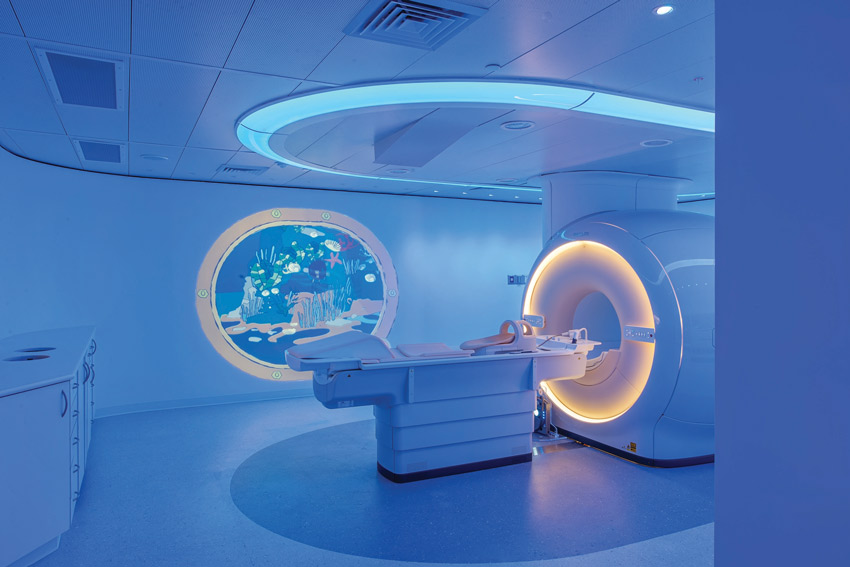
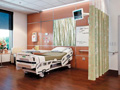
Photo courtesy of Gerflor USA
The design of the flooring in a health-care interior must be matched to the unique needs of the specific space in which it is installed.
Floor Coving
Another way to improve the overall cleanliness of the hospital interior is to cove the flooring at the room corners. Coving the flooring is not a new technique for floor installation, but new integrated floor-to-wall and corner systems are now available. These corner systems, as they are often referred to, use a specially cut piece of flooring that makes it possible to skip the process of corner welding.
A corner system completely eliminates tight and inaccessible corners from the interior space, leaving smooth and accessible slopes in their place. This has many advantages in a hospital application. It improves the cleanliness of room corners, reduces the opportunity for dirt and dust to buildup in these previously hard-to-reach places, and makes cleaning and maintenance in tight corner spaces easy and more efficient.
These clean corner systems can be incorporated into many different interior areas in a hospital. Patient rooms, operating rooms, and even cleanrooms will benefit from the elimination of hard-to-reach corners.
Other Interior Types
These new products also solve regularly occurring problems in other types of interiors. High-traffic interiors everywhere can benefit from high-resolution digital artwork that is protected from dents and scratches and easy to clean. Linear drains that provide effective water management in barrier-free showers can also be used to create beautiful bathrooms that feature large-format tile or stone throughout both wet and dry areas.
High-Traffic Interiors
Walls in high-traffic interiors regularly experience bumps and collisions. They are also a perfect surface to make an impression upon the many people that constantly move past them. With high-impact protected and stain-resistant digital wall art, designers now have a double-duty tool that can support aesthetic themes, offer directional cues, or incorporate logos and branding with beautiful, high-resolution images that will look good for a long time.
Inspiring Commercial Interiors
It is a well-known fact that people are the most expensive asset in an office building. Crafting spaces that will motivate employees and inspire creativity is another way that the office space can be designed to optimize its most valuable asset. Use art or custom graphics as the wall cladding, instead of paint or wallpaper, to create interior spaces with personality.

Photo courtesy of Inpro
Crafting spaces that will motivate employees and inspire creativity is another way that the office space can be designed to optimize its most valuable asset.
Contemporary Commercial Interiors
Digital wall art can contribute toward achieving a contemporary aesthetic, not only in its unlimited colors and patterns and extraordinarily large art selection, but also in the way that the physical installation is mounted. There are several mounting options available, including standoffs, screw holes and caps, adhesive, double-sided tape, and cables. Standoffs can offer an interior art installation a more contemporary look and feel than traditional frames. When specifying a standoff product, look for solutions that offer an additional styrene backer to provide extra rigidity to the structure. The increased rigidity will eliminate bowing over the life of the art piece.
Beautiful Bathrooms
Using a linear drain instead of the traditional center-placed drain also makes it possible to revolutionize the look and feel of the bathroom space in two important ways. Large format tile can now be laid in the shower without being cut, and drains have been designed to support the overall aesthetics of the space.
Use Large Format Tile in the Shower
Traditional center-placed drains limited flooring material choices in showers to either small mosaic tile or large format tile that was cut and pie-pieced together to accommodate the 360-degree floor pitch. Linear drains have eliminated this limitation and allow for the entire floor to slope in one direction towards the drain. This new approach to draining enables designers to use large format tiles, stone slabs, or solid surface materials in the shower floor, minimizing the presence of grout lines and making it possible to use one material in both wet and dry sides of the bathroom, visually opening the space up.

Photo courtesy of Infinity Drain
Linear drains enable large-format tile to be used throughout the bathroom, minimizing the presence of grout lines.
Incorporate Drains as a Design Element
Linear drains are available in a number of styles and finishes to complement the overall design aesthetic of the space. The four most common styles of a decorative top grate are: perforated, wedge wire, tile insert, and closed top.
Perforated top grates are typically the least expensive. These patterned grates are often constructed of 304 stainless steel in 16 gauge or less and are fabricated on a break press. The patterns are either punched out or cut out with a laser.
Wedge wire top grates are often the sturdiest grates available. Constructed of 316 stainless steel in 12 gauge, these grates can have a load rating of up to 5,000 pounds.
The tile insert frame incorporates the same tile used in the floor of the shower into the physical grate of the drain, essentially camouflaging the drain to appear like the rest of the shower floor. There is a ¼-inch gap between the frame and the linear drain channel, which is where the water drains down to the outlet and through to the waste line. The tile insert tray arrives on the jobsite empty, and the tile setter places a small tile into the tray. Depending upon the manufacturer, the frame can accommodate flooring material up to ¾ inch thick.
The closed-top grate is a hybrid between the perforated grate and the tile insert frame. The grate top is a piece of stainless steel, similar to the perforated grate, but without any holes or patterns punched into the material. There is a ¼-inch gap around the four edges of the solid grate material, into which the water drains from the shower floor.
New products offer designers new tools in their arsenal to advance the interior space. From health-care interiors to commercial interiors and bathrooms, these new drains, wall coverings, and flooring options will enable designers to meet existing challenges in these spaces a little more easily and further expand the possibilities of the interior space.
End Notes
1Lent, T.; Silas, J.; and Vallette, J. “Resilient Flooring & Chemical Hazards: A Comparative Analysis of Vinyl and Other Alternatives for Health Care.” Healthy Building Network, April 2009. Print.
2“Healthcare-associated Infections.” Centers for Disease Control and Prevention, 02 March 2016. Web. http://www.cdc.gov/hai/surveillance.
Jeanette Fitzgerald Pitts has written dozens of continuing education articles about a variety of building products.