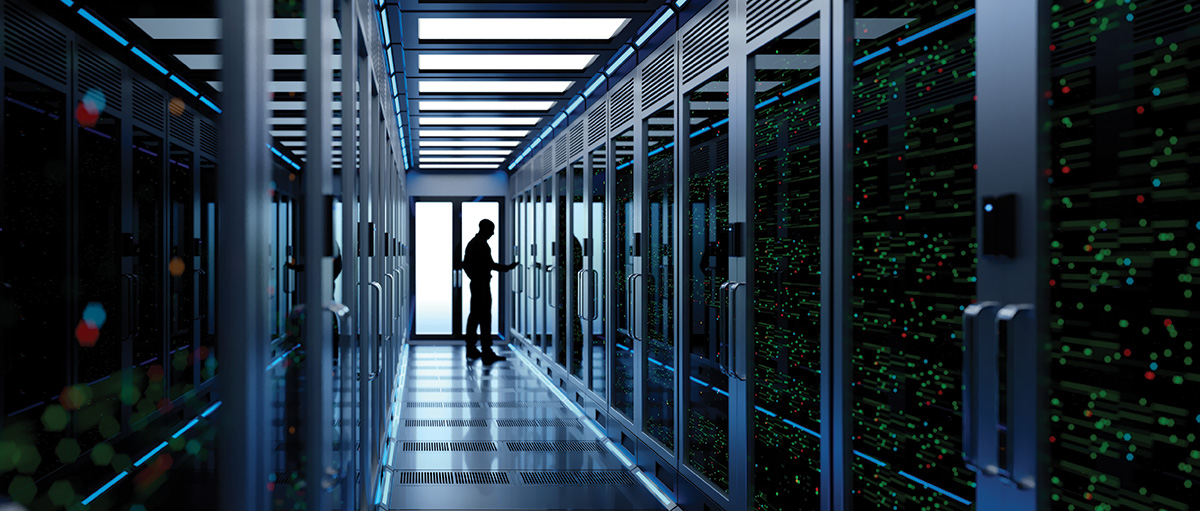
Photo courtesy of Oldcastle BuildingEnvelope
Data centers are complex and specialized structures that involve intricate planning, both initially and to anticipate future adaptation and growth.
Data centers are the physical hubs of our digitally connected world. As the demand for data storage and computing capabilities exponentially increases, so too does the demand for new data centers.
The design behind data centers must, of necessity, be specific. Designing data centers differs from more conventional design precisely because these facilities must also anticipate processes, procedures, and specialized labor for unique technical needs. Design professionals are charged with ensuring business continuity, disaster prevention, and building in contingencies that reduce the chances of downtime.1 Unplanned data center outages cause immediate financial fallout; the average cost of data center downtime in 2025 soared as high as $9,000 per minute.2 Data centers and other mission-critical facility designs prioritize maximum availability and failure mitigation for the complex to prevent financial, reputational, and even health risks to those within the facility.3 This multifaceted set of analytics is complicated by a desire for speed to market and the sheer number of centers in planning and construction.
Defining Mission Critical
Redefining the Designer and Supplier Relationship
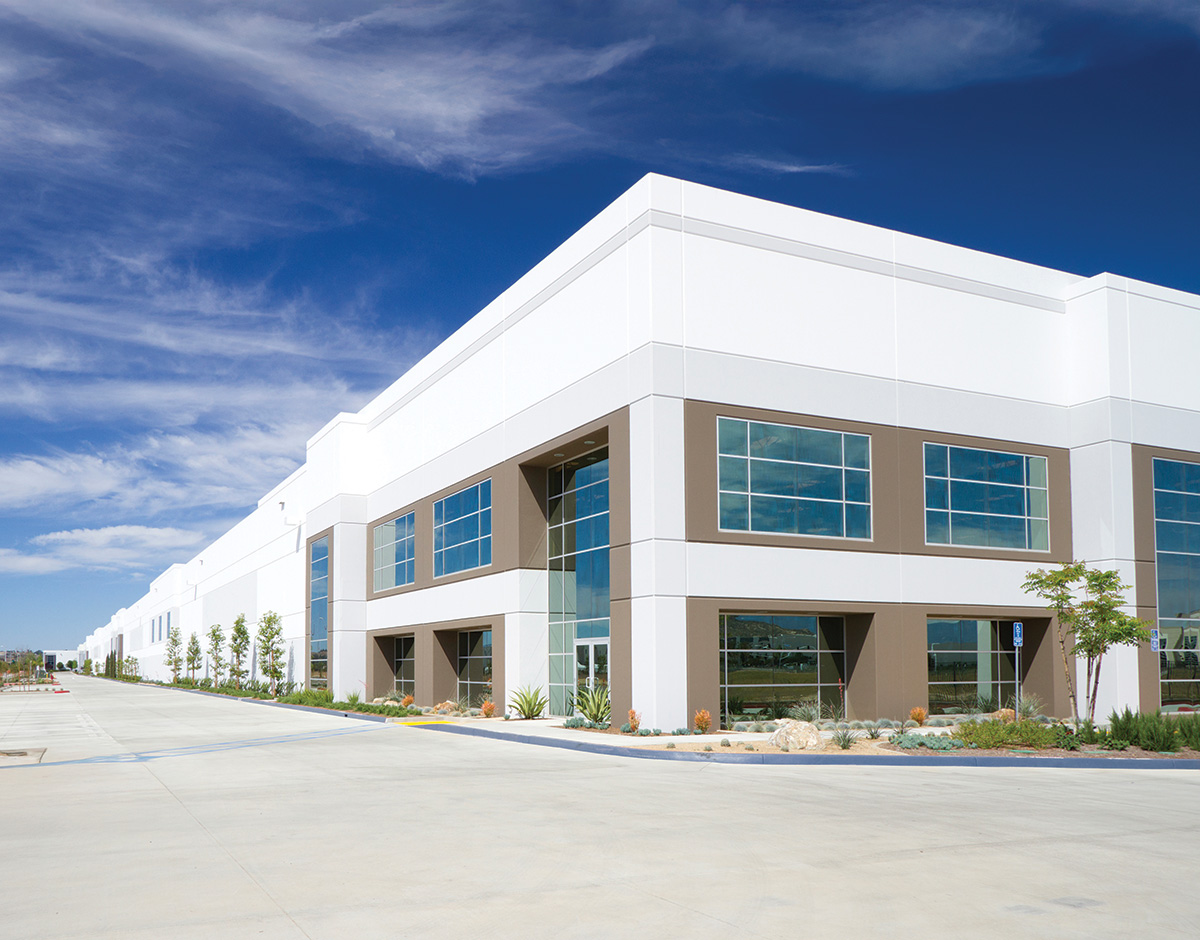
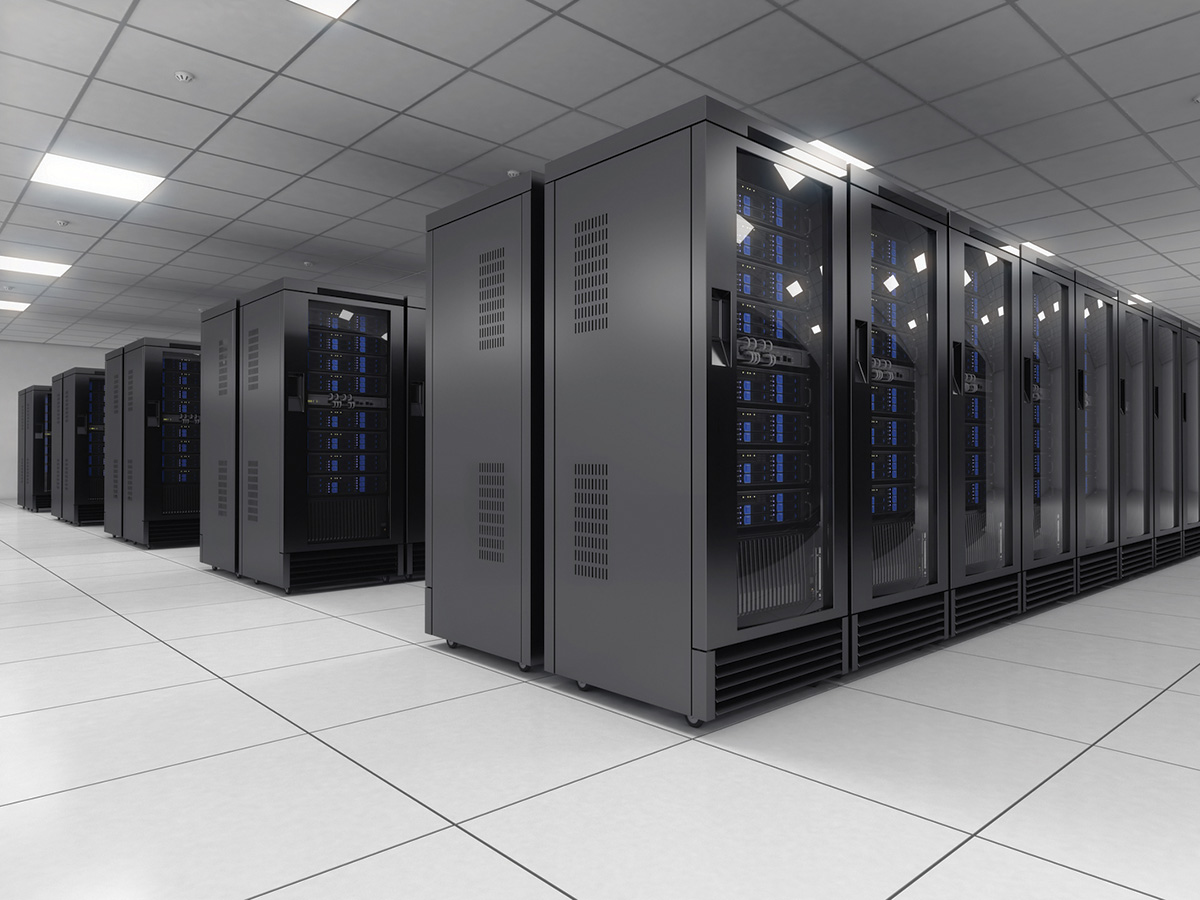
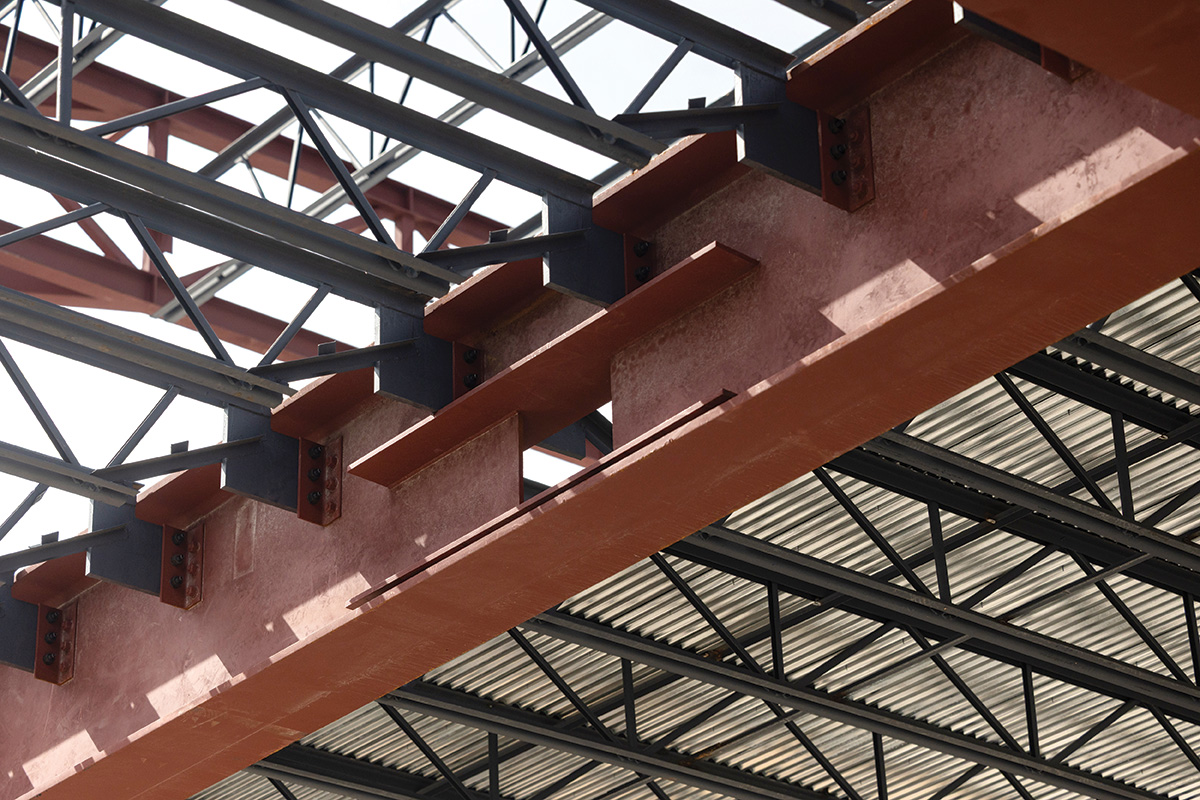
Photo © AvailableLight / iStock / Getty Images Plus via Getty Images; courtesy of New Millennium, A Steel Dynamics Company
Direct design team cooperation with suppliers ensures engineered and manufactured solutions that control costs, enhance performance, and safeguard project success.
Today’s data center and mission-critical design must address twin challenges: speed to market and contingency planning.
To navigate these challenges, successful design teams engage in early collaboration. Collaboration directly with suppliers is becoming a common practice, as it addresses impending issues in the design stage before they become serious issues that impede construction. Mission-critical projects currently face extensive supply chain constraints and component shortages, coupled with labor shortages within the industry. Design flexibility is essential to ensure long-term viability and enables faster adaptation to evolving technologies.
Structural steel companies, like steel joists and steel deck manufacturers, are a resource that should be embedded with team members during early collaboration. Suppliers are sources of knowledge and can provide guidance throughout design and construction. By guaranteeing procurement and delivery, direct supplier relationships can insulate owners from unstable market forces to pinpoint more efficient design strategies. Supplier assistance extends from the architect to the contractor, answering questions on concerns from topics as varied as sustainability to installation.
“Our engineers grasp the scope and then explore the most economical design,” says Jill Engerman, National Accounts Project Manager at New Millennium. “For a particular data center project, they might suggest integrating some of our steel deck accessories so there’s less cutting in the field. Then we’ll work together on other opportunities to streamline, such as maximizing loads and staging deliveries to the site.”
The versatility of joist and deck products in composite design allows for a broad spectrum of data center configurations in structural steel. Structural steel offers both capacity and flexibility. Assembled in a factory setting avoids labor shortages and offers an alternative way forward from traditional stick-built construction. Open-web steel joists are, by definition, prefabricated. Designed on a per-project basis, these components provide a standard floor and roof structural system tailored to exacting design specifications. With the development of flush frame connections, substituting for beams can be seamless.
Integrated Enclosures Bring Value
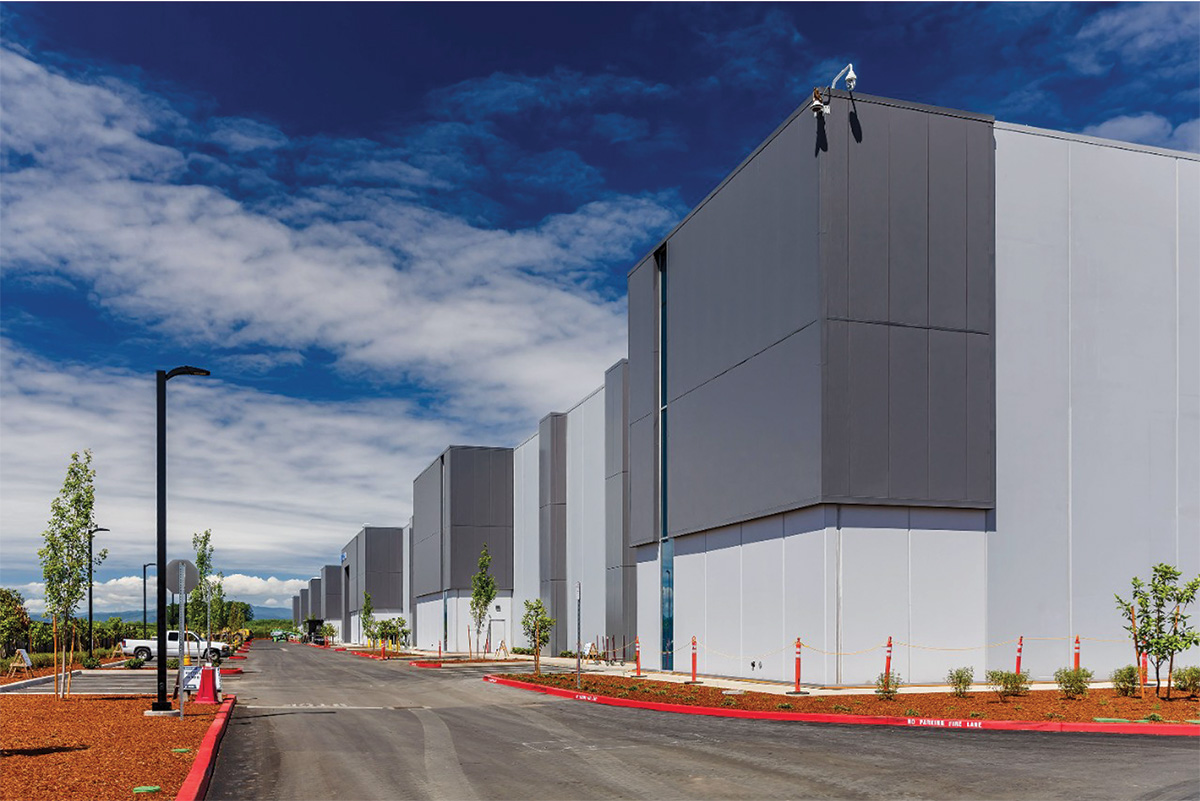
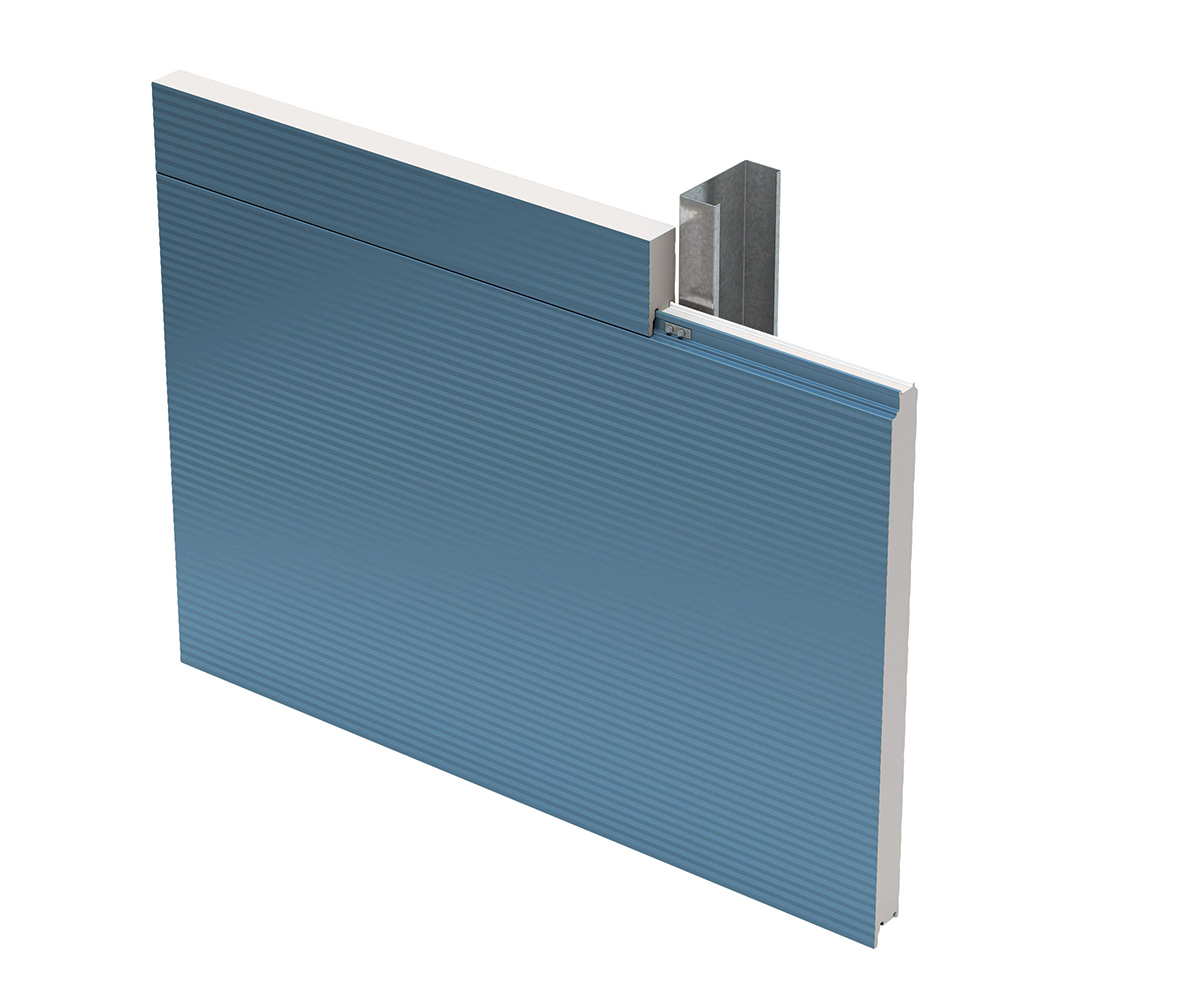
Photo courtesy of Kingspan Insulated Panels, Inc.
Integrated enclosure systems, such as insulated metal panels, can streamline construction while delivering high levels of performance.
High-performance exterior wall enclosure systems, specifically insulated metal panel (IMP) wall assemblies, bring crucial support for thermal efficiency, airtightness, moisture control, durability, and construction speed in mission-critical facilities. IMPs are not simply aesthetic cladding; they are prefabricated, single-component, fully integrated enclosure systems that are quick to install and help to accelerate the overall speed of construction. Unlike traditional construction methods that rely on multiple trades, IMPs can be installed by a single team, reducing labor and equipment costs and helping to speed up the construction process.
An additional advantage of IMPs is the ability to achieve a faster dry-in, allowing interior trades to begin work before the entire wall structure is completed. IMPs meet the fire performance requirements of mission-critical facilities. These systems are designed and tested to comply with rigorous fire, structural, and environmental performance standards. By maintaining optimal conditions, these panels help protect sensitive equipment from damage due to temperature fluctuations and humidity.
“Especially for our hyperscale data center clients, everything is speed-to-market right now,” said Joy Hughes, Global Accounts Director, Gensler. “AI is driving the capacity, but our challenge is how fast we can get these facilities up and running. When our clients come to us, they already have service agreements with end users set up with promised dates. They have to be move-in ready, so everything is moving very quickly, and it can come down to how the buildings are built, and what they’re made of. Everything is about speed, speed, speed.4”
Data centers are not static; as demand for data processing increases, these facilities must be able to scale quickly. IMPs offer flexibility in design, allowing for easy expansion and modification. IMPs support adjustments to additional capacity or adapting to new technologies by providing a versatile and adaptable building envelope.
Leveraging Optimized, Glazed Envelope Solutions
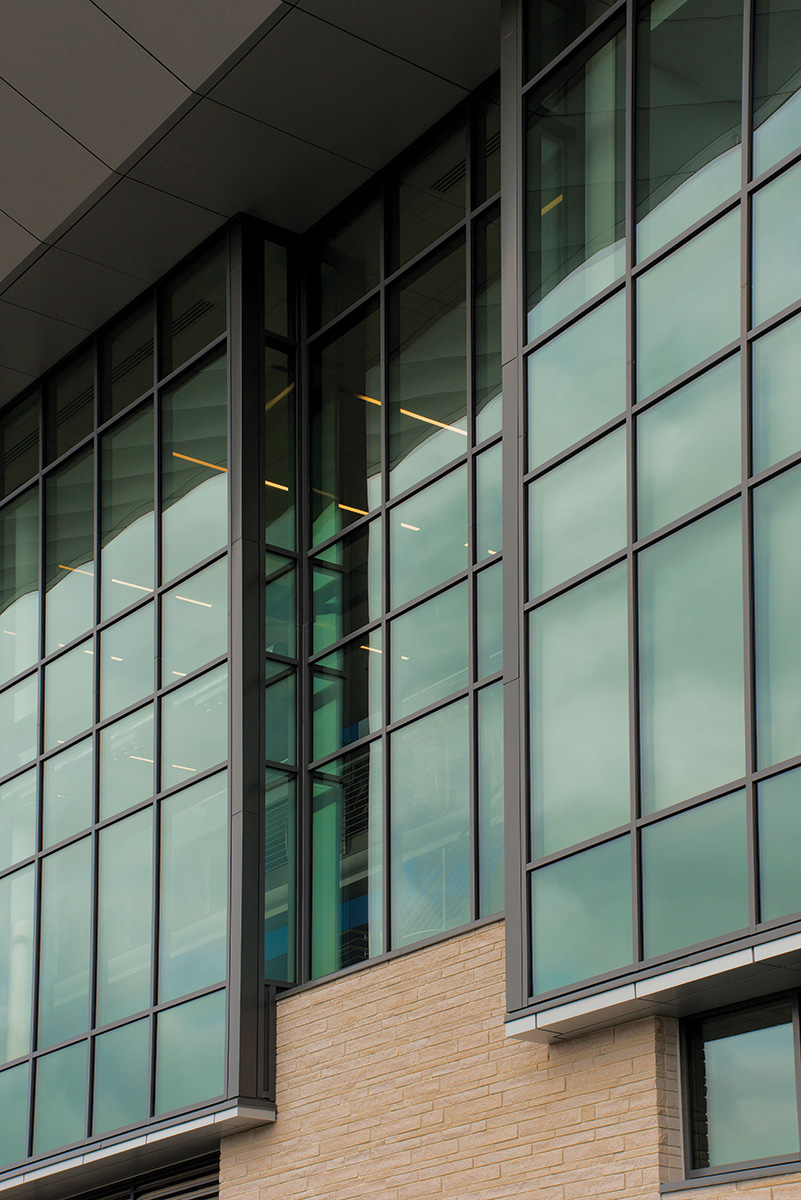
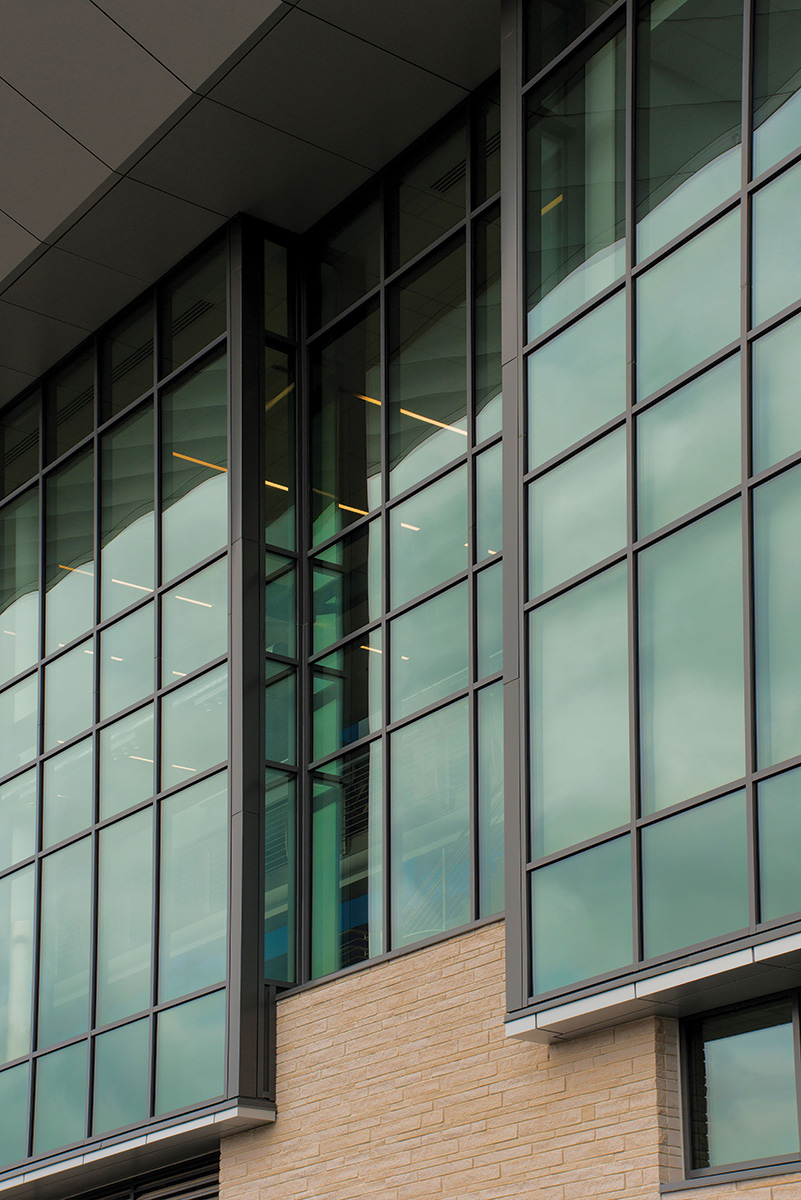
Photo courtesy of Oldcastle BuildingEnvelope
High-performance glazing, including high-thermal framing, triple-pane IGU, VIG, and low-e coatings, has an important role to play in reducing solar heat to protect the PUE (Power Usage Effectiveness) targets mandated by hyperscale 2026 sustainability roadmaps.
Meeting the hyper-accelerated demands of developers means choosing prefabricated solutions which offer the design team an advantage.
The role of unitized curtain walls in modular construction enhances the speed of construction. Insulating Glass Units, or IG units, are designed to support energy efficiency and sound control goals for projects. A variety of make-ups, air space options, low-emissivity coatings, and decorative interlayers provide nearly limitless flexibility for the glazing to meet a wide range of performance requirements. IG units can be fabricated to meet state energy and safety codes, acoustical and seismic requirements, impact, bullet, hurricane, and blast resistance requirements. IG units can be designed to reduce heat loss and solar heat gain targets. They can be provided as dual pane, triple pane, thin triple pane, or vacuum insulating units, with glazing as thin as ¼ inch. Glass and glazing systems can meet a variety of project needs while maintaining clear sightlines into mission-critical spaces and providing visibility and natural light for users in occupied office areas.
Incorporating high-performance glazing in mission-critical design allows projects to meet aggressive net-zero targets and lower power usage effectiveness. This glazing technology can also transition to “transparent” aisle containment systems through the use of fire-resistant glazing for thermal segregation and visual sightlines. The visual appeal of glazing enhances aesthetic integration and urbanization for the centers.
Factory-glazed modularity reduces on-site envelope installation timelines and skilled trade requirements. Unitized curtain wall systems are pre-glazed and assembled units that are installed on-site, minimizing field labor and ensuring greater quality control. These systems improve weatherproofing and accelerate project timelines. They also mitigate supply chain risk through standardization. By implementing standardized glazing reference designs, hyperscale developers can scale across multiple regions without repeating custom engineering phases, allowing the team a first-mover advantage in AI capacity.
Chetwoods Architects director Louis Fantis notes that, for data centers, design quality, facade treatment, and planning engagement are critical.5 The design team has to think not only about technical performance but also about how these buildings express themselves architecturally in a dense setting.
Photo courtesy of Oldcastle BuildingEnvelope
Data centers are complex and specialized structures that involve intricate planning, both initially and to anticipate future adaptation and growth.
Data centers are the physical hubs of our digitally connected world. As the demand for data storage and computing capabilities exponentially increases, so too does the demand for new data centers.
The design behind data centers must, of necessity, be specific. Designing data centers differs from more conventional design precisely because these facilities must also anticipate processes, procedures, and specialized labor for unique technical needs. Design professionals are charged with ensuring business continuity, disaster prevention, and building in contingencies that reduce the chances of downtime.1 Unplanned data center outages cause immediate financial fallout; the average cost of data center downtime in 2025 soared as high as $9,000 per minute.2 Data centers and other mission-critical facility designs prioritize maximum availability and failure mitigation for the complex to prevent financial, reputational, and even health risks to those within the facility.3 This multifaceted set of analytics is complicated by a desire for speed to market and the sheer number of centers in planning and construction.
Defining Mission Critical
Redefining the Designer and Supplier Relationship
Photo © AvailableLight / iStock / Getty Images Plus via Getty Images; courtesy of New Millennium, A Steel Dynamics Company
Direct design team cooperation with suppliers ensures engineered and manufactured solutions that control costs, enhance performance, and safeguard project success.
Today’s data center and mission-critical design must address twin challenges: speed to market and contingency planning.
To navigate these challenges, successful design teams engage in early collaboration. Collaboration directly with suppliers is becoming a common practice, as it addresses impending issues in the design stage before they become serious issues that impede construction. Mission-critical projects currently face extensive supply chain constraints and component shortages, coupled with labor shortages within the industry. Design flexibility is essential to ensure long-term viability and enables faster adaptation to evolving technologies.
Structural steel companies, like steel joists and steel deck manufacturers, are a resource that should be embedded with team members during early collaboration. Suppliers are sources of knowledge and can provide guidance throughout design and construction. By guaranteeing procurement and delivery, direct supplier relationships can insulate owners from unstable market forces to pinpoint more efficient design strategies. Supplier assistance extends from the architect to the contractor, answering questions on concerns from topics as varied as sustainability to installation.
“Our engineers grasp the scope and then explore the most economical design,” says Jill Engerman, National Accounts Project Manager at New Millennium. “For a particular data center project, they might suggest integrating some of our steel deck accessories so there’s less cutting in the field. Then we’ll work together on other opportunities to streamline, such as maximizing loads and staging deliveries to the site.”
The versatility of joist and deck products in composite design allows for a broad spectrum of data center configurations in structural steel. Structural steel offers both capacity and flexibility. Assembled in a factory setting avoids labor shortages and offers an alternative way forward from traditional stick-built construction. Open-web steel joists are, by definition, prefabricated. Designed on a per-project basis, these components provide a standard floor and roof structural system tailored to exacting design specifications. With the development of flush frame connections, substituting for beams can be seamless.
Integrated Enclosures Bring Value
Photo courtesy of Kingspan Insulated Panels, Inc.
Integrated enclosure systems, such as insulated metal panels, can streamline construction while delivering high levels of performance.
High-performance exterior wall enclosure systems, specifically insulated metal panel (IMP) wall assemblies, bring crucial support for thermal efficiency, airtightness, moisture control, durability, and construction speed in mission-critical facilities. IMPs are not simply aesthetic cladding; they are prefabricated, single-component, fully integrated enclosure systems that are quick to install and help to accelerate the overall speed of construction. Unlike traditional construction methods that rely on multiple trades, IMPs can be installed by a single team, reducing labor and equipment costs and helping to speed up the construction process.
An additional advantage of IMPs is the ability to achieve a faster dry-in, allowing interior trades to begin work before the entire wall structure is completed. IMPs meet the fire performance requirements of mission-critical facilities. These systems are designed and tested to comply with rigorous fire, structural, and environmental performance standards. By maintaining optimal conditions, these panels help protect sensitive equipment from damage due to temperature fluctuations and humidity.
“Especially for our hyperscale data center clients, everything is speed-to-market right now,” said Joy Hughes, Global Accounts Director, Gensler. “AI is driving the capacity, but our challenge is how fast we can get these facilities up and running. When our clients come to us, they already have service agreements with end users set up with promised dates. They have to be move-in ready, so everything is moving very quickly, and it can come down to how the buildings are built, and what they’re made of. Everything is about speed, speed, speed.4”
Data centers are not static; as demand for data processing increases, these facilities must be able to scale quickly. IMPs offer flexibility in design, allowing for easy expansion and modification. IMPs support adjustments to additional capacity or adapting to new technologies by providing a versatile and adaptable building envelope.
Leveraging Optimized, Glazed Envelope Solutions
Photo courtesy of Oldcastle BuildingEnvelope
High-performance glazing, including high-thermal framing, triple-pane IGU, VIG, and low-e coatings, has an important role to play in reducing solar heat to protect the PUE (Power Usage Effectiveness) targets mandated by hyperscale 2026 sustainability roadmaps.
Meeting the hyper-accelerated demands of developers means choosing prefabricated solutions which offer the design team an advantage.
The role of unitized curtain walls in modular construction enhances the speed of construction. Insulating Glass Units, or IG units, are designed to support energy efficiency and sound control goals for projects. A variety of make-ups, air space options, low-emissivity coatings, and decorative interlayers provide nearly limitless flexibility for the glazing to meet a wide range of performance requirements. IG units can be fabricated to meet state energy and safety codes, acoustical and seismic requirements, impact, bullet, hurricane, and blast resistance requirements. IG units can be designed to reduce heat loss and solar heat gain targets. They can be provided as dual pane, triple pane, thin triple pane, or vacuum insulating units, with glazing as thin as ¼ inch. Glass and glazing systems can meet a variety of project needs while maintaining clear sightlines into mission-critical spaces and providing visibility and natural light for users in occupied office areas.
Incorporating high-performance glazing in mission-critical design allows projects to meet aggressive net-zero targets and lower power usage effectiveness. This glazing technology can also transition to “transparent” aisle containment systems through the use of fire-resistant glazing for thermal segregation and visual sightlines. The visual appeal of glazing enhances aesthetic integration and urbanization for the centers.
Factory-glazed modularity reduces on-site envelope installation timelines and skilled trade requirements. Unitized curtain wall systems are pre-glazed and assembled units that are installed on-site, minimizing field labor and ensuring greater quality control. These systems improve weatherproofing and accelerate project timelines. They also mitigate supply chain risk through standardization. By implementing standardized glazing reference designs, hyperscale developers can scale across multiple regions without repeating custom engineering phases, allowing the team a first-mover advantage in AI capacity.
Chetwoods Architects director Louis Fantis notes that, for data centers, design quality, facade treatment, and planning engagement are critical.5 The design team has to think not only about technical performance but also about how these buildings express themselves architecturally in a dense setting.
Specifying Durable, Sustainable Materials
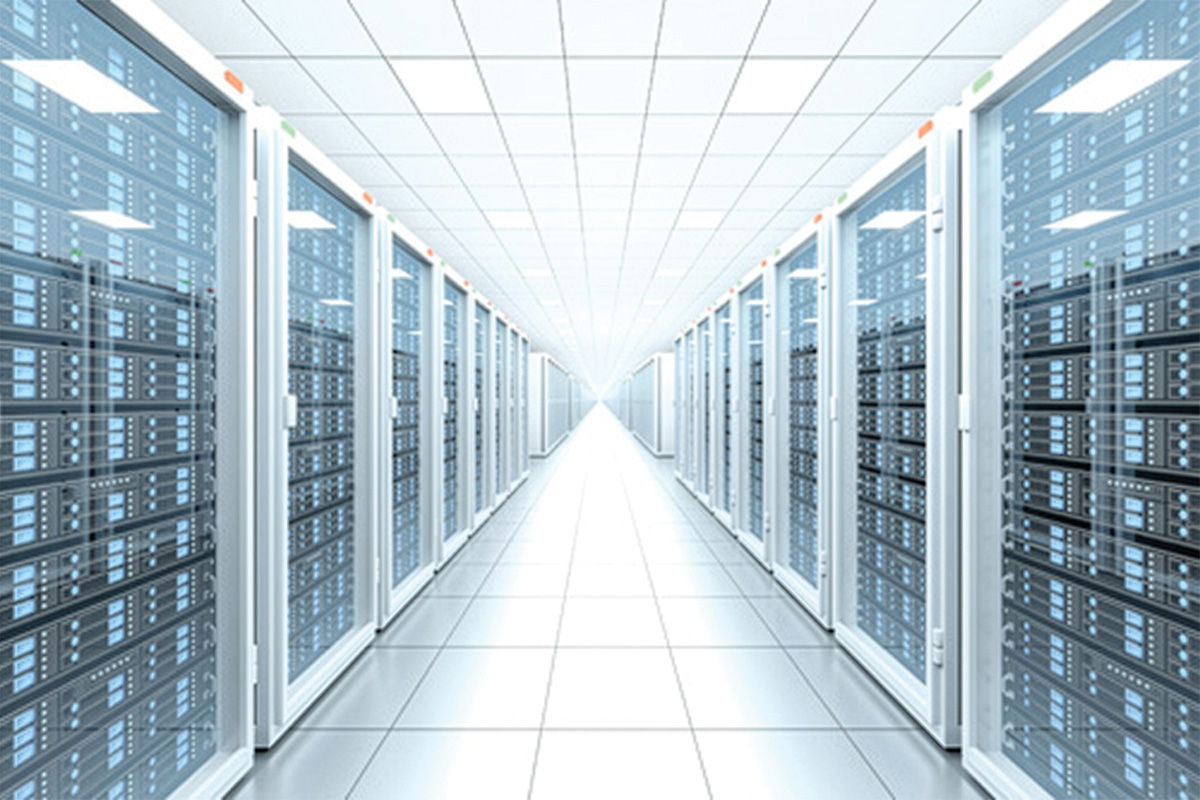
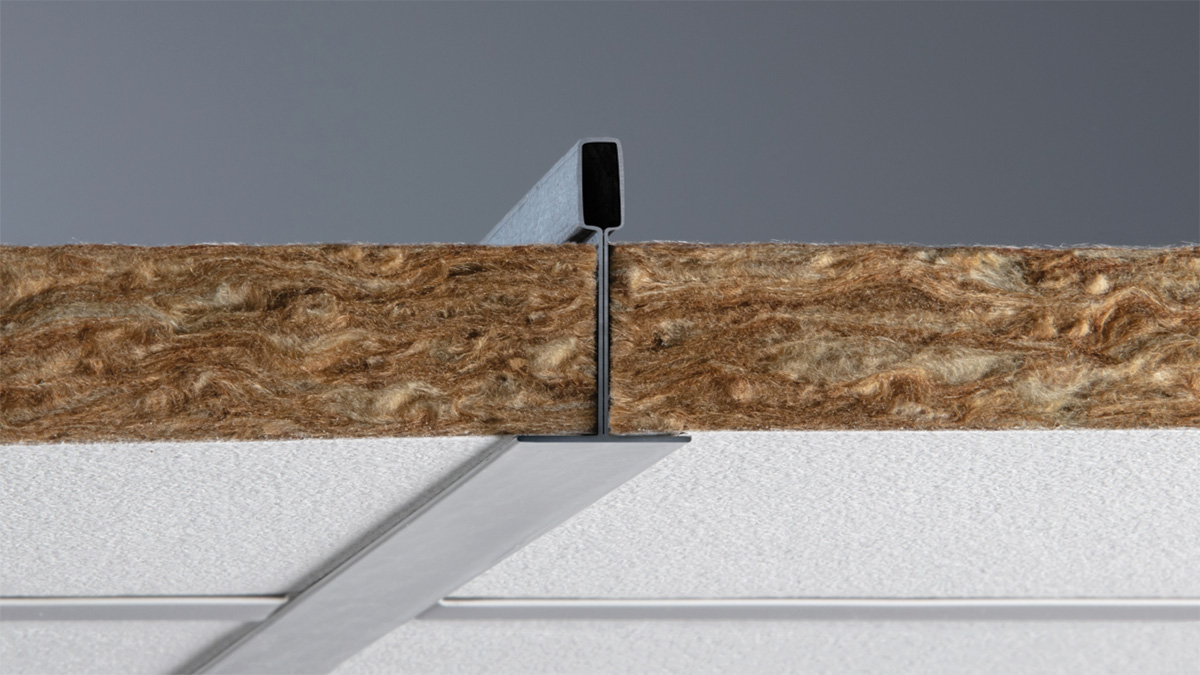
Photo courtesy of Rockfon
Project sustainability goals are enabled by enhanced traceability, transparency, and reporting for recycled materials to meet sustainability and ESG requirements.
Choosing low embodied carbon products addresses another major data center challenge: sustainability. Supported with a 30-year warranty, acoustical stone wool ceiling tiles and panels have a long lifespan, contributing to commercial and industrial projects’ interior designs while reducing “cradle to gate” carbon. An additional, critical part of this long-range view of a building’s impact is the anticipation of customers’ future needs. Takeback manufacturer programs offer a sustainable choice to reduce waste from projects and to extend the material’s use beyond the end of the project life cycle.
Stone wool can be repeatedly recycled while maintaining its performance properties. Upon removal from a building, stone wool products re-enter the production cycle, conserving resources and minimizing waste, creating a closed-loop system. Through this process, new high-quality stone wool products are manufactured. “We fully support the transition to a society based on circular economy principles,” explained Rachel Berkin, LEED AP O+M, Rockfon senior sustainability manager. “Circularity is at the core of our sustainability strategy because of stone wool’s remarkable benefits.”
Stone wool is manufactured primarily with basalt rock, one of the world’s most abundant and continuously generated resources. Harnessing the inherent properties of stone, ceiling tiles and panels from stone wool provide the performance needed to satisfy demanding design parameters in data centers. Stone wool is antimicrobial without any additives, flame-resistant, hydrophobic, and sound-absorptive. These properties are delivered in an acoustical ceiling tile product that contributes to safe, comfortable, and beautiful data center designs.
Providing Unified Building Automation

Photo © gorodenkoff / iStock / Getty Images Plus via Getty Images; courtesy Honeywell
Velocity to scale is critical for data center design.
Smarter buildings start with better control. An integrated and comprehensive range of controllers, field devices, and software allows ownership, management, and the design team to customize a system to fit each building and scale for future requirements.
A building management system (BMS) is vital for data centers where precise building control is critical. Data center operators need a single pane of glass for HVAC, power, cooling, fire, and security. A centralized platform reduces blind spots, speeds root‑cause analysis, and minimizes downtime from fragmented systems. When a cooling or electrical anomaly emerges, cross‑system visibility helps teams act before it becomes a service‑impacting event.
The best BMS helps maintain uptime and prevents operational technology from inhibiting a data center’s IT networks. Designing an integrated solution contributes to system-wide visibility and enables proactive intervention.
The right data center solution provider can specify a BMS designed to meet the demanding needs of these digital factories. Robust systems should be designed with redundant paths for uninterrupted power and cooling. Monitoring, analytics, automation, asset management, and predictive maintenance are some of the BMS-enabled solutions that can help protect uptime.
An integrated BMS maximizes operational efficiency across the data center’s lifecycle. Likewise, a data solution center partner ensures the facility meets planning and building code requirements and is prepared for the workloads of today and tomorrow.
Data centers are energy‑intensive, and with AI-enabled software can help optimize cooling, airflow, and electrical usage through real‑time analytics, adaptive setpoints, and continuous commissioning. AI‑based control strategies reduce unnecessary load while maintaining strict environmental tolerances—supporting sustainability goals and lowering operating costs.
Defeating “NIMBY” with Design
NIMBY: Not in my backyard. Mention a data center and people picture large, rectangular buildings with little architectural flair. While community concern around data center growth typically centers on energy and water usage, local protests have also flared up from neighbors decrying “ugly” eyesores.6
Joy Hughes, Global Accounts Director for Gensler, notes that their firm is seeing accelerated requirements for a higher level of design on the exterior of data center projects, allowing the facility to blend in as much as possible with established buildings. Gensler seeks to work with the jurisdictions and have dialogue with the community about how these facilities are designed and built to ensure that the team is sensitive to neighborhood concerns.7
The Role of Glazing
Design teams can defeat this preconception by applying “Good Neighbor” design principles, using architectural features that help data centers meet municipal zoning requirements, particularly in dense, mixed-use urban environments. Firms that are leading the design of these facilities, like Gensler and Corgan, are starting to lean into aesthetic solutions that help the building better integrate with the neighborhoods around it.
“While many still view data centers as simple ‘concrete boxes,’ leading architecture firms are shifting toward aesthetic solutions that integrate these facilities into our neighborhoods,” said Brett Chottiner, National Accounts Manager, Data Centers, Oldcastle Building Envelope. “The opportunity now is to use glass and glazing systems as not only an aesthetic asset, but a performance asset. By leaning into transparency and design, we can use advanced glazing systems like triple pane glazing and high-thermal curtain wall that actively support the critical power usage effectiveness (PUE) and net-zero targets of the next generation of mission-critical infrastructure.”
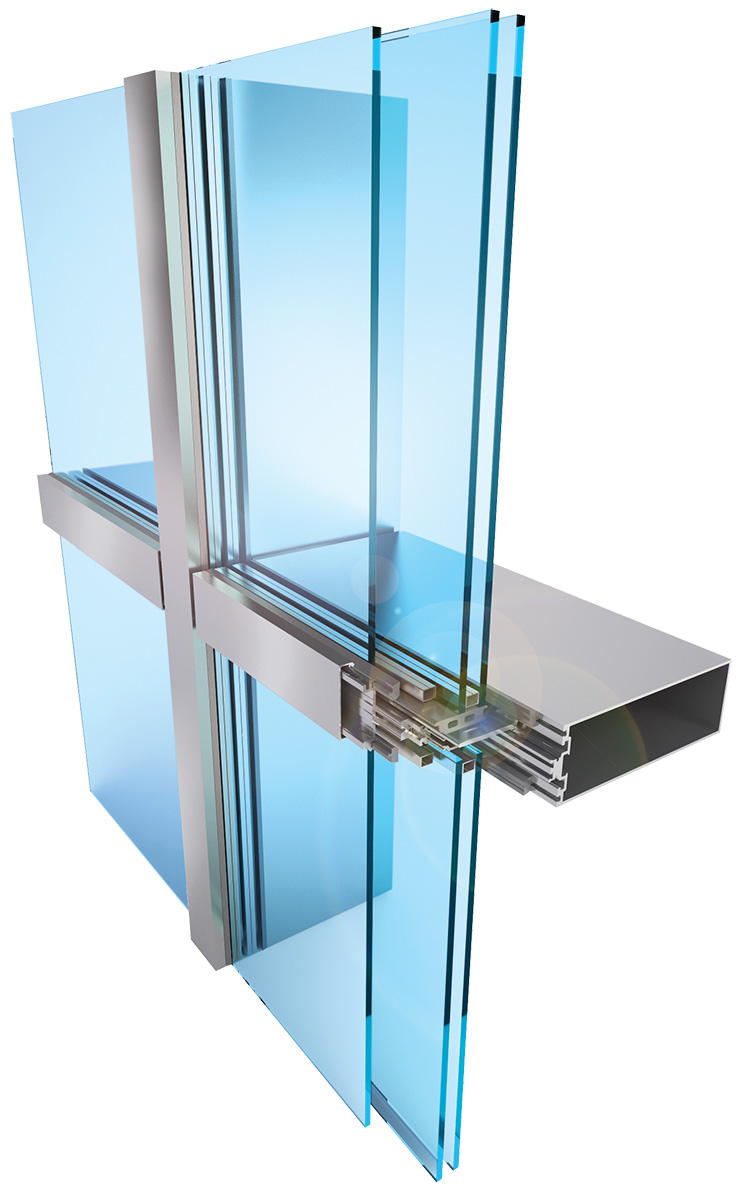
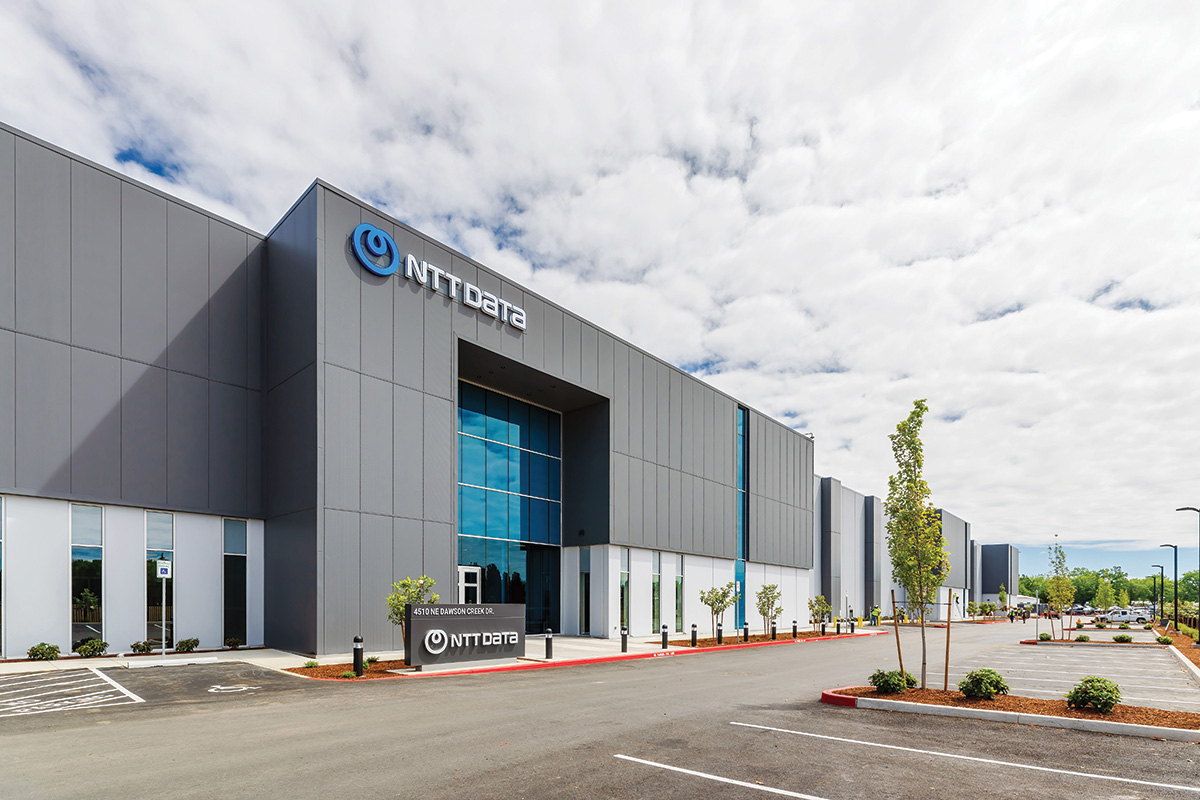
Image courtesy of Oldcastle BuildingEnvelope
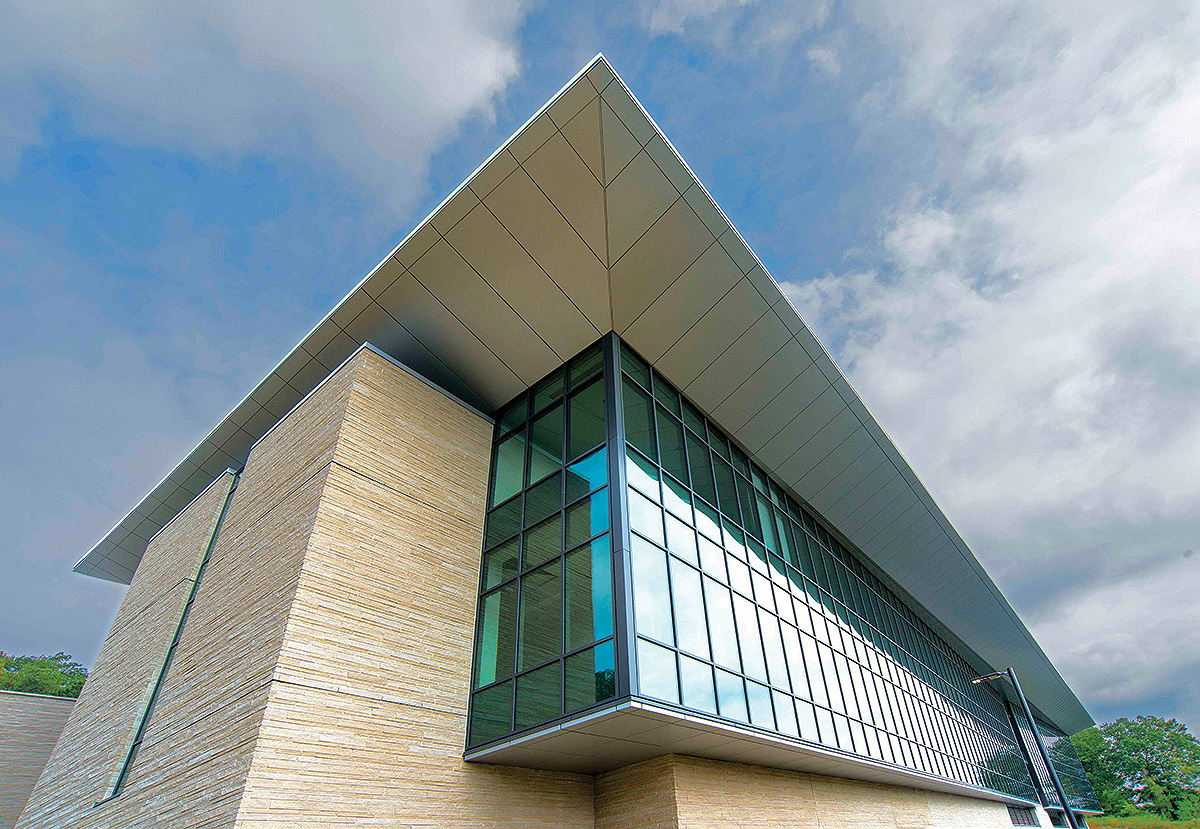
Facilitated by the high performance of glazing assemblies, data center design is shifting to more aesthetically pleasing facades to blend into mixed-use neighborhoods.
Glass and glazing systems, from the all-glass facade look of curtain wall, to the integrated appeal of storefront and glass entrances, can be leveraged to make data centers feel integrated into neighborhoods and urban environments. However, with the ability to meet design goals comes the necessity to make sure that the systems selected are supporting, not detracting from, data center power usage needs and thermal efficiency goals.
For a fenestration system to provide optimal energy efficiency, its components must be carefully selected so that together they can deliver the desired result. This includes aluminum framing systems and, more importantly, insulating glass. Insulating Glass Units (IGUs) with dual or triple glazing are the key to a successful energy-efficient fenestration system. For the best results, they should be filled with argon or xenon gas and should incorporate low-emission (low-E) coatings. Low-e coatings, gas-filled insulating glass units, and the use of double or triple panes are all critical considerations. When paired with high-performance aluminum framing, like high thermal curtain walls and storefronts, these systems work together to reduce solar heat, which in turn protects the PUE (Power Usage Effectiveness) targets mandated by hyperscale 2026 sustainability roadmaps. Many systems also provide Environmental Product Declarations (EPDs) as well as other sustainable rating certifications like Red-List Free labels to further support sustainability goals.
When reinforced with polyamide thermal struts, high-performance curtain walls provide exceptional thermal attributes. These glazed systems are also designed to be installed from inside the building, which facilitates frame installation and eliminates the need for staging equipment. Thermal performance per AAMA 1503 for Low E 1-inch insulating glass generates a U-factor = 0.34 and CRF = 79. Thin triple IGUs with polyamide insulating strips can achieve U-factors as low as 0.20, without increasing system depth.
One of the most outstanding benefits from the factory assembly and glazing of available unitized curtain wall frames is the reduction of field labor and minimization of reliance on site-applied seals. Factory-assembled, sealed, and glazed curtain walls provide captured and structural silicone glazing options with various infill flexibilities. This framing design features two lines of defense, or rain screen approach, for superior air and water resistance.
IMPs: High Efficiency and Aesthetically on Point
As new materials and technology expand architectural design flexibility in industrial and infrastructure facilities, emerging design trends are influencing how architects approach resilience, sustainability, and adaptability in mission-critical facilities. Because of their all-in-one performance attributes combining air, water, vapor, and thermal barriers, insulated metal panels (IMPs) not only reduce the construction timeline but also minimize labor costs and reduce the opportunities for onsite installation errors. Faster construction times mean facilities can become operational sooner, leading to quicker revenue generation and a faster return on investment. While there is a perception that IMP systems limit architectural flexibility or are difficult to coordinate with other building systems, in practice, modern IMPs offer a wide range of design options and can simplify installation by integrating multiple enclosure components into a single assembly.
“Today’s mission-critical facilities demand enclosure strategies that balance performance, resilience, and architectural flexibility,” said Karim Muri, Vice President, Marketing Services and Strategy Developments, Kingspan Insulated Panels.
High-performance buildings require materials that can deliver exceptional air tightness, stable temperature management, and strong fire resistance. This is particularly important in environments such as data centers, where precise climate control is essential. Providing a highly efficient barrier while also offering an aesthetically pleasing appearance is possible. IMPs provide unique aesthetics through a wide range of profiles while delivering supreme thermal performance. Adjustable module widths can integrate with distinct architectural style. Color finishes of the panels are virtually unlimited and include custom finishes. Panels, applied horizontally or vertically, feature a sleek design with a wide variety of profiles that add visual appeal to the building. The clean lines give the data center a contemporary but professional look.
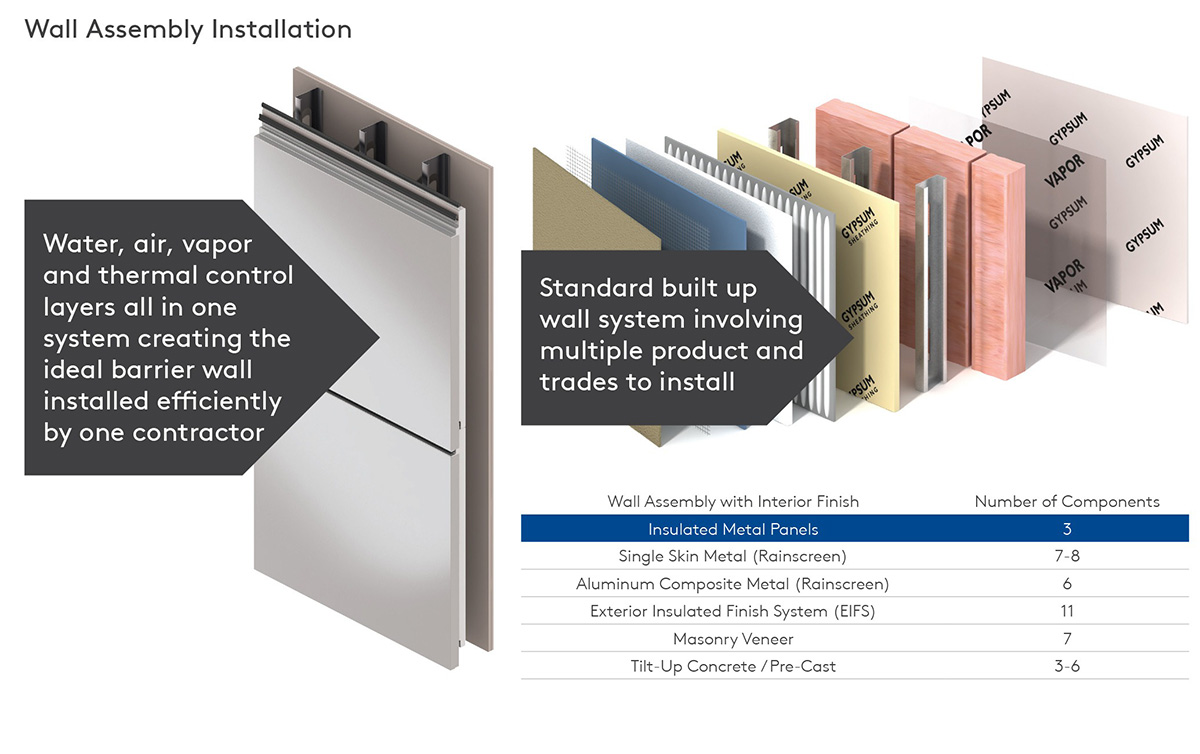
Image courtesy of Kingspan Insulated Panels, Inc.
Designing for always-on infrastructure requires architects to view the building enclosure as a critical operational system, not just an exterior finish.
Industry organizations involved in establishing and maintaining standards for IMPs include ASTM International, the National Fire Protection Association (NFPA), FM Approvals, and the International Code Council (ICC). Specified IMPs should meet relevant standards, including ASTM testing for thermal resistance, air infiltration, water penetration, structural performance, and fire testing of wall assemblies, as well as NFPA fire performance standards for exterior wall systems. Many projects also require compliance with FM Approvals standards for fire and structural performance.
IMPs also support sustainability measures within the building design. Compared to conventional concrete wall assemblies, certain IMPs have been demonstrated to have 28 percent lower embodied carbon in a Whole Building Life Cycle Assessment (WBLCA) study.
Providing Centers with Centralized Support
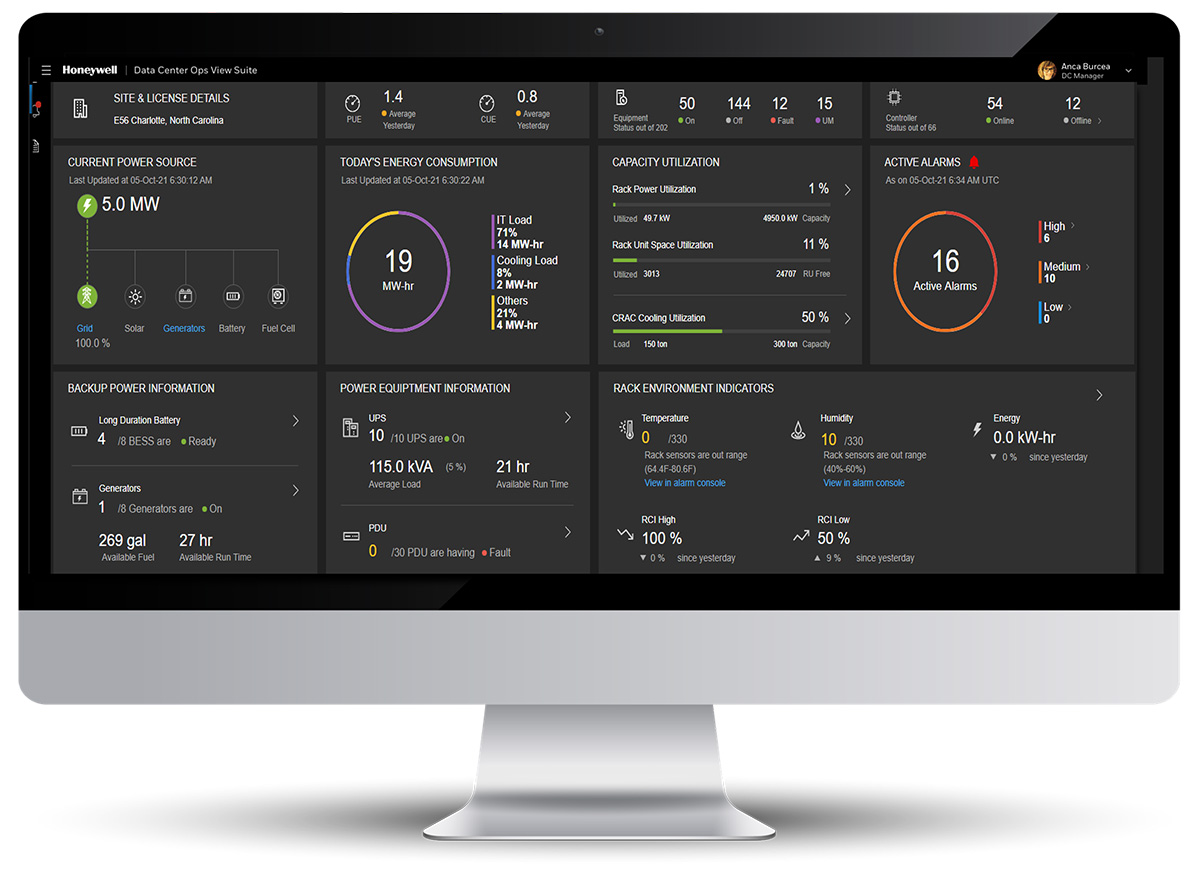
Photo courtesy of Honeywell
A centralized platform, like the example pictured here, reduces blind spots, speeds root cause analysis, and minimizes downtime from fragmented systems. When an anomaly emerges, cross-system visibility helps teams act before it becomes a service-impacting issue.
For data centers, the performance of the building is critical. When a building performs at its peak potential, so does the data housed inside. A collection of disparate products will not produce the same results as a unified operational platform.
Data centers and other mission-critical facilities rely on an integrated ecosystem of sensors, analytics, and building automation controls that can detect, analyze, and act in real time.
Four out of five operators believe their most recent downtime incidents were preventable with better management, processing, and configuration.8 A data center solution provider understands the total picture of downtime risks and has a suite of automation and analytics solutions in place to help mitigate them.
Data center solutions for fire and life safety, building and access controls, electrical equipment, and OT cybersecurity are designed to work as an integrated ecosystem. A data center solution provider should help to maximize operational efficiency across the data center’s lifecycle while reducing complexity. Solutions providers can serve as a partner and single point of contact from planning through ongoing service and maintenance.
With a centralized platform, data center operators benefit from having a single pane of glass view into HVAC, power, cooling, fire, and security systems. A centralized platform reduces blind spots, speeds rootcause analysis, and minimizes downtime caused by fragmented control systems. When a cooling or electrical issue emerges, crosssystem visibility helps teams act before it becomes a serviceimpacting event.
Resilient operations are also ensured through early detection. Fire systems provide survivable communications and earlywarning detection before thermal runaway; security platforms maintain continuity even during network disruptions; and BMS analytics flag degrading assets before they fail. The result is a more resilient facility that can maintain operations through faults, alarms, or partial system outages.
A BMS allows for optimized energy usage without compromising reliability. Data centers are energyintensive, and BMS platforms with predictive AI can help optimize cooling, airflow, and electrical usage through realtime analytics, adaptive setpoints, and continuous commissioning. AIbased control strategies reduce unnecessary load while maintaining strict environmental tolerances—supporting sustainability goals and lowering operating costs. Software can balance energy load and help to manage energy escalations from AI demand spikes.
Interconnected fire detection, suppression, access control, and video systems integrate with building automation to create a coordinated response to incidents. Integrated safety and security reduce operational risk to the facility. Events like overheating, smoke, or unauthorized access can automatically trigger HVAC adjustments, alarms, lockdowns, or notifications. This integration reduces human error, accelerates response time, and protects uptime by containing issues before they escalate.
New Concerns in Data Center Design: Acoustics
Acoustic control is an evolving consideration across the construction industry, and this includes data center design. Two principal issues that often go without sufficient consideration during design are sound transmission and ambient noise. Equipment in data centers can create significant noise pollution, often exceeding 85-100 decibels. Decibel levels above 85 cause long-term hearing damage. The combined noise from cooling systems, back-up generators, data halls, and miscellaneous rooftop equipment can be mitigated by decoupling transmission, along with sound-absorptive materials.
Bringing the Strength of Steel to Acoustic Control
Acoustical steel deck products boast a Noise Reduction Coefficient (NRC) that can exceed .90 NRC. By comparison, standard ceiling tile has an NRC of .60. Composite steel deck brings mass to attenuate sound, with specific assemblies significantly improving upon standard Sound Transmission Class (STC) and Impact Insulation Class (IIC) allowable minimums. Building material selection, such as acoustic decks, used in concert with personal protection equipment, create a safer environment for workers in data centers.
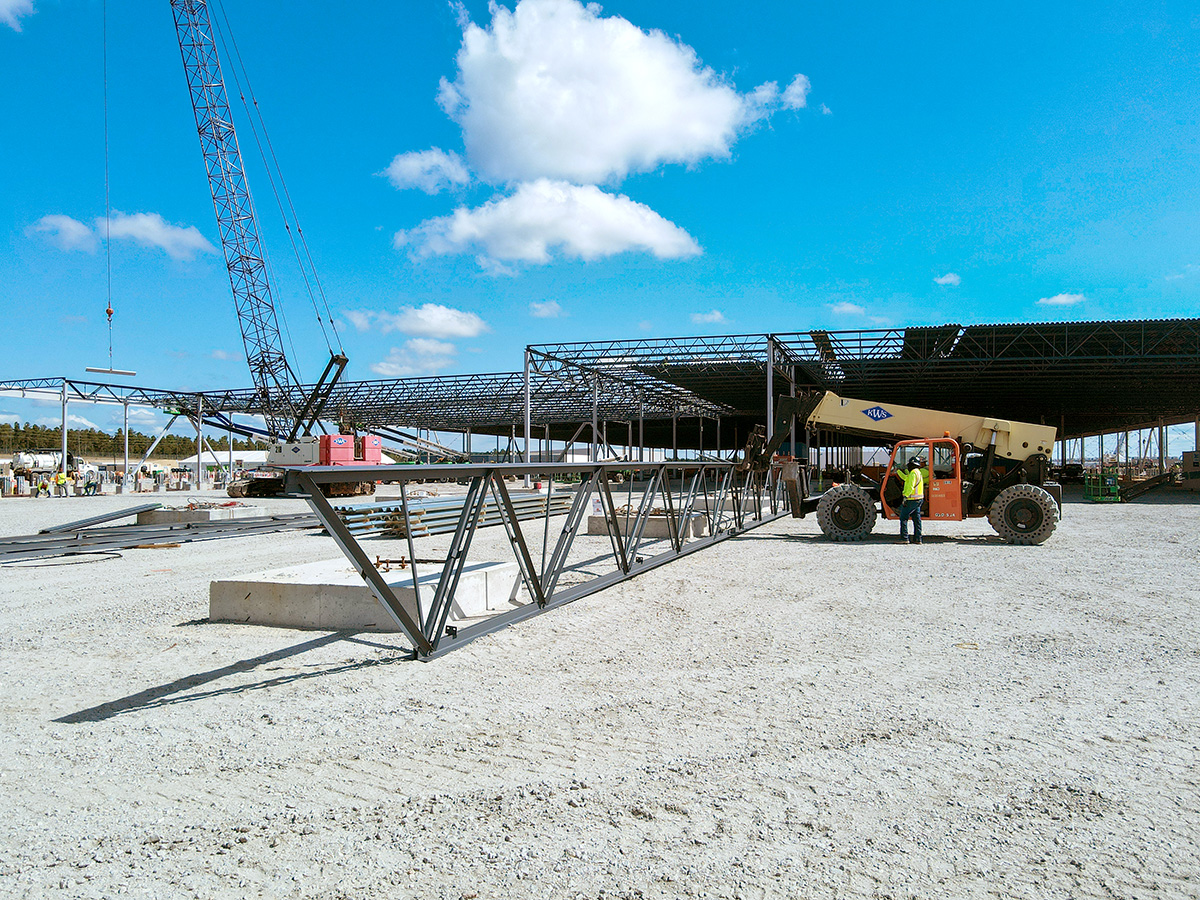
Dovetail profiles are alternatives to standard roof and floor deck. They offer long span and other performance benefits. In composite design, the flexibility of the product allows designers to optimize multi-story construction. Long-Span Composite Deck Design Tool software allows the design team to specify composite deck slabs with confidence and generate a detailed calculation report. Available in 2- and 3.5-inch profiles, composite steel deck delivers a highly efficient thin-slab solution for unprotected fire-rated assemblies. In exposed applications, the dovetail shape creates a linear plank ceiling aesthetic, concealing fasteners in roof applications. Mission-critical projects can take advantage of hanging devices from a long-span dovetail composite deck. The dovetail profile features non-destructive hanging devices that are easily movable throughout the lifespan of the building. In the construction phase, building system racks can be adjusted quickly during fit-up. Compared to the static, fixed nature of traditional hangers, changes would require extensive time to reconfigure. In operation, the compression fit of dovetail hangers does not shed debris in the form of silica dust from concrete or metal shavings from steel. These are potentially detrimental to the sensitive equipment these facilities house.
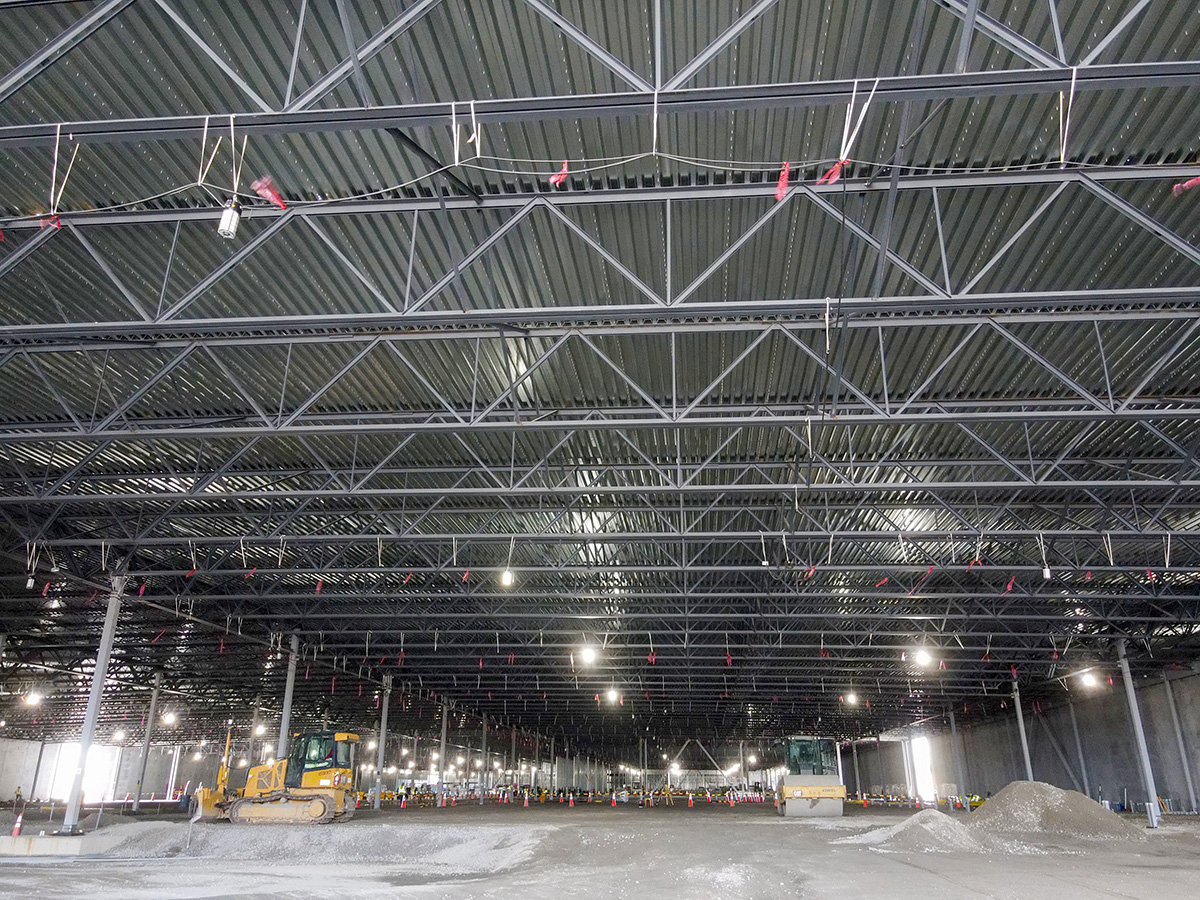
Photo courtesy of New Millennium, A Steel Dynamics Company
Besides acoustics and product availability, the steel industry is additionally addressing sustainability in production in a multitude of ways, from recycled content to energy consumption, to the development of high-strength materials equating with lighter materials capable of supporting greater loads.
Another consideration in deck selection is product cover width. Wider decks reduce handling and fastening while making installation faster, safer, and less labor-intensive.
Steel Deck Institute and Steel Joist Institute provide uniform industry standards for the design, manufacture, and field usage of steel deck and joist products. Domestic steel joist and steel deck manufacturers carry a full suite of certifications, including Environmental Product Declaration (EPD), Global Warming Potential (GWP), Life Cycle Analysis (LCA), Renewable Energy Certificates (REC), International Code Council Evaluation Service (ICC-ES) third-party testing of building products, and United Laboratories (UL) standard of testing for fire-rated assemblies. For acoustics, Sound Transmission Class (STC): ASTM E90: “Airborne Sound Transmission Loss,” Impact Insulation Class (IIC): ASTM E492: “Impact Sound Transmission Through Floor-Ceiling Assemblies,” and Noise Reduction Coefficient (NRC): ASTM C423-17: “Standard Test Method for Sound Absorption” are all assessed.
The versatility of joist and deck products allows for a broad spectrum of data center configurations in structural steel. As the surge in data center construction has strained material procurement and labor availability, design flexibility is essential to ensure long-term viability, adaptation to evolving technologies, and solutions for challenges like acoustic control.
Sustainable Acoustics
While experts may agree that acoustic requirements in construction have changed, there has not been a unified strategy of best practice in addressing sound control challenges. Nevertheless, acoustical quality is a fundamental pillar of Indoor Environmental Quality (IEQ).
Innovative acoustical solutions allow design professionals to respond to and exceed occupant expectations and increasingly stringent requirements in building standards. Exterior noise control and community compliance is an obvious challenge for data centers. Addressing interior noise is also critical for their employee health and safety, and requires careful specification.
There are several key roles for an acoustical ceiling in a data center. These are to absorb noise inside the room, decrease noise from the next room, and to help insulate against equipment noise.
During design, architects and engineers can identify the optimal levels of absorption independently and block for a space to achieve comfort and use smart design choices to maximize the strengths of individual building components in achieving those goals. For data centers specifically, noise reduction solutions such as acoustical ceiling tiles can be coupled with equipment enclosures and vibration isolation strategies.
“High sound absorption helps control the ambient noise levels and prevents excessive reverberance,” says Gary Madaras, Acoustic Specialist, PH.D., ASA, INCE, ASSOC. AIA.
High-performing stone wool absorptive ceiling panels can achieve an NRC of 0.95. This level of absorption can improve the acoustic experience in large spaces, such as data center halls and in multifunctional rooms, corridors, meeting rooms, lobbies, and reception areas. In addition to the benefits associated with 0.95 NRC, an Articulation Class (AC) rating of 190 supports heightened speech privacy. Available in a wider range of standard sizes, styles, and formats, stone wool acoustic ceiling panels contribute to commercial projects’ creative designs, industry-leading performance, and sustainability goals.
The mission-critical industry is facing exceptional pressure to prioritize sustainable and low carbon goals, making efficiency in their building portfolio essential. Stone wool acoustical tiles achieve both the necessary sound performance as well as providing documented sustainability. Selecting stone wool acoustical tiles for use in data centers allows designers to push forward the further incorporation of low carbon and circular economy benchmarks.
Endnotes
- Allison Hoadley Anderson,Chapter 11 - The Role of Designers and Other Building Practitioners in Advancing Resilience, Editor(s): Ryan Colker,Optimizing Community Infrastructure, Butterworth-Heinemann, 2020, Pages 197-210,
- ISBN 9780128162408. Accessed April 2, 2026.
- “What Is the Cost of Data Center Downtime & How to Prevent It.” Engineering. Ketchum Walton®. September 12, 2025. Accessed March 20, 2026.
- “Mission Critical Facility and Operations Management Focuses on Maximum Availability and Failure Mitigation Preventing Financial, Reputational, and Even Health Risks.” Insights. Cushman & Wakefield. August 22, 2022. Accessed March 5, 2026.
- “How the AI Gold Rush Is Influencing Data Center Design Trends.” Research & Insights. Gensler. May 6, 2025. Accessed March 11, 2026.
- Butler, Josh. “Data centres are booming – how can architects improve their design?” Architects Journal. December 2, 2025. Accessed March 11, 2026.
- Jones, Rachyl. “Data centers get makeovers to blunt NIMBY criticism.” January 7, 2026. Semafor. Accessed March 9, 2026.
- “How the AI Gold Rush Is Influencing Data Center Design Trends.” Research & Insights. Gensler. May 6, 2025. Accessed March 9, 2026.
- “Executive Summary, Annual outage analysis 2025.” Uptime Institute. May 2025. Accessed March 10, 2026.
- Axelrod, Sarah. “Crusoe to build initial 200 MW AI data center with plans to expand at 1.2GW Lancium Clean Campus.” Crusoe. July 18, 2024. Accessed March 20, 2026.
Amanda Voss, MPP, is an author, editor, and policy analyst. Writing for multiple publications, she has also served as the managing editor for Energy Design Update.