Photo courtesy of Häcker Kitchens
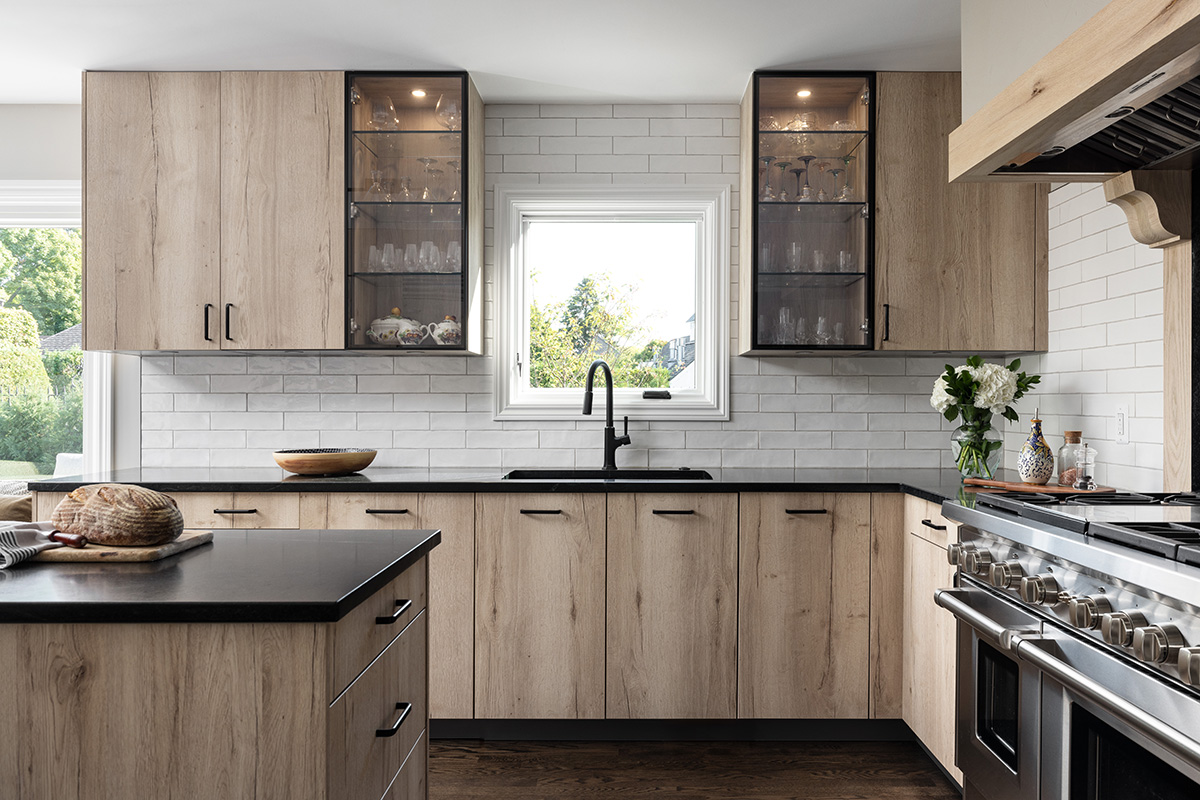
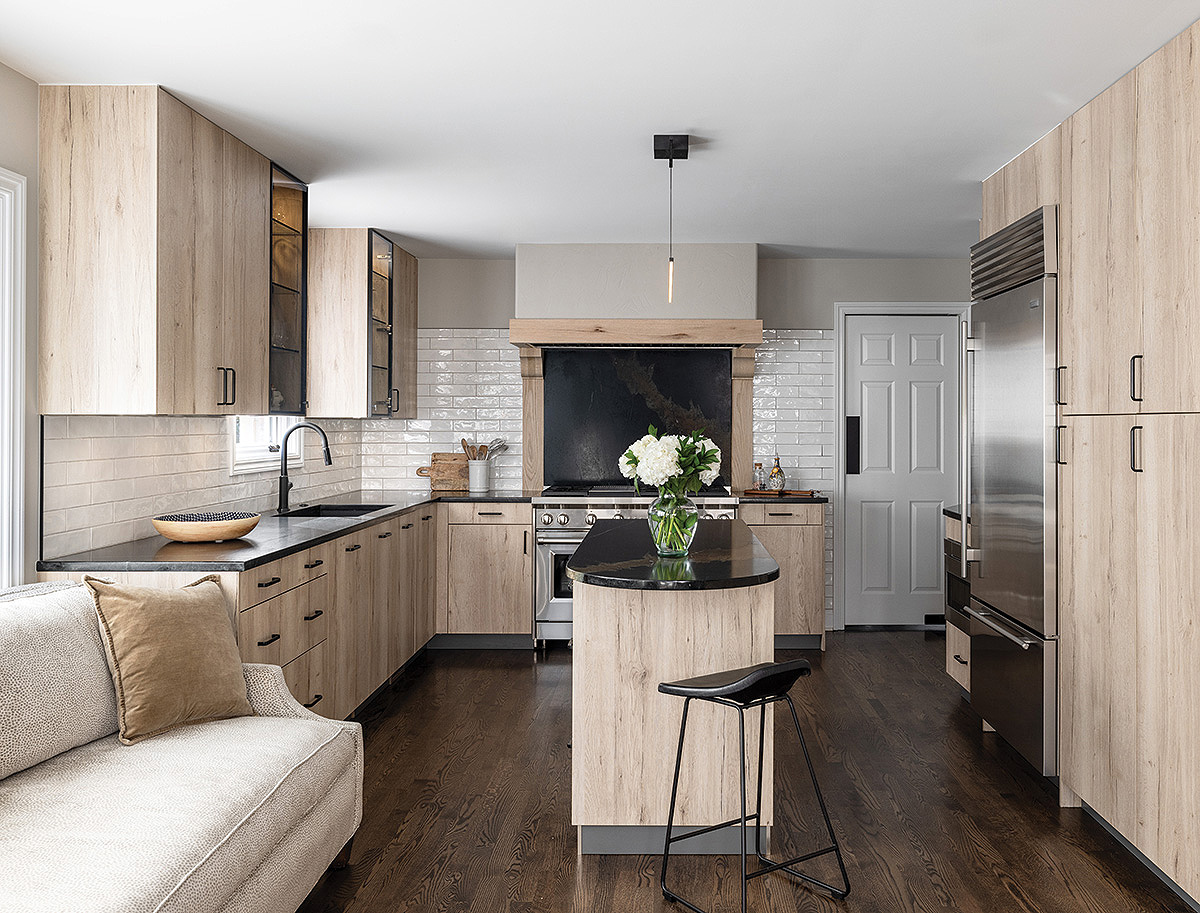
Light oak cabinetry brightens the space, and a compact island organizes the kitchen for daily cooking and shared use.
Residential kitchens are the settings for some of the most demanding activities in the home. They must accommodate storage, food preparation, circulation, and social interaction while operating under conditions that include heat, moisture, heavy loads, and constant movement. Because these environments serve a wide range of users and evolve with changing household needs, design decisions made during early planning play an important role in determining how safely, comfortably, and reliably the kitchen functions across years of use.
Why Early Kitchen Planning Decisions Matter
Decisions made during the planning stage set the foundation for how a kitchen will operate in routine use over many years. Circulation paths, cabinet placement, organization systems, and material selection influence how people move through the space, retrieve items, and complete daily tasks over time.
One of the most important considerations is ergonomics for residential work environments that require repeated reaching, lifting, and movement between preparation, cooking, and cleanup zones. Spatial planning decisions—including aisle widths, landing areas, and work surface heights—affect how comfortably and safely these tasks can be performed. Layouts that conform to predictable patterns of human movement help reduce unnecessary strain and promote reliable circulation during simultaneous use. Also important is positioning the cabinets and workspaces to get as much natural light as possible, to then determine task and ambient lighting as needed.
Storage planning is equally significant. When storage locations are poorly aligned with everyday tasks, occupants often compensate by cluttering countertops, bending repeatedly, or moving inefficiently across the room. Storage systems that allow interior organization to be adjusted over time help kitchens remain functional as household routines and users change.
Cabinet construction also influences sustained reliability. Kitchens are among the most frequently renovated areas of the home. This could be because cabinet structures have failed, the doors and hardware become dated, or interior storage systems no longer support how the space is used. When high-quality cabinet construction is specified from the beginning, updates years later can include reworked storage systems inside the drawers and cabinets, as well as door and hardware upgrades, preventing a tear-out.
These planning considerations—ergonomic layout, adaptable storage, and durable cabinet construction—work together to create a long-lived kitchen that supports the occupants’ well-being. The following section discusses ergonomic planning strategies that improve comfort, efficiency, and physical safety in everyday kitchen use.
Ergonomic Planning for Comfort, Safety, and Wellness
Life in the kitchen means constant movement. Activities involve carrying groceries, reaching into cabinets and drawers, lifting pots, and pivoting between work areas, often within a small footprint. Thoughtful ergonomic planning helps these actions happen naturally. When circulation paths, work surfaces, and storage locations adhere to predictable movement patterns, routine kitchen tasks become easier and safer to perform day after day.
Circulation Planning and Collision Prevention
Ergonomics begins with movement through the room. The National Kitchen and Bath Association (NKBA) Kitchen Planning Guidelines1 suggest no major traffic patterns through the kitchen that interrupt the basic work triangle created by the sink, stove, and refrigerator. Refrigerator, dishwasher, and oven doors should not block primary walkways when open. Temporary obstructions can force people passing through to come into contact with hot surfaces or sharp tools.
The guidelines stress aisle widths and landing spaces. Typical recommendations generally include:
- At least 15 inches of landing space next to the refrigerator handle side
- Landing areas of 24 inches and 18 inches beside sinks
- Landing areas of 12 inches and 15 inches beside cooktops
- Aisles of about 42 inches in single-cook kitchens
- Aisles of about 48 inches where multiple people cook
Work Surface Height and Posture: Counter height affects how comfortable people are when working in the kitchen, and this comfort can affect their long-term well-being. Chopping vegetables, mixing ingredients, and washing dishes all require repeated arm and shoulder movement. If the work surface is too high or too low, the body compensates by bending or elevating the shoulders.
Most kitchens have counters that are about 36 inches high. However, certain tasks benefit from small adjustments. A slightly lower surface can make chopping and mixing easier, while a seated work area around 30 inches may support longer preparation tasks or accommodate users with limited mobility. Adjustable toe kick feet allow for more adjustments.
Counter depth also matters. When counters extend too far without knee space, people lean forward while working, placing additional stress on the lower back. Providing knee and toe clearance, guidance often referenced in ANSI A117.1 accessibility standards, allows users to maintain a more upright working posture.
Storage to Reduce Reach Range: Where items are stored affects how safely and comfortably those items are retrieved. Frequently used cookware and utensils work best within the primary reach zone—generally between shoulder and knee height for standing users.
Traditional base cabinets with deep shelves often require bending and lifting heavy pots from near floor level, which can stress the lower back. Full-extension drawers higher up improve access by bringing items forward and allowing them to be lifted from a higher point. Placement near the point of use also impacts well-being. Spices, oils, and cooking utensils stored near the cooktop reduce the need to reach across hot surfaces. Items used daily should remain easy to reach, while rarely used small appliances can be stored higher or lower.
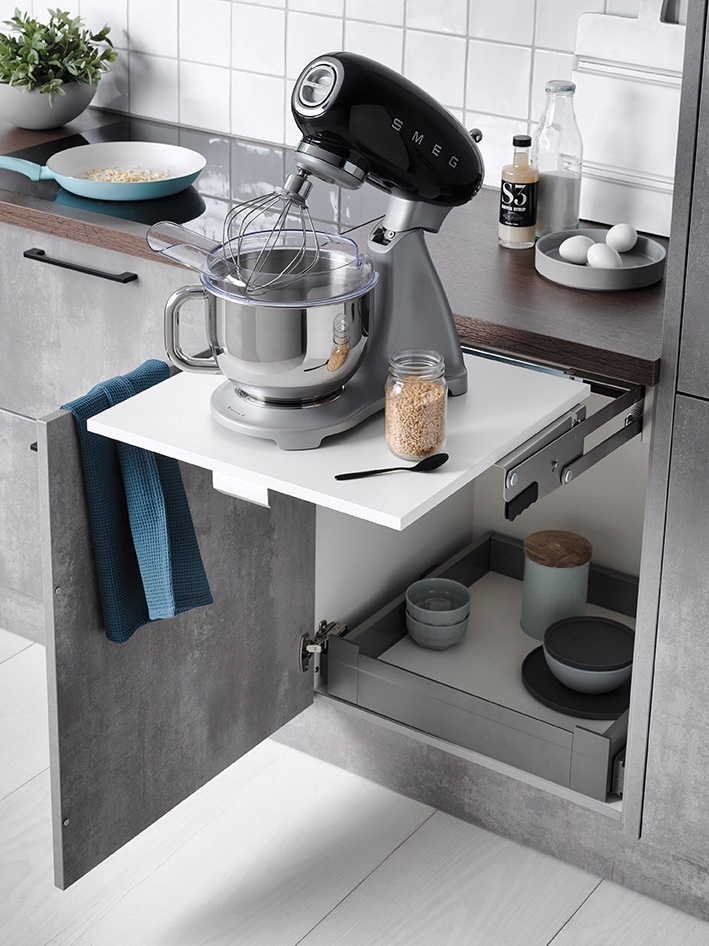
Photo courtesy of Häcker Kitchens
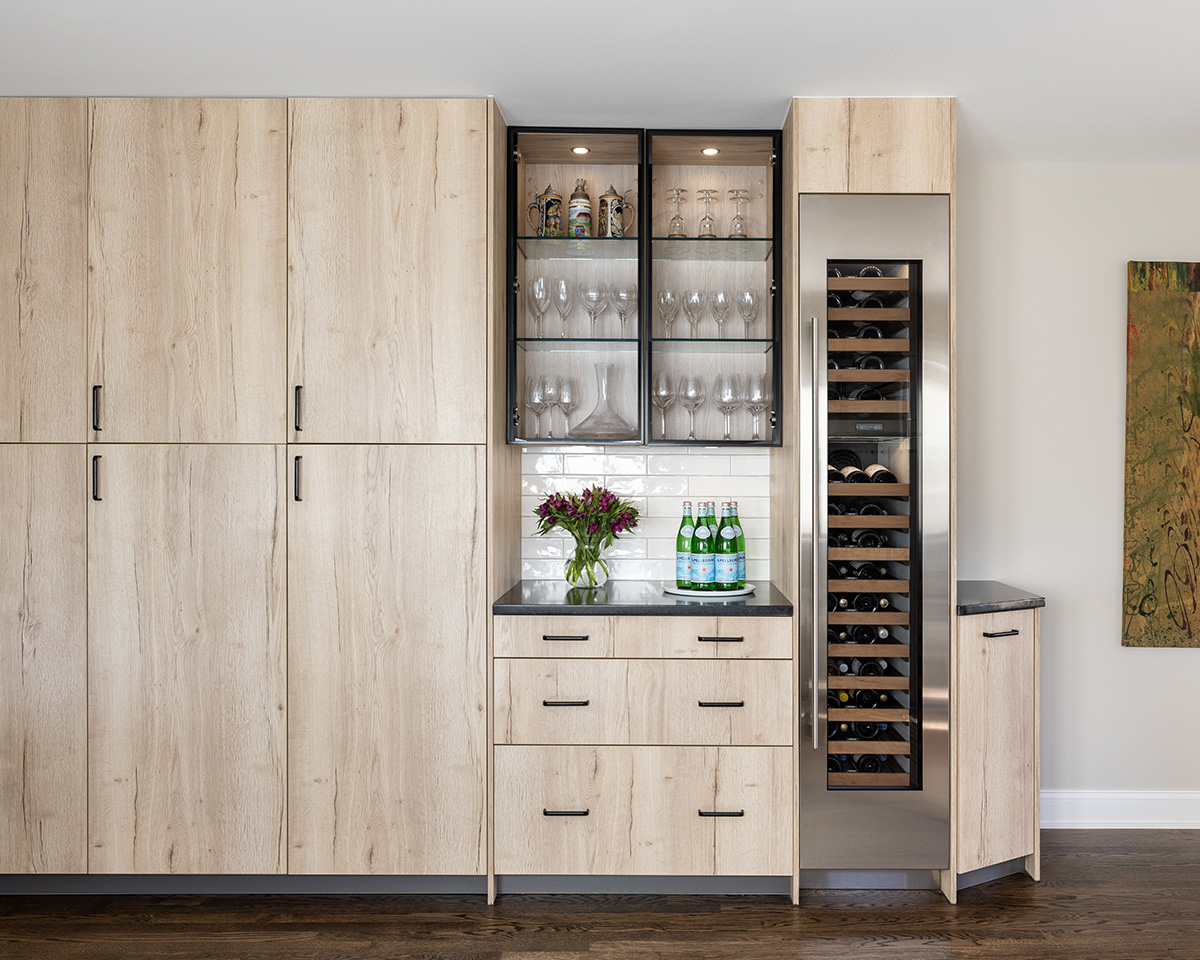
Countertop appliances can be neatly tucked away but are within easy reach when ready to use.
Workspace Visibility and Floor Safety: Surface materials and lighting can influence kitchen safety. Floors near sinks and cooktops benefit from slip-resistant finishes, particularly where water or cooking oils may accumulate.
Lighting also supports safe food preparation. Natural light during daylight hours is usually preferable. At night or where supplemental illumination is warranted, task lighting above preparation areas improves visibility when cutting or measuring ingredients. Under-cabinet fixtures illuminate counters directly and prevent shadows from upper cabinets or the user’s body.
Adjustable Countertop Surfaces for Changing Kitchen Tasks
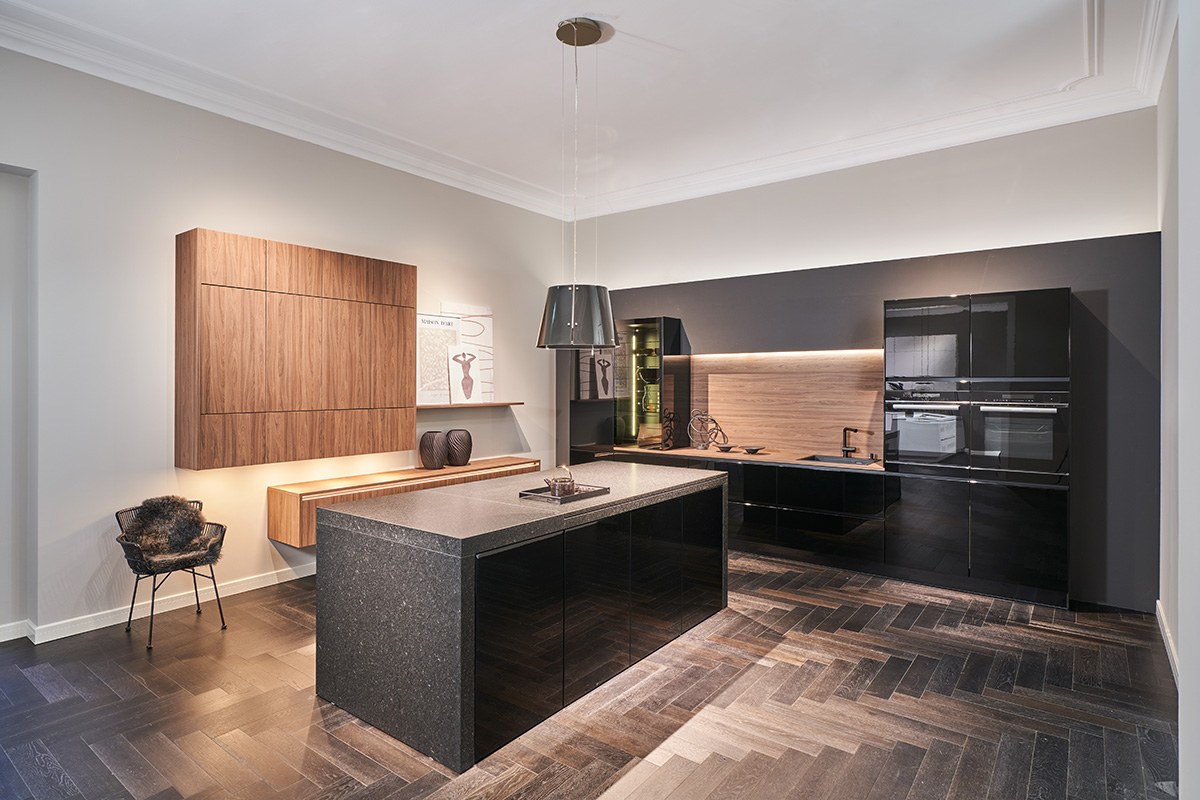
Photo courtesy of Häcker Kitchens
With the sliding surface closed, the island reads as a single monolithic worktop.
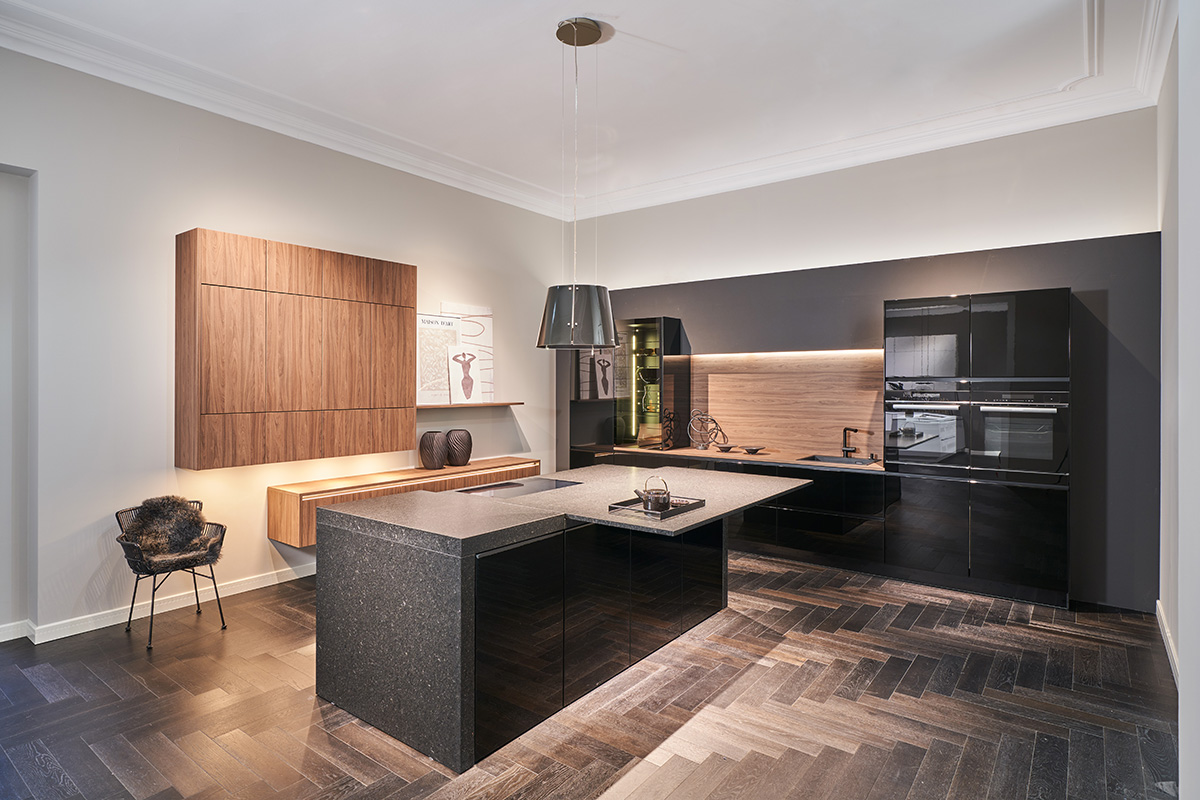
Photo courtesy of Häcker Kitchens
When extended, the sliding panel creates additional preparation surface.
One configuration places a sliding countertop above a fixed surface below. When closed, the upper surface forms a continuous island top. When moved, the sliding layer exposes the lower surface, which may contain a cooking or preparation area. This allows active work zones to be revealed during cooking and covered when the kitchen is used for dining or gathering.
Another version incorporates a smaller movable surface positioned beside a fixed counter. This movable section can shift to the left or right or from the center of the island. The adjustable surface allows the work area to expand for food preparation or contract when the island is used for seating or serving.
“The ability to adjust the surface area of each countertop allows for customized workspaces, accommodating various tasks from food preparation to casual dining,” said Andreas Gommeringer, President of Häcker Kitchens North America. “By allowing kitchen surfaces to be repositioned as needed, homeowners can maintain comfortable positioning when moving about the room, minimize unnecessary reaching or bending as they perform daily activities, and define an accessible floor plan.”
These systems are typically designed specifically for island installations and can accommodate cooktops or sinks located in the fixed surface below. Countertops may be fabricated from durable materials such as ceramic, engineered stone, or natural stone.
Movable countertop systems make the island more ergonomically adaptable to daily activities. By allowing surfaces to shift closer to the user, these systems can reduce unnecessary reaching or bending during kitchen tasks. The result is a kitchen workspace that adjusts to different uses without changing the overall room layout.
Interior Cabinet Accessories That Improve Daily Use
Once the kitchen layout is set, much of its usefulness depends on how the cabinets are arranged inside. Poorly organized storage leads to searching, stacking, and repeated bending into deep spaces. Well-planned interior accessories solve these problems by keeping tools visible and within reach.
Cabinet interiors do not need to be complicated; a few well-chosen components can make daily cooking less frustrating and keep work surfaces clear.
Drawer Organization and Interior Dividers: Drawers are easiest to use when their interiors are divided into separate sections rather than left as open boxes. Inserts and adjustable dividers keep tools separated, making them easy to access quickly. Common drawer storage solutions include:
- Cutlery inserts made from wood or composite materials that separate utensils into designated compartments. Items stay in place when the drawer opens and closes.
- Adjustable divider rails that allow the layout of the drawer to change over time. As cooking tools change, the dividers can be repositioned without replacing the drawer.
- Cookware and lid dividers that store pots, pans, and lids upright instead of stacking them. This makes it easier to see and remove items without lifting several pieces at once.
- Interior drawer lighting that turns on when the drawer opens, making it easier to see contents in low light.
These simple systems keep everyday tools visible and prevent drawers from turning into crowded storage spaces.
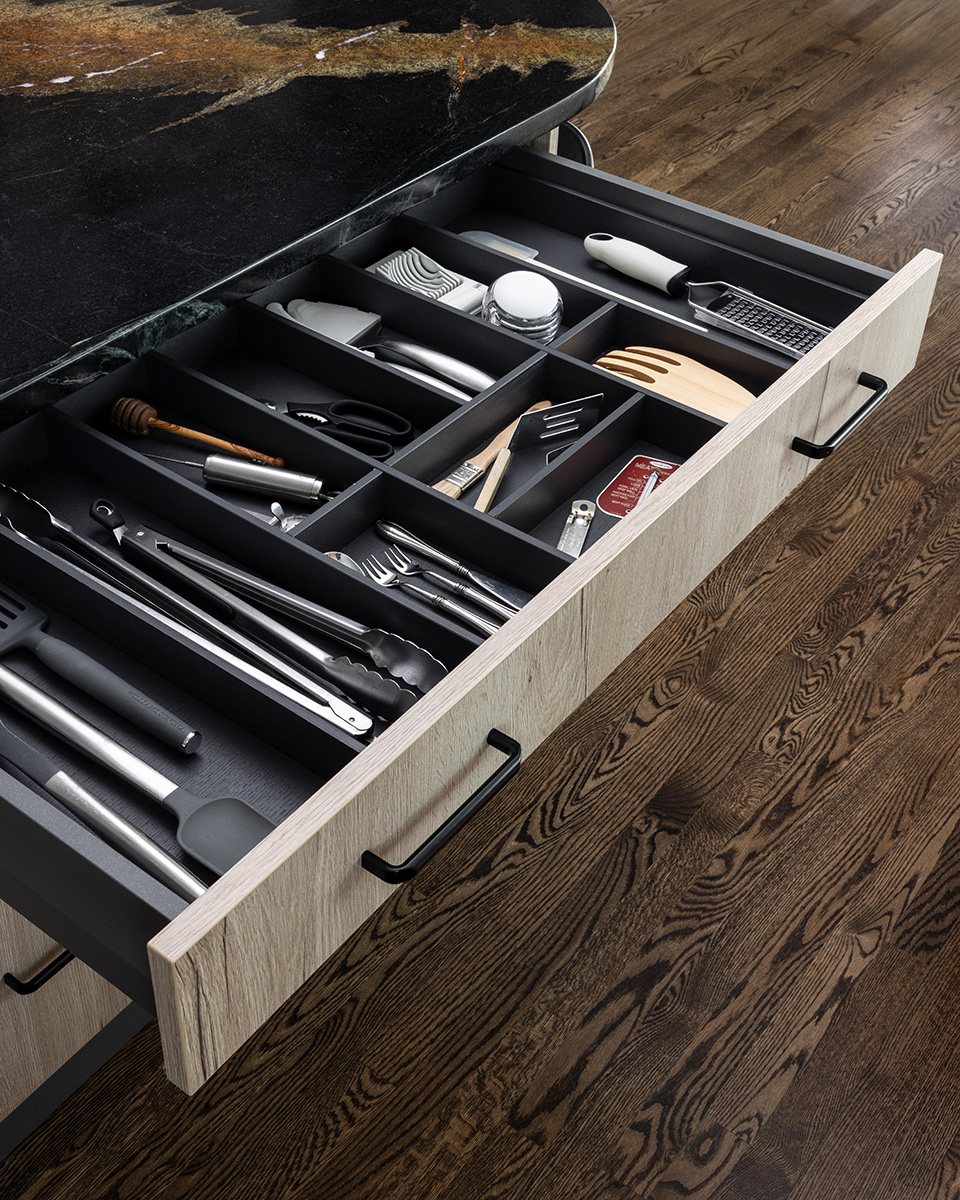
Photo courtesy of Häcker Kitchens
Adjustable drawer dividers keep utensils organized and easy to reach during food preparation.
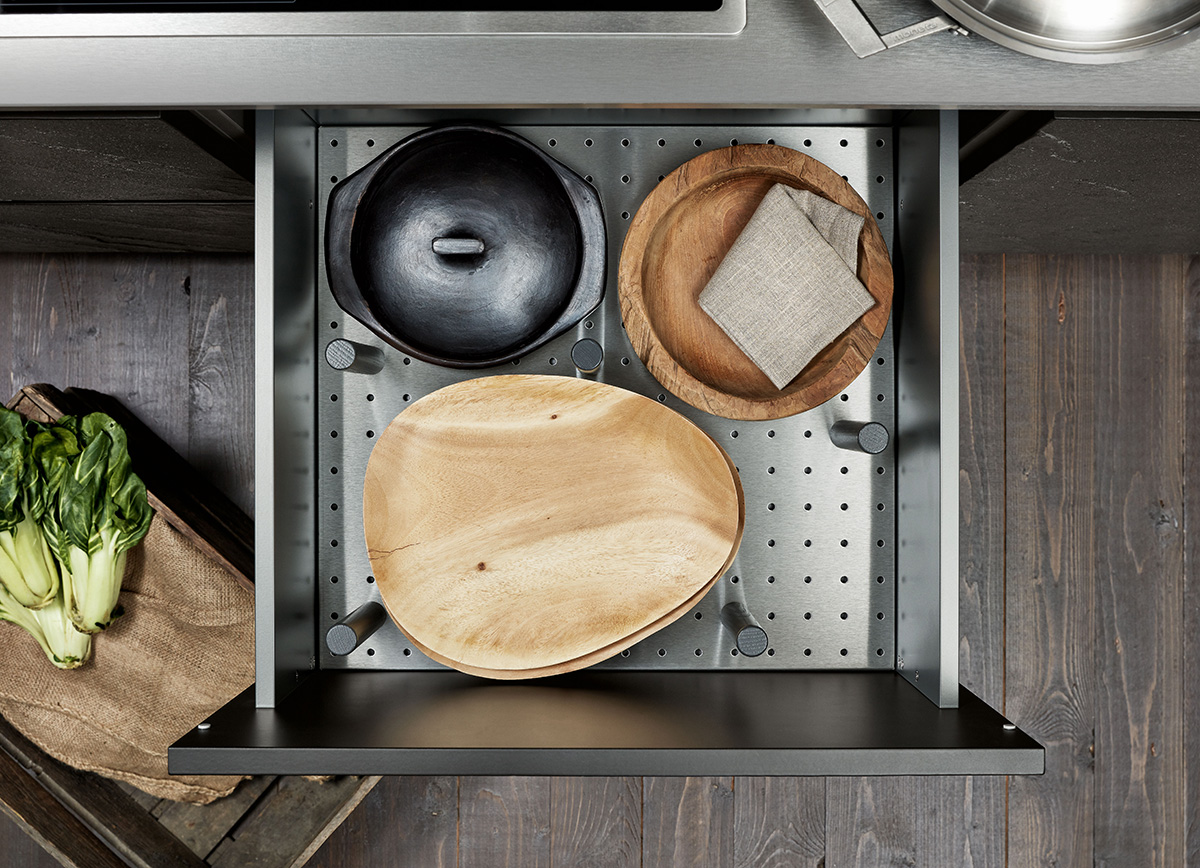
Photo courtesy of Häcker Kitchens
Adjustable divider rails allow drawer layouts to change as storage needs evolve.
Base Cabinet Access and Corner Solutions
Base cabinets can be difficult to use when items are stored deep inside, requiring users to bend deeply or even get down on their knees to find and retrieve items. Access systems move shelves forward, making contents more visible and easier to reach. Common solutions include:
- Corner pull-out shelves that swing or slide outward when the cabinet door opens. Cookware stored in corner cabinets becomes easier to see and reach.
- Vertical tray dividers placed near ovens for baking sheets, cutting boards, and serving trays. Storing trays upright eliminates unwieldy stacks.
- Narrow pull-out organizers beside cooking areas that hold bottles, spices, or cooking tools close to the work surface.
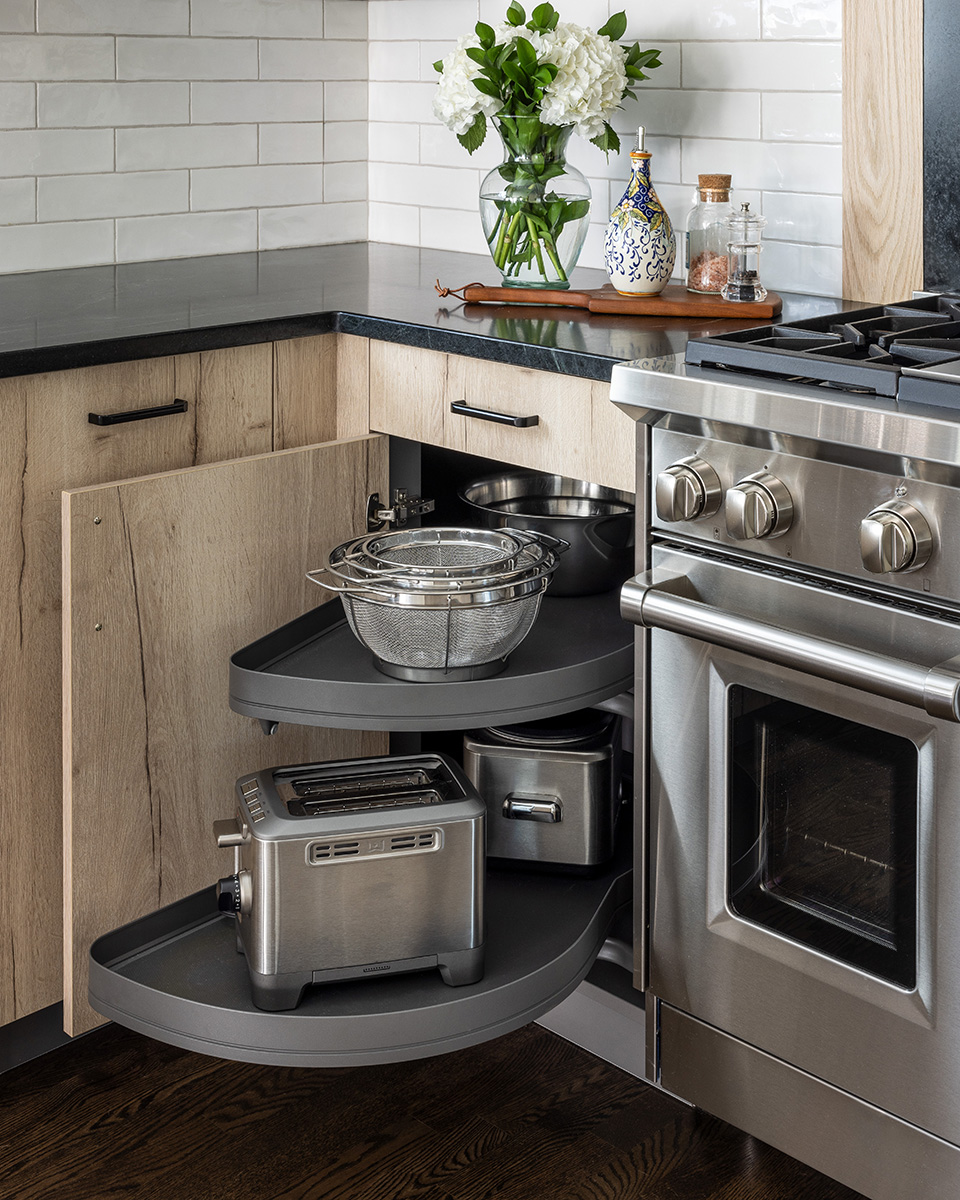
Photo courtesy of Häcker Kitchens
Corner pull-out shelves bring cookware and small appliances forward for easier access.
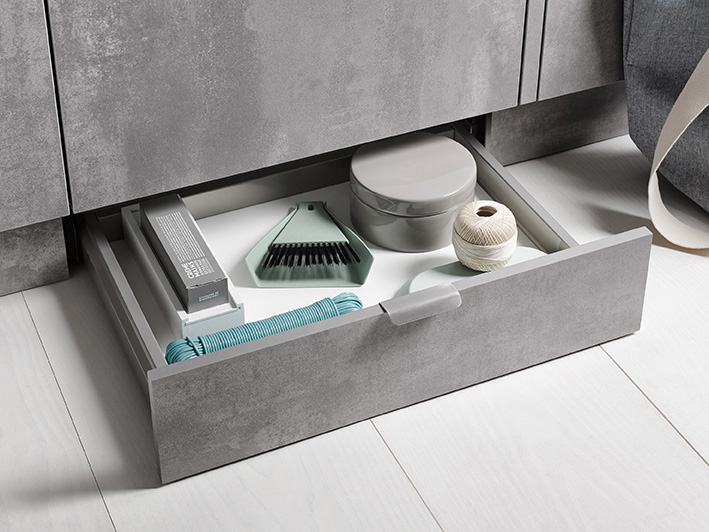
Photo courtesy of Häcker Kitchens
Toe kick drawers allow cleaning supplies to use unclaimed space.
Photo courtesy of Häcker Kitchens
Light oak cabinetry brightens the space, and a compact island organizes the kitchen for daily cooking and shared use.
Residential kitchens are the settings for some of the most demanding activities in the home. They must accommodate storage, food preparation, circulation, and social interaction while operating under conditions that include heat, moisture, heavy loads, and constant movement. Because these environments serve a wide range of users and evolve with changing household needs, design decisions made during early planning play an important role in determining how safely, comfortably, and reliably the kitchen functions across years of use.
Why Early Kitchen Planning Decisions Matter
Decisions made during the planning stage set the foundation for how a kitchen will operate in routine use over many years. Circulation paths, cabinet placement, organization systems, and material selection influence how people move through the space, retrieve items, and complete daily tasks over time.
One of the most important considerations is ergonomics for residential work environments that require repeated reaching, lifting, and movement between preparation, cooking, and cleanup zones. Spatial planning decisions—including aisle widths, landing areas, and work surface heights—affect how comfortably and safely these tasks can be performed. Layouts that conform to predictable patterns of human movement help reduce unnecessary strain and promote reliable circulation during simultaneous use. Also important is positioning the cabinets and workspaces to get as much natural light as possible, to then determine task and ambient lighting as needed.
Storage planning is equally significant. When storage locations are poorly aligned with everyday tasks, occupants often compensate by cluttering countertops, bending repeatedly, or moving inefficiently across the room. Storage systems that allow interior organization to be adjusted over time help kitchens remain functional as household routines and users change.
Cabinet construction also influences sustained reliability. Kitchens are among the most frequently renovated areas of the home. This could be because cabinet structures have failed, the doors and hardware become dated, or interior storage systems no longer support how the space is used. When high-quality cabinet construction is specified from the beginning, updates years later can include reworked storage systems inside the drawers and cabinets, as well as door and hardware upgrades, preventing a tear-out.
These planning considerations—ergonomic layout, adaptable storage, and durable cabinet construction—work together to create a long-lived kitchen that supports the occupants’ well-being. The following section discusses ergonomic planning strategies that improve comfort, efficiency, and physical safety in everyday kitchen use.
Ergonomic Planning for Comfort, Safety, and Wellness
Life in the kitchen means constant movement. Activities involve carrying groceries, reaching into cabinets and drawers, lifting pots, and pivoting between work areas, often within a small footprint. Thoughtful ergonomic planning helps these actions happen naturally. When circulation paths, work surfaces, and storage locations adhere to predictable movement patterns, routine kitchen tasks become easier and safer to perform day after day.
Circulation Planning and Collision Prevention
Ergonomics begins with movement through the room. The National Kitchen and Bath Association (NKBA) Kitchen Planning Guidelines1 suggest no major traffic patterns through the kitchen that interrupt the basic work triangle created by the sink, stove, and refrigerator. Refrigerator, dishwasher, and oven doors should not block primary walkways when open. Temporary obstructions can force people passing through to come into contact with hot surfaces or sharp tools.
The guidelines stress aisle widths and landing spaces. Typical recommendations generally include:
- At least 15 inches of landing space next to the refrigerator handle side
- Landing areas of 24 inches and 18 inches beside sinks
- Landing areas of 12 inches and 15 inches beside cooktops
- Aisles of about 42 inches in single-cook kitchens
- Aisles of about 48 inches where multiple people cook
Work Surface Height and Posture: Counter height affects how comfortable people are when working in the kitchen, and this comfort can affect their long-term well-being. Chopping vegetables, mixing ingredients, and washing dishes all require repeated arm and shoulder movement. If the work surface is too high or too low, the body compensates by bending or elevating the shoulders.
Most kitchens have counters that are about 36 inches high. However, certain tasks benefit from small adjustments. A slightly lower surface can make chopping and mixing easier, while a seated work area around 30 inches may support longer preparation tasks or accommodate users with limited mobility. Adjustable toe kick feet allow for more adjustments.
Counter depth also matters. When counters extend too far without knee space, people lean forward while working, placing additional stress on the lower back. Providing knee and toe clearance, guidance often referenced in ANSI A117.1 accessibility standards, allows users to maintain a more upright working posture.
Storage to Reduce Reach Range: Where items are stored affects how safely and comfortably those items are retrieved. Frequently used cookware and utensils work best within the primary reach zone—generally between shoulder and knee height for standing users.
Traditional base cabinets with deep shelves often require bending and lifting heavy pots from near floor level, which can stress the lower back. Full-extension drawers higher up improve access by bringing items forward and allowing them to be lifted from a higher point. Placement near the point of use also impacts well-being. Spices, oils, and cooking utensils stored near the cooktop reduce the need to reach across hot surfaces. Items used daily should remain easy to reach, while rarely used small appliances can be stored higher or lower.
Photo courtesy of Häcker Kitchens
Countertop appliances can be neatly tucked away but are within easy reach when ready to use.
Workspace Visibility and Floor Safety: Surface materials and lighting can influence kitchen safety. Floors near sinks and cooktops benefit from slip-resistant finishes, particularly where water or cooking oils may accumulate.
Lighting also supports safe food preparation. Natural light during daylight hours is usually preferable. At night or where supplemental illumination is warranted, task lighting above preparation areas improves visibility when cutting or measuring ingredients. Under-cabinet fixtures illuminate counters directly and prevent shadows from upper cabinets or the user’s body.
Adjustable Countertop Surfaces for Changing Kitchen Tasks
Photo courtesy of Häcker Kitchens
With the sliding surface closed, the island reads as a single monolithic worktop.
Photo courtesy of Häcker Kitchens
When extended, the sliding panel creates additional preparation surface.
One configuration places a sliding countertop above a fixed surface below. When closed, the upper surface forms a continuous island top. When moved, the sliding layer exposes the lower surface, which may contain a cooking or preparation area. This allows active work zones to be revealed during cooking and covered when the kitchen is used for dining or gathering.
Another version incorporates a smaller movable surface positioned beside a fixed counter. This movable section can shift to the left or right or from the center of the island. The adjustable surface allows the work area to expand for food preparation or contract when the island is used for seating or serving.
“The ability to adjust the surface area of each countertop allows for customized workspaces, accommodating various tasks from food preparation to casual dining,” said Andreas Gommeringer, President of Häcker Kitchens North America. “By allowing kitchen surfaces to be repositioned as needed, homeowners can maintain comfortable positioning when moving about the room, minimize unnecessary reaching or bending as they perform daily activities, and define an accessible floor plan.”
These systems are typically designed specifically for island installations and can accommodate cooktops or sinks located in the fixed surface below. Countertops may be fabricated from durable materials such as ceramic, engineered stone, or natural stone.
Movable countertop systems make the island more ergonomically adaptable to daily activities. By allowing surfaces to shift closer to the user, these systems can reduce unnecessary reaching or bending during kitchen tasks. The result is a kitchen workspace that adjusts to different uses without changing the overall room layout.
Interior Cabinet Accessories That Improve Daily Use
Once the kitchen layout is set, much of its usefulness depends on how the cabinets are arranged inside. Poorly organized storage leads to searching, stacking, and repeated bending into deep spaces. Well-planned interior accessories solve these problems by keeping tools visible and within reach.
Cabinet interiors do not need to be complicated; a few well-chosen components can make daily cooking less frustrating and keep work surfaces clear.
Drawer Organization and Interior Dividers: Drawers are easiest to use when their interiors are divided into separate sections rather than left as open boxes. Inserts and adjustable dividers keep tools separated, making them easy to access quickly. Common drawer storage solutions include:
- Cutlery inserts made from wood or composite materials that separate utensils into designated compartments. Items stay in place when the drawer opens and closes.
- Adjustable divider rails that allow the layout of the drawer to change over time. As cooking tools change, the dividers can be repositioned without replacing the drawer.
- Cookware and lid dividers that store pots, pans, and lids upright instead of stacking them. This makes it easier to see and remove items without lifting several pieces at once.
- Interior drawer lighting that turns on when the drawer opens, making it easier to see contents in low light.
These simple systems keep everyday tools visible and prevent drawers from turning into crowded storage spaces.
Photo courtesy of Häcker Kitchens
Adjustable drawer dividers keep utensils organized and easy to reach during food preparation.
Photo courtesy of Häcker Kitchens
Adjustable divider rails allow drawer layouts to change as storage needs evolve.
Base Cabinet Access and Corner Solutions
Base cabinets can be difficult to use when items are stored deep inside, requiring users to bend deeply or even get down on their knees to find and retrieve items. Access systems move shelves forward, making contents more visible and easier to reach. Common solutions include:
- Corner pull-out shelves that swing or slide outward when the cabinet door opens. Cookware stored in corner cabinets becomes easier to see and reach.
- Vertical tray dividers placed near ovens for baking sheets, cutting boards, and serving trays. Storing trays upright eliminates unwieldy stacks.
- Narrow pull-out organizers beside cooking areas that hold bottles, spices, or cooking tools close to the work surface.
Photo courtesy of Häcker Kitchens
Corner pull-out shelves bring cookware and small appliances forward for easier access.
Photo courtesy of Häcker Kitchens
Toe kick drawers allow cleaning supplies to use unclaimed space.
Tall and Upper Cabinets
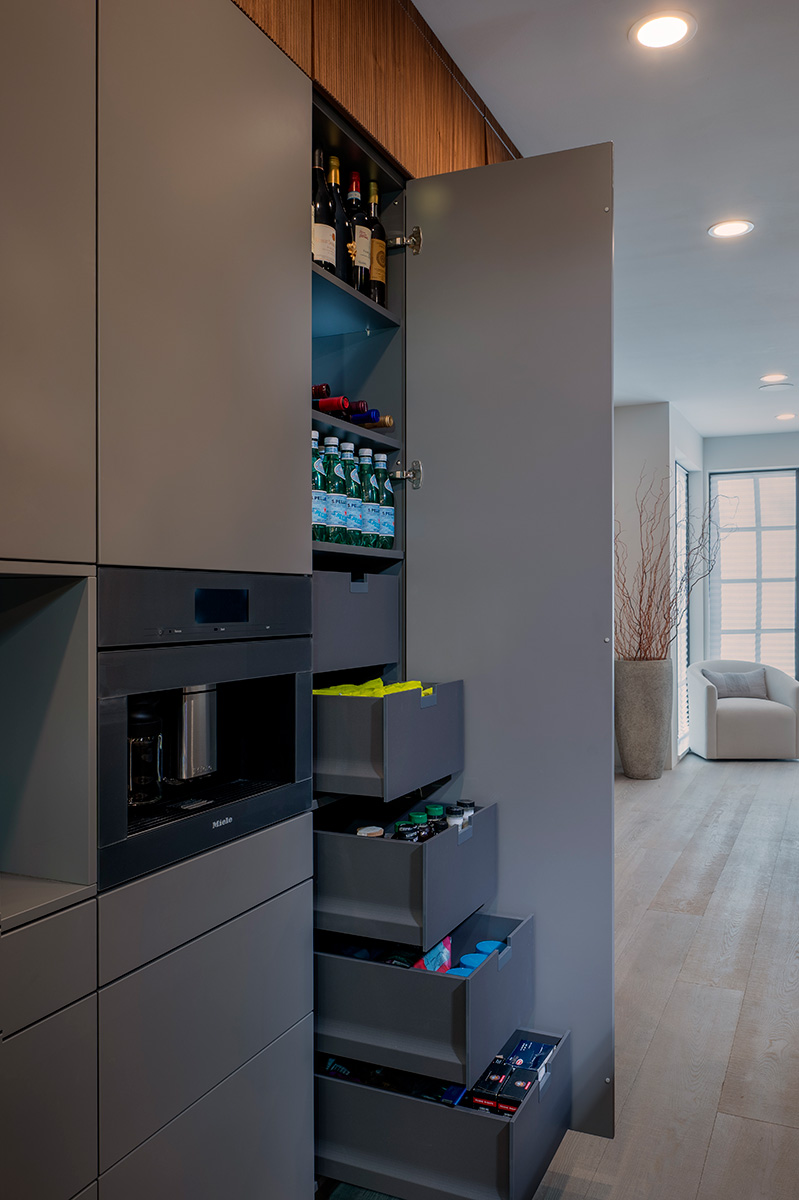
Photo courtesy of Häcker Kitchens
Full-height cabinets with pull-out pantry drawers bring stored items forward for easier access and better visibility.
Tall cabinets hold a large amount of food and kitchen supplies, but they are easiest to use with drawers or shelves that move toward the user. Common storage strategies include:
- Pullout shelves or drawers that slide forward, bringing stored items into view.
- Interior cabinet lighting that makes tall or deep storage areas easier to see.
- Interior shelves arranged by height so dry goods and packaged foods remain visible and easy to reach.
- Drop-down mechanism that lowers shelves, allowing short-statured people easy access to the higher-positioned upper cabinets.
These systems help prevent food and supplies from disappearing into the back of tall cabinets.
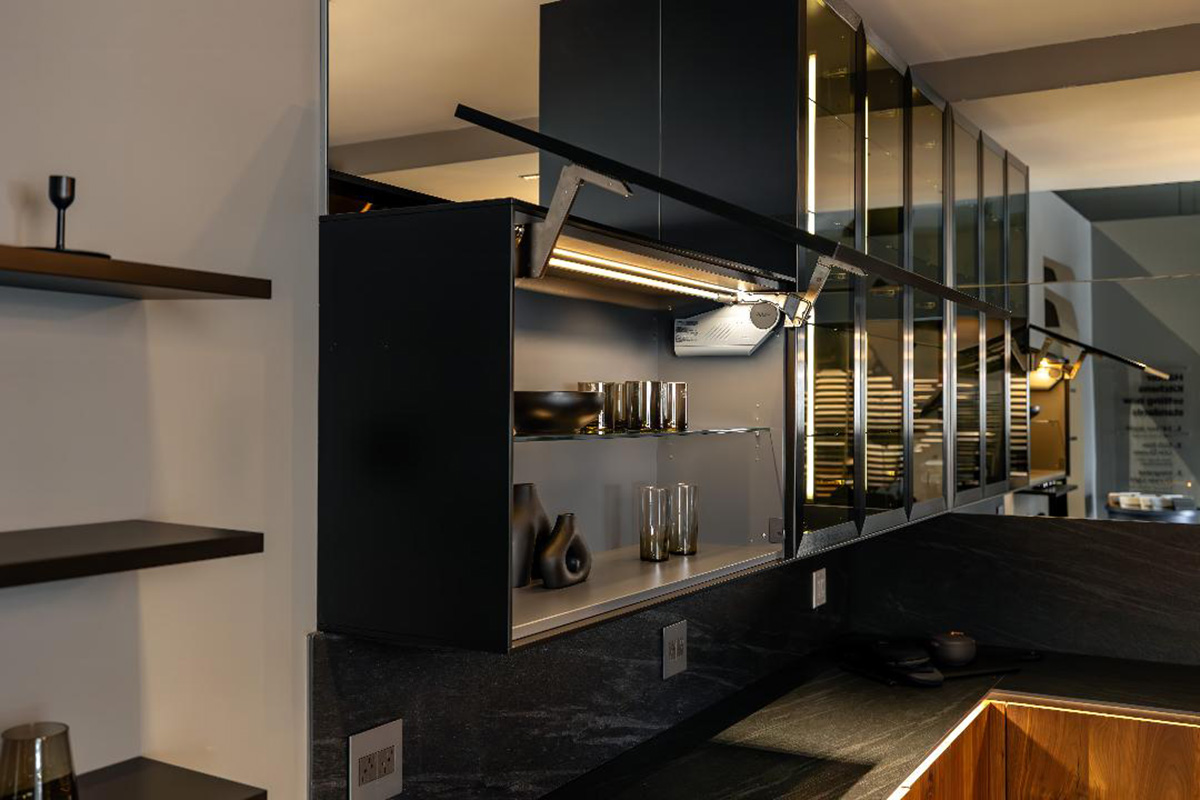
Photo courtesy of Häcker Kitchens
Lift-up upper cabinet doors open vertically instead of swinging outward, keeping doors clear of circulation paths.
Waste and Sink-Base Protection
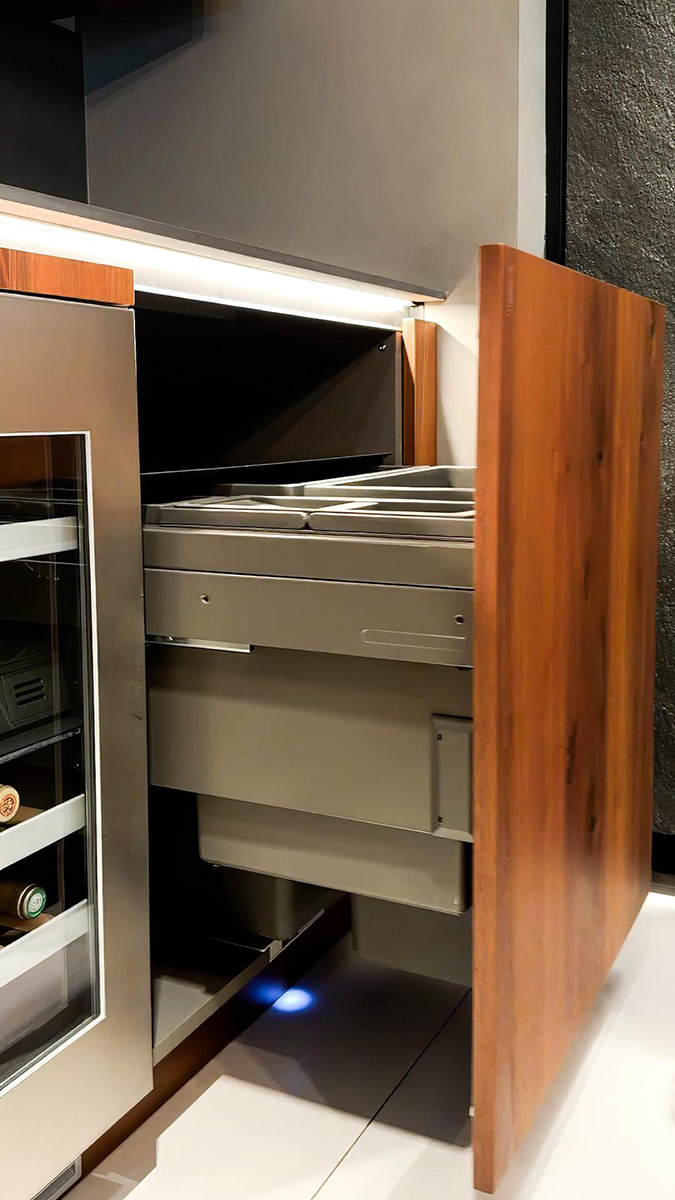
Photo courtesy of Häcker Kitchens
Motion-activated waste and recycling bin allows for hands-free use.
Some accessories focus on keeping the cabinet interior clean and protected in areas that experience frequent moisture and heavy use. Common utility components include:
- Pull-out waste and recycling bins that allow trash and recyclables to be separated within a single cabinet.
- Metal sink-base protection panels that shield cabinet floors from water damage caused by leaks or spills.
Why Interior Organization Matters
When cabinet interiors are organized, everyday kitchen tasks become simpler. Tools are easier to find, cookware can be comfortably lifted out without digging through stacks, and waste stays contained near the preparation area. Well-organized cabinet and drawer interiors keep work surfaces clear and reduce unnecessary movement.
Over time, the needs of the users may change, and flexible cabinet and drawer storage systems can also change to support household well-being.
Durable Materials, Construction Quality, and Long-Lasting Finishes
A kitchen is exposed to conditions that other rooms in a house rarely encounter. Cabinets need to withstand heat from cooking appliances, repeated cleaning, moisture near sinks and dishwashers, and the constant opening and closing of doors that come with daily use. Because of these demands, durability depends on more than how the kitchen looks on the day it is installed. Material choices, cabinet construction, and finishing methods all influence how well the space holds up over time.
Material Durability in High-Use Kitchen Environments
Residential kitchens place considerable stress on cabinet materials. Panels and substrates must resist swelling when humidity rises, remain stable near cooking equipment, and withstand years of repeated handling.
Many cabinet manufacturers rely on engineered wood panels produced under controlled manufacturing conditions. Proper edge sealing and surface protection are equally important, as exposed edges are common points where moisture can penetrate, leading to swelling or delamination.
Specifying materials designed for severe conditions helps cabinets retain structural stability and diminishes the chance of early deterioration.
Construction Quality and Long-Term Alignment
The internal construction of cabinets often receives little attention once installation is complete, yet it plays a major role in how well the kitchen ages. Joinery methods, box reinforcement, and hardware attachment all influence whether doors stay properly aligned and drawers continue to operate smoothly after years of use.
Hinges and drawer slides designed for frequent cycling help maintain reliable movement. Cabinet boxes with reinforced panels and tight manufacturing tolerances are less likely to twist or shift under heavy loads, such as cookware or small appliances. When cabinets are factory-manufactured as coordinated systems rather than assembled from unrelated components, alignment tends to remain more stable.
Solid cabinet construction that remains in alignment over time can also make later adjustments easier. High-quality cabinet boxes can remain in place for decades, while interior fittings—drawer inserts, pull-outs, and storage accessories—can be changed as household needs evolve. This distinction between the structural cabinet framework and the interior organization allows kitchens to adapt without needing full replacement.
Finishes and Indoor Environmental Quality
Cabinet finishes protect underlying materials from moisture, abrasion, and repeated cleaning. In kitchens, surfaces must withstand frequent contact with water, cleaning products, and food preparation.
Laminates, catalyzed lacquers, and sealed edge treatments are commonly used to protect cabinet substrates. Durable coatings help prevent scratching and discoloration while maintaining surfaces that can be cleaned regularly without degrading.
Finishes likewise influence indoor environmental quality. Low-emitting materials that comply with CARB Phase 2 and TSCA Title VI standards help reduce formaldehyde emissions. Water-based finishing systems and controlled manufacturing processes can further limit the release of solvents during production and installation.
Service Life and Maintenance Considerations
Durable materials and careful construction help limit the amount of maintenance a kitchen requires over time. Cabinets that remain properly aligned and structurally stable need fewer adjustments and repairs, reducing disruption for homeowners.
Edge protection is critical. Some manufacturers do not provide edge protection, and the edge banding comes off easily in humid spaces like bathrooms. If the cabinetry is not sealed under the countertop, that can lead to bio-organic growth. Edge protection and subsurface sealing help prevent moisture infiltration. Then, reinforced cabinet boxes resist warping under heavy loads, and drawer systems designed for repeated cycling can operate reliably for many years. Together, these details add to a longer service life for the cabinetry, and more peace of mind and less frustration for the users.
Rather than relying on a single material upgrade, durability usually results from a set of factors: stable substrates, well-constructed cabinet boxes, and protective finishes. When these parts are coordinated, the kitchen stays usable and flexible as the household changes.
Responsible Sourcing and Material Consistency
Material sourcing also affects the long-term quality of cabinets. Manufacturers that maintain controlled supply chains and work with certified wood sources can achieve greater consistency in panel quality and dimensional stability. Inconsistent raw materials may lead to warping, joint stress, or finish problems over time. Forestry certification programs and closely monitored supplier networks help reduce these variations by providing more predictable raw material inputs.
Conformance with regulations further supports indoor air quality while helping ensure that cabinet materials meet established emission standards. When sourcing practices, manufacturing controls, and finishing processes are managed together, cabinet systems are more likely to remain stable and durable throughout their service life.
Beyond the Kitchen: Extending Order and Continuity Through the Home
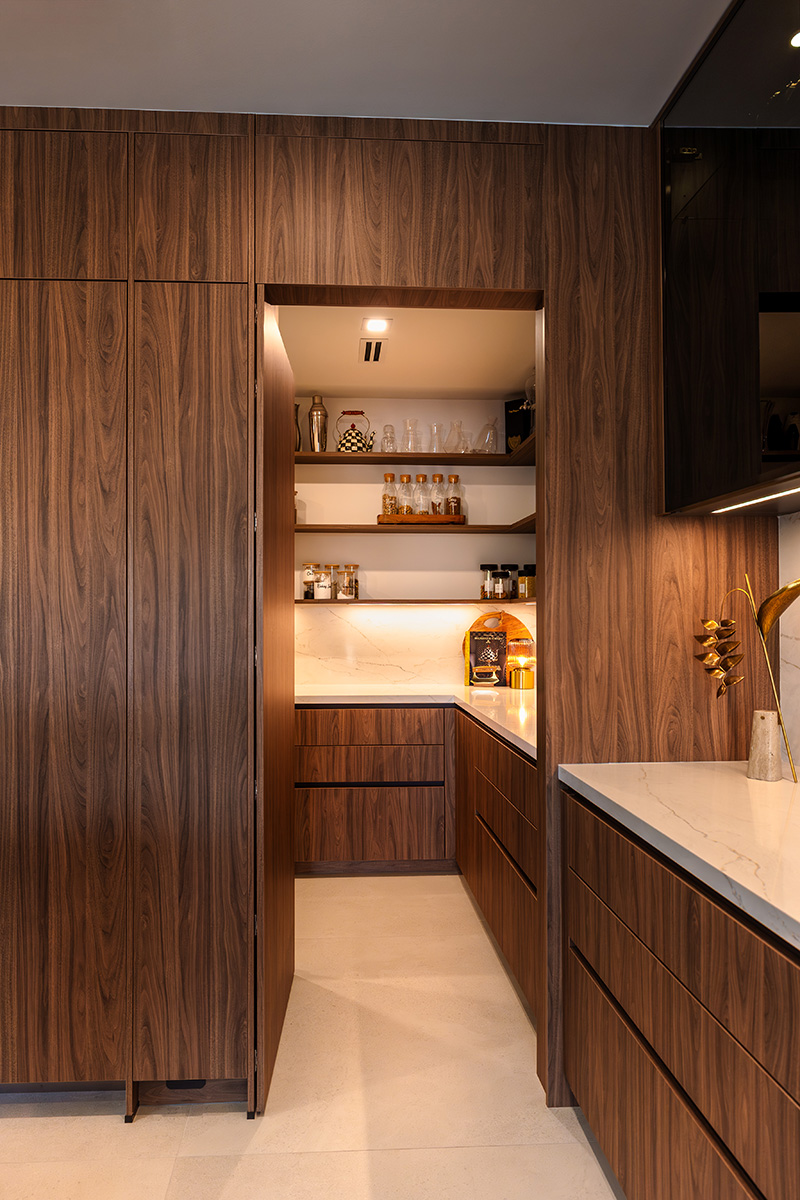
Photo courtesy of Häcker Kitchens
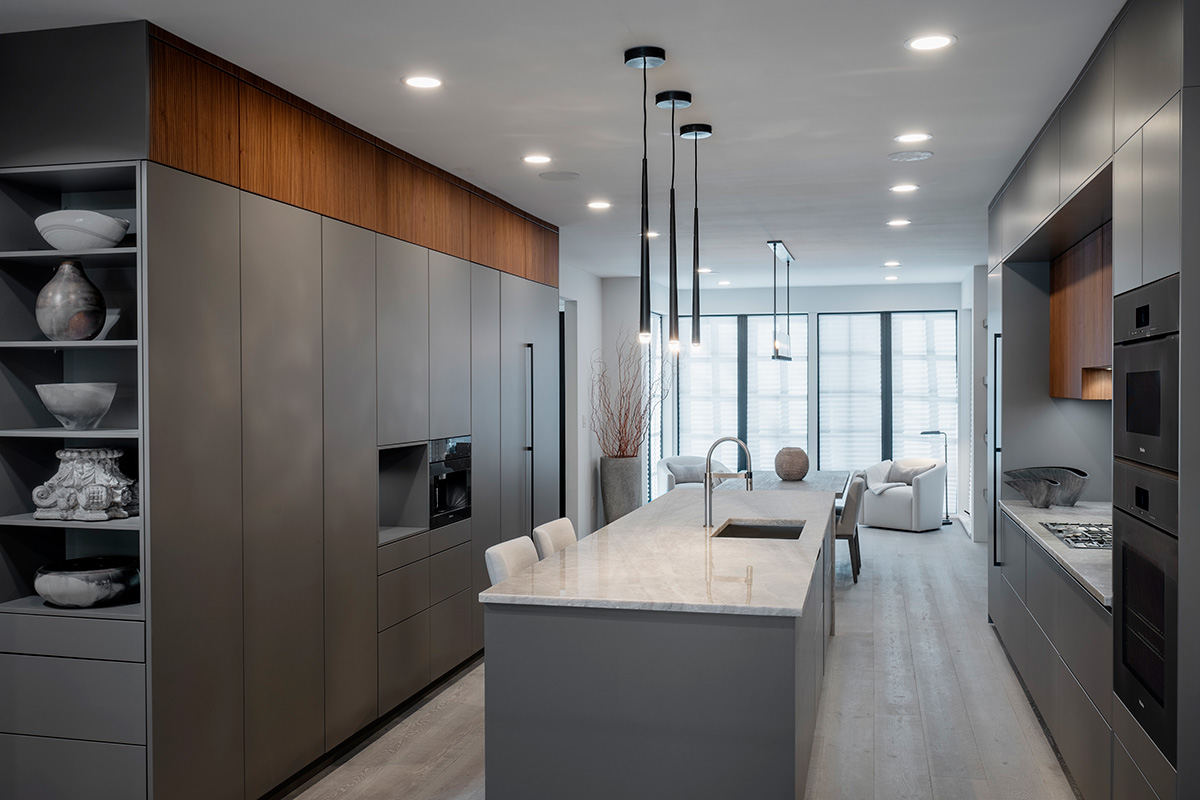
Walnut cabinetry and clean lines from the kitchen to the pantry set the tone for the rest of the house.
The design strategy for this residence was to establish a clear set of materials and cabinet details in the kitchen and carry them into other rooms of the house. Similar cabinetry appears not only in the kitchen but also in the pantry, laundry room, office, powder room, serving areas, and primary bathroom. Using the same cabinet system in each space created a consistent visual structure throughout the interior.
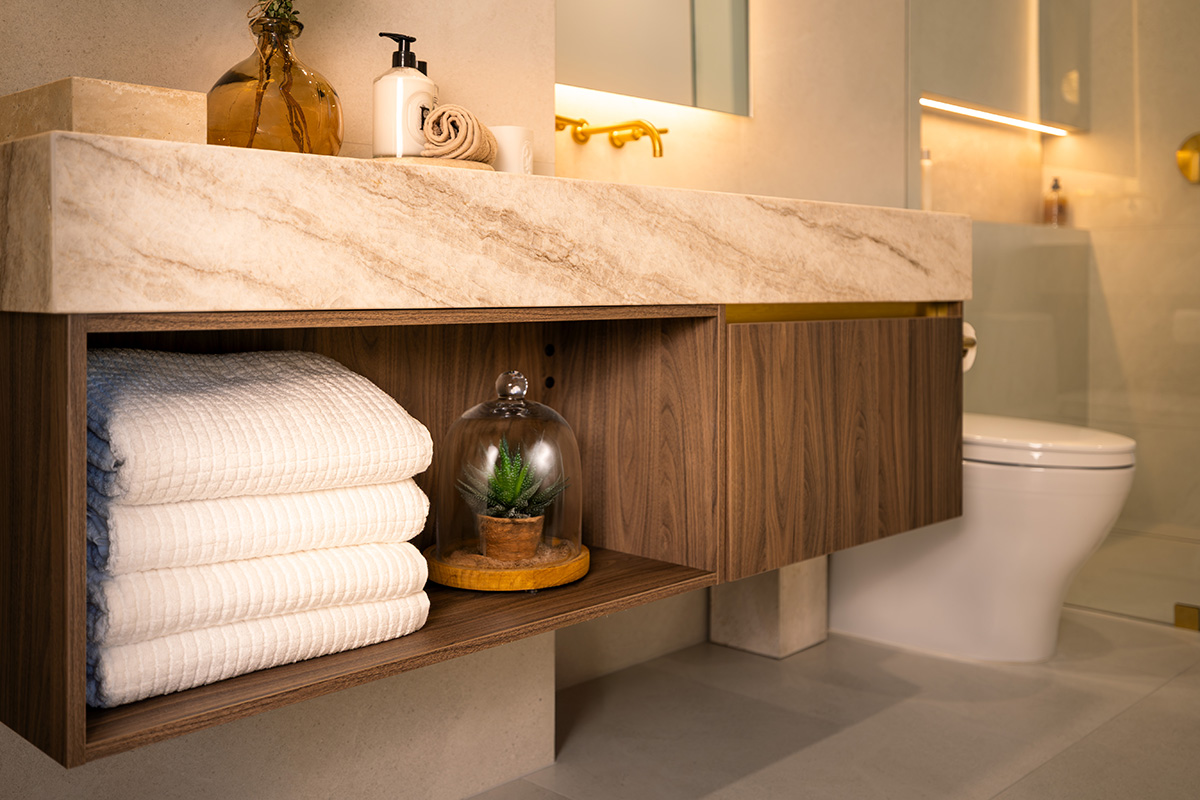
Photo courtesy of Häcker Kitchens
The floating walnut vanity reflects the cabinetry used in the kitchen.
Natural walnut cabinet fronts used in the kitchen form the foundation of the design. The same walnut finish appears again in the laundry room, powder room, and serving areas, allowing those spaces to relate visually to the kitchen. In other parts of the home, additional cabinet finishes are introduced, including darker surfaces and a white finish in the laundry room. These variations provide contrast while maintaining the same cabinet proportions and construction.
Some cabinetry is installed as wall-mounted units with concealed hardware. This installation method creates a suspended appearance and keeps the floor plane continuous beneath the cabinets. The same installation approach is repeated across rooms so that cabinets appear consistent regardless of location in the house.
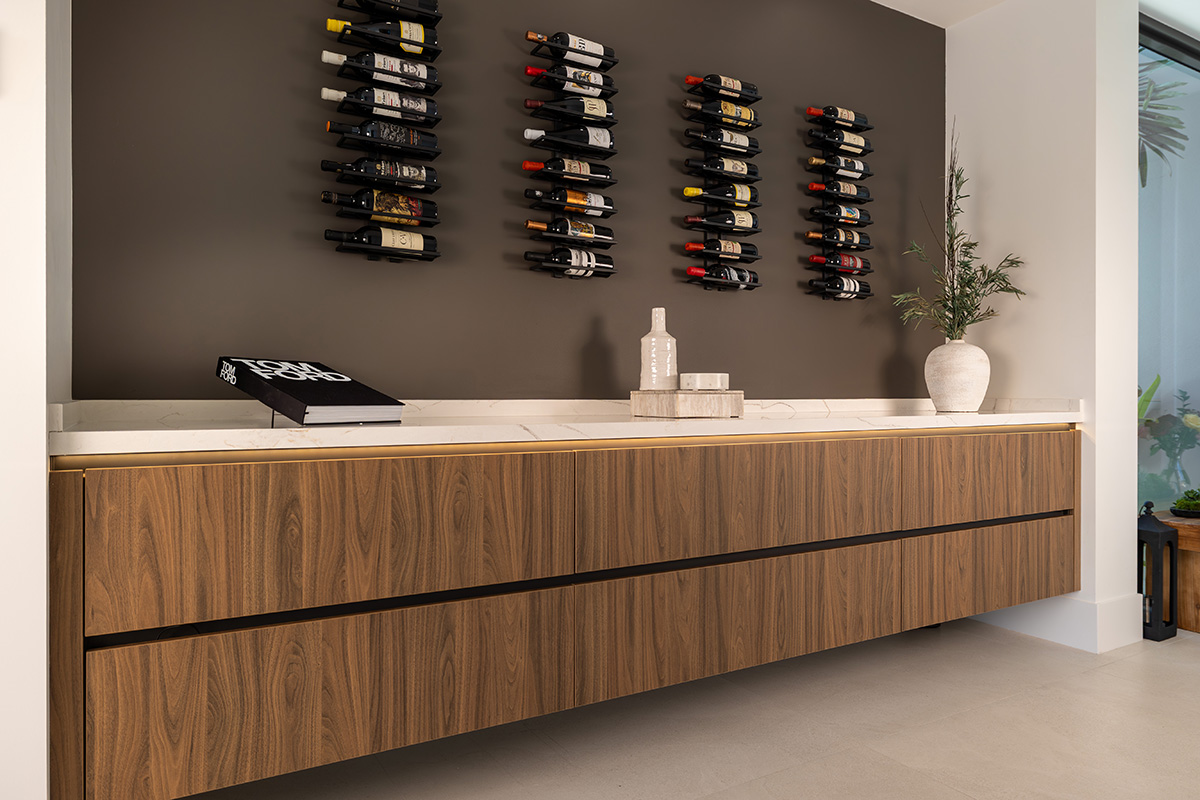
Photo courtesy of Häcker Kitchens
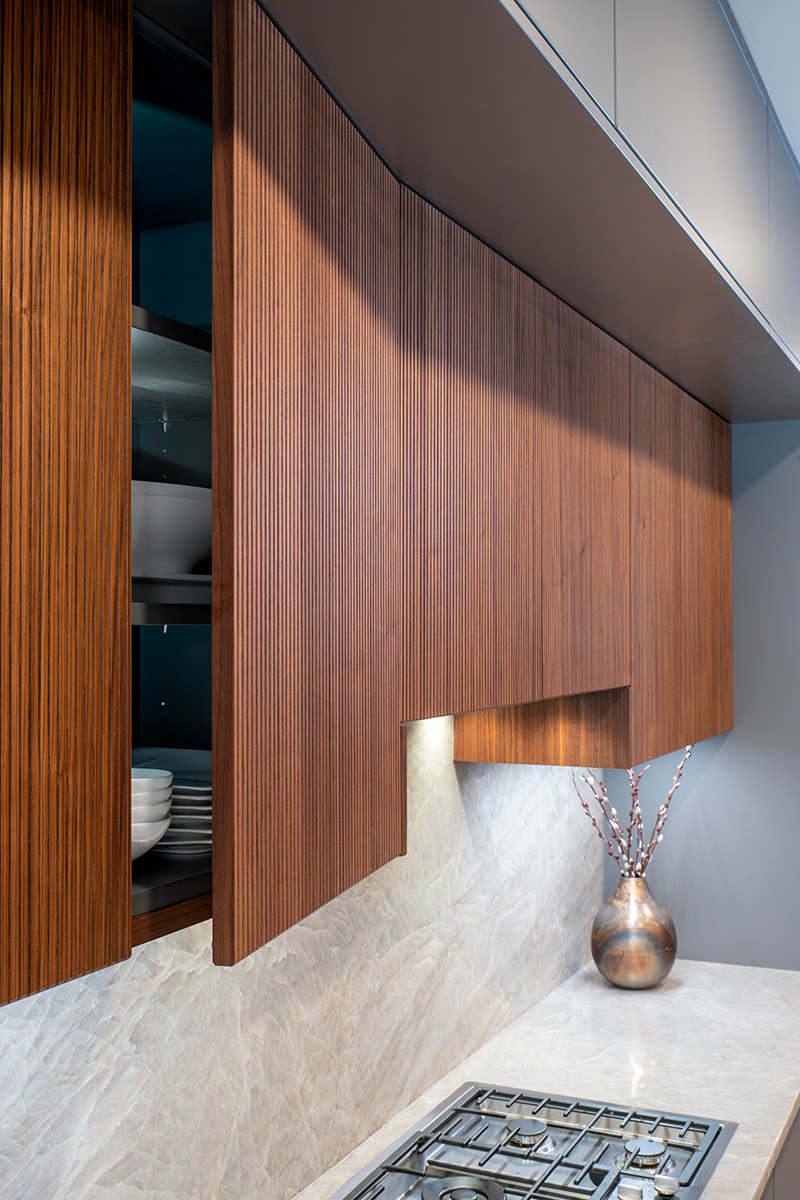
Walnut cabinetry continues into the pantry and serving areas, linking these spaces to the kitchen.
Cabinet doors and drawer fronts follow the same alignment and proportions used in the kitchen. Under-cabinet lighting appears in several locations, reinforcing the horizontal lines created by the cabinetry and helping illuminate work surfaces.
The pantry continues the same cabinet materials and detailing used in the kitchen, allowing it to function as an extension of the main cooking space. Matching cabinetry and lighting help the pantry read as part of the same system rather than a separate room.
Through repeating cabinet finishes, installation methods, and hardware details, the design maintains continuity across the house. Each room performs a different function, but the cabinetry provides a common framework that ties the spaces together.
Conclusion
A well-designed kitchen enhances daily life in ways that are often invisible. Circulation feels natural, tools are easy to reach, surfaces stay clear, and the room remains comfortable to use throughout the day. These outcomes rarely happen by accident. They result from early planning decisions about layout, storage, cabinetry construction, and material selection. When designers carefully consider ergonomics, durability, and organization, the kitchen becomes easier to use and maintain over time. Storage stays orderly, hardware continues to operate smoothly, and surfaces withstand the demands of cooking, cleaning, and gathering.
Because the kitchen is one of the most frequently used spaces in the home, these choices add value year after year. Thoughtful planning reduces the need for renovation, minimizes disruption, and allows the space to adapt as households change. In the end, longevity in kitchen design is not simply about materials lasting longer. It comes from coordinated decisions that keep the room comfortable, safe, and dependable for the people who use it every day.
End Notes
1 Kitchen Planning Guidelines with Access Standards
Kathy Price-Robinson writes about building and design. Her remodeling series “Pardon Our Dust” ran 12 years in the Los Angeles Times. She specializes in writing about buildings that are durable and resilient to climate disruptions. www.kathyprice.com.