Elevating Enclosure Performance
Supercharging Thermal Efficiency, Sustainability, Durability, and Building Safety through Optimized Continuous Insulation Choices
Sponsored by Atlas Roofing Corporation | Presented by Lance Williams
Webinar On-Demand
Design practices increasingly rely on exterior insulation to meet energy codes and continuous insulation requirements. This shift brings new challenges, particulary related to NFPA 285-compliant wall assemblies, moisture management, thermal continuity, and long-term durability.
This presentation explores the performance of exterior insulation under the demanding conditions of modern rainscreen systems and masonry veneers, with a focus on NFPA 285 compliance, thermal bridging, moisture transport, durability and sustainability. Attendees will gain insights to help design, specify, and install exterior insulation to optimize performance while avoiding potential issues.
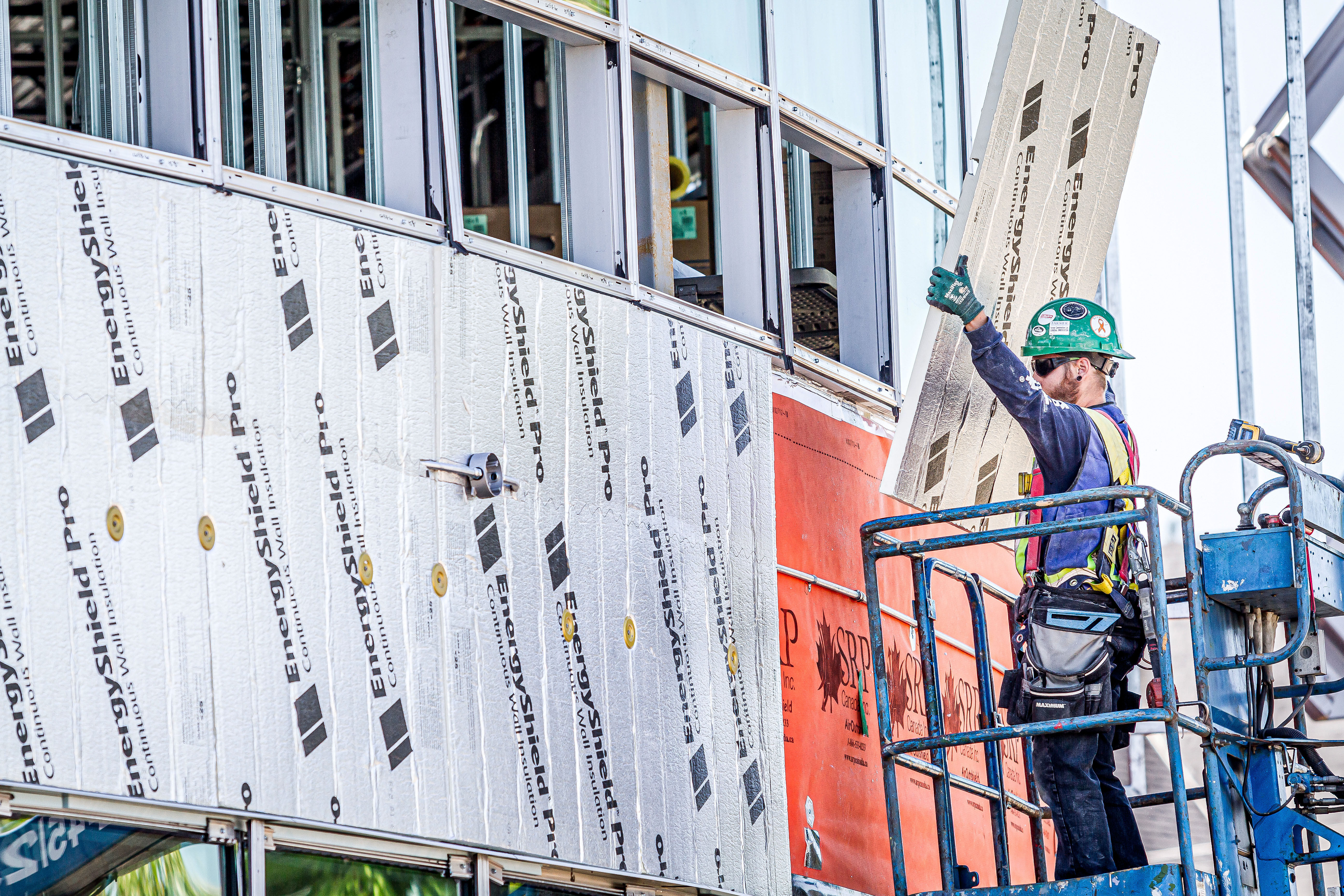
Photo courtesy of ATLAS
 |
Lance Williams is an Architectural Sales Manager focused on how today’s enclosure choices shape tomorrow’s buildings. Drawing on more than 20 years in commercial walls and continuous insulation, he brings a long-view perspective on performance, risk, and carbon grounded in building science and real-world application realities. He’s known for framing complex envelope decisions in ways that resonate with owners, designers, and builders alike. |

The Roof & Wall Insulation division of Atlas is a leading innovator and manufacturer of high-performance polyiso insulation solutions for commercial and residential construction. With a focus on energy-efficiency, durability, and sustainability, the division offers a wide variety of roof and wall insulation products designed to meet or exceed the most demanding building codes and performance standards. Supported by an extensive network of eight manufacturing facilities and a commitment to technical expertise and customer service, the Roof & Wall Insulation Division empowers architects, contractors, and building owners to construct more efficient and resilient buildings. As a division of Atlas, a trusted leader in the building materials industry since 1982, it continues to drive innovation and excellence across the insulation market.
Originally published in Building Enclosure
Originally published in April 2026
LEARNING OBJECTIVES
- Explain building code requirements and testing methods for fire propagation and smoke development, with a focus on understanding the NFPA 285 assembly test in relation to modern wall assemblies.
- Evaluate insulation properties related to water, air, thermal, and durability in rainscreen systems and masonry veneers to inform insulation selection.
- Identify challenges such as thermal bridging, multiple drain planes, drainage efficiency, water absorption, and vapor transmission to better support effective wall system design.
- Asses the manufacturing and sustainability characteristics of continuous insulation options to support specification decisions that reduce operational carbon footprints.