Flooring for Laboratory Designs
Flooring solutions
Sponsored by Interface
Some building uses are inherently tough on flooring. A very good example are laboratory settings that can be the function of an entire building (i.e., higher education science/research buildings, bio-pharmaceutical facilities, etc.) or part of another building (i.e., health care, manufacturing, etc.). All of these settings typically involve processes or activities that can require the use of chemicals, biological organisms, or heavy traffic from people and/or equipment. The flooring in these spaces, in particular, needs to hold up to these conditions in a way that is not only good for the buildings, but good for the people who use them too. That means architects and designers are often challenged to find flooring solutions to meet the rigorous demands of these spaces while still achieving human comfort, excellent appearance, ease of cleaning, and long term durability. This course will look a bit closer at these demands and assess some of the common flooring choices that have been used in the range of buildings where laboratory settings are found. In particular, we will investigate the growing use of rubber flooring products that have emerged as a proven alternative to some other traditional flooring materials and the qualities that have made them the preferred choice of many architects, designers, and building owners in laboratory settings.
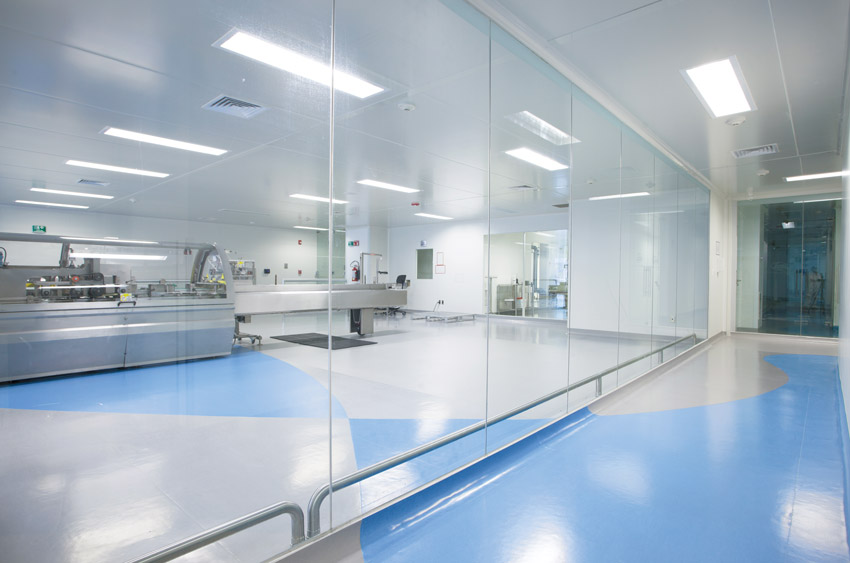
Photo courtesy of nora

Interface is a world-leading modular flooring company with a fully integrated collection of carpet tiles and resilient flooring. Our modular system helps customers create interior spaces while positively impacting the people who use them and our planet. nora is Interface’s commercial rubber flooring systems and solutions brand. Produced in Germany for more than 65 years, nora premium rubber works to improve operations, efficiencies, health, safety, and wellness with sustainable flooring that eases maintenance, absorbs noise, and provides added comfort underfoot.
LEARNING OBJECTIVES
- Identify and recognize the aesthetic significance of laboratory and industrial floor surfaces as part of the overall interior design and project documentation process.
- Assess the health and safety performance aspects of laboratory and industrial floor surfaces as they relate to durability, suitability, and sustainability.
- Explain the importance of proper flooring preparation and installation techniques to enhance overall flooring and assembly performance.
- Determine ways to incorporate the principles and topics presented into building design and documentation as evidenced in project case studies.