Photo courtesy of Jason Keen
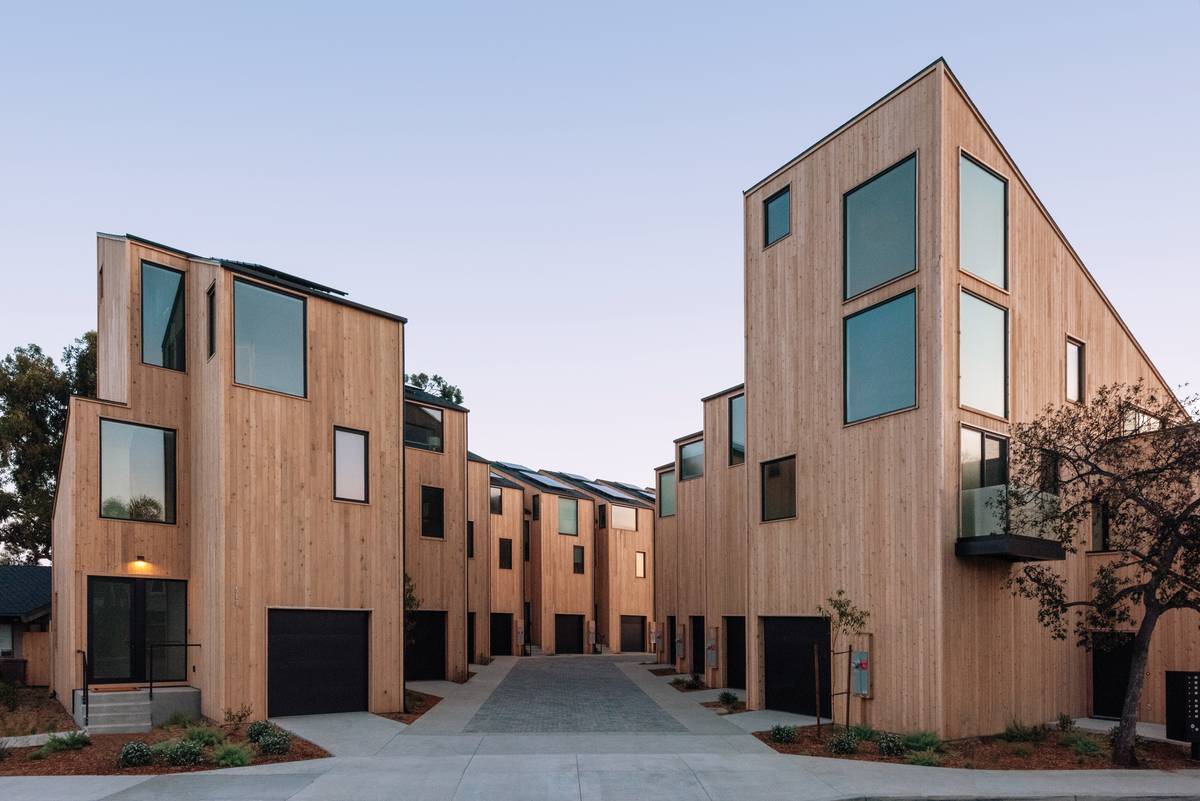
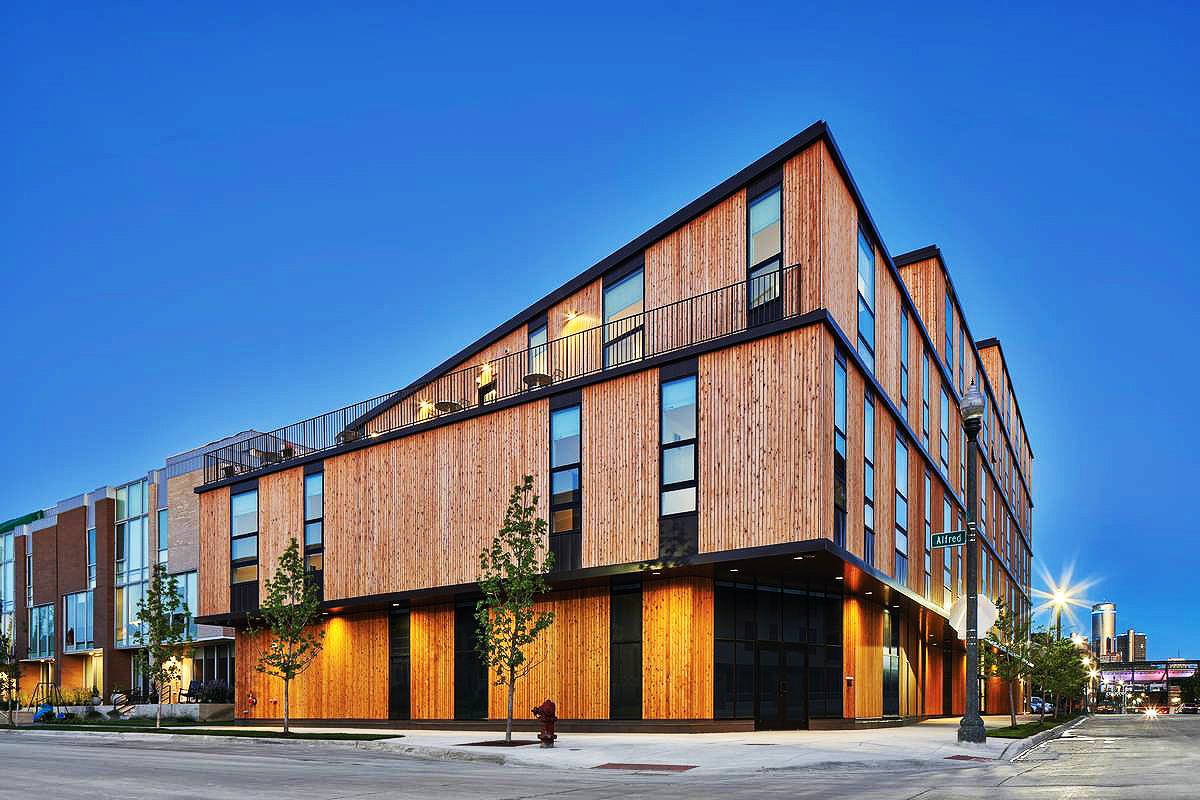
John R 2660, in Detroit’s historic Brush Park neighborhood, is part of City Modern, one of the city’s first large-scale housing developments in more than 65 years.
Western Red Cedar has long been valued by architects, builders, and designers for its unique combination of beauty, durability, and versatility. Native to the Pacific Northwest, the species is naturally resistant to decay, moisture, and insect damage, making it well suited for both interior and exterior applications. Its dimensional stability, workability, and rich visual character have made it a staple in residential, commercial, and institutional architecture. Available in a range of grades and appearances, Western Red Cedar offers designers the flexibility to achieve a variety of aesthetic and performance goals while maintaining a strong connection to nature.
Advantages of Knotty Cedar
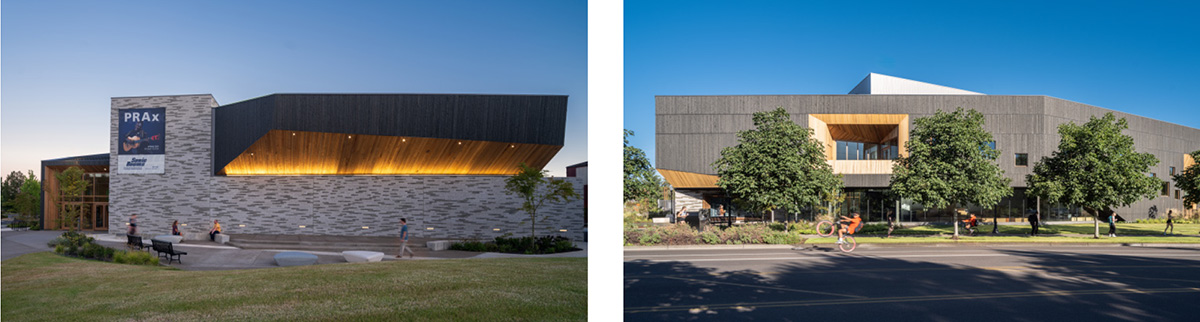
A popular specification, knotty Western Red Cedar is widely available and cost-effective, making it an attractive option for designers seeking the warmth and performance of real wood. Retaining the natural appearance of the tree, this grade aligns with growing interest in authentic, sustainable, and biophilic design. “As the market is flooded with more and more processed materials, the natural ones and the materials that display their true qualities as they are extracted or harvested seem more authentic,” states Nathan Hamilton, associate principal, Allied Works Architecture, Portland, Oregon.
Knots accentuate the wood’s natural character, adding warmth, texture, and individuality that cannot be replicated by perfectly uniform materials. “For me, knotty wood contains the life and vibrancy of the forest,” observes Patrick Warren, senior associate, Frits de Vries Architects + Associates, Vancouver, B.C. “It’s a durable, solid, and real material that evokes the forest, with all of its movement and imperfections.” He further describes knotty cedar as more casual and energetic than clear cedar, with a richness that reflects the complexity of the forest itself.
Brian Campbell, an architect with Scott Edwards Architecture in Portland, appreciates the durability and longevity of knotty Western Red Cedar, and the fact that it ages gracefully. Compared to many premium wood species and clear grades, knotty cedar remains both affordable and readily available, granting architects greater freedom to use it more extensively for exteriors and interiors. “This value proposition gives a lot of flexibility and freedom, allowing architects to try things that might otherwise be out of the range of possibility,” he explains.
Authenticity Through Natural Character
Debunking the misconception that knotty boards are somehow inferior to clear grades, Warren pushes back, stating that this fallacy represents a complete disconnection between a product and the forests and trees that it comes from. He believes this is rooted in a consumer culture that is disconnected from its sources. “The knots tell the story of how the tree grew, giving every board its own unique appearance. That natural variation creates warmth, depth, and authenticity that manufactured materials simply cannot replicate,” agrees Nick Mira, AIA, LEED AP, principal architect, Propel Studio Architecture, Portland, Oregon.
The knots reveal the growth history of the tree, giving each board a distinct appearance and reinforcing a sense of authenticity that manufactured materials cannot replicate. “When it comes to materiality, authenticity is critical. Highly processed materials, even ones derived from nature, fall short of helping us feel connected to the natural world,” agrees Hamilton.
Many designers believe the market is shifting away from simulated finishes and toward materials that honestly express their origins. “We are getting back to an appreciation of wood that feels alive with all its knurls and knots,” observes designer Brooklyn Decker, who is based in Austin, Texas. “Figured and character-rich wood and stone have roared back into interior design and architecture. We are seeing burlwoods, cathedrals, knots, bold patterns, and textures all reappearing in interiors after a long period of restraint and subtlety. Rediscovering knotty cedar is part of that energy and creativity,” says Warren. “Knotty cedar adds another layer of visual richness by introducing texture, grain variation, and warmth while making efficient use of the resource. It is a material that performs well technically while creating spaces people genuinely enjoy experiencing.”
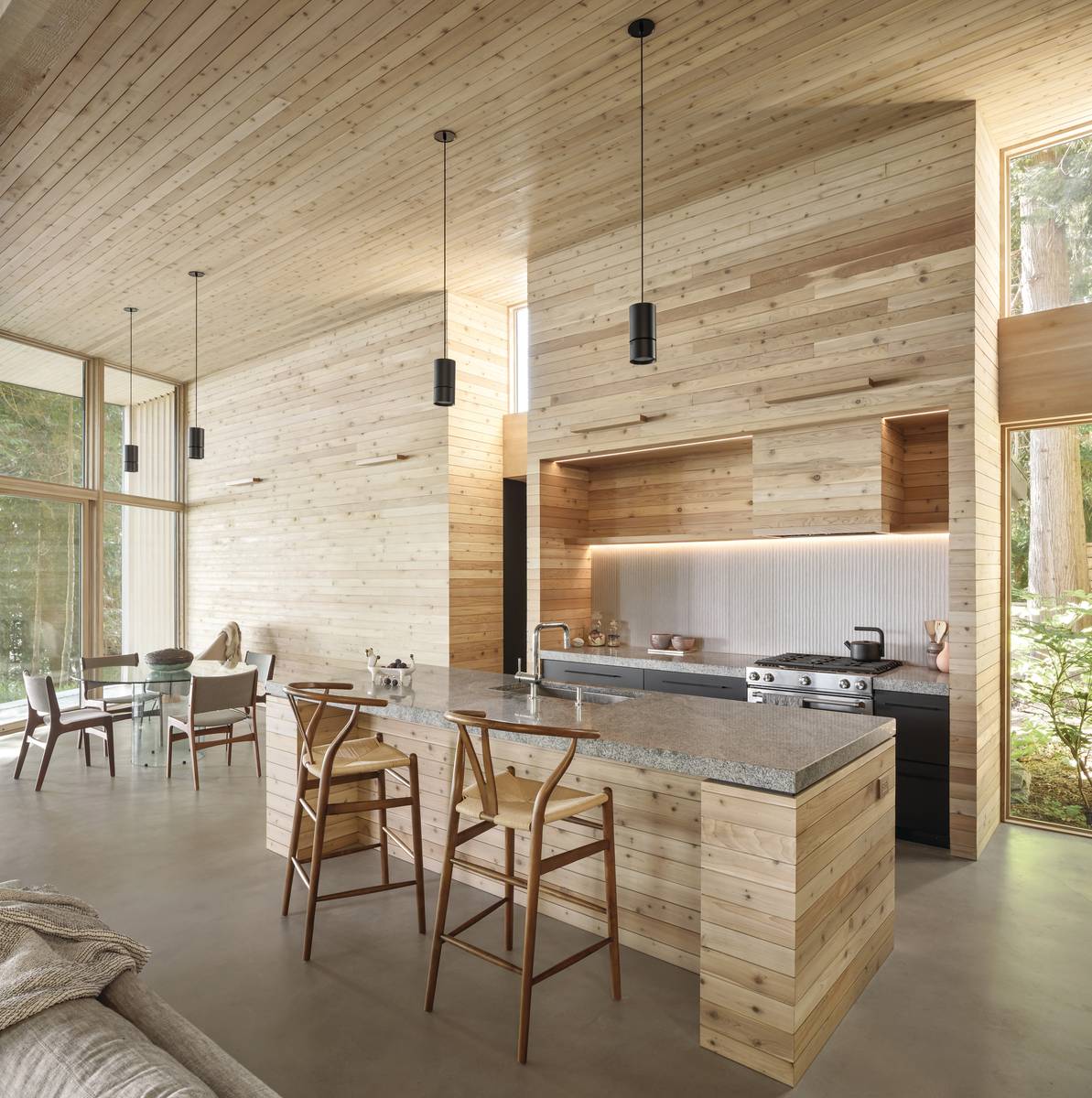
Photo courtesy of Ema Peter
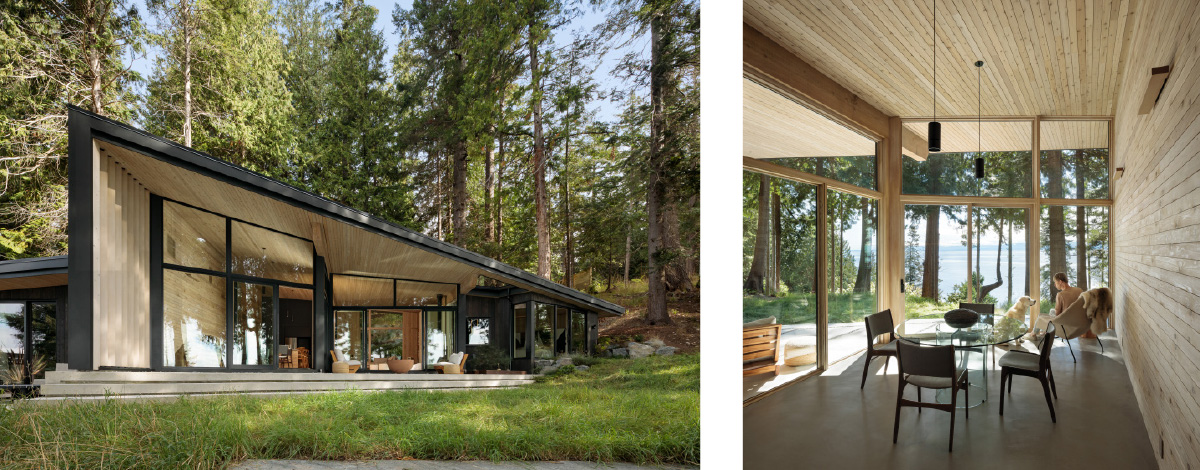
Displaying the knots, texture, and grain of real wood, knotty red cedar is used extensively at this cabin in Halfmoon Bay on British Columbia’s Sunshine Coast.
Phoenix-based general contractor Mikko Pasanen is installing increasing percentages of natural materials on his projects. “Natural wood continues to be popular because it adds texture and character that manufactured materials often can’t replicate. There’s also growing appreciation for materials that feel timeless and work well in both modern and traditional designs. Knotty cedar fits that preference because it has a natural appearance that doesn’t feel overly polished,” he observes.
Another design trend that lines up well with knotty cedar is a desire to balance the pristine, new appearance of new construction with the quality and timeless appeal of organic materials.
“When we use wood as a finish, either inside or outside, we prefer a little character in the grain rather than more uniform patterns, and given this, we often end up with some knots,” relates Ian Butcher, founding partner, Best Practice Architecture, Seattle. For projects seeking a more restrained aesthetic, darker stains can reduce visual contrast around knots while preserving the wood’s texture and organic character.
WRC vs. Cedar Alternatives
Western Red Cedar is widely recognized as the benchmark for durability among cedar species. Thanks to its high concentration of naturally protective extractives, WRC offers exceptional resistance to decay, moisture, and weathering, outperforming many other cedar species, including Japanese Cedar (Sugi), Incense Cedar, and Aromatic Cedar. The durability rankings place Western Red Cedar as the most durable cedar species, while Japanese Cedar ranks among the least durable.
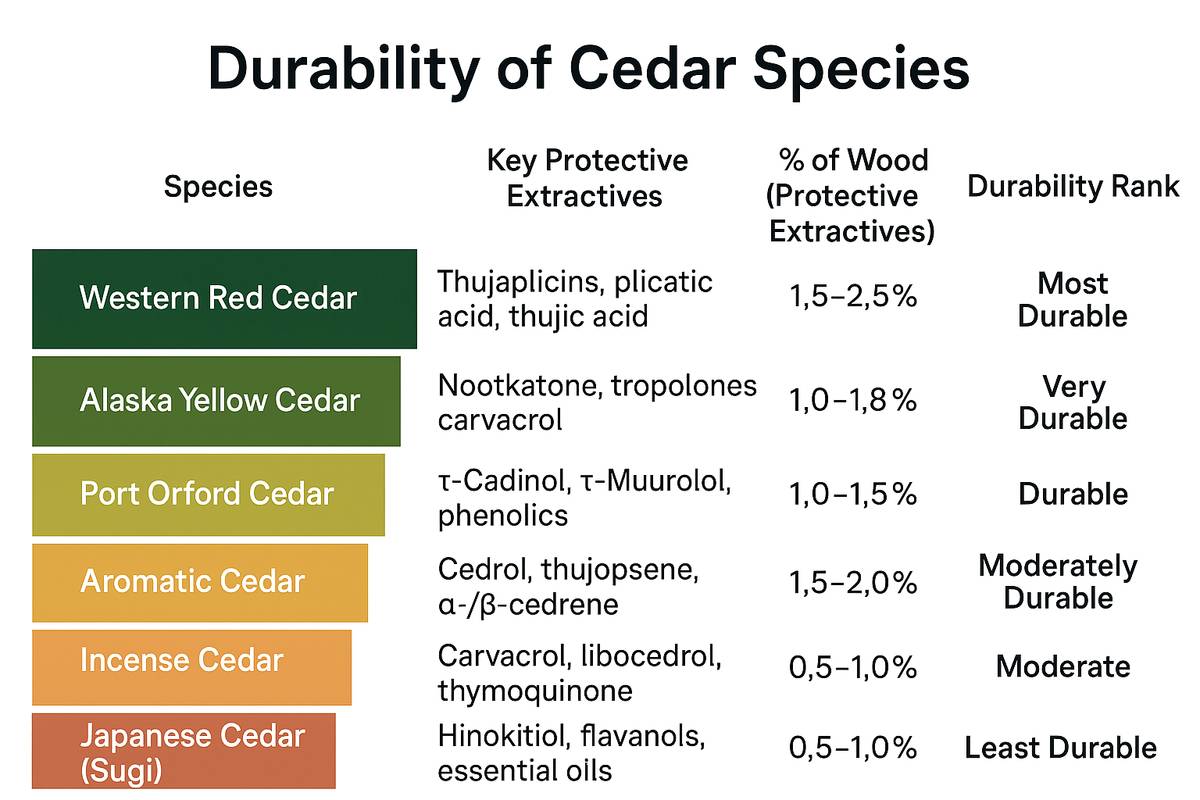
Image courtesy of Tile Council of North America
In addition to durability, Western Red Cedar is highly dimensionally stable, with lower shrinkage than species such as Sugi and Port Orford Cedar. This helps minimize movement, checking, and distortion over time, resulting in better long-term appearance and performance.
For architects and specifiers, the distinction is important. Specifying “cedar” alone can allow substitution with lower-performing species. A Knotty Cedar specification for Western Red Cedar helps ensure superior durability, reduced maintenance, and a longer service life than alternative cedar products.
Popular Applications
“With a great appearance and strong durability, knotty cedar is the best choice for projects using dimensional lumber, timbers, siding, soffit, and decking,” states Jay Poppe, cedar specialist, Western Red Cedar Lumber Association. “A popular design we are seeing is transitions from interior to exterior spaces, such as interior ceilings to soffits and patio covers where cedar is the obvious choice for material.”
In addition, architects are choosing knotty cedar for exposed beams, decks, and fencing. Interior applications increasingly include wall cladding, ceilings, flooring accents, and saunas, where cedar’s appearance and natural aroma contribute to the overall experience.
“Western Red Cedar is one of our go-to choices for exterior and interior cladding. It offers excellent durability and rot resistance while providing the rich tone that people often associate with warmth and comfort. We also love that the material has the ability to age naturally when left exposed to the elements. The silvering offers an honest patina that really can’t be achieved by synthetic finishes,” relates Cory Mattheis, AIA, a principal with the Seattle-based Miller Hull Partnership.
For example, his team chose a select tight knot for the interior walls and ceilings of their Trestle Cabin project on an island in the Salish Sea, about 70 miles north of Seattle. The architects intentionally decided not to finish the wood in order to promote its natural aging and patina over time.
“The rough sawn exterior siding was stained black to recede into the forest while the interior boards were milled smooth and left unfinished. This contrast was conceptually interesting to the design team as a way to explore how the treatment of a single material could create different experiences for the inhabitants,” he explains.
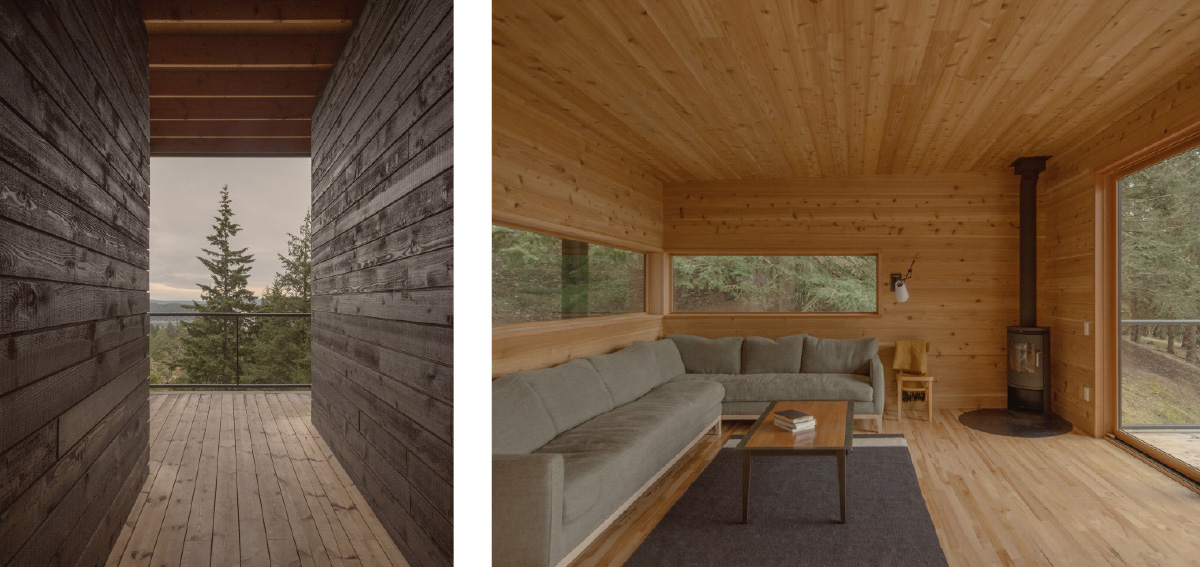
Photos courtesy of Juan Benavides
Miller Hull Partnership’s design for the Trestle Cabin near Seattle features rough-sawn exterior knotty cedar siding stained black and unfinished knotty cedar interiors.
The cabin owners are now living in a space that not only feels great, but smells amazing as the unfinished wood radiates the essence and natural oils of the wood like a sauna.
In selecting different combinations of types, sizes, and stains, architects can creatively specify knotty cedar for a wide range of expressions and applications. The knots add visual interest and help large wall and ceiling surfaces feel more dynamic through subtle variation in grain, color, and texture. “When used on a large, continuous simple field, such as a ceiling or large wall, knotty cedar feels natural, continuous, and the knots don’t overwhelm. This lends depth and soft solidity to an interior,” describes Warren. “On exterior applications, we use a wider board to balance the scale of the exterior.”
The Vancouver architect also chose knotty cedar for his own home. For this application, he opted to mute the knots and therefore stained the exterior black to enable the cladding to recede into the forest shadows.
For another project, a coastal inn, Warren finished the knotty cedar with a Swedish preservation system that allows the wood to naturally weather to grey while protecting the surface.
For projects where creating a welcoming, human-scaled environment is a primary design objective, Mira considers knotty Western Red Cedar an especially effective choice. The same applies to residences and buildings seeking to create a strong connection to nature and incorporate enhanced outdoor dwelling spaces. “We frequently incorporate cedar into rainscreen siding, soffits, ceilings, fences, and exterior gathering spaces because of its durability, workability, and timeless appearance. Whether used on multifamily housing or custom residences, cedar consistently provides warmth and authenticity while complementing contemporary architecture,” he relates.
One of the design strategies Farrow likes to employ is uplighting knotty cedar cladding to create a natural warmth and glow at night. For interiors, he specifies knotty cedar to create an honest expression of natural beauty. “With knotty cedar, a room changes. The eye finds places to rest and moments of discovery. You intuitively understand what the building is made of and how it’s put together. There’s also the meditative and day-dreamy quality that it brings to all interiors.”
As an architect and builder, Farrow also appreciates cedar’s ease of construction and the way the material can be used to craft a building and other components. “It goes up quicker than most any other material, and I always keep scraps or remnants for use in everything from frames for artwork, or a cutting board or even a doorstop,” he says.
Enhanced Sustainability
Before delving into the sustainability benefits of knotty cedar, it’s important to recognize the significant contribution wood makes to eco-friendly construction. “Think about it. You have this living process that captures carbon, provides habitat, cleans our air, moderates the climate, and also produces a nearly ready-to-use building product,” observes Warren.
That said, knotty Western Red Cedar actually amplifies these benefits. “In so many ways, knotty cedar is THE sustainable material. It captures carbon, can be regrown, and provides habitat and oxygen while growing, and is biodegradable,” states Farrow.
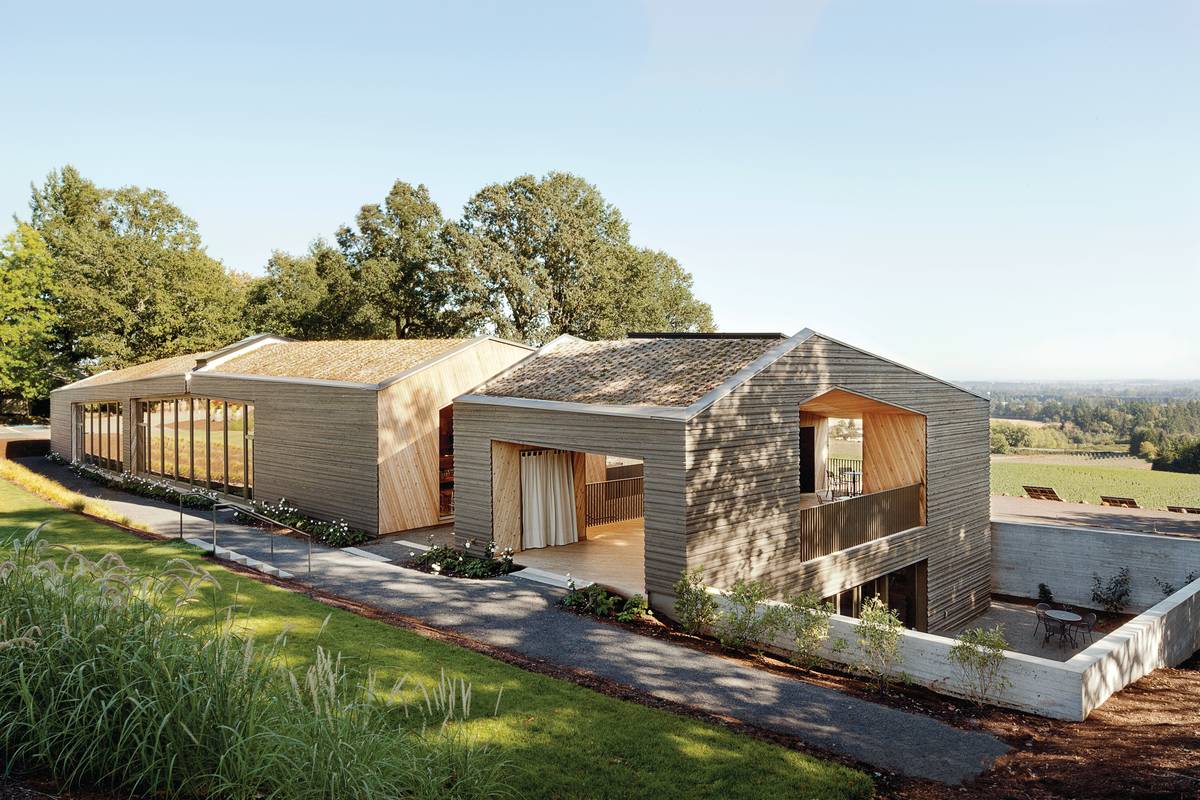
Photo courtesy of Jeremy Bittermann/JBSA Images
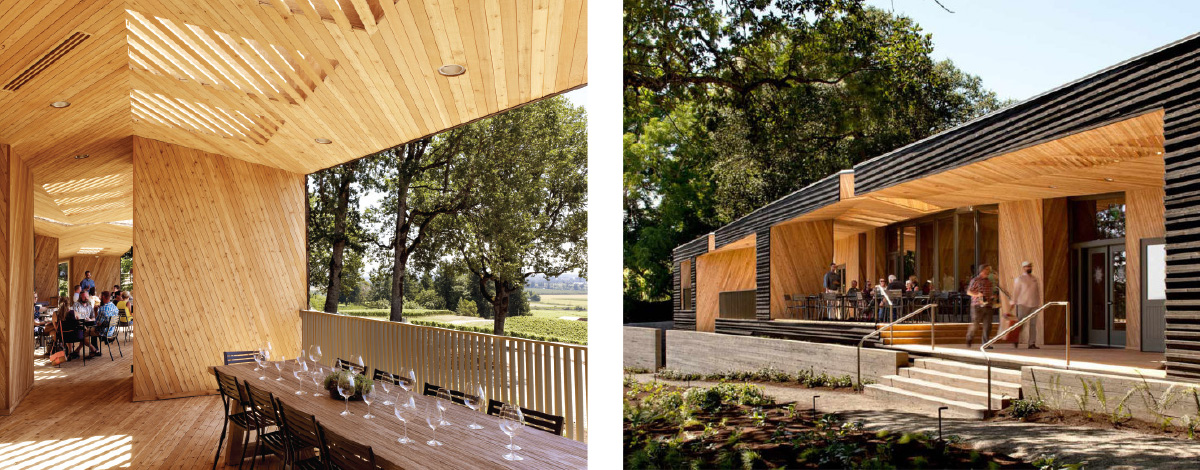
Supporting a greater utilization of harvested wood and better forestry practices, knotty cedar enhances sustainability designs as shown here at the Sokol Blosser Winery in Dayton.
Photo courtesy of Jason Keen
John R 2660, in Detroit’s historic Brush Park neighborhood, is part of City Modern, one of the city’s first large-scale housing developments in more than 65 years.
Western Red Cedar has long been valued by architects, builders, and designers for its unique combination of beauty, durability, and versatility. Native to the Pacific Northwest, the species is naturally resistant to decay, moisture, and insect damage, making it well suited for both interior and exterior applications. Its dimensional stability, workability, and rich visual character have made it a staple in residential, commercial, and institutional architecture. Available in a range of grades and appearances, Western Red Cedar offers designers the flexibility to achieve a variety of aesthetic and performance goals while maintaining a strong connection to nature.
Advantages of Knotty Cedar
A popular specification, knotty Western Red Cedar is widely available and cost-effective, making it an attractive option for designers seeking the warmth and performance of real wood. Retaining the natural appearance of the tree, this grade aligns with growing interest in authentic, sustainable, and biophilic design. “As the market is flooded with more and more processed materials, the natural ones and the materials that display their true qualities as they are extracted or harvested seem more authentic,” states Nathan Hamilton, associate principal, Allied Works Architecture, Portland, Oregon.
Knots accentuate the wood’s natural character, adding warmth, texture, and individuality that cannot be replicated by perfectly uniform materials. “For me, knotty wood contains the life and vibrancy of the forest,” observes Patrick Warren, senior associate, Frits de Vries Architects + Associates, Vancouver, B.C. “It’s a durable, solid, and real material that evokes the forest, with all of its movement and imperfections.” He further describes knotty cedar as more casual and energetic than clear cedar, with a richness that reflects the complexity of the forest itself.
Brian Campbell, an architect with Scott Edwards Architecture in Portland, appreciates the durability and longevity of knotty Western Red Cedar, and the fact that it ages gracefully. Compared to many premium wood species and clear grades, knotty cedar remains both affordable and readily available, granting architects greater freedom to use it more extensively for exteriors and interiors. “This value proposition gives a lot of flexibility and freedom, allowing architects to try things that might otherwise be out of the range of possibility,” he explains.
Authenticity Through Natural Character
Debunking the misconception that knotty boards are somehow inferior to clear grades, Warren pushes back, stating that this fallacy represents a complete disconnection between a product and the forests and trees that it comes from. He believes this is rooted in a consumer culture that is disconnected from its sources. “The knots tell the story of how the tree grew, giving every board its own unique appearance. That natural variation creates warmth, depth, and authenticity that manufactured materials simply cannot replicate,” agrees Nick Mira, AIA, LEED AP, principal architect, Propel Studio Architecture, Portland, Oregon.
The knots reveal the growth history of the tree, giving each board a distinct appearance and reinforcing a sense of authenticity that manufactured materials cannot replicate. “When it comes to materiality, authenticity is critical. Highly processed materials, even ones derived from nature, fall short of helping us feel connected to the natural world,” agrees Hamilton.
Many designers believe the market is shifting away from simulated finishes and toward materials that honestly express their origins. “We are getting back to an appreciation of wood that feels alive with all its knurls and knots,” observes designer Brooklyn Decker, who is based in Austin, Texas. “Figured and character-rich wood and stone have roared back into interior design and architecture. We are seeing burlwoods, cathedrals, knots, bold patterns, and textures all reappearing in interiors after a long period of restraint and subtlety. Rediscovering knotty cedar is part of that energy and creativity,” says Warren. “Knotty cedar adds another layer of visual richness by introducing texture, grain variation, and warmth while making efficient use of the resource. It is a material that performs well technically while creating spaces people genuinely enjoy experiencing.”
Photo courtesy of Ema Peter
Displaying the knots, texture, and grain of real wood, knotty red cedar is used extensively at this cabin in Halfmoon Bay on British Columbia’s Sunshine Coast.
Phoenix-based general contractor Mikko Pasanen is installing increasing percentages of natural materials on his projects. “Natural wood continues to be popular because it adds texture and character that manufactured materials often can’t replicate. There’s also growing appreciation for materials that feel timeless and work well in both modern and traditional designs. Knotty cedar fits that preference because it has a natural appearance that doesn’t feel overly polished,” he observes.
Another design trend that lines up well with knotty cedar is a desire to balance the pristine, new appearance of new construction with the quality and timeless appeal of organic materials.
“When we use wood as a finish, either inside or outside, we prefer a little character in the grain rather than more uniform patterns, and given this, we often end up with some knots,” relates Ian Butcher, founding partner, Best Practice Architecture, Seattle. For projects seeking a more restrained aesthetic, darker stains can reduce visual contrast around knots while preserving the wood’s texture and organic character.
WRC vs. Cedar Alternatives
Western Red Cedar is widely recognized as the benchmark for durability among cedar species. Thanks to its high concentration of naturally protective extractives, WRC offers exceptional resistance to decay, moisture, and weathering, outperforming many other cedar species, including Japanese Cedar (Sugi), Incense Cedar, and Aromatic Cedar. The durability rankings place Western Red Cedar as the most durable cedar species, while Japanese Cedar ranks among the least durable.
Image courtesy of Tile Council of North America
In addition to durability, Western Red Cedar is highly dimensionally stable, with lower shrinkage than species such as Sugi and Port Orford Cedar. This helps minimize movement, checking, and distortion over time, resulting in better long-term appearance and performance.
For architects and specifiers, the distinction is important. Specifying “cedar” alone can allow substitution with lower-performing species. A Knotty Cedar specification for Western Red Cedar helps ensure superior durability, reduced maintenance, and a longer service life than alternative cedar products.
Popular Applications
“With a great appearance and strong durability, knotty cedar is the best choice for projects using dimensional lumber, timbers, siding, soffit, and decking,” states Jay Poppe, cedar specialist, Western Red Cedar Lumber Association. “A popular design we are seeing is transitions from interior to exterior spaces, such as interior ceilings to soffits and patio covers where cedar is the obvious choice for material.”
In addition, architects are choosing knotty cedar for exposed beams, decks, and fencing. Interior applications increasingly include wall cladding, ceilings, flooring accents, and saunas, where cedar’s appearance and natural aroma contribute to the overall experience.
“Western Red Cedar is one of our go-to choices for exterior and interior cladding. It offers excellent durability and rot resistance while providing the rich tone that people often associate with warmth and comfort. We also love that the material has the ability to age naturally when left exposed to the elements. The silvering offers an honest patina that really can’t be achieved by synthetic finishes,” relates Cory Mattheis, AIA, a principal with the Seattle-based Miller Hull Partnership.
For example, his team chose a select tight knot for the interior walls and ceilings of their Trestle Cabin project on an island in the Salish Sea, about 70 miles north of Seattle. The architects intentionally decided not to finish the wood in order to promote its natural aging and patina over time.
“The rough sawn exterior siding was stained black to recede into the forest while the interior boards were milled smooth and left unfinished. This contrast was conceptually interesting to the design team as a way to explore how the treatment of a single material could create different experiences for the inhabitants,” he explains.
Photos courtesy of Juan Benavides
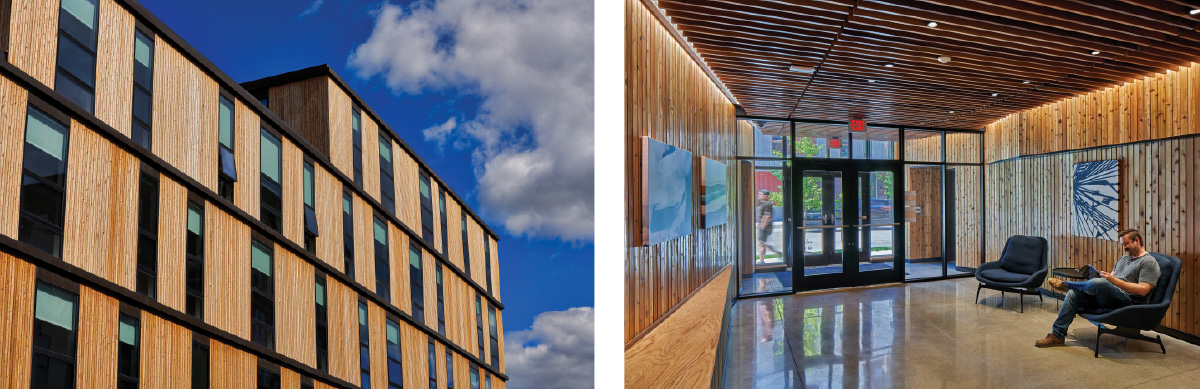
Miller Hull Partnership’s design for the Trestle Cabin near Seattle features rough-sawn exterior knotty cedar siding stained black and unfinished knotty cedar interiors.
The cabin owners are now living in a space that not only feels great, but smells amazing as the unfinished wood radiates the essence and natural oils of the wood like a sauna.
In selecting different combinations of types, sizes, and stains, architects can creatively specify knotty cedar for a wide range of expressions and applications. The knots add visual interest and help large wall and ceiling surfaces feel more dynamic through subtle variation in grain, color, and texture. “When used on a large, continuous simple field, such as a ceiling or large wall, knotty cedar feels natural, continuous, and the knots don’t overwhelm. This lends depth and soft solidity to an interior,” describes Warren. “On exterior applications, we use a wider board to balance the scale of the exterior.”
The Vancouver architect also chose knotty cedar for his own home. For this application, he opted to mute the knots and therefore stained the exterior black to enable the cladding to recede into the forest shadows.
For another project, a coastal inn, Warren finished the knotty cedar with a Swedish preservation system that allows the wood to naturally weather to grey while protecting the surface.
For projects where creating a welcoming, human-scaled environment is a primary design objective, Mira considers knotty Western Red Cedar an especially effective choice. The same applies to residences and buildings seeking to create a strong connection to nature and incorporate enhanced outdoor dwelling spaces. “We frequently incorporate cedar into rainscreen siding, soffits, ceilings, fences, and exterior gathering spaces because of its durability, workability, and timeless appearance. Whether used on multifamily housing or custom residences, cedar consistently provides warmth and authenticity while complementing contemporary architecture,” he relates.
One of the design strategies Farrow likes to employ is uplighting knotty cedar cladding to create a natural warmth and glow at night. For interiors, he specifies knotty cedar to create an honest expression of natural beauty. “With knotty cedar, a room changes. The eye finds places to rest and moments of discovery. You intuitively understand what the building is made of and how it’s put together. There’s also the meditative and day-dreamy quality that it brings to all interiors.”
As an architect and builder, Farrow also appreciates cedar’s ease of construction and the way the material can be used to craft a building and other components. “It goes up quicker than most any other material, and I always keep scraps or remnants for use in everything from frames for artwork, or a cutting board or even a doorstop,” he says.
Enhanced Sustainability
Before delving into the sustainability benefits of knotty cedar, it’s important to recognize the significant contribution wood makes to eco-friendly construction. “Think about it. You have this living process that captures carbon, provides habitat, cleans our air, moderates the climate, and also produces a nearly ready-to-use building product,” observes Warren.
That said, knotty Western Red Cedar actually amplifies these benefits. “In so many ways, knotty cedar is THE sustainable material. It captures carbon, can be regrown, and provides habitat and oxygen while growing, and is biodegradable,” states Farrow.
Photo courtesy of Jeremy Bittermann/JBSA Images
Supporting a greater utilization of harvested wood and better forestry practices, knotty cedar enhances sustainability designs as shown here at the Sokol Blosser Winery in Dayton.
Other distinctive attributes of knotty cedar are its ability to reduce wood waste and the fact that it’s harvested from younger trees. This greater utilization of felled wood is an important ecological and forest management strategy, decreasing carbon loss while improving forest resilience against fires. Of note, an estimated 30% to 40% of harvested wood is discarded. By utilizing wood with knots, manufacturers can make much more efficient use of the material.
By harvesting younger forests, the industry can help preserve first- and second-growth forests. Unlike clear vertical grain cedar, which typically comes from older trees to achieve a denser grain pattern, younger trees have more branches along the full length of the trunk.
“Using and celebrating knotty cedar is a choice that benefits and protects forests,” says Warren. “It allows managed forests to be harvested and regenerated more quickly while protecting greater areas of untouched old-growth forests. In a carefully managed forest, the benefits of growing and harvesting cedar are immense for both the community and the environment.” Matthies adds, “From an embodied carbon perspective, this makes a significant difference to the health of our forest ecosystems.”
Specifying Western Red Cedar is also a way for architects to support all five principles of the American Institute of Architects
Materials Pledge, which prioritizes building materials that positively impact human and environmental health.
- Human Health: Naturally durable cedar reduces reliance on added chemical treatments, supporting healthier indoor and outdoor environments.
- Social Health & Equity: Responsibly sourced cedar supports ethical forestry practices, worker well-being, and local communities.
- Ecosystem Health: Knotty cedar maximizes the use of harvested trees, reducing waste and supporting sustainable forest resource management.
- Climate Health: Cedar stores carbon and typically has a lower embodied carbon footprint than many non-wood building materials.
- Circular Economy: Durable, reusable, and recyclable, knotty cedar supports a long service life and material recovery at end of use.
Showcasing cedar’s exemplary sustainability benefits, FPInnovations compared the environmental performance of Western Red Cedar siding and decking to wood-plastic composite decking, vinyl siding, fiber-cement siding, and clay brick siding in a 2025 study entitled Life Cycle Assessment of Western Red Cedar Decking, Siding, and Competing Products.
Cedar excelled in the following five areas:
- Carbon Positive: Cedar siding stores more carbon than is emitted during its production, installation, maintenance, and end-of-life stages.
- Lower Embodied Carbon: Cedar has a lower greenhouse gas footprint than vinyl, fiber-cement, and brick siding.
- Reduced Energy Demand: Cedar requires less fossil-fuel energy to manufacture than competing siding materials.
- Renewable Resource: Cedar is harvested from sustainably managed forests and continuously replenished through natural growth.
- Strong Life Cycle Performance: Even when maintenance is included, cedar delivers superior overall environmental performance across multiple impact categories.
Better Biophilic Designs
As interest in biophilic design continues to grow and bring the qualities of nature into the built environment, wood remains a popular strategy. Through sight, touch, and smell, building occupants are drawn to wood’s natural qualities. According to Catie Ryan Balatas, an associate partner with Terrapin Bright Green, a consulting and research firm specializing in biophilic design, wood offers the following biophilic properties:
Visually Engaging Complexity: Wood’s natural grain and patterning provide the layered visual complexity found in nature, helping create spaces that feel balanced, inviting, and restorative.
- Human-Centered Materiality: The warm tactile qualities of wood encourage physical comfort and support a more relaxing user experience compared to synthetic materials.
- Natural Sensory Enrichment: Wood introduces subtle natural scents that can positively influence mood and contribute to a healthier indoor environment.
- Warm Visual Ambiance: The natural color palette of wood enhances perceptions of warmth, comfort, and emotional well-being.
- Connection to Nature: Wood serves as a tangible reminder of the natural world, helping occupants feel more connected to nature even within built environments.
- Genuine Natural Expression: Unlike manufactured finishes, wood exhibits authentic variation in grain, texture, and reflectivity, creating a richer and more meaningful sensory experience.
Honing in on Western Red Cedar’s characteristics, she says the wood species’ warm hues, pronounced grain, and tactile qualities amplify its biophilic effects. Its rot-resistant, durable nature supports large-scale exterior and interior designs, and its association with traditional North American structures and Indigenous cultures reinforces occupants’ associations with shelter, protection, and nature.
“Biophilic design is about strengthening people’s connection to nature. Knotty cedar reinforces that connection because every board is unique. The grain patterns, knots, and natural color variation remind occupants that the material originated from a living tree rather than a factory,” states Mira.
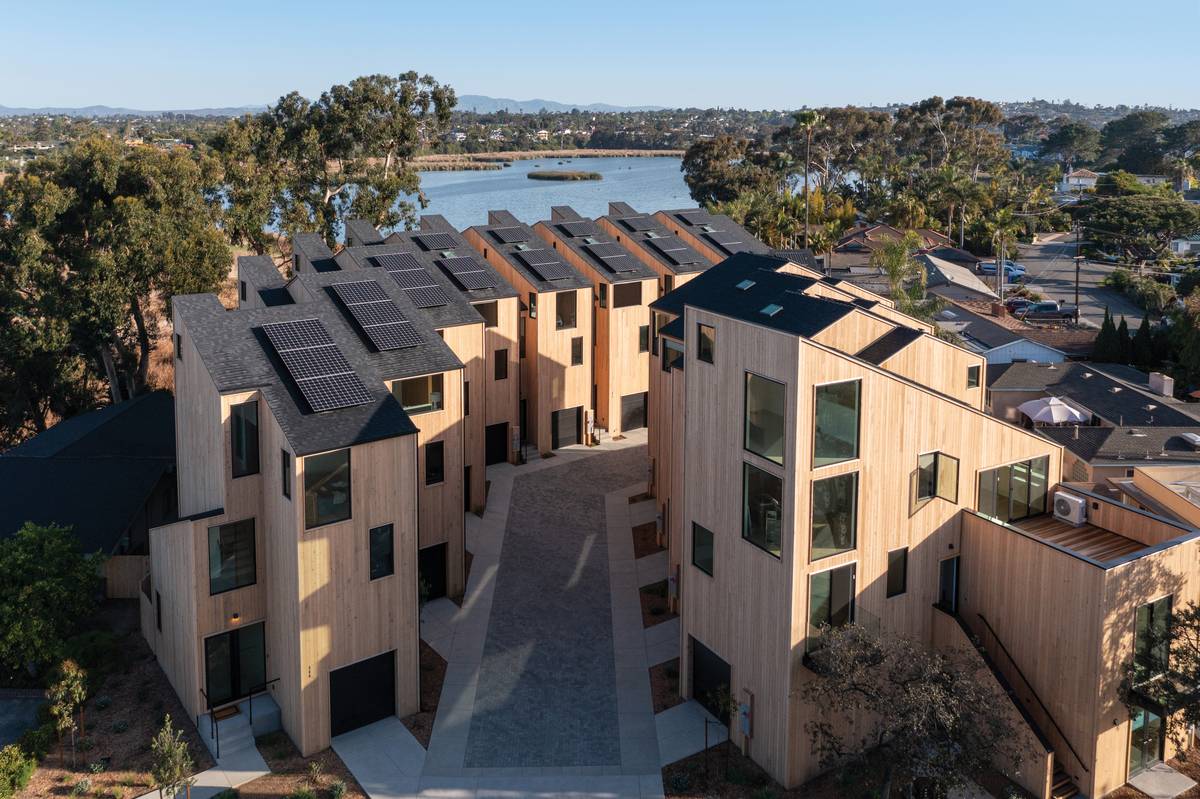
Photo courtesy of Auda & Auda Photography
Blending with the lagoon and surrounding trees, the knotty Western Red Cedar siding design for the multifamily Laguna Row development in Carlsbad, California, exemplifies biophilic design at its best.
“In bringing that natural wood character throughout more of the project, all of a sudden, you’re really enhancing those biophilic benefits and strengthening those natural connections. Furthermore, knotty cedar’s rustic character has a very natural feel and can help strengthen the perception that this is a living material,” says Campbell.
Measuring the Benefits
In measuring the performance and healing qualities of biophilic wood designs, Terrapin Bright Green’s 2024 publication, Biophilic Design with Wood in British Columbia, highlights increased productivity and reduced absenteeism in offices, improved academic performance in schools, faster healing and reduced occupational stress in hospitals, and increased dwell time and improved sales in retail establishments.
An interesting study published in the Mass Timber Construction Journal in 2025 examined the opinions of individuals evaluating a wooden key ring and pencil holder with and without knots. The qualities that most attracted participants to the knotted options included cognitive engagement, closeness to nature, perceived personality and uniqueness, and natural appeal.
Knotty Wood Types and Applications
When selecting knotty cedar grades and sizes, architects can choose from a number of options. Starting the highest grade, “Select Knotty,” the assortment of grad types are based on a number of factors including knot size and quality.
For common applications such as siding, trim, soffits, decks, interior walls, and ceilings, knotty cedar is available in a variety of standard sizes and patterns.
Growing Interest
Pushing back against technology overload and the rise of AI, architects anticipate that biophilic materials such as knotty cedar will continue to grow in popularity across a wide range of building types and settings. “Living in a world where technology and AI smooth out all our rough edges, more than ever people are looking for patina, character, and imperfection. We want materials that feel alive,” agrees Decker.
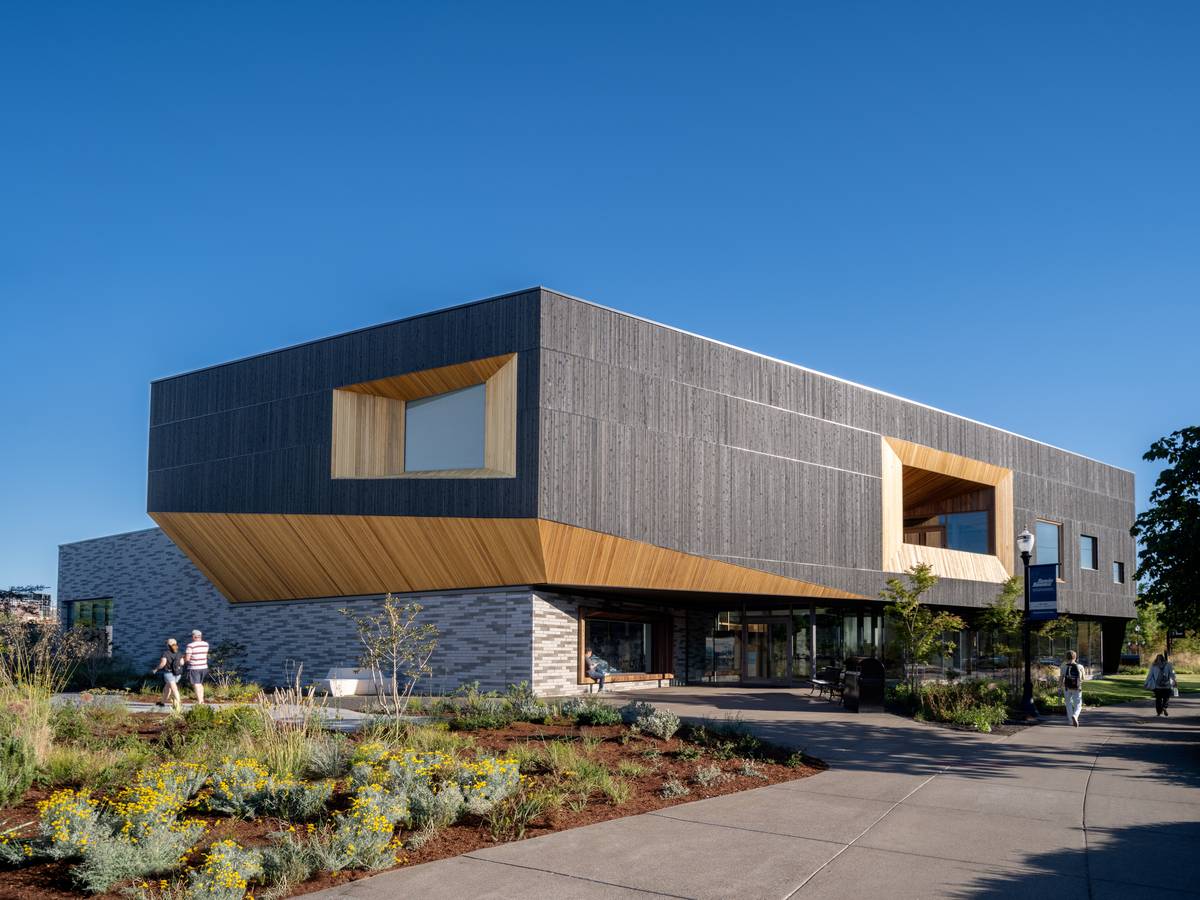
Photo courtesy of Christian Columbre
Harvested from younger trees, knotty cedar supports sustainable foresting and is more readily available.
“The use of knotty Western Red Cedar will continue to grow as a way to support healthy forests, create biophilic environments, and restore interest in honest materials,” adds Hamilton.
In turn, Matthies foresees an expansion of supply chains and distribution networks offering knotty cedar. “It’s such a great material for exterior siding applications, for example, that it makes sense that other regions and markets would be interested. And it’s a way to preserve the old-growth forests that are so critical to carbon sequestration and healthier ecosystems,” he concludes.
Barbara Horwitz-Bennett is a veteran architectural journalist who has written hundreds of CEUs and articles for various AEC publications. www.linkedin.com/in/barbarahbennett/