Critical Transitions: Achieving Air Barrier Continuity
Integrating Air Barrier Design Across the Roof, Wall, Below-Grade, and Interior to Optimize Whole Building Enclosure Performance
Sponsored by VaproShield | Presented by Scott D. Wood
Webinar On-Demand
Modern high performance buildings demand more than independent envelope components. They require a coordinated air control strategy that begins with the details to the final building air leak testing. This course examines the role of continuous air barriers in improving energy efficiency, durability, and occupant comfort in commercial construction.
Participants will explore how air leakage increases condensation risk, reduces thermal efficiency and impacts long-term building performance. This course will review best practices for detailing critical transitions such as roof-to-wall and wall to below-grade connections, where discontinuities often lead to failures. Special attention will be given to vapor permeable air barrier systems and their ability to maintain airtightness while supporting drying potential within the assemblies.
Through discussion of real-world projects across mission-critical facilities, large-format industrial buildings, multi-family housing, and commercial construction, attendees will learn how integrated, permeable enclosure strategies support long-term resilience, effective moisture management, and reduce building failure risk.
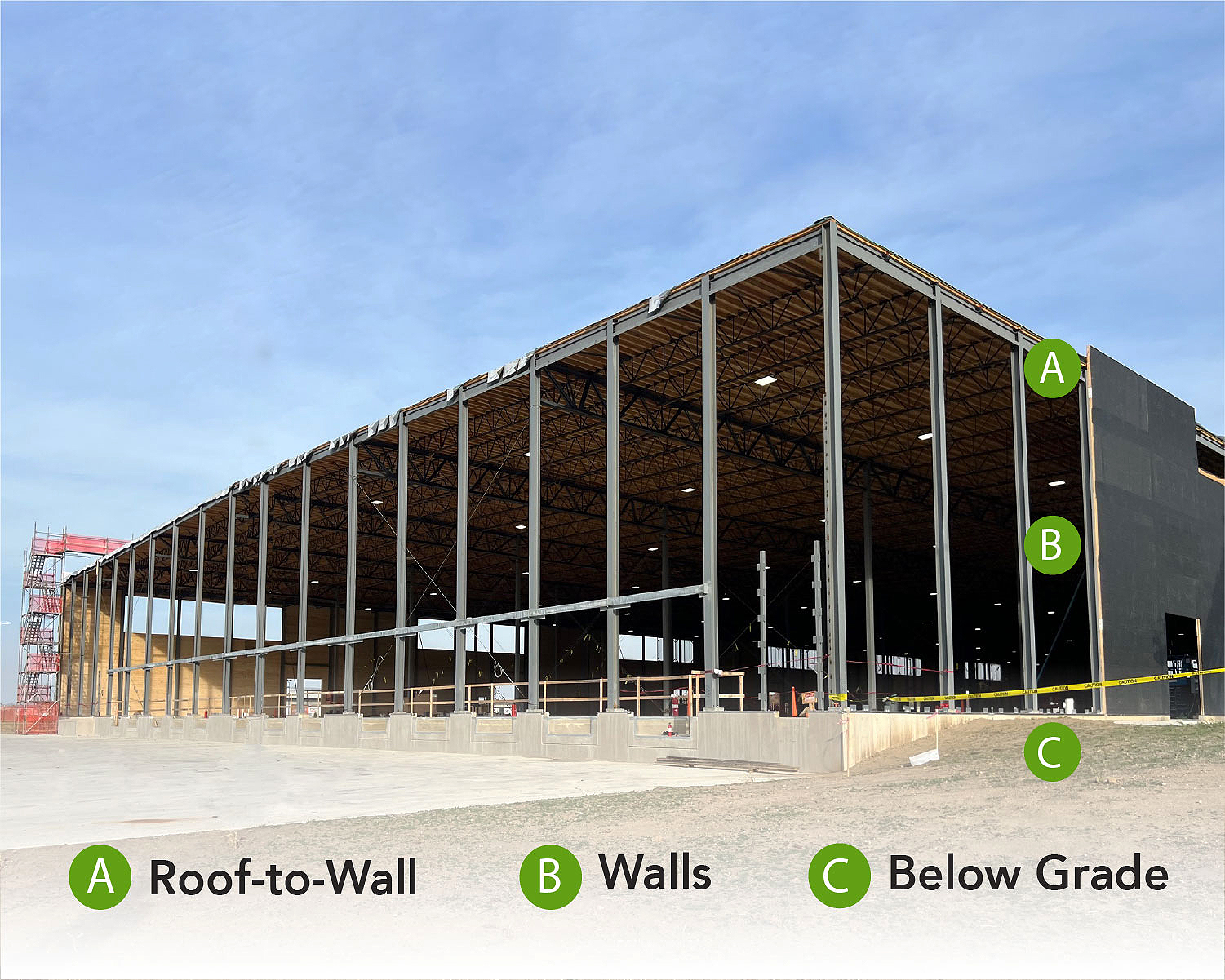
Photo courtesy of VaproShield
 |
Scott D. Wood is a Senior Building Scientist at VaproShield and is responsible for product QA/QC on manufactured materials and investigation/testing of properties for new product development. He provides technical support for the company’s representatives, client inquiries, and assists in development--updating product literature and creating VaproShield’s AIA presentations. Scott’s extensive background has supported the excellent presentations he has provided domestically and internationally. |
VaproShield’s innovative wall and roof air barrier membranes mitigate moisture damage and control air infiltration leading to enhanced indoor air quality for occupants, increasing building longevity and improving long term energy performance.
Originally published in Building Enclosure
Originally published in April 2026
LEARNING OBJECTIVES
- Identify best practices for maintaining air control at critical transitions, including roof-to-wall and wall-to-below-grade connections.
- Cover how air leakage impacts energy performance, durability, and occupant comfort in commercial buildings.
- Discuss how vapor-permeable air barriers support drying potential while maintaining airtightness in high-performance enclosure design, including data centers, multifamily, and commercial buildings.
- Identify common breakdowns in communication and sequencing between trades that impact air barrier continuity and explore approaches to improve coordination at critical transitions.