Permeable Interlocking Concrete Pavers
Designing sustainable water management solutions
Sponsored by Unilock
This presentation will inspire architects, engineers, landscape architects, developers and municipal agencies to make permeable interlocking concrete pavers the first choice for sustainable, stormwater solutions. Permeable pavers are a recommended Best Management Practice under the EPA's NPDES requirements. They are also a recommended construction practice under Low Impact Development and LEED guidelines in addition to other benefits.
Originally, concrete pavers were designed for heavy-duty applications, which make them a perfect and superior solution for streets, roads, parking lots and even plazas and sidewalks. Permeable pavers allow water infiltration between units, not through the paver themselves. This is a huge advantage over other porous materials because paver composite is not changed. There is also an aesthetic quality to pavers because they are made in several different shapes, colors and textures. All of these options and benefits will be explored.
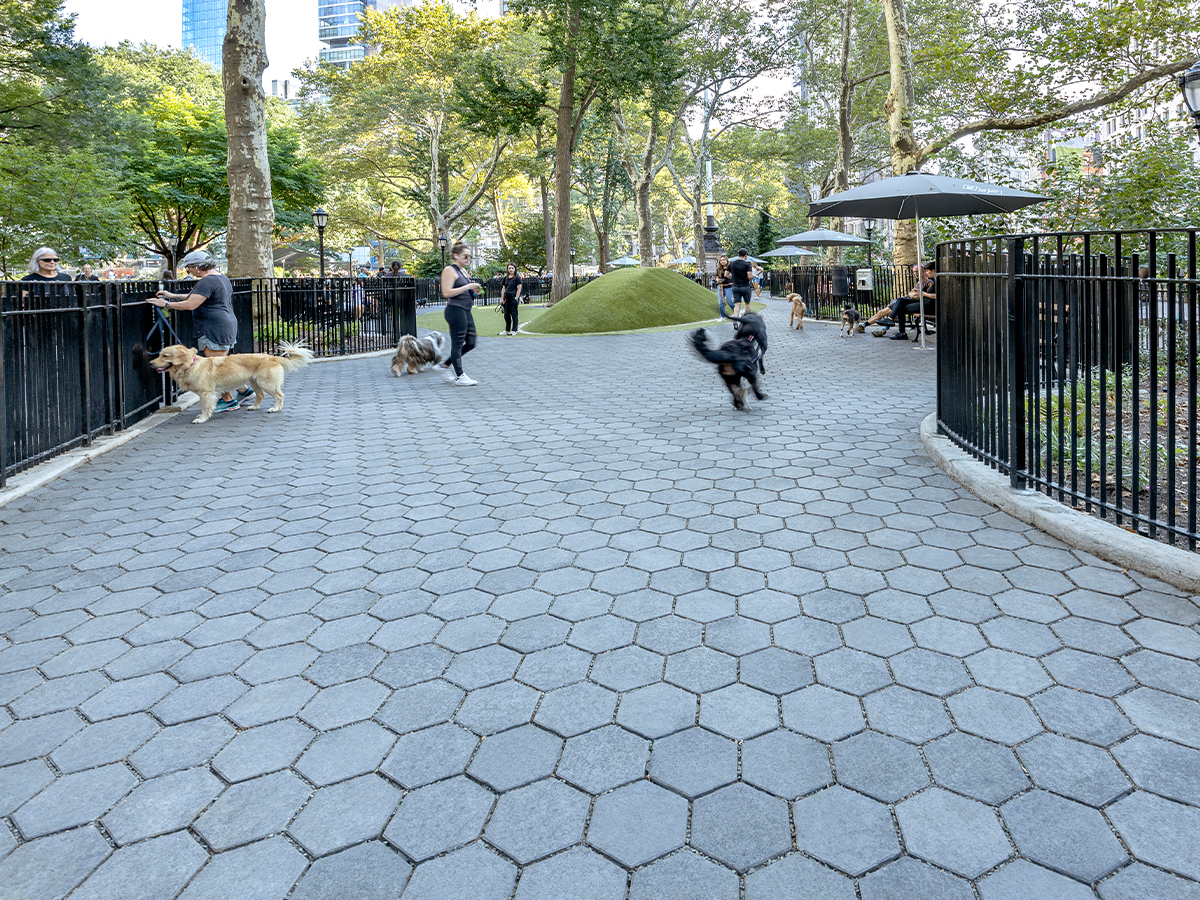
Photo courtesy of Unilock

Designers and architects trust Unilock pavers and retaining walls to achieve their vision without having to compromise either creative design or long-term performance. We introduced pavers to North America and we continue to deliver on style with the latest technologies.
LEARNING OBJECTIVES
- Describe beneficial environmental impacts of permeable pavers on water quality, groundwater sources and sewer systems.
- Analyze drainage, reduction of runoff and pollution removal benefits of using a permeable system.
- Evaluate and identify key environmental attributes and functionality differences between permeable pavers and other traditional paver systems.
- Understand different installation procedures for permeable pavers.
- List the permeable paver materials and be able to design different sustainable water management solutions.
- Identify scenarios in which permeable pavers are more environmentally favorable than traditional solid surface applications.