The Critical Role of Water, Air, and Thermal Control and Tube-Seal Fastener Solutions
Where Secure Attachment Meets Continuous Envelope Performance
Sponsored by TRUFAST | Presented by Jason Wigboldy
Webinar On-Demand
This course examines the fundamentals of building envelope design, with a particular focus on fastener penetrations through water, air, and thermal control layers and their effect on overall performance. It explores various attachment solutions, including tube-seal fasteners, that reduce thermal bridging and support the continuity of the air- and weather-resistive barrier (AWRB) and exterior insulation, contributing to LEED® v5 Building Design and Construction and WELL Building Standard™ v2 goals.
The course also reviews testing procedures for evaluating moisture penetration and fire resilience and demonstrates how selecting assemblies through a systematic approach can improve design efficiency while reducing errors and omissions. Throughout the course, a mass timber structure serves as a case study to illustrate best practices in building envelope detailing.
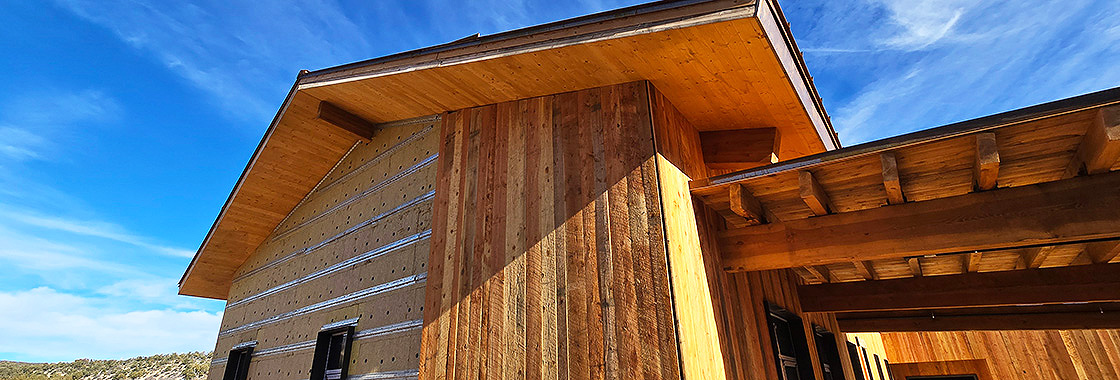
Photo courtesy of TRUFAST
 |
Jason Wigboldy has led TRUFAST Walls for over 20 years in areas of business development, product development, and testing. TRUFAST develops attachment solutions for various layers of the exterior building envelope including air and water barriers, thermal barriers, and cladding attachment that address leakage and thermal-bridging resulting in durable performance and ultimate sustainability. |

TRUFAST® began manufacturing and distributing unique and better performing fastening solutions for the commercial roofing industry more than 40 years ago. Our product offering has grown to include other engineered fastening solutions – such as adhesives, induction weld plates, fasteners/washers for exterior building envelopes and facades – and accessories. We are your single source for attachment solutions for the whole building envelope! Visit www.trufast.com to learn more.
Originally published in Building Enclosure
Originally published in July 2026
LEARNING OBJECTIVES
- Discuss the importance of a high-performing building envelope and the role of each control layer in supporting WELL v2 goals for occupant comfort, indoor environmental quality, and moisture management.
- Evaluate the impact of fastener and anchor penetrations on building envelope performance, particularly related to moisture control, air leakage, thermal bridging, and long-term durability.
- Explore attachment solutions, such as tube-seal fasteners and anchors, that reduce thermal bridging and maintain the continuity of the AWRB and insulation, helping preserve structural integrity while supporting LEED v5 and WELL v2 goals for energy efficiency and mitigation of moisture-related deterioration.
- Examine full-system testing used to assess thermal efficiency, air and water penetration resistance, and fire propagation, supporting long-term building safety, resilience, and compliance.