This course explores how robotics, AI, and computational design are transforming architectural practice and construction workflows. Drawing on research from Princeton’s Adel Research Group (ARG) and ETH Zurich, participants will examine multi-robot assembly, AI-driven material optimization, and human– robot collaboration in off-site prefabrication. Case studies—including the DFAB House—reveal how robotic fabrication increases precision and productivity, improves worker safety, and supports lowercarbon and resilient building systems.
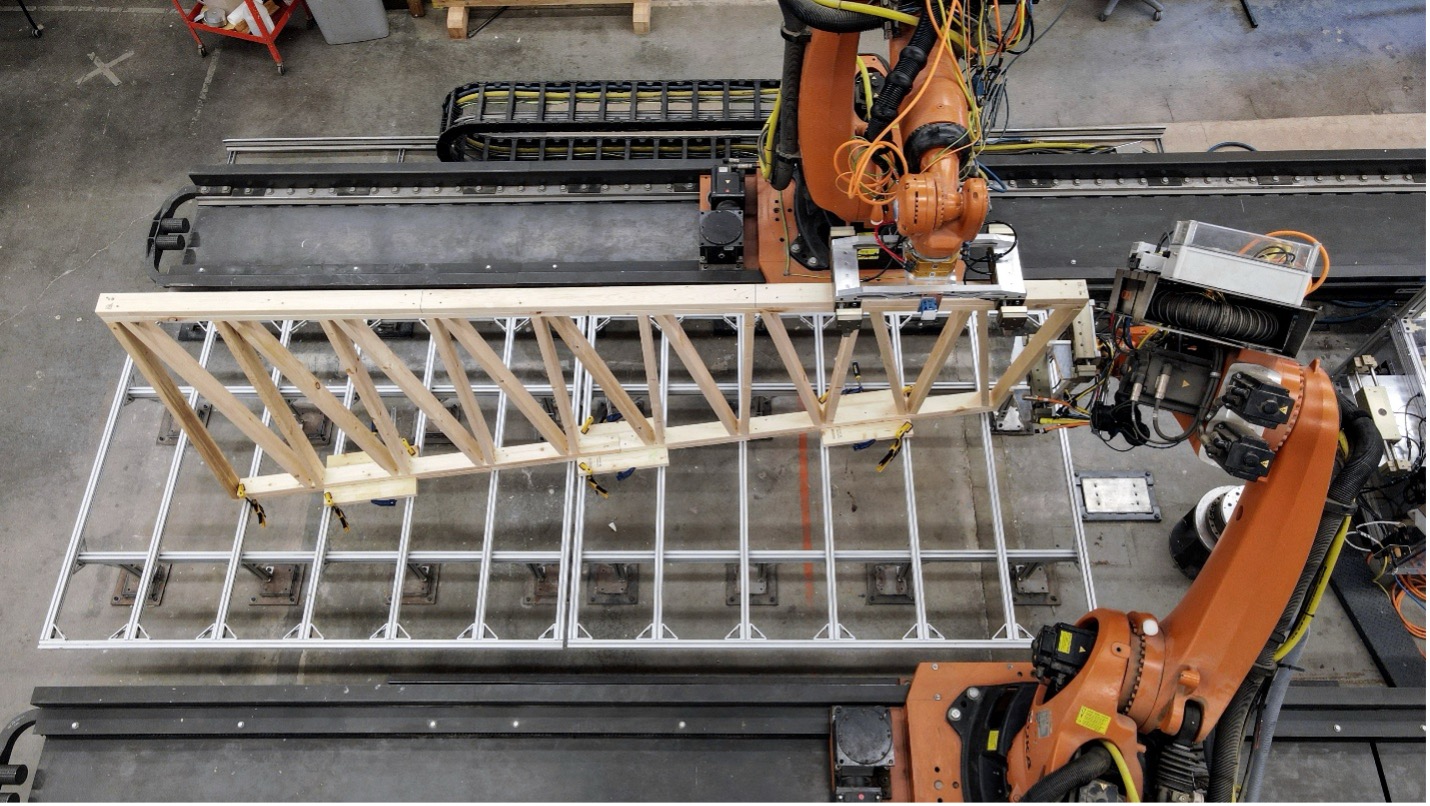
Robotics, AI, and computational design are reshaping architecture and construction—from multi-robot assembly and AI-driven material optimization to human–robot collaboration in off-site prefabrication—improving precision, productivity, worker safety, and supporting lower-carbon, resilient building systems. Photo courtesy of Arash Adel.
This course explores how robotics, AI, and computational design are transforming architectural practice and construction workflows. Drawing on research from Princeton’s Adel Research Group (ARG) and ETH Zurich, participants will examine multi-robot assembly, AI-driven material optimization, and human– robot collaboration in off-site prefabrication. Case studies—including the DFAB House—reveal how robotic fabrication increases precision and productivity, improves worker safety, and supports lowercarbon and resilient building systems.
Robotics, AI, and computational design are reshaping architecture and construction—from multi-robot assembly and AI-driven material optimization to human–robot collaboration in off-site prefabrication—improving precision, productivity, worker safety, and supporting lower-carbon, resilient building systems. Photo courtesy of Arash Adel.