Photo courtesy of Stéphane Groleau
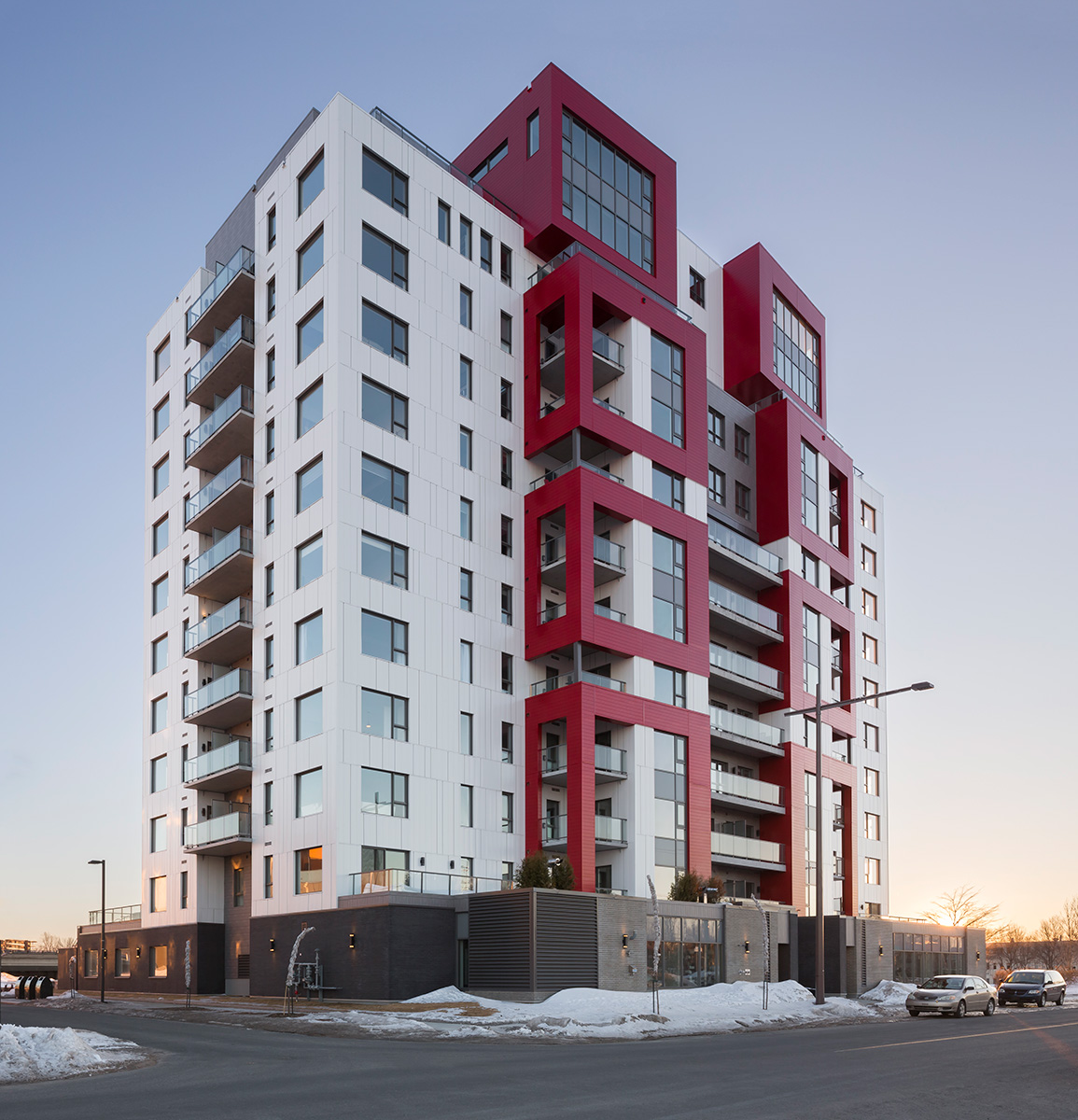
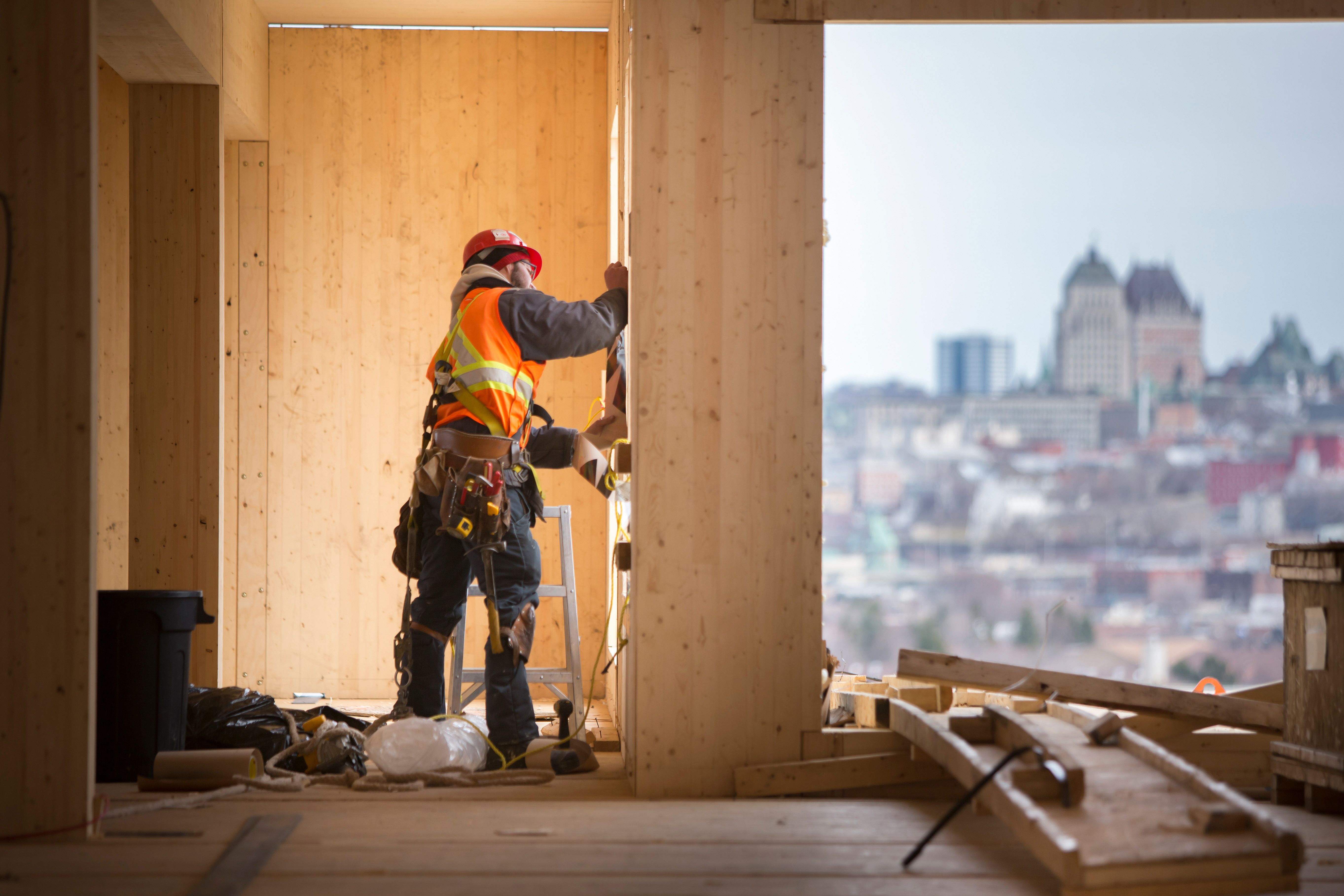
Project: Origine54. Mass timber’s lighter weight boosted this Quebec-based multifamily project—dubbed Origine—by seven additional stories, giving it a total of thirteen. The same building in that location made from concrete would have maxed out at six stories high, given the low bearing capacity of the soil. The architect for Origine is Yvan Blouin Architect.
WHAT CONSTITUTES A TALLER BUILDING?
T3 in Minneapolis, Atlanta, and Toronto. Trafalgar Place in London. 25 King in Brisbane. Brock Commons in Vancouver. These structures from around the world are all taller wood hybrid buildings constructed within the past five years. The Council on Tall Buildings and Urban Habitat (CTBUH) provides definitions for what constitutes “tall” around the globe. For the CTBUH, “tall” is subjective, as a high-rise in a small European town might get lost in a city like New York.
The CTBUH defines the materials from which tall buildings are comprised. Buildings constructed from timber are permitted through “the use of localized non-timber connections between timber elements” and, in some cases, a “floor system of concrete planks or concrete slab on top of timber beams” since timber still acts as the primary structure.
In 2019, the International Code Council (ICC) announced approval of 14 code changes as part of the 2021 International Building Code (IBC) that will allow mass timber structures of up to 18 stories. Included in these approved code changes is the introduction of three new construction types—IV-A, IV-B, and IV-C, with varying degrees of noncombustible protection required as follows:
- Type IV-A: 18 stories maximum, fully protected mass timber elements with fire- resistance ratings of 3 hours for bearing walls and structural frame construction, 2 hours for floor construction, and 1.5 hours for roof construction.
- Type IV-B: 12 stories maximum, with protected exterior and limited exposed interior mass timber with fire-resistance ratings of 2 hours for bearing walls, structural frame, and floor construction, and 1 hour for roof construction.
- Type IV-C: 9 stories maximum, protected exterior and exposed mass timber interior with fire-resistance ratings of 2 hours for bearing walls, structural frame, and floor construction, and 1 hour for roof construction.
Canadian code, too, has progressed to include taller mass timber structures. The new 2020 National Building Code of Canada (NBCC) will permit 12 stories of mass timber construction, taking into account its strength and fire resistance ratings. Over the past several years, a number of tall wood projects have been completed around the world, demonstrating successful applications of new wood and mass timber technologies. With rising demand for new urban buildings and increased interest in sustainable and efficient construction, the potential for tall wood buildings is expected to grow.
HOW TO BUILD TALLER WITH WOOD
Heavy timber, as defined by the American Wood Council, is either sawn lumber or structural glue-laminated timber and is associated with Type IV construction. While it was once primarily used for one-story structures such as churches, schools, auditoriums, or warehouses, heavy timber, like mass timber, is being used to build taller structures and in innovative designs seeking to capture the aesthetics and benefits of building with wood.
Mass timber is a product category typically characterized by the use of large, solid wood panels often manufactured off-site for wall, floor, and roof construction. Mass timber can include sawn lumber and structural glue-laminated timber. It also includes innovative forms of sculptural buildings and non-building structures formed from solid wood panels or framing systems.
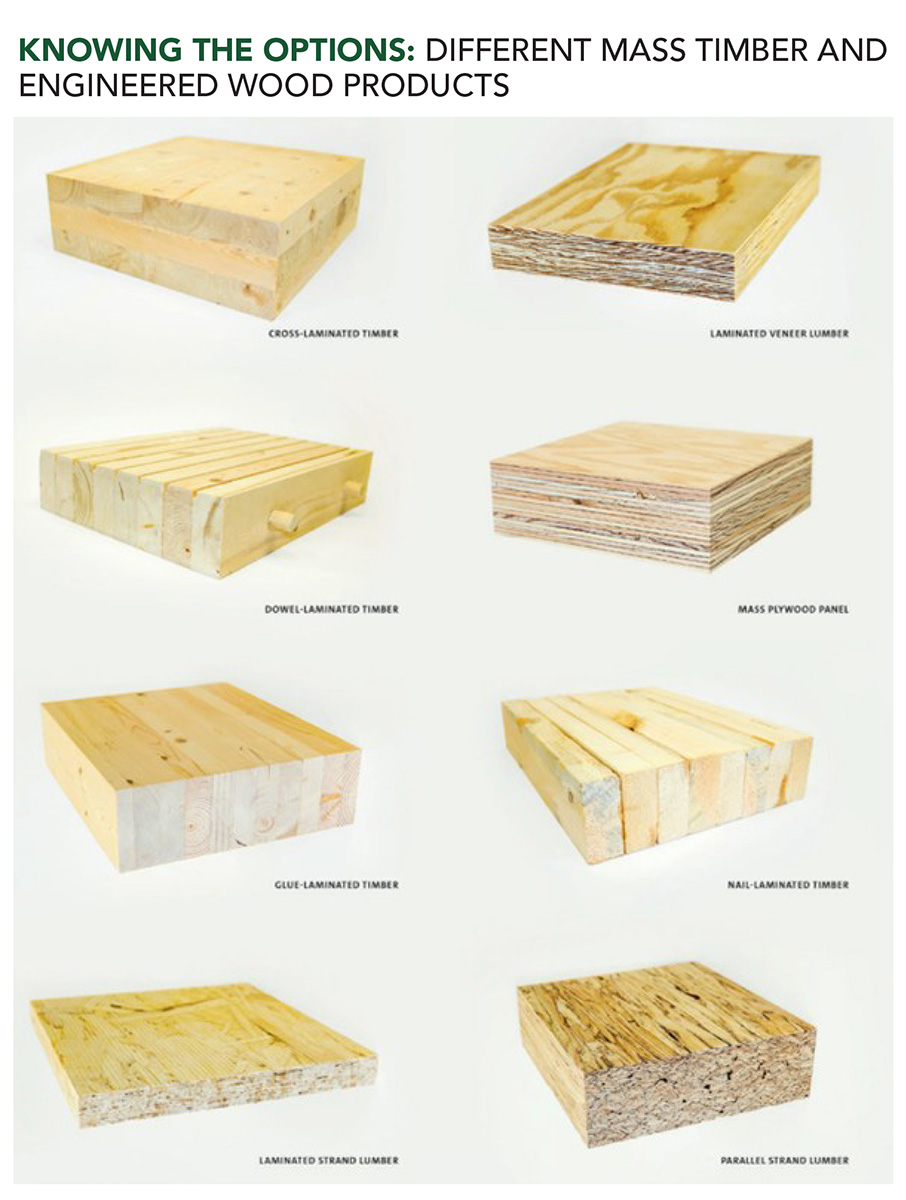
Products in the mass timber family include cross-laminated timber (CLT), dowel-laminated timber (DLT), glued-laminated timber (glulam), laminated strand lumber (LSL), laminated veneer lumber (LVL), mass plywood panel (MPP), nail-laminated timber (NLT or nail- lam), and timber-concrete composites (TCC). Mass timber and engineered wood products can be used in an array of applications.
Why Build Taller with Wood?
Design teams and building owners report a growing number of reasons why we should build taller with wood. In a survey report of tall wood buildings around the world, these reasons ranged from market leadership and design aesthetic to speed of construction and building performance.
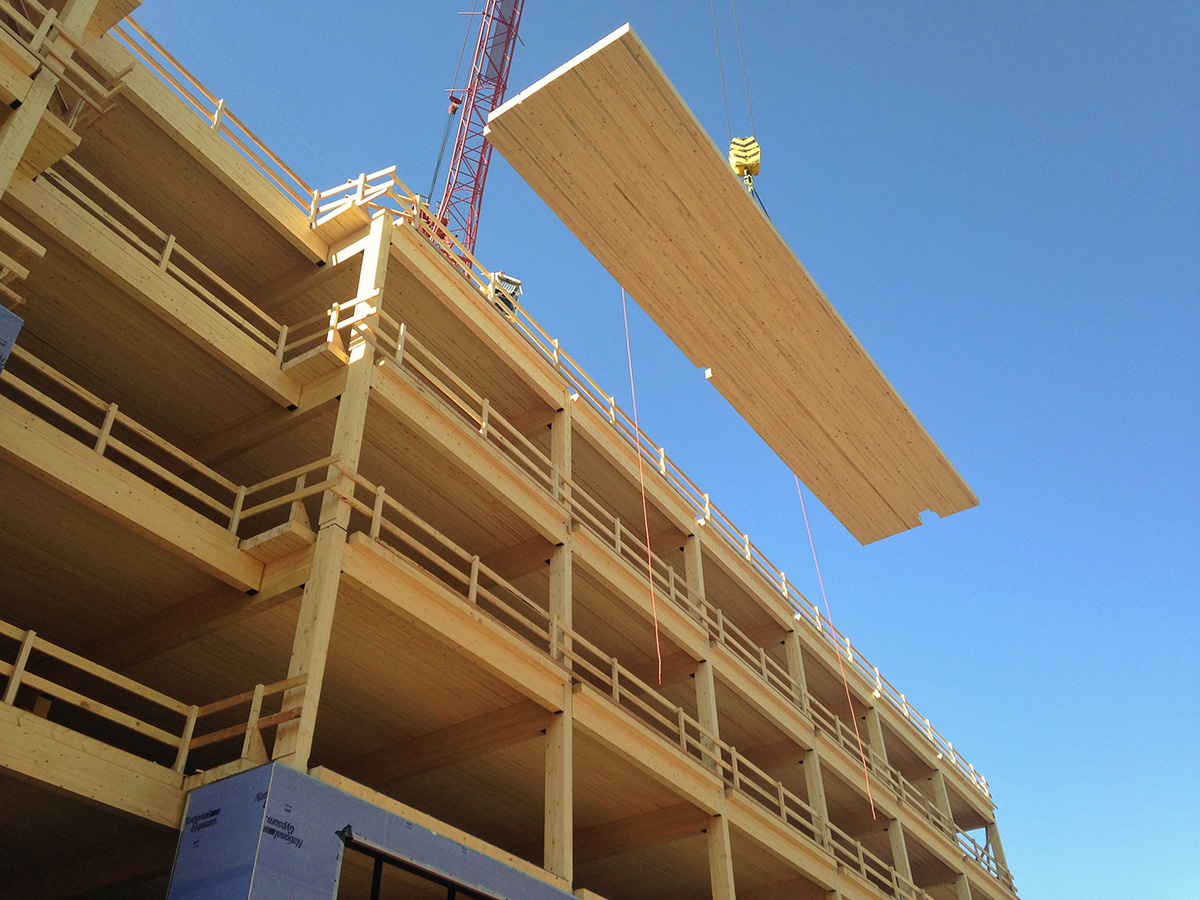
Photo courtesy of StructureCraft Builders
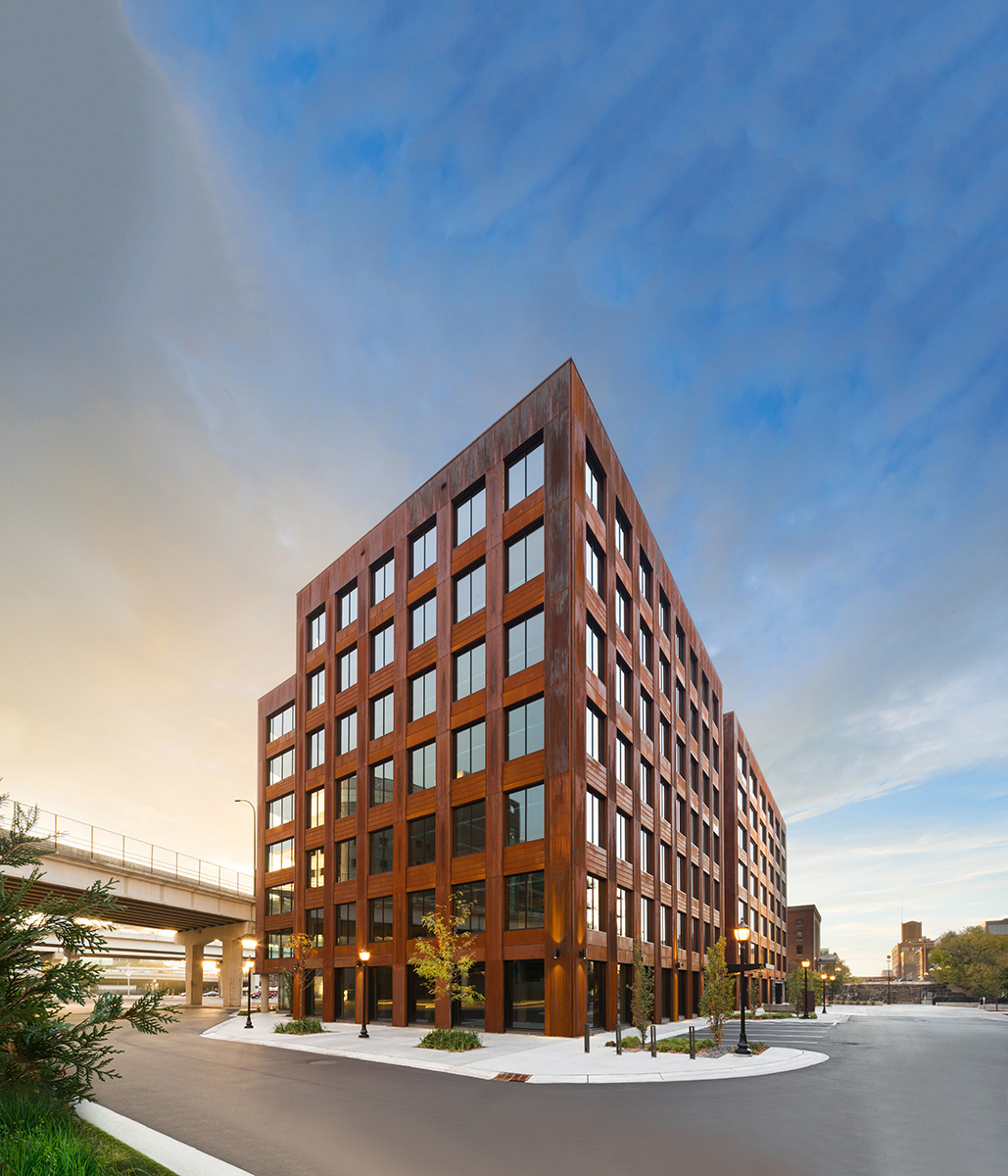
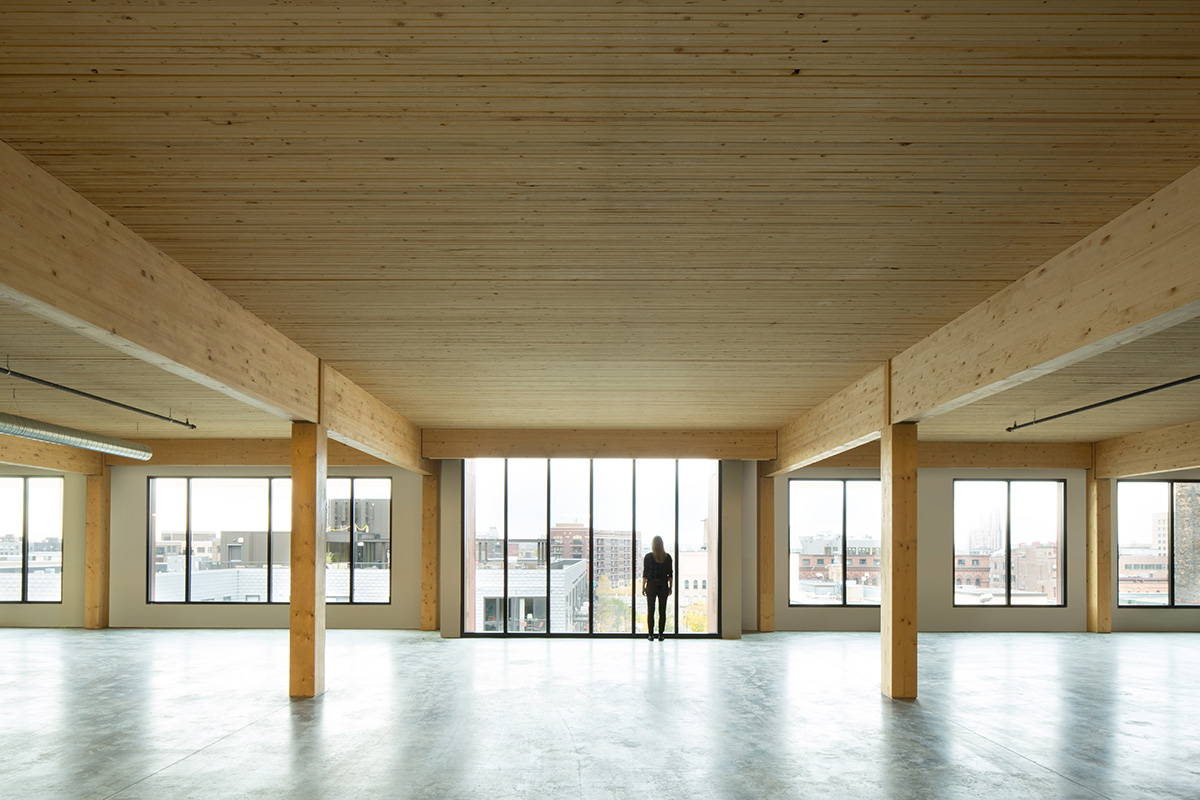
Project: T3 Minneapolis. Mass timber products’ light-weight advantage when compared to steel or concrete can often mean smaller foundations, helping to reduce a project’s overall cost and seismic loads. T3 is 30% lighter than its equivalent in steel would have been, and 60% lighter than post-tensioned concrete, according to engineer-led fabricator StructureCraft, which supplied mass timber for the project. Michael Green Architecture (MGA) served as the design architect, while DLR Group served as the agency of record.
- Light-Weight Advantage and Efficient Footprints. Timber structural systems have high building-volume-to-surface-area ratios, allowing for spacious interiors even with space constraints that typically require tall, compact designs. This means spacious interiors, even when the footprint of a building is constricted, which is frequently the case with tall, compact structures like high-rise buildings. Additionally, mass timber buildings weigh only one-fifth of traditional concrete buildings, which reduces foundation requirements. There is also opportunity for application of wood construction in projects to increase the height of existing buildings. The lighter weight of wood can allow additions to building height without foundation reinforcement that might be required if other building materials were used.
- Tight Envelopes and Thermal Performance. Mass timber components are fabricated with high levels of precision to ensure a tight fit using Building Information Modeling (BIM) and CNC machining. Together with wood’s natural insulating properties, mass timber construction offers strong thermal performance, which is critical for high energy demands of tall buildings. For tall wood projects targeting net-zero energy or other stringent energy performance criteria, mass timber can store solar heat energy during the day and release it at night, reducing energy loads.
- Fire Resistance. In the event of a fire, exposed surfaces of mass timber chars, protecting their inner structure, which is essential to occupant and first-responder safety in wood buildings, particularly those with multiple stories. This is reflected in the fact that the general liability insurance risks of a mass timber building versus a concrete or steel building are no different.
- Structural and Seismic Performance. Wood’s strength-to-weight ratio is competitive with steel, but it weighs considerably less, reducing foundation loads and seismic forces and making for a resilient and safe structure. Extensive testing conducted by the Natural Hazards Research Infrastructure in 2017 validated “a seismic design methodology for 8 to 20 story tall wood buildings” that confirms “the structural integrity of the building both during and after an earthquake.” These attributes of taller wood are particularly beneficial for those in regions looking to build taller in earthquake zones. In some cases, a lighter-weight structure not only saves on foundation costs but also allows a taller structure to be built that would not be possible with concrete and steel in compromised soil conditions.
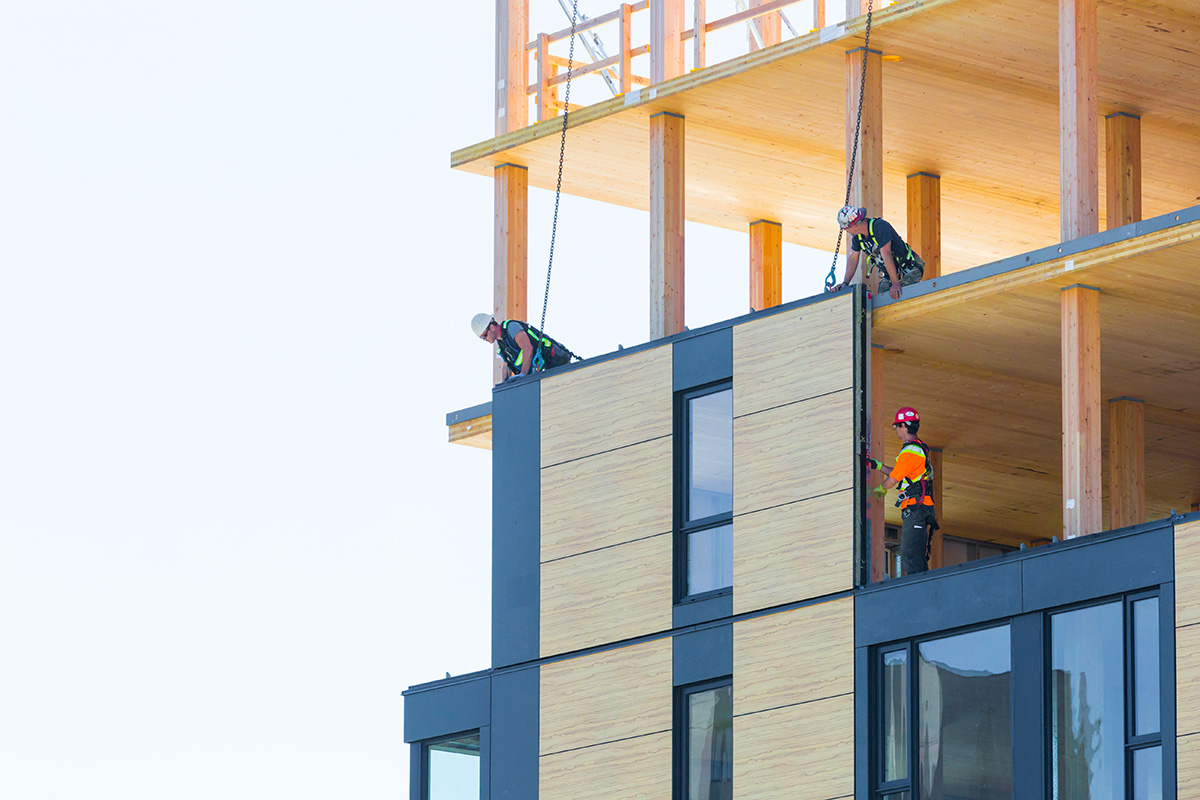
- Faster and Safer On-Site Construction. When it comes to taller wood, prefabricated sections can be manufactured off site, shipped to the project, and then assembled on site, significantly shortening project timelines and improving safety and accuracy. This means a lower number of workers on-site, more work being performed in controlled environments off-site, minimal cutting and coring on-site, and fewer temporary structures (formwork) being put in place on-site.
- Occupant Comfort and Well-Being. A plethora of research suggests that higher density, urban environments—and in particular high-rise structures—can be stress inducing. With the growing interest in biophilic design and healthy buildings, architecture that makes use of taller wood structures offers promising results to counter such stress. Occupants of taller wood buildings have reported higher levels of comfort and satisfaction. And there is growing evidence that visual, tactile, and olfactory responses to natural materials, such as exposed timber, lower stress levels as measured by blood pressure, pulse rate, skin conductance, muscle tension, and electrical activity of the brain.
- Market Distinction and Overall Value. Prefabricated mass timber building systems increasingly offer added value, including environmental benefits, cost/schedule savings, higher quality and more precise construction, and in some instances, better lease rates. In a feasibility study for a 12-story mass timber mixed use building in Seattle, Washington, using mass timber could lead to 0.5 % savings “below the cost of the concrete baseline”; it caused experts to predict that leases could potentially increase by 5%; the design attained “a 15% reduction of operational cost as compared to [the] baseline”; and, finally, the project is predicted “to emit 45% less greenhouse gases,” from extraction through to construction, than a concrete structure. All of these benefits led the Tall with Timber report to state that building with mass timber creates “a new value proposition and business model.”
- Build-up Sustainably. Public policies on climate change and green building are increasingly calling for more sustainable ways to build up and increase density within urban environments, something taller wood construction is well-suited to address. Governments, developers, and clients are beginning to see the emerging economic advantages of mass timber design and construction due in part to a shift in manufacturing and supply chains and new code legislation that “now render engineered wood as cost competitive with more conventional types of construction such as concrete and steel.”
TALLER WOOD STRUCTURAL SYSTEMS: UNDERSTANDING LOAD PATHS, TRANSFER, UPLIFT FORCES, AND DUCTILITY
Regardless of the materials used to build a structure, it must be able to manage loads and uplift forces. When building taller wood structures, it is especially important to understand the roles ductility and load transfer play in preventing structural damage.
Load paths, or the direction a load takes through structural elements, can cause those elements to experience compression, tension, bending, torsion, or shear. The components of a structure must be able to manage loads by ultimately transferring the loads to the ground. For tall wood buildings, the structural elements are particularly susceptible to shrinkage. Green and Taggart, in their book Tall Wood Buildings: Design, Construction, and Performance, recommend a design where the wood grain is parallel to the load path to offset negative effects like shrinkage.
Such a design can aid load transfer, creating consistency between the stories of a building. Other options include using stairs or elevator shafts to help transfer loads. Recent tests were conducted demonstrating that elevator shafts need not be made solely from concrete to achieve this; it is possible to have successful load transfer using a CLT core.
Uplift forces, where external wind forces cause negative internal pressures within a building, in turn creating suction (uplift) forces, can also affect structures. Because wood structures can be lightweight, they can be susceptible to uplift. Depending on the structure of the building, as well as local codes, strategies for coping with uplift vary. For example, options may include concrete floors or a concrete podium to serve as an anchor. In some cases, vertical mass timber panels of the service cores resist uplift forces.
Ductility, “the ability of a material to deform under stress, thus absorbing and dissipating energy,” is crucial to managing uplift. According to Green and Taggart, when the “structural elements of a building are inherently rigid, it is the connections that must perform” the function of ductility. Connections are flexible enough to absorb and transfer wind, for instance, without becoming damaged. In the case of extreme weather, however, the connections will intentionally become damaged to prevent the failure of the structure as a whole.
SELECTING A STRUCTURAL APPROACH
In addition to the stability and strength needed to account for load paths and uplift forces, the spatial arrangement of the building needs to be considered. The intended use of the building—commercial or residential—will be the first step in determining the structural approach. After that, the structural system will determine the architecture. Alternatively, the architectural strategy can be determined prior to the structural system; however, this has the potential to lead to higher costs and inefficiencies. A third strategy to employ when selecting a structural approach is a combination of the two aforementioned options. Assessing the attributes of the different systems while assessing other needs of the building can lead to a more refined strategy.
Platform
Light-frame structural approaches are generally the most common type of wood construction in North America, and each type of light-frame construction is best suited for specific applications. For instance, platform construction, where individual floors are framed separately, is primarily used in residential applications. More specifically, platform framing involves load-carrying elements, each one story in height, whether posts or panels; each floor forms a platform for the construction of the next.
Balloon
Balloon frames, on the other hand, involve vertical structural members that span at least two stories; the floor is hung off of a ledger connected to the wall and forms a platform for the construction of the next floor. The columns are superimposed one above the other, with end grain-to-end grain bearing. As opposed to platform framing, balloon is often used in industrial or commercial applications. Light-frame construction can be combined with mass timber assemblies to form a hybrid building system suited for building taller mid-rise structures with wood.
Massive Timber-Bearing Wall Systems
Massive timber panel systems are load bearing. Used in residential construction, massive panel systems are highly compartmented. This implies little need for future reconstruction, as well as adherence to local codes.
Post-and-Beam Systems
As opposed to massive timber panel systems, post-and-beam systems are used in commercial applications. Post-and-beam systems require fewer structural joints, allow for open floor plans, and require no load-bearing walls.
Hybrid Systems
Hybrid systems can utilize wood, steel, and concrete to capitalize on their various performance properties. These systems are often employed in the creation of podium structures for mixed-use buildings. As noted above, hybrid systems can also include a combination of light-frame wood and mass timber components.
Image courtesy of Think Wood, adapted from Perkins+Will’s Wood 101 and Mass Timber Pocket Guide
CRACKING THE CODE TO BUILD TALLER
The IBC classifies five major construction types, each with subcategories and maximum permissible heights. Type I-A (Unlimited), I-B (180’), II-A (85’), II-B (75’) are for noncombustible construction. Type III-A (85’), III-B (75’), V-A (70’), and V-B (60’) are for light-frame wood construction. Type IV-HT (85’) pertains to heavy timber. Each subcategory has its own fire resistance requirements, and these height limits are only permitted on buildings equipped throughout with an NFPA 13 sprinkler system.
While fire protection regarding mass timber will be discussed in greater detail in upcoming sections, it is worthwhile to note that, under the new tall wood construction types to be included in the 2021 IBC, all mass timber elements in Type IV-A and most mass timber elements in type IV-B will require the application of a noncombustible material.
“This noncombustible material applied to the mass timber helps determine fire behavior by delaying the contribution of the mass timber structure in a fire and has an added benefit of increasing the fire-resistance rating of the mass timber element.”
Writing for WoodWorks, Breneman, Timmers, and Richardson summarize additional requirements for Types IV-A, IV-B, and IV-C:
- “No exposed mass timber in concealed spaces; concealed space permitted only with noncombustible protection as required for the interior mass timber
- Exterior side of exterior walls protected by a noncombustible material—e.g., 5/8” Type X gypsum sheathing
- No combustible exterior wall coverings except for certain water-resistant barriers
- No exposed mass timber on the inside and outside surfaces of exit enclosures and elevator hoistways in high-rise buildings (occupied floor > 75 feet from lowest fire department access)
- Noncombustible construction only for exit enclosures and elevator hoistways greater than 12 stories or 180 feet”
Many of these changes were proposed in April 2018 and adopted by the ICC in January 2019. Other changes to code, such as material inspections and material-specific modifications, were submitted to the ICC in 2019. Some states, such as Oregon and Washington, already allow for this construction type in anticipation of these changes in anticipation of the publication of IBC 2021.
Canadian Code
Canadian code, too, has progressed to include taller mass timber structures. Prior to these changes, as of 2015, the National Building Code of Canada (NBCC) permitted light wood-frame structures of up to six stories. The new 2020 NBCC will permit 12 stories of mass timber construction, taking into account its strength and fire resistance ratings. Some provinces, such as British Columbia, Ontario, and Quebec, have already permitted mass timber structures of at least 12 stories in advance of these code changes.
As with the 2021 IBC, the mass timber should be “encapsulated” with Gyproc or other materials that resist the spread of fire. The new codes permit the use of mass timber with a minimum thickness of 96 mm and a minimum 50-minute fire rating.
Apart from balconies and some ceilings, the mass timber cannot be exposed.
Photo courtesy of Stéphane Groleau
Project: Origine54. Mass timber’s lighter weight boosted this Quebec-based multifamily project—dubbed Origine—by seven additional stories, giving it a total of thirteen. The same building in that location made from concrete would have maxed out at six stories high, given the low bearing capacity of the soil. The architect for Origine is Yvan Blouin Architect.
WHAT CONSTITUTES A TALLER BUILDING?
T3 in Minneapolis, Atlanta, and Toronto. Trafalgar Place in London. 25 King in Brisbane. Brock Commons in Vancouver. These structures from around the world are all taller wood hybrid buildings constructed within the past five years. The Council on Tall Buildings and Urban Habitat (CTBUH) provides definitions for what constitutes “tall” around the globe. For the CTBUH, “tall” is subjective, as a high-rise in a small European town might get lost in a city like New York.
The CTBUH defines the materials from which tall buildings are comprised. Buildings constructed from timber are permitted through “the use of localized non-timber connections between timber elements” and, in some cases, a “floor system of concrete planks or concrete slab on top of timber beams” since timber still acts as the primary structure.
In 2019, the International Code Council (ICC) announced approval of 14 code changes as part of the 2021 International Building Code (IBC) that will allow mass timber structures of up to 18 stories. Included in these approved code changes is the introduction of three new construction types—IV-A, IV-B, and IV-C, with varying degrees of noncombustible protection required as follows:
- Type IV-A: 18 stories maximum, fully protected mass timber elements with fire- resistance ratings of 3 hours for bearing walls and structural frame construction, 2 hours for floor construction, and 1.5 hours for roof construction.
- Type IV-B: 12 stories maximum, with protected exterior and limited exposed interior mass timber with fire-resistance ratings of 2 hours for bearing walls, structural frame, and floor construction, and 1 hour for roof construction.
- Type IV-C: 9 stories maximum, protected exterior and exposed mass timber interior with fire-resistance ratings of 2 hours for bearing walls, structural frame, and floor construction, and 1 hour for roof construction.
Canadian code, too, has progressed to include taller mass timber structures. The new 2020 National Building Code of Canada (NBCC) will permit 12 stories of mass timber construction, taking into account its strength and fire resistance ratings. Over the past several years, a number of tall wood projects have been completed around the world, demonstrating successful applications of new wood and mass timber technologies. With rising demand for new urban buildings and increased interest in sustainable and efficient construction, the potential for tall wood buildings is expected to grow.
HOW TO BUILD TALLER WITH WOOD
Heavy timber, as defined by the American Wood Council, is either sawn lumber or structural glue-laminated timber and is associated with Type IV construction. While it was once primarily used for one-story structures such as churches, schools, auditoriums, or warehouses, heavy timber, like mass timber, is being used to build taller structures and in innovative designs seeking to capture the aesthetics and benefits of building with wood.
Mass timber is a product category typically characterized by the use of large, solid wood panels often manufactured off-site for wall, floor, and roof construction. Mass timber can include sawn lumber and structural glue-laminated timber. It also includes innovative forms of sculptural buildings and non-building structures formed from solid wood panels or framing systems.
Products in the mass timber family include cross-laminated timber (CLT), dowel-laminated timber (DLT), glued-laminated timber (glulam), laminated strand lumber (LSL), laminated veneer lumber (LVL), mass plywood panel (MPP), nail-laminated timber (NLT or nail- lam), and timber-concrete composites (TCC). Mass timber and engineered wood products can be used in an array of applications.
Why Build Taller with Wood?
Design teams and building owners report a growing number of reasons why we should build taller with wood. In a survey report of tall wood buildings around the world, these reasons ranged from market leadership and design aesthetic to speed of construction and building performance.
Photo courtesy of StructureCraft Builders
Project: T3 Minneapolis. Mass timber products’ light-weight advantage when compared to steel or concrete can often mean smaller foundations, helping to reduce a project’s overall cost and seismic loads. T3 is 30% lighter than its equivalent in steel would have been, and 60% lighter than post-tensioned concrete, according to engineer-led fabricator StructureCraft, which supplied mass timber for the project. Michael Green Architecture (MGA) served as the design architect, while DLR Group served as the agency of record.
- Light-Weight Advantage and Efficient Footprints. Timber structural systems have high building-volume-to-surface-area ratios, allowing for spacious interiors even with space constraints that typically require tall, compact designs. This means spacious interiors, even when the footprint of a building is constricted, which is frequently the case with tall, compact structures like high-rise buildings. Additionally, mass timber buildings weigh only one-fifth of traditional concrete buildings, which reduces foundation requirements. There is also opportunity for application of wood construction in projects to increase the height of existing buildings. The lighter weight of wood can allow additions to building height without foundation reinforcement that might be required if other building materials were used.
- Tight Envelopes and Thermal Performance. Mass timber components are fabricated with high levels of precision to ensure a tight fit using Building Information Modeling (BIM) and CNC machining. Together with wood’s natural insulating properties, mass timber construction offers strong thermal performance, which is critical for high energy demands of tall buildings. For tall wood projects targeting net-zero energy or other stringent energy performance criteria, mass timber can store solar heat energy during the day and release it at night, reducing energy loads.
- Fire Resistance. In the event of a fire, exposed surfaces of mass timber chars, protecting their inner structure, which is essential to occupant and first-responder safety in wood buildings, particularly those with multiple stories. This is reflected in the fact that the general liability insurance risks of a mass timber building versus a concrete or steel building are no different.
- Structural and Seismic Performance. Wood’s strength-to-weight ratio is competitive with steel, but it weighs considerably less, reducing foundation loads and seismic forces and making for a resilient and safe structure. Extensive testing conducted by the Natural Hazards Research Infrastructure in 2017 validated “a seismic design methodology for 8 to 20 story tall wood buildings” that confirms “the structural integrity of the building both during and after an earthquake.” These attributes of taller wood are particularly beneficial for those in regions looking to build taller in earthquake zones. In some cases, a lighter-weight structure not only saves on foundation costs but also allows a taller structure to be built that would not be possible with concrete and steel in compromised soil conditions.
- Faster and Safer On-Site Construction. When it comes to taller wood, prefabricated sections can be manufactured off site, shipped to the project, and then assembled on site, significantly shortening project timelines and improving safety and accuracy. This means a lower number of workers on-site, more work being performed in controlled environments off-site, minimal cutting and coring on-site, and fewer temporary structures (formwork) being put in place on-site.
- Occupant Comfort and Well-Being. A plethora of research suggests that higher density, urban environments—and in particular high-rise structures—can be stress inducing. With the growing interest in biophilic design and healthy buildings, architecture that makes use of taller wood structures offers promising results to counter such stress. Occupants of taller wood buildings have reported higher levels of comfort and satisfaction. And there is growing evidence that visual, tactile, and olfactory responses to natural materials, such as exposed timber, lower stress levels as measured by blood pressure, pulse rate, skin conductance, muscle tension, and electrical activity of the brain.
- Market Distinction and Overall Value. Prefabricated mass timber building systems increasingly offer added value, including environmental benefits, cost/schedule savings, higher quality and more precise construction, and in some instances, better lease rates. In a feasibility study for a 12-story mass timber mixed use building in Seattle, Washington, using mass timber could lead to 0.5 % savings “below the cost of the concrete baseline”; it caused experts to predict that leases could potentially increase by 5%; the design attained “a 15% reduction of operational cost as compared to [the] baseline”; and, finally, the project is predicted “to emit 45% less greenhouse gases,” from extraction through to construction, than a concrete structure. All of these benefits led the Tall with Timber report to state that building with mass timber creates “a new value proposition and business model.”
- Build-up Sustainably. Public policies on climate change and green building are increasingly calling for more sustainable ways to build up and increase density within urban environments, something taller wood construction is well-suited to address. Governments, developers, and clients are beginning to see the emerging economic advantages of mass timber design and construction due in part to a shift in manufacturing and supply chains and new code legislation that “now render engineered wood as cost competitive with more conventional types of construction such as concrete and steel.”
TALLER WOOD STRUCTURAL SYSTEMS: UNDERSTANDING LOAD PATHS, TRANSFER, UPLIFT FORCES, AND DUCTILITY
Regardless of the materials used to build a structure, it must be able to manage loads and uplift forces. When building taller wood structures, it is especially important to understand the roles ductility and load transfer play in preventing structural damage.
Load paths, or the direction a load takes through structural elements, can cause those elements to experience compression, tension, bending, torsion, or shear. The components of a structure must be able to manage loads by ultimately transferring the loads to the ground. For tall wood buildings, the structural elements are particularly susceptible to shrinkage. Green and Taggart, in their book Tall Wood Buildings: Design, Construction, and Performance, recommend a design where the wood grain is parallel to the load path to offset negative effects like shrinkage.
Such a design can aid load transfer, creating consistency between the stories of a building. Other options include using stairs or elevator shafts to help transfer loads. Recent tests were conducted demonstrating that elevator shafts need not be made solely from concrete to achieve this; it is possible to have successful load transfer using a CLT core.
Uplift forces, where external wind forces cause negative internal pressures within a building, in turn creating suction (uplift) forces, can also affect structures. Because wood structures can be lightweight, they can be susceptible to uplift. Depending on the structure of the building, as well as local codes, strategies for coping with uplift vary. For example, options may include concrete floors or a concrete podium to serve as an anchor. In some cases, vertical mass timber panels of the service cores resist uplift forces.
Ductility, “the ability of a material to deform under stress, thus absorbing and dissipating energy,” is crucial to managing uplift. According to Green and Taggart, when the “structural elements of a building are inherently rigid, it is the connections that must perform” the function of ductility. Connections are flexible enough to absorb and transfer wind, for instance, without becoming damaged. In the case of extreme weather, however, the connections will intentionally become damaged to prevent the failure of the structure as a whole.
SELECTING A STRUCTURAL APPROACH
In addition to the stability and strength needed to account for load paths and uplift forces, the spatial arrangement of the building needs to be considered. The intended use of the building—commercial or residential—will be the first step in determining the structural approach. After that, the structural system will determine the architecture. Alternatively, the architectural strategy can be determined prior to the structural system; however, this has the potential to lead to higher costs and inefficiencies. A third strategy to employ when selecting a structural approach is a combination of the two aforementioned options. Assessing the attributes of the different systems while assessing other needs of the building can lead to a more refined strategy.
Platform
Light-frame structural approaches are generally the most common type of wood construction in North America, and each type of light-frame construction is best suited for specific applications. For instance, platform construction, where individual floors are framed separately, is primarily used in residential applications. More specifically, platform framing involves load-carrying elements, each one story in height, whether posts or panels; each floor forms a platform for the construction of the next.
Balloon
Balloon frames, on the other hand, involve vertical structural members that span at least two stories; the floor is hung off of a ledger connected to the wall and forms a platform for the construction of the next floor. The columns are superimposed one above the other, with end grain-to-end grain bearing. As opposed to platform framing, balloon is often used in industrial or commercial applications. Light-frame construction can be combined with mass timber assemblies to form a hybrid building system suited for building taller mid-rise structures with wood.
Massive Timber-Bearing Wall Systems
Massive timber panel systems are load bearing. Used in residential construction, massive panel systems are highly compartmented. This implies little need for future reconstruction, as well as adherence to local codes.
Post-and-Beam Systems
As opposed to massive timber panel systems, post-and-beam systems are used in commercial applications. Post-and-beam systems require fewer structural joints, allow for open floor plans, and require no load-bearing walls.
Hybrid Systems
Hybrid systems can utilize wood, steel, and concrete to capitalize on their various performance properties. These systems are often employed in the creation of podium structures for mixed-use buildings. As noted above, hybrid systems can also include a combination of light-frame wood and mass timber components.
Image courtesy of Think Wood, adapted from Perkins+Will’s Wood 101 and Mass Timber Pocket Guide
CRACKING THE CODE TO BUILD TALLER
The IBC classifies five major construction types, each with subcategories and maximum permissible heights. Type I-A (Unlimited), I-B (180’), II-A (85’), II-B (75’) are for noncombustible construction. Type III-A (85’), III-B (75’), V-A (70’), and V-B (60’) are for light-frame wood construction. Type IV-HT (85’) pertains to heavy timber. Each subcategory has its own fire resistance requirements, and these height limits are only permitted on buildings equipped throughout with an NFPA 13 sprinkler system.
While fire protection regarding mass timber will be discussed in greater detail in upcoming sections, it is worthwhile to note that, under the new tall wood construction types to be included in the 2021 IBC, all mass timber elements in Type IV-A and most mass timber elements in type IV-B will require the application of a noncombustible material.
“This noncombustible material applied to the mass timber helps determine fire behavior by delaying the contribution of the mass timber structure in a fire and has an added benefit of increasing the fire-resistance rating of the mass timber element.”
Writing for WoodWorks, Breneman, Timmers, and Richardson summarize additional requirements for Types IV-A, IV-B, and IV-C:
- “No exposed mass timber in concealed spaces; concealed space permitted only with noncombustible protection as required for the interior mass timber
- Exterior side of exterior walls protected by a noncombustible material—e.g., 5/8” Type X gypsum sheathing
- No combustible exterior wall coverings except for certain water-resistant barriers
- No exposed mass timber on the inside and outside surfaces of exit enclosures and elevator hoistways in high-rise buildings (occupied floor > 75 feet from lowest fire department access)
- Noncombustible construction only for exit enclosures and elevator hoistways greater than 12 stories or 180 feet”
Many of these changes were proposed in April 2018 and adopted by the ICC in January 2019. Other changes to code, such as material inspections and material-specific modifications, were submitted to the ICC in 2019. Some states, such as Oregon and Washington, already allow for this construction type in anticipation of these changes in anticipation of the publication of IBC 2021.
Canadian Code
Canadian code, too, has progressed to include taller mass timber structures. Prior to these changes, as of 2015, the National Building Code of Canada (NBCC) permitted light wood-frame structures of up to six stories. The new 2020 NBCC will permit 12 stories of mass timber construction, taking into account its strength and fire resistance ratings. Some provinces, such as British Columbia, Ontario, and Quebec, have already permitted mass timber structures of at least 12 stories in advance of these code changes.
As with the 2021 IBC, the mass timber should be “encapsulated” with Gyproc or other materials that resist the spread of fire. The new codes permit the use of mass timber with a minimum thickness of 96 mm and a minimum 50-minute fire rating.
Apart from balconies and some ceilings, the mass timber cannot be exposed.
TALLER WOOD BUILDING PERFORMANCE
Regardless of the structural approach chosen, fire, seismic, acoustic, and thermal standards are all critical to design and material choice.
Fire Protection
Fire performance of mass timber, and specifically exposed fire resistance, suffers more from misperception than from a lack of research data. Despite current tests and codes, as well as emerging codes, the use of existing code provisions has not been commonplace in modern commercial construction; therefore, jurisdictional comfort with an expanded use of those provisions for the purpose of CLT design has presented a challenge. This has started to change, however, with a growing groundswell of support for greater use of mass timber and taller wood construction.
The fire protection properties of heavy timber, mass timber, and engineered timber should not be confused with light-wood frame structures. When massive wood elements are in the midst of a fire, the outside of the wood chars, both protecting the inner layers of wood as well as driving moisture from the exterior of the wood to the interior. In other words, while the outside of the wood burns, the inside remains unharmed. The predictability of wood’s char rate has been well-established for decades and has also been recognized for years in U.S. building codes and standards.
Even though massive wood elements have natural qualities that resist complete burning, there are additional steps that can be taken for further protection. Mass timber or heavy timber products can be encapsulated in gypsum wallboard, a fire-resistant material. This can be done fully or partially. If done partially, the structure and the ceilings of the building would typically be encapsulated.
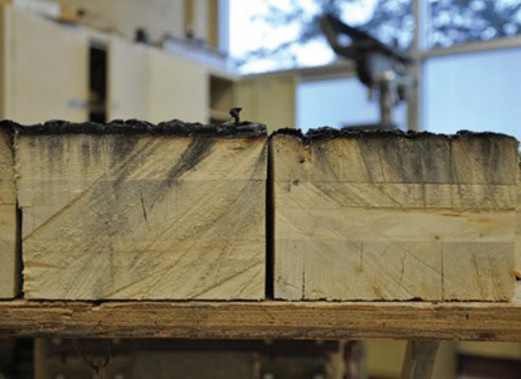
Photo courtesy of WoodWorks
TAKE THE HEAT: There is an inherent fire resistance to heavy or mass timber, such as CLT shown here, because of the layer of char that occurs during a fire that protects the inner structure of the beam or panel.
Tall Timber Takes the Heat
The increase in wood volume raises necessary questions about the additional potential for structural contribution to combustion and what it means for fire safety. Rigorous testing demonstrates tall timber construction is safe and has led to code changes in the U.S. and Canada.
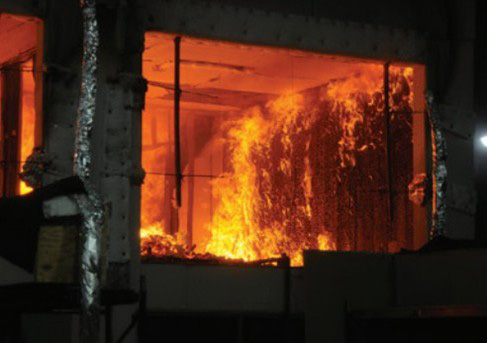
Photo courtesy of WoodWorks
Mass timber has undergone rigorous real-life fire testing in support of recent code changes in both the United States and Canada, demonstrating that it will char at a predictable rate and resist fire even when left exposed.
U.S. Testing
Tests by the American Wood Council (AWC) and the Bureau of Alcohol, Tobacco, Firearms, and Explosives (ATF) in collaboration with the U.S. Forest Service demonstrate that it is possible to build a cross-laminated timber (CLT) building that exceeds code requirements for fire performance, even when timber is left exposed. The five tests were summarized in USDA Lab Notes:
- Test 1: a mass timber structure fully protected with gypsum wall board was subjected to a large furnishings and contents fire. The test was terminated after three hours without significant charring on the protected wood surfaces of the structure.
- Test 2: approximately 30 percent of the CLT ceiling area in the living room and bedroom was left exposed. The test was terminated after four hours, providing additional time to determine if there would be any significant fire contribution from the exposed CLT. Notably, once the furnishings and contents had been consumed by the fire, the exposed CLT essentially self-extinguished due to the formation of char that protected the underlying wood.
- Test 3: parallel CLT walls were left exposed, one in the living room and one in the bedroom. Similar to Test 2, once the apartment furnishings and contents had been consumed by the fire, during which a protective surface of char formed on the CLT, the mass timber surfaces essentially self-extinguished.
- Tests 4 and 5: examined the effects of sprinkler protection. For both tests, all mass timber surfaces in the living room and bedroom were left exposed. Test 4 demonstrated that under normal operating conditions, a single sprinkler easily contained the fire. For Test 5, the fire was allowed to grow in the compartment for 23 minutes before water was supplied to the sprinklers, which quickly controlled the fire.”
Canadian Testing
Full-scale fire tests completed by FP Innovations and funded by Natural Resources Canada and others are intended to help address this issue. In association with a 13-story mass timber demonstration project (12 stories of CLT over one story of concrete) in Quebec, the provincial government funded full-scale CLT fire tests to prove CLT’s equivalence to two-hour-rated noncombustible construction.
- One series of full-scale compartment tests compared the performance of light-gauge steel, light-frame wood, and CLT. Tests included a three-story encapsulated CLT apartment simulation that ran for three hours. Results of the apartment simulation show the effectiveness of encapsulation in significantly delaying CLT’s potential contribution to fire growth and prove that the structure can withstand complete burnout.
- Another test focused on a 25-foot CLT stair/elevator shaft (exposed on the inside face with two layers of gypsum protection on the fire side) and studied the smoke propagation and leakage, as well as its structural stability as a fire exit. The test ran for two hours and showed no sign of smoke or heat penetration into the shaft.
- Research recently completed by FP Innovations and funded by Natural Resources Canada/The Canadian Forest Service evaluated the ability of selected fire stops and sealing joints in CLT assemblies, both for panel joints and around through penetrations to prevent the passage of hot gases and limit heat transfer. Results showed that products commercially available for use in light-frame and concrete construction are also feasible for CLT applications.
Seismic
As structural engineer and mass timber expert Robert Malczyk asserts, “mass timber and CLT’s strength lies in its durability against seismic forces. First and foremost, buildings constructed with CLT are lightweight. The weight of cross-laminated timber is six times less than that of concrete. Seismically, this means the strength of an earthquake that a building is designed to resist is directly proportionate to the weight of a building.” There has also been a proliferation of industry and academic research initiatives to build out the body of knowledge on mass timber structural performance in North American applications.
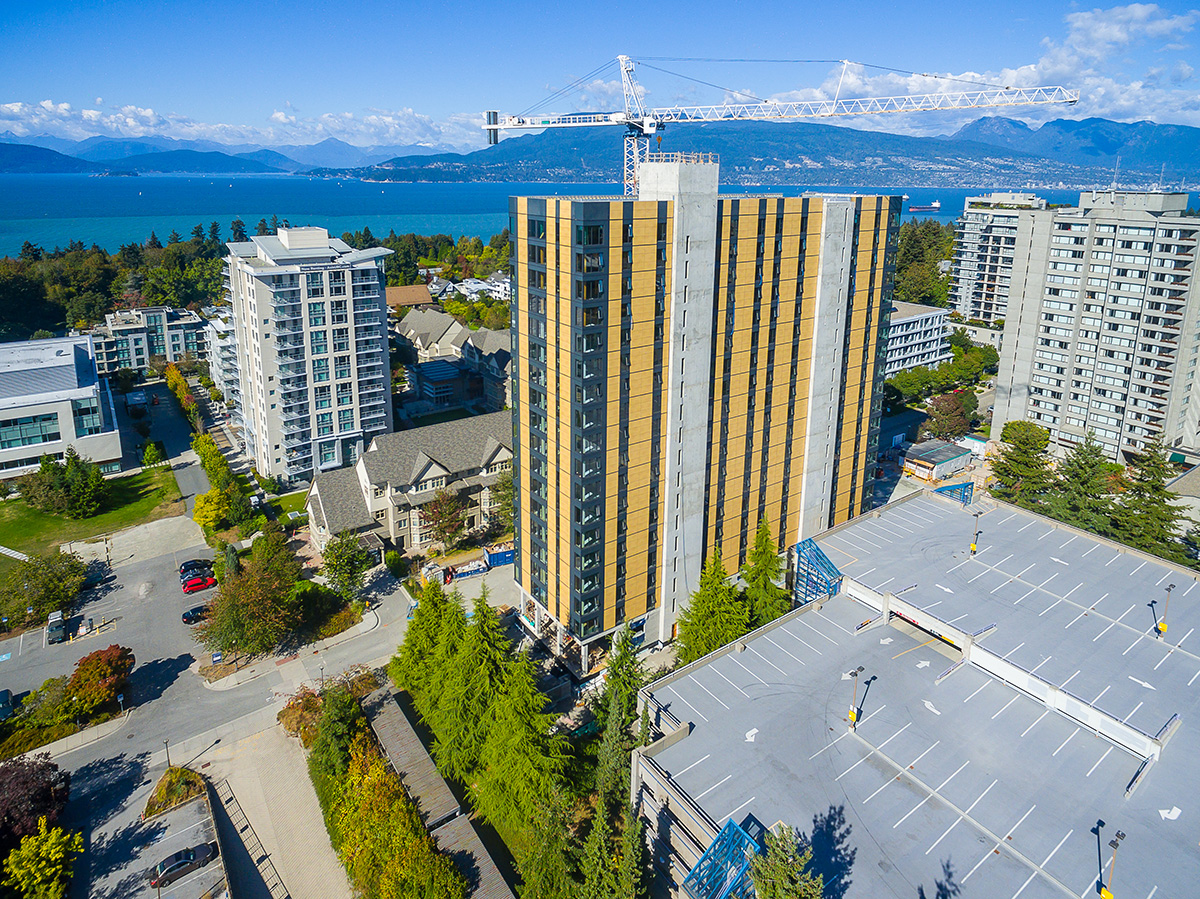
Progress has been made in addressing seismic concerns in mass timber buildings in earthquake zones such as the Pacific Northwest. For example, the primary lateral support for earthquake and wind loading for the University of British Columbia’s Brock Commons Tallwood House is provided by two concrete cores. Nearby, UBC’s four-story Bioenergy Research and Demonstration Facility and 5-story Earth Sciences Building are recent applications of innovative mass timber designs that could provide valuable lessons for the construction of taller wood buildings. Examples of innovative ductile details in these buildings include steel box connectors integrated into glulam beam and column members, glulam Chevron braces, knife-plate connectors to attach glulam beams to glulam columns, glulam braces to glulam beams, and glulam beams to CLT walls.
Investigation of testing protocols for the evaluation of in-plane shear strength of CLT panels is ongoing. These and other efforts have led to the new “Acceptance Criteria for Cross-Laminated Timber Panels for Use as Components in Floor and Roof Decks” (AC455) from the ICC Evaluation Service. This product evaluation standard is generally compatible with the ANSI/APA PRG 320 qualification requirements, with a notable addition of testing procedures for evaluating the in-plane strength of CLT panels. Having acceptance criteria for CLT panels allows manufacturers to pursue directed testing culminating in an ICC-ES evaluation report. Evaluation reports are helpful in gaining jurisdictional approval for new materials, further assisting designers. Current North American CLT manufacturers are beginning to provide evaluation and product reports.
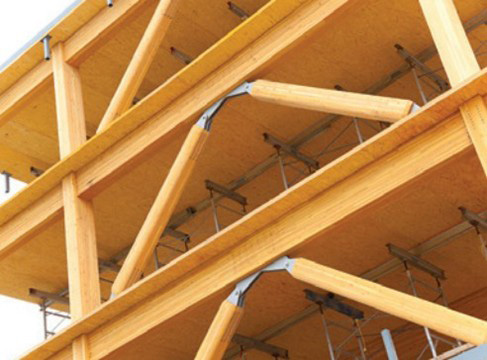
Photo courtesy of K.K. Law
The University of British Columbia’s five-story Earth Sciences Building, from architecture firm Perkins+Will, could provide valuable lessons for the construction of even taller wood buildings in earthquake zones. The structure includes innovative connections that improve resistance to seismic loads, such as these exposed glulam chevron bracings.
Acoustic
Everything from the shape of a room, objects within a room, traffic, HVAC equipment, and the materials a space is comprised of all impact acoustics. In buildings, sound is either airborne or stems from impact. Airborne sound can include speech, HVAC equipment, music, or other ambient noise. Impact sound transmission includes footfall or the sound of dropped objects. To mitigate the effects of airborne or impact sound transmission, there are a variety of sound isolation options.
The most straightforward option to address sound transmission is through the design of the floor, ceiling, and wall assemblies. Green and Taggart maintain that “the most comprehensive data [on sound isolation and CLT] comes from the French Institute for Forest-Based and Furniture Sector (FCBA) [...] and in collaboration with FP Innovations to establish that a standard five-layer CLT panel has an STC rating of 39 and an IIC rating of 24.” STC stands for “Sound Transmission Class” and refers to how well a floor or wall assembly minimizes the amount of airborne sound that passes through it. The ratings for five-layer CLT panels have the potential to reach up to STC 60 and an impact insulation class (IIC) rating of 59; these ratings equate to best performance ratings for partitions. These STC and IIC ratings are only possible with the addition of multiple layers of materials in addition to the CLT panel.
For wall assemblies, a variety of measures can be taken to mitigate sound transmission when building with mass timber. For instance, the outside face of each wall can be lined with gypsum wallboard; two frames can be used with a small gap between them; interior cavities can be filled with insulation; and discontinuities between panels can be employed. For floor and ceiling assemblies, materials that absorb sound, such as carpeting or rubber, can be used; in Europe, rubber is often placed underneath the floor between it and the ceiling beneath. Depth and thickness should also be taken into consideration for both wall and floor/ ceiling assemblies, as well as other aesthetic or architectural finishes that are being specified.
Thermal
Thermal performance contributes to a range of important goals for most projects, including energy efficiency, comfort, durability, code compliance, structural integrity, and sustainable outcomes. At a basic level and for any building enclosure, a material’s ability to manage air, vapor, and moisture should be taken into account when planning for thermal performance.
For tall wood, a main consideration, as previously noted, is that wood is susceptible to damage such as shrinkage from long-term or sustained exposure to moisture. However, unlike concrete and steel, wood does not need a thermal break between the structural and exterior envelope.
Prefabricated mass timber components such as glue-laminated timber (glulam) beams—as well as cross-laminated timber (CLT), dowel-laminated timber (DLT), and nail-laminated timber (NLT) wall, floor, and roof panels—are finding use in projects in North America. Due to their thickness, these wood products deliver thermal insulation and thermal mass. For projects seeking to meet net-zero energy or other stringent energy performance criteria, wood can store solar heat energy during the day and release it at night, reducing energy loads.
TALLER WOOD DESIGN AND CONSTRUCTION CHECKLIST
The Wood Product Council’s Mass Timber Cost and Design Optimization Checklists help architects and engineers in the design and cost optimization of mass timber projects. For more details, please download the original document at https://www.woodworks.org/wp-content/uploads/wood_solution_paper-Mass-Timber-Design-Cost-Optimization-Checklists.pdf.
Pre-Design:
- Do not take the traditional design-bid-build approach; include and identify the builder and specialty subcontractor early in the project; coordinate design, pricing, logistics, and schedule
- Establish cost milestones and design goals, and include mass timber scope for architect and engineering consultants
- Utilize 3D modeling and consider workflow; coordinate with building systems and identify engineering scope for mass timber to be integrated with other systems
Schematic Design Optimization:
- Approach mass timber design as modular system design based on 8’; maximize panel size to avoid wastage and additional machine cutting; consider shipping container limits if bringing materials from overseas
- Coordinate structure, vibration, fire resistance, and acoustic systems; think about floor, roof, load-bearing walls, and lateral force-resisting walls; consider utilizing a mass timber core; consider wet vs. dry toppings in terms of acoustics; consider the appearance of exposed timber; keep in mind that local jurisdictions may need more information on mass timber and fire resistance ratings
Schematic Design Cost Optimization:
- Mass timber weighs less than concrete and some steel, equating to smaller foundations, lower seismic forces, and potentially less soil remediation costs; mass timber is erected more quickly than similar buildings made from other materials.
- Consider the greater aesthetic value of building with mass timber; include fabrication allowance; remember that shipping can vary depending on where materials are sourced and on the size of the panels.
- Installation teams usually consist of 6 to 11 people; consider whether the general contractor or subcontractor will install the mass timber and determine whether crews will need additional training.
Design Development Design Optimization:
- Calculate fire resistance for exposed mass timber and determine whether caulking is needed
- Have a “Plan B”; consider the use of a hybrid system
- Evaluate manufacturers and compare prefabricated systems to others; consider surface coatings for aesthetics, durability, and added protection
- Keep key details in mind for type of mass timber used; for example, for beam-to-column joints, consider what will be exposed or concealed and take appropriate fire-resistance actions
Design Development Cost Optimization:
- On-site crane time can be reduced because of lighter weight of wood panels
- Mass timber can be built in severe weather conditions and still achieve cost savings; trades can begin work soon after panels are delivered on-site
- Less waste, fewer deliveries, and less site disruption equate to additional cost savings
ENVIRONMENTAL CONSIDERATIONS: IS BUILDING TALLER WITH WOOD SUSTAINABLE?
Writing for the Architect’s Newspaper, Olivia Martin claims, “The building sector is responsible for 44.6% of US carbon dioxide emissions. And, with an estimated 1.9 trillion billion square feet to be built in the next 33 years, those emissions will not subside without significant intervention.”
Martin advocates building with timber to reduce the carbon footprint. Timber is not only a renewable resource—it also does not need to be imported and is itself able to reduce carbon emissions. As a renewable resource, wood requires photosynthesis rather than machinery to develop and produce itself. Because trees grow across North America, there is also no need to import timber, which not only saves on shipping costs but also removes the pollution and energy associated with shipping. Finally, one study estimates that using wood as a building material could save “4 to 31 percent of global CO2 emissions and 12 to 19 percent of global FF [fossil fuel] consumption by using 34 to 100 percent of the world’s sustainable wood growth.”
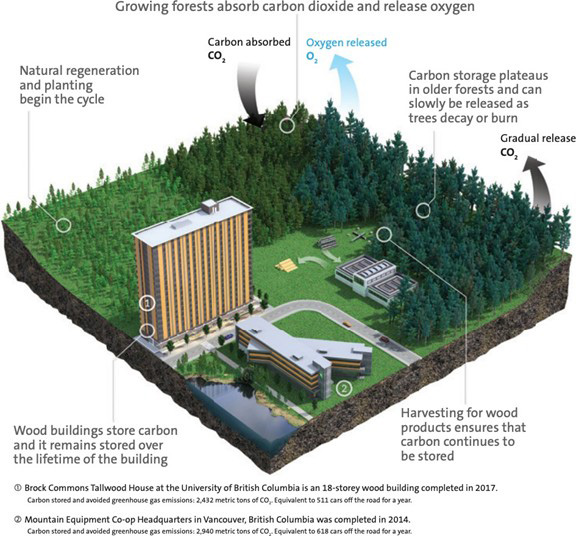
Image courtesy of Naturally Wood
True or False: If We Use More Wood, We’ll Have Less Forest
FALSE. Forest management operates under layers of federal, state/provincial, and local regulations and guidelines that foresters and harvesting professionals must follow to protect water quality, wildlife habitat, soil, and other resources. According to the USDA Forest Service, more than 44 million acres of private forestland could be converted to housing development in the next three decades. In the U.S., where 56 percent of forests are privately owned, strong markets for wood products help to ensure that landowners derive value from their investment. This provides an incentive not only to keep lands forested, but to manage them sustainably for long-term health. Canada reported no change in forest area, and twice as much wood is being grown each year as is harvested. In both countries, responsible forest management has resulted in more than 50 consecutive years of net forest growth that exceeds annual forest harvests. The rate of deforestation has been virtually zero for decades; however, the value of forest land in agriculture and real estate maintains pressure to convert.
THE FUTURE OF TALL WOOD CONSTRUCTION
Building taller with wood is not only gaining traction as a viable building method, but it has also been shown to be cost effective, contribute to well-being, and reduce carbon emissions. While code is still evolving, the pool of testing data on mass timber—particularly in regard to fire resistance—is also continuing to grow. Ongoing public, jurisdictional, and industry education is needed to change the perception of mass timber construction and to demonstrate the safe effective role it can play as a primary structural material in taller buildings. As these sectors become more knowledgeable, the momentum started by innovative buildings such as Brock Commons in Vancouver and T3 in Minneapolis can continue to grow, providing benefits to the industry, public, and the environment.