Decoding the Datasheet: Understanding Below- Grade Waterproofing Performance
Translating laboratory testing, evaluation reports, and field detailing into real-world below-grade waterproofing performance
Sponsored by Polyguard | Andrew Hunt
This course examines below-grade sheet waterproofing systems with a focus on how laboratory testing, evaluation reports, and published material properties translate into real-world performance. It explores pre-applied and post-applied systems, emphasizing how design decisions, construction sequencing, detailing, drainage, accessory integration, and installation conditions affect long-term durability.
Participants will learn to interpret standards such as ICC-ES AC 527 and relevant ASTM test methods within the context of field conditions rather than in isolation. The presentation highlights the importance of system-based thinking, including interfaces, terminations, penetrations, and coordination across trades. Through practical examples and case-based discussion, the presentation bridges the gap between specifications, testing, and jobsite realities, helping design professionals make more informed decisions.
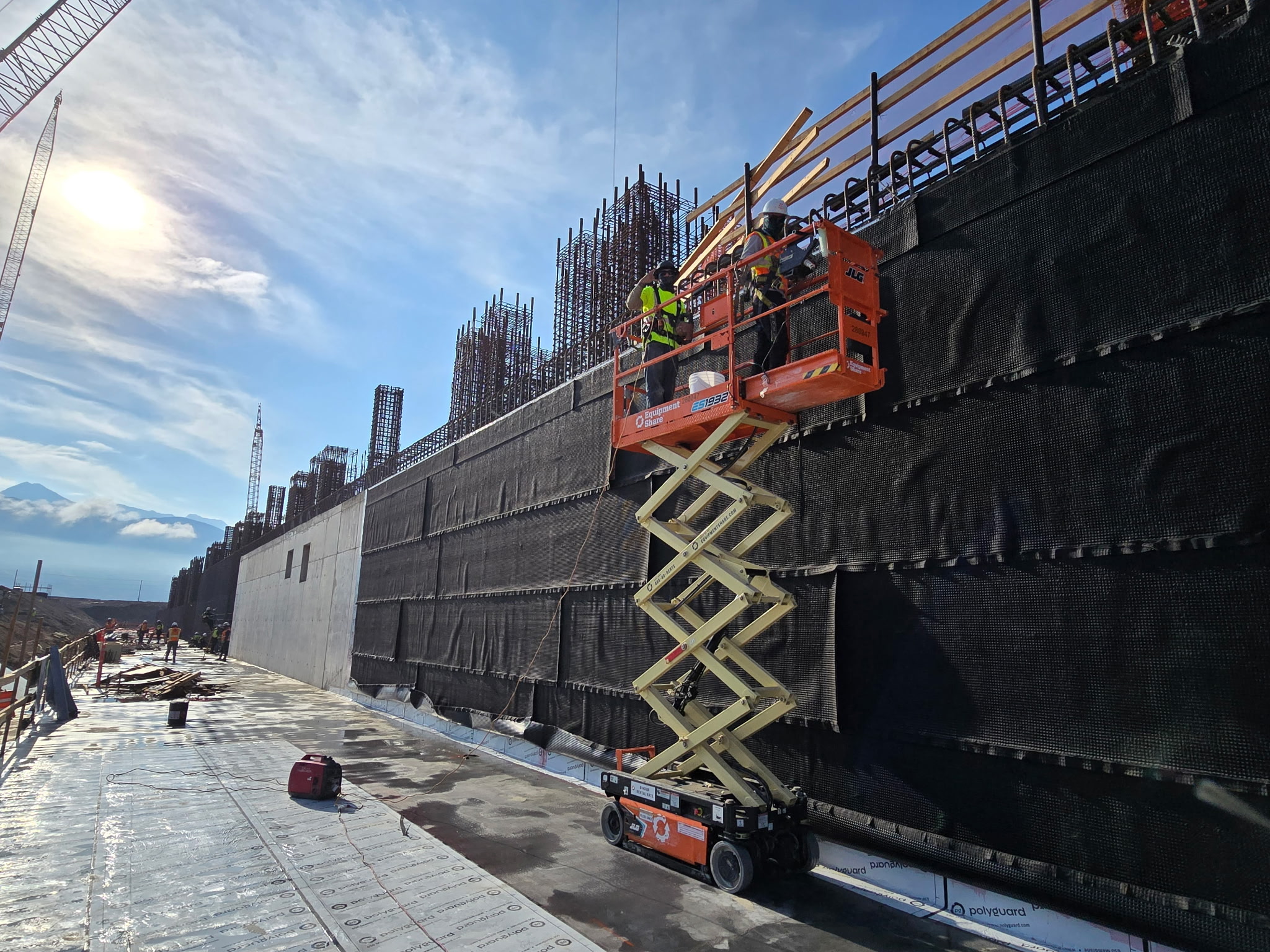
Photo courtesy of Polyguard

Polyguard manufactures the toughest sealants & barrier systems for every construction project. Behind our quality products is an entire team of experts that are passionate about innovation and truly care about your success.
Originally published in Architectural Record
Originally published in July 2026
LEARNING OBJECTIVES
- Differentiate between pre-applied and post-applied below-grade waterproofing systems and identify appropriate applications for each.
- Evaluate below-grade waterproofing performance as a function of the full assembly, including substrate conditions, detailing, sequencing, accessory integration, drainage, and construction-phase protection.
- Interpret laboratory test data, evaluation reports, and published material properties, and recognize the limitations of relying on isolated metrics when making design and specification decisions.
- Apply best practices for coordination, inspection, and construction-phase durability to reduce risk in belowgrade systems.