Photo © WrongWay via Adobe Stock; courtesy of Propane Education & Research Council
Protecting a commercial property means having a plan in place to provide backup power. The most dependable power plans are those localized on site.
The Problem with the Status
From retail stores to healthcare facilities, an unexpected blackout can mean massive revenue loss, data disruption, and safety concerns. According to an EnergySage study in 2024,1 the average financial loss to businesses due to power outages is estimated to be around $150 billion annually in the United States, with the exact cost dependent on the business size and duration of the outage. With climate-induced disasters on the rise, businesses are actively seeking robust, scalable, and sustainable backup power solutions. Generac, which accounts for about 75% of the U.S. backup generator market, has seen a 70% increase in annual sales since 2021.2 When the local power grid goes down, commercial buildings can—and in some cases are required to—utilize backup power to be more resilient, to mitigate against financial losses, to protect life safety, and to provide vital services.
Fueling Resilience: Propane is Replacing Diesel in Power Generation
Grid instability has pushed commercial operators to invest in backup systems that not only work in emergencies but are also cost-effective over time. Propane-powered power systems have arisen as a vital lifeline across multiple sectors: from farms and homes to construction sites and commercial operations. Known for their resilience, cost-effectiveness, and environmental advantages, propane generators deliver power when it’s needed most, ensuring continuity, safety, and productivity.
Providing Reliability: What Is Backup Power?
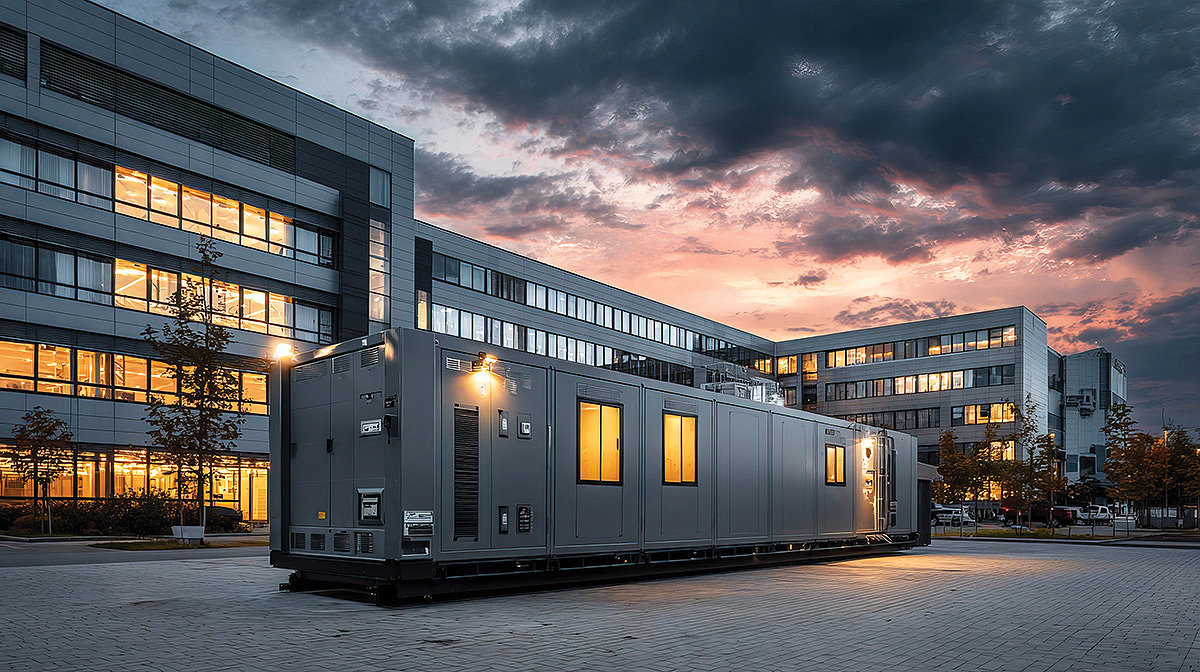
A basic definition for backup, or standby, power is an additional power source that can be used in the event of a power failure. When the design professional considers the incredible number of building systems, appliances, office tools, and other types of equipment that are powered by and reliant on electricity, they get a sense of the impact of a power outage. There are many reasons a commercial building may select backup power: code requirements, for redundancy, enhanced energy or cost savings, energy independence, decentralized supply, environmental benefits, or simply to ensure an uninterrupted power supply.
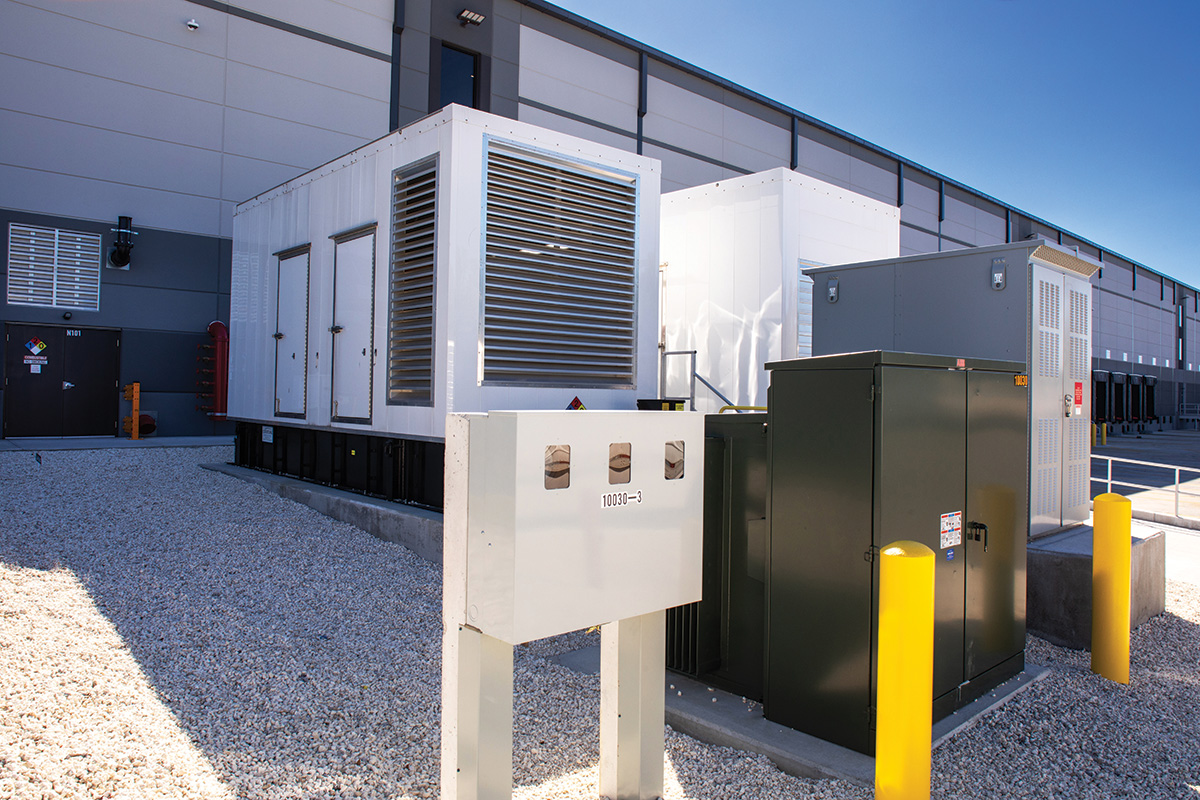
Photo ©Francisco via Adobe Stock; courtesy of Propane Education & Research Council
On-site generators are the most common form of backup power system. What differentiates these systems is the fuel or power source used.
Most businesses select backup power technology in the form of a generator, which is essentially an engine that burns fuel to create electricity. Generators are an extremely common backup power technology with a long history. They come in many different sizes and capacities. Generators can burn different fuel sources; in some cases, a generator can even operate on multiple fuels. Each fuel configuration has advantages and disadvantages, but the good news for designers and specifiers is that there is a wide range of options available.
The Impact of Codes on Backup Power Design: NEC, IBC, IFC
Codes and standards that dictate the use and design of different types of systems use very specific terminology. Different categories of backup power within the code mean very different things.
The National Electric Code (NEC) is also known as “NFPA 70” or the National Fire Protection Association’s Standard 70. The NEC addresses the installation of electrical components; signaling and communications systems; and optical fiber systems in commercial, residential, and industrial occupancies.
Within the NEC, there are some key terms relevant to backup power:
- An “emergency system” covers systems essential for the safety of human life. These systems are legally required and classified as “emergency” by municipal, state, federal, or a governmental agency having jurisdiction. These systems generally provide power to egress lighting, fire detection and protection, certain types of elevators, public safety communications, or any system where loss of power would cause serious endangerment to life or health within 10 seconds of normal power loss.
- “Legally required standby power systems” are backup power solutions required by code, depending on building use and occupancy. They may include power communications, selected ventilation or smoke removal systems, lighting, or certain types of industrial processes that may create hazards or hamper firefighting operations if power is not available. These must be available within 60 seconds of normal power loss.
- “Optional standby systems” are backup power systems that an owner may discretionally require if their business practices dictate the necessity. Such systems generally consist of loads that do not affect life safety but could have an unacceptable consequence of financial or operational losses. Loads may include data processing, communication systems, refrigeration, or other imperative performance needs.
- “Critical operation power systems” (COPS) are the newest classification of backup power for systems, operations, or facilities designated by local, state, and federal government as “mission critical.” These may include police stations, fire stations, and other facilities that serve public safety, national security, or business continuity. There are also additional commissioning requirements for COPS.
- The International Fire Code (IFC) and International Building Code (IBC) are two major building codes that dictate specific requirements for commercial buildings. The IFC and IBC requirements for emergency and standby power are coordinated with each other. Both of these codes refer back to the NEC for specific installation requirements for electrical systems.
- The code requirements for emergency or standby power are based on the building’s use and its occupancy. Emergency Power Systems are required by the IFC and IBC for high-rise buildings as well as other buildings designated by the jurisdiction.
- Standby Power Systems are required by codes for covered mall buildings, high-rise buildings, atriums, and other designated structures.
These are a few of the building uses and occupancies listed in the codes as requiring some form of backup power. Note that IFC and IBC codes actually can require that both Emergency Power and Standby Power systems be installed in certain buildings, such as high rises. In all cases, it is important to thoroughly review the local code requirements to determine which types of backup power are needed.
After determining the building use and occupancy to see what type of backup power is required by code, codes may also dictate the specifics of how that power is provided.
Within Article 700 of the NEC, Emergency Power must have on-site fuel storage, be available within 10 seconds of a power failure, and testing of the system will be mandated. The on-site fuel requirement is very important. Because of its classification as an Emergency Power application, on-site fuel storage ensures that the generator is ready to operate and won’t be subject to any upstream fuel reliability issues. In the past, this requirement was typically met by using diesel fuel stored on-site. Today, propane stored on-site provides an excellent and environmentally friendly alternative.
The Impact of Codes and Legislation on Backup Generator Emissions
The EPA regulates backup power systems. Because of the dominance of diesel-fueled backup generators, the EPA classifies these backup power systems as stationary internal combustion engines. Per the EPA, “[These are] common combustion sources that collectively can have a significant impact on air quality and public health. The air toxics emitted from stationary engines include formaldehyde, acrolein, acetaldehyde, and methanol. Exposure to these air toxics may produce a wide variety of health difficulties for people, including irritation of the eyes, skin, and mucous membranes, and central nervous system problems. Engines also emit the conventional air pollutants created when fuel is burned, including carbon monoxide (CO), nitrogen oxides (NOx), volatile organic compounds (VOCs), and particulate matter (PM). The health effects of these pollutants include a range of respiratory (breathing) issues, especially asthma among children and seniors.3”
The EPA has set increasingly stringent emissions requirements for non-road engines and equipment. Tier 1 was enacted in 1994, with Tiers 2 and 3 following in the years thereafter. Tier 4 was enacted in 2004, with a number of continuing revisions applied to this day. Overall, this framework has established requirements for increasingly clean exhaust systems. A very important note is that different EPA emission requirements (Tiers) will apply based on the type of backup power system installed. For example, if an Emergency Power system meets the EPA’s definition of an emergency power generator, meaning it only runs for purposes of backup when the grid power goes offline, then the system will have to meet Tier 2 or 3 requirements. These less stringent emission tiers apply because the generator’s run time isn’t too extensive. For non-emergency generators, like a system that runs on a regular basis to shave peak loads at a facility to lower utility costs, the generator run time will be much greater, and Tier 4 emissions will apply.
The way in which the EPA regulations categorize a backup power system is significant and will have implications for the equipment specifications. For a given project, the details on how emissions requirements will affect system design and specifications can be coordinated with the generator manufacturer and the electrical engineer. The EPA also has extensive information on the emissions tiers available online.
Fuel Stability and Maintenance: Solving the Diesel Dilemma with Propane
For decision makers to have informed choices, it is important to understand the full cost and reliability associated with various backup system fuel configurations. There are several general risk categories to consider. Generators risk failing to start, failing to run, and failing due to a lack of fuel supply. Each failure type reduces system reliability. Failure to start has the greatest impact on short outages, while failure to run and failure of fuel supply have the strongest effect on long outages. 4
Considering the Status Quo: Diesel

Photo ©nexusseven via Adobe Stock; courtesy of Propane Education & Research Council
Diesel is the traditional choice for backup generators with fuel stored on site. However, while a “status quo” choice, relying on diesel brings disadvantages.
Diesel remains the most common fuel choice for commercial buildings, yet presents dependability challenges. Diesel-fueled backup generators account for about 85% of backup generators used by critical facilities and commercial buildings in the U.S.5
Diesel is cost effective for larger, single-engine applications over 150 kW. It also provides a good option for on-site fuel storage, a system feature that is required in Emergency Power applications. Diesel generators are also able to match their power output as they face variable loads.
Photo © WrongWay via Adobe Stock; courtesy of Propane Education & Research Council
Protecting a commercial property means having a plan in place to provide backup power. The most dependable power plans are those localized on site.
The Problem with the Status
From retail stores to healthcare facilities, an unexpected blackout can mean massive revenue loss, data disruption, and safety concerns. According to an EnergySage study in 2024,1 the average financial loss to businesses due to power outages is estimated to be around $150 billion annually in the United States, with the exact cost dependent on the business size and duration of the outage. With climate-induced disasters on the rise, businesses are actively seeking robust, scalable, and sustainable backup power solutions. Generac, which accounts for about 75% of the U.S. backup generator market, has seen a 70% increase in annual sales since 2021.2 When the local power grid goes down, commercial buildings can—and in some cases are required to—utilize backup power to be more resilient, to mitigate against financial losses, to protect life safety, and to provide vital services.
Fueling Resilience: Propane is Replacing Diesel in Power Generation
Grid instability has pushed commercial operators to invest in backup systems that not only work in emergencies but are also cost-effective over time. Propane-powered power systems have arisen as a vital lifeline across multiple sectors: from farms and homes to construction sites and commercial operations. Known for their resilience, cost-effectiveness, and environmental advantages, propane generators deliver power when it’s needed most, ensuring continuity, safety, and productivity.
Providing Reliability: What Is Backup Power?
A basic definition for backup, or standby, power is an additional power source that can be used in the event of a power failure. When the design professional considers the incredible number of building systems, appliances, office tools, and other types of equipment that are powered by and reliant on electricity, they get a sense of the impact of a power outage. There are many reasons a commercial building may select backup power: code requirements, for redundancy, enhanced energy or cost savings, energy independence, decentralized supply, environmental benefits, or simply to ensure an uninterrupted power supply.
Photo ©Francisco via Adobe Stock; courtesy of Propane Education & Research Council
On-site generators are the most common form of backup power system. What differentiates these systems is the fuel or power source used.
Most businesses select backup power technology in the form of a generator, which is essentially an engine that burns fuel to create electricity. Generators are an extremely common backup power technology with a long history. They come in many different sizes and capacities. Generators can burn different fuel sources; in some cases, a generator can even operate on multiple fuels. Each fuel configuration has advantages and disadvantages, but the good news for designers and specifiers is that there is a wide range of options available.
The Impact of Codes on Backup Power Design: NEC, IBC, IFC
Codes and standards that dictate the use and design of different types of systems use very specific terminology. Different categories of backup power within the code mean very different things.
The National Electric Code (NEC) is also known as “NFPA 70” or the National Fire Protection Association’s Standard 70. The NEC addresses the installation of electrical components; signaling and communications systems; and optical fiber systems in commercial, residential, and industrial occupancies.
Within the NEC, there are some key terms relevant to backup power:
- An “emergency system” covers systems essential for the safety of human life. These systems are legally required and classified as “emergency” by municipal, state, federal, or a governmental agency having jurisdiction. These systems generally provide power to egress lighting, fire detection and protection, certain types of elevators, public safety communications, or any system where loss of power would cause serious endangerment to life or health within 10 seconds of normal power loss.
- “Legally required standby power systems” are backup power solutions required by code, depending on building use and occupancy. They may include power communications, selected ventilation or smoke removal systems, lighting, or certain types of industrial processes that may create hazards or hamper firefighting operations if power is not available. These must be available within 60 seconds of normal power loss.
- “Optional standby systems” are backup power systems that an owner may discretionally require if their business practices dictate the necessity. Such systems generally consist of loads that do not affect life safety but could have an unacceptable consequence of financial or operational losses. Loads may include data processing, communication systems, refrigeration, or other imperative performance needs.
- “Critical operation power systems” (COPS) are the newest classification of backup power for systems, operations, or facilities designated by local, state, and federal government as “mission critical.” These may include police stations, fire stations, and other facilities that serve public safety, national security, or business continuity. There are also additional commissioning requirements for COPS.
- The International Fire Code (IFC) and International Building Code (IBC) are two major building codes that dictate specific requirements for commercial buildings. The IFC and IBC requirements for emergency and standby power are coordinated with each other. Both of these codes refer back to the NEC for specific installation requirements for electrical systems.
- The code requirements for emergency or standby power are based on the building’s use and its occupancy. Emergency Power Systems are required by the IFC and IBC for high-rise buildings as well as other buildings designated by the jurisdiction.
- Standby Power Systems are required by codes for covered mall buildings, high-rise buildings, atriums, and other designated structures.
These are a few of the building uses and occupancies listed in the codes as requiring some form of backup power. Note that IFC and IBC codes actually can require that both Emergency Power and Standby Power systems be installed in certain buildings, such as high rises. In all cases, it is important to thoroughly review the local code requirements to determine which types of backup power are needed.
After determining the building use and occupancy to see what type of backup power is required by code, codes may also dictate the specifics of how that power is provided.
Within Article 700 of the NEC, Emergency Power must have on-site fuel storage, be available within 10 seconds of a power failure, and testing of the system will be mandated. The on-site fuel requirement is very important. Because of its classification as an Emergency Power application, on-site fuel storage ensures that the generator is ready to operate and won’t be subject to any upstream fuel reliability issues. In the past, this requirement was typically met by using diesel fuel stored on-site. Today, propane stored on-site provides an excellent and environmentally friendly alternative.
The Impact of Codes and Legislation on Backup Generator Emissions
The EPA regulates backup power systems. Because of the dominance of diesel-fueled backup generators, the EPA classifies these backup power systems as stationary internal combustion engines. Per the EPA, “[These are] common combustion sources that collectively can have a significant impact on air quality and public health. The air toxics emitted from stationary engines include formaldehyde, acrolein, acetaldehyde, and methanol. Exposure to these air toxics may produce a wide variety of health difficulties for people, including irritation of the eyes, skin, and mucous membranes, and central nervous system problems. Engines also emit the conventional air pollutants created when fuel is burned, including carbon monoxide (CO), nitrogen oxides (NOx), volatile organic compounds (VOCs), and particulate matter (PM). The health effects of these pollutants include a range of respiratory (breathing) issues, especially asthma among children and seniors.3”
The EPA has set increasingly stringent emissions requirements for non-road engines and equipment. Tier 1 was enacted in 1994, with Tiers 2 and 3 following in the years thereafter. Tier 4 was enacted in 2004, with a number of continuing revisions applied to this day. Overall, this framework has established requirements for increasingly clean exhaust systems. A very important note is that different EPA emission requirements (Tiers) will apply based on the type of backup power system installed. For example, if an Emergency Power system meets the EPA’s definition of an emergency power generator, meaning it only runs for purposes of backup when the grid power goes offline, then the system will have to meet Tier 2 or 3 requirements. These less stringent emission tiers apply because the generator’s run time isn’t too extensive. For non-emergency generators, like a system that runs on a regular basis to shave peak loads at a facility to lower utility costs, the generator run time will be much greater, and Tier 4 emissions will apply.
The way in which the EPA regulations categorize a backup power system is significant and will have implications for the equipment specifications. For a given project, the details on how emissions requirements will affect system design and specifications can be coordinated with the generator manufacturer and the electrical engineer. The EPA also has extensive information on the emissions tiers available online.
Fuel Stability and Maintenance: Solving the Diesel Dilemma with Propane
For decision makers to have informed choices, it is important to understand the full cost and reliability associated with various backup system fuel configurations. There are several general risk categories to consider. Generators risk failing to start, failing to run, and failing due to a lack of fuel supply. Each failure type reduces system reliability. Failure to start has the greatest impact on short outages, while failure to run and failure of fuel supply have the strongest effect on long outages. 4
Considering the Status Quo: Diesel
Photo ©nexusseven via Adobe Stock; courtesy of Propane Education & Research Council
Diesel is the traditional choice for backup generators with fuel stored on site. However, while a “status quo” choice, relying on diesel brings disadvantages.
Diesel remains the most common fuel choice for commercial buildings, yet presents dependability challenges. Diesel-fueled backup generators account for about 85% of backup generators used by critical facilities and commercial buildings in the U.S.5
Diesel is cost effective for larger, single-engine applications over 150 kW. It also provides a good option for on-site fuel storage, a system feature that is required in Emergency Power applications. Diesel generators are also able to match their power output as they face variable loads.
Challenges for Diesel Applications
Perhaps the most significant challenge for diesel systems is the stability of the diesel fuel. Diesel degrades over time via oxidation, which leads to the formation of sediments and gum that can clog fuel filters and injectors if not treated. Condensation in the fuel system can also lead to bacterial growth, which can cause clogging. Thus, diesel storage systems require either manual regimens or automatic fuel maintenance systems to keep the system reliable. In fact, for emergency applications, fuel maintenance is required by code within NFPA 110. The need for either automatic fuel maintenance systems or manual operations increases the total ownership cost of the diesel system, a factor to include in the evaluation of fuel and equipment options.
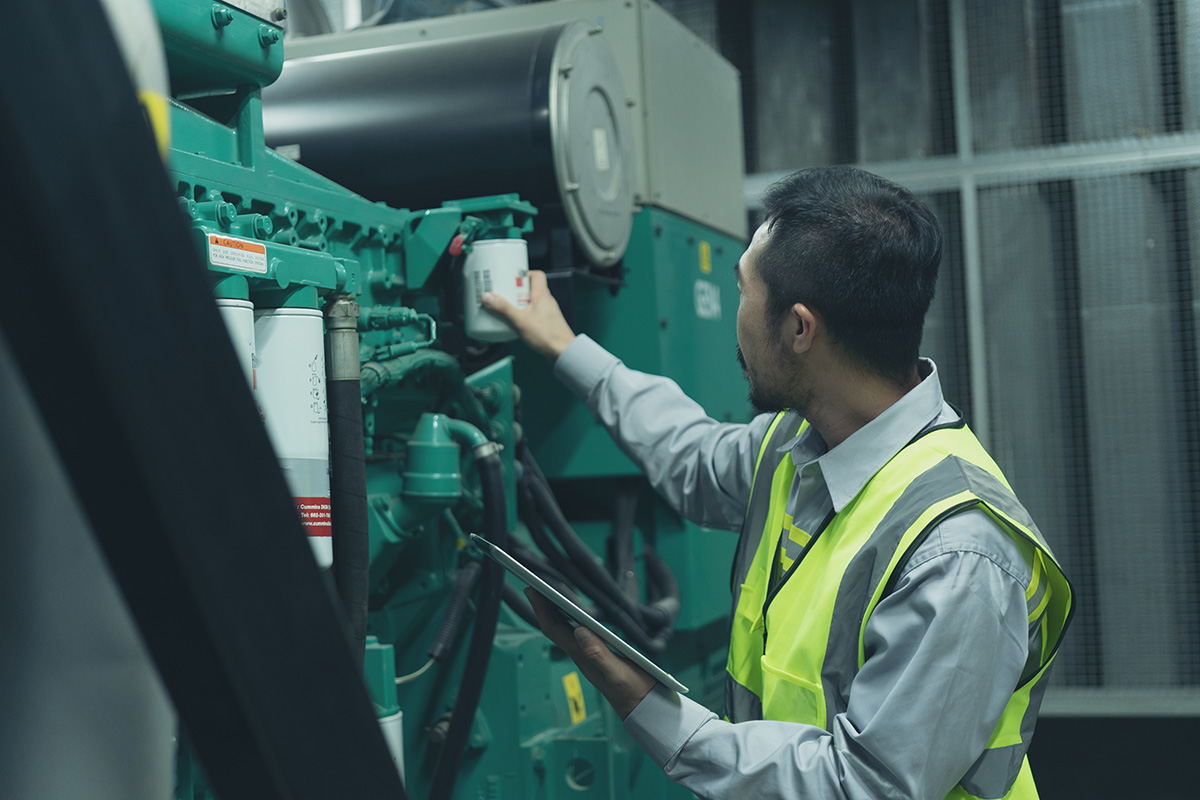
Photo ©PigS via Adobe Stock; courtesy of Propane Education & Research Council
Diesel generators require continuous monitoring and maintenance to ensure proper operation and to meet emission and environmental standards.
Diesel generators are covered by EPA emission regulations. It’s especially important to understand which regulations apply based on the exact backup power application. The implications of which regulations apply can have a significant impact on costs.
Emissions are another critical component influencing fuel selection. Businesses in areas with accelerating power disruptions and severe weather are using diesel-powered generators. California hosts a largely hidden grid of dispersed diesel generators, the population of which is growing rapidly. In December 2018, there were 6,497 back-up generators (BUGs) with 3,810 megawatts (MW) of collective capacity in the Bay Area Air Quality Management District (BAAQMD). In 2021, less than three years later, BUG deployment had reached 8,722 generators, reflecting 4,840 MW of capacity, a 34 percent jump in the back-up generator fleet.6 However, diesel generators tend to be located close to where people live, work, and attend school. While trying to avoid power disruptions, these diesel generators are a significant air pollution source, releasing greenhouse gases, particulate matter (PM), volatile organic compounds (VOCs), nitrogen oxides (NOx), and sulfur dioxide (SO2), which can create smog and exacerbate respiratory conditions, like asthma, chronic obstructive pulmonary disease, and lung cancer, especially for children and older adults.7 Based on BAAQMD data, the California generators produced an estimated 86,899 metric tons of carbon dioxide, 20 metric tons of fine particulate matter, 62 metric tons of volatile organic compounds, and 1,000 metric tons of nitrogen oxides.8
Diesel generators are covered by EPA emission regulations. To comply with emission regulations, modern diesel generators require advanced exhaust after-treatment systems to reduce nitrogen oxides (NOx) and particulate matter. These systems dramatically increase the mechanical complexity and cost of diesel equipment, complicating maintenance routines and budgets. While these technologies reduce emissions, they also introduce new vulnerabilities. Diesel generators are more sensitive to operating conditions, particularly in the variable-load environments common to mobile power applications. Low-load operation can prevent proper exhaust temperatures, leading to clogged filters, unplanned shutdowns, and costly maintenance.
A Cleaner, Alternative Solution from Propane
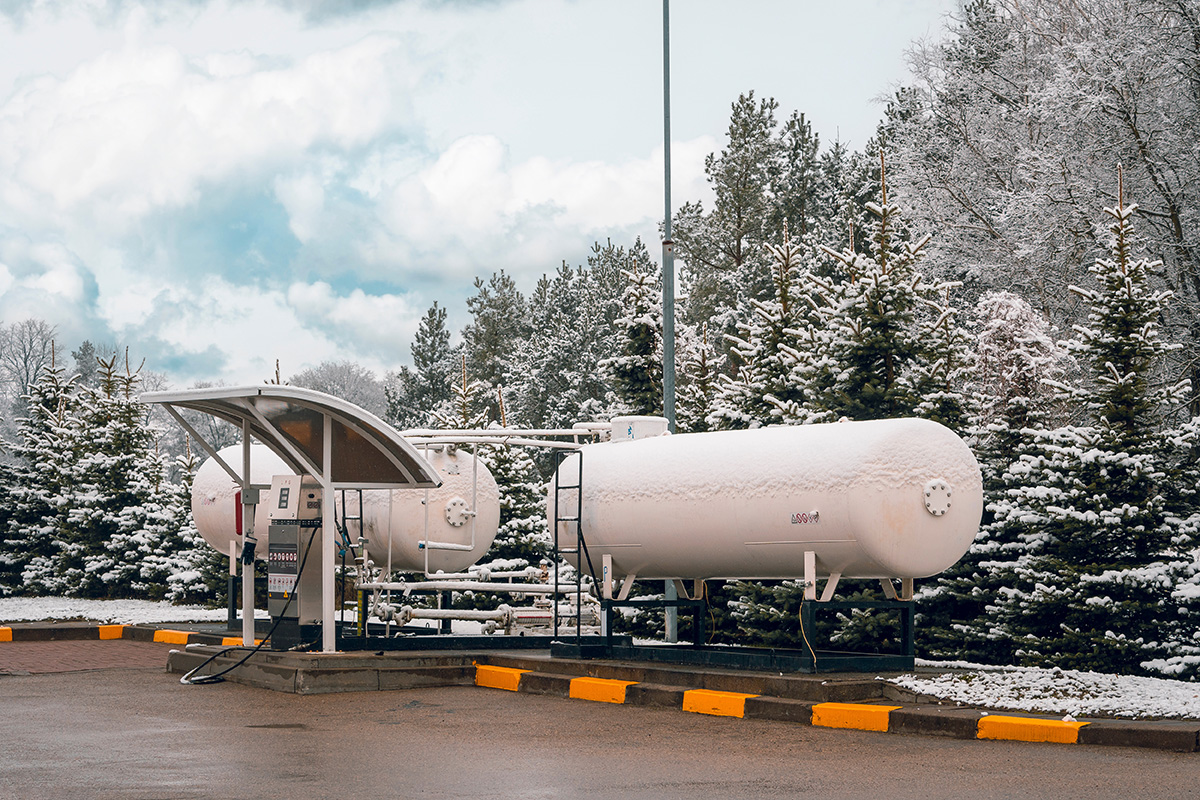
Photo ©graja via Adobe Stock; courtesy of Propane Education & Research Council
Propane burns cleaner, leading to less engine maintenance, lower emissions, and easier starting for backup generators. Additionally, propane is safer to store, non-toxic, and offers reliable, extended run times in emergencies.
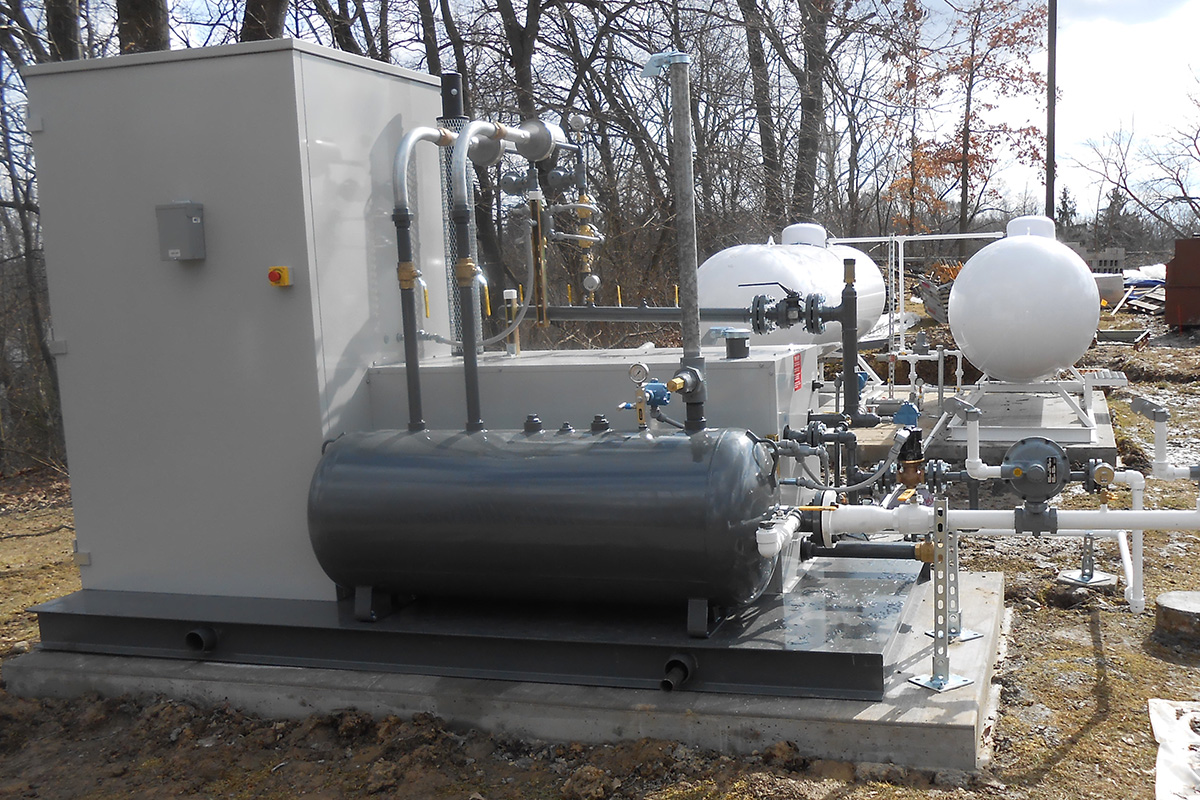
Put simply, there are cleaner alternatives to traditional diesel-powered generators. Backup power that uses propane or dual fuel captures many sustainable benefits. Propane standby generators offer a powerful, reliable way to protect buildings and businesses from the damage a power outage can cause. Some commercial architects, particularly those in urban areas, are not familiar with the many benefits of designing with propane. Overcoming misconceptions allows architects to bring solutions to their projects that only propane provides. Some preconceived concerns include off-gassing and detection, unknown green building rating implications, and logistical challenges regarding propane’s storage and maintenance. Propane is quickly expanding into commercial construction markets through innovations in commercial tank manufacturing and commercial distribution networks. Commercial and industrial companies face the demand to adopt energy options that are reliable and affordable, while also meeting emissions standards. Propane provides a clean energy solution that delivers superior comfort, lower emissions and energy costs, and exceptional reliability for businesses.
Propane as a Project Asset
Propane is a low-carbon energy source that produces fewer harmful emissions than competing fuels. In comparison to other widely used fuels, the US Energy Information Administration (EIA) shows that propane offers one of the lowest in carbon emissions per million BTUs.9 Generators that operate on propane have proven to be environmentally friendly relative to diesel. Tailpipe emissions from propane generators are significantly lower in two air-pollution categories: NOx and PM. Choosing propane secures forward-thinking environmental benefits, including reduced greenhouse gas and NOx emissions, as well as lowered energy costs and more efficient performance. These benefits are likely to become more significant over time, as emissions standards continue to grow more stringent.
Understanding Propane Infrastructure
Since propane is designed to be safely delivered and stored on site, it offers energy security. There are three components to a commercial building’s propane infrastructure: storage, a distribution system, and optional components. Because of its flexibility, propane provides scalable solutions for small- to large-scale projects.
Propane storage tanks provide on-site propane storage for commercial building projects of any size, from the smallest commercial building to a sprawling resort or retail complex. This greatly increases the architect’s design flexibility. The fact that propane is stored locally in tanks provides additional flexibility for developers and owners. Propane can be bought as needed for a project, stored in tanks on site, or stored off site for future delivery. The smallest tank systems available range from 120 gallons to 2,000 gallons for spot energy needs. For larger projects, 18,000- and 30,000-gallon tanks are commonly used. Other storage tanks can hold as many as 120,000 gallons. One tank can be sized to serve a building’s energy needs, based on its total maximum load, measured in British thermal units (Btus). Alternatively, multiple smaller tanks can be manifolded together. Determining the minimum required on-site storage involves looking at the generator’s fuel consumption rate and its specified run time to arrive at how many gallons of storage are needed. For example, a 60-kilowatt generator that serves a medium-sized commercial building, running at full load, will consume about 9 gallons of propane per hour and 215 gallons over an entire day. Keep in mind it’s unlikely a generator will run at full load for an extended period, which will decrease the consumption rate.
Propane storage can be underground or aboveground. Tanks can be placed at multiple sites throughout a project, or one central tank can be used with gas piping running throughout the complex of commercial buildings. There are also several options for placing storage tanks.
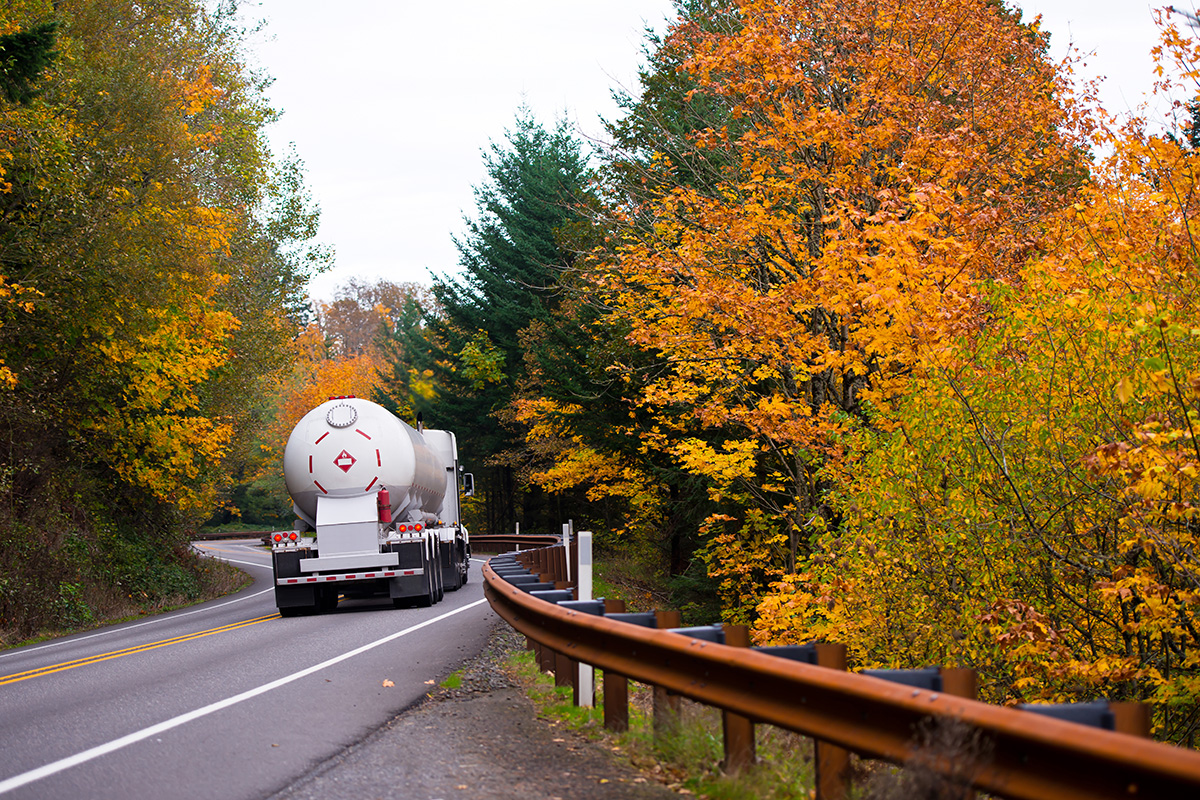
Photo ©vit via Adobe Stock; courtesy of Propane Education & Research Council
Propane is widely available and can be easily delivered to any location. It is often the fuel of choice for remote locations, given its competitive pricing, availability, and stability when stored.
Propane distribution systems are like natural gas systems in that underground pipes deliver the propane to individual service points on buildings. Outside gas piping is buried according to locally applied codes and standards. NFPA Standard 58 establishes the industry requirements for tank and underground gas line installation. Working in accordance with NFPA 58, the propane supplier involved in the project can determine the proper size and number of tanks to meet the building’s loads. Tanks can be fenced, buried, or landscaped to enhance security, safety, and aesthetics.
Optional components can help building owners manage their propane supply. A remote tank-monitoring system uses a wireless connection to send periodic reports of tank levels to the propane provider and the customer, which improves the efficiency of scheduled deliveries. A metered service arrangement allows multiple customers to share a single propane supply and be billed only for their usage.
The U.S. produces more than enough propane to meet demand and is the leading producer of propane. Despite sharp declines in oil prices, domestic propane production is expected to continue to grow rapidly, keeping downward pressure on average propane prices relative to oil prices. Because natural gas is delivered by a network of underground distribution and service pipelines, when deciding what areas to serve, natural gas companies consider the economic return on investment that is necessary to build out their network. Propane, on the other hand, is delivered by vehicles and stored on site in tanks, which allows for more flexibility. It also makes propane prices competitive even in low-density markets. Projects thought to be impossible or cost-prohibitive owing to the lack of access to natural gas are possible because of propane, and projects delayed by the need to construct pipelines can move forward right away with propane. And with the option of aboveground or underground storage tanks, propane professionals can install and connect building systems and other applications on the project team’s schedule. Propane also provides jobsite flexibility by providing gas energy for portable generators and temporary heaters.
Propane, Equipment, and Maintenance
In terms of fuel stability, propane does not degrade or oxidize over time like diesel. This means there are no fuel maintenance issues with propane, unlike with diesel, which can be a major cost and operational benefit in backup power systems that either require or prefer on-site fuel storage. Propane also eliminates common diesel problems like wet-stacking and gelling in cold weather. Contractors appreciate its safe, non-toxic properties and the ability to refuel without contaminating groundwater or soil. Furthermore, propane systems feature quiet operation, which reduces noise pollution in urban projects.
Challenges for Propane Systems
Challenges with propane generator systems include lower cost-effectiveness for large, single-engine applications. Design options for propane systems include running the system with the propane entering the engine as either a vapor or a liquid. Vapor configurations offer advantages for single engines. Vaporizers can often utilize heat from the generator’s engine coolant. A vaporizer can also help solve tricky engineering challenges, such as property restrictions that limit the size and placement of propane tanks. Generator manufacturers offer design support to account for these factors in the system design.
Propane: A Clean Energy Solution Ready for Today
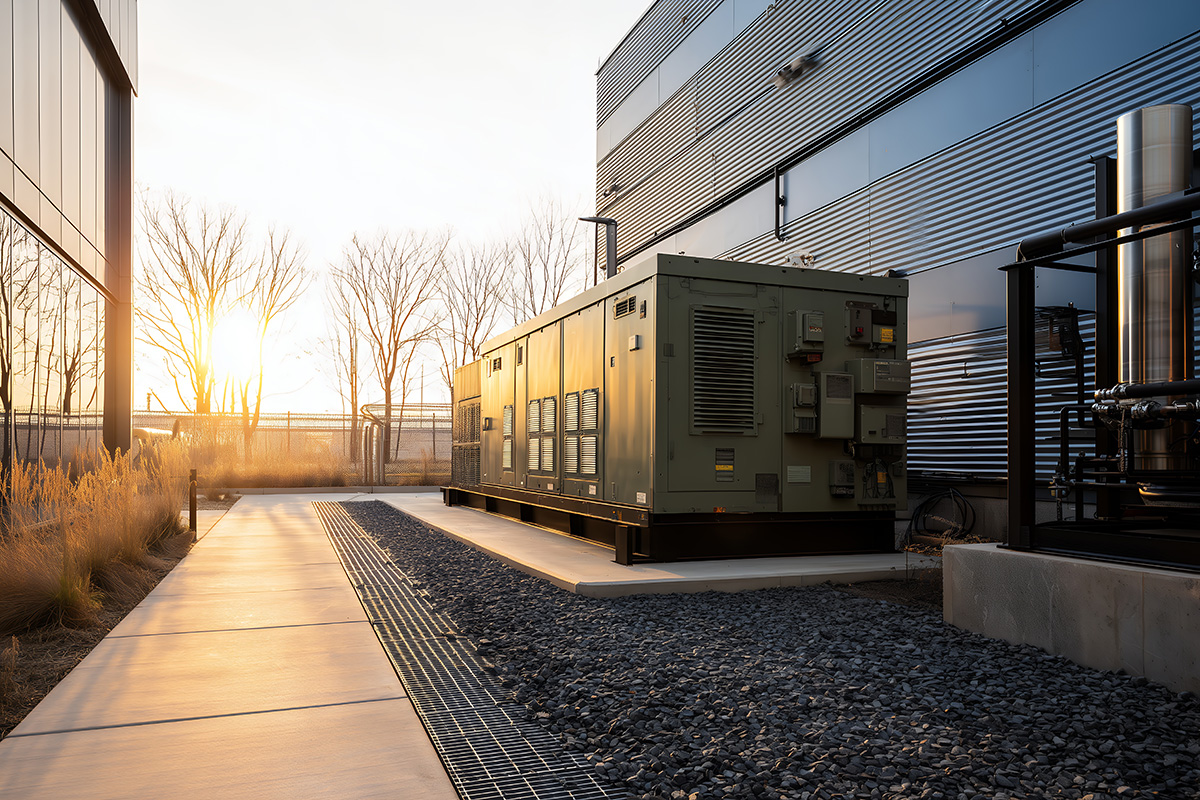
Photo ©Rifqi via Adobe Stock; courtesy of Propane Education & Research Council
Decarbonization will require more clean energy options. Propane provides a cleaner energy source that already has an established infrastructure.
“Options to switch to green power are steadily growing, so no matter where you live, there is an opportunity for you to make an energy choice that counts and supports a clean energy future,” notes the U.S. Environmental Protection Agency’s (EPA) Energy Star program.10
Propane stands out as a scalable and resilient energy solution to power businesses and projects of all sizes. Propane, sometimes known as liquefied petroleum gas, or LPG, is a gas normally compressed and stored as a liquid. It is nontoxic, colorless, and virtually odorless in its natural state; an identifying odor is added to the finished product so that leaks can be detected.
Using propane as an energy source for a project means harnessing a clean technology to reduce emissions while still meeting energy needs. Propane is abundantly available, reliably helping the U.S. adapt to the new energy transition. Propane is an ideal energy source for heating, tankless water heating, cooking, clothes drying, fireplaces, power generation, and many other applications. It is classified by the U.S. Department of Energy (DOE) as a clean alternative fuel and is an approved clean alternative fuel under the Clean Air Act of 1990.
Propane brings all the advantages of natural gas to buildings, at a competitive price, even if these structures are off the power grid or public utilities. Every day for millions of Americans, propane continues to deliver what is most important to customers when choosing their energy: reliability. During extreme weather and natural disasters, propane reliably heats and powers buildings, businesses, and farms independent of the electric grid. Substituting propane for other fuels such as gasoline and fuel oil is an economical choice and demonstrates a commitment to cleaner air. Using propane reduces the greenhouse gas carbon dioxide and air pollutants like carbon monoxide and nitrogen oxide.11
The flexibility of propane storage makes it easy to install in virtually any environment without disrupting sensitive habitats. Because it vaporizes when exposed to air, propane does not harm soil and has negligible effects on the ozone. Similarly, propane poses no hazard to drinking water or marine ecosystems. Propane only ignites when in the presence of a specific air mixture and an ignition source above 920 degrees Fahrenheit, making it safer than other fuels.
Propane offers a clean, reliable, domestically produced, abundant, and affordable energy solution that strengthens building resilience. Its applications are rapidly growing due to new technology developments, and propane is quickly expanding into commercial construction markets through innovations in commercial tank manufacturing and commercial distribution networks. Propane can now be used for any commercial building application that does not have access to natural gas or where it is cost prohibitive to extend lines, including new construction, interior construction for new tenants, major renovations, and building efficiency upgrades. Propane is also independent of the electric grid, making it a valuable partner energy source at solar and wind generation facilities, or at off-grid homes. When solar and wind generation facilities are unable to produce, propane acts as a backup, providing on-call power in emergencies.
Because of its exceptional environmental benefits and flexibility, propane stands out as both a prime and backup energy source for commercial projects, not only during construction, but also for the life of the building. It is reliable. Propane does not degrade over time like gasoline or diesel, making it ideal for standby power applications. Propane produces fewer emissions than diesel or gasoline. With a strong nationwide distribution network, propane remains accessible even during fuel supply disruptions caused by storms or emergencies.
Looking to the Future: Further Propane Innovations
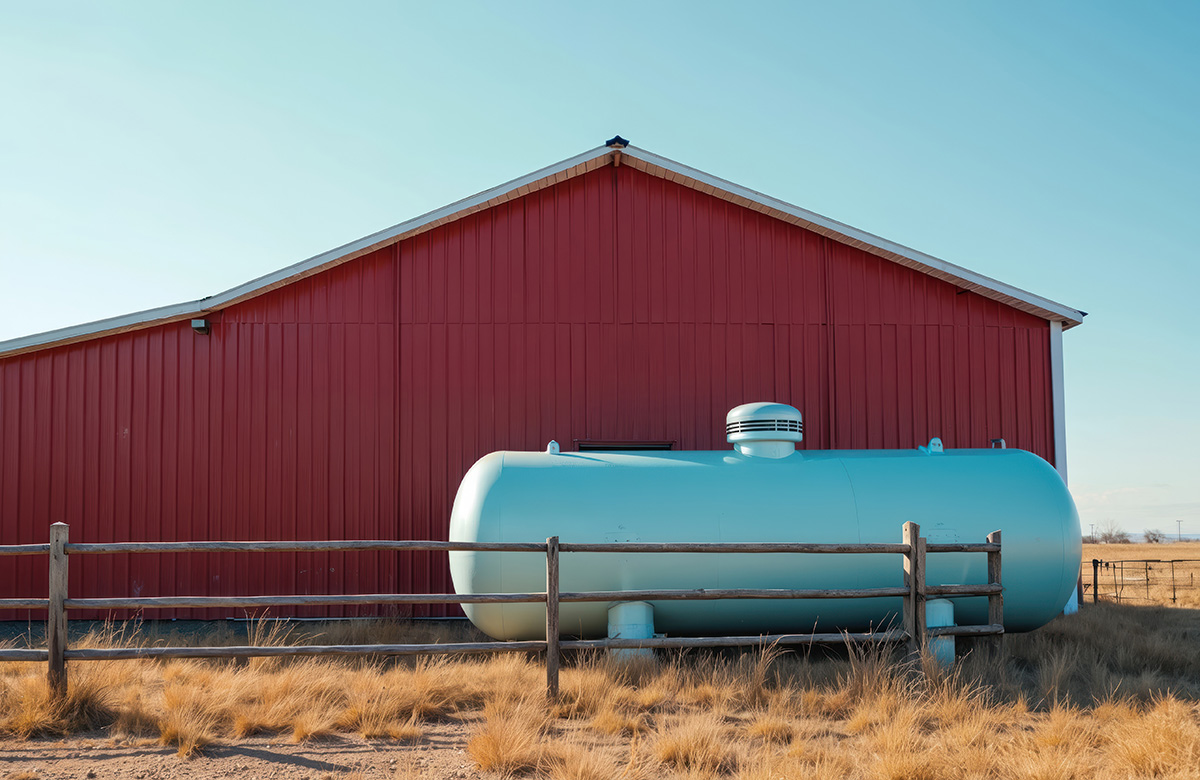
Photo ©Steve via Adobe Stock; courtesy of Propane Education & Research Council
Developments like renewable propane are pushing an already clean fuel to enhanced levels of efficiency and sustainability.
Commercial and industrial projects face the demand to adopt energy options that are reliable and affordable, while also meeting emissions standards. Propane already provides a clean energy solution that delivers superior comfort, lower emissions and energy costs, and exceptional reliability for businesses.
Propane-powered solutions offer a complementary pathway for improving local air quality and decarbonization, specifically by replacing diesel-powered solutions. Typical propane engines provide an excellent option in improving the local air quality relative to diesel, particularly by reducing NOx and PM emissions. Innovation within propane systems is further advancing sustainability. CO2 emissions reduction can be significantly enabled using optimized propane engines. The engines used in Propane Combined Heat and Power (CHP) and Distributed Energy Solutions have a higher thermal efficiency (>30% fuel to electrical conversion efficiency), higher durability (40,000-60,000 hours), and lower emissions.12 Depending on the size of the unit, a 16% - 43% reduction in CO2 emissions can be realized using these solutions in the backup generator market. CHP applications can be used for several combined heat and power solutions in the 1 kW - 1 MW range in commercial and industrial projects. This provides a black-start capability that not only provides power, but also heat or cooling, even when the grid is down. Propane generators also create the opportunity for fuel cells, a high-efficiency and low-emissions technology that is seldom used with diesel.
Renewable propane strengthens the case for diesel displacement even further. Produced as a byproduct of renewable diesel and sustainable aviation fuel manufacturing, renewable propane is chemically identical to conventional propane and fully compatible with existing infrastructure. Without new equipment or system redesigns, renewable propane can reduce greenhouse gas emissions. Using renewable propane can lead to a 50% - 70% reduction in lifecycle CO2 emissions compared to conventional diesel and can accelerate deep decarbonization.13 Blends of conventional and renewable propane are also practical solutions for accelerating decarbonization.
ENDNOTES
- Walker, Emily. “How much do power outages cost?” EnergySage. September 2025. Accessed February 26, 2026.
- Sunjoo Hwang, Sopitsuda Tongsopit, Noah Kittner. “Transitioning from diesel backup generators to PV-plus-storage microgrids in California public buildings.” Sustainable Production and Consumption. Volume 38. 2023. Pages 252-265. ISSN 2352-5509. https://doi.org/10.1016/j.spc.2023.04.001.Accessed February 26, 2026.
- https://www.epa.gov/stationary-engines/compliance-requirements-stationary-engines. Accessed February 26, 2026.
- Ericson, Sean and Dan Olis. 2019. A Comparison of Fuel Choice for Backup Generators. Golden, CO: National Renewable Energy Laboratory. NREL/ TP-6A50-72509. Accessed February 26, 2026.
- Sunjoo Hwang, Sopitsuda Tongsopit, Noah Kittner. “Transitioning from diesel backup generators to PV-plus-storage microgrids in California public buildings.” Sustainable Production and Consumption. Volume 38. 2023. Pages 252-265. ISSN 2352-5509. https://doi.org/10.1016/j.spc.2023.04.001. Accessed February 26, 2026.
- Moss, Steven and Andy Bilich. “Diesel Back-Up Generator Population Grows Rapidly in the Bay Area and Southern California.” M. Cubed. Accessed February 26, 2026.
- Ibid.
- Steven Moss, M.Cubed Partner and Andy Bilich, Research Associate. “Hidden Grid: More Than Eight Gigawatts of Fossil Fueled Back-Up Generators Located in Just Five California Districts.” M. Cubed. May 2020. . Accessed February 26, 2026.
- Carbon Dioxide Emissions Coefficients. U.S. Energy Information Administration. September 18, 2024. Accessed February 26, 2026.
- “Green Power Options.” Energy Star. U.S. Environmental Protection Agency. Accessed February 26, 2026.
- Alternative Fuels Data Center: Propane. U.S. Department of Energy. . “About Propane.” Western Propane Gas Association. Accessed February 26, 2026.
- Vishwanathn, Dr. Gokul. “Power Generation: The Emissions Shifting Problem.” Propane Education & Research Council. March 2022. Accessed February 27, 2026.
- “LCFS Pathway Certified Carbon Intensities.” Low Carbon Fuel Standard. California Air Resources Board. Accessed February 27, 2026.
Amanda Voss, MPP, is an author, editor, and policy analyst. Writing for multiple publications, she has also served as the managing editor for Energy Design Update.