Photo courtesy of David Laudadio
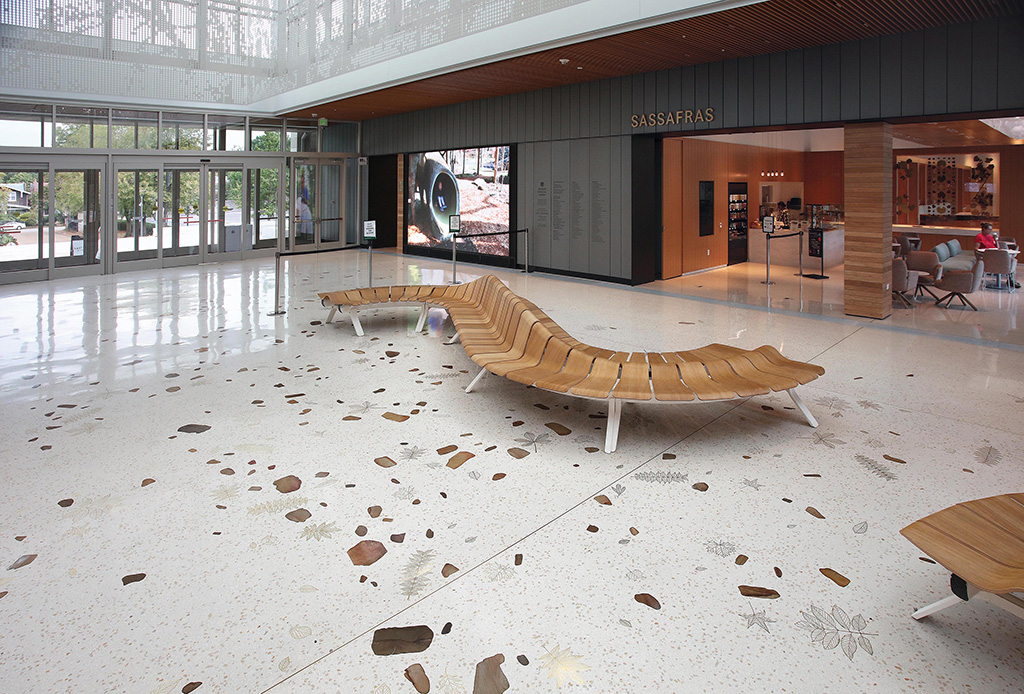
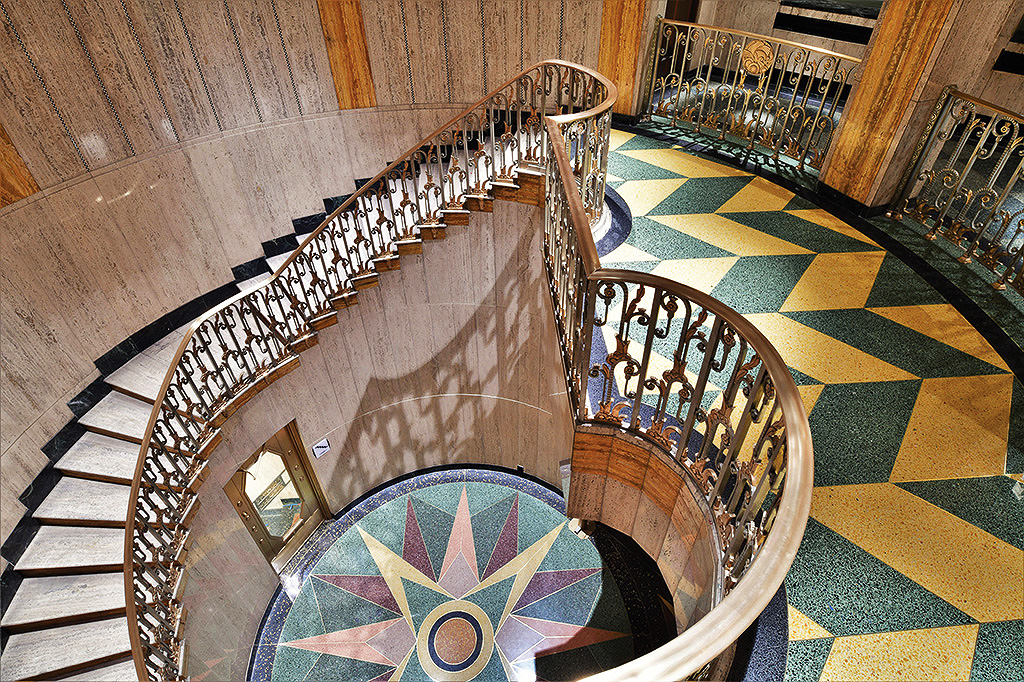
In Indianapolis, a former bottling plant was renovated as a boutique hotel, Bottleworks. Its original terrazzo floors were restored, providing durable, renewable, and environmentally friendly surfaces that shine through nearly a century of use.
This course introduces architects to terrazzo as a sustainable, durable finish for resilient buildings. The program covers terrazzo’s material properties, environmental benefits, and performance in demanding conditions such as flood zones, hurricane areas, and fire-prone regions.
Participants will learn the distinctions between epoxy and cementitious systems, terrazzo’s low VOC and mold-resistant qualities, and its compliance with current IBC and IECC requirements. The course also explores passive design advantages—thermal mass and reflectivity—that improve energy efficiency and support LEED and WELL certification goals.
Case studies highlight terrazzo’s proven value in disaster recovery projects and large-scale civic spaces. Best practices for specification and collaboration with NTMA-certified contractors round out the course, giving architects practical strategies to integrate terrazzo into climate-adapted buildings that balance aesthetics, occupant safety, and environmental stewardship.
Introduction to Terrazzo in Resilient Design
As buildings contend with both environmental and operational stressors—from flooding and fire to heavy daily use—designers face the challenge of specifying materials that provide long-lasting performance while safeguarding sustainability, occupant well-being, the environment, and the community. Terrazzo offers a durable, low-maintenance, and environmentally responsible finish ideal for climate-ready construction.
This course examines how terrazzo contributes to resilient, healthy, and sustainable design, drawing on case studies from diverse building types, including airports, schools, and single-family residences. Topics covered include terrazzo’s resistance to water and fire damage, durability in high-use areas, inclusion of recycled content, eco-friendly maintenance practices, energy-saving potential, and its compatibility with LEED and other green building frameworks.
Terrazzo’s nonporous, hygienic surface supports indoor air quality and occupant safety. Its ability to withstand both daily wear and high-impact events helps reduce long-term operating costs, support public health and welfare, and significantly mitigate disaster-related damages. For buildings prioritizing resilience, terrazzo is a finish that holds up, no matter the forecast.
What is Terrazzo?
Terrazzo is a composite material traditionally made from marble chips set in a cementitious binder. Today, it is more commonly produced using an epoxy resin-based matrix combined with a variety of aggregates, such as natural stone, recycled glass, mother-of-pearl, and other natural or synthetic materials.
The epoxy terrazzo system has become the preferred choice for most applications due to its lighter weight, thinner profile, faster installation, and greater design flexibility compared to traditional cement-based systems. Cement terrazzo offers a classic style characterized by a more muted color palette.
Unlike prefabricated surface materials, terrazzo is typically installed in situ (on-site) by hand. Raw materials are poured over a properly prepared concrete substrate, creating a structural, permanent element and allowing complete customization of patterns, colors, and shapes, and adaptation to site conditions and irregularities. After curing, the surface is ground and polished to create a smooth, seamless, and durable finish.
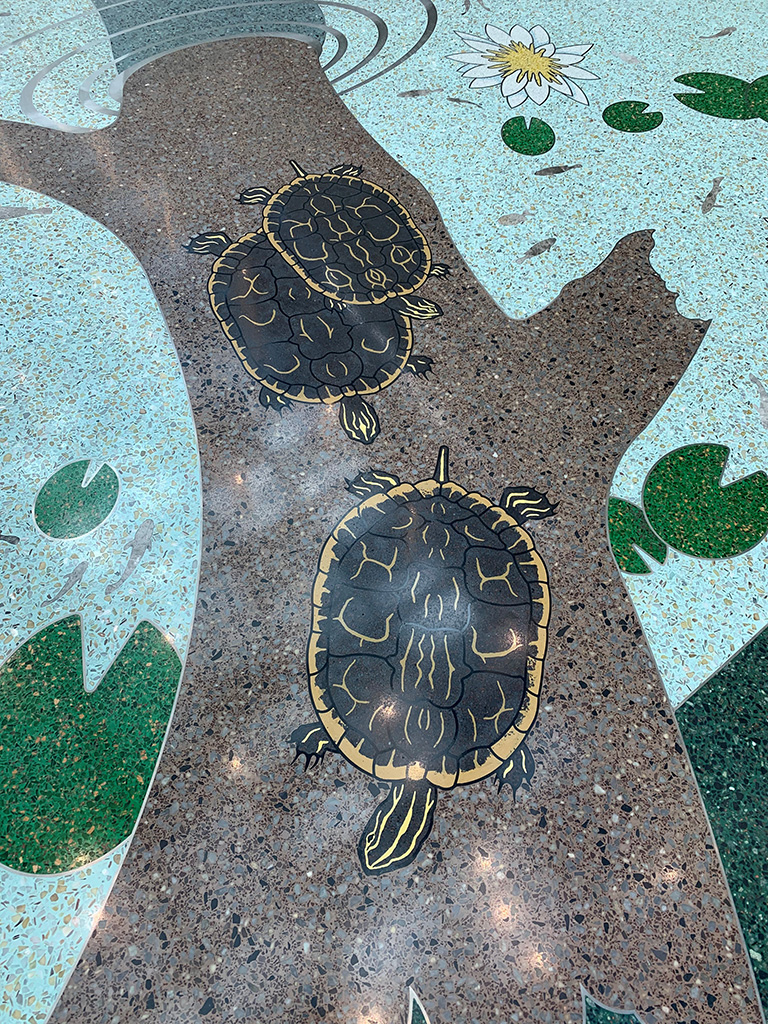
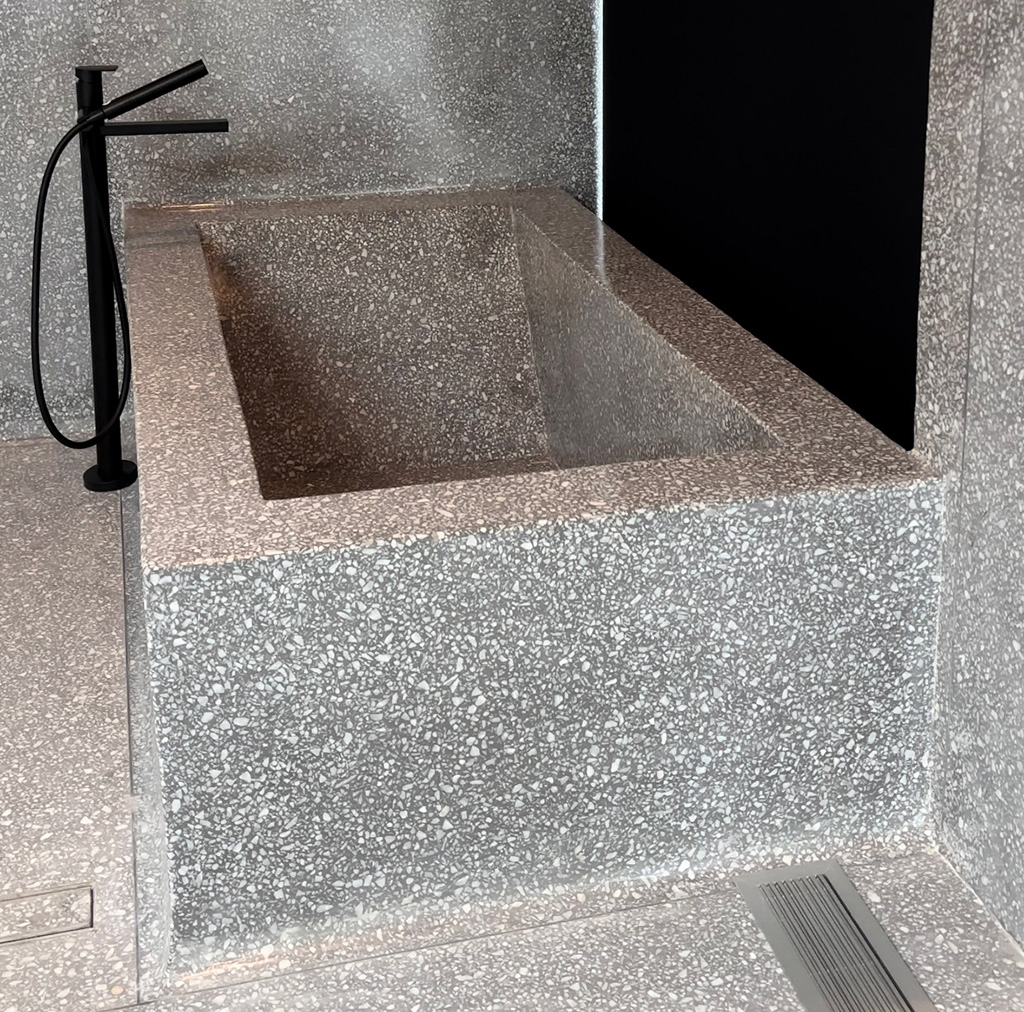
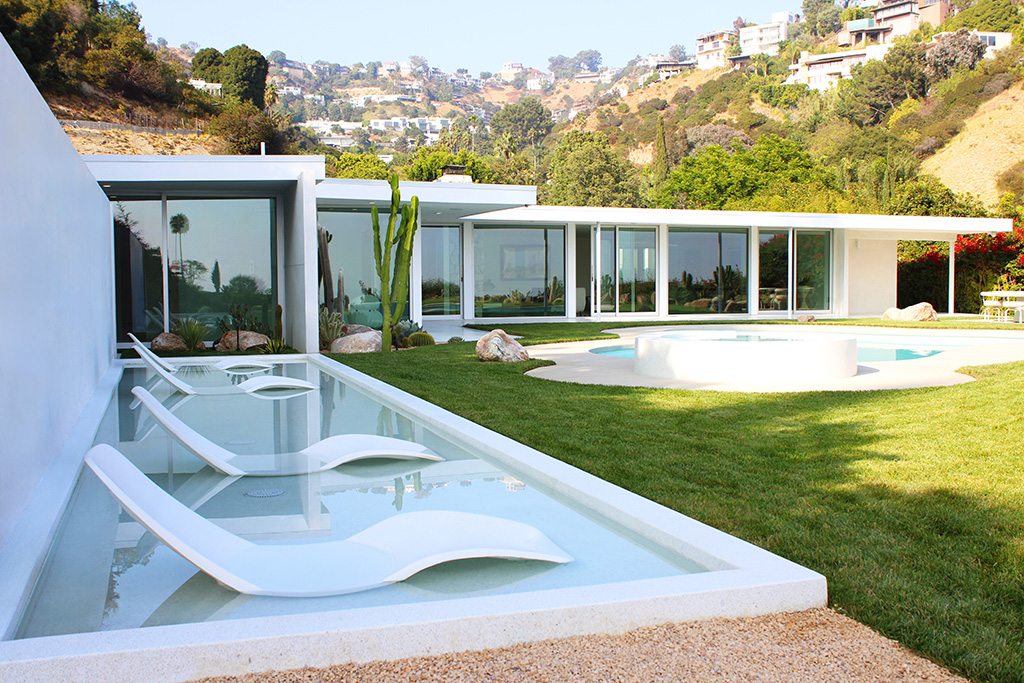
In addition to floors, terrazzo can be applied to both vertical and horizontal surfaces, including walls, ceilings, stairs, curbs, panels, countertops, and furniture. These applications may be formed on-site or fabricated as precast elements, offering architects and designers a high-performance, visually versatile solution.
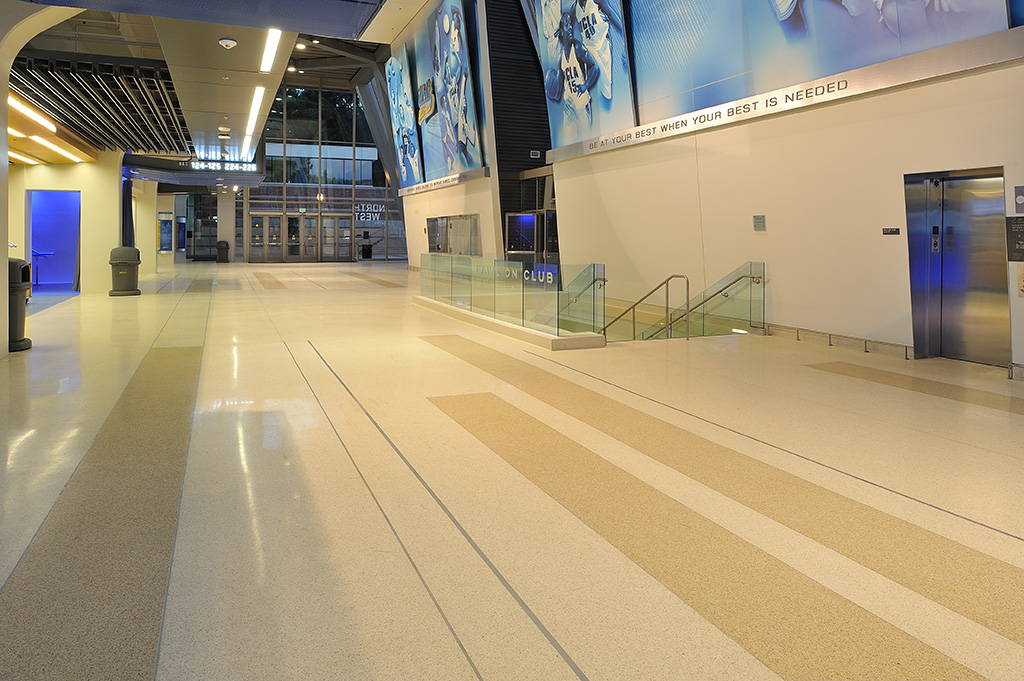
To define patterns and maintain color separation in epoxy terrazzo, divider strips—typically made of zinc, aluminum, brass, plastic, or contrasting terrazzo—are embedded in the matrix. They are commonly spaced 8 feet or more apart and can be used to mark joints, termination points, or the end of a pour. For intricate designs, waterjet-cut strips allow precise detailing. Alternatively, epoxy terrazzo can be installed without divider strips, creating seamless, fluid, and organic patterns.
In cementitious terrazzo, divider strips are essential and regularly spaced—typically every 4 feet by 4 feet—to control shrinkage and movement cracks that occur as the material dries and cures. These strips help limit cracking but can restrict design freedom to mostly rectangular or square patterns. Expansion joints are tailored to the site conditions to ensure durability and crack prevention.
Terrazzo’s material composition, installation techniques, and design versatility make it a unique finish with both functional and aesthetic advantages.
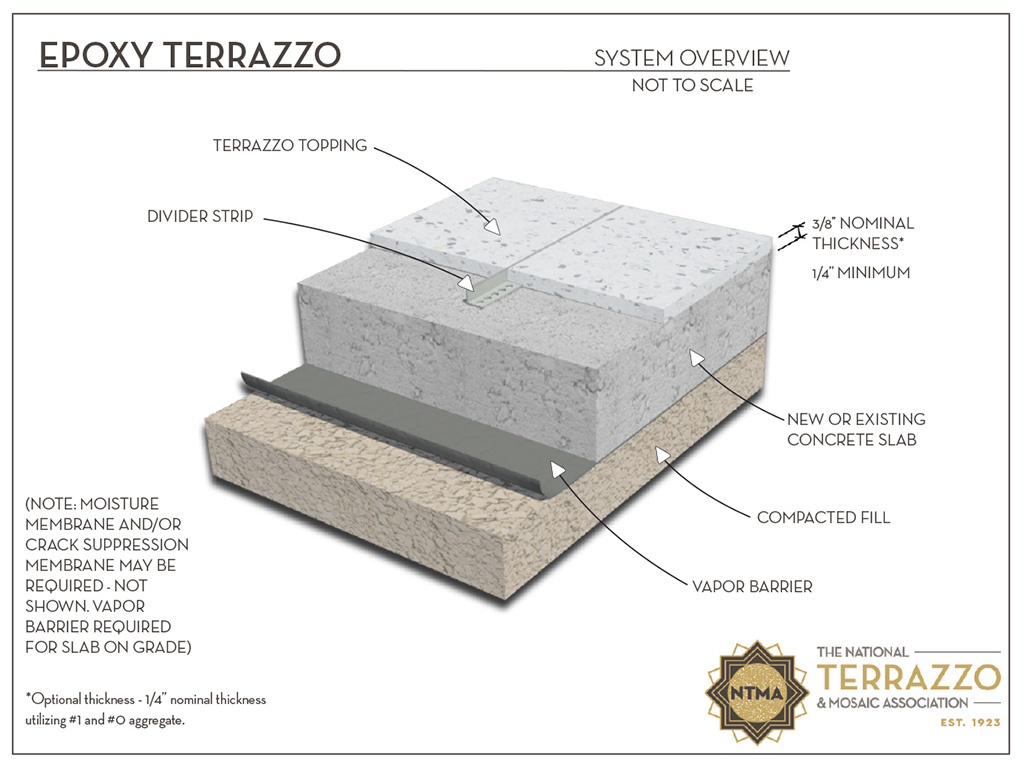
Image courtesy of NTMA
Epoxy terrazzo: a thin-set resin veneer on concrete, customizable with marble, glass, or synthetic aggregates.
History and Evolution of Terrazzo
Terrazzo is rooted in traditional Old-World craftsmanship, with origins tracing back to ancient Egypt and Rome, where decorative stone and tile work adorned floors and walls. The technique evolved significantly in 15th-century Venice, where marble workers repurposed stone remnants by embedding them into a mortar base. These rudimentary surfaces were then ground and polished, creating what would become the recognizable terrazzo aesthetic.
The in-situ installation method—pouring and finishing the material directly over a substrate—embodies this artisanal heritage and continues to be used today, adapted with modern tools and materials that enhance its performance and design potential.
Italian artisans introduced terrazzo to the United States in the late 19th century, and it gained widespread popularity by the 1920s. Technological innovations—such as the introduction of metal divider strips in 1924 to reduce cracking and expand design capabilities, along with the use of electric grinding machines—dramatically improved both the quality and efficiency of terrazzo installations.
These advancements made terrazzo more accessible, attracting designers with its versatility and affinity to the aesthetic of the Art Deco movement.
The growing demand and increased affordability of terrazzo led to the formalization of industry standards. Established in 1923, the National Terrazzo and Mosaic Association (NTMA), now headquartered in Fredericksburg, Texas, has played a pivotal role in shaping and advancing the terrazzo industry in North America.
Today, the NTMA serves as a comprehensive resource for architects, designers, and specifiers by providing free access to detailed specifications, color samples, technical guidance, and educational support. NTMA-approved contractors are pre-qualified through a two-year process to meet the association’s rigorous standards, ensuring quality control and consistency across projects.
Terrazzo’s Environmental Sustainability
Terrazzo’s value as a sustainable finish extends far beyond aesthetic appeal. With increasing emphasis on building performance and environmental impact in design decisions, terrazzo continues to stand out for its long life cycle, efficient use of materials, and conservation of resources over time. Its composition, installation, and performance all contribute to a lower environmental footprint compared to many other flooring systems.
From ease of maintenance to indoor environmental quality and long-term resilience, terrazzo aligns well with current sustainability and health, safety, and welfare objectives, making it a material that supports today’s climate-conscious design priorities. The following sections explore how these characteristics contribute to environmentally responsible, future-ready, and disaster-resilient buildings.
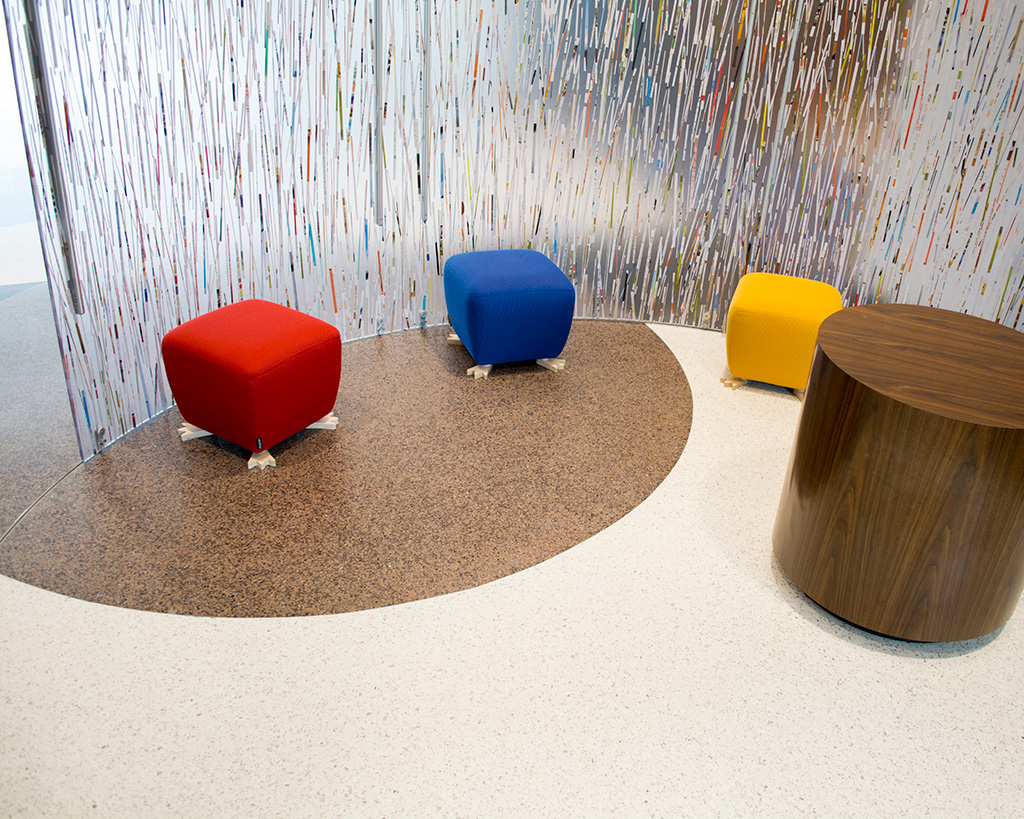
Photo courtesy of Kevin Grega
Terrazzo at Owego Elementary, designed by Don Kalina at Highland Associates, incorporates recycled walnut shells, creatively supporting sustainability and reflecting local character.
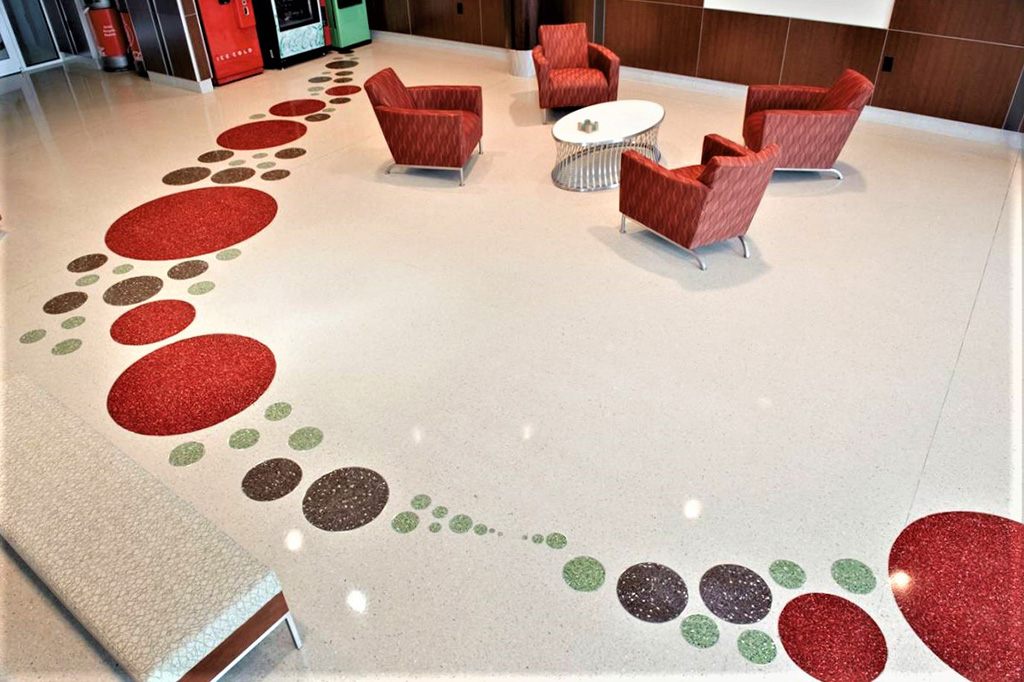
Photo courtesy of Terrazzo Masters
Crushed Coca-Cola bottles repurposed as terrazzo aggregate demonstrate in-situ recycling, reducing waste while contributing to sustainability. Forcum Lannom, contractor and architect.
Recycled and Locally Sourced Materials
Terrazzo often incorporates recycled content, including clear or colored glass, seashells, stone, porcelain, and metal chips, thereby reducing waste and demand for virgin raw materials. This sustainable attribute can contribute to LEED v4 credits in the Materials and Resources (MR) category, such as Building Product Disclosure and Optimization – Sourcing of Raw Materials, as well as Regional Materials credits, which reward the use of locally sourced products to help minimize transportation-related emissions.
When accompanied by third-party verified Environmental Product Declarations (EPDs) and life cycle assessments (LCAs), terrazzo systems can further contribute to credits related to material transparency and the reduction of environmental impacts over a product’s life cycle.
Many examples of imaginatively recycled local aggregates can be found among the NTMA’s Honor Award-winning projects. The following are a few of them.
In 2011, Tropical Storm Lee caused flooding in Owego, New York, which destroyed the town’s elementary school. The rebuilt facility incorporated recycled crushed walnut shells sourced from local trees into its terrazzo floor. This material choice supported sustainability goals and reinforced a connection to place while enhancing the color palette. In a Coca-Cola bottling facility in Baton Rouge, Louisiana, crushed Coke bottles were repurposed for terrazzo aggregate. In a creative example of in-situ recycling in Canada, heritage marble was reclaimed to complement the aesthetic of the 1909 former Ottawa Union Train Station during its renovation for temporary use by the Senate of Canada. Following a historic preservation plan for the landmark structure, which aimed to conserve materials and divert construction waste from landfills, terrazzo artisans salvaged Missisquoi Grey Marble, a compact local stone, from existing floors, baseboards, wainscoting, and stairs to create the new floor. In the Scarpa Palladiana-style installation, 2-by-2½-inch slabs were installed in a grid pattern.
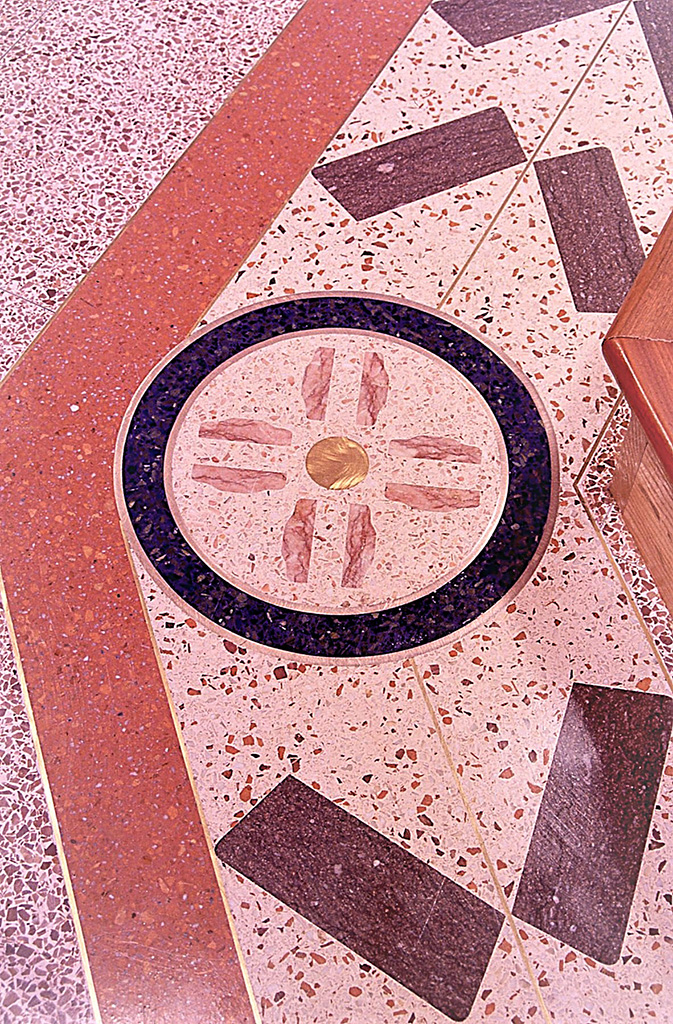
When St. Catherine of Siena Catholic Church in Seattle was remodeled, portions of the existing sand-cushion terrazzo were saw-cut and infilled with epoxy/sand mortar, while marble elements saved from demolition in the church were used to accent epoxy terrazzo mixes that formed a new central altar and dais. The new baptismal font was also entirely constructed from marble waste, its vertical fascia crafted from precast terrazzo that incorporated sections of pink marble from the stiles of the old railing.
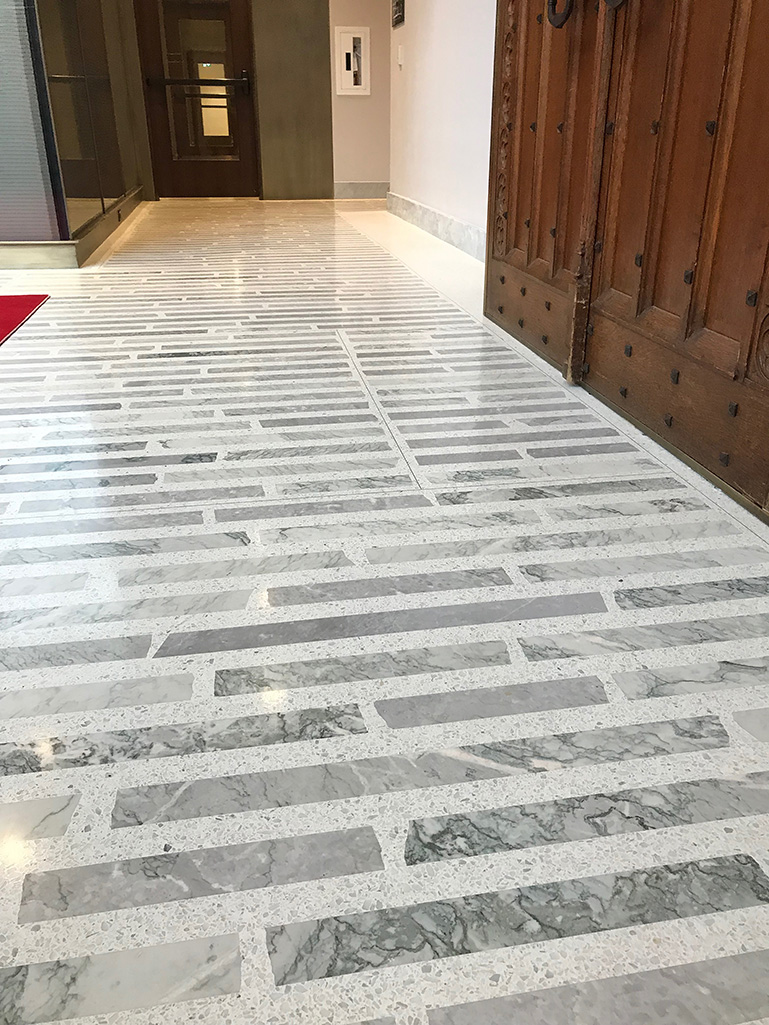
Photo courtesy of Franklin Terrazzo
Heritage marble reclaimed for Ottawa Union Station’s terrazzo floor is an example of in-situ recycling in the 1909 landmark renovation. Diamond Schmitt Architects.
Photos courtesy of the NTMA
Seattle’s St. Catherine of Siena Church remodel reused marble and terrazzo waste to create altar, dais, and baptismal font accents. Veraldi Renouard Architects.
Durable Longevity
Terrazzo offers exceptional durability and longevity, with floors commonly lasting 50 to 75 years—or even longer—as evidenced by their continued performance in historic buildings. Terrazzo floors in four century-old courthouses across the Pacific Northwest were restored in 2012. “Once terrazzo is in, it stays forever,” said Rebecca Nielsen of the U.S. General Services Administration. A historic preservation program specialist and LEED-accredited professional, Ms. Nielsen oversees 20 federally registered landmark buildings.
Courtesy of Brycen Fischer Photography
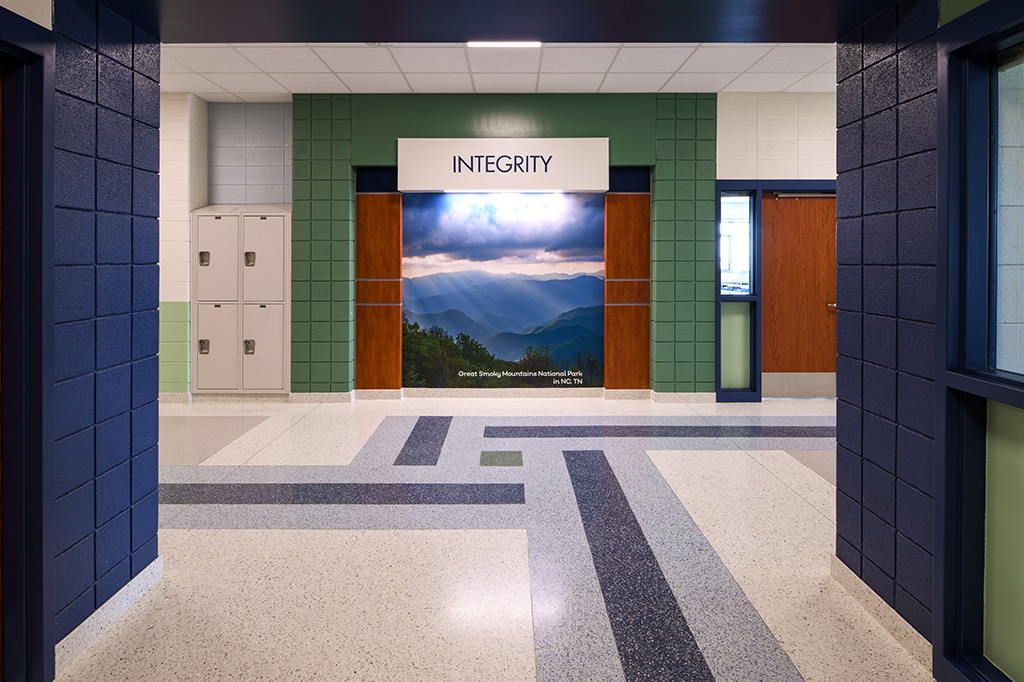
Terrazzo’s timeless durability at Guilford Park High ensures lasting value, outliving the building while supporting sustainable, fiscally smart design. TCA | Architects.
In schools, terrazzo’s durability is a key attribute. Robyn Toth of TCA Architects in Crownsville, Maryland, has led the design and specification of terrazzo floors in three schools for Maryland’s Howard County Public School System. Her projects include the LEED Silver-certified Guilford Park High School, which opened in 2023, and Hanover Hills Elementary, a County Green School, focused on energy efficiency and conservation, and LEED Gold certified. Wilde Lake Middle School, which opened in 2017, was Maryland’s first Net-Zero-Energy and first LEED Platinum school.
With 28 years of experience designing sustainable public K–12 facilities in Maryland, Ms. Toth has completed more than 88 school projects, along with numerous feasibility and site acquisition studies across the state. One primary reason she specified terrazzo for these schools is its exceptional durability and long-term value. “I think of terrazzo as a timeless finish: it will last longer than the rest of the building,” said Ms. Toth. “Terrazzo offers many assets that are both fiscally and environmentally friendly.” Ms. Toth reported that her firm has successfully led the renovations of 50- to 75-year-old terrazzo floors that required only refinishing.
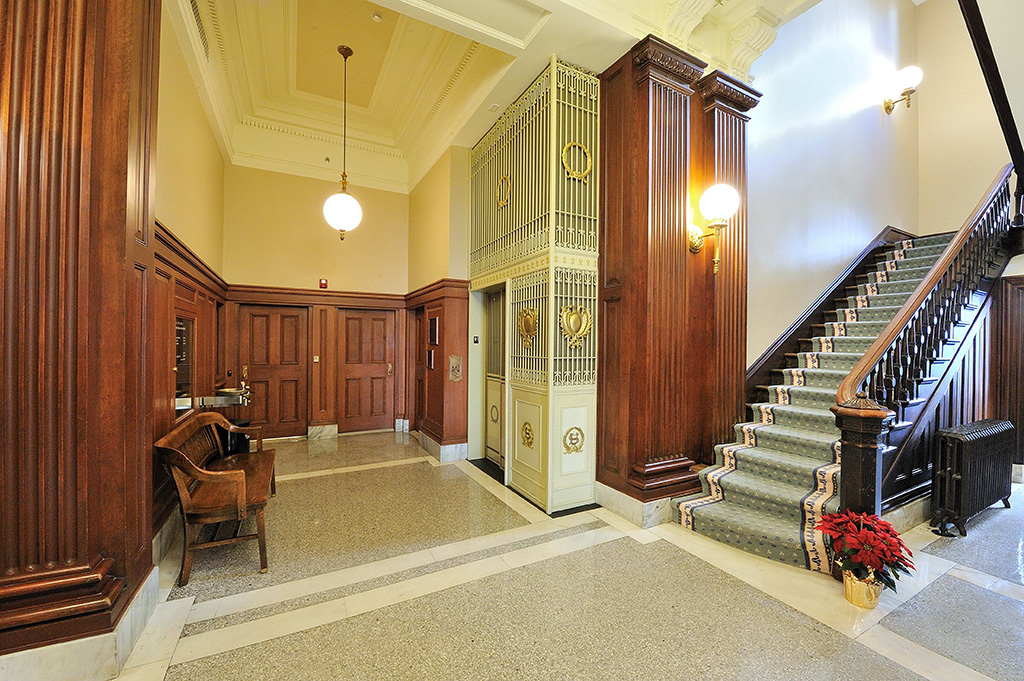
Photo Courtesy of David Laudadio
Pioneer Courthouse in Portland, Oregon, is one of four Pacific Northwest courthouses with terrazzo floors over a century old, still performing beautifully. A 2006 renovation was led by Sera Design.
Life Cycle Advantages
Terrazzo’s longevity reduces both life cycle costs and environmental impact, making it an ideal flooring solution for high-traffic environments. While terrazzo’s installation costs and lead time can be higher than those of vinyl composition tile (VCT), the greater initial investment more than pays off over time, Ms. Toth said. Cost comparisons show that the total installation and operation expenses of terrazzo break even with VCT at around 12.5 years and continue to provide greater long-term benefits.
Over a 40-year life cycle, a cost comparison that includes initial installation, replacement, and maintenance shows terrazzo—which never needs replacement—at $30 per square foot versus $50 per square foot for VCT. Terrazzo’s nominal maintenance costs immediately begin to balance out the lower installation cost of VCT during the first year.
Unlike softer synthetic materials or natural stones, terrazzo can be easily spot-repaired or replaced in sections between divider strips. Thanks to standardized mix specifications, repairs can closely match the original installation, preserving aesthetic continuity over time. In contrast, achieving a consistent repair or replacement is often challenging with other materials.
The 2023 IBC emphasizes the use of durable, high-performance materials to improve building resilience against extreme weather events, such as hurricanes, floods, and wildfires. Terrazzo’s long service life and low maintenance requirements also align with LEED v4’s emphasis on whole-building life cycle performance, potentially contributing to the Building Life Cycle Impact Reduction credit. By eliminating the need for frequent replacement, terrazzo avoids the high costs, operational disruption, and material waste associated with tearing out and reinstalling flooring.
For example, carpet or vinyl may require replacement every five to ten years in commercial settings, resulting in ongoing costs, landfill waste, and facility downtime. Terrazzo, by contrast, offers a permanent, resilient, and resource-efficient solution that supports a project’s sustainability goals for the facility’s entire lifespan.
For these reasons, terrazzo has become the preferred flooring for many public schools, state universities, and post offices, with the bulk of long-term savings coming from dramatically lower maintenance expenses and the elimination of disruptive flooring replacements throughout the building’s lifespan.
Low Maintenance - Operational Cost Savings
“What’s nice about terrazzo is that the maintenance is significantly less than for less durable finishes,” said Ms. Toth. She specifies terrazzo for Howard County’s LEED-certified and Green Schools in large part because it enhances energy efficiency and conservation. “With the amount of foot traffic, that means significant cost benefits down the road.”
Howard County’s commitment to environmental sustainability means the district also values terrazzo’s energy efficiency and long-term economy. The switch from VCT, which requires twice-yearly stripping and buffing, to terrazzo’s minimal, cost-saving maintenance schedule was a compelling advantage, conserving water, cleaning supplies and equipment, as well as labor and energy during out-of-school hours, according to Ms. Toth.
While some owners may initially focus on upfront costs, Ms. Toth advised, “Walk them through 20 years of operations costs, and terrazzo becomes a much stronger candidate. If you can get the owner to really evaluate the life cycle, terrazzo offers so many benefits over VCT, the current competitor. Terrazzo is the much smarter choice.”
Maintenance costs account for a significant portion of the budget for any heavily used facility. According to Floor Trends and Installation magazine, “Over 90 percent of a floor’s life cycle cost is spent on long-term cleaning and maintenance.” A cost-efficient maintenance schedule offers compelling advantages by reducing the use of resources.
Terrazzo’s seamless, impermeable, and non-absorbent surface makes it easy to clean and maintain—even after exposure to severe environmental stress. As a durable, nonporous material without grout joints, terrazzo effectively resists microbial growth and moisture accumulation. Its seamless, nonporous surface resists moisture infiltration, which aligns with IBC requirements for flood-resistant materials in high-velocity hurricane zones (HVHZ) and flood-prone areas. An integral cove base in terrazzo, installed around walls and columns, provides a tough, protective transition to vertical surfaces, preventing dirt buildup.
The NTMA emphasizes the importance of the recommended simple maintenance program for all terrazzo surfaces. Spills should be wiped up promptly, and floors should be dust-mopped daily to remove dirt and grit. Regular cleaning involves using a pH-neutral cleaner, followed by damp mopping with clean water. Acidic, toxic, or harsh cleaning agents should be avoided to preserve the surface integrity.
To protect against stains, the floor should be sealed periodically—typically every one to two years, depending on traffic and use—with a sealer specifically formulated for terrazzo. Buffing or burnishing can restore shine, especially in high-traffic areas. Use of waxes is discouraged as they tend to build up and dull the finish.
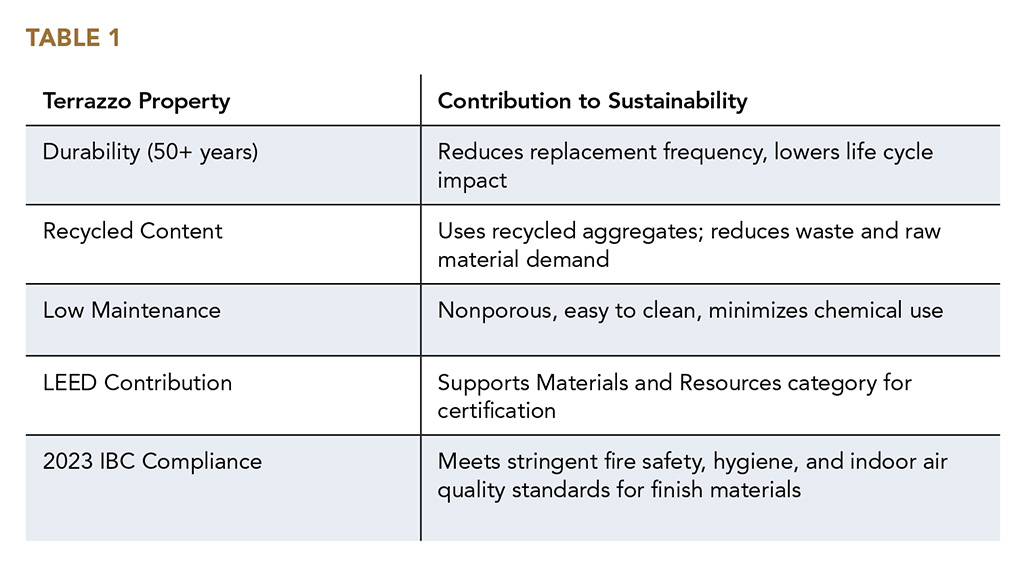
Table courtesy of NTMA
Photo courtesy of David Laudadio
In Indianapolis, a former bottling plant was renovated as a boutique hotel, Bottleworks. Its original terrazzo floors were restored, providing durable, renewable, and environmentally friendly surfaces that shine through nearly a century of use.
This course introduces architects to terrazzo as a sustainable, durable finish for resilient buildings. The program covers terrazzo’s material properties, environmental benefits, and performance in demanding conditions such as flood zones, hurricane areas, and fire-prone regions.
Participants will learn the distinctions between epoxy and cementitious systems, terrazzo’s low VOC and mold-resistant qualities, and its compliance with current IBC and IECC requirements. The course also explores passive design advantages—thermal mass and reflectivity—that improve energy efficiency and support LEED and WELL certification goals.
Case studies highlight terrazzo’s proven value in disaster recovery projects and large-scale civic spaces. Best practices for specification and collaboration with NTMA-certified contractors round out the course, giving architects practical strategies to integrate terrazzo into climate-adapted buildings that balance aesthetics, occupant safety, and environmental stewardship.
Introduction to Terrazzo in Resilient Design
As buildings contend with both environmental and operational stressors—from flooding and fire to heavy daily use—designers face the challenge of specifying materials that provide long-lasting performance while safeguarding sustainability, occupant well-being, the environment, and the community. Terrazzo offers a durable, low-maintenance, and environmentally responsible finish ideal for climate-ready construction.
This course examines how terrazzo contributes to resilient, healthy, and sustainable design, drawing on case studies from diverse building types, including airports, schools, and single-family residences. Topics covered include terrazzo’s resistance to water and fire damage, durability in high-use areas, inclusion of recycled content, eco-friendly maintenance practices, energy-saving potential, and its compatibility with LEED and other green building frameworks.
Terrazzo’s nonporous, hygienic surface supports indoor air quality and occupant safety. Its ability to withstand both daily wear and high-impact events helps reduce long-term operating costs, support public health and welfare, and significantly mitigate disaster-related damages. For buildings prioritizing resilience, terrazzo is a finish that holds up, no matter the forecast.
What is Terrazzo?
Terrazzo is a composite material traditionally made from marble chips set in a cementitious binder. Today, it is more commonly produced using an epoxy resin-based matrix combined with a variety of aggregates, such as natural stone, recycled glass, mother-of-pearl, and other natural or synthetic materials.
The epoxy terrazzo system has become the preferred choice for most applications due to its lighter weight, thinner profile, faster installation, and greater design flexibility compared to traditional cement-based systems. Cement terrazzo offers a classic style characterized by a more muted color palette.
Unlike prefabricated surface materials, terrazzo is typically installed in situ (on-site) by hand. Raw materials are poured over a properly prepared concrete substrate, creating a structural, permanent element and allowing complete customization of patterns, colors, and shapes, and adaptation to site conditions and irregularities. After curing, the surface is ground and polished to create a smooth, seamless, and durable finish.
In addition to floors, terrazzo can be applied to both vertical and horizontal surfaces, including walls, ceilings, stairs, curbs, panels, countertops, and furniture. These applications may be formed on-site or fabricated as precast elements, offering architects and designers a high-performance, visually versatile solution.
To define patterns and maintain color separation in epoxy terrazzo, divider strips—typically made of zinc, aluminum, brass, plastic, or contrasting terrazzo—are embedded in the matrix. They are commonly spaced 8 feet or more apart and can be used to mark joints, termination points, or the end of a pour. For intricate designs, waterjet-cut strips allow precise detailing. Alternatively, epoxy terrazzo can be installed without divider strips, creating seamless, fluid, and organic patterns.
In cementitious terrazzo, divider strips are essential and regularly spaced—typically every 4 feet by 4 feet—to control shrinkage and movement cracks that occur as the material dries and cures. These strips help limit cracking but can restrict design freedom to mostly rectangular or square patterns. Expansion joints are tailored to the site conditions to ensure durability and crack prevention.
Terrazzo’s material composition, installation techniques, and design versatility make it a unique finish with both functional and aesthetic advantages.
Image courtesy of NTMA
Epoxy terrazzo: a thin-set resin veneer on concrete, customizable with marble, glass, or synthetic aggregates.
History and Evolution of Terrazzo
Terrazzo is rooted in traditional Old-World craftsmanship, with origins tracing back to ancient Egypt and Rome, where decorative stone and tile work adorned floors and walls. The technique evolved significantly in 15th-century Venice, where marble workers repurposed stone remnants by embedding them into a mortar base. These rudimentary surfaces were then ground and polished, creating what would become the recognizable terrazzo aesthetic.
The in-situ installation method—pouring and finishing the material directly over a substrate—embodies this artisanal heritage and continues to be used today, adapted with modern tools and materials that enhance its performance and design potential.
Italian artisans introduced terrazzo to the United States in the late 19th century, and it gained widespread popularity by the 1920s. Technological innovations—such as the introduction of metal divider strips in 1924 to reduce cracking and expand design capabilities, along with the use of electric grinding machines—dramatically improved both the quality and efficiency of terrazzo installations.
These advancements made terrazzo more accessible, attracting designers with its versatility and affinity to the aesthetic of the Art Deco movement.
The growing demand and increased affordability of terrazzo led to the formalization of industry standards. Established in 1923, the National Terrazzo and Mosaic Association (NTMA), now headquartered in Fredericksburg, Texas, has played a pivotal role in shaping and advancing the terrazzo industry in North America.
Today, the NTMA serves as a comprehensive resource for architects, designers, and specifiers by providing free access to detailed specifications, color samples, technical guidance, and educational support. NTMA-approved contractors are pre-qualified through a two-year process to meet the association’s rigorous standards, ensuring quality control and consistency across projects.
Terrazzo’s Environmental Sustainability
Terrazzo’s value as a sustainable finish extends far beyond aesthetic appeal. With increasing emphasis on building performance and environmental impact in design decisions, terrazzo continues to stand out for its long life cycle, efficient use of materials, and conservation of resources over time. Its composition, installation, and performance all contribute to a lower environmental footprint compared to many other flooring systems.
From ease of maintenance to indoor environmental quality and long-term resilience, terrazzo aligns well with current sustainability and health, safety, and welfare objectives, making it a material that supports today’s climate-conscious design priorities. The following sections explore how these characteristics contribute to environmentally responsible, future-ready, and disaster-resilient buildings.
Photo courtesy of Kevin Grega
Terrazzo at Owego Elementary, designed by Don Kalina at Highland Associates, incorporates recycled walnut shells, creatively supporting sustainability and reflecting local character.
Photo courtesy of Terrazzo Masters
Crushed Coca-Cola bottles repurposed as terrazzo aggregate demonstrate in-situ recycling, reducing waste while contributing to sustainability. Forcum Lannom, contractor and architect.
Recycled and Locally Sourced Materials
Terrazzo often incorporates recycled content, including clear or colored glass, seashells, stone, porcelain, and metal chips, thereby reducing waste and demand for virgin raw materials. This sustainable attribute can contribute to LEED v4 credits in the Materials and Resources (MR) category, such as Building Product Disclosure and Optimization – Sourcing of Raw Materials, as well as Regional Materials credits, which reward the use of locally sourced products to help minimize transportation-related emissions.
When accompanied by third-party verified Environmental Product Declarations (EPDs) and life cycle assessments (LCAs), terrazzo systems can further contribute to credits related to material transparency and the reduction of environmental impacts over a product’s life cycle.
Many examples of imaginatively recycled local aggregates can be found among the NTMA’s Honor Award-winning projects. The following are a few of them.
In 2011, Tropical Storm Lee caused flooding in Owego, New York, which destroyed the town’s elementary school. The rebuilt facility incorporated recycled crushed walnut shells sourced from local trees into its terrazzo floor. This material choice supported sustainability goals and reinforced a connection to place while enhancing the color palette. In a Coca-Cola bottling facility in Baton Rouge, Louisiana, crushed Coke bottles were repurposed for terrazzo aggregate. In a creative example of in-situ recycling in Canada, heritage marble was reclaimed to complement the aesthetic of the 1909 former Ottawa Union Train Station during its renovation for temporary use by the Senate of Canada. Following a historic preservation plan for the landmark structure, which aimed to conserve materials and divert construction waste from landfills, terrazzo artisans salvaged Missisquoi Grey Marble, a compact local stone, from existing floors, baseboards, wainscoting, and stairs to create the new floor. In the Scarpa Palladiana-style installation, 2-by-2½-inch slabs were installed in a grid pattern.
When St. Catherine of Siena Catholic Church in Seattle was remodeled, portions of the existing sand-cushion terrazzo were saw-cut and infilled with epoxy/sand mortar, while marble elements saved from demolition in the church were used to accent epoxy terrazzo mixes that formed a new central altar and dais. The new baptismal font was also entirely constructed from marble waste, its vertical fascia crafted from precast terrazzo that incorporated sections of pink marble from the stiles of the old railing.
Photo courtesy of Franklin Terrazzo
Heritage marble reclaimed for Ottawa Union Station’s terrazzo floor is an example of in-situ recycling in the 1909 landmark renovation. Diamond Schmitt Architects.
Photos courtesy of the NTMA
Seattle’s St. Catherine of Siena Church remodel reused marble and terrazzo waste to create altar, dais, and baptismal font accents. Veraldi Renouard Architects.
Durable Longevity
Terrazzo offers exceptional durability and longevity, with floors commonly lasting 50 to 75 years—or even longer—as evidenced by their continued performance in historic buildings. Terrazzo floors in four century-old courthouses across the Pacific Northwest were restored in 2012. “Once terrazzo is in, it stays forever,” said Rebecca Nielsen of the U.S. General Services Administration. A historic preservation program specialist and LEED-accredited professional, Ms. Nielsen oversees 20 federally registered landmark buildings.
Courtesy of Brycen Fischer Photography
Terrazzo’s timeless durability at Guilford Park High ensures lasting value, outliving the building while supporting sustainable, fiscally smart design. TCA | Architects.
In schools, terrazzo’s durability is a key attribute. Robyn Toth of TCA Architects in Crownsville, Maryland, has led the design and specification of terrazzo floors in three schools for Maryland’s Howard County Public School System. Her projects include the LEED Silver-certified Guilford Park High School, which opened in 2023, and Hanover Hills Elementary, a County Green School, focused on energy efficiency and conservation, and LEED Gold certified. Wilde Lake Middle School, which opened in 2017, was Maryland’s first Net-Zero-Energy and first LEED Platinum school.
With 28 years of experience designing sustainable public K–12 facilities in Maryland, Ms. Toth has completed more than 88 school projects, along with numerous feasibility and site acquisition studies across the state. One primary reason she specified terrazzo for these schools is its exceptional durability and long-term value. “I think of terrazzo as a timeless finish: it will last longer than the rest of the building,” said Ms. Toth. “Terrazzo offers many assets that are both fiscally and environmentally friendly.” Ms. Toth reported that her firm has successfully led the renovations of 50- to 75-year-old terrazzo floors that required only refinishing.
Photo Courtesy of David Laudadio
Pioneer Courthouse in Portland, Oregon, is one of four Pacific Northwest courthouses with terrazzo floors over a century old, still performing beautifully. A 2006 renovation was led by Sera Design.
Life Cycle Advantages
Terrazzo’s longevity reduces both life cycle costs and environmental impact, making it an ideal flooring solution for high-traffic environments. While terrazzo’s installation costs and lead time can be higher than those of vinyl composition tile (VCT), the greater initial investment more than pays off over time, Ms. Toth said. Cost comparisons show that the total installation and operation expenses of terrazzo break even with VCT at around 12.5 years and continue to provide greater long-term benefits.
Over a 40-year life cycle, a cost comparison that includes initial installation, replacement, and maintenance shows terrazzo—which never needs replacement—at $30 per square foot versus $50 per square foot for VCT. Terrazzo’s nominal maintenance costs immediately begin to balance out the lower installation cost of VCT during the first year.
Unlike softer synthetic materials or natural stones, terrazzo can be easily spot-repaired or replaced in sections between divider strips. Thanks to standardized mix specifications, repairs can closely match the original installation, preserving aesthetic continuity over time. In contrast, achieving a consistent repair or replacement is often challenging with other materials.
The 2023 IBC emphasizes the use of durable, high-performance materials to improve building resilience against extreme weather events, such as hurricanes, floods, and wildfires. Terrazzo’s long service life and low maintenance requirements also align with LEED v4’s emphasis on whole-building life cycle performance, potentially contributing to the Building Life Cycle Impact Reduction credit. By eliminating the need for frequent replacement, terrazzo avoids the high costs, operational disruption, and material waste associated with tearing out and reinstalling flooring.
For example, carpet or vinyl may require replacement every five to ten years in commercial settings, resulting in ongoing costs, landfill waste, and facility downtime. Terrazzo, by contrast, offers a permanent, resilient, and resource-efficient solution that supports a project’s sustainability goals for the facility’s entire lifespan.
For these reasons, terrazzo has become the preferred flooring for many public schools, state universities, and post offices, with the bulk of long-term savings coming from dramatically lower maintenance expenses and the elimination of disruptive flooring replacements throughout the building’s lifespan.
Low Maintenance - Operational Cost Savings
“What’s nice about terrazzo is that the maintenance is significantly less than for less durable finishes,” said Ms. Toth. She specifies terrazzo for Howard County’s LEED-certified and Green Schools in large part because it enhances energy efficiency and conservation. “With the amount of foot traffic, that means significant cost benefits down the road.”
Howard County’s commitment to environmental sustainability means the district also values terrazzo’s energy efficiency and long-term economy. The switch from VCT, which requires twice-yearly stripping and buffing, to terrazzo’s minimal, cost-saving maintenance schedule was a compelling advantage, conserving water, cleaning supplies and equipment, as well as labor and energy during out-of-school hours, according to Ms. Toth.
While some owners may initially focus on upfront costs, Ms. Toth advised, “Walk them through 20 years of operations costs, and terrazzo becomes a much stronger candidate. If you can get the owner to really evaluate the life cycle, terrazzo offers so many benefits over VCT, the current competitor. Terrazzo is the much smarter choice.”
Maintenance costs account for a significant portion of the budget for any heavily used facility. According to Floor Trends and Installation magazine, “Over 90 percent of a floor’s life cycle cost is spent on long-term cleaning and maintenance.” A cost-efficient maintenance schedule offers compelling advantages by reducing the use of resources.
Terrazzo’s seamless, impermeable, and non-absorbent surface makes it easy to clean and maintain—even after exposure to severe environmental stress. As a durable, nonporous material without grout joints, terrazzo effectively resists microbial growth and moisture accumulation. Its seamless, nonporous surface resists moisture infiltration, which aligns with IBC requirements for flood-resistant materials in high-velocity hurricane zones (HVHZ) and flood-prone areas. An integral cove base in terrazzo, installed around walls and columns, provides a tough, protective transition to vertical surfaces, preventing dirt buildup.
The NTMA emphasizes the importance of the recommended simple maintenance program for all terrazzo surfaces. Spills should be wiped up promptly, and floors should be dust-mopped daily to remove dirt and grit. Regular cleaning involves using a pH-neutral cleaner, followed by damp mopping with clean water. Acidic, toxic, or harsh cleaning agents should be avoided to preserve the surface integrity.
To protect against stains, the floor should be sealed periodically—typically every one to two years, depending on traffic and use—with a sealer specifically formulated for terrazzo. Buffing or burnishing can restore shine, especially in high-traffic areas. Use of waxes is discouraged as they tend to build up and dull the finish.
Table courtesy of NTMA
Further Terrazzo HSW Assets and LEED Certification Contributions
Terrazzo can contribute to achieving LEED certification goals and the 2023 IBC’s sustainability goals, reducing the environmental impact of construction through its durability, low maintenance, and indoor air quality benefits. Its eco-friendly epoxy or cementitious binders result in a low carbon footprint, contributing to sustainable construction.
Terrazzo’s composition and installation support human health, safety, and welfare in several ways. As a VOC-free, low-maintenance material, nonporous and joint-free, terrazzo inherently resists moisture penetration and growth of bacteria, mold, and mildew. Its nonslip surface protects safety in high-traffic areas.
1. Zero VOC
Epoxy terrazzo, formulated as 100 percent solids, contains zero volatile organic compounds (VOCs), minimizing off-gassing and improving indoor air quality. Cement-based terrazzo uses low-VOC inorganic binders, ensuring minimal emissions over its lifespan. These properties support LEED v4’s Low-Emitting Materials and Indoor Air Quality Assessment credits, while low-carbon binders contribute to Environmental Product Declarations (EPDs) for reduced embodied carbon.
2. Nonporous
Epoxy and cementitious terrazzo’s seamless, nonporous surfaces resist moisture, mold, and bacterial growth, enhancing indoor air quality and reducing health risks from allergens or respiratory irritants. Properly sealed, these surfaces support low-maintenance cleaning, aligning with LEED v4’s Indoor Air Quality Assessment credit. The nonslip finish, achievable through proper texturing or sealers, reduces fall risks in high-traffic areas.
3. Waste Reduction
Terrazzo, as a poured-in-place material, generates minimal construction waste, supporting LEED credits in the Construction and Demolition Waste Management category within the Materials and Resources category.
4. Thermal Mass and Energy Performance
Terrazzo installed over concrete offers significant thermal mass, enabling it to absorb, store, and release heat gradually. This passive thermal regulation stabilizes indoor temperatures, reducing reliance on heating and cooling systems, and can potentially contribute to LEED Energy and Atmosphere (EA) credits like Optimize Energy Performance. It can also be installed over radiant heat.
5. Reflectivity and Daylight Efficiency
Polished terrazzo, especially in lighter colors, has a high light reflectance value (LRV), amplifying natural daylight and reducing dependence on artificial lighting. This quality supports LEED Indoor Environmental Quality Daylight credits. The combined benefits of thermal mass and reflectance make terrazzo an effective passive design strategy for reducing operational carbon footprints and aligning with both LEED and WELL certification goals.
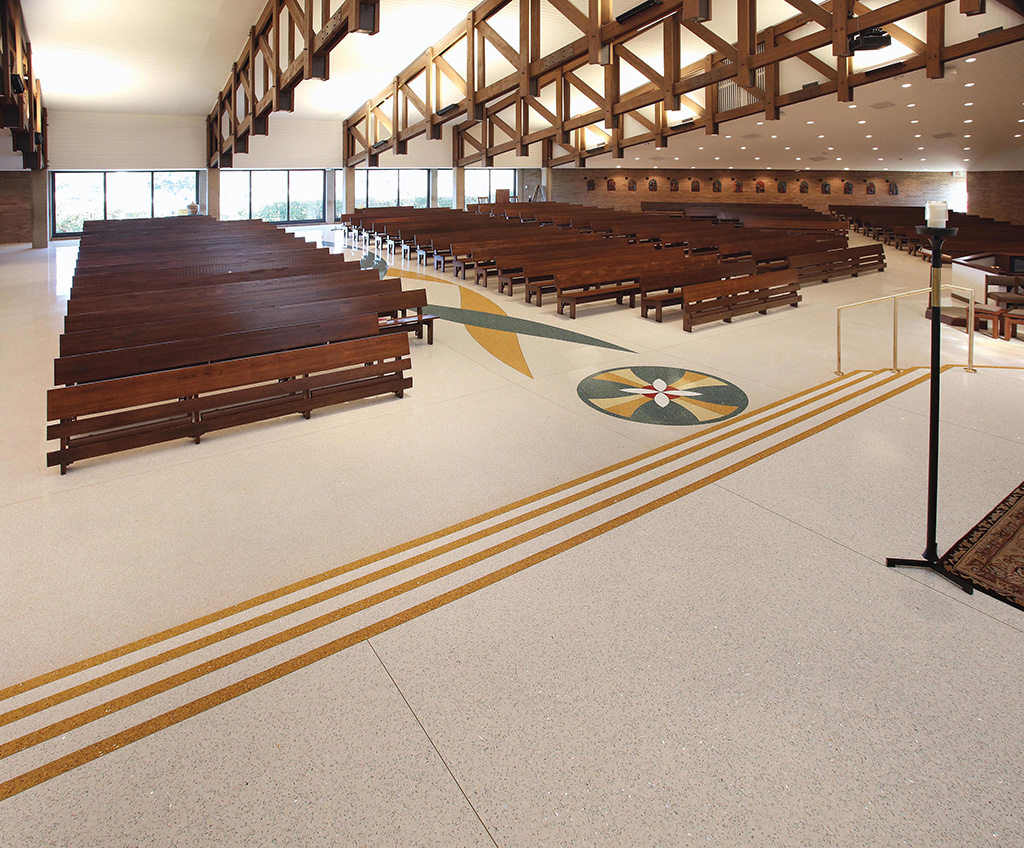
Photo courtesy of Viken Djaferian
Terrazzo at St. Joan of Arc Church enhances acoustics, supporting clear, resonant sound throughout the sanctuary. Architect: Douglas Lasch.
6. A Versatile Medium for Inclusive, Engaging Environments
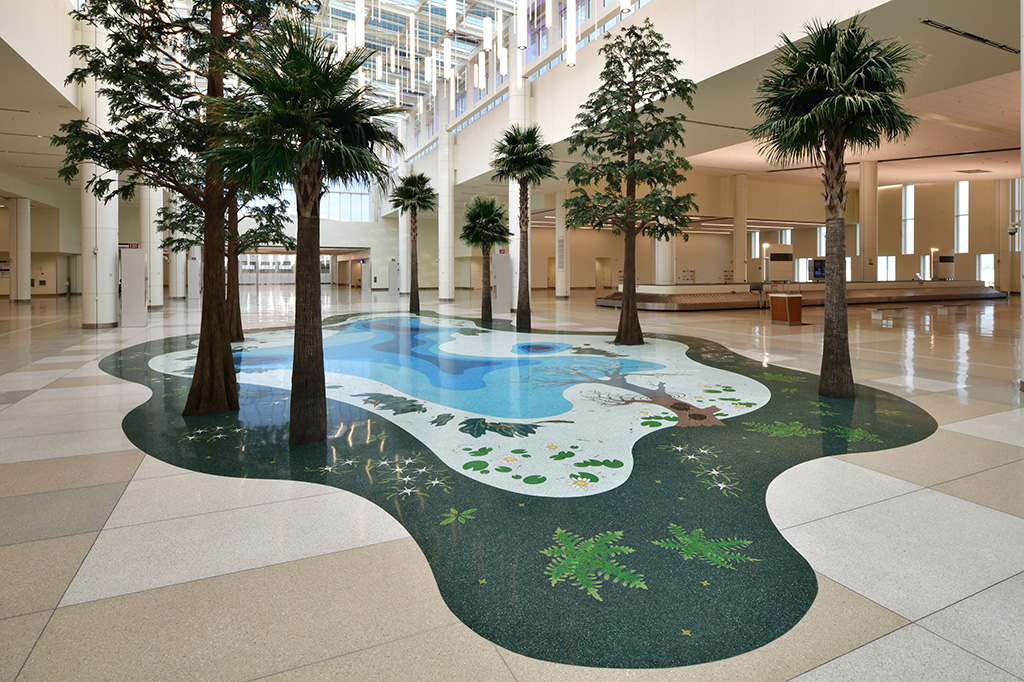
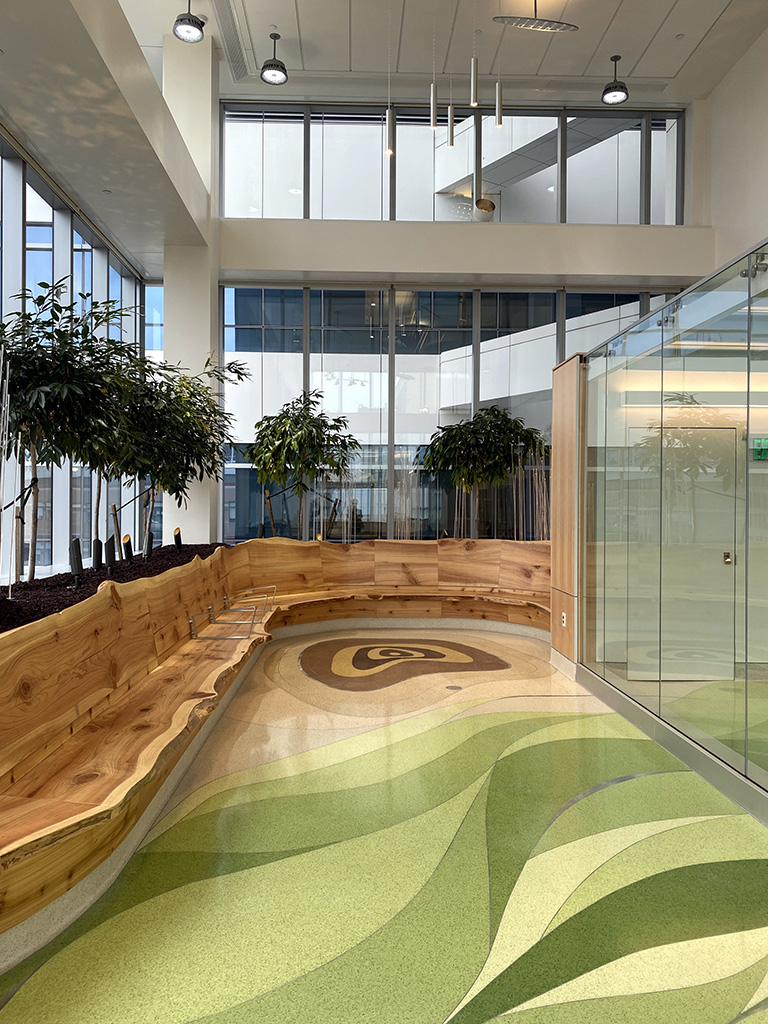
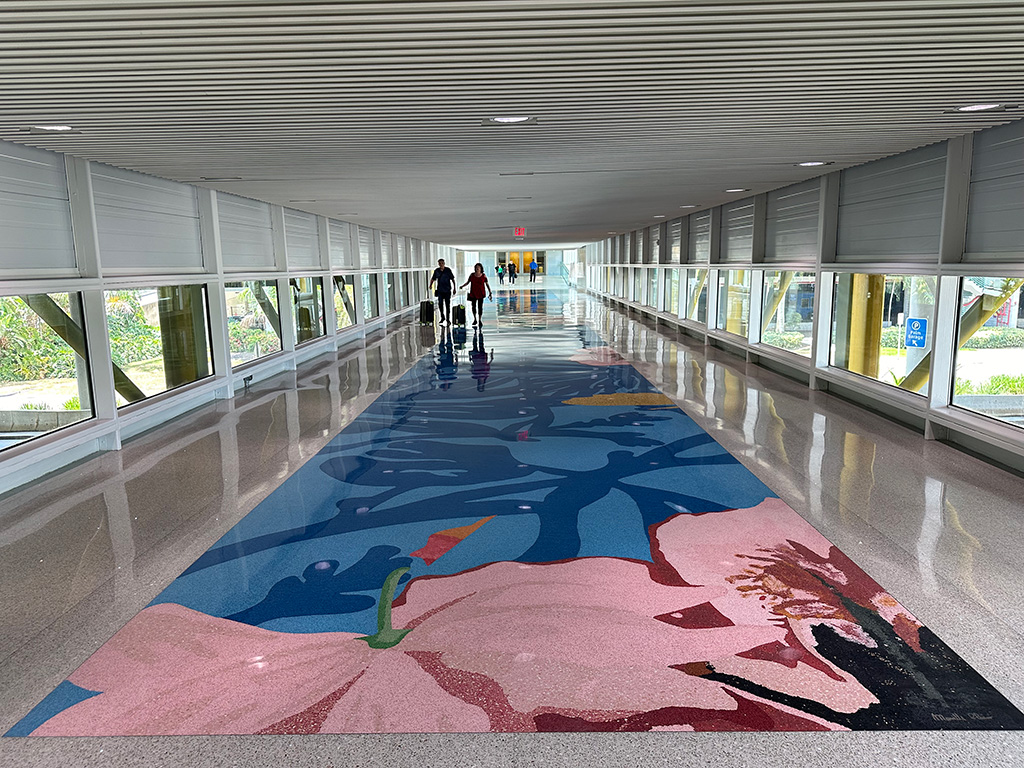
Terrazzo empowers designers to create inclusive spaces that enrich the human experience, allowing them to experiment creatively and push boundaries. Its infinite customization makes it a powerful tool to engage the senses, fostering comfort, wayfinding, and meaningful connection. Designers can control the endless options of color, aggregate type, size, texture, finish, and pattern complexity. Techniques such as Venetian (large aggregates), Palladiana (irregular large slabs randomly placed), and Scarpa Palladiana (structured patterns) further expand design possibilities.
Terrazzo can be formulated to enhance both low- and high-sensory stimulation environments. Low-stimulation strategies harness terrazzo’s smooth surfaces, soothing color palettes, and seamless finishes to create calming, restorative areas that reduce ambient noise from rolling luggage or equipment, improving comfort and speech clarity.
Conversely, its hard surface can amplify sound and enhance acoustics. For example, at St. Joan of Arc Catholic Church in Lisle, Illinois, Douglas Lasch, principal with Faith Environ Studio Architects of La Grange, Illinois, recommended terrazzo for its renovation project, citing both its aesthetic and practical advantages: ease of maintenance and long life cycle, but also its capacity to improve volume and clarity of liturgical music and speech in the sanctuary.
High-stimulation design elements in terrazzo—bold color contrasts, dynamic patterns, and inlaid graphics—can energize interiors, provide visual interest, and serve as intuitive wayfinding landmarks. By thoughtfully balancing zones of varied sensory stimulation, terrazzo helps foster inclusive, functional environments that engage multiple senses and accommodate diverse physical, cognitive, and sensory requirements.
Aligned with LEED and WELL Building Standards, terrazzo’s versatile palette and performance make it a compelling choice for designers aiming to enrich human experience through multi-sensory, accessible, and biophilic design.
Its flexibility extends to incorporating unconventional materials, inviting fresh ideas, and innovative applications that make terrazzo uniquely adaptable to any design vision.
For example, in Northeastern University’s EXP building in Boston, metal shavings, nuts, bolts, and washers are embedded in the terrazzo floor to produce a tactile, industrial-inspired aesthetic in the hall leading to the makerspace area. EXP is a 357,000-square-foot interdisciplinary research and makerspace facility that has achieved LEED Platinum certification.
Terrazzo’s adaptability also extends to accessibility features without compromising durability or beauty. For example, Chicago’s Magic Lounge features a copper wire induction loop system integrated beneath its terrazzo floor, allowing hearing aid users to clearly receive live sound from performers. Installed by Menconi Terrazzo of Bensenville, Illinois, and honored with a 2019 NTMA Award, the floor’s striking 3D stacked block pattern complements the club’s immersive 1920s Art Deco ambiance.
By combining zones of both high and low sensory stimulation throughout a space, designers can support a broader range of occupant preferences and neurodiverse needs, resulting in inclusive, functional environments.

Photo courtesy of Payette Associates
Northeastern’s EXP building features terrazzo embedded with metal hardware, embodying the makerspace’s industrial aesthetic and hands-on learning environment.
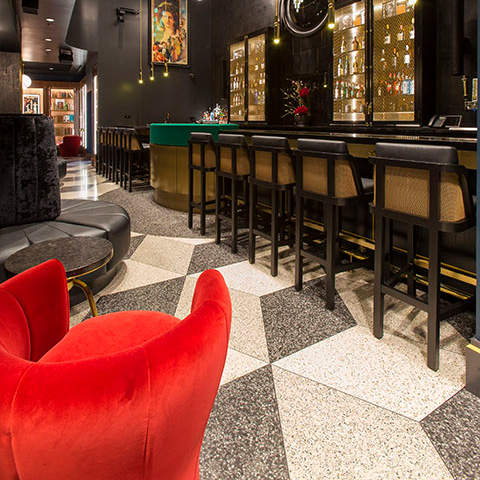
Photo courtesy of Joe Aldofino
Chicago’s Magic Lounge terrazzo floor incorporates hearing-assist technology beneath its 1920s Art Deco pattern. Morris Architects-Planners.
Terrazzo In Disaster-Resistant Design
In the face of threats from natural disasters and climate volatility, material selection plays a critical role in safeguarding both public safety and long-term operational viability. Fire, flooding, and extreme weather all pose challenges to a building’s finishes—particularly in high-traffic areas. Terrazzo, with its combination of inherent durability, minimal maintenance requirements, and long service life, offers specific advantages in environments where resilience is paramount.
The National Institute for Building Sciences (NIBS) underscores the importance of disaster-mitigation strategies in construction. According to NIBS, each dollar invested in resilient building practices—such as specifying durable, low-maintenance materials—can yield savings of $6 to $11 in averted disaster-related costs. These savings are not only financial but also operational, as they reduce damage, disruptions, downtime, and resource demands during recovery.
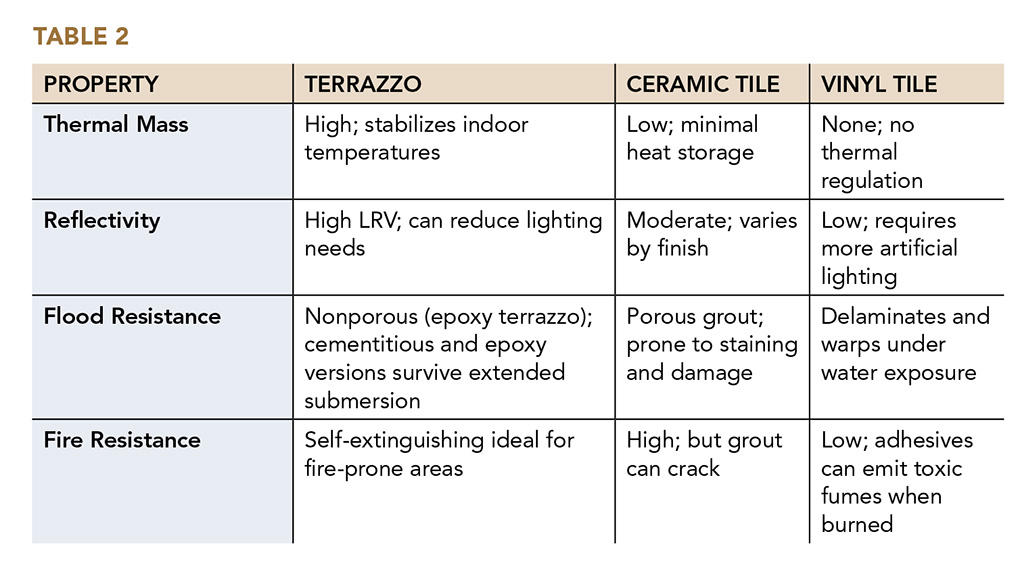
Terrazzo’s properties support both immediate recovery and long-term durability. Terrazzo’s robustness provides multi-hazard resilience. Its inherent fire resistance and non-combustibility make it suitable for wildfire-prone areas, while its water resistance aids in flood recovery. Its seamless, nonporous composition and resistance to water infiltration, mold growth, and damage from debris or physical impact allow it to maintain its integrity following floods, heavy storms, or fire-related events.
In addition to supporting rapid recovery after such events, terrazzo reduces long-term maintenance needs and the frequency of replacement, contributing to operational efficiency, resource conservation, and sustainability goals. Unlike surface finishes that require full removal and replacement after damage, terrazzo installations can typically be restored in place through refinishing, avoiding unnecessary demolition waste and material consumption.
Terrazzo’s typical lifespan—exceeding 75 years—supports climate-ready design by reducing both embodied carbon over time and the frequency of material turnover. As a result, terrazzo not only performs reliably under extreme conditions but also aligns with the broader objectives of sustainable and resilient building strategies.
Flood Resistance
Both cement-based and epoxy-based terrazzo can be repolished to maintain integrity after flood exposure. Terrazzo’s seamless, nonporous surface resists water infiltration, mold, and debris, making it easy to clean and maintain even in post-disaster recovery scenarios. Its ability to endure such challenges without significant damage positions it as a top choice for sustainable, resistant construction in flood-prone areas. These characteristics align with IBC requirements for materials in flood hazard areas (Chapter 16 and ASCE 7).
Fire Resistance
Terrazzo is well-suited for fire-prone regions. Its composition reduces fire fuel load compared to combustible materials like wood or carpet, and a high inert mineral content—typically 70–80 percent aggregates such as marble or glass—contributes to terrazzo’s low flammability and reduces any smoke or fumes from epoxy resin. Additionally, NTMA epoxy terrazzo formulations are designed to minimize harmful emissions under normal conditions, and their low combustibility further limits toxic emissions in fire scenarios.
Cementitious terrazzo does not burn, while epoxy terrazzo demonstrates strong fire performance per ASTM E648 (Radiant Panel Test), which measures critical radiant flux (CRF)—the minimum energy required to sustain flame spread on flooring. NTMA supplier epoxy terrazzo systems typically have a CRF around 0.90, exceeding ASTM E648 fire safety criteria and qualifying for use in occupied buildings, including corridors and exit routes where flame spread control is essential under International Building Code (IBC) standards.
In ASTM D635 testing, epoxy terrazzo flooring is classified as self-extinguishing, with burning limited to a maximum of 0.25 inches (6.4 mm). Unlike many flooring materials, epoxy terrazzo does not significantly contribute to flame spread or fire growth; its dense, monolithic surface minimizes rapid fire propagation and smoke development. While epoxy terrazzo may degrade at temperatures above 275°F (135°C), it does not contribute to fire spread. Compared to materials like carpet or plastics, epoxy terrazzo’s lower combustible content and high inert aggregate proportion make it a safer option with relatively low risk of toxic fume release during fires.
These properties make both epoxy and cementitious terrazzo preferred flooring choices in high-occupancy, high-risk environments such as hospitals, airports, schools, and transit facilities, where fire safety and code compliance are critical. Terrazzo’s durability, fire resistance, and low emissions also contribute to LEED credits for low-emitting materials, supporting indoor air quality goals in high-traffic projects.
Terrazzo’s Durability in High-Use Environments
Epoxy terrazzo, with a compressive strength of approximately 14,000 PSI compared to 4,000 for cementitious terrazzo, is engineered to withstand heavy foot traffic and the physical stresses typical of demanding spaces.
Several years ago, Bob Michielutti of Michielutti Brothers Tile, Terrazzo, & Marble in Eastpointe, Michigan, spoke with convention center owners planning a new floor for a 7,500-square-foot open area. The NTMA contractor advised that terrazzo’s superior resistance to stress and heavy impact made it the preferred choice for a high-traffic venue frequently subjected to substantial loads typical of convention centers: foot traffic, rolling equipment, displays, and staging. He even offered terrazzo at the same price as the architect’s preferred option—large-format tile—but the tile was ultimately chosen for its aesthetic.
The owners had warehoused a substantial backstock of the tiles, but over time, as the tile floor repeatedly cracked and broke under continual impact and heavy loads, their inventory was exhausted, and they were unable to source replacements for the discontinued tile.
The NTMA’s technical director, Gary French, has described epoxy terrazzo as a resilient plastic material, whereas tile is brittle like glass, making it far more prone to cracking under impact—an important distinction that illustrates terrazzo’s superior durability and longevity in environments.
Best Practices for Specifying Terrazzo
To maximize terrazzo’s benefits in resilient and climate-ready designs, architects should follow these best practices:
Choose the Right Matrix
When evaluating terrazzo for sustainable and disaster-resilient design, both epoxy and cement-based systems offer distinct advantages aligned with different project conditions and performance goals.
1. Epoxy Terrazzo:
Epoxy terrazzo is widely favored for its rapid installation, thinner profile, design flexibility, and unlimited colors, including its capacity to replicate the classic look of cement terrazzo. It requires no slab depression and can be installed over existing substrates, including terrazzo, concrete, tile, or wood—making it particularly effective for renovation work.
With its seamless, impermeable surface, epoxy terrazzo offers high resistance to staining, moisture, and microbial growth, contributing to healthy indoor environments and reduced maintenance demands. Although sensitive to moisture during installation, epoxy systems perform reliably after flood events when installed with proper moisture and crack isolation membranes. Its tensile strength and resistance to cracking make it well-suited for high-performance, climate-conscious construction.
2. Cementitious Sand-Cushion Terrazzo
Cementitious terrazzo—especially the traditional sand-cushion system—offers a distinct set of advantages, particularly in applications where long-term environmental exposure and structural movement must be accounted for. This thicker, heavier system requires a depressed slab and is more labor-intensive, with a more complex installation process. It demands a particular set of installation skills that not all contractors can offer. Installation with sand-cushion terrazzo also typically involves slower drying and curing times compared to epoxy systems.
However, it is more tolerant of ambient conditions during installation and can be successfully applied in below-grade or non-temperature-controlled environments, such as schools or public buildings that are intermittently unoccupied. Cement’s inherent non-combustibility provides key advantages in fire-prone regions. Unlike epoxy terrazzo, cementitious terrazzo does not burn or emit smoke, and its long-standing performance in fire testing is well established.
In flood conditions, sand-cushion terrazzo systems have demonstrated reliable performance due to their capacity to accommodate moisture and structural movement. It also achieves superior flatness. This performance benefit comes from its thick underbed, which compensates for inconsistencies in the concrete slab below.
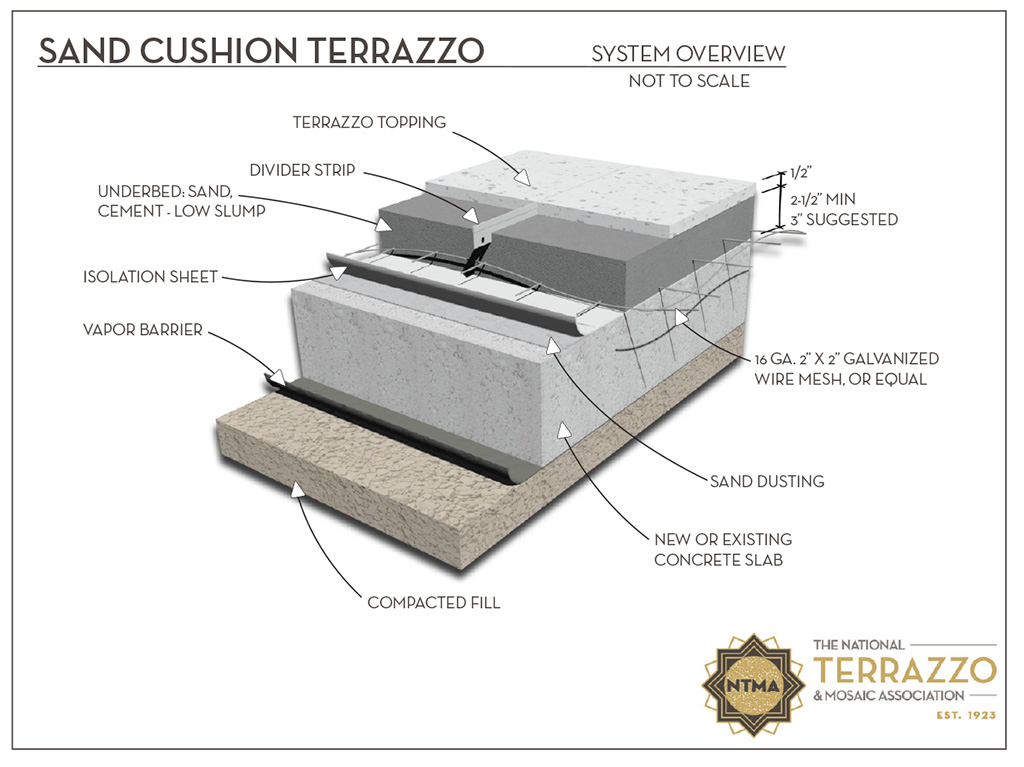
Image courtesy of NTMA
Sand-cushion terrazzo, the premium cementitious system, combines a reinforced underbed with an isolation sheet and sand layer for interior floors.
3. Thinner Cementitious Systems
The thinner concrete terrazzo systems, bonded and monolithic, offer different characteristics but share some similarities regarding flood and fire resistance.
The bonded terrazzo system consists of a cement matrix topping, typically about half an inch thick, bonded over a sand-cement underbed that ranges from approximately 1.25 and 1.75 inches thick. This combination yields a total thickness between roughly 1.75 to 2.25 inches. The sand-cement underbed adds stability and helps compensate for unevenness in the substrate.
Bonded terrazzo offers good fire resistance due to the non-combustibility of cementitious materials, providing a safe surface in fire-prone areas. Regarding flood resistance, its matrix and underbed structure permit some moisture tolerance, though less than that of the sand-cushion system.
Monolithic terrazzo is a yet thinner system, consisting solely of a cementitious topping approximately half an inch thick, bonded directly to the concrete slab without any underbed. Because it depends entirely on the substrate for support and flatness, it requires a very flat and stable slab and is generally used indoors, where environmental conditions are controlled. While monolithic terrazzo shares the favorable fire-resistance properties of cement terrazzo, it is less able to accommodate moisture and movement; therefore, it is less suitable for flood-prone or highly variable environmental conditions.
Together, these terrazzo systems offer a range of thicknesses and installation methods tailored to specific use cases. Their fire-resistance stems from the cementitious composition, offering noncombustible, smoke-free surfaces in the event of a fire. Flood resistance varies among the systems, with sand-cushion terrazzo leading in moisture tolerance due to its thicker underbed, bonded terrazzo providing moderate resilience, and monolithic terrazzo preferred for dry, stable indoor environments.
In summary, epoxy terrazzo supports streamlined construction, adaptable aesthetics, and high durability in controlled environments, aligning well with LEED goals and renovation needs. Cement terrazzo, by contrast, offers exceptional fire and flood resistance and performs reliably in less predictable site conditions. Each system contributes to long-term sustainability and climate resilience in distinct ways, and the selection should reflect the project’s specific functional demands, risk exposure, and design intents.
Engage Qualified NTMA Installers
Working with NTMA-qualified contractors and suppliers minimizes risks and enhances the long-term value and performance of your terrazzo investment. NTMA contractors undergo one of the most rigorous qualification processes in the construction industry, ensuring top-tier skill and quality. The membership application process takes two years on average and includes site visits, interviews, and verification that the contractor can resolve issues and stand behind their work. This process assures a knowledgeable subcontractor with experienced crews who deliver competitively priced, high-quality installations.
NTMA members are committed to ongoing education and training, ensuring they stay current with cutting-edge terrazzo technology, safety regulations, and industry best practices. The association fosters a culture of collaboration and expertise built over generations. Choosing an NTMA contractor brings architects, builders, and owners confidence in a durable, sustainable, and expertly installed terrazzo floor, supported by complementary technical advice provided by NTMA and its technical director.
Incorporate Sustainability
Specify recycled glass or locally sourced aggregates to reduce embodied carbon, which may earn LEED credits for Building Product Disclosure and Optimization. Locally sourced or recycled aggregates may not always be readily available. Early coordination with suppliers is essential.
Leverage passive design by pairing terrazzo with radiant heating/cooling systems to enhance thermal mass benefits. Specify polished finishes to maximize reflectivity in day-lit spaces.
Design for Durability
Ensure proper substrate preparation and crack and moisture membranes to prevent cracking with thin-set epoxy terrazzo.
Budgeting
Early coordination with an NTMA terrazzo contractor can help streamline design and scope to balance budget constraints while maximizing the flooring’s value and performance. Focus on large areas with simple designs using cost-effective materials such as recycled glass or 100 percent marble aggregates. Limit decorative elements to key spots. Strategically using precast terrazzo for small or difficult areas, such as stair landings or elevator cabs, can also save labor and waste. Additionally, terrazzo materials typically have quicker delivery times compared to many manufactured flooring products, offering schedule flexibility and potential savings on project timing.
Conclusion
Terrazzo’s disaster resistance, fire safety, durability, low maintenance, and resource-conserving qualities make it a cornerstone of resilient and climate-ready design. From surviving Hurricane Katrina to its proven performance in schools and major airports, terrazzo proves its value in disaster-resistant and sustainable architecture. By specifying terrazzo thoughtfully, architects can create buildings that endure extreme conditions while improving user experience and reducing energy use and environmental impact for the life of the building.
Anna Migeon is a professional writer with nearly 20 years of experience in construction products, including terrazzo and EIFS stucco systems. www.linkedin.com/in/anna-migeon-4318b112