Photo courtesy of CRL
Design profoundly impacts people. Interior design is growing to focus on helping occupants become more productive in their daily lives.
“Rooms should not be put together for show, but to nourish one’s own well-being.”
- Albert Hadley, American Interior Designer and Decorator, Parsons School of Design
Winston Churchill’s famous quote, “We shape our buildings; thereafter they shape us,” was spoken to the House of Commons on October 28, 1943, during a debate about rebuilding the bombed structure. Churchill argued persuasively for the preservation of the original Commons’ design, contending that the design itself shaped the platform of national political interaction. Today’s scientific discoveries in the field of neuroaesthetics demonstrate that Churchill’s statement was, in fact, correct.
Officially designated as a field of study in 2002, the science of neuroaesthetics is mathematically validating what design professionals intuitively know: aesthetic experiences are a human imperative, and they fundamentally shape human health, well-being, and learning.1 When the right elements and materials come together, designers can fashion a tailored environment that functionally provides improvements to people’s well-being. Interior architecture is evolving alongside these discoveries, as smart systems, modularity, and user-focused design redefine how occupants interact with space. A focus on occupant comfort is now a key part of the design process.
Creating Intelligent Spaces by Design
Interior design is witnessing rapid change as user-focused strategies shape how occupants can relate to the built environment. Every surface of the interior–from ceiling to subfloor–is being reevaluated for its contributions to the interior ecosystem. From sensory-responsive lighting to multi-purpose ceilings, new products are moving interiors beyond aesthetics to capture gains in well-being.
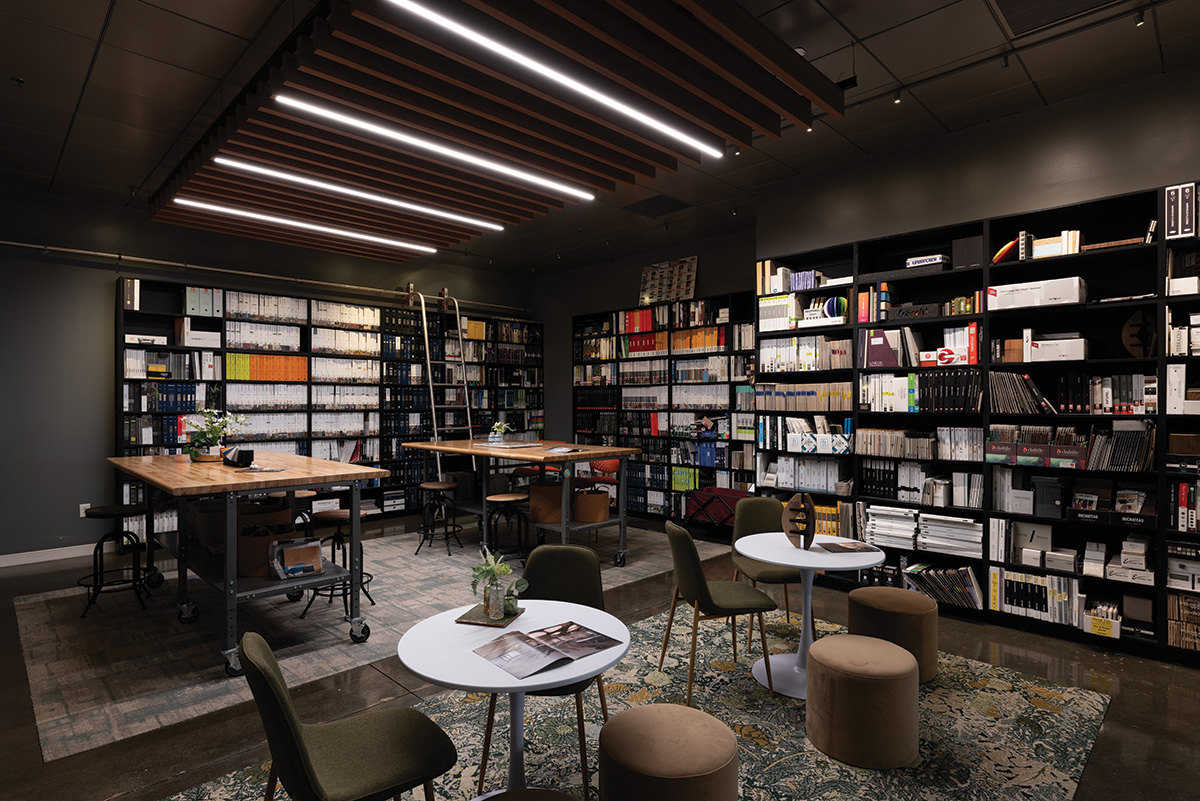
Photo © Fungi Media; courtesy of USG
As the impacts of the built environment on people continue to be better understood, the responsibility of design choices has grown weightier. Integrating lighting into design enables better adaptation to occupant needs throughout the space.
Product Options Advancing Intelligent Spaces: A Lens on Lighting
Intelligent spaces can become inspiring or, if mishandled, become distracting. Colors, visual and tactile textures, maintained sound levels, and lighting all serve to enhance or detract from the human experience indoors.
Researchers investigating the impact of the lighting environment on psychological perception, physiology, and productivity are advancing smarter design in lighting control strategies, based on the study results. In recent research conducted in a smart lighting laboratory, 67 volunteers were tested in different illuminances and correlated color temperatures (CCTs). The experimental results found that both illuminance and CCT could significantly influence the feeling of comfort and relaxation of the subjects.2
Additional research found that warm and dimmed lighting (3000 K, 100 lux) effectively reduced stress markers and perceived stress levels in people, aligning with theories suggesting the calming effects of warmer white light tones. Conversely, cooler lighting (7000 K) was associated with enhanced cognitive performance and reduced cognitive fatigue, potentially due to its similarity to natural daylight, stimulating an alert state conducive to mental tasks. These findings indicate that lighting interventions, such as adaptive lighting, can offer designers a non-intrusive strategy that improves well-being and productivity in office environments. Adaptive lighting provides an intelligent artificial light program that enhances visibility by automatically adjusting light intensity and color temperature based on time of day, natural light levels, or environmental conditions. Evidence shows that changes to lighting are particularly effective in addressing acute symptoms for people, like headaches or eye strain. Adaptive lighting offers a strategy that improves workplace well-being and productivity.3
The concept of adaptive or human-centric lighting (HCL) in design focuses on how light affects vision, physiology, and psychology. Within the field of HCL, lighting for circadian entrainment is a key aspect, but the concept also encompasses light’s broader influences, such as hormone production, mood, sleep regulation, and cognitive function. By considering these effects, along with visual quality and aesthetics, HCL aims to enhance overall well-being, leveraging modern research to address the impact of today’s advanced lighting technologies.4
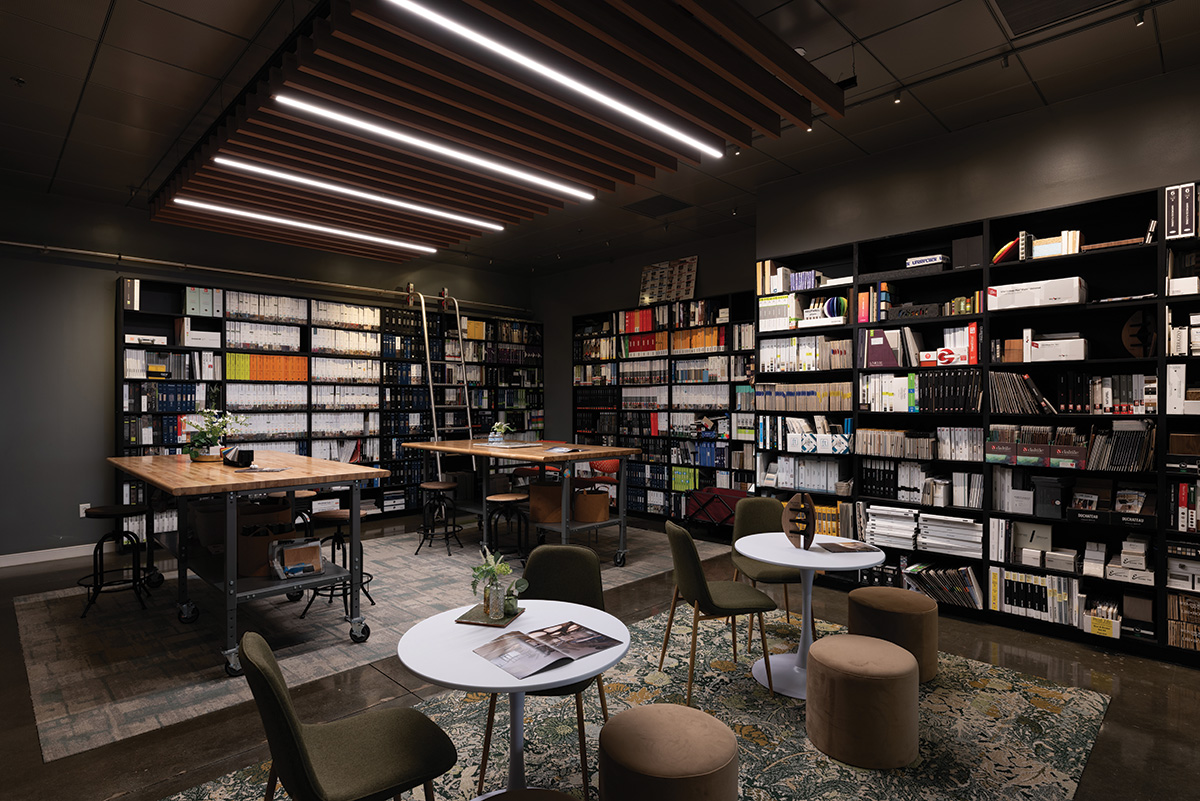
Product innovations are rapidly accommodating this research in lighting. Over the past decade, walls, floors, and ceilings have transformed to better meet aggressive code and safety requirements while satisfying artistic appeal. The latest in these materials is taking duality of purpose a step further. Ceiling design solutions that formerly combined aesthetics and acoustic performance are now offering fully integrated lighting using best-in-class components. This creates an easy-to-specify, turnkey system for designers. Fully integrated lighting reduces coordination and installation time and is ideal for providing combined visual accents and acoustic control. Panel designs and tunable lighting offer the flexibility to meet specific occupant needs in a space. Daylight harvesting systems, color-changing cove lighting, individual task lights, and personal workspace lighting control bring additional tools to enhance beneficial lighting for occupants.
Product Options Advancing Intelligent Spaces: Promoting Interaction and Connection
Versatility and modularity are keywords in contemporary interior design. These terms recognize that every interior has its own set of aesthetic and functional requirements, which are dictated by the unique needs of the people within the space. According to JLL’s Future of Work 2024 survey, the design of workplaces has a significant impact on people’s performance and well-being. The design of the workplace plays a critical role in supporting engagement and enhancing team performance, social cohesion, and organizational culture in the office. Integrating social strategies with design strategies can promote company culture and support well-being.5
“Interior spaces cannot simply be functional; they must also provide a healthy, vibrant, and visually stimulating environment,” said Mark Suehiro, Senior Product Manager at CRL. “With the right use of glass partitions and other interior systems, improved mood, heightened productivity, and increased collaboration are possible.”
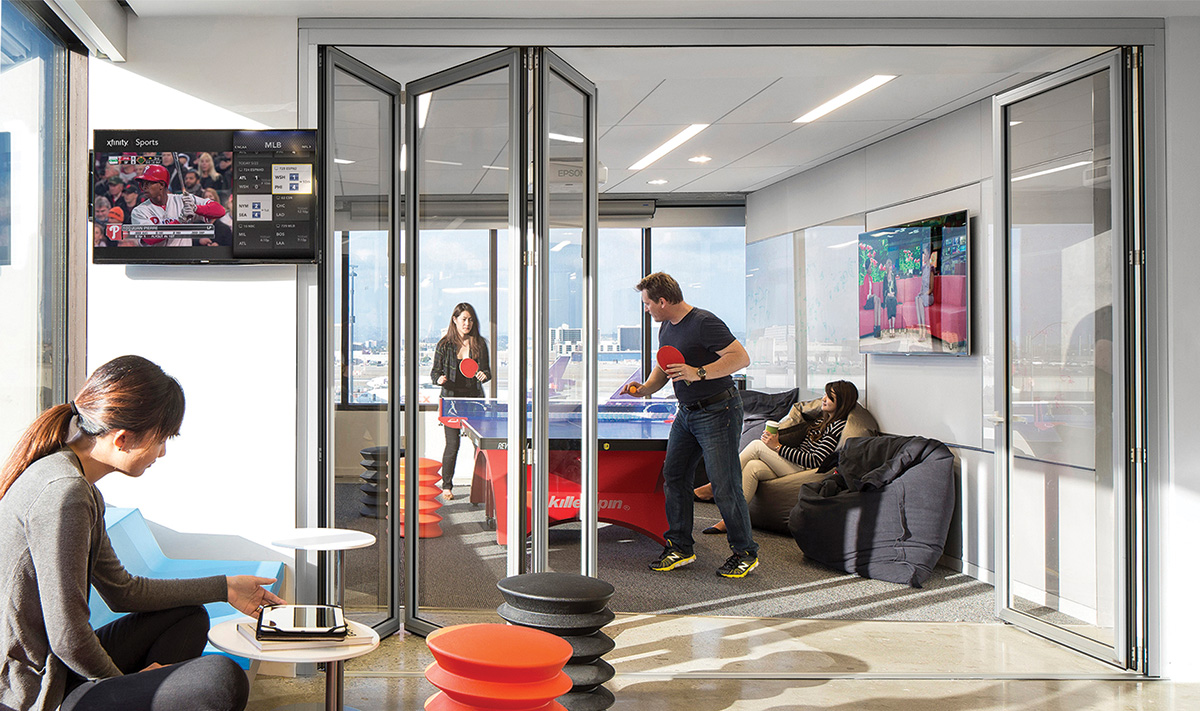
Photo courtesy of CRL
Bi-folding glass walls create striking, transformative spaces in a wide range of commercial applications. These systems feature top-hung or bottom-rolling framed glass panels that fold and slide with minimal effort. The panels stack neatly to the side when opened, which maximizes floorspace and produces hybrid environments that offer expansive views, airflow, daylighting, and contemporary aesthetics.
Glass spans are advantageous to contemporary dynamic interiors. There are different types of systems available, each with their unique attributes and advantages including: frameless systems that offer uninterrupted glass spans that maximize daylighting and transparency; framed systems that offer a traditional look and reduce glass deflection; movable walls that create multi-purpose spaces; and freestanding post systems that are highly versatile and ideal for high ceilings where the glass cannot reach the top due to height limitations.
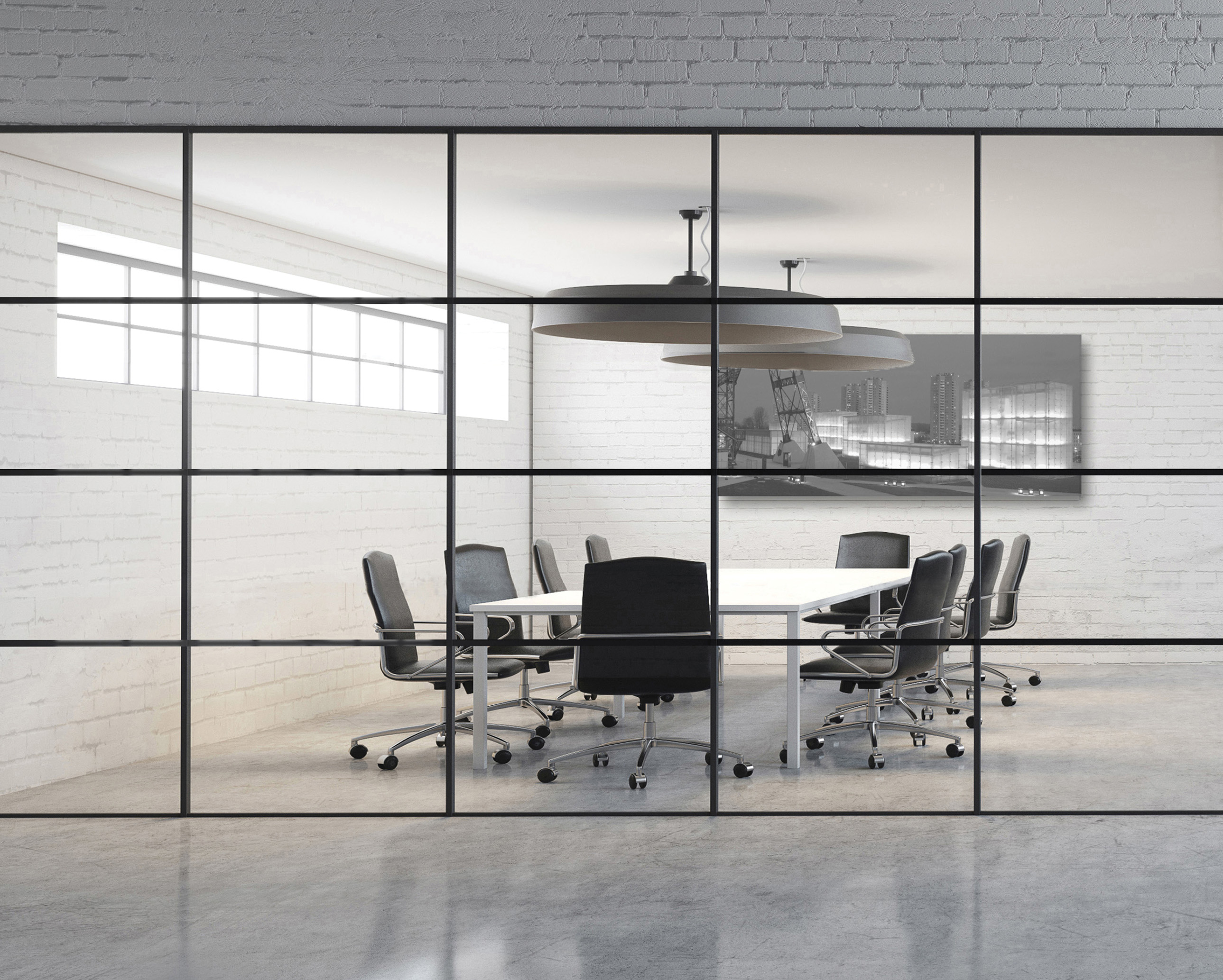
Interior glass partition walls are a stylish and practical way to elevate interiors. Glass partition walls allow light to flow throughout the space and promote transparency, and, at the same time, maintain the quiet areas an office needs to be most productive. The glass selection can also maximize daylight diffusion while eliminating glare. Whether ensuring abundant natural light for all employees or creating an open conference room to encourage the exchange of ideas, glass office partitions create a customizable, bright, and productive space.
With the demand for adaptable spaces that quickly accommodate change, large-scale movable walls are increasingly specified in design, including sliding glass doors and bi-folding glass doors. These doors become, in effect, movable walls that can open a floor plan to create multi-functional and dynamic spaces. Movable glazed walls carry the same benefits as glazed partitions and can incorporate double-glazed insulating glass, which helps mitigate sound to improve privacy. These systems feature a large scale, which helps form contemporary visuals.
There are many wellness benefits to glass partition systems in modern-day building interiors, including defining functional spaces, creating private rooms that mitigate sound, and providing daylight diffusion for brighter interiors. The positive psychological impacts of more natural light are a significant benefit to the overall well-being of occupants. More daylight can improve occupant morale and lead to vibrant and collaborative interiors. Glazed partitions act as a glass wall, dividing various functional spaces while maximizing daylight diffusion and transparency. Coupled with glass doors that feature slim rails and fittings, the system relies on minimal hardware to reduce obstructions, enhance visibility, and create a sense of openness. Allowing an ample amount of natural light to enter and reach spaces deep within the office environment continues to be important. The result of vibrant spaces with unobstructed views is the improved well-being of employees.
Intelligent Acoustic Control
Acoustic conditions in the workplace are regarded as a leading source of dissatisfaction when compared to other interior features such as office layout, furnishing, thermal comfort, air quality, lighting, and general cleanliness, according to research conducted by the Center for the Built Environment.6 The WELL Building Standard reports that uncontrolled sound within an enclosed space from sources like HVAC equipment, appliances, and other occupants is shown to hinder productivity, focus, and memory retention.7
In addition to airborne noise sources, impact noise from adjacent activity, such as foot traffic, exercise, or mechanical equipment vibration, can create uncomfortable environments for occupants located nearby. Another common acoustical issue is a lack of privacy within and between enclosed spaces. It requires careful attention to design an interior that meets the acoustic needs of every occupant.

Photo © opolja - stock.adobe.com
Fine-textured acoustical panels are designed to offer the highest standard in noise reduction or noise isolation.
Photo courtesy of CRL
Design profoundly impacts people. Interior design is growing to focus on helping occupants become more productive in their daily lives.
“Rooms should not be put together for show, but to nourish one’s own well-being.”
- Albert Hadley, American Interior Designer and Decorator, Parsons School of Design
Winston Churchill’s famous quote, “We shape our buildings; thereafter they shape us,” was spoken to the House of Commons on October 28, 1943, during a debate about rebuilding the bombed structure. Churchill argued persuasively for the preservation of the original Commons’ design, contending that the design itself shaped the platform of national political interaction. Today’s scientific discoveries in the field of neuroaesthetics demonstrate that Churchill’s statement was, in fact, correct.
Officially designated as a field of study in 2002, the science of neuroaesthetics is mathematically validating what design professionals intuitively know: aesthetic experiences are a human imperative, and they fundamentally shape human health, well-being, and learning.1 When the right elements and materials come together, designers can fashion a tailored environment that functionally provides improvements to people’s well-being. Interior architecture is evolving alongside these discoveries, as smart systems, modularity, and user-focused design redefine how occupants interact with space. A focus on occupant comfort is now a key part of the design process.
Creating Intelligent Spaces by Design
Interior design is witnessing rapid change as user-focused strategies shape how occupants can relate to the built environment. Every surface of the interior–from ceiling to subfloor–is being reevaluated for its contributions to the interior ecosystem. From sensory-responsive lighting to multi-purpose ceilings, new products are moving interiors beyond aesthetics to capture gains in well-being.
Photo © Fungi Media; courtesy of USG
As the impacts of the built environment on people continue to be better understood, the responsibility of design choices has grown weightier. Integrating lighting into design enables better adaptation to occupant needs throughout the space.
Product Options Advancing Intelligent Spaces: A Lens on Lighting
Intelligent spaces can become inspiring or, if mishandled, become distracting. Colors, visual and tactile textures, maintained sound levels, and lighting all serve to enhance or detract from the human experience indoors.
Researchers investigating the impact of the lighting environment on psychological perception, physiology, and productivity are advancing smarter design in lighting control strategies, based on the study results. In recent research conducted in a smart lighting laboratory, 67 volunteers were tested in different illuminances and correlated color temperatures (CCTs). The experimental results found that both illuminance and CCT could significantly influence the feeling of comfort and relaxation of the subjects.2
Additional research found that warm and dimmed lighting (3000 K, 100 lux) effectively reduced stress markers and perceived stress levels in people, aligning with theories suggesting the calming effects of warmer white light tones. Conversely, cooler lighting (7000 K) was associated with enhanced cognitive performance and reduced cognitive fatigue, potentially due to its similarity to natural daylight, stimulating an alert state conducive to mental tasks. These findings indicate that lighting interventions, such as adaptive lighting, can offer designers a non-intrusive strategy that improves well-being and productivity in office environments. Adaptive lighting provides an intelligent artificial light program that enhances visibility by automatically adjusting light intensity and color temperature based on time of day, natural light levels, or environmental conditions. Evidence shows that changes to lighting are particularly effective in addressing acute symptoms for people, like headaches or eye strain. Adaptive lighting offers a strategy that improves workplace well-being and productivity.3
The concept of adaptive or human-centric lighting (HCL) in design focuses on how light affects vision, physiology, and psychology. Within the field of HCL, lighting for circadian entrainment is a key aspect, but the concept also encompasses light’s broader influences, such as hormone production, mood, sleep regulation, and cognitive function. By considering these effects, along with visual quality and aesthetics, HCL aims to enhance overall well-being, leveraging modern research to address the impact of today’s advanced lighting technologies.4
Product innovations are rapidly accommodating this research in lighting. Over the past decade, walls, floors, and ceilings have transformed to better meet aggressive code and safety requirements while satisfying artistic appeal. The latest in these materials is taking duality of purpose a step further. Ceiling design solutions that formerly combined aesthetics and acoustic performance are now offering fully integrated lighting using best-in-class components. This creates an easy-to-specify, turnkey system for designers. Fully integrated lighting reduces coordination and installation time and is ideal for providing combined visual accents and acoustic control. Panel designs and tunable lighting offer the flexibility to meet specific occupant needs in a space. Daylight harvesting systems, color-changing cove lighting, individual task lights, and personal workspace lighting control bring additional tools to enhance beneficial lighting for occupants.
Product Options Advancing Intelligent Spaces: Promoting Interaction and Connection
Versatility and modularity are keywords in contemporary interior design. These terms recognize that every interior has its own set of aesthetic and functional requirements, which are dictated by the unique needs of the people within the space. According to JLL’s Future of Work 2024 survey, the design of workplaces has a significant impact on people’s performance and well-being. The design of the workplace plays a critical role in supporting engagement and enhancing team performance, social cohesion, and organizational culture in the office. Integrating social strategies with design strategies can promote company culture and support well-being.5
“Interior spaces cannot simply be functional; they must also provide a healthy, vibrant, and visually stimulating environment,” said Mark Suehiro, Senior Product Manager at CRL. “With the right use of glass partitions and other interior systems, improved mood, heightened productivity, and increased collaboration are possible.”
Photo courtesy of CRL
Bi-folding glass walls create striking, transformative spaces in a wide range of commercial applications. These systems feature top-hung or bottom-rolling framed glass panels that fold and slide with minimal effort. The panels stack neatly to the side when opened, which maximizes floorspace and produces hybrid environments that offer expansive views, airflow, daylighting, and contemporary aesthetics.
Glass spans are advantageous to contemporary dynamic interiors. There are different types of systems available, each with their unique attributes and advantages including: frameless systems that offer uninterrupted glass spans that maximize daylighting and transparency; framed systems that offer a traditional look and reduce glass deflection; movable walls that create multi-purpose spaces; and freestanding post systems that are highly versatile and ideal for high ceilings where the glass cannot reach the top due to height limitations.
Interior glass partition walls are a stylish and practical way to elevate interiors. Glass partition walls allow light to flow throughout the space and promote transparency, and, at the same time, maintain the quiet areas an office needs to be most productive. The glass selection can also maximize daylight diffusion while eliminating glare. Whether ensuring abundant natural light for all employees or creating an open conference room to encourage the exchange of ideas, glass office partitions create a customizable, bright, and productive space.
With the demand for adaptable spaces that quickly accommodate change, large-scale movable walls are increasingly specified in design, including sliding glass doors and bi-folding glass doors. These doors become, in effect, movable walls that can open a floor plan to create multi-functional and dynamic spaces. Movable glazed walls carry the same benefits as glazed partitions and can incorporate double-glazed insulating glass, which helps mitigate sound to improve privacy. These systems feature a large scale, which helps form contemporary visuals.
There are many wellness benefits to glass partition systems in modern-day building interiors, including defining functional spaces, creating private rooms that mitigate sound, and providing daylight diffusion for brighter interiors. The positive psychological impacts of more natural light are a significant benefit to the overall well-being of occupants. More daylight can improve occupant morale and lead to vibrant and collaborative interiors. Glazed partitions act as a glass wall, dividing various functional spaces while maximizing daylight diffusion and transparency. Coupled with glass doors that feature slim rails and fittings, the system relies on minimal hardware to reduce obstructions, enhance visibility, and create a sense of openness. Allowing an ample amount of natural light to enter and reach spaces deep within the office environment continues to be important. The result of vibrant spaces with unobstructed views is the improved well-being of employees.
Intelligent Acoustic Control
Acoustic conditions in the workplace are regarded as a leading source of dissatisfaction when compared to other interior features such as office layout, furnishing, thermal comfort, air quality, lighting, and general cleanliness, according to research conducted by the Center for the Built Environment.6 The WELL Building Standard reports that uncontrolled sound within an enclosed space from sources like HVAC equipment, appliances, and other occupants is shown to hinder productivity, focus, and memory retention.7
In addition to airborne noise sources, impact noise from adjacent activity, such as foot traffic, exercise, or mechanical equipment vibration, can create uncomfortable environments for occupants located nearby. Another common acoustical issue is a lack of privacy within and between enclosed spaces. It requires careful attention to design an interior that meets the acoustic needs of every occupant.
Photo © opolja - stock.adobe.com
Fine-textured acoustical panels are designed to offer the highest standard in noise reduction or noise isolation.
Creating Acoustic Comfort at Every Level
Noise pollution is a growing concern. Symptomatic of this significance, the WELL v2™ pilot, launched in 2018, included an entire concept dedicated to sound, with the focus on fostering comfortable and healthy sonic environments. WELL’s Sound Concept addresses noise by providing options for project teams to explore noise control and intentional acoustic design- ranging from general sound mapping and planning to HVAC and façade design, and down to the specification of products intended to increase speech intelligibility and acoustic privacy.8
Among tools to evaluate potential noise levels, STC ratings offer a standardized metric to rate the effectiveness of an assembly to diminish airborne sound. Decibels (dB) provide a measurement of how loud a noise is. The sound transmission class (STC) measures the difference in decibels through a product. Therefore, the STC rating offers the design team an indication of how soundproof a wall, floor, or ceiling structure may be.9 STC ratings are determined with acoustic testing that adheres to the ASTM E90 standard.
While a lab-tested assembly offers assurance, there are still nearly unlimited factors in the field that will impact sound transmission. The location of a building in its environment, whether it is near a noisy major intersection or a quiet park, plays a large role in what noises the interior must mitigate. Within the interior, material properties, construction techniques, and room acoustics have an impact. Sound can become structure-borne and travel through assemblies, such as walls connected to ceiling joists and subfloors, creating flanking paths.10
Adding mass, sealing gaps at connections and doors, and providing airspace between enclosed spaces are strategies recommended by the International WELL Building Institute™ that bolster sound privacy and increase occupant comfort.
Adapting to Sound Challenges with Glass
Glass partition systems feature components to help designers improve acoustics and reduce sound transmission, creating a robust solution for architects and designers to create offices with private work and meeting spaces for individuals or groups, while maintaining a vibrant, open-office aesthetic.
An important component of privacy is reducing sound transmission throughout the office space. The Sound Transmission Class (STC) rating system provides the metric for comparing and contrasting the sound transmission qualities of various interior partition systems.
STC ratings can be summarized as follows:
- 25 - Normal speech can be easily heard and understood
- 30 - Loud speech can be easily heard and understood
- 35 - Loud speech heard but not understood
- 40 - Loud speech only a murmur
- 45 - Loud speech not heard
- 50 - Very loud sounds can be heard (musical instruments)
- 60 - Soundproof
Although there are no inherent certifications or industry standards that interior glass walls and partitions must meet, using STC ratings allows design professionals to better plan and design for sound privacy. Glass walls that effectively mitigate sound have many benefits. They keep sensitive phone calls from being overheard, dampen loud speech from meetings in shared spaces to low decibel levels, and provide private spaces free of distractions. A glass partition system that optimizes acoustics is not only desired but necessary in government buildings, law firms, executive offices, HR offices, conference rooms, and even healthcare environments where privacy is paramount. As awareness of acoustic comfort increases, market trends are reflecting a corresponding rise in popularity of dual-glazed interior glass walls that provide superior sound mitigation. Privacy is becoming increasingly important, not only for confidentiality, but also to limit distractions. Focus rooms with dual-glazed partitions are increasingly incorporated into modern office and education designs. They provide small, private areas that can improve productivity.
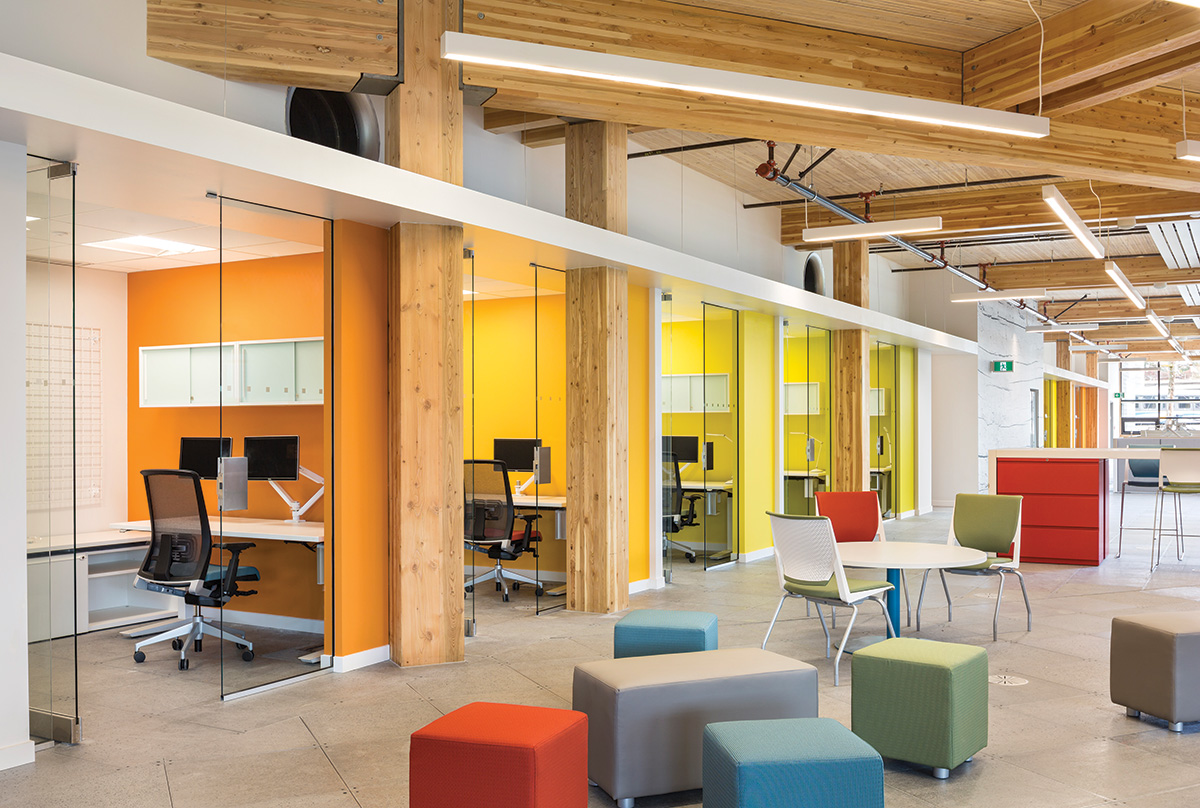
Photo ©Ed White; courtesy of CRL
In modern designs that blend shared and private spaces, controlling noise is a must. Glazing solutions offering high STC ratings make an excellent sound-insulating glass wall solution, mitigating sound so that loud speech is difficult to hear. This creates private spaces for focus or collaboration.
When specifying glass partitions to provide privacy, framed glass partitions systems that feature dual glazing (two parallel glass panels with an air space in between) can provide high STC ratings of 35 and above, depending on the application.
Glass itself generally does not have good sound attenuation properties; however, adding an interlayer between glass lites offers an effective approach to diminish sound. Laminated glass is also more effective than monolithic tempered glass in reducing sound transmission. Use of laminated glass in dual-glazed systems further enhances sound privacy. Standard sizes include 5/16”, 3/8”, and ½” monolithic tempered glass, or 9/16” laminated glass.
A properly designed double-glazed office partition with a 3-1/2” space between glass lites can offer, and even outperform, the soundproofing capabilities of a concrete wall of equal thickness. The larger the airspace between the glass lites, the better the sound attenuation properties. A double-glazed unit with a 6” airspace will achieve an STC rating approximately 15 points greater than a double-glazed unit with a 1/4” airspace. Testing has shown that a double-glazed office partition system with an airspace of 3-1/2” and two 1/4” laminated glass lites generates an STC rating of approximately 46, virtually the same rating obtained when using one 1/4” laminated glass lite and one 1/4” monolithic glass. Opting for the latter configuration of laminated and monolithic can result in significant savings because of reduced glass.
Glass manufacturers and suppliers provide STC data for the glass alone. These ratings do not take other considerations into account, such as frame type or gasketing. Reputable manufacturers of glazed office partition systems will be able to provide STC reports for the entire system, using various glazing configurations. These reports should come from an approved third-party testing facility. STC reports should be included in the bid package. These certify that the office partition will meet the sound mitigation requirements and will also free designers from liability.
From Distraction to Inspiration, by Design
Intelligent spaces can be either inspiring or distracting. A unique observational data and personnel survey study for the International Journal Administration, Business & Organization, found that, while open spaces encourage collaboration and communication, they can also reduce privacy and increase noise. The findings suggest that a hybrid approach combining both open spaces and closed spaces, which provide greater focus and privacy, offers the most effective solution to accommodate a variety of work needs.11 The study also highlights the importance of integrating psychological and task-based considerations in workspace design. While open space allows individuals to feel free in their environment and be uncrowded, noise issues can arise. The design professional must grapple with how to balance ideal levels of background sound and the reduction of unwanted noise.
The NRC (Noise Reduction Coefficient) measures how much sound a material absorbs within a space. A product’s NRC rating reflects how effectively it reduces reflected and reverberated sound. This rating targets noise sources generated within the same space. Noises in the same space can be tempered with the addition of soft surfaces, including carpet, felt designs on walls, and acoustic absorbing baffles, or insulation in the ceiling.
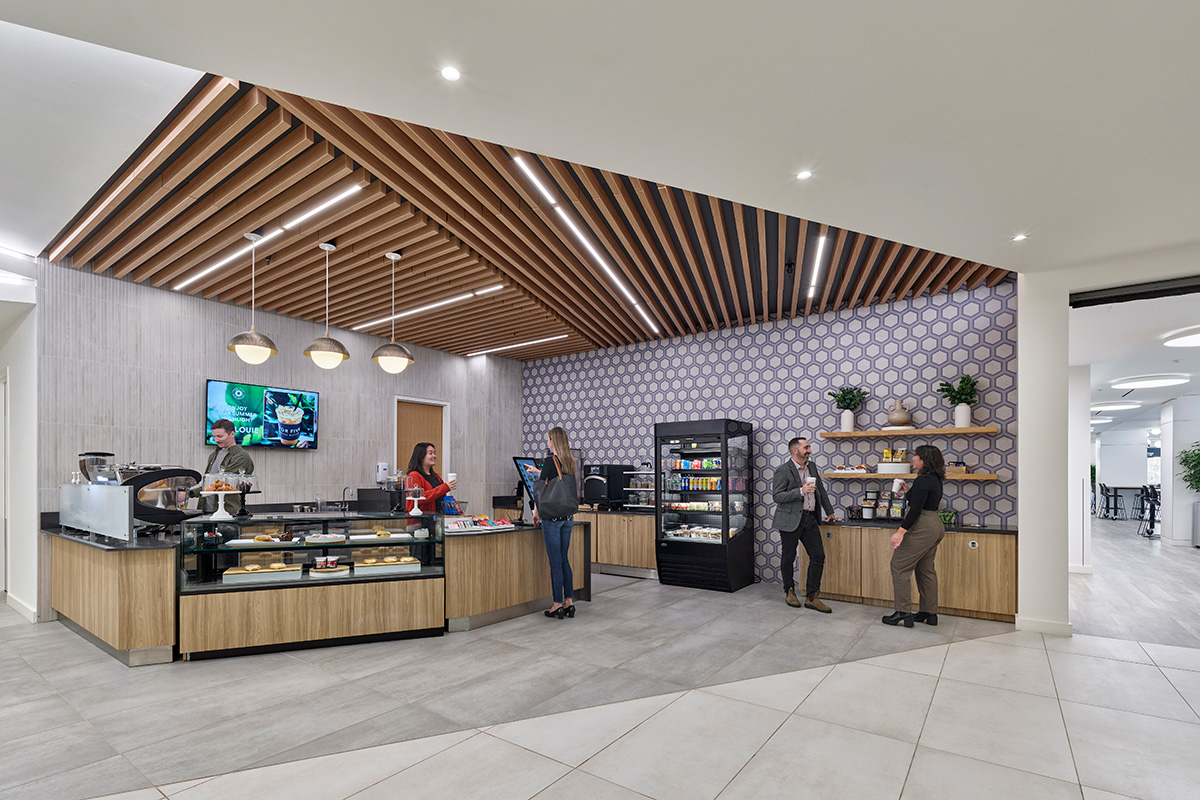
Photo © Jeffrey Totaro and Integrated Project Services; courtesy of USG
Fine-textured acoustical panels are designed to offer the highest standard in noise reduction or noise isolation.
Another type of noise comes from CNS, or Controlled Noise Sources. This designation classifies sounds produced in another space that transfer into the space. Noise control strategies here aim to reduce transmitted sound and vibrations. These intrusive noises can be addressed by the addition of vibration reflective or absorbing materials. Decoupling, separation, and mass are other noise reduction approaches for this target. High mass vinyl in walls, or suspended in the plenum, high Ceiling Attenuation Class (CAC) rated ceiling panels, and floating hard surfaces, such as floors with absorbent underlayment, are strategies that reflect this intrusive sound away. However, increasing the CAC can reduce the NRC of an environment, because these approaches work in opposite ways. A balance is needed.
Fortunately, there are many innovative systems that capture the ability to isolate and absorb unwanted noise. Cast mineral fiber ceiling panels offer a good option for open-plan areas that require strong sound absorption (NRC) and sound blocking (CAC) performance. The unique manufacturing process of cast mineral fiber panels creates a smooth surface with high noise absorption (NRC) and blocking (CAC), with superior sag resistance and outstanding dimensional stability. The combination of cast mineral fiber materials also creates exceptionally durable, long-lasting panels and offers designers a full range of color and texture options.
Acoustical drywall ceiling provides another design option with excellent acoustic performance without compromising the seamless beauty of drywall. This breakthrough innovation in drywall brings finishing and acoustical elements together in one system to maximize sound control. Sound performance with an NRC up to 0.90 and CAC 40+ is provided with perforated panels to optimize performance and is enhanced with an acoustically transparent spray-applied finish. The ceiling also offers a monolithic appearance with a fine finish, and an optional high light reflective finish (LR-87) to reduce fixture and energy use.
Holistic Health in Interiors
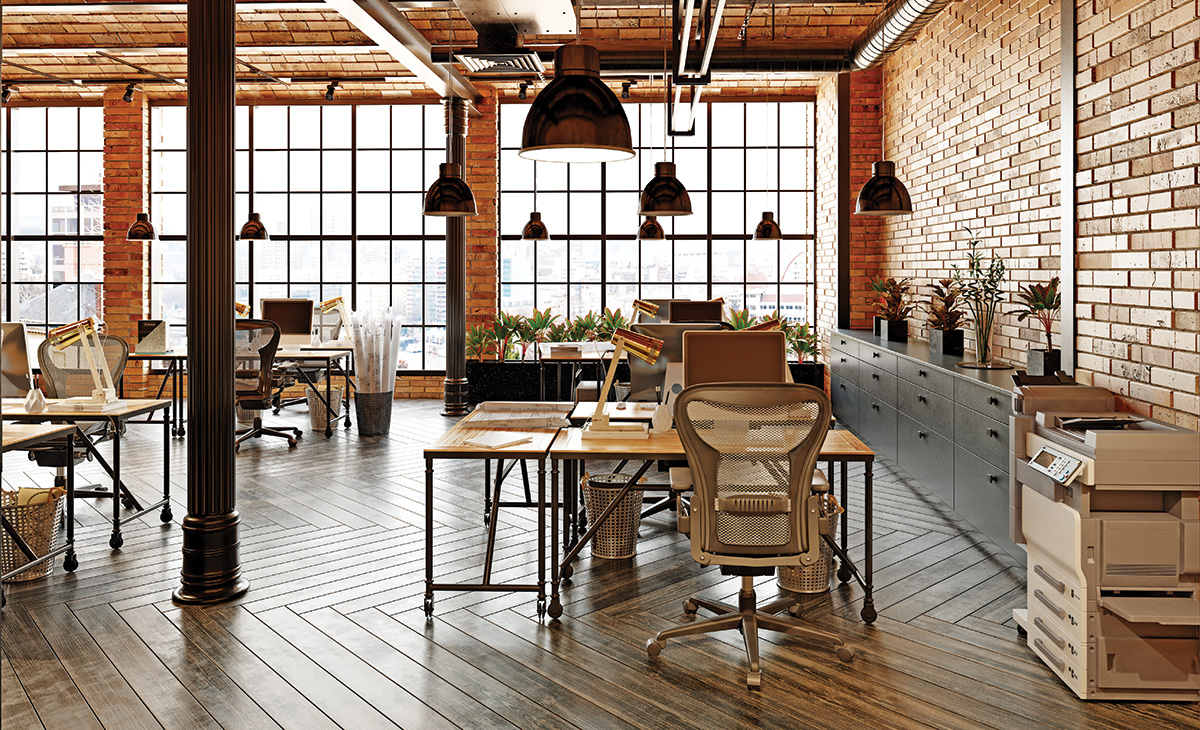
Photo © Victor zastol’skiy - stock.adobe.com
The entire building assembly plays a role in safeguarding occupant acoustic comfort.
“Architectural space is more than bounded geometric space. It is a playground for human activity and experience, a system of overlapping subject-specific and group-specific ‘enactive envelopes’, a collection of perceived and conceptualized platforms or stages where activities are played out,” writes David Kirsh.12
The impacts of the built environment on human health, and even behavior, are dramatic. Beyond a trend, it has become best practice to design and build the interior environment with architectural elements that function to provide improvements in occupant well-being. These improvements comprehend the whole person.
Public awareness that buildings affect well-being is also growing: 75.6% of respondents in an Architectural Science Review study indicated that buildings have an influence not only on physical health, but also on mental health.13
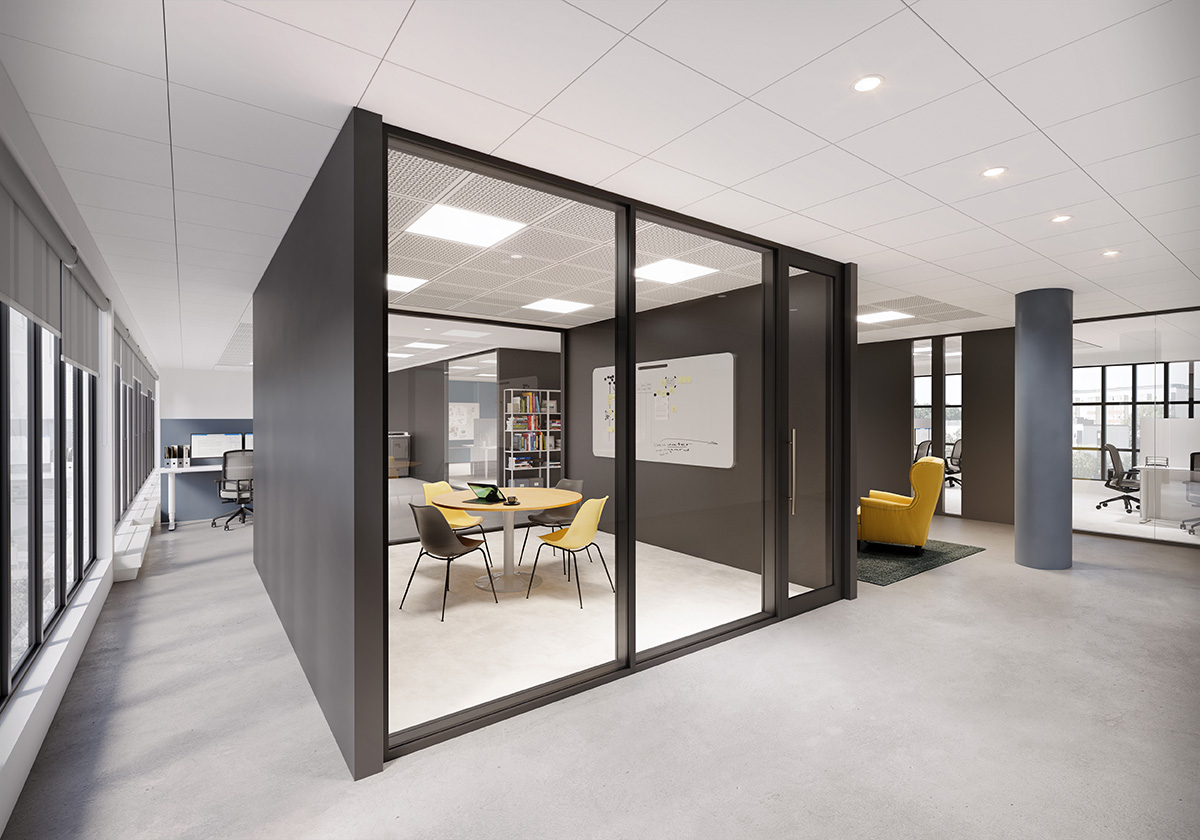
Photo courtesy of CRL
Glass is a durable and highly sought-after building material as it combines transparency, durability, structural properties, and is easy to clean and maintain. It also has many health benefits for the occupant, including providing a nonporous surface, enhancing daylighting, connection to the environment, and others.
Securing Clear Health Gains with Glass
Glass spans are conducive to the modern, dynamic, and health-conscious workspace.
The positive psychological impacts of more natural light capture significant benefits for the overall well-being of occupants. Surveys demonstrate that most office workers would like direct sunlight in their offices at least one season of the year14 and that they believe working under natural daylight is better for their health and well-being than electric lighting.15 Using glass partitions allows workers to enjoy distant, diverse, and dynamic views from the interior and establishes a link to the surrounding environment, which fosters connection and creativity.16 Collaboration and interaction are increased with a visual connection to coworkers and peers. By minimizing obstructions, glass partitions excel in allowing natural daylight from exterior-facing windows to diffuse through the interior spaces of an office. With documented research dating back to 1986, daylighting also has consistently been associated with improved mood, enhanced morale, less fatigue, and reduced eyestrain.17 Bright lighting enables enhanced focus and alertness, and well-daylit spaces are generally perceived by occupants to be “better” than dim, gloomy ones.18 National Institutes of Health (NIH) research19 into the impact of windows and daylight exposure on the health and sleep of office workers found that both natural and artificial bright light, particularly in the morning, can significantly improve health outcomes such as depression, agitation, sleep, balance circadian rest and activity, and seasonal affective disorder.
Glass partitions additionally play an important role in achieving energy-usage goals by replacing opaque partition systems with transparent glass walls. Transparent glass walls can decrease reliance on interior lighting during daytime hours, reducing electrical consumption. Interior glass partitions also permit views to the exterior from multiple points. The consequent reduction of reliance on electrical sources for producing interior light lowers energy costs and decreases a building’s carbon footprint. Depending on the lighting control system used, how well the space is daylit during occupied hours, and intended functions of the space, multiple studies in office buildings have recorded energy savings ranging between 20% to 60% when daylighting is used in place of electric lighting.20 Increasing the use of natural resources, such as daylight, by careful use of windows and glass within the built environment, reduces dependency on fossil fuels as well as combustion of greenhouse gases.
As the built environment’s wellness movement continues to expand, occupant comfort, daylighting, and creating a connection between the inside and outside are key strategic components of wellness strategies.
Creating Therapeutic Surfaces
The products specified today ultimately build tomorrow. As current design trends align with neuroaesthetic and scientific research centering on enhancing well-being and creating human-centric plans, the importance of color, texture, and the visual experience is rising to the forefront. Just as noise–unwanted sound–negatively impacts health and productivity, so can glare. Glare, in the form of unwanted light, is often caused by unshielded direct light sources or transmitted by overly reflective surfaces from one area to another. Achieving desired light levels is very important for the occupant experience and contributes to a calm and inspirational work environment.
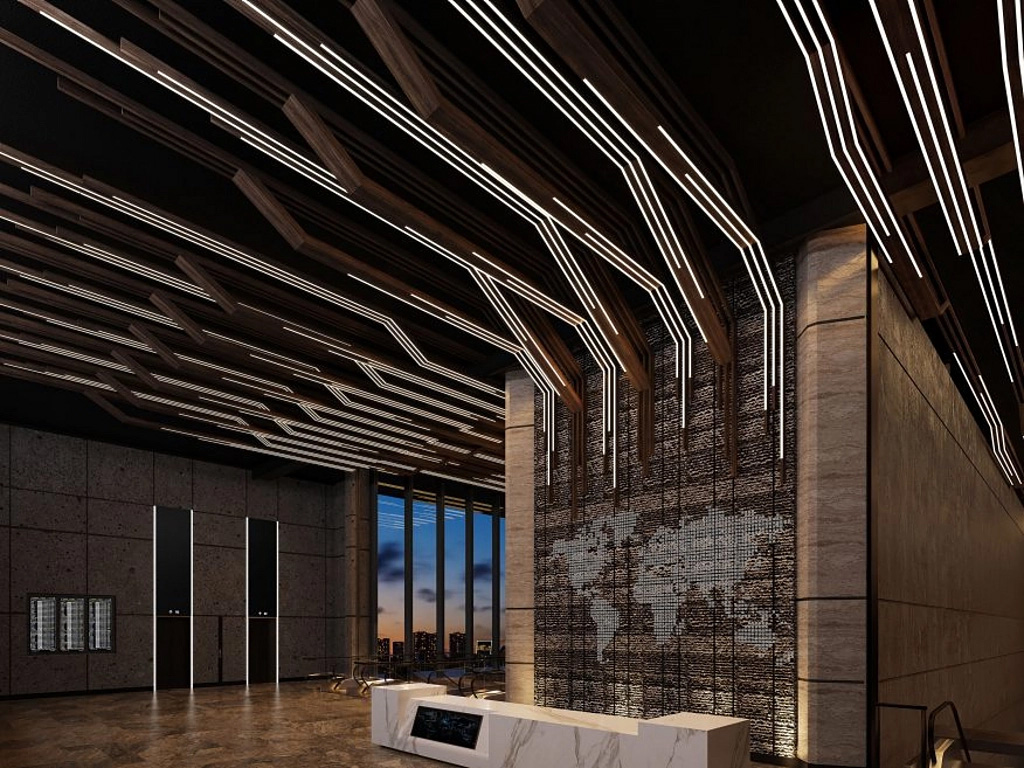
Photo courtesy of USG
Just as unwanted sound pollutes an environment with noise, so too uncontrolled light can cause glare. Adaptive lighting paired with intentional surfaces ensures occupant comfort.
Providing the optimal level of light means paying attention to floor, ceiling, and wall finishes and their relationship to lighting. Indirect lighting strategies, where light fixtures are placed to reflect off the ceiling, instead of directly down towards the floor, can diffuse glare. Task lights or local lighting can generate necessary light for workspaces while reducing ambient light levels in a larger space. Light diffusing finishes and filtering shades can harness the power of natural light while reducing its intensity. Ceiling panels that integrate backlighting offer seamless space lighting. Lighting programming in ceilings can be further programmed with precise color matching, allowing designers to select a single color or set a unique sequence of colors to create a one-of-a-kind backlighting experience. Texture and design options offer customization and generate the desired aesthetic.
Integrating the impacts of walls, ceilings, finishes, and lighting can also integrate sustainability attributes. Products designed with intentional occupant benefits help to maximize certification and sustainable program credits, such as contributing to multiple LEED v4 and LEED v4.1 points and multiple Features found in the WELL Building Standard™ v1.0/v2.0.
Intelligent Adaptation to Use
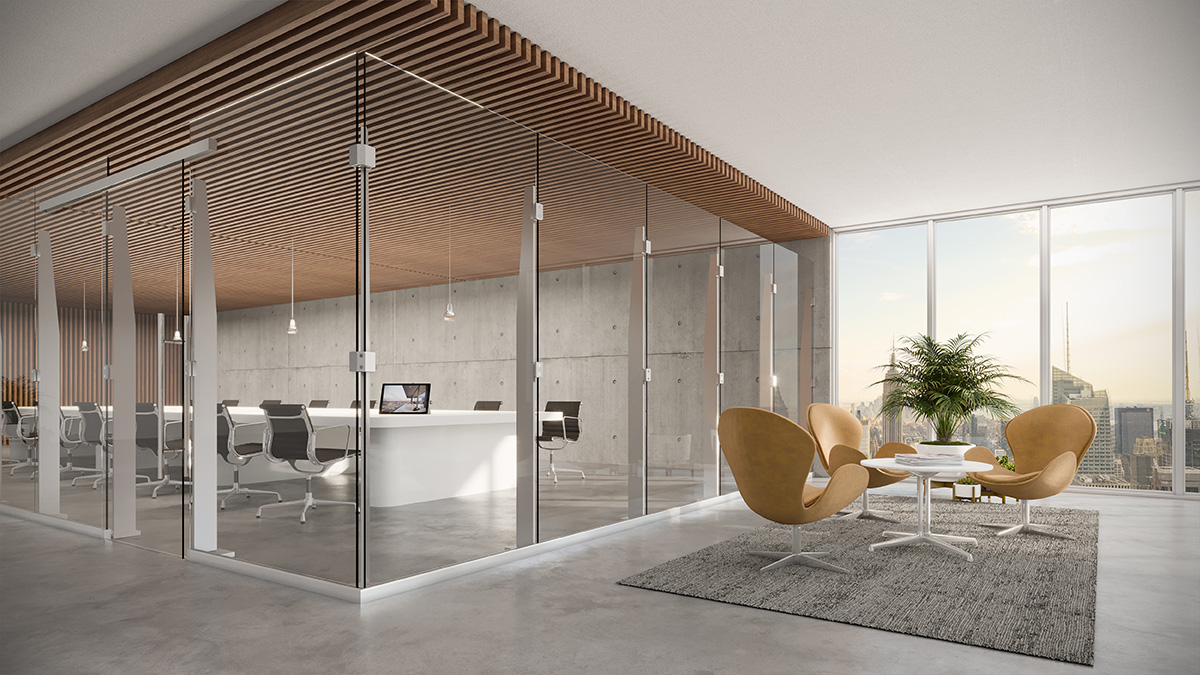
Photo courtesy of CRL
Freestanding glazed partitions define spaces with maximum transparency and are ideal for highly modular, remodeling, or tenant applications.
Versatile Design Options Adapt to Occupant Needs
Contemporary designs that meet the evolving and holistic needs of today’s office employees are leveraging the beauty and versatility of glass partitions. Scalable glass wall solutions seamlessly define interiors and can be easily customized to the specific needs, including acoustic and efficiency goals, of a project. Glazing partitions can accommodate conference rooms, office fronts, study rooms, waiting rooms, and lobbies. Glazed products and systems play an important role for designers, particularly when working in retrofit applications where designs need to be made effective within an established framework. Freestanding glass walls and movable bi-folding glass walls are among the most adaptable of these products.
Freestanding glass walls offer almost unlimited configurations using any combination of end posts, center posts, and corner posts that hold glass panes in place with robust stainless-steel clamps. L-shapes, Z-shapes, U-shapes, and rectangular enclosures can easily be achieved. These systems are best for interior environments with high or exposed ceilings since they are freestanding and not secured at the top. Their exceptional adaptability offers an ideal match for retrofit or tenant improvement scenarios.
Bi-folding glass walls create a highly versatile design tool to generate multi-purpose spaces. For example, bi-folding panels can slide into a closed position to create space definition or private areas. They can then be opened and stacked to the side to create open, collaborative spaces that promote socializing and are more conducive to work functions, allowing for on-the-spot adaptability. Bi-folding doors offer an expansive scale that’s ideal for large openings, with a maximum system height of 12 feet. The doors operate on a top or bottom rolling system and can be inward or outward folding with a flush or raised sill. Panel hinges can be completely concealed to provide a streamlined look. Optional 1-inch dual-glazed insulating glass units help mitigate sound. Bi-folding doors can be specified with a pivot door. Glass systems with sliding panels offer even greater glass spans, reaching heights of 13 feet and widths of 7 feet per sliding panel.
Newer systems offer ultra-slim panel rails and stiles to create a minimal and uniform frame that produces uninterrupted views, while allowing daylight to flow and enliven office interiors. Sliding movable walls offer multiple options for installation, including bottom track-mounted frames and recessed or pocket installation. Double- and triple-track options are available, along with automation for hands-free operation. As with bi-folding systems, 1-inch dual-glazed insulating units are available to effectively mitigate sound for enhanced privacy.
Understanding the Occupant Enables Better Use
Practice and science confirm that the spatial environment is intricately connected to individuals’ living conditions. For the design professional, human-oriented working conditions should be evaluated holistically, and ideal products are those that integrate functionality, health, and aesthetics.
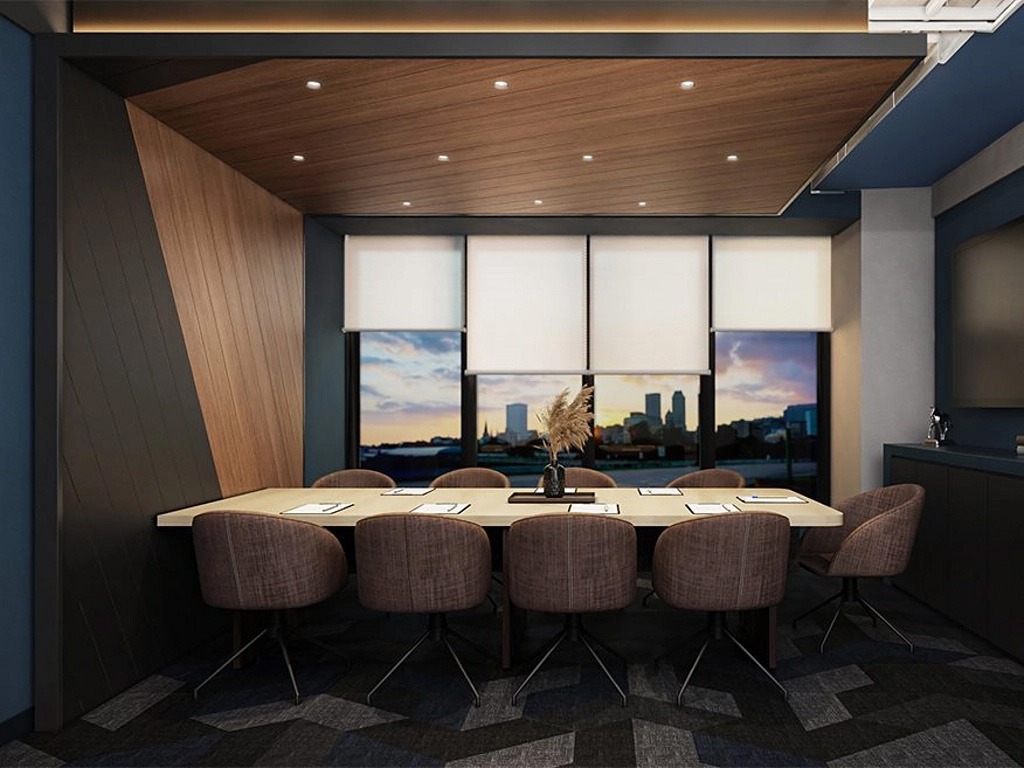
Photo courtesy of USG
Offering multiple color temperatures and beam spreads, linear ceiling, wall, and design systems bring the simplicity of integrated lighting and a cohesive palette straight from the factory.
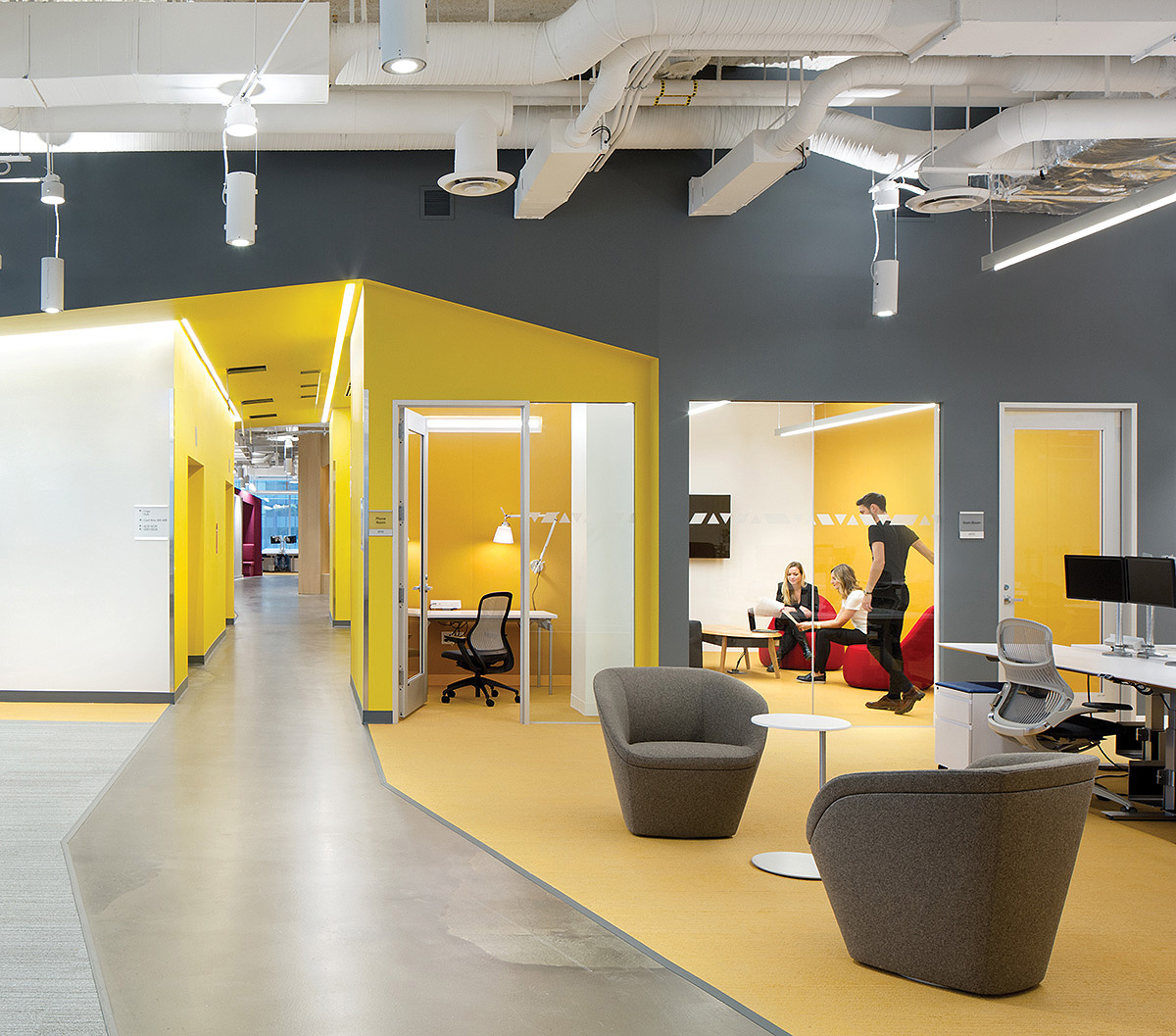
Visual stimulation not only drives human activity but also subtly influences cognitive and emotional experiences.21 Among the many design elements that make up architectural space, color is widely recognized as one of the most expressive factors and one that has the most direct impact on users’ emotions and perceptual experiences. It is a powerful tool for people to perceive, understand, and respond to stimuli.22 Color palettes that are complementary and integrated across all surfaces–flooring, walls, ceilings, and accessories–define space and set the tone. Colors, lighting, and patterns that repeat across the design offer anchor points. Calming neutral colors provide a foundation for accent areas that guide people in a space. Likewise, when pursuing an individual’s total well-being, the workplace, and particularly the furniture, should first meet the basic requirements of safety and comfort.23 Soft furniture that is movable and modular, where people can cohabitate while working, can best characterize shared spaces and encourages collaboration.
A proactive, holistic approach beginning in the design phase and using products that integrate features helps simplify final installation while maintaining the high design and performance required. The resulting integrated ceiling and wall systems are better able to achieve the design vision while supporting acoustic goals, budget parameters, and the construction schedule.
Endnotes
- Magsamen S. Your Brain on Art: The Case for Neuroaesthetics. Cerebrum. 2019 Jul 1;2019:cer-07-19. PMID: 32206171; PMCID: PMC7075503. Accessed February 4, 2026.
- Chen, R., Tsai, M.-C., & Tsay, Y.-S. (2022). Effect of Color Temperature and Illuminance on Psychology, Physiology, and Productivity: An Experimental Study. Energies, 15(12), 4477. Accessed February 5, 2026.
- Mohamad Awada, Burcin Becerik Gerber, Gale M. Lucas, Shawn C. Roll,
The impact of color correlated temperature and illuminance levels of office lighting on stress and cognitive restoration, Journal of Environmental Psychology, Volume 104, 2025, 102628, ISSN 0272-4944. (https://www.sciencedirect.com/science/article/pii/S0272494425001112). Accessed February 5, 2026.
- Spitzig J. LIGHT FOR LIFE: The evolution of human-centric lighting: The evolution of human-centric lighting. Lighting Design + Application. 2024;54(10):38-40. doi:10.1177/036063252024054010012. Accessed February 5, 2026.
- “Insight: The Future of Office Design.” JLL. Accessed February 5, 2026.
- “What’s new in WELL v2: Sound.” WELL. October 11, 2018. Accessed February 9, 2026.
- “Acoustics: Part of Comfort, A WELLography™ First Edition.” Melcher Media. WELL Building Institute PBC. 2017. Accessed February 9, 2026.
- “Sound.” WELL v2 Pilot 2018. Accessed March 2, 2026.
- Menchetti, Bob. “Understanding The Basics of Sound Transmission Class (STC) Ratings.” Acoustical Testing. NGC® Testing Services. December 7, 2023. Accessed March 2, 2026.
- Ibid.
- Billa, Salfa Salsha, Laun Nauri, Harmon Chaniago. “Comparison of Effectiveness of Open and Closed Office Spaces on Employee Productivity: A Case Study in Office X.” International Journal Administration, Business & Organization. August 30, 2025. Accessed February 9, 2026.
- Kirsh, D. (2025). Reimagining space: how activity space explains human behaviour in buildings. Architectural Science Review, 1–11. Accessed March 2, 2026.
- Dalton, R. C., Burgess, D., Mavros, P., Hölscher, C., Gregorians, L., Pozza, E., … Heatherwick, T. (2025). Building appearance and wellbeing: how architectural design affects public emotion. Architectural Science Review, 1–20. . Accessed March 2, 2026.
- Christoffersen, J., Petersen, E., Johnsen, K., Valbjørn, O. and Hygge, S. (1999) Vinduer og dagslys – en feltundersøgelse i kontorbygninger (SBi - rapport 318) Hørsholm: Statens Byggeforskningsinstitut.
- Lighting Research Center (2014) Rensselaer Polytechnic Institute, Daylighting Resources – Productivity.
- Wirz-Justice, A., Fournier, C. (2010) Light , Health and Wellbeing : Implications from chronobiology for architectural design, World Health Design, vol. 3.
- Robbins, C. L. (1986) Daylighting Design and Analysis, New York: Van Nostrand Reinhold Company.
- 18 Mardaljevic, J. (2012) Daylight, Indoor Illumination and Human Behavior in Encyclopedia of Sustainability Science and Technology Springer-Verlag New York Inc, New York. ISBN 978-0-387-89469-0, pp 2804-2846.
- Boubekri M, Cheung IN, Reid KJ, Wang CH, Zee PC. Impact of windows and daylight exposure on overall health and sleep quality of office workers: a case-control pilot study. J Clin Sleep Med. 2014 Jun 15;10(6):603-11. doi: 10.5664/jcsm.3780. PMID: 24932139; PMCID: PMC4031400. Accessed February 10, 2026.
- Galasiu, A. D.; Newsham, G. R.; Suvagau, C.; Sander, D. M. (2007). “Energy saving lighting control systems for open-plan offices: a field study” (PDF). Leukos, 4(1). pp. 7–29. Archived from the original (PDF) on 13 June 2010.
- Valentine, C. The impact of architectural form on physiological stress: A systematic review. Front. Comput. Sci. 2024, 5, 1237531. Accessed February 11, 2026.
- Chen, S.; Sleipness, O.; Christensen, K.; Yang, B.; Wang, H. Developing and testing a protocol to systematically assess social interaction with urban outdoor environment. J. Environ. Psychol. 2023, 88, 102008. Accessed February 11, 2026.
- Iliev, B., Domljan, D., & Vlaović, Z. (2023). Comparison of anthropometric dimensions of preschool children and chairs in kindergartens in North Macedonia, Bulgaria and Croatia. Heliyon, 9(3). Accessed February 11, 2026.
Amanda Voss, MPP, is an author, editor, and policy analyst. Writing for multiple publications, she has also served as the managing editor for Energy Design Update.